
Behind every sizzling grill and cheerful queue, a mobile business beats with a simple question: how much can a food truck make in a year? For event planners coordinating festivals, corporate HR and admin teams fueling team days, local community groups celebrating neighborhood flavors, and individual food enthusiasts chasing new taste experiences, the answer isn’t one-size-fits-all. Revenue dances with location, menu, hours, seasonality, and the art of operations. Profit follows a different rhythm, shaped by ingredient costs, labor, permits, insurance, and maintenance. Startup costs and financing orders the cadence for growth, whether you’re testing the waters with a single unit or planning a scalable fleet for larger events. This guide unpacks the numbers in three chapters, each building on the last to give you a holistic view of what a food truck can earn in a year—and how to push those numbers in your favor. Expect practical ranges, real-world scenarios, and actionable tips that speak to planners shaping experiences, teams investing in employee wellness, communities supporting local entrepreneurs, and fans who crave great food on wheels.
Revenue in Motion: Unraveling a Food Truck’s Yearly Take Through Location, Menu, and Timing
The question of how much a food truck can make in a year invites a dozen different answers, each pulled from a different street corner, market, or corporate campus. In practice, the year a truck spends on the move is a calendar of decisions: where to park, when to serve, what to serve, and how diligently the business is managed behind the scenes. Revenue, in this frame, isn’t a single splash of income but a flowing sum of daily sales, event bookings, and recurring customers that accumulate over time. When you look at the numbers, several layers emerge, each shaped by location, menu, operating hours, seasonal demand, and the efficiency of everyday management. Industry observers consistently note a broad range: from modest beginnings in smaller markets to robust envelopes of cash in large, dense cities. The resulting annual revenue can stretch from the low six figures to well over that in peak conditions, with profitability riding on the careful balance of costs and pricing strategies as much as on traffic flow and appetite. This chapter does not pretend to prescribe a single path to profitability, but it does map the terrain, weaving together what many operators learn by trial, error, and a bit of street-smart calculation as they chase steady, sustainable income over twelve months.
Location is the most obvious driver of a truck’s yearly revenue, and the dynamic is almost always the same in any market: the more potential customers you can reach during the hours you operate, the higher your sales will be. Urban cores, transit hubs, business districts, and tourist strips concentrate foot traffic in compact zones and create opportunities to convert passerby interest into first-time purchases and repeat visits. In high-traffic urban areas, a well-managed truck with a compelling menu can pull in substantial revenue. The range often cited by operators and industry data places annual revenue from $150,000 to $300,000 in these settings, with the potential to exceed $400,000 in exceptionally strong conditions where demand remains high and competition is manageable. But those figures rest on the assumption that the truck has a plan for sustaining sales across the week, across weather swings, and across the season when crowds thin but dollars still circulate through certain peak moments.
In contrast, trucks operating in smaller cities or rural communities generally confront lighter foot traffic and a more finite pool of daily customers. Their annual revenue tends to settle in the $75,000 to $120,000 band, with the best performers finding pockets of consistent demand around farmers’ markets, events, and local office pockets. Even here, the right blend of menu, service speed, and event partnerships can push a truck beyond the average. The difference between a successful year and a merely functional one often comes down to how many days a truck is on the road and how many high-margin meals can be carved from a given footprint. A few days of heavy traffic, matched with well-timed appearances at markets or festivals, can noticeably shift the annual tally upward. For operators who are willing to drive to opportunities and curate a service that people look forward to, the geographic canvas becomes wide rather than narrow.
Another inexorable driver is the menu itself. The most profitable trucks tend to harmonize pricing with perceived value. Menus that emphasize premium ingredients, locally sourced items, or niche cuisines can command higher price points and, crucially, cultivate a following that returns not just for one dish but for the overall experience. When customers perceive that a truck offers something distinct—whether through an expert balance of sweet, savory, or spicy, or through a concept that feels curated and thoughtful rather than generic—the result is larger average tickets and a higher probability of repeat business. A well-positioned truck may see daily sales lift from the mid-range to the upper end of its market, particularly when the menu resonates with local tastes, dietary trends, or a sense of novelty that attracts curious diners. The pricing strategy matters just as much as the product itself: a strong price-to-value ratio, clear communication of what customers receive, and a predictable portion size all play into consumers’ willingness to spend.
Operating hours further shape yearly revenue by determining how many customers a truck can serve and how many opportunities to connect with new ones exist in the calendar. A lunch-focused route is often built around office districts, where a predictable lunchtime audience reappears day after day. Evening shifts, weekend markets, and mobile events broaden the reach to residents and tourists, creating ancillary revenue streams that can supplement core lunch business. The density of opportunities—markets, festivals, food truck rallies, and private bookings—matters almost as much as the daily sales rate. In some markets, operators routinely convert daytime traffic into early evening revenue, then leverage weekend and special-event gigs for additional growth. These extra gigs can be the hinge that lifts annual earnings from a comfortable mid-range to a more ambitious total, especially when events stack across the year. For example, a private booking can deliver a several-hundred-dollar add-on in a single appearance, while a festival slot can expose the truck to thousands of potential repeat customers who return for the overall experience rather than a single dish.
Seasonality adds another layer of complexity. Weather, holidays, and school calendars all influence how reliably a truck can draw crowds. Some months are reliably strong, others can be slow, and the difference often rests on how well an operator fills the calendar with high-traffic events, corporate gigs, and regular weekend appearances. A disciplined approach to seasonality includes planning for peak demand while maintaining cost discipline during slower periods. The objective is not to chase every spike but to smooth revenue across the year, using a mix of core sales, recurring events, and occasional bursts that keep cash flow steady and predictable. The strategic use of online orders, if available in a given market, can provide a modest but meaningful lift, extending reach beyond the immediate physical footprint to a broader audience and increasing the average daily take when done well.
The data landscape behind these patterns is not a single figure but a chorus of estimates and real-world experiences. Industry estimates align with the general story: in cities with dense populations and healthy foot traffic, a truck can average substantial annual revenue, while in less dense markets, revenue remains respectable but more modest. For trucks that build a loyal customer base around a signature menu and a reliable schedule, the numbers begin to accumulate in ways that feel real and repeatable. The potential for a strong profit margin is equally real, though it, too, depends on discipline and the ability to manage costs without sacrificing the customer experience. When a truck is priced to reflect value, sourced ingredients with an eye toward waste reduction, and managed labor efficiently, net profits can rise meaningfully—often within a range that reflects a solid, sustainable business rather than a fast, volatile burst of income.
In assessing profitability, the balance between gross revenue and the many expenses of mobile food service must be understood clearly. Fuel, vehicle maintenance, licensing and permits, insurance, and labor all subtract from the top line. Ingredient costs must be weighed against portion sizes and yield. A common framework suggests that profit margins for an effectively run operation typically land in the 15% to 30% range after all overheads are accounted for. Some operators report higher margins, particularly when they optimize inventory and labor through batch prep, streamlined service, and intelligent menu design. Others may see narrower margins when fuel costs rise, or when labor hours required to sustain a busy schedule push overhead higher. The take-home message is that profitability is not a fixed target but a function of how well the business is managed: the clarity of the pricing model, the efficiency of kitchen workflows, and the ability to create a fan base that translates into consistent, repeatable sales.
The financial picture, then, includes not just the day-to-day sales but also the shape of the investment required to enter and sustain the business. Startup costs for a mobile food service operation can range broadly, reflecting equipment, permits, and initial inventory. Estimates commonly place initial outlays between $50,000 and $150,000, a range that covers the vehicle, kitchen equipment, and the necessary licenses. Financing approaches vary, but even within a modest capital budget, an operator can establish a strong foothold by choosing adaptable equipment, prioritizing reliability over novelty, and building a go-to menu that travels well and holds up across weather and travel demands. In this light, the decision to enter the field becomes a calculation that weighs upfront investment against projected annual revenue, the length of the operating season, and the likelihood of capturing a stable, growing customer base. It is not simply a lottery ticket; it is a business model that rewards careful planning, disciplined operation, and a willingness to adapt as markets shift.
A practical way to interpret these numbers is to envision what a typical year could look like when the plan blends location strategy, menu appeal, and event revenue. Suppose a truck operates in a high-demand urban corridor for roughly 240 days of the year, combining weekday lunch service with weekend markets and a handful of private events. If daily sales average in the middle to upper end of the industry range—say, between $800 and $1,500—the math starts to show why some operators chase the bustling urban core with a sense of purpose. A conservative daily average of $1,000 across 240 days yields about $240,000 in gross revenue before events. Add a few lucrative private bookings, perhaps a handful of weekend events each month that bring in $200 to $300 per booking, and the annual figure climbs further. For many operators, this is the core narrative: strong daily sales coupled with periodic event income can push annual revenue into a range where profitability becomes not just possible but practical with careful cost control. Conversely, if a truck is only open a few days a week or concentrates its schedule in slower months, the same daily sales figure becomes the exception rather than the rule, and the annual total can fall appreciably.
To understand the full picture, it helps to consider the event ecosystem that can amplify revenue. Farmers’ markets, street fairs, corporate gatherings, weddings, and other private functions offer opportunities to diversify income beyond standard service windows. The pricing structure for events often differs from regular service; private bookings can command a premium per event, particularly when the truck is part of a curated dining experience, a themed night, or a multi-vendor setup that promises a complete customer experience. Even modest event fees—price points in the lower hundreds—add up when they recur across a year. The ability to secure repeat event opportunities also matters; a reputation for reliability and quality becomes a form of intangible capital that translates into more bookings and more predictable revenue in the months when regular sales are thinner. A well-rounded operator treats events not as occasional bonuses but as a stable, integral component of the business model.
The stories behind these numbers are not abstract. They are built by disciplined planning that aligns the menu with the market, coordinates with event calendars, and maintains a careful eye on costs. The most successful operators are not chasing maximum daily sales alone; they are balancing the pace of growth with a sustainable approach to hiring, inventory, and maintenance. They build a calendar that reflects both the rhythm of the location and the expectations of customers who have learned to seek out their truck at certain times or places. They invest in a dependable workflow, so that a long line does not translate into chaos but into a smooth, efficient service that keeps customers satisfied and willing to return. When this balance is achieved, a truck’s yearly revenue is not a number read from a single ledger line but a narrative of consistent performance, repeated visits, and a growing reputation that can sustain the business through fluctuations in market conditions.
For readers who want to dive deeper into the mechanics of regulatory compliance and how it intersects with revenue planning, there is value in understanding how rules shape operation windows, permitted locations, and safety requirements. The guidance you seek may be found at resources that discuss navigating the regulatory landscape in the food truck sector, where local permits, fire codes, and health inspections influence both day-to-day operations and longer-term planning. This framework matters because the path to steady revenue often runs through a maze of compliance steps that ensure the operation can stay open, serve customers safely, and protect the business from interruptions caused by permit or compliance issues. Reading about these regulations can sharpen a truck owner’s ability to map the calendar with confidence and to align pricing and service strategy with what the market will bear so that the year’s numbers can be realized as planned. You can explore these considerations at Navigating food truck industry regulations.
The bottom line for the annual revenue question is that there is no one-size-fits-all answer. The most reliable forecasts come from a disciplined analysis of locale, menu, and timing, paired with a realistic plan for operating days, event opportunities, and cost control. A well-positioned truck in a thriving market with a distinctive offering and an effective event strategy can move from a solid start to a year that feels less like a gamble and more like a carefully executed business cycle. Even in markets with slower growth, a steady, consistent approach—driven by predictable service hours, a curated menu, and a robust calendar of events—can yield a respectable annual revenue figure and, with prudent cost management, a meaningful profit. This is the essence of the revenue map for food trucks: a chart that links street-facing visibility with the slow burn of daily execution and the occasional, high-reward event that makes all the difference across a full year.
For readers who want practical guidance on the financial aspects, the body of work in this field emphasizes not only how much a truck can make but how much it can keep. Profitability hinges on controlling the levers that determine both sides of the ledger—the top line and the bottom line. A prudent operator treats each revenue opportunity as a planned event within a broader budget, balancing aggressive outreach with careful stewardship of supplies, labor, and maintenance. The result is a sustainable annual total that reflects both the hustle of moving through crowded streets and the steadiness of a business built to last. The story of revenue, then, is not a single peak but a horizon: it unfolds as a yearlong rhythm of sales and selections that, when aligned with demand and cost discipline, yields a durable and repeatable financial outcome.
External resource: For more detailed industry benchmarks and context, see https://www.nationalfoodtruckassociation.org
Counting the Miles, Counting the Money: Realistic Yearly Earnings, Margins, and the Hidden Costs of Running a Food Truck
All at once, the idea of a food truck can feel like a beacon of freedom: wheels turning, a sizzling grill, and a street menu that travels with the season. Yet the year-end tally for what a truck actually earns is less a single number than a map. It maps out not only revenue but the many costs that ride along with every mile driven, every customer served, and every event attended. When you step back from the initial glamor, you begin to see a more precise portrait: earnings hinge on location, menu pricing, operating efficiency, and the sheer volume of customers you can attract. In practical terms, a well-run truck in the United States can push annual revenue into a broad range. Some operators in high-density, high-traffic markets may see between roughly $150,000 and $300,000 in gross sales in a year, while others in smaller towns or at off-peak times might settle in closer to the $60,000 to $100,000 band. A startup or first-year operator, still learning the rhythms of the road and the cadence of the crowd, may bring in $30,000 to $50,000 as they test menus, routes, and permitting processes. These figures reflect the variability baked into every mobile kitchen, and they underscore a simple but important truth: earnings are as much about the business model as they are about appetite for food.
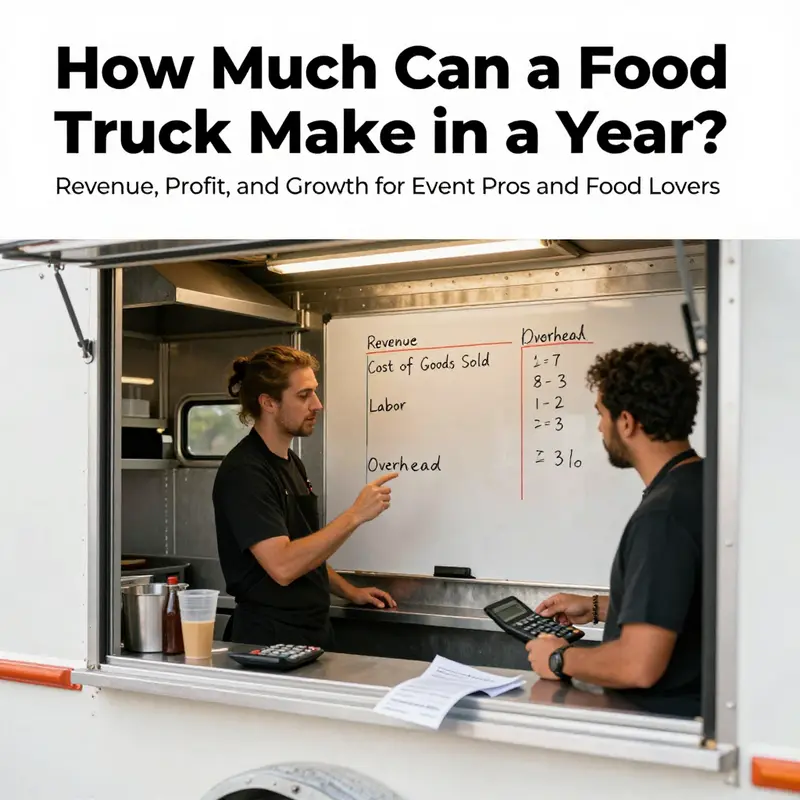
To translate revenue into real profit, you must account for a suite of costs that do not vanish with a single change in location or menu. Food costs, labor, fuel, permits, insurance, maintenance, and marketing all pull from the same pot, shaping what remains as net income. Industry benchmarks place food costs at roughly 30% to 35% of revenue, with labor costs hovering around 20% to 25% depending on staffing strategy and wage levels. Overhead includes vehicle payments or leases, insurance, licensing, fuel, and ongoing maintenance. When you add in the cost of marketing and occasional event fees, it becomes clear why net earnings are modest for many operators even when the top line looks healthy. The typical net income for a single truck, after all expenses, runs in the neighborhood of $30,000 to $70,000 per year. And that spread matters: a difference of just a few percentage points in food cost or labor can translate into thousands of dollars of annual profit or loss.
There is also a broader, more structural truth behind those numbers. The lowest end of the spectrum—$30,000 to $50,000 in annual gross for a first-year truck—reflects learning curves, cautious loyalty in a tight location, or a menu that doesn’t yield high average tickets. In contrast, trucks that consistently press their margins in the higher end of the range tend to share several common features. They operate in markets with frequent foot traffic, deploy efficient workflows, and price strategically so that price increases do not erode demand. They optimize portion sizes to protect food costs, negotiate better supplier terms, and use data to calibrate which days and which hours bring the best returns. They also diversify revenue streams by participating in events, festivals, or farm-to-table collaborations, and they maintain a disciplined approach to inventory and waste. In other words, profitability is often less about the weather of the day and more about the weather of the week—the pattern of events, the cadence of lunch and dinner rushes, and the capacity to turn a crowded noon into a sustainable afternoon.
The geographic variable is not merely about north versus south or coast versus interior. It’s about the density of potential customers, the competition among vendors, and the willingness of local buyers to trade convenience for novelty. In dense urban cores—think city centers, business districts, and near transit hubs—revenue opportunities can be plentiful, but so can costs, especially if the city imposes higher permit fees, stricter compliance regimes, or more complex parking constraints. In those environments, a truck may generate substantial gross receipts, yet the net might only marginally improve if the fixed costs are higher or if labor demands increase to meet peak demand. In contrast, a truck in a smaller city or suburban corridor may see less volume but enjoy lower costs or easier access to good parking, storage, and permits, thereby lifting the percentage of revenue that translates into profit.
Seasonality intensifies this dynamic. Some regions savor a long summer spell that stretches lucrative outdoor events, farmers markets, and food-truck-friendly street nights. Others are constrained by winter chill, indoor event calendars, or shorter festival seasons. The season can swing both revenue and costs. A brisk summer can multiply customer flow, but it can also raise costs if you must staff longer hours, keep the trailer ready for back-to-back events, or run more frequent fuel cycles. Conversely, winter may reduce customer volume but can shave some operating costs if you scale hours and optimize schedules for fewer but more targeted opportunities. The best operators prepare for this by building a flexible calendar, maintaining lean inventories, and pricing to reflect demand swings without alienating regulars who crave reliability.
From a budgeting perspective, the core question is not simply, How much can I earn? It’s, How does revenue translate into net income after covering every essential expense? The math starts with gross revenue, then subtracts variable costs, like ingredients and day-to-day labor, and fixed costs that do not vanish with low customer volume. In the best-practice model, the operator seeks a balanced equation: pricing that sustains margins, menus that support consistent portion control, and a level of staffing that matches demand without inflating payroll. To derive a sustainable annual profit, many trucks treat profitability as a function of throughput—the number of meals sold per week multiplied by the average ticket—and the efficiency with which the business converts that throughput into net income. Put differently, a high-earning year is not just about more sales; it’s about selling more of the right things, at the right times, with mindful cost control.
One practical lever to push profits higher is refining the menu to optimize food costs without sacrificing customer appeal. Menus that feature fewer, well-priced items can reduce waste, simplify purchasing, and shrink the time customers wait in line. When price points are anchored to value—ensuring customers feel they are getting a fair parcel of flavor for their money—the risk of price resistance drops, and you protect your gross margin. Yet pricing must be treated as a dynamic tool, not a fixed shield. Prices may be adjusted in response to rising supply costs or the influx of new competition. It’s a deliberate practice, not a gamble, and it often hinges on a clear understanding of your cost structure and customer expectations.
Efficiencies in operations also have a direct bearing on profit. The pace of service affects both revenue and labor cost. A well-tuned workflow reduces the time a customer spends in line, lowers stress on staff, and increases the number of orders completed per hour. Efficient workflows begin with the layout of the trailer, the sequence of cooking steps, and the placement of utensils, pans, and ingredients. They extend to the selection of equipment that balances performance with energy use and maintenance needs. Energy-efficient appliances, properly scheduled maintenance, and robust inventory management can reduce both energy bills and waste. Smart procurement is another critical piece. Building better supplier relationships can yield favorable terms, lower unit costs, and fewer disruptions if a supplier experiences a delay or shortage. In practice, that means negotiating payment terms, exploring bulk discounts for staple ingredients, and planning orders to minimize overstock while preventing stockouts.
Another dimension is labor management. Labor costs are among the most controllable expenses, but they require careful balancing of service quality and wage standards. The sweet spot typically lies between staffing levels that cover peak periods and the consistency necessary to deliver a dependable customer experience. Training and cross-training staff to handle multiple roles can reduce the need for specialized hires while maintaining service reliability. Scheduling that aligns with anticipated customer flow—particularly around events, lunch hours, and weekend nights—helps keep payroll aligned with revenue. And, where possible, some operators leverage on-site helpers for event seasonality, while maintaining a lean core team for daily operations.
Location strategy remains fundamental. A well-chosen site can dramatically affect both revenue and costs. High-traffic zones attract more customers, but they can also command higher permit fees and require more frequent parking checks, security considerations, or special event permits. A complementary strategy is to partner with venues or organizations that offer recurring demand, such as business districts that host lunch crowds on certain days, or neighborhoods that host monthly street markets. The aim is to create a predictable stream of customers and to reduce the hit-or-miss nature of street vending. Those who succeed often diversify their locations, forming a hybrid model where routine street locations are amplified by special appearances at festivals, corporate campuses, or private events. Each channel has its own cost profile and revenue potential, and the most resilient operators tailor their calendar to balance risk and return across channels.
The numbers do not lie, but they do need interpretation. The industry-wide message is nuanced: while many trucks can post impressive top-line revenue during peak seasons and in bustling markets, the typical, sustainable annual net income is more modest. As several national resources highlight, the average net profit margin for a food truck tends to land in the 10% to 20% range after all expenses. That implies a typical single-truck net income of around $30,000 to $70,000 per year. It is a reminder that profit is not merely the difference between price and cost; it is the cumulative result of sales cadence, cost discipline, and the strategic use of vehicle, labor, and inventory assets.
For someone contemplating a move into the mobile kitchen space, there is value in recognizing the common paths toward stronger profitability. A truck’s ability to sustain year-round income often depends on a combination of disciplined cost control, menu discipline, and diversified revenue streams. Events and catering, while not guaranteed income, are potent accelerants when integrated thoughtfully into the business plan. The more built-in revenue streams a truck can cultivate, the more stable its earnings can become across seasons. Yet even the best plans must be grounded in reality: a truck is a business that travels with the weather, market appetite, and public appetite for novelty.
There is also a practical note about entry costs and financing that deserves attention. The capital needed to launch a food truck operation—acquiring the vehicle, outfitting it for cooking, securing licenses, and establishing initial inventory—can be substantial. For some operators, financing can be secured with a traditional loan or line of credit, while others bootstrap with savings, partners, or smaller staged investments. The early months may be lean as the business experiments with menu ideas, tests pricing, and builds a customer base. It is not unusual to see the first-year revenue swing widely from truck to truck as the operator discovers what resonates in their market and learns to fine-tune every detail from inventory turnover to gas consumption. In time, with careful monitoring, the best performers convert learning into scalable routines that drive more consistent profits and, in the process, turn the truck into a true mobile microbusiness rather than a short-lived venture.
As you can see, the total earnings picture is layered. Revenue can be robust enough to fund a comfortable living, yet profit depends on the precision with which the operator managers cost structures, throughput, and risk. The margins you achieve are not predetermined by the market alone; they are crafted by your daily decisions about suppliers, staffing, scheduling, and menu design. That is why the conversations around a food truck’s annual earnings must focus not solely on the size of the cash intake but on the discipline and structure that convert appetite for great food into sustainable financial outcomes. A realistic forecast, built on local market conditions, a thoughtful menu strategy, and a disciplined operations plan, can turn a street-side kitchen into a steady, growing business rather than a seasonal spectacle. If you’re seeking practical guidance on laying the financial groundwork and building resilience for first-time owners, there are resources that walk through the steps of budgeting, forecasting, and managing cash flow in a way that aligns with the realities described here. A practical starting point is to engage with financial tips designed for first-time food-truck owners, which can help translate these concepts into a concrete plan you can apply as you map your own route to profitability.
For a broader, externally validated benchmark, researchers point to national data that anchors these expectations. While revenue and profit can vary dramatically by city, season, and strategy, the central takeaway remains consistent: success is a function of revenue-generating opportunities paired with tight cost controls. The more you can align menus with cost-efficient sourcing, optimize labor, and secure steady demand through events and location strategy, the more likely your annual earnings will meet or exceed the mid-to-upper ranges discussed here. The end result is a business that can weather fluctuations in the market and still provide meaningful net income, rather than a fragile venture that evaporates with the first market downturn or weather shift.
In the end, the question is not just how much a food truck can make annually, but how reliably it can convert that potential into profit. The most successful operators convert appetite into throughput, throughput into revenue, and revenue into profit through careful management of costs, a menu that resonates with guests, and a strategic footprint that captures the most value from each location. If you undertake this with deliberate planning, the numbers begin to align. You move from a hopeful aspiration toward a defined, repeatable business model. And when the model works, the truck doesn’t just travel; it earns its way through the road—the story of a year lived on wheels, where every mile adds both flavor and financial clarity.
For readers seeking concrete planning steps and practical tips that help translate these benchmarks into your own plan, consider exploring targeted guidance on financial discipline for first-time food-truck owners. The resources linked above are designed to help you translate general benchmarks into a personalized forecast that reflects your market, menu, and ambitions. And as you chart your route, remember that the real strength of a food truck—the thing that sustains earnings across the year—is not a single clever trick but a balanced combination of pricing, waste control, labor efficiency, and a calendar that secures regular, high-quality demand. The road ahead is not simply about selling more meals; it is about turning every service into a dependable, profitable step on a well-planned journey. To deepen your understanding, you can explore additional insights in related posts that discuss practical financial tips for first-time truck owners, or look into how branding, event selection, and resilient operations contribute to resale value and long-term profitability. financial tips for first-time food-truck owners
In closing, the numbers tell a compelling story of possibility tempered by discipline. A food truck can be a viable, even lucrative, year-round business in the right market and with the right approach. Yet the path to consistent, meaningful net income requires more than great food and fair prices. It requires a deliberate, data-informed plan that anticipates seasonality, urban dynamics, and the inevitable costs that come with mobility, licensing, and upkeep. For any operator who treats this as a true business with a calendar, a budget, and a strategy for revenue diversification, the prospect of turning a plate of comfort food into a reliable annual return becomes not only possible but probable. That is the core distinction between a successful food truck and a great story about a truck on the road.
External resource for benchmarking and broader national context: https://www.sba.gov
How Much Can a Food Truck Make in a Year? Unpacking Startup Costs, Financing, and the Road to Scalability
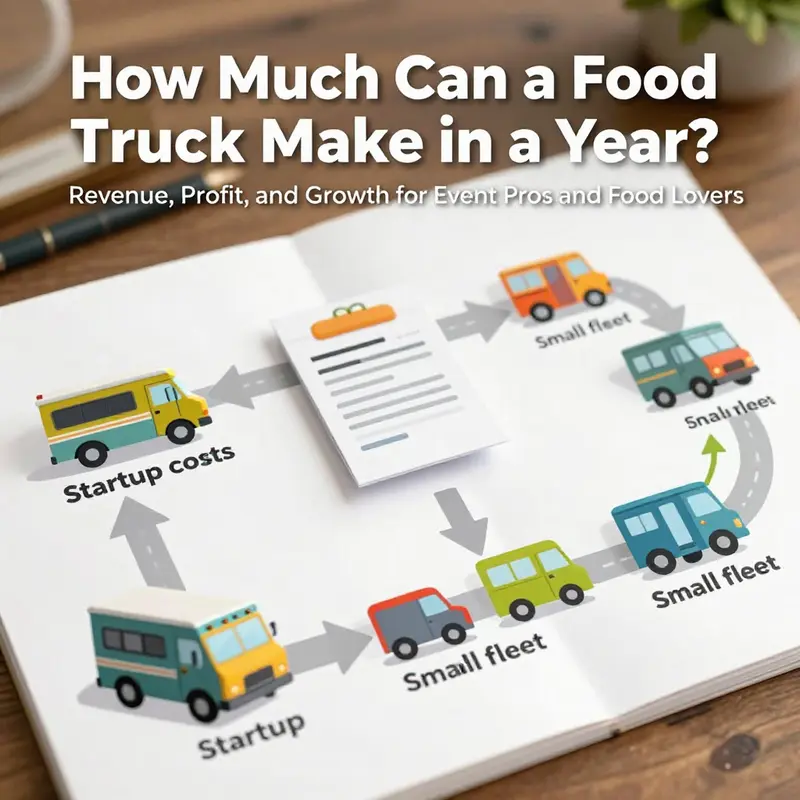
A food truck is often imagined as a gleaming siren on wheels, a siren that promises quick cash and a fast track to culinary fame. The reality is more nuanced. A successful food truck can generate substantial revenue, but the path from ignition to steady profitability runs through location, menu design, operating discipline, and a host of practical decisions that shape cost structures, cash flow, and ultimately payoff. This chapter threads together the research, the trade-offs, and the strategic choices that determine annual income for a food truck, moving beyond abstract numbers to a clearer map of what it takes to make money and how big that money can be. The numbers vary widely—by city, by cuisine, by season, and by the operator’s skill in turning traffic into repeat customers—but the underlying patterns are consistent. Startups must combine a compelling offering with tight cost control and scalable systems to translate revenue into real profit year after year. The journey from a single truck to a growing brand is not a straight line, and understanding the economics at each turn helps entrepreneurs decide whether to launch, how aggressively to scale, and where the greatest opportunities lie within the evolving landscape of mobile food service.
From the outset, a cautious yet ambitious operator weighs two intertwined questions: how much revenue can be realistically expected in a given market, and how much profit can be retained after the many costs that will inevitably accumulate. Industry estimates place broad revenue bands in the hundreds of thousands, with gross receipts often swelling in dense urban corridors and dipping in smaller communities. A straightforward way to frame this is to view a food truck as a mobile restaurant that leverages location and hours to capture high-volume traffic while paying for the instruments of business—the truck, the kitchen, the permits, the workers, and the fuel. This framing helps separate top-line potential from bottom-line reality, and it clarifies where capital should be allocated to maximize return. In practice, the relationship between revenue and profit hinges on a handful of levers that savvy operators monitor with disciplined rigor.
First, consider revenue potential. In the most active metropolitan markets, a well-prepared truck with a compelling, repeatable menu can bring in substantial annual gross revenue. Industry estimates converge on a broad range that, in the most favorable urban settings, can exceed two hundred thousand dollars in a year and, for the most successful, enter the upper end of the four hundred thousand-dollar mark. Yet these higher figures are not universal—many factors push the number downward. Location remains the core determinant: foot traffic density, proximity to offices and events, the presence of competing vendors, and the tempo of the market across seasons. A truck that serves high-demand categories—think premium street foods, chef-driven interpretations of familiar favorites, or niche concepts with strong social media resonance—tends to outperform those offering more generic fare. Equally important is operational discipline: consistent quality, reliable service speed, and the ability to weather peak hours as well as lulls. A truck that can turn a line into a predictable cadence—so customers know exactly where to find it and at what times—sees higher utilization of the cooking line and more opportunities to upsell, cross-sell, and drive repeat visits.
The other side of the revenue coin is cost, and this is where profit margins become the real gatekeeper of financial success. Even in markets with strong demand, net profit margins for a single food truck typically fall in a range that requires careful cost control to sustain. Basic margins tend to cluster around a three-decade small business standard: gross margins in the range of thirty to fifty percent, depending on ingredients and waste, labor efficiency, and overhead. After accounting for fuel, maintenance, permits, insurance, and wages, the net profit for a well-run truck can span from roughly twenty thousand to seventy thousand dollars annually. That broad band is not a refusal to be precise; it reflects the reality that the same truck can deliver wildly different results based on how intelligently costs are managed and how efficiently demand is captured.
To illustrate these dynamics, it’s helpful to contrast different operating contexts. In high-traffic urban environments like a major financial district or a downtown corridor with a steady flow of office workers, well-managed trucks with a tight menu and fast service can approach the higher end of revenue expectations. They are not just selling meals; they are selling a convenient, dependable experience during a set portion of the day. The scale of demand invites the strategic use of peak hours, event-based catering, and proximity to complementary activities—think partnering with nearby vendors or coordinate with local festivals—to stretch revenue across longer windows. In these settings, a truck might realize annual gross revenue in the ballpark of two hundred thousand to four hundred thousand dollars, with net profits shaped by how efficiently labor and inventory are managed and how cleverly the route is optimized for traffic patterns and weather. In practice, this means designing a menu that can be prepared quickly, with minimal waste, and priced to maintain healthy margins even as ingredient prices fluctuate.
By contrast, trucks operating in smaller cities or rural areas face a different calculus. Foot traffic may be less predictable, competition can be lower, but the market size also constrains volume. In such contexts, annual gross revenue often lands in a more modest range, with many operators reporting between sixty thousand and one hundred thousand dollars. The upside here tends to be stability and the opportunity to carve out a loyal customer base through consistent presence at neighborhood events, farmers’ markets, or school and corporate campuses. In some cases, menus that emphasize value or regional favorites can capture a consistent share of a smaller pool of potential customers, while still delivering a respectable return when costs are kept under tight control. For first-time operators, the learning curve is steep but manageable, and the economics can be favorable if the plan emphasizes sustainable growth rather than rapid scale.
An important caveat comes from the variability of startup performance. Early-stage trucks, especially those entering the market with limited brand recognition or a less tested concept, often experience revenue that trails the long-run averages. In many instances, first-year gross revenues hover in the range of thirty thousand to fifty thousand dollars, with net profits sometimes slipping into the single digits to low tens of thousands because of upfront investment in equipment, training, and marketing. This reality underscores the need for realistic expectations and a staged approach: prove the concept in a controlled way, rebuild cash flow, and then expand once brand traction and operational systems are solid.
Startup costs are the other half of the coin. The initial capital required to launch a food truck varies widely, reflecting whether a buyer is starting from a used vehicle or purchasing a fully customized, high-end kitchen-on-wheels. A basic but functional setup typically costs between fifty thousand and one hundred thousand dollars. A more elaborate, highly customized configuration can push well beyond one hundred fifty thousand dollars. These enactments include the truck itself, commercial kitchen equipment, permits and licenses, insurance, and the initial inventory needed to begin service. In some cases, operators bring in additional capital for branding and marketing to establish a distinctive identity that can stand out in crowded markets. It is essential to view these costs not as expensive line items but as the foundational investments that enable reliability, compliance, and scale.
Financing is a cornerstone of the capital stack. Many founders rely on a blend of small business loans, personal capital, or family investment to cover the upfront needs. The path to financing often includes a plan that demonstrates operating viability, a reasonable profit trajectory, and a credible strategy for growth. The U.S. Small Business Administration (SBA) offers a framework that is frequently used by aspiring operators seeking supportive terms and access to capital. While the SBA guidelines vary by program and lender, the underlying message is clear: prepare a robust business plan, emphasize control of costs, and articulate a credible path to profitability and repayment. For readers seeking a structured starting point on costs, financing, and industry trends, the SBA’s official guidance provides a recognized reference point that many operators consult as they refine their models and pitch their idea to lenders.
The question of scalability is where the narrative often becomes most dynamic. A single food truck has significant limitations in terms of capacity. Growth typically comes through one of several pathways: adding more trucks to reach additional markets, forming a brand that can be franchised, or building a hybrid model that couples a mobile presence with a fixed-location concept such as a brick-and-mortar venue or a pop-up concept inside larger venues or markets. Each route carries its own set of challenges. Expanding to multiple units demands rigorous standardization of recipes, prep processes, and quality controls, as well as robust scheduling and supply chain management. Franchising introduces brand governance, franchisee support, and royalty structures, all of which require formal systems and a defined playbook. A move into catering and events, or establishing a stable catering line, can supplement mobile sales with high-margin revenue, but it also adds complexity in terms of logistics, staffing, and customer expectations.
Operational discipline becomes the throughline that ties startup, financing, and scalability together. A few practical practices consistently separate profitable operators from those who struggle to convert revenue into meaningful net income. First, menu design matters as much as volume planning. A compact menu with a few signature items reduces waste, speeds up service, and improves consistency. It also strengthens branding, since customers can easily recall and repeat what they liked. Second, route planning and location strategy matter as much as the menu. A predictable schedule helps turn casual passersby into loyal customers who can space out visits in a way that suits their routines. Third, inventory control and supplier relationships matter for margins. Knowing what sells, what doesn’t, and when to renegotiate terms with suppliers can prevent costly spoilage and price shocks. Fourth, labor management matters for both throughput and morale. Efficient staffing models—balanced shifts, cross-trained cooks, and clear performance expectations—help control wage costs while maintaining service quality during peak periods. Fifth, branding and customer engagement matter for lifetime value. A consistent visual identity, a memorable voice on social channels, and events that raise brand visibility can generate new customers who become repeat patrons. The combination of a well-designed concept, meticulous cost management, and scalable systems creates the foundation for sustained profitability and controlled growth over time.
The discussion of internal economics would be incomplete without acknowledging the role of seasonality and market timing. Food trucks often experience fluctuations in demand tied to weather, holidays, and local events. A well-timed expansion strategy should account for these cycles, shelving aggressive investment during expected demand dips and leaning into opportunities when the environment is favorable. Seasonal promotions, partnerships with local venues, and participation in events can amplify revenue without a proportionate rise in fixed costs. Conversely, a misread season can expose a business to pressure on margins as overhead continues while sales soften. A prudent operator treats seasonality not as a setback but as a factor to plan around: maintain lean inventories, adjust staffing, and cultivate a robust base of repeat customers who will seek you out regardless of the calendar.
Even with strong numbers and disciplined operations, a chain of decisions defines profitability over time. The choice to pursue multiple trucks or a franchise mirrors the belief that brand equity is a scalable asset—one that compounds as awareness grows and as the business gains bargaining power with suppliers and venues. But scaling is not inevitable; it requires investments in brand governance: standardized recipes, training programs, financial controls, and a centralized approach to marketing, purchasing, and maintenance. The more an operator can codify procedures, the more likely the business can expand without sacrificing quality or reliability. This is where the concept of a playbook becomes valuable. The best operators document the how and why behind each decision: how a recipe scales from a single 6-foot kitchen to a larger industrial setup; why certain events yield higher margins; where to source supplies to minimize volatility; how to price goods to maintain profitability across a broader footprint. The accumulation of these decisions creates a durable advantage that can be translated into additional trucks, franchised concepts, or complementary revenue streams such as corporate catering or seasonal storefronts.
Branding and identity also play a pivotal role in long-term profitability. A strong brand helps attract customers, supports pricing power, and makes expansion more feasible because the brand carries a predictable value that can be monetized in multiple markets. A coherent branding strategy extends beyond signage and logos; it touches the entire customer journey—from the way food is described on the menu to the tone of social media posts, to the design of the truck itself and the experience of ordering. Operators who invest in branding early tend to see higher customer recall, more efficient marketing, and a faster path to repeat business. This is not just about aesthetics. Branding helps create a sense of trust and reliability that makes new customers comfortable trying something new and makes returning customers feel a sense of belonging. For readers curious about how to translate branding into measurable advantages, one practical resource is the guide on food-truck graphics and identity that has helped many operators craft a resonant, repeatable experience. Branding on wheels: the ultimate guide to food truck graphics and identity
The journey to profitability is also a journey through risk management and compliance. Health regulations, permits, and insurance are not merely bureaucratic hurdles; they directly influence operating costs and the ability to stay open during peak seasons and in event-driven settings. Staying ahead of regulatory changes requires an ongoing commitment to monitoring local ordinances, updating certifications, and ensuring that equipment and facilities meet evolving standards. Operators who integrate compliance into their operating rhythm—regular inspections, routine maintenance, and proactive renewal of licenses—minimize the risk of costly interruptions and fines. The balance of risk and opportunity shifts as the business scales; more trucks introduce more regulatory exposures and more moving parts to manage. That makes the use of standardized procedures, centralized data capture, and reliable vendors essential rather than optional luxuries. In the end, profitability is a function of how well the business can align operating realities with strategic ambitions while maintaining a careful eye on the day-to-day details that sustain service quality and financial health.
For entrepreneurs considering this path, there is no single blueprint that guarantees a particular annual income. Yet the framework above helps align expectations with the practical realities of the market. It clarifies that the highest potential returns come from markets with strong demand, a well-differentiated menu, efficient operations, and a brand that can scale. It also clarifies that even in favorable markets, profitability hinges on disciplined cost control, reliable logistics, and the ability to translate volume into solid margins. The most successful operators approach the business as a disciplined combination of culinary craft and business systems. They test concepts in real-world conditions, refine their offerings based on data, and invest in the necessary infrastructure to support growth. They also recognize that scalability is not a race but a sequence of deliberate steps—adding trucks only after the first unit has demonstrated sustainable profitability, ensuring that systems, training, and brand governance are in place, and aligning financing with a clear plan for how and when to monetize growth.
In short, annual earnings for a food truck can range widely, from tens of thousands to several hundred thousand dollars in gross revenue, with net income typically a fraction of that gross and heavily influenced by location, menu, and management. A starting point anchored in conservative projections—especially for first-year operators—often yields a modest profit, but with a deliberate path toward expansion, a well-structured operation can achieve meaningful scale over time. The practical takeaway is simple: build around a reliable operating model, invest where it matters most—menu efficiency, location strategy, and brand strength—and approach financing as a tool to enable growth rather than a means to cover volatility. When viewed through this lens, the numbers become a map rather than a verdict, guiding decisions about where to launch, how to price, which markets to enter, and when to grow beyond a single truck. The result is not a guarantee of wealth, but a coherent, repeatable framework for turning the mobility of a kitchen on wheels into a durable, scalable venture.
External resources provide a more formal grounding for these decisions. For a foundational framework on startup costs, financing options, and industry trends, readers may consult official guides from a reputable government resource that outlines the considerations involved in starting a small business and how lenders view such ventures: https://www.sba.gov
Final thoughts
Understanding how much a food truck can make in a year comes down to aligning location, menu, costs, and growth strategy. Revenue potential is real but uneven—urban hubs with busy foot traffic and popular menus can push gross income toward the higher end, while careful cost management and smart financing open doors in smaller markets and during off-peak seasons. By viewing the business through three lenses—where you operate and what you serve; how you price, purchase, and pay staff; and how you finance and scale—you create a practical roadmap for success. Event planners can plan partnerships with trucks that maximize attendee satisfaction and sponsor value; HR teams can offer memorable experiences with quality food; communities can celebrate local flavors with reliable, community-driven vendors; and enthusiasts can enjoy consistent, tasty options at festivals and markets. The journey from one truck to a thriving mobile business is iterative, data-driven, and deeply human—built on relationships, discipline, and a willingness to adapt as markets and tastes evolve.