Washington, DC thrives on the energy of its food truck culture, turning public spaces into bustling tasting rooms and social hubs. For event organizers, corporate teams, community groups, and curious food lovers, understanding where trucks gather helps shape memorable experiences—whether you’re hosting a daytime festival, a neighborhood lunchtime crawl, or a company appreciation event. This guide dives into four connected areas: the reliable public hotspots that attract regular crowds, the seasonal and event-driven hubs that animate the calendar, the digital tools that reveal real-time locations, and concrete vendor examples that illustrate what makes DC’s truck scene tick. Each chapter builds toward a practical playbook you can use to plan logistics, optimize foot traffic, and elevate your next gathering with delicious, mobile options that audiences love.
Gathering Ground: How DC’s Food Trucks Converge in Public Spaces—from the National Mall to H Street NE
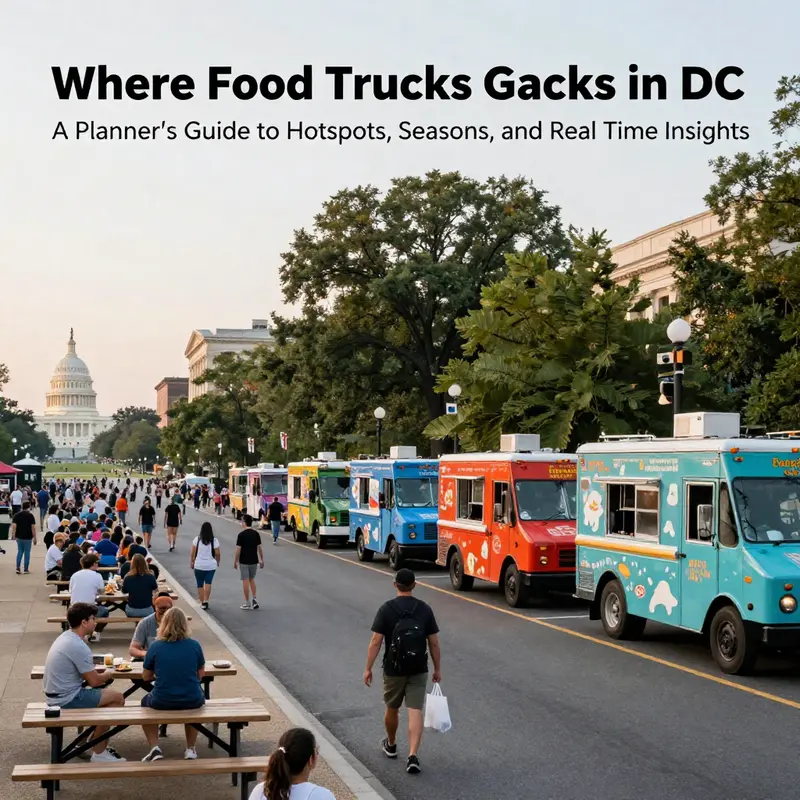
Washington, D.C. has long welcomed the energy and variety of its mobile food scene, where a rotating cast of trucks threads through the city’s parks, corridors, and neighborhoods. The landscape is not static; it shifts with the calendar, the weather, and the city’s congestion of events. Yet a handful of public spaces stand out as reliable magnets for vendors and for curious diners who want to sample a spectrum of cuisines without straying far from the city’s iconic addresses. The broader picture is one of regulated movement—trucks that must balance appetite with permits, proximity rules, and the rhythms of federal property, public plazas, and seasonal happenings. To understand where the trucks gather, it helps to move through three core hubs first, then to trace the patterns that pull in trucks to adjacent corridors and neighborhood districts. The National Mall offers a ceremonial centerpiece, Pennsylvania Avenue NW frames a political and public-spirited promenade, and H Street NE—the Atlas District—pulses with a neighborhood-economy energy that spills onto side streets and sidewalks. Together they sketch a map that is as much about permission as about appetite, about timing as about turf, and about how a city with a national character welcomes its street-food vendors while preserving accessibility, safety, and sustainability for everyone who visits or works in the area.
The National Mall sits at the heart of the American narrative, drawing millions of visitors each year to the monuments, museums, and open lawns that define national memory. It is also a space governed by a federal authority, with a vending policy that is more about permission than permissionless presence. The National Park Service (NPS) oversees the Mall and Memorial Parks, and it maintains a clear stance: the core Mall area generally does not permit unauthorized vending. Permits and approvals are typically required for any commercial activity on federal property, and competition for use is commonly allocated to nonprofits, educational programs, or approved events. This does not mean the Mall is devoid of food options; it means that vendors must operate in designated adjacent zones, or participate in events where NPS coordination with other agencies ensures safe, orderly access. For the hungry traveler, this translates into looking for trucks along nearby corridors—areas just outside the core Mall footprint where sidewalks and nearby parks can host clusters of trucks during peak times, on weekends, or during special exhibitions and public programs. On busy ceremonial days or holiday weekends, the Mall corridor may see more formal programming or food-service partners, but even then the goal remains the same: to keep the Mall walkable, respectful of the grounds, and accessible for visitors who arrive with a sense of ritual about this national space.
Inside this framework, the practical pattern emerges. The presence of food trucks near the Mall is often tethered to adjacent streets and campus-like perimeters where the daily flow of pedestrians, families, and museum-goers creates natural demand. Constitution Avenue and nearby museum districts commonly host trucks when there is a public program or a weekend shopper crowd, but these deployments are typically provisional and planned in coordination with park management and city agencies. The experience for organizers and attendees alike hinges on timing, inclement weather contingencies, and security considerations that the federal property demands. For someone who wants to catch a diverse spread of offerings, the best strategy is to align with event calendars and to monitor adjacent parks that serve as staging grounds for vendors during light-to-moderate crowd days. The Mall’s proximity to world-class museums means it is not merely a transit route but a destination in itself, and the food trucks that operate nearby often become part of a broader museum-going itinerary. As you plan a visit, you can consult National Park Service guidance specifically addressing selling in the Mall, along with day-by-day event calendars that hint at which adjacent zones may host a cluster of trucks on any given weekend. This is the kind of live, location-aware information that can make a food-truck outing near the Mall both convenient and enjoyable for families and solo diners alike.
Traversing to the political heartbeat of the city, Pennsylvania Avenue NW—particularly around the White House vicinity—presents a different set of conditions. This stretch runs along federal property and is subject to higher levels of regulation and security oversight, which translates into a more disciplined cadence for food trucks. On lunch hours, during official events, and in rotating schedules tied to public celebrations, you may see trucks parked along PA Ave NW or on nearby side streets where permit windows and street-fee structures allow curbside service without disrupting security operations. The pattern here is about proximity to power centers and public spaces, rather than a simple street-food crawl. Vendors who work this corridor tend to plan well in advance, monitor official calendars, and coordinate with multiple city and federal agencies to ensure they remain within the boundaries set for temporary signage, cooking operations, and waste management. The outcome is a corridor that can feel like a tasting menu of the city’s most portable flavors, punctuated by the occasional rotation of vendors that provide a culinary snapshot of the moment. Those who follow the PA Ave NW route may also notice a cultural rhythm: a sense that food trucks are part of the city’s daily tempo, offering a quick bite to those attending lunchtime briefings, visiting tours, or public events around Lafayette Square and the White House area. It is not a free-for-all; it is a carefully choreographed dance between vendors seeking visibility and the authorities seeking order and safety. For the curious traveler, the key is to check live listings and event notices, use official channels for the day’s post, and be prepared for the possibility that a given block may be closed or temporarily restricted due to a security protocol or a high-traffic government function.
The Atlas District along H Street NE is a contrast to the Mall and PA Ave NW in both atmosphere and regulatory texture. H Street NE, widely known as the Atlas District, is celebrated for its vibrant street-food culture and its array of pop-ups and rotating trucks. It is a neighborhood where food trucks align with the rhythm of weekend markets, district-wide festivals, and the steady buzz of a nightlife corridor that attracts locals and visitors alike. The scene here is anchored by active organizing bodies—local business improvement districts and neighborhood associations—that coordinate with city agencies to implement street closures, permit allocations, and safety and sanitation measures during events. The trucks that assemble along H Street NE bring a broad spectrum of cuisines, reflecting the district’s embrace of culinary experimentation and evening culture. The Atlas District’s events calendar often serves as a magnet for trucks, drawing them into a compact cluster that becomes a social and gastronomic hub for a few hours each weekend or during seasonal celebrations. For those who want to catch this energy, the best approach is to follow neighborhood calendars and vendor maps, then head to the districts around busy intersections and shared public plazas where these events cluster. In this context, the street-food scene becomes a social fabric that blends seamlessly with the district’s bars, galleries, and theaters, creating a nighttime microcosm of the city’s culinary diversity. As with the Mall and PA Ave NW, the regulatory overlay is ever-present, with vendors needing the proper DC permits and health approvals, and with event organizers often handling the logistics of street closures and compliance. Those who operate in or visit the Atlas District should anticipate a mix of formal event-driven vans and more casual pop-up lines that emerge as the neighborhood’s weekend tempo unfolds.
Beyond these three anchor areas, several other districts repeatedly appear on the city’s radar as consistent hotspots for food trucks. NoMa, near major transit hubs, and the waterfront venues around The Wharf, have become popular clusters that attract lunchtime crowds and festival-goers alike. Dupont Circle and Foggy Bottom also host rotating sets, particularly during warm months or when a conference, university event, or civic gathering brings more foot traffic into the area. Capitol Hill, with its own particular blend of legislative-adjacent energy and residential neighborhoods, occasionally hosts truck clusters that complement political events, community fairs, or farmers’ markets. The common thread across these zones is not a single geolocation but a pattern: trucks gravitate toward places where people gather—near Metro entrances, parks, or busy streets—while remaining responsive to the city’s permit regime, safety standards, and the seasonal cadence of events and markets. For locals and regular visitors, a practical rule of thumb emerges: when a district hosts a market, festival, or public program, a group of trucks is likely to appear to serve the crowd that already knows to expect them.
For anyone looking to follow the trucks in real time, several channels prove surprisingly reliable. City portals such as the official DC government food-trucks page provide a baseline map of licensed vendors, their general locations, and any alerts about permits, street closures, or health advisories. Social media platforms and the trucks’ own feeds—especially image-rich updates and short-location posts—offer a day-by-day view of where trucks are gathering. Apps and aggregator sites that track street vendors supply live-location information, with updates for the current day or the coming weekend. Visitors who want to curate a mobile culinary itinerary can plan around a central hub—say, the Atlas District on a Saturday evening—and then hop to a nearby corridor when a new lineup appears. For organizers and operators, the process involves aligning the event’s permit framework with the city’s vending rules, coordinating with the appropriate agencies, and marketing the event through the channel that best reaches the daytime or evening crowd.
To connect readers with practical access points, consider how the narrative around these hubs translates into a visitor’s practical experience. If you wish to understand the regulatory scaffolding behind these scenes in more depth, a focused resource that navigates food-truck regulations can be a helpful companion to this overview. Detailed guidance about licensing, health permits, and the interplay of local and federal considerations is available through a dedicated, regulation-centered resource that examines how street-vending operations balance community access with safety and compliance. This deeper dive can help you anticipate the steps required to operate within the District while also helping you understand the decision-making behind where trucks can legally set up and how long they can stay. For readers who want to explore this regulatory landscape further, the discussion ties back to the practical reality that the city’s most dynamic food-truck clusters are always bounded by rules meant to protect public spaces and the people who use them. The aim is to offer a coherent mental map of where trucks gather and how to engage with those spaces responsibly, whether you are a visitor seeking a great bite or a vendor planning a future route.
If you want to explore more about how to navigate the regulatory side of food-truck operations, you can check a deeper discussion onNavigating Food-Truck Industry Regulations, which is linked here for convenience. This resource provides broader context on licensing, health permits, and compliance practices that influence where trucks can and cannot park on a given day. It complements the on-the-ground guidance in this chapter by outlining the procedural steps, the agencies involved, and the kinds of checks that keep the street food ecosystem orderly while still vibrant. Keeping this regulatory awareness in view helps explain why the city’s “hotspots” are not just natural gathering points but carefully managed spaces that balance public access with policy constraints. In practice, the best strategy for a visitor is to enjoy the diverse lineup while staying attuned to posted signs, official maps, and live updates that reflect the city’s current permits and event calendars. In a city that frequently hosts large-scale events and national institutions, the interplay between street vendors and public space is a living example of how urban life adapts to the needs and values of its residents and visitors.
For up-to-date information on live truck locations and schedules, rely on DC’s official food-trucks portal, along with well-followed community trackers and neighborhood calendars. If you’re organizing or operating, remember that the Mall’s core remains federally controlled and that adjacent zones are where the most frequent action occurs. On PA Ave NW, anticipate regulation-driven timing and security considerations that shape when and where trucks can operate. In the Atlas District, prepare for events that bring a concentrated scene of vendors into a walkable cluster that’s convenient for a Saturday evening stroll with a bite to accompany it. Then, when you’re ready to broaden your search, you can extend your route to NoMa, The Wharf, Dupont Circle, Foggy Bottom, and Capitol Hill, keeping an eye on the calendar and the dynamic dance between street-food access and urban regulation. The city’s map of gathering points thus emerges not as a fixed grid but as a living itinerary that reveals how public space, mobility, and cuisine converge in the nation’s capital.
To summarize, the three core anchors—National Mall, Pennsylvania Avenue NW, and H Street NE—set the tone for how food trucks gather in DC: a practical blend of access, regulation, and audience. The Mall anchors the experience in a context of federal oversight and adjacent-area opportunities; PA Ave NW anchors it in proximity to national institutions and public events; H Street NE anchors it in neighborhood energy and district-led programming. Beyond these anchors, a constellation of districts and corridors—NoMa, The Wharf, Dupont Circle, Foggy Bottom, Capitol Hill—rounds out a city-wide pattern in which trucks cluster around transit hubs, parks, event zones, and busy streets. For organizers, vendors, and visitors alike, the most reliable guidance comes from combining official permit information, event calendars, and live-day updates that reflect the city’s real-time permitting and crowd dynamics. The result is a map that is as much about how the city works as it is about how the city tastes, with a culinary geography that makes DC feel both familiar and adventurous every time you step onto a street where a truck has parked and a line has formed.
External resource: https://www.nps.gov/visit/planyourvisit/selling-in-the-national-mall.htm
Seasonal Sparks and Citywide Stages: Where DC’s Food Trucks Gather Across the Nation’s Capital
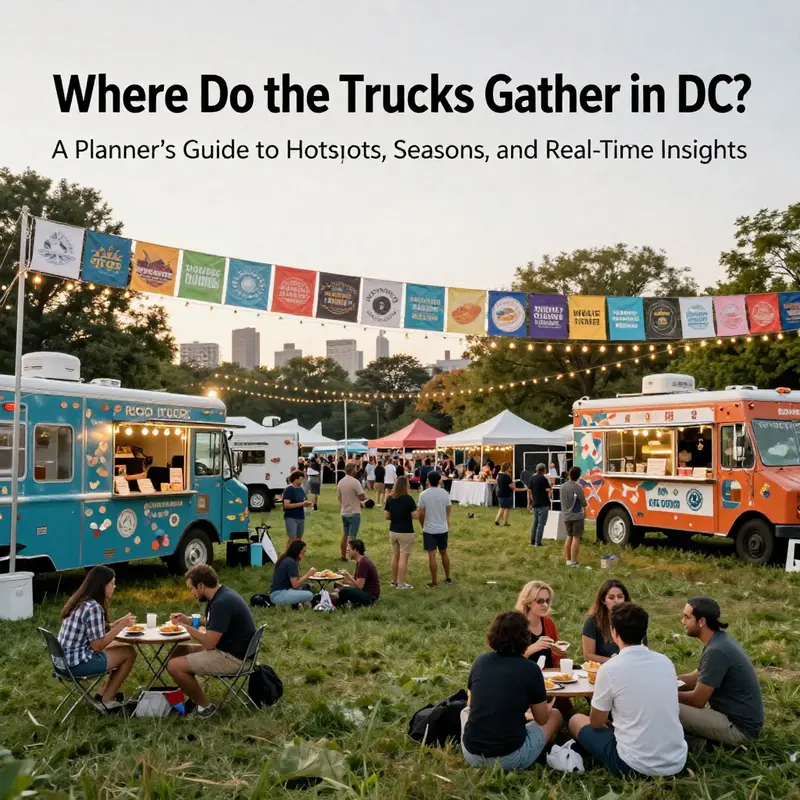
In Washington, D.C., the gatherings of food trucks form a living map of the city’s seasons, rhythms, and public celebrations. The trucks don’t stay in one place for long; they migrate with the weather, the crowds, and the calendar. What emerges is a moving panorama of urban life where every neighborhood offers a different taste of the district, yet all share a common pulse: the city’s appetite for quick, inventive meals served with a side of people-watching and public space. If you want to understand not just where the trucks park, but how the city itself curates those moments, you follow the seasonal and event-driven hubs that anchor these itinerant kitchens. The pattern is not random. It’s a deliberate choreography between open-air venues, transit hubs, waterfront walks, and festival grounds that, for a few hours, becomes a stage for what a modern city eats, and how it gathers to share it.
One of the most iconic seasonal hubs sits along the tidal embrace of the waterfront during the cherry-blossom season. The basin area becomes a culinary promenade when the city sings with blossoms, and visitors from all over converge for the scent of floral air and a line of bright trucks offering everything from hearty sandwiches to delicate, blossom-inspired sweets. The scene shifts with the wind and the calendar—late March into early April, when the cherry trees reach their peak and the riverfront light seems to lean toward a warmer, festival-ready glow. In those days, the surrounding paths fill with walkers and families, joggers and students, all pausing to sample the food-line mosaic that threads through the trees. The trucks here aren’t merely vendors; they become a seasonal chorus, adding texture to a landscape that is already rich with monuments, museums, and reflective spaces. The experience is not simply about filling a stomach. It’s about participating in a moment when the city’s most public space becomes a shared dining room, with the water nearby offering a counterpoint of motion to the stillness of the blossoms.
Another recurring anchor in spring and summer is The Wharf, a waterfront district that has evolved into a natural gathering ground for street-food pop-ups and mobile kitchens. The Wharf’s linear geography—restaurants lining the water, a promenade that invites strolling, and piers that float with the tide—provides an ideal setting for visitors who want variety without sacrificing convenience. During the shoulder seasons, trucks appear at regular intervals, offering a wider array of cuisines and creative bites that complement the open-air ambiance. In this setting, a family might chase a sunset over the water, grabbing quick meals in the middle of a leisurely stroll, while a group of colleagues pauses for a lighter lunch between meetings and meetings with a view. The Wharf turns truck cuisine into a social ritual—one that can be timed to a specific walk along the river, an afternoon concert, or a post-work amble with friends. The scene is less about a fixed storefront and more about the choreography of movement, the cadence of the crowd, and the way the air carries the aroma of a half-dozen different culinary directions at once.
Penn Quarter and Union Station stand as crosscurrents of traveler energy and neighborhood vitality. In these areas, the weekend brings a steady stream of spontaneous clusters of trucks that mingle with foot traffic, subway passengers, and museum-goers. The proximity to transit hubs means you can weave a quick culinary stop into a broader itinerary—from a gallery or a gallery walk to a quick bite before boarding a train. The cuisines presented in these hubs reflect the city’s cosmopolitan character: a compact, curated set of options that feel especially suitable for a quick bite in the midst of city exploration. The auditory and visual texture of Penn Quarter—lively sidewalks, street musicians, and the clatter of carts—creates a slice of urban life that is both practical and joyful. It’s an example of how food trucks in D.C. function not merely as eateries on wheels but as flexible nodes in the city’s pedestrian network, offering convenience without sacrificing variety.
The National Mall, with its museums, memorials, and open spaces, hosts gatherings that are as much civic rituals as culinary stops. On weekends and during special public occasions, trucks cluster near the perimeters of the core museum corridor, offering a spectrum of flavors that invites visitors to enhance a museum day with a bite that travels as far as the mind’s curiosity. This hub isn’t simply a place to eat; it is a way to extend the cultural itinerary outdoors, to add a portable, portable, and permeable layer to the experience of learning, reflection, and public life. The proximity to the Smithsonian institutions means a steady, culturally oriented audience, yet the energy remains casual and inclusive—families with strollers, students on breaks, friends catching up after classes. The food trucks here often become part of the day’s memory, a flavorful bookmark between exhibitions or a quick meal before a concert on the National Mall’s expansive lawns.
On the eastern edge of town, H Street NE has emerged as a corridor of nightlife and neighborhood resurgence, a place where the appetite for a late-night bite aligns with the district’s willingness to experiment. The trucks here are part of a broader convergence of dining and culture: a street-scale ecosystem that thrives on weekend events and neighborhood festivals. H Street’s appeal lies in its density of options and its walkable, approachable atmosphere. For visitors and locals alike, it offers a sense of discovery—an opportunity to stumble upon a new flavor or a familiar favorite in a setting that blends urban grit with hospitality. The weekend crowds, street fairs, and summer events turn the street into a living kitchen, a place where culinary storytelling happens in an open-air kitchen, where the city’s different neighborhoods meet at a curbside counter and exchange recipes through aroma and taste.
For those who prefer a more expansive trail experience, the Capital Crescent Trail near Bethesda and the D.C. border hosts seasonal truck gatherings, typically during the warmer months or during targeted public events. The physical geography of the trail—reliable footpaths, shaded segments, and easy access from rail stops—offers a different flavor of truck culture. The setting invites visitors to pair outdoor recreation with a casual bite, turning a bike ride or a long walk into a culinary detour as part of a larger day spent outdoors. This location demonstrates the versatility of the city’s mobile kitchens, which migrate between urban cores and more suburban-adjacent venues, expanding the geographic and experiential reach of the scene.
Beyond these anchor zones, the city’s calendar matters a great deal. The annual cherry-blossom and springtime celebrations, the waterfront festivals, and the college-town weekends all shape where trucks gather. The DC Food Truck Festival, seasonal markets, and city-sponsored celebrations act as magnets for operators who want to reach large, diverse audiences. The trucks come into contact with a broad cross-section of residents and visitors, a dynamic mix that amplifies the sense of DC as a city of plannable moments and spontaneous delights. The rhythm is reinforced by the platforms that followers, foodies, and curious travelers use to track the daily whereabouts of mobile kitchens. Roaming Coyote and Yelp’s guides offer a snapshot of current locations and updates, while social channels—especially Instagram—provide real-time glimpses of queues, menus, and the mood of nearby crowds. In this way, the city’s food-truck ecosystem becomes a shared, crowd-sourced map that complements official schedules with on-the-ground updates.
For readers planning a day that ties together a love of public space and a desire to taste a city’s seasonal moods, there is a practical path to staying in the loop. Start with a broad sense of the city’s major hubs: the tidal basin during the blossom season, The Wharf’s waterfront cluster, Penn Quarter and Union Station as weekend magnets, the Mall-adjacent clusters near the museums, H Street NE’s weekend energy, and the Capital Crescent Trail’s warm-weather gatherings near the border. Then layer in the city’s events calendar. The cherry-blossom celebration, the waterfront festivals, and the neighborhood street fairs anchor predictable patterns while leaving room for spontaneous pop-ups that can shift from week to week. The real-time layer—social posts, live updates, and venue-agnostic notices—adds another dimension to the planning process. It’s this layered approach that makes DC’s food-truck scene feel both intimate and expansive: a city-scale restaurant map that changes with the seasons but keeps returning to certain beloved ground where the public is invited to gather, taste, and linger.
For readers curious about the day-to-day specifics and how to time a visit, a reliable tactic is to check the city’s official aggregation and observer platforms, which list seasonal hubs and event-driven gatherings as they come online. In practice, you’ll find the most dependable cues in the city’s seasonal calendars and festival pages, which highlight the occasions when trucks are most likely to converge on a given site. Real-time chatter, too, matters: a quick scroll through social feeds can reveal where the crowd is forming, what cuisines are on offer, and whether a particular spot has a wait that aligns with a museum tour, a waterfront stroll, or a transit connection. The city’s landscape of public space—its parks, promenades, and public squares—serves as the stage, and the trucks are the cast that moves through it, offering comfort, curiosity, and a sense of shared afternoon or evening rituals. In this sense, the question “Where do the food trucks gather in DC?” becomes a way to understand how a capital city choreographs food culture into the daily life of its streets, its landmarks, and its festivals.
To fully appreciate the day-by-day variability and the seasonal magic, readers can also explore a resource that aggregates the practical, on-the-ground details needed to plan a visit. For a sense of daily locations, schedules, and seasonal variations, the Los Chiflado’s Truck blog offers a window into how operators and patrons talk about the city’s mobile kitchens. Los Chiflado’s Truck blog provides frequent updates about where to find trucks, what types of foods are trending, and how to navigate peak times around major events. This internal reference complements the broader city guides and festival calendars, giving a granular flavor to the overarching patterns described here. The city’s food-truck ecosystem thrives on this combination of pre-planned venues and responsive, real-time chatter, creating a dynamic, shared dining landscape for residents and visitors alike. For those who crave a centralized, official snapshot, the DC Food Truck Association site remains a trusted backbone for scheduling and location announcements across the city. It is through these layered sources—the seasonal hubs, the event-driven magnet zones, and the real-time streams—that the story of where DC’s food trucks gather is written, day after day, season after season.
External resource: For ongoing updates about truck locations and events, see the DC Food Truck Association’s official site at https://www.dcfoodtrucks.org.
Wheels in the District: Charting Where DC’s Food Trucks Gather with Real-Time Tracking
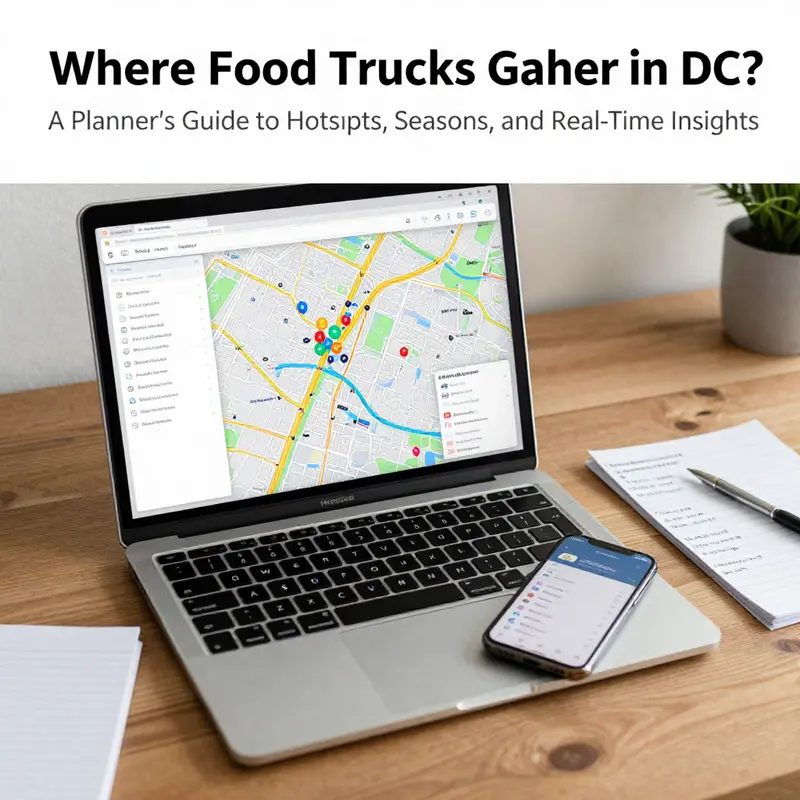
In Washington, DC, the city hums with the movement of food trucks as reliably as the Metro itself. These mobile kitchens illuminate public space with colors, aromas, and the quick cadence of lineups that shift by hour and by season. If you stroll through early spring along the National Mall, you may find a cluster of trucks near the museums where visitors spill out from galleries and stroll toward the grassy expanse. On weekends the area around the National Museum of American History and the National Gallery of Art becomes a tasting map, each truck offering a different route through the city’s culinary palate. The energy here is a kind of civic aroma, a current that threads through families, students, international visitors, and locals who come for a bite between monuments and conversations. It is not just about food; it is about the way a city allocates space to spontaneous gatherings and then choreographs them with time and weather. The movement is a choreography, and the places where these wheels pause are the steps of that dance.
Beyond the Mall, the arteries of DC reveal the second set of anchor points where trucks congregate with regularity. Pennsylvania Avenue NW becomes a corridor of public life during government events and public celebrations. When crowds pour into the streets for a commemorative moment or a ceremonial gathering, trucks rear into the sides of the avenues, offering quick meals to people who are already moving between security checkpoints and open-air viewing spaces. The pattern here is not random. It is informed by crowd flow, by the proximity to transit hubs, and by the need for accessible curb space where a vehicle can briefly pause to serve a line that forms as people cross from one block to another. It is a practical form of urban hospitality, a way to extend the public realm with food as a shared language.
If you want a more neighborhood-forward scene, H Street NE stands out as a beacon of civic energy after dark and on weekend afternoons. The corridor, known for its restaurants and night-life, hosts a lively rotation of trucks that complement the local vibe. Here the trucks become part of the street’s personality, aligning with outdoor markets, block parties, and seasonal events that turn a simple curb into a place where people linger, chat, and decide on a next bite or a next stroll. The rhythm on H Street is different from the Mall or the government-side corridors; it leans toward the improvisational, where the scent of spices blends with the sound of live music, with pedestrians weaving between storefronts and open-air setups. The city, in this sense, invites a tasting walk through a sequence of micro neighborhoods, each with its own tempo and its own favorite trucks.
A more seasonal pulse draws trucks toward the Capital Crescent Trail near Bethesda and at other outdoor “micro-epicenters” where cyclists, hikers, and summer wanderers converge. In warmer months, the trail becomes a corridor of activity, and trucks find that travelers on two wheels crave fuel, a quick snack, or a cool beverage after a long ride. The setting is more diffuse than a single square block, and yet the pattern is predictable in its own way: trucks park at trailheads, near popular rest stops, or along shaded stretches where a weary traveler can pause, bite, and hop back onto the path. The seasonal dimension adds a sense of place, turning the DC landscape into a living map that expands and contracts with the weather and the flow of outdoor life.
Of course, the city’s calendar plays a central role. The DC Food Truck Festival and various seasonal markets turn ordinary blocks into temporary food districts, inviting a larger number of vendors to converge in a short window of time. These events create a concentrated, festival-like atmosphere where lines become shared stories and the choices multiply in front of crowds that arrive with curiosity and time. The effect is both practical and experiential: attendees experiment with pairings, chat with drivers about the origin of dishes, and map out future routes for subsequent visits. In these moments, the city reveals a flexible social economy in which mobility, food, and space are not separate systems but parts of a single, evolving street-level ecosystem.
To navigate this dynamic, residents and visitors increasingly rely on digital and real-time platforms that translate movement into usable intelligence. The most authoritative resource is the DC Food Truck Tracker, a platform backed by the city that provides real-time location updates, business hours, and, when possible, menu information. The tracker is designed to be a map of today’s momentum, letting users filter by date, location, or cuisine type and switch between a broad city view and a tighter snapshot of a single neighborhood. This capability is especially valuable in a city where the same group of trucks may rotate between blocks from week to week, and where a single intersection can host a dozen options on a crisp Saturday afternoon. The map view helps with planning, but the real value lies in the way the tracker aggregates operator data through direct collaboration and field observations. The result is a trustworthy, citywide compass that marks not just where trucks are, but how that location relates to the day’s traffic, weather, and public programming.
For specific neighborhoods and time windows, the tracker proves its value. In Capitol Hill or near Union Station, you may find multiple trucks clustering around transit hubs during the lunch rush, offering a mix of cuisines that cater to office workers and daily commuters who use the rail network and bus routes. Around Dupont Circle, a different line forms, often with late-morning vendors leaning into coffee and light bites before the area’s afternoon peak. The National Mall area remains a tether to culture and education, but even there the trucks must negotiate a moving curriculum of museum opening hours, school groups, and occasional demonstrations. The city’s weather and seasonal events can tilt the balance, shifting where buyers go and how long they linger in a given block. The tracker helps both sides—diners and vendors—anticipate the shifts, making the experience more efficient and more enjoyable.
In practice, using these real-time tools requires a simple, almost tactile approach. Start with the map to locate clusters near your destination, then apply filters for the cuisine you crave or the time of day you plan to eat. A quick check before leaving your hotel or transit stop can save you a lot of wandering and backtracking. If you are a visitor, you can design a mini-tour that spans a few neighborhoods in a single afternoon, sampling a different style at each stop. If you are a local, the tracker becomes a practical companion for day-long errands, where a detour for a savory bite can be slotted into a larger plan without missing a meeting or a train. The real-time nature of the data means the city itself feels more navigable, more responsive to the whims of weather, crowds, or special programming, and less like a static map of where trucks used to be yesterday.
To connect the practical and the experiential, consider how the data moves between the vendor and the public. The DC Food Truck Tracker does not operate in isolation; it relies on continued cooperation with truck operators who share current locations and hours, and on city programming that helps publicize openings, closures, and route changes. The result is a shared infrastructure that keeps a moving population fed and a dynamic city feeling small enough to explore on foot. When a traveler looks at the map and sees a cluster forming near a transit hub, the impulse is straightforward: walk a few blocks, check the queue, and decide which line to join. When a resident uses the tracker regularly, the same logic becomes a habit, a way to weave daily life into a pattern of efficient, satisfying meals.
For readers who want more on the practical side of parking and maneuvering trucks through crowded streets, a deeper dive is available in Mastering Food-Truck Parking Challenges, a guide for navigating space constraints and urban logistics. Mastering Food-Truck Parking Challenges. This resource offers perspective on curb space, loading zones, and the subtle ergonomics of city streets where a truck must balance access, safety, and speed.
As a closing reflection, the city’s food truck ecosystem illustrates a broader truth about urban life: mobility and nourishment fuse into a shared experience that depends as much on data as on appetite. The tracker converts a moving city into a readable landscape. It invites you to follow the pattern rather than chase it blindly. It rewards curiosity with a menu of possibilities and a sense that you are part of a living, evolving street food culture. The next time you plan a DC outing, let the real-time map guide your route, and let your taste buds chart the rest. The streets, after all, are not just routes; they are a procession of moments where people come together to eat, talk, and rediscover what a city can feel like when food becomes a common language.
External resource: For official real-time tracking and a city-backed view of where food trucks are today, you can consult the DC Food Truck Tracker at https://www.dc.gov/service/dc-food-truck-tracker
Where the Wheels Gather: Mapping DC’s Food Truck Hubs and the Lively Rhythm of Mobile Cuisine
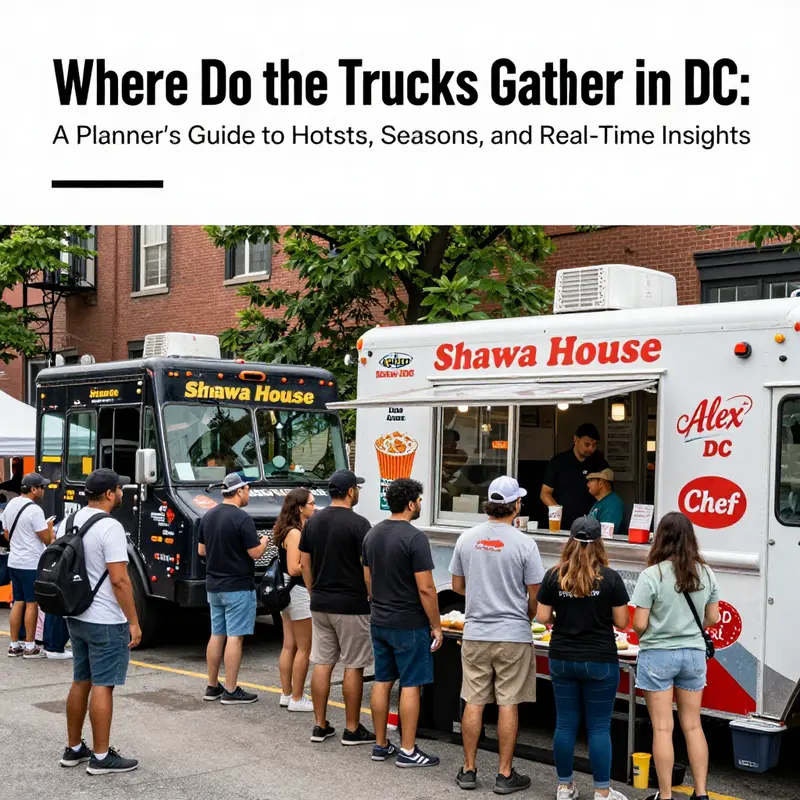
In Washington, D.C., the culinary footprint of the street is not fixed to a single corner but canvassed across a living map. Food trucks here move with the pulse of foot traffic, the cadence of government schedules, and the pull of seasonal events that turn sidewalks into open-air eateries. The scene is as much about the city’s rhythms as it is about the food itself. In winter, a curated market atmosphere can fold the best mobile kitchens into a single, compact village that hums with lights, music, and long lines of locals and visitors seeking warmth and flavor. The Downtown DC Holiday Market is a prominent example of this seasonal transformation, where the urban core becomes a temporary culinary hub and a magnet for people who want a quick bite before a museum visit or a stroll along a lit promenade. The market, by design, concentrates a diverse lineup of trucks into a walkable loop, offering a curated cross-section of the city’s mobile dining talent while keeping the experience legible and accessible for families, tourists, and office workers alike. To the uninitiated, it can feel like stepping into a festival that travels through the winter months on four wheels, with a common thread of quality and variety that feels quintessentially DC.
Yet not all the city’s best gatherings are confined to seasonal tents. On weekdays, Pennsylvania Avenue NW becomes a working corridor of fast, flavorful food just steps from major governmental institutions and the political heart of the capital. The proximity to civic centers means a steady flow of people who want a quick, satisfying meal that doesn’t disrupt the day’s duties or the flow of the city’s core. The trucks tend to cluster in the open spaces near the Capitol and the National Mall, drawing in visitors who are already in the area for a stroll, a tour, or a quick stop between meetings. This alignment of purpose—high foot traffic, proximity to landmark destinations, and a built-in audience hungry for variety—helps explain why certain lanes along this stretch become reliable gathering points. The dynamic is not simply about food; it is about a daily ritual that choreographs movement through the heart of the city, turning a simple meal into a small, shared moment of discovery.
To the west, Foggy Bottom and the area around Union Station offer a complementary pattern. Foggy Bottom’s office clusters and university-adjacent footfall create predictable windows for lunch or late-afternoon snacks, while Union Station’s mass transit draw means a constant influx of travelers looking for something quick, delicious, and portable. The juxtaposition of these hubs—one anchored near government and education, the other anchored near a major transportation node—illustrates how DC’s truck scene thrives on diversity of context. The Wharf, DC’s waterfront neighborhood, stands out for its sustained appeal. Its promenade, open vistas, and river breeze invite a steady cadence of visitors who want to pair a waterfront stroll with a bite that travels well and holds well as they move between piers, shops, and outdoor seating. The Wharf demonstrates how a well-chosen setting can extend the life of a truck’s presence, creating a coastal-in-the-city feel that appeals to both locals and visiting food explorers.
Beyond these established corridors, the city’s neighborhoods contribute their own pockets of mobility. The Capital Crescent Trail—though primarily used for biking and walking—also hosts seasonal or event-driven pop-ups that draw commuters and outdoor enthusiasts who want a quick, flavorful stop before or after a long ride. H Street NE, a corridor known for its vibrant dining scene and nightlife, becomes a magnet for crowds during weekend events and festivals. Its energetic street life translates into a robust appetite for a wide range of flavors, ensuring a healthy rotation of trucks that keep prowling the avenue with fresh offerings while the area’s entertainment venues and markets draw in crowds looking for a casual bite that fits a night out.
The National Mall and the surrounding museum complex also function as anchors of the city’s mobile dining ecosystem. On weekends and holidays, the area near museums and galleries can turn the open spaces into a stage for quick-service meals that complement the day’s cultural explorations. Visitors who are navigating the expansive grounds often welcome the opportunity to sample a handful of options in a single, compact area—an approach that strengthens the perception of the truck scene as a fluid, citywide cuisine village rather than a scattered set of discrete stalls.
An important aspect of this ecosystem is the way trucks adapt to seasonality and events. While the core locations provide reliable flow, organizers and vendors strategically align with festivals, markets, and citywide celebrations to maximize visibility. The DC food truck calendar often folds in a mix of city-sponsored events and private gatherings, with major attractions like the DC Food Truck Festival and seasonal city markets acting as magnets that bring together a curated mix of cuisines under one roofless roof. The experience becomes more than a meal; it is a curated itinerary of taste, a mobile gallery of flavors that travelers can trace across a day, a weekend, or a season. In this sense, the trucks operate as itinerant ambassadors of the city—each with a distinct voice, each contributing to a broader tapestry of urban life.
For readers curious about how this movement translates into the everyday operations of running a truck, it helps to think of the city as a living map rather than a fixed stage. The routes and gathering spots are shaped by parking rules, permits, and the practicalities of curb space. The operators must read the city’s rhythms as a navigator reads currents in a body of water: anticipate the waves of foot traffic, adjust to weather shifts, and be ready to reappear at a moment’s notice in a place that makes strategic sense for the audience present on any given day. The result is a choreography that blends planning with spontaneity, where a truck’s success depends as much on timing and positioning as on what is cooked inside the vehicle. In this sense, the city’s mobile kitchens function as micro-communities, bringing together residents, workers, students, and tourists who all share a moment of taste and an impression of place that is unique to DC’s street-food culture.
What makes these gatherings resonate is not only the variety but the sense of discovery that each stop offers. A typical cluster of trucks might feature vendors offering classic, no-frills fare that evokes street foods from other urban centers, balanced by stalls with bold, region-inspired flavors. One truck may present a straightforward sandwich that speaks to comfort and nostalgia, while another offers a kitchen that draws from distant cuisines with bright, fresh salsas and bold spice notes to awaken the palate. A third truck may tilt toward tropical or island-inspired flavors, delivering bright fruit accents and dishes that feel like a quick vacation in the middle of a walking route through the city. A fourth might present a fusion approach, serving wraps or bowls that combine elements from multiple traditions in playful, thoughtful ways. This mix—comfort classics, regional specialties, tropical notes, and inventive fusions—creates a mosaic that invites people to sample, compare, and return to the street for new discoveries. The promise is not just nourishment but a brief, shared social experience: a moment in which a hurried day slows down long enough to savor a bite, chat with a neighbor at the curb, and move on with renewed energy.
For those who want to dive deeper into the practice of running a mobile kitchen in a city like DC, the broader narrative is one of branding and presence as much as of food. Trucks cultivate a sense of place through a combination of visual identity, reliable schedules, and strategic partnerships with event organizers. They learn which corners deliver the best lines during lunch hours, which blocks stay lively after sunset, and how to leverage a few highly visible spots to drive people to less obvious but equally flavorful routes on other days. The story here is one of consistency paired with adaptation: a truck builds trust by appearing at familiar anchors, then captures curiosity by rotating into new neighborhoods at key moments in the calendar. In this way, the DC truck scene mirrors the city itself—a dynamic blend of steady routes and seasonal bursts, of long-standing corners and fresh avenues that together map the culinary life of the capital.
If you are planning to explore these hubs yourself, there are practical clues you can use to orient your own journey. Start with the most reliable anchors—the well-known markets and the major corridors—then let the calendar and the weather guide your wandering. On a winter afternoon, you might find a curated lineup at a Downtown DC Holiday Market, where a handful of trucks cluster and a few benches invite conversation as you warm your hands with a cup of something seasonal. On a typical weekday, a stroll along Pennsylvania Avenue NW or a quick detour near Union Station can yield a couple of options that satisfy a tight lunch window without requiring a detour from a busy schedule. In the evenings, the Wharf’s waterfront setting encourages a leisurely pace, inviting a longer tasting sequence as you meander past shops and along the water. And in the warmer months, neighborhoods like H Street NE offer a high-energy backdrop where a rotating cast of trucks responds to festival vibes and nightlife crowds.
What ties all these scenes together is a shared attention to place and pace. Vendors learn to read the city’s moods and adjust their presence accordingly. They monitor foot traffic patterns, respond to block party rhythms, and time their appearances to coincide with the most active hours. The result is a living network of culinary nodes that feels both intimate and expansive—a citywide palate on wheels. This sense of movement and adaptability is as much a feature of DC’s food truck culture as the dishes themselves. It invites locals to think of the urban landscape as edible and approachable, a dynamic where every corner holds the possibility of a new bite and every event invites the possibility of a new favorite truck.
For readers who want to explore further and perhaps catch a glimpse of how these trucks map their routes and present themselves to the world, a wealth of context is available through the city’s broader food and events coverage. Readers can consult a range of resources that track daily movements and anniversaries of beloved trucks across the city, and can also follow the seasonal calendars that mark when markets and festivals will appear in specific districts. To gain more practical insight into branding, vehicle identity, and the logistics of keeping a mobile kitchen operating smoothly over time, consider the guidance and case studies discussed on the Los Chiflado’s Truck blog. This resource offers reflections from operators who manage similar fleets and communities, illustrating how the street-food map is drawn and redrawn as the city evolves. Los Chiflado’s Truck blog offers a window into the mindset that propels these gatherings and helps explain why certain corners become just as important as any permanent dining destination.
In sum, DC’s food truck landscape is a tapestry of places and moments: seasonal markets that turn sidewalks into dining halls, government-facing corridors that pulse with a different kind of weekday energy, waterfront neighborhoods with late-day allure, and transit hubs where a steady stream of travelers converges with locals on a common quest for flavor. It is a landscape defined by movement, adaptability, and a shared belief that great food should be portable, approachable, and capable of turning any moment into an occasion. The trucks’ convergence points—whether a curated winter market or a bustling artery near the Capitol—resemble urban junctions where stories cross, where a vendor’s recipe meets a passerby’s curiosity, and where a bite becomes a memory that travels with you as you navigate the rest of the city. As the season changes, as events come and go, and as new truck teams roll into town, this mobile culinary network continues to expand, weaving itself into the city’s daily life and reinforcing the idea that in DC, eating on the go is not a compromise but a way to experience the city more fully.
External resource: https://www.downtowndc.com/events/downtowndc-holiday-market
Final thoughts
DC’s food truck ecosystem is a living map of where people gather, eat, and connect. By harnessing reliable public hotspots, aligning with seasonal festivals, leveraging real-time location tools, and spotlighting influential vendors, organizers can design experiences that feel native to the city’s rhythm. When you plan with these patterns in mind, you tap into a proven formula for high-traffic engagement, diversified menus, and memorable moments that keep attendees coming back for more.