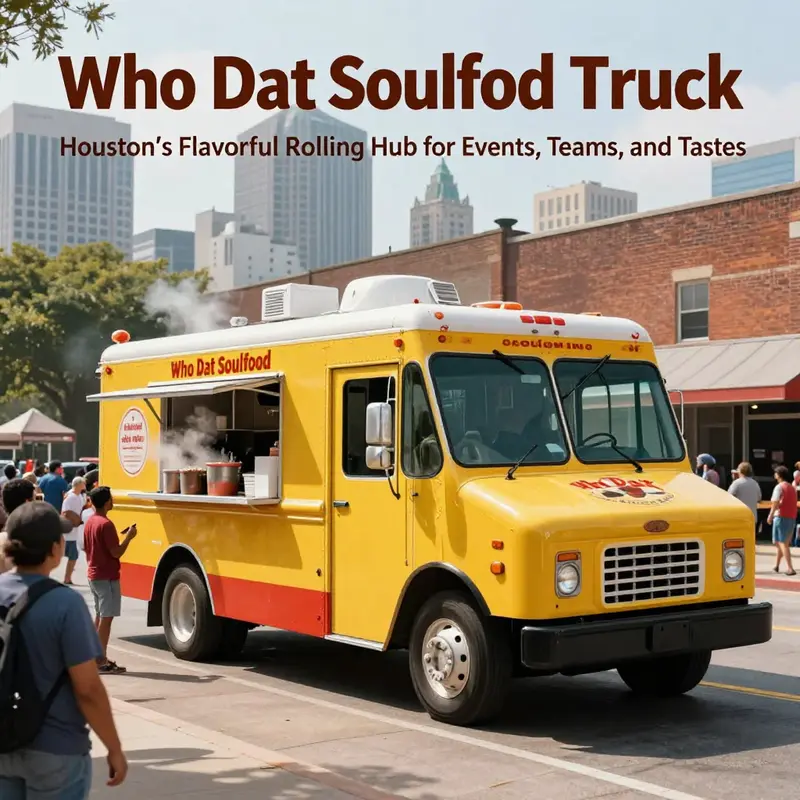
In Houston, flavor travels on four wheels with Who Dat Soulfood Truck. Based in the 77086 area, this vibrant mobile kitchen serves soulful favorites with a modern twist, crafted from fresh ingredients and family-inspired recipes. They keep a steady schedule on Wednesdays from 5:30 PM to 8:30 PM, while giving Mondays and Tuesdays a well-deserved break to recharge for the next wave of events. The truck’s allure isn’t just the plates; it’s the experience—friendly service, bold colors, and a sense of community that turns a simple meal into a shared moment. Event planners, corporate HR teams, local community groups, and food enthusiasts all find something to love: reliable catering on wheels, engaging guest experiences, and a chance to connect with Houston’s diverse neighborhoods. This article unfolds in four chapters that map Who Dat’s operational footprint, the drivers of its popularity, its digital and communications footprint, and its broader economic and community impact. Each chapter ties back to a single truth: Who Dat Soulfood Truck is more than a meal—it’s a moving gathering place that nourishes people and partnerships across the city.
Wheels in Houston: Mapping a Soul-Food Truck’s Footprint, Location, and Midweek Schedule
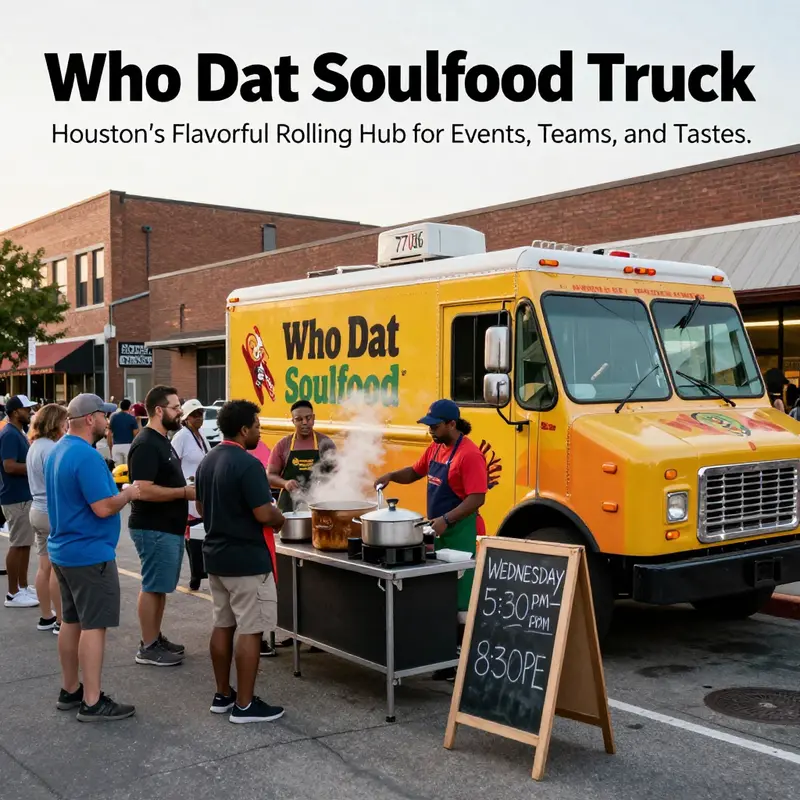
In the vast mosaic of Houston’s neighborhoods, a mobile kitchen threads its way through the city’s arteries, turning curbside corners into small, communal feasts. The rhythm it keeps is part practical and part poetic: a wheel turning, a grill warming, the hum of conversation rising as the sun slips toward evening. This chapter follows that rhythm by tracing the truck’s operational footprint—the space it calls home on any given week—the physical location that makes its meals accessible, and the deliberate, midweek schedule that shapes who comes, when they come, and why this particular mobile kitchen endures in a crowded food scene.
The footprint is more than a point on a map; it is a strategy crafted around visibility, accessibility, and the everyday needs of a neighborhood that thrives on quick, soulful bites after work, after school, or after running errands around town. As of January 2026, the truck’s current operational footprint centers on Houston, TX 77086, a zone that sits at the crossroads of commerce and residence, where residential blocks meet light commercial corridors and a steady stream of pedestrians and drivers filters through the area. This location offers a practical blend: close enough to busy intersections and popular gathering spots to catch the eye of potential diners, yet far enough from a predictable grid that keeps its footprint dynamic rather than stagnant. The choice of this hub is not arbitrary. It leverages the pull of foot traffic that tends to peak when people begin to unwind after work and search for something satisfying but not time-consuming. It also aligns with a supply chain that favors fresh, hearty ingredients prepared in a compact, mobile kitchen that can reposition with relative ease if opportunities arise or if a particular corner becomes more favorable on a given evening.
If you want a precise sense of where to find the truck on any particular week, the current reality appears in the practical instruction that real-time updates are available through the official listing. The location is not staked to a single fixed address but rather identified by a neighborhood anchor that relevant regulars learn to anticipate. The Houston environment rewards this kind of predictability—the comfort of routine—while also leaving space for serendipitous encounters at new spots: a busy strip near a community center after a local event, or a pop-up adjacency to a night market where people flow from one food destination to another. The footprint, then, is a living map that reflects both a steady cadence and the possibility of movement, a dynamic that characterizes many mobile kitchens operating in dense urban fabrics.
A centerpiece of this footprint is the schedule itself, distilled down to a tight, purposeful window. As of January 2026, the operating hours are carved out with clear intention: Wednesday from 5:30 PM to 8:30 PM. Monday and Tuesday are designated as closed, a deliberate choice that signals a midweek strategy rather than a daily hustle. This targeted schedule suggests a response to observed demand patterns—the evenings when local workers, students, and families are most likely to seek a satisfying, late dinner without the friction of a crowded weekend crowd. Within this frame, the truck becomes a stable midweek anchor for a neighborhood, something acquaintances and new customers can plan around, a reliable option at the heart of a busy week.
Why this midweek focus? The logic rests on several intertwined factors. First, the midweek window aligns with a broader urban pattern in which people want a comforting, hearty meal after a long day. Soulful, home-like dishes—when prepared with care and served hot—offer a sense of community and nostalgia that pairs well with the social ambiance of a street-side dining moment. Second, the limited hours cultivate a sense of exclusivity and urgency, encouraging turnouts that feel deliberate rather than routine. Third, the schedule allows the crew to optimize pre-shift prep and post-service wrap-up without the pressure of a longer week. The result is not merely about selling food; it is about curating an experience that fits the cadence of Houston life while offering a consistent, recognizable option for a neighborhood that learns to anticipate a weekly ritual.
From a logistics perspective, a concentrated window makes it possible to plan with a sharper focus. The caravan of a mobile kitchen—propane or electric cooking systems, a generator, refrigeration, and the day’s supply of fresh ingredients—requires careful sequencing. The team can coordinate pickups, manage inventory within a compact space, and ensure food safety through a disciplined sequence of mise en place, cooking, plating, and service. The crew attends to the sensory details that matter to customers: the aroma of seasoned meats, the sizzle of greens on the skillet, the warmth of a well-made biscuit, and the aroma of spices that speak to tradition as much as flavor. The speed at which orders move from window to patron is not a rushed sprint; it is a well-timed dance that keeps lines moving and food arriving promptly while still maintaining quality.
This focus on a particular footprint and a precise schedule has a cascading effect on the surrounding ecosystem. Local residents come to associate certain sidewalks, corners, and open spaces with the possibility of a midweek meal option that feels both indulgent and accessible. Office workers who live in the area may coordinate lunch breaks with the truck’s proximity to their commutes, turning a weekday routine into something a little brighter. Students from nearby campuses or schools can see the truck as a flexible, approachable option for a quick supper between study sessions and group projects. In this way, the footprint extends beyond a simple location; it becomes part of a social map that people reference as much as a map of streets and traffic patterns. The reality of this dynamic is reinforced by the stories that appear on social feeds and in customer photos—images of plates steaming with rich color and textures that tell a story of home cooking on wheels.
Of course, a footprint of this kind cannot exist in a vacuum. Behind the scenes, the realities of city life, health regulations, and parking limitations shape how the footprint operates from week to week. Parking decisions, for instance, require navigating a matrix of local rules, street-cleaning schedules, and permissions from property owners or lot managers. These are not abstract concerns; they directly determine where the truck can legally pull up, how long it can stay, and how customers access the service window. The ongoing conversation around parking challenges is a recurring theme in the life of any food-truck operator, and it is a topic that deserves careful attention for anyone looking to understand how mobility can coexist with a stable, repeatable customer base. For a deeper dive into those practical considerations, you can explore the topic in mastering-food-truck-parking-challenges.
In this context, the week’s rhythm emerges as a composite of place, time, and purpose. The footprint anchors the business in a real community, the location makes it accessible to the people who live and work nearby, and the midweek window reframes a simple meal into a moment of encounter. The result is a narrative of mobility that is about more than speed or variety; it is about how a mobile kitchen can become a reliable, beloved thread in the fabric of a city’s weekly life. The chapter you have read so far is a map of that thread—where it threads, when it tightens, and why it matters.
Looking ahead, the story of this footprint invites readers to imagine what might come next: perhaps expanded midweek hours, perhaps a broader footprint that stretches to additional corners of Houston, or perhaps collaborations with local events that transform a Wednesday window into a recurring destination rather than a lone stop. These possibilities are not mere fantasies; they would require careful attention to the same fundamentals that define the current footprint: accessibility, consistency, and the ability to balance logistical realities with the energy of a street-level dining scene. The trajectory depends on listening to the community, maintaining food quality, and staying nimble enough to shift when an opportunity arises. The narrative of this truck’s footprint, location, and schedule thus becomes a window into a broader conversation about how mobile kitchens can sustain a meaningful pace in a city that never stops.
External resource for broader context: https://www.google.com/maps/place/Who+Dat+Soulfood+Truck/@29.745767,-95.383754,15z/data=!3m1!4b1!4m6!3m5!1s0x8644a1c8f3e3f1d1:0x1a9a35d7b3a3f8d8!2sWho+Dat+Soulfood+Truck!3m2!1d29.745767!2d-95.383754!5m1!1e1?hl=en&entry=ttu
Who Dat on the Move: Engaging Hearts and Palates to Build Popularity for a Houston Soul Food Truck
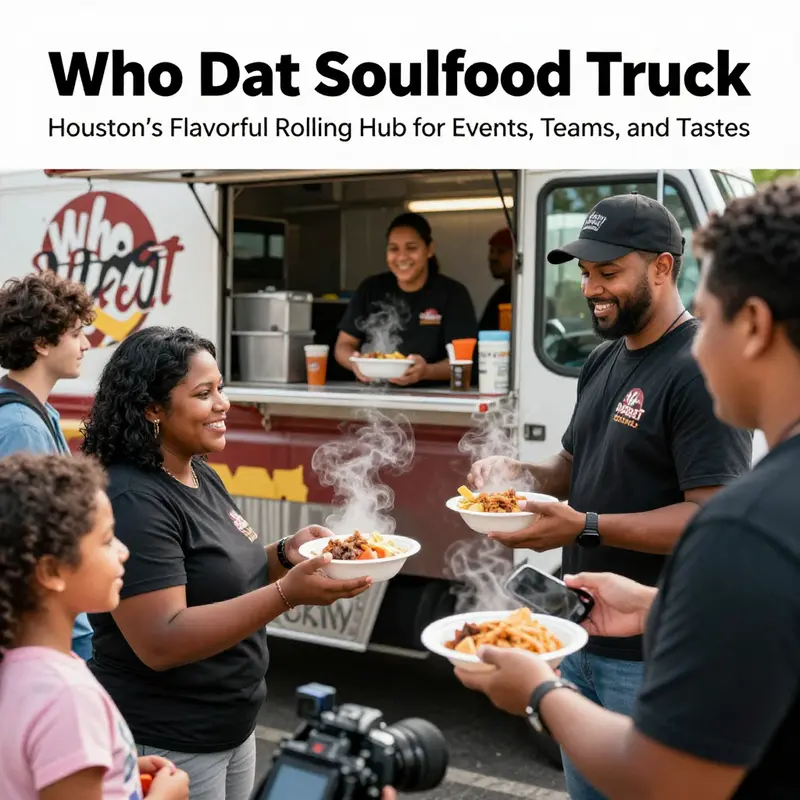
The story of Who Dat Soulfood Truck is more than a menu of southern favorites. It’s a case study in how a mobile eatery translates delicious cooking into a living brand experience that people seek out. In Houston’s busy landscape, a food truck competes with expectations, and Millennials and young professionals look for flavor plus a narrative they can share. Who Dat’s current rhythm—serving mid-evening warmth on Wednesdays in the 77086 corridor with doors open from 5:30 to 8:30 PM—becomes a microcosm of how a brand crafts anticipation and invites repeat visits in a city that moves quickly.
Flavor anchors the experience, but the story behind each dish, the hospitality of the team, and the visible craft of cooking convert a one-off taste into lasting popularity. The truck’s authenticity, rooted in tradition while embracing modern engagement, becomes a living promise. When a guest reads a card about a dish’s inspiration or watches a short behind-the-scenes clip, the meal becomes a memory, not just a moment. The modern food-truck phenomenon rewards brands that pair a great menu with a shareable experience.
From the first hello at the window to the final goodbye, engagement blends warmth with practical systems: friendly service, a steady pace, and a truck design that signals reliability. The environment invites participation—watching a cook at work, snapping a quick photo, and returning for new items that tell a fresh part of the story. The millennial consumer seeks a brand experience aligned with values, storytelling, and responsiveness to feedback, which Who Dat translates into real-world adjustments to location, flow, and menu accents. In short, authentic storytelling paired with operational discipline creates a durable, city-wide presence.
On the Move and Online: The Digital Pulse of Who Dat Soulfood Truck
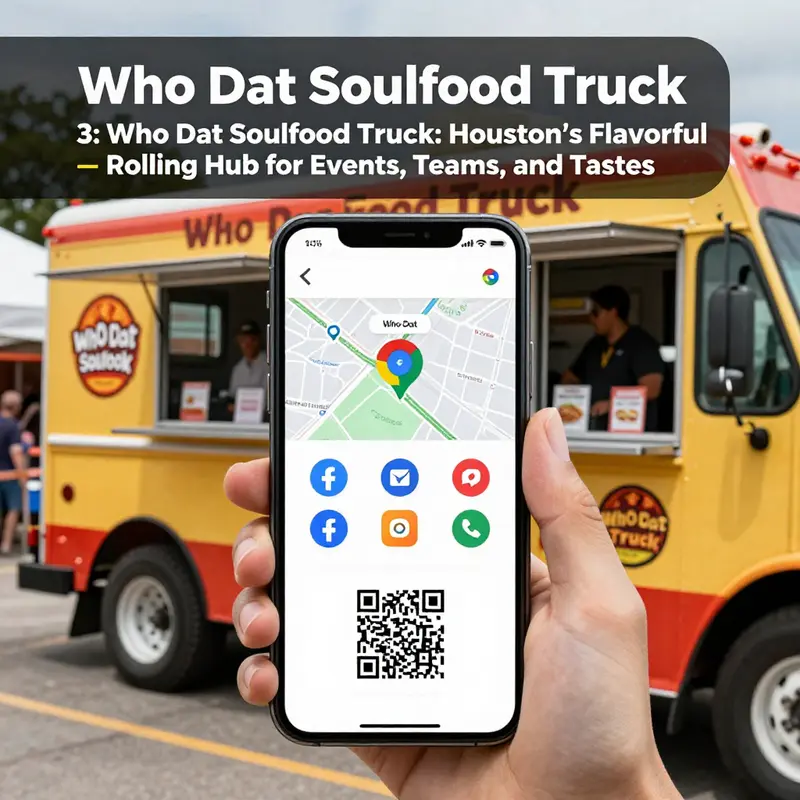
The Who Dat Soulfood Truck travels through Houston with a mission that blends hospitality, flavor, and mobility. Its daily rhythm is not simply about cooking; it is about being found, seen, and understood in a city that moves as fast as a well-timed sizzle on a hot grille. The truck’s physical footprint—its bright truck skin, a welcoming menu board, and a staff that greets every passerby with a smile—depends just as much on its digital footprint as on the steam and smoke that rise from its pans. In this chapter, the modern mobile vendor is a case study in how digital presence, accessible information, and thoughtful communication work together to attract new customers while keeping regulars informed, engaged, and eager to hurry back for the next plate. The Houston base, the posted hours, and the local community shape a narrative that unfolds both on the street and across screens. In a city where curbside bites compete with countless other options, a coherent online identity helps Who Dat cut through the noise, guiding hungry patrons not just to a location, but to an experience worthy of a repeat visit.
From the outset, the truck’s digital footprint is not an afterthought; it is the front door. The social media channels, the short videos of sizzling skillets, and the quick updates about what’s on the menu at that week’s location all work in concert to create a sense of anticipation. The strategy is simple yet powerful: let the community know where you are, what you are serving, and when you are moving to the next stop. Such clarity reduces the friction of a first-time visit. A diner who follows the truck online can plan around a particular dish, a comfort-food favorite, or a limited-time special that might vanish by the next day. Information accessibility becomes a promise—an assurance that this mobile kitchen is both present and predictable in a market where predictability is a rare commodity. This reliability, in turn, builds trust and loyalty, two currencies that sustain a small business when foot traffic ebbs and flows with weather, traffic, and local events.
The digital presence of Who Dat Soulfood Truck is not just about posting a schedule; it is about shaping a story. Every photo, every caption, and every short clip contributes to a larger identity. The visuals center on hearty portions, fresh ingredients, and the glow of a well-seasoned cast iron surface. The voice in captions is warm and inclusive, inviting locals and visitors alike to see themselves in the meal, to imagine the first bite, and to share the moment with friends or family. This is not mere advertising. It is a social ritual that reinforces the sense that the truck is not a distant vendor but a neighbor on wheels, arriving with a friendly hello and a pot of something soul-satisfying. In that sense, the digital presence becomes a navigational beacon, guiding people to a place where they can slow down, savor, and connect with others who share a love for soulful cooking.
A core aspect of this approach is real-time information—that dynamic feed of location updates, menu changes, and timely promotions. The truck’s followers gain access to a living map of where the cooking happens and when the steam catches the air just right. Real-time updates transform the experience from a static purchase into a participatory moment. Customers can decide to wait for the next stop if a beloved dish is off the daily menu, or they can adjust their plans to catch a dish that is only available for a short window. In a way, the truck becomes a small, constantly evolving event, with the audience as participants rather than passive observers. The ability to update the crowd quickly also helps the operation adapt to day-to-day realities: a late delivery, a temporary kitchen tweak, or a surprise feature in a dipping sauce can be announced with a concise post, preventing misunderstandings and preserving goodwill.
The communications ecosystem builds further through multi-channel storytelling. Photos, short videos, and live streams offer a sensory window into the cooking process. Viewers can watch the sizzle, hear the timbre of the seasoned pan, and glimpse the care that goes into every plate. This multisensory approach strengthens brand recall. It is not just what is being served; it is how the service feels. The rhythm of posts—taste previews, kitchen tips, short insights into crust or spice blends—creates a cadence that fans anticipate. Such consistency across platforms gives the brand a coherent personality. It is a voice that speaks to family gatherings, late-night cravings, and weekend celebrations, all while remaining grounded in the everyday warmth of a Houston street food experience.
Beyond social feeds, the truck’s digital strategy reaches into e-commerce-inspired models that extend the customer relationship. While the core business remains on the curb or at a pop-up location, there is value in offering pre-orders, menu previews, and digital payments that streamline the on-site experience. A well-structured online presence lowers the barrier to a first visit and increases the likelihood of a return. The digital conversation becomes a bridge between a curious browser and a loyal patron. The ability to place a mobile order, view daily specials, or receive a notification about a restock can transform an impulse visit into a planned one. And when the interaction is smooth, when payment feels secure and the checkout is simple, the path from discovery to consumption becomes a satisfying, repeatable pattern rather than an occasional gamble.
The integration of external marketplaces in the broader narrative of a mobile food enterprise reflects a contemporary reality for many operators. While Who Dat Soulfood Truck remains a local favorite in Houston, the broader industry is seeing mobile kitchens extend their reach through accessible listings and supplier networks. These platforms offer transparent specifications and pricing ranges that empower aspiring operators to evaluate equipment, upgrade fleets, or expand capacity. The takeaway is not that the truck must abandon its local roots; rather, it demonstrates how digital ecosystems can support careful growth. A well-curated online presence acts as a hub that speaks to both local customers and potential partners or suppliers who may follow the brand beyond street corners. In this way, the truck’s digital strategy mirrors the broader arc of the mobile food movement: a blend of authenticity, accessibility, and scalable communication that can travel as far as the web allows.
The operational discipline behind this digital lifeblood is not glamorous in every moment, yet it is foundational. Consistency in posting, responsiveness to comments, and accuracy in location details create a sense of reliability that customers begin to rely on. A simple rule often proves transformative: respond quickly, update thoroughly, and celebrate the community’s stories. For customers, this means a sense that their experience matters beyond the moment of paying for a plate. For operators, it means feedback loops that can inform menu adjustments, staffing decisions, and schedule planning. The digital dimension, therefore, is not a separate channel but an extension of service quality. It requires the same care one would give to the food itself: attention, timing, and a clear sense of purpose.
The social fabric around Who Dat Soulfood Truck also reveals how digital presence translates into tangible community benefits. When updates announce a new dish or a seasonal favorite, they often spark conversations in the neighborhood about home-style cooking, comfort foods, and memories associated with certain flavors. The truck becomes a living repository of shared experiences, a moving stage on which the city’s stories play out in the language of spice and aroma. This is where the branding effort—the story, the visuals, the tone—meets daily life. A strong online identity makes it easier for neighbors to bring friends along, for newcomers to feel welcomed, and for events organizers to consider the truck as a reliable partner for gatherings. In short, digital presence is not an isolated tactic; it is a relational asset that deepens trust, elevates reputation, and broadens impact without diluting the core value: excellent soul food served with warmth and immediacy.
The internal compass behind this approach is a coherent brand narrative that travels well across screens, streets, and conversations. The voice is not loud for loudness’s sake but calibrated to reflect the warmth of the kitchen, the urgency of a lunch rush, and the joy of sharing a plate with someone you just met. Visuals reinforce the narrative: a consistent color palette, legible typography on the menu, and imagery that captures the texture of fried coating, the shine of a fresh glaze, and the steam that tells a story of freshness. The branding strategy, summarized in one accessible idea, centers on the sense that Who Dat is more than a truck; it is a neighborhood ritual on wheels. This is where the internal link to branding best practices matters. For a concise exploration of how such branding translates into on-the-move identity, consider the guide to Branding on Wheels. Branding on Wheels.
The external landscape, including global procurement and equipment networks, offers a backdrop for this chapter’s themes without losing sight of the local anchor. Operators who study the broader market learn to balance agility with craft. When a new feature or a seasonal dish surfaces, the timing of its release matters as much as the dish itself. The digital world rewards clarity: a precise post with a vivid image, a clear call to action, and a link to the exact place a curious customer can order or visit. In practice, this means a carefully curated feed that respects the social rhythms of the audience. People scroll during commutes, between classes, or while waiting for a friend at the coffee shop. If the content arrives as a helpful nudge rather than noise, it earns attention. If it arrives with the texture of honest hospitality, it earns loyalty. And if it arrives with a sense that the business is listening—responding to comments, acknowledging feedback, and adjusting offerings accordingly—it earns trust that grows into advocacy.
The story of Who Dat Soulfood Truck’s digital life is not about chasing trends for trend’s sake. It is about building a durable, humane cadence that respects the city’s pace while inviting participation. The truck’s online presence becomes a living map of local culture, a way for people to feel connected to a shared culinary language even before they taste a dish. Information is not merely accessible; it is actionable. Customers can plan, anticipate, and participate in a public conversation about food, flavor, and community. In an era when customers expect immediacy, reliability, and responsiveness, this mobile kitchen has carved a path that honors tradition while embracing the tools that make modern dining possible. The result is a brand that feels both intimate and expansive: intimate in the moments of service at a street corner, expansive in the reach of a well-structured online ecosystem that lines up followers, friends, and future customers along one continuous, appetizing thread.
In sum, the digital pulse of Who Dat Soulfood Truck amplifies what the truck does best—deliver comfort, warmth, and a sense of belonging—by connecting it to a wider audience without losing the locality and soul that make the food resonate. The blend of accessible information, real-time updates, and multi-channel communication creates a narrative that travels as easily as the truck itself. As the city grows and the digital landscape evolves, this chapter of the broader article recognizes a simple truth: in the world of modern food—especially for mobile, community-rooted ventures—the story has to move with the people, and the people have to be able to find and trust that story wherever they are. The mobile kitchen that once relied on a short line of locals now sits at the crossroads of street life and online engagement, a testament to the fact that good food travels further when the signal is clear, the flavor is honest, and the community is welcome at every stop. External reference: https://www.alibaba.com/product-detail/China-Towable-Mobile-Ice-Cream-Truck-Coffee_1600547929221.html?spm=a2700.160911.0.0.1a7f3d5cXvLmNw
Riding the Houston Night: The Economic and Community Footprint of Who Dat Soulfood Truck

Houston is a city that moves on wheels as much as it does on foot, and nowhere is that momentum more tangible than in the city’s compact, vibrant world of mobile food vendors. In the heart of a bustling urban landscape, a modest soul food truck operates on a Wednesday evening with a steady hum of traffic, music, and conversation swirling around a chalkboard menu that promises warmth, familiarity, and a touch of spice. The Who Dat Soulfood Truck, anchored in the 77086 corridor, becomes more than a place to grab a meal. It is a small engine of local economy and a gathering point for neighbors who share stories, loyalties, and appetites. The scene is simple yet potent: a line of regulars and newcomers, the clatter of metal against metal as trays slide down the line, and the unmistakable scent of seasoned greens, honey-glazed cornbread, and smoky proteins wafting through the Houston evening air. In these moments, the city’s economic and social fabric feels less abstract and more tangible, as if every plate served carries a note in the larger symphony of Houston’s evolving urban life.
The truck’s weekly rhythm—open for business on Wednesdays from 5:30 PM to 8:30 PM—frames a micro-economy that quietly strengthens the neighborhoods it touches. Jobs are created not only inside the truck’s kitchen but across a broader circle of local suppliers, drivers, and part-time staff who contribute to the operation’s reliability. The cook who chops, seasons, and oversees plating, the driver who navigates evening traffic, the cashier who greets each guest with a smile, and the assistants who help with prep all earn livelihoods that ripple through a surrounding ecosystem of small businesses. This isn’t merely about sustenance; it’s about sustaining pathways for people to participate in entrepreneurship. In a city as diverse as Houston, those pathways often begin in places like a curbside kitchen that can be mobilized where need, curiosity, and appetite converge.
Economists describe mobile food vendors as vital accelerators for local commerce because they inject disposable income into nearby areas and encourage pedestrian traffic that benefits adjacent storefronts. For a residential area like 77086, the truck’s presence on a regular schedule helps anchor an informal, walkable evening economy. Diners spilling out of the truck’s queue on a Wednesday night frequently choose to linger, allowing them to notice small storefronts, parks, and services they might otherwise overlook. That longer dwell time translates into incidental opportunities: a passerby might step into a nearby café for after-meal coffee, a tailor shop to repair a garment, or a local market to pick up ingredients for the next family meal. In this way, the truck becomes a catalyst for incremental economic activity beyond its own sales. It also nudges local supply chains toward smaller, community-oriented vendors, encouraging neighbors to source produce, spices, and other staples from nearby producers who appreciate the direct, recurring demand.
The financial upside extends beyond payroll and procurement. The city’s broader economic development framework recognizes the value of mobile vendors in diversifying entrepreneurship, especially in neighborhoods that face barriers to traditional storefronts. The Houston Economic Development Department emphasizes programs that support small businesses and entrepreneurship, including initiatives that help mobile vendors navigate licensing, financing, and growth strategies. This framework provides context for a truck like Who Dat to not only operate but also to scale, adapt, and contribute to a more resilient local economy. When a family or individual takes the leap to start a mobile food venture, they often become part of a broader story about economic inclusion—transforming a curbside kitchen into a platform for skill-building, mentorship, and financial literacy. That narrative matters because it speaks to a city that wants to retain talent, encourage new ideas, and ensure that prosperity does not hinge on an unrealistically rigid business form.
Beyond the numbers, the truck’s impact on the social fabric is equally meaningful. Food acts as a bridge across cultures and generations, and the soul food menu—rooted in transgenerational recipes and shared memories—serves as a cultural touchstone. Regular guests arrive with stories of family gatherings and late-night study sessions, while new customers discover a sense of place through a shared meal. The act of gathering around a hot plate becomes a form of civic ritual, reinforcing community ties in a city shaped by rapid growth and demographic change. In this sense, the truck contributes to place-making, turning a stretch of pavement into a social space where neighbors learn one another’s names, celebrate small victories, and lean on each other during tough times. The repeated pattern of coming together around a familiar plate helps create a sense of belonging that complements Houston’s more formal, institutional approaches to community development.
From a policy perspective, the experience of Who Dat underscores the importance of thoughtful regulatory environments that balance safety, public health, and opportunity. Mobile vendors operate at the intersection of food service, transportation, and small-business ownership, requiring navigable licensing, health inspections, and parking considerations. The City of Houston’s Economic Development Department offers resources that illuminate the landscape for entrepreneurs who choose to pursue mobile food ventures. Local guidance helps ensure compliance without stifling speed to market, a crucial balance for operators who must respond quickly to demand, weather, and event calendars. When a city builds pathways for these operators—whether through streamlined permitting, clear signage requirements, or access to affordable financing—it invites a broader spectrum of residents to participate in the city’s economic life. The tale of Who Dat is, in part, a case study in how policy choices can either open doors for aspiring cooks and small-business owners or create friction that hampers momentum.
In discussing the economic and community dimensions, it is important to acknowledge the role of social media and community photography in shaping perception and demand. The truck’s presence is reinforced not only by the plate it serves but by the thousands of images that customers share online. These pictures—vivid with color, steam, and the smiles of satisfied diners—become informal endorsements that circulate within neighborhoods and across the city’s digital spaces. They encourage curious newcomers to seek out the truck on a Wednesday evening, adding to the cadence of foot traffic that sustains nearby venues and fosters a sense of eventfulness around ordinary weekdays. The visual language of the truck—bright signage, a warm interior glow, the glistening sheen of gravy and greens—becomes a form of neighborhood branding that travels as far as social networks will carry it, even in a city known for its sprawling geography.
As this chapter weaves together economic and community strands, it is important to place Who Dat within the larger arc of Houston’s mobile-food ecosystem. The city’s urban Core, its diverse neighborhoods, and its outwardly expanding suburbs together form a complex network where mobile vendors locate, rotate, and adapt. The truck’s Wednesday schedule is not an isolated habit but a micro-event that communities anticipate, plan around, and incorporate into their weekly routines. When families coordinate rides to pick up dinner after sports practice, when coworkers decide to meet at the curb for a quick meal, or when a school group stops by after an evening program, the truck’s calendar becomes a shared reference point. This shared habit translates to recurring economic contributions: steady demand, predictable hours that help with inventory planning, and a reliability that encourages suppliers and partners to invest in the neighborhood’s culinary scene. In short, the Who Dat Soulfood Truck embodies a practical, everyday form of urban resilience—where a simple meal and a simple route are capable of supporting livelihoods, strengthening community bonds, and validating the value of small, nimble businesses in a metropolitan economy.
For readers seeking a deeper understanding of the policy and economic environment that fosters these mobile enterprises, the regulatory landscape is worth exploring. There is a continuum from licensing to parking to health compliance that can appear daunting for first-time operators. A helpful starting point is to examine navigational guidance that distills what it takes to run a mobile kitchen in Houston and similar markets. For a concise overview, see navigational resources linked to industry guidelines that translate complex requirements into practical steps. This frontier—where entrepreneurship meets regulation—remains a pivotal area for future chapters, as it determines how many more households might turn a recipe into a livelihood and how many more urban blocks might gain a moment of communal life around a curbside table.
The narrative of Who Dat is, in part, a narrative about opportunity—opportunity for the families that cook, the neighbors who dine, and the city that benefits from a more dynamic, inclusive economy. It also serves as a reminder that economic vitality in a major city rarely rests on grand, singular investments. It grows in the margins: a well-timed Wednesday service, a loyal patron who brings a friend, a local supplier who expands a family’s harvest of peppers or greens, and a city policy that values the grit and generosity behind every plate served. In a landscape of rapid change, the humble curbside meal becomes a beacon of how an urban economy can bend toward more inclusive growth while still preserving the unique flavors, stories, and rhythms that give Houston its distinctive character.
For those who want to situate this specific example within a broader framework, a reference point is the City of Houston’s Economic Development Department, which provides data and reports about small business development, entrepreneurship, and city-supported initiatives that illuminate the potential for mobile food vendors to contribute to a thriving, diverse economy. The ongoing dialogue between operators, residents, and policymakers is essential for maintaining the delicate balance between entrepreneurship and neighborhood quality of life. As Who Dat continues to serve its Wednesday evening crowds, its story contributes to a larger, evolving tapestry about how cities can grow in ways that welcome creativity, sustain families, and honor the cultural flavors that make urban life vivid and inviting.
In sum, the economic and community impact of Who Dat Soulfood Truck in Houston extends beyond dollars and cents. It is a narrative about inclusion, place-making, and resilience—the real-time, edible proof that mobile food ventures can help knit together a city’s neighborhoods, support local livelihoods, and enrich the shared culture that makes Houston a place people want to call home. This is a story of one truck, yes, but it also speaks to a broader possibility: that a city’s best chapters may be written not only in grand investments but in the daily act of sharing a meal, building trust, and sustaining a community through the simple, powerful act of feeding one another.
External resources provide additional context for readers who want to explore these themes from an official vantage point. For authoritative data on Houston’s mobile vendor landscape and broader small-business initiatives, see https://www.houstontx.gov/edc.
Final thoughts
From footprint and schedule to engagement, digital reach, and community impact, Who Dat Soulfood Truck demonstrates how a mobile eatery can become a reliable partner for events, workplaces, and neighborhoods. Its consistent Wednesday presence offers planners a predictable catering option, while its friendly service and shareable dishes spark word-of-mouth and repeat business. By embracing clear communication, accessible information, and collaborative opportunities with local groups, the truck not only feeds people but also strengthens community networks. For event organizers, HR teams, and local associations, the takeaway is practical: choose partners that blend delicious, comforting food with dependable schedules, welcoming service, and a commitment to local connection. In Houston’s vibrant landscape, the Who Dat model stands as a blueprint for turning a moving kitchen into a thriving, people-centered hub.