Finding an affordable food truck that fits an event budget, a corporate gathering, or a community festival can feel like solving a delicious puzzle. The good news is that affordable doesn’t have to mean low quality. Today’s market blends global sourcing, innovative builders, and smarter buying paths, so you can land a legal, fully functioning mobile kitchen without breaking the bank. This guide speaks directly to Event Planners and Organizers, Corporate HR & Admin Teams, Local Community Groups, and Individual Consumers & Food Enthusiasts who want better options, clearer choices, and practical steps to secure a food truck near them at a favorable price. We’ll explore the market landscape and price drivers that shape every quote, compare new versus used units with a practical cost-benefit lens, demystify supplier sourcing on Alibaba with reliability checks, and unpack customization, compliance, and total cost of ownership so you can make informed decisions that light up your events and satisfy your budget. Each chapter builds on the idea that affordability and quality can coexist when you understand where the money goes, who you’re buying from, and what you truly need to operate legally and delightfully in your locale. By the end, you’ll have actionable strategies, a checklist of crucial questions, and a reality-based view of what “cheap” means in the world of mobile catering.
Market Pulse on Wheels: Finding Affordable Food Trucks Near You Without Sacrificing Quality
The urge to launch a food business on wheels often collides with a tight budget, yet a thriving market scene makes affordable paths more accessible than ever. Across global and local horizons, the food truck sector is expanding, driven by consumers who want quick, diverse, and sometimes novel dining experiences. Industry signals point to a market that could reach roughly US$7.5 billion by the early 2030s, with a steady compound annual growth rate around 6 percent. This growth isn’t a guarantee of ease, but it does suggest that value lies not only in the sticker price of a truck but in the way a buyer navigates the ecosystem around purchase, customization, and permits. In short, cheap can coexist with solid long‑term potential, provided the buyer approaches the process with a clear map of what to seek and what to avoid.
To understand where to shop for a cheap food truck near you without sacrificing reliability, it helps to see the landscape as a continuum. On one end you have brand-new, purpose-built units that come with a branded kitchen and turnkey upfit. On the other end you have older, well-maintained used trailers and vans that can be transformed into efficient mobile kitchens. Between these extremes lie a spectrum of options: partially refurbished units, base vehicles awaiting kitchen installations, and modular setups that let you mix and match concessions according to location and concept. The more you align your choice with the specific demands of your local market—whether that means a compact coffee cart in a high‑foot-traffic district or a grab-and-go burger trailer near a busy business park—the better your total investment will perform over time.
The market’s dynamics have begun to favor buyers who approach purchase with a structured supplier evaluation framework. Price is important, but it isn’t the only signal of value. A supplier’s ability to deliver on time, respond promptly to questions or issues, and support repeat business through upgrades or parts availability often proves more impactful over the life of the truck than a few thousand dollars saved on the initial price. When you combine a disciplined sourcing approach with clear financial structuring, the route to affordable ownership becomes more predictable. Financing options have broadened as well. Traditional bank loans remain viable for many buyers, but more specialized equipment leasing programs and vendor‑financing arrangements have emerged to accommodate cash‑flow‑sensitive entrants. For startups, leveraging a mix of down payment, favorable terms, and potential tax advantages can turn a daunting capital hurdle into a manageable, revenue‑generating asset.
Of course, there is a caveat. Local regulatory frameworks can make the cheapest path unworkable if it produces a noncompliant vehicle or a non‑permitted operation. Health department rules, zoning restrictions, and street-availability for vending are not cosmetic concerns. They shape the feasibility, location strategy, and even the design of the truck. A robust due diligence process, therefore, must pair market-driven price discovery with a rigorous regulatory readout. In the most mature markets, cities designate certain zones for food trucks, require specific permits, and enforce vehicle safety standards. Buyers who do their homework on local requirements—often before selecting a vehicle—avoid costly delays and fines and keep a smoother path to profitability.
Price ranges illustrate how flexible the market can be while still offering dependable equipment. For well‑maintained used units in the 3–5 year range, you can commonly see prices in the neighborhood of $40,000 to $75,000, with some variation based on region, the condition of kitchen equipment, and the overall utility of the truck. Older used units, say 5–10 years, frequently carry a price window from $25,000 to $50,000, where buyers often factor in updates or refurbishments. For vehicles over a decade old that need more attention, prices can dip to the $10,000–$20,000 range, but those savings come with a higher likelihood of frequent maintenance or major upgrades down the line.
If you’re pursuing a brand-new, custom-built truck, the cost structure shifts upward in a more pronounced way. A basic build with standard features—kitchen layout, refrigeration, and reliable electrical systems—often starts around $80,000. As you add finishes, specialty cooking equipment, better insulation, and more climate control, a mid-range build typically lands between $100,000 and $150,000. For premium materials, solar options, high-end climate management, and unique architectural design—at times aimed at high‑end concepts or multi‑unit operators—the price can exceed $200,000, with some standout builds surpassing the $300,000 mark. Those figures reflect not only the labor of skilled upfit work but also the quality and longevity of components, which in turn influence operating costs, energy efficiency, and the ease of daily use.
Beyond upfit, a thoughtful buyer accounts for a cluster of ongoing or near‑term costs. The interior kitchen and storage configuration—the upfit—can range from roughly $20,000 to $60,000 depending on materials, gadgetry, and the level of customization. Inside equipment, including commercial grills, fryers, refrigerators, and sinks, can demand $30,000 to $50,000. Then there are the plumbing and electrical systems, water storage, waste management, and the generator or power source that keeps everything running in non‑grid settings. Permits, licenses, and health approvals add another layer, often ranging from $1,000 to $5,000 annually depending on city and state. Insurance, maintenance, and routine replacements should also be bundled into a conservative projection for ongoing costs. Taken together, the total startup investment for a food truck operation can span from roughly $60,000 to well over $250,000, depending on the scope of the project and the market you aim to serve. This isn’t merely a transaction; it’s a business architecture—one that links your concept, your location, and your back‑end operations into a price that often exceeds the sum of its parts but ultimately sustains revenue if managed with discipline.
Among the channels to access affordable units, several routes hold particular promise for different buyer personalities. Dealers that work with both new and used inventories remain a steady path for those who want proximity and the ability to test-drive before committing. These buyers often benefit from straightforward financing or leasing options, with the upside of local service and spare parts readily accessible. Proximity matters here not just for the initial inspection, but for a future warranty claim or a quick fix when the heat of a Saturday rush hits. Auctions add a different flavor of opportunity. Public and private auction platforms can yield dramatic price advantages, especially for units that are being sold “as is.” The risk, of course, is greater, and the need for due diligence and on-site inspection becomes non‑negotiable. If you’re not nearby, you’ll need to budget for transport and potential integration work that aligns the unit with local codes. The upside is the potential to find a mechanically sound shell that you can tailor into your dream kitchen at a fraction of the price of a turnkey build.
Upfit shops provide another compelling option: buy a solid used van or trailer and let a local shop craft the kitchen to your exact concept. This path often proves economical, particularly when the base vehicle is a model with a reputation for reliability. The upfit price can be scoped with a detailed quote that foregrounds the equipment list, labor hours, timelines, warranty terms, and post‑installation support. Consumers who pursue this route frequently appreciate the ability to spread costs over several months via financing tied to the project. Market realities also favor buyers who cultivate flexibility. A month‑to‑month approach to a given inventory—being able to swap a given oven or refrigerator or even the service window layout—can keep operating costs aligned with revenue streams as your concept matures.
Online marketplaces broaden the horizon beyond local options. They can yield surprisingly affordable opportunities, especially when sellers are motivated by a quick close or a desire to move inventory. In this space, the cheapest listings are often private sellers or sellers from distant regions. While the allure of a bargain is strong, the hidden costs of shipping, import duties (where relevant), and the labor needed to bring a vehicle up to local health and safety standards can erode price advantages. Importantly, the risk of title issues or undisclosed damage can be higher in remote transactions. Buyers who pursue this approach do well to tighten their risk controls: obtain clear titles, insist on comprehensive mechanical histories, request recent inspection reports, and, if possible, arrange for an independent evaluation before bidding or buying. To balance speed and certainty, some buyers combine an online hunt with a local test drive and in‑person inspection once a promising unit surfaces.
Budget options can also appear in more globalized formats, where a budget‑oriented producer in a different region ships a fully equipped trailer or van. These may be priced aggressively, but the buyer should account for shipping and duties and ensure that the unit complies with local codes and certifications. In discussions about global sourcing, several buyers press for documentation that confirms CE or other recognized certifications, structural integrity, and compliance with emissions or safety standards. The cost of such compliance must be factored into the total cost of ownership, not treated as an afterthought.
If you’re reading this from a position of uncertainty, a practical approach is to map out a three‑tier plan. The first tier targets a basic, functional mobile kitchen that can legally operate in your city, with a modest but reliable equipment roster. The second tier pushes into a midrange configuration that adds improved energy efficiency, better insulation, and a more polished exterior. The third tier contemplates premium features—solar power, advanced climate control, and unique branding elements—that are typically reserved for operators with a proven local following or multi‑unit ambitions. Your choice should hinge on the balance between upfront capital, cash flow projections, and the time needed to secure steady sales in your target neighborhood. In essence, the budget equation is as much about revenue potential as it is about the upfront price tag.
If you’re unsure which path aligns with your concept, it can help to examine model strategy in a more concrete way. The decision often boils down to whether you need a compact, agile platform that can work in tight urban corridors or a larger, more expansive kitchen capable of higher daily volumes. There are advantages to both strategies, and a thoughtful buyer will consider site access, typical crowd size, peak times, and the kinds of cuisine that resonate in the area. For readers who want a deeper dive into model selection, a detailed guide on choosing the right food truck model offers a practical framework and a longer view of how concept and layout interact with location economics. Choosing the Right Food Truck Model
The sourcing journey also benefits from a disciplined look at supplier reliability. In practice, buyers should track a few key performance signals: on-time delivery rates, responsiveness to inquiries or issues, and reorder frequency for upgrade parts or additional equipment. These signals help separate vendors who can scale with your operation from those who may struggle once you begin selling in earnest. A supplier who can offer a modular upfit or a seamless upgrade path reduces the friction of growth and keeps your truck current with evolving health and safety standards. In this sense, the relationship with a supplier becomes a long‑term asset, sometimes more valuable than a single price negotiation.
Beyond the mechanics of purchase, the chapter would be incomplete without acknowledging the practicalities of location and compliance. Local health and safety standards—ranging from equipment inspections to water handling and waste disposal—can be the difference between a lunch‑hour sprint and a stalled enterprise. Zoning restrictions determine where you can operate, while permits for daily vending or seasonal events unlock the ability to reach customers. In many markets, you’ll also need to factor in parking availability, the cost of city permits, and the potential for shared street space or night markets that can boost visibility. A careful buyer proactively maps these constraints, educating themselves about the timeframes, fees, and renewal cycles involved. If you’re willing to do this legwork, you’ll find that a well‑priced unit can become a steady revenue generator even before you raise your first independent dollar.
For readers who want to anchor their price expectations to current benchmarks, the world of food trucks remains robust but nuanced. A conservative estimate places a sizable chunk of your risk in the upfit and operations side rather than the chassis itself. The upfit’s price tag can outpace the base vehicle in many cases, but it is precisely where you tailor the truck to your concept and efficiency goals. A clean, well‑plumbed system with efficient cooling reduces waste and improves service speed, which in turn affects daily revenue. The beauty of this market is that you can start small and scale, not only by raising prices but by expanding your hours, refining your menu, and gradually upgrading equipment as sales validate demand.
In closing, the journey to a cheap but reliable food truck near you is fundamentally about disciplined sourcing, clear budgeting, and a keen eye for regulatory readiness. It invites you to blend multiple channels—local dealers for proximity and service, auctions for price discipline, upfit shops for tailored kitchens, and marketplaces for inventory flexibility—while guarding against hidden costs that erode the initial savings. By anchoring your plan to a realistic total cost of ownership, you protect your business from the common trap of underestimating permits, insurance, and ongoing maintenance. Your ultimate goal is a kitchen on wheels that can emulate the consistency of a brick-and-mortar operation in a rapidly changing, mobile landscape.
For ongoing pricing benchmarks and in‑depth market insights, you can explore industry resources that curate current data and trend analyses. This external perspective provides a broader context for your purchasing decisions and helps align expectations with market realities: https://www.foodtruckbusiness.com/.
null
null
Chapter 3: Cheap, Nearby Food Trucks Through Global Sourcing: Alibaba as a Path to Reliable, Affordable Mobile Kitchens
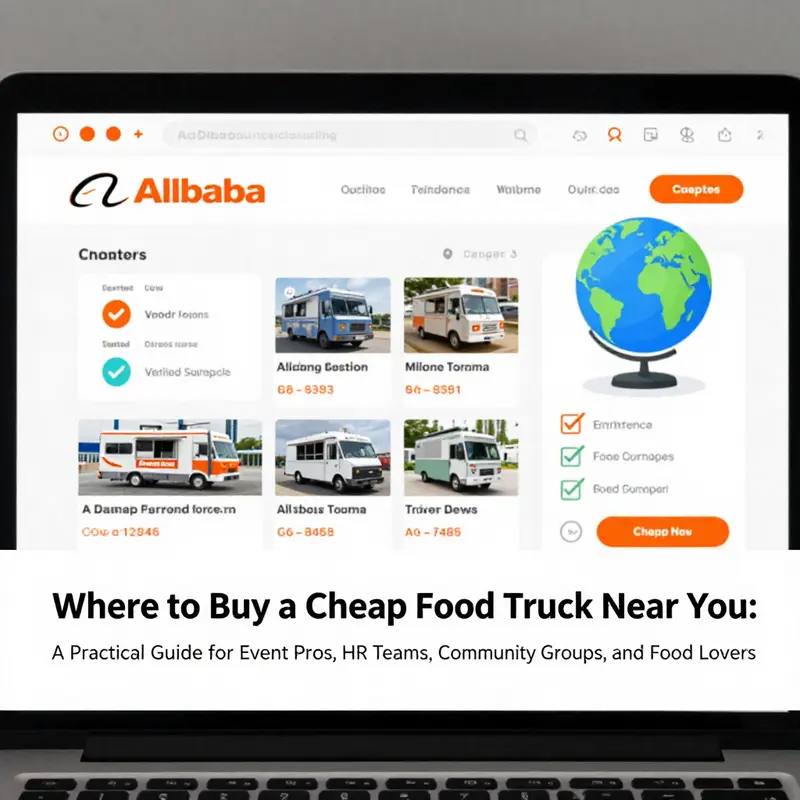
Finding a food truck near you that doesn’t break the bank is less about the exact street you’re on and more about the routes you’re willing to travel to reach a factory floor. In this chapter, the map broadens from a single local seller to a global marketplace that can dramatically widen your options without sacrificing reliability. The idea of buying a cheap, mobile kitchen close to home is appealing, but the reality is that the best bargains often come from direct-from-factory sourcing, where price is driven down by scale, efficiency, and streamlined supply chains. The challenge is not only to locate a bargain but to secure a unit that will stand up to daily use, meet regulatory standards, and serve your unique menu. Platforms that connect buyers directly with manufacturers—without the usual intermediaries—offer that combination of breadth, customization, and potential savings. One platform in particular has become a focal point for many aspiring food-entrepreneurs who want to pay less while still getting a robust, fully functional kitchen on wheels: the global sourcing marketplace that specializes in mobile food service vehicles. This is not merely a story about cheaper carts; it’s a narrative about smarter procurement, careful vetting, and thoughtful design choices that turn a low-cost shell into a reliable, revenue-generating asset.
To begin with, the core appeal of sourcing from a global marketplace is straightforward. You gain direct access to manufacturers and suppliers who produce food trucks, trailers, and related mobile kitchens at scale. That means you can bypass the markups often added by middlemen, distributors, and local brokers. When price pressure is high, direct factory pricing becomes a powerful lever. It’s especially compelling for people who are flexible about model types and willing to customize, because many factories maintain a wide portfolio of designs—from compact carts designed for high-traffic urban spots to larger, fully equipped trucks meant for set locations with a steady customer flow. The practical result is that you can often find options that would be unaffordable if you were shopping only within your city or country. The cost advantage is particularly pronounced when you review basic, entry-level configurations that still provide a functional kitchen setup. A core takeaway here is that cheap does not have to mean flimsy. With the right supplier and the right standards, a budget-conscious buyer can obtain a vehicle that remains compliant, durable, and scalable as business grows.
A large portion of the value in global sourcing comes from the breadth of customization that factories can offer. A basic shell can transform into any number of specialized formats, from a compact burger bar to a niche concept that serves a signature dish with a small yet efficient kitchen crew. You can tailor the interior layout, exterior branding, and equipment lineup to match your concept, location, and workflow. For example, you might want to prioritize a taller exhaust system for certain cooking methods, or you may require a particular refrigeration configuration for perishable ingredients. You may also want to add features like a built-in handwashing station, an additional bathroom, or a branded generator to ensure you can operate in areas with limited infrastructure. Every customization adds to the purchase price, but the right balance between core equipment and selective upgrades can significantly impact long-term profitability. In many cases, factories also offer design drawings and installation support as part of the package, sometimes even before a purchase is formalized. That kind of support can save time and reduce project risk, especially for first-time buyers who don’t have in-house design or project management resources.
The pricing spectrum in this space is surprisingly broad, reflecting both the diversity of configurations and the geographic spread of manufacturers. For buyers who are price-focused, there are practical options that start with a lean mobile cart or trailer designed for quick-service concepts. The most affordable configurations can begin in the low-thousands, while more fully equipped and larger units hover in the mid-range. When we translate this into concrete figures, a simple, mobile food cart or compact trailer can sometimes be found around the $1,700 mark. This price point typically represents a basic shell with minimal kitchen equipment, intended for entrepreneurs who plan to customize heavily or work with a limited initial menu. For a step up to a fully functional mobile kitchen—roughly a compact truck or larger trailer with a complete kitchen lineup, including a cooking surface, refrigeration, and basic plumbing—the price range often falls between about $2,600 and $4,500. These figures are not universal; they fluctuate with the level of finish, the type of powertrain (electric versus gas), and the degree of customization. The more premium models—double-decker layouts, luxury finishes, or specialty configurations—can run significantly higher, frequently in the $9,000 to $11,000 band, especially when tailored with branded graphics and high-end equipment. While these numbers illustrate that there are affordable paths into mobile food service, they also underscore a crucial point: the cheapest option is rarely the best option for a serious business. The long-term cost of ownership, reliability, and compliance factors can quickly shift the calculus away from upfront price toward total cost of ownership.
In practice, then, the route to a cheap yet reliable purchase often involves careful screening of suppliers and a clear plan for due diligence. The marketplace operates best when buyers treat it like a mini-sourcing project rather than a casual shopping expedition. Start by identifying suppliers with strong credentials—verification statuses that indicate some form of due diligence has been completed by the platform. Look for suppliers that offer a Trade Assurance program or similar buyer protections. These are not guarantees of perfection, but they do add a layer of risk management that is especially valuable for first-time buyers. A credible supplier will be willing to provide detailed specifications, high-resolution photos, and, ideally, video documentation of the installed equipment and the finished unit. It’s reasonable to request copies of certifications such as safety and quality marks, which, in international markets, commonly include CE and ISO standards. Certificates are not only a sign of quality; they also help ensure that a unit will pass import inspections and operate safely in your jurisdiction.
Beyond certifications, a thoughtful buyer will request a sample or a small batch of information before committing. The moment you request a drawing, layout plan, or a bill of materials, you’re testing not just the product but the supplier’s readiness to collaborate. A well-organized supplier will respond with precise dimensions, equipment lists, electrical and plumbing schematics, and a clear timeline for production and delivery. If the vendor can’t provide these details promptly, it’s a red flag, not a reason for hesitation. The goal is to minimize surprises, especially when you’re coordinating with local permitting offices or health and safety inspectors who will scrutinize your final installation. A transparent vendor who communicates in a timely and professional manner is a signal that you’re dealing with a partner rather than a gamble.
The Trade Assurance framework that Alibaba offers—though it cannot guarantee flawless execution—acts as a financial safety net that helps ensure the product delivered matches the description and arrives on schedule. This is particularly valuable when you’re buying from overseas and logistics timelines are uncertain. To maximize protection, align your payment terms with the supplier’s milestones, such as upfront deposits for design development and staged payments upon completion of specified production milestones. Throughout the process, keep records of all communications, specifications, and agreed-upon changes. Clear, written records protect both sides and provide a trail that can be referenced if disputes arise.
Another practical strategy is to leverage design drawings and installation support that many suppliers offer, often at little or no extra cost. A preliminary design drawing can reveal potential inconsistencies between envisioned layout and actual production capabilities. For instance, a design may look attractive visually but could be impractical when you consider the workflow, such as the distance between the cooking line and the handwashing station, or the placement of refrigeration units relative to heat sources. Early design iterations can prevent costly post-production modifications and delays once the unit lands in your shop or at your chosen selling location. In some cases, suppliers will even provide partial-installed works, enabling you to experiment with the space and determine if you need further adjustments before the full build-out is complete. The freedom to iterate on design, with factory input and professional drawings, often translates into a more reliable final product—especially when operating under the tight schedules of seasonal demand or festival calendars.
Vetting suppliers is not a one-and-done step. It requires ongoing, open communication and a willingness to walk away when a partner signals unreliability. Good communication is a predictor of on-time delivery and post-sale support. If a supplier cannot respond within a reasonable window or becomes evasive about critical specifications, you have every reason to pause and reassess. You should also seek references from other buyers who have completed transactions with the vendor. A credible supplier will have a track record and will not hesitate to put you in touch with prior customers. While it is not always possible to verify every claim, gathering multiple viewpoints can illuminate patterns of behavior—whether a vendor consistently delivers on time, honors warranty commitments, or offers meaningful after-sales support.
The practical impact of all this is that buying a cheap food truck near you is not a matter of stumbling upon a single bargain. It’s about constructing a pathway that begins with global access to manufacturers and ends with a reliable, locally operable kitchen on wheels. The key steps—define your concept, shortlist suppliers with verified status, request detailed specifications and certifications, review design drawings, and use the platform’s protection features—create a disciplined approach that reduces risk while preserving the potential for meaningful savings. As you work through these steps, you may find that a local talk with a zoning official or a local permitting consultant helps to align your purchase with the regulatory road map. This alignment is essential because a unit’s ability to meet health and safety standards is as critical as its ability to cook great food. The last thing you want is a bargain that cannot be deployed due to compliance gaps, additional retrofits, or extended downtime.
One practical thought to keep in mind is the relationship between upfront cost and long-term value. A unit that costs less but requires heavy customization, frequent maintenance, or complex installations can become more expensive to own and operate over time. Conversely, investing in a slightly higher-priced base unit with a robust power setup, durable chassis, and modular components can yield substantial savings in maintenance and expansion. The trade-off is not between cheap and expensive alone; it is about choosing the right balance of initial investment, reliability, and adaptability to future menu changes or location shifts. A flexible interior, for example, can accommodate changes in offerings without a complete rebuild, preserving the value of your initial purchase. The seller that recognizes this balance often becomes more than a vendor; they become a partner who helps you scale as your business grows—a valuable advantage that justifies a modest premium upfront.
In this broader view, Alibaba and similar marketplaces can be gateways to near-me opportunities only when paired with a disciplined sourcing strategy. The near-me aspect emerges not from proximity alone but from how you translate a global supply network into a practical on-the-ground operation. You may decide to locate a unit that is manufactured abroad but delivered and installed locally, so you can begin operations quickly while preserving the option to travel for additional components or upgrades as your business evolves. This approach aligns with the idea of turning a budget into a stepping-stone: a starting point that becomes a foundation for a growing, resilient mobile food business. For readers who want to explore this path further in a structured way, the following action steps can help shape your next move.
- Clarify your concept and a realistic budget that includes delivery, installation, and necessary permits. A well-defined concept makes it easier to select layout configurations that optimize workflow and reduce bottlenecks during service.
- Build a short list of suppliers who offer verified status, clear specifications, and responsive communication. Reach out with a concise but detailed inquiry that includes your intended layout, power needs, water and waste provisions, and cooling requirements.
- Request design drawings and a detailed bill of materials. Compare these documents across several vendors to identify potential discrepancies and to gauge which supplier can deliver the most realistic, scalable solution.
- Use Trade Assurance and payment milestones to manage risk. Prioritize vendors who can provide a reliable track record and transparent processes for milestones, delivery timelines, and warranty terms.
- Review potential after-sales support and warranty arrangements. A strong post-sale relationship can dramatically reduce downtime and extend the life of your investment.
- Plan for local compliance early. While the initial purchase is global, your final installation, cartography of the service area, and health code alignment will happen locally. Engaging with a local consultant or health department early in the process can avert delays and ensure you pass inspections on the first attempt.
As you incorporate these steps, you’ll notice a recurring theme: the best cheap food truck near you is less about chasing the lowest price and more about finding a reliable, adaptable partner who can deliver a solid platform for your culinary concept. The goal is to strike a balance between price and performance, and to do it with a supplier who can translate your vision into a working system, not a stack of unconnected parts. If you are exploring the right model to pursue, you may want to study the broader conversations around “Choosing the right food truck model” to understand how layout, equipment choices, and service flow interact with cost. You can explore that guidance here: Choosing the right food truck model.
Ultimately, the journey to a cheap but dependable food truck near you begins with a willingness to examine the supply chain as a strategic asset. It requires a discerning eye for documentation, a cautious stance on promises, and a collaborative mindset with suppliers who view your success as their success. When done well, you end up with more than a low price; you gain a flexible platform that can support a sustainable, scalable food business. The global marketplace is not a one-way street to cheap hardware; it is a dynamic, multi-layer marketplace where design, engineering, logistics, and local compliance converge. The result is a practical, financially sensible route to turning a mobile-kitchen dream into a thriving street-food reality.
External reference for further exploration: https://www.alibaba.com/trade/search?fsb=y&IndexArea=product_en&CatId=&SearchText=food%20truck
Chapter 4: Finding a Cheap Food Truck Near You Without Sacrificing Quality—Customization, Compliance, and the Real Cost of Ownership
When you begin the quest to purchase a food truck that won’t break the bank, the instinct to equate cheap with low value is a trap. The market today offers a spectrum from compact, fully equipped mobile kitchens to basic, light-duty carts. The key is to shift the focus from sticker price alone to the total value you receive: how quickly you can start serving, how reliable the setup is, and how smoothly you can scale as demand grows. In practical terms, cheap often comes in at around the mid-range of the spectrum, with options that can be customized to fit your cuisine, location, and branding without forcing you into a rigid, one-size-fits-all design. Prices can begin at modest levels for customized trailers, sometimes listed around a few thousand dollars, depending on the configuration and vendor. That base price is never the full story, but it can be a doorway to a viable first step for entrepreneurs testing ideas or launching smaller operations in high-traffic neighborhoods or festivals.
What makes a cheaper option compelling is not merely the absence of extras but the presence of intelligent design choices. Vendors today frequently offer customization pathways that let you tailor key components to your concept. You can choose color schemes that echo your branding, opt for interior layouts that maximize flow for cooks and cashiers, and request equipment packages suited to burgers, BBQ, fried chicken, coffee service, or ice cream. Even round or curved cart shapes can be designed to stand out in a busy lineup while preserving efficiency. The ability to customize without escalating costs is a potent advantage. It means you can craft a distinct presence on the curb or at events while staying aligned with a realistic budget. In practice, a buyer might start with a mobile kitchen that includes a compact, efficient layout and then add or upgrade pieces over time as revenue supports expansion.
These options are often facilitated by online wholesale marketplaces that connect buyers with verified manufacturers and distributors. The appeal is obvious: you can compare multiple vendors side by side, request design drawings, and negotiate details such as refrigeration, handwashing stations, or branding elements in a single conversation. The range of configurations means you can test different concepts—hot dogs and pretzels, tacos and bowls, or sweets and beverages—without committing to a single, fixed template. The goal is not to chase the lowest initial price alone but to identify a design that delivers reliability and compliance while still leaving room for future refinements as your operation grows.
As you weigh options, it becomes essential to keep sight of the regulatory landscape. Compliance is not a luxury feature; it is the backbone of sustainable operation. Reputable suppliers often align their builds with international safety and quality standards, including certifications such as CE or other recognized safety benchmarks. For anyone shipping equipment across borders, particularly from overseas vendors, these certifications are not just bureaucratic boxes to tick. They influence insurance terms, permit eligibility, and the likelihood of avoiding costly fines or mandatory unit shutdowns. In other words, the legality of your mobile kitchen is a component of the value proposition itself. When you review a potential unit, insist on documentation that demonstrates compliance with applicable standards and ensure the unit can be inspected or certified by local authorities if required. The peace of mind gained from solid documentation can smooth your path through inspections, licensing, and insurance—areas where shortcuts can prove far more expensive over time than the initial saving on the price tag.
Even with strong compliance, the total cost of ownership (TCO) remains a crucial framework for decision making. The upfront price is only the beginning. Transportation, installation, and any required site work can add significantly to the first bill. Permits and licenses vary by city, county, and state, and the process itself can have a predictable lead time that affects your go-to-market plan. Insurance is another ongoing line item shaped by the vehicle class, the equipment you carry, and your operating hours. Beyond these, ongoing costs include fuel or electricity, maintenance, routine cleaning, and consumables. The maintenance burden is not a cosmetic concern; it translates directly into downtime, which translates into lost sales. A cheaper unit that requires frequent repairs or complex maintenance can end up costing more over a year than a better-built unit with a higher purchase price but fewer downtime episodes.
One practical way to think about TCO is to model the lifecycle of your truck from purchase through maturation. Start with the base price and add estimates for transportation, crating, initial installation, and any local compliance fees. Then layer in recurring costs: insurance, permits, fuel, routine maintenance, and restocking of essential items like fuel, gas, or electricity supplies, depending on your power source. Don’t neglect staffing: a compact kitchen can operate with a minimal crew during off-peak times, but as seats, lines, or events grow, you may need more hands. A fully loaded, well-functioning truck can deliver better uptime and higher average tickets, which reduces the per-unit overhead and accelerates payback on the initial investment. It’s a balancing act—seek genuine efficiencies that fit your menu and service model rather than chasing the idea of a rock-bottom price.
To navigate this balancing act effectively, many buyers turn to the ecosystem that supports wholesale and export-oriented manufacturing. A common route is to explore offerings from producers who can deliver customized configurations tailored to your food concept, while also providing design drawings and installation support. For instance, a complete package might include a full kitchen with food-grade appliances, integrated ventilation, safe electrical and plumbing layouts, and branding options that help you stand out without adding a lot of complexity. The advantage of this approach is that you can request a one-stop solution where the design, build, and some after-sales services are coordinated in one place. This can dramatically reduce the friction that sometimes accompanies multi-vendor purchases, such as misaligned specifications, inconsistent build quality, or incompatible fittings between the kitchen and the vehicle body. When you work with a vendor that can provide a cohesive, well-documented build, you gain momentum in the project and reduce the risk of unexpected snag-ups during installation or operation.
If you need a mental model to compare offers, consider the distinction between a “production-ready” unit and a “build-it-yourself-light.” A production-ready unit is typically stocked with a complete kitchen package and comes with a defined footprint, electrical load, and water system. It’s often sold with warranties, installation support, and documentation suitable for quick permitting and insurance underwriting. The build-it-yourself-light option is more modular; it gives you a framework to assemble pieces in stages, perhaps starting with a minimal kitchen and gradually adding equipment as cash flow improves. The latter path can be appealing if you want to keep initial cash outlay as low as possible, but it usually entails longer lead times, more on-site assembly, and greater management of multiple vendors. Either path can work; the choice hinges on your immediate cash position, your appetite for project management, and your tolerance for risk. In both cases, the goal is to arrive at a unit that fits your concept, can be shipped or moved to a desired location, and is compliant with local and state rules.
For readers who want direct pointers on where to begin, the best starting moves are pragmatic and focused. First, define your core menu and service model. A hot-dog stand requires different kitchen layouts and ventilation than a coffee cart or a taco truck. Second, map your target operating locations—bridges, markets, festival circuits, or a fixed street-side pitch—and research what permits, parking rules, and health department expectations apply there. Third, translate your concept into a rough equipment list and electrical load, then use that to filter vendors who can meet those specs within your budget. Finally, compare the total package: price, customization options, delivery timelines, certifications, warranty terms, and after-sales support. This approach keeps the process grounded and oriented toward real-world outcomes rather than chasing a dream unit that may not suit your cityscape or economics.
As you narrow your choices, it’s worthwhile to reflect on the intangible but real advantages of working with vendors who can demonstrate strong export or cross-border experience. Such partners are often better equipped to translate your local requirements into a build that travels well, withstands the rigors of travel and varied climates, and still slots into the legal and logistical realities of mobile vending. They can also provide design drawings at no or low additional cost, which helps you visualize and refine the final layout before committing to a build. The confidence that comes from a well-documented, thoughtfully designed unit reduces the risk of costly changes after production begins and improves your ability to secure permits and financing. The combination of customization, compliance, and a careful assessment of the total cost of ownership is where you transform the notion of “cheap” into a meaningful, sustainable competitive advantage. It is not merely about saving pennies on the purchase price; it is about ensuring that the savings you do achieve contribute to a durable, scalable, and legally sound operation.
If you want a concrete direction on how to choose the right model for your specific goals, consider exploring more on the topic of selecting the right food truck model. That resource dives into the decision framework for different configurations and how to align them with your menu, location strategy, and growth plan. You can read more here: Choosing the Right Food Truck Model.
In summary, a cheap food truck near you can be a smart entry point if you approach it with a clear plan for customization, compliance, and total cost of ownership. The real value lies in the unit’s ability to support your business, not just its initial price tag. By prioritizing a well-designed kitchen, solid certifications, reliable post-sale support, and a realistic projection of ongoing costs, you position yourself to turn a modest investment into a thriving, repeatable model. The road from idea to launch is rarely a straight line, but with careful vendor selection, a clear menu and location strategy, and a thorough read on regulatory obligations, you can flatten the curve between initial outlay and sustained revenue. The growing ecosystem of online marketplaces and export-capable manufacturers helps keep this pathway accessible, even for first-time buyers who are mindful of cash flow and risk. And when you map all of these elements together—the customization potential, the compliance assurances, and the true bottom line—you begin to understand why the cheapest option can sometimes deliver the strongest long-term value, provided you discipline the process and anchor your decisions in a rock-solid plan.
External resource: https://www.alibaba.com/product-detail/Wholesale-Price-Mobile-Food-Trucks-for-Sale_1600585797124.html
Final thoughts
Affordability in the food truck space comes down to informed choices, realistic expectations, and a solid sourcing strategy. By understanding price drivers, evaluating new and used options with a practical lens, validating Alibaba suppliers, and planning for customization and compliance as part of the total cost of ownership, you can secure a mobile kitchen that fits your budget and your event calendar. The path to a cheap yet capable food truck is not a single sale—it’s a thoughtful sequence of questions, verifications, and design choices that align with your goals, location, and audience. With the right approach, your next gathering can be powered by a reliable, affordable mobile kitchen that elevates the experience rather than drains resources.