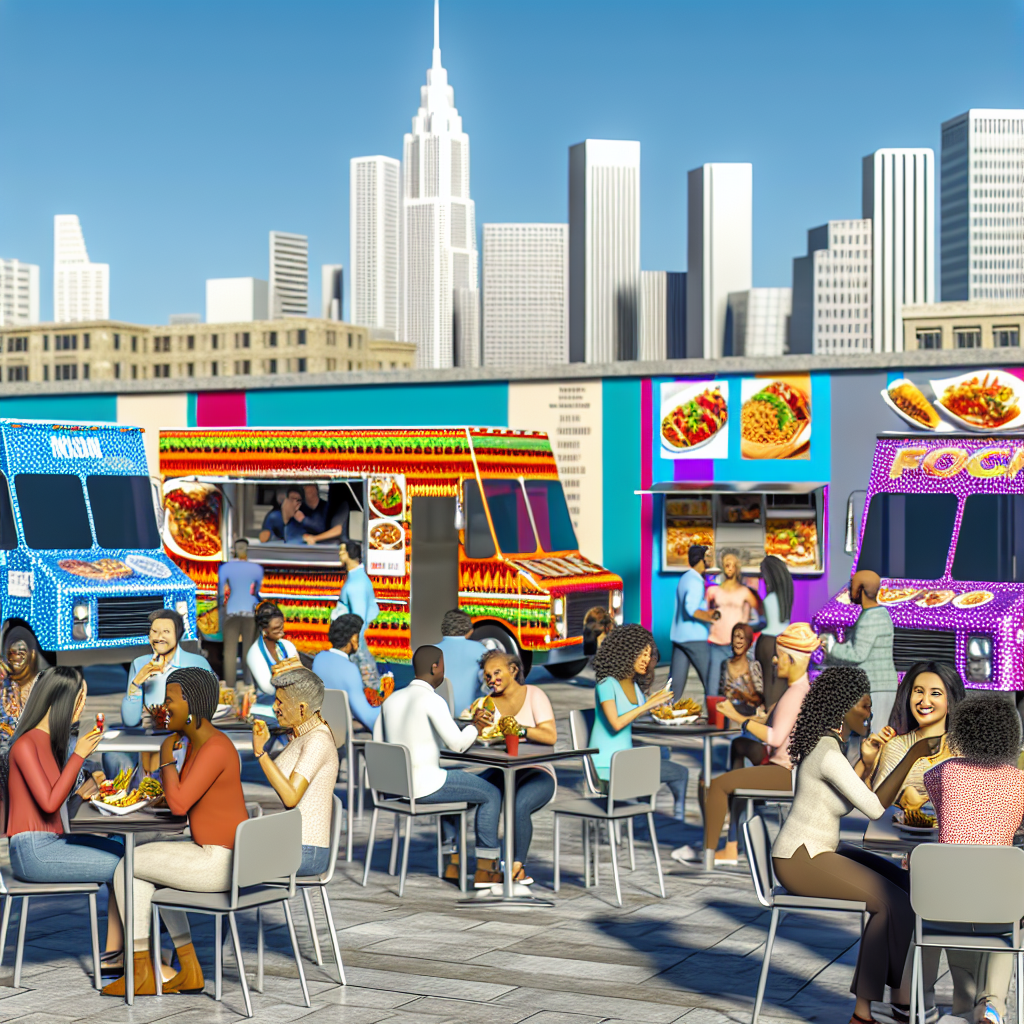
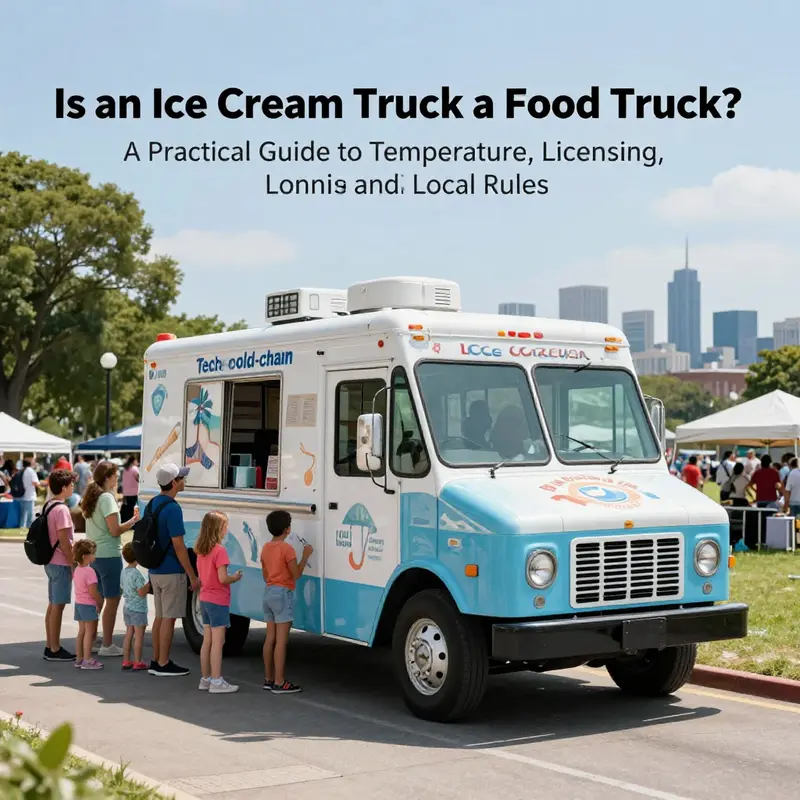
Picture a gleaming ice cream truck cruising into a sunlit plaza, bells jangling, and a line of smiling faces gathered for a quick, cool treat. To event planners, corporate HR teams, local groups, and food enthusiasts, that scene is more than dessert—it’s an opportunity to spark memories, foster connections, and elevate community experiences. But beneath the friendly parade of flavors lies a regulatory landscape that treats ice cream trucks as mobile food vendors with their own special twists. Are they food trucks? In most jurisdictions, yes, they fit the broad definition of a food truck, but the ice-cold mission brings unique expectations around refrigeration, temperature control, and the places where they may operate. This article explores the question through four focused chapters that stay tightly linked to the central idea: ice cream trucks are part of the food-truck ecosystem, yet their temperature-driven operations invite particular standards and policies. We’ll start with the tech heartbeat—the equipment and cold chain that keep ice cream safe and appealing on the road. Then we’ll map licensing and permits, showing how regulations often align with hot-food trucks but sometimes diverge for frozen desserts. We’ll walk through zoning and public-space rules to understand where these mobile vendors can park, when, and in which settings—schools, parks, and events. Finally, we’ll widen the lens to societal, economic, and global perspectives, revealing how culture and policy shape this sweet mobility around the world. By the end, planners and partners will have a practical framework to navigate this delicious, dynamic sector with confidence.
null
null
Cold on Wheels: Ice Cream Trucks and the Mobile Food Regulation Landscape
On a busy street, the chime of a wagon and the hum of a refrigerated case announce more than a treat. They mark the arrival of an ice cream truck, a familiar presence in neighborhoods and at events. Beneath the nostalgia lies a regulatory reality: safety, licensing, and the cold chain. Is an ice cream truck a food truck? In most places the answer is yes, but with rules tailored to temperature control and frozen storage. The big picture is about how agencies apply general mobile food rules to a specialized product. The practical upshot is that ice cream trucks share the same core duties as other mobile vendors—protect the public, ensure safe handling, and provide reliable service—while paying extra attention to refrigeration equipment, temperature logs, and quiet, predictable operations in public spaces. The regulatory map can feel vast, but it coalesces around a few shared themes: licensing as the legal foundation; inspections that verify cleanliness and cold storage; and location rules that balance commerce with community needs. For operators, the path is to build compliance into daily practice rather than treating it as a separate checklist: maintain the cold chain, document maintenance, monitor temperatures, and stay aware of local hours and permit requirements. Finally, resources from state and local health departments and national guidelines offer practical anchors to navigate the specifics wherever the truck travels, from school zones to parks and fairs.
Scoop and Scope: Navigating Zoning, Public Space Access, and Local Policy Variations for Ice Cream Trucks within the Food Truck World
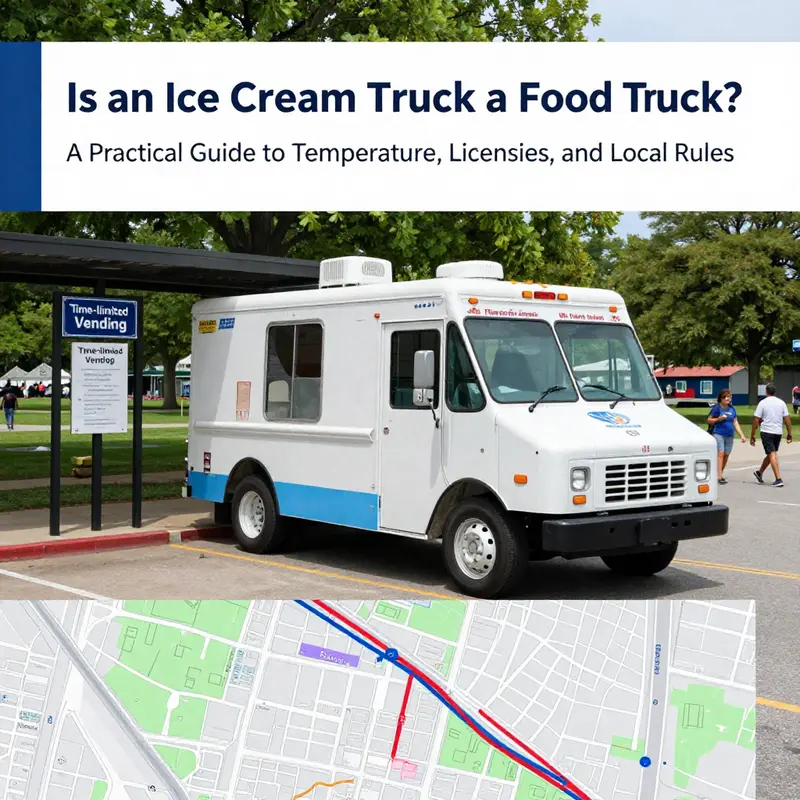
The question is deceptively simple: is an ice cream truck a food truck? In broad terms, most regulatory frameworks will say yes. An ice cream truck is a mobile vendor that prepares, stores, and sells edible goods from a vehicle, often with the same end goal as a traditional food truck—to deliver ready-to-consume fare directly to customers in public spaces. Yet the moment you pull back the curtain, the differences become a guide to the regulatory maze that operators must navigate to stay compliant. Ice cream trucks are not a subtractive variation of the food truck phenomenon; they sit at the intersection of hot kitchen logistics and cold-chain physics. The product they dispense—frozen desserts—demands a different rhythm of operation, a more rigid temperature management, and a set of inspections that places refrigeration at the center of compliance. This distinction matters because it shapes the licensing path, the inspection cadence, and the kinds of certifications a vendor might need. In many areas, the general framework includes a business license, a basic food-handler permit, and approval from the local health department, but the ice cream vehicle is often subject to extra checks that reflect the vulnerable nature of frozen foods. The cold chain cannot be compromised, and this insistence on temperature stability translates into specific equipment standards, spare parts inventories, and documentation requirements that can push a one-truck operation into the realm of a more formal, temperature-controlled institution on wheels.
The regulatory contrast is not merely technical. It reverberates through how communities imagine and regulate a mobile vendor in public space. When the core concern is immediate consumption in open areas—on sidewalks, in parks, at event plazas—the regulators weigh not only food safety but public space impact. Ice cream trucks frequently navigate a narrower corridor of permissible activities than some other food trucks. Their routes may be more transient by design, weaving through neighborhoods, past schools, or into popular gathering spots where families congregate. The need to attract customers with music or a bell, a traditional hallmark of the ice cream truck experience, can trigger additional scrutiny under sound restrictions or local noise ordinances. This is where the regulatory picture shifts from a straightforward “food preparation and sale” model to a social and urban planning concern about traffic flow, pedestrian risk, and the protection of children in school zones. The result is a patchwork of zoning provisions, public-space access rules, and policy variations that can feel inconsistent from one jurisdiction to the next, even though the underlying goal remains protection of public health and safety.
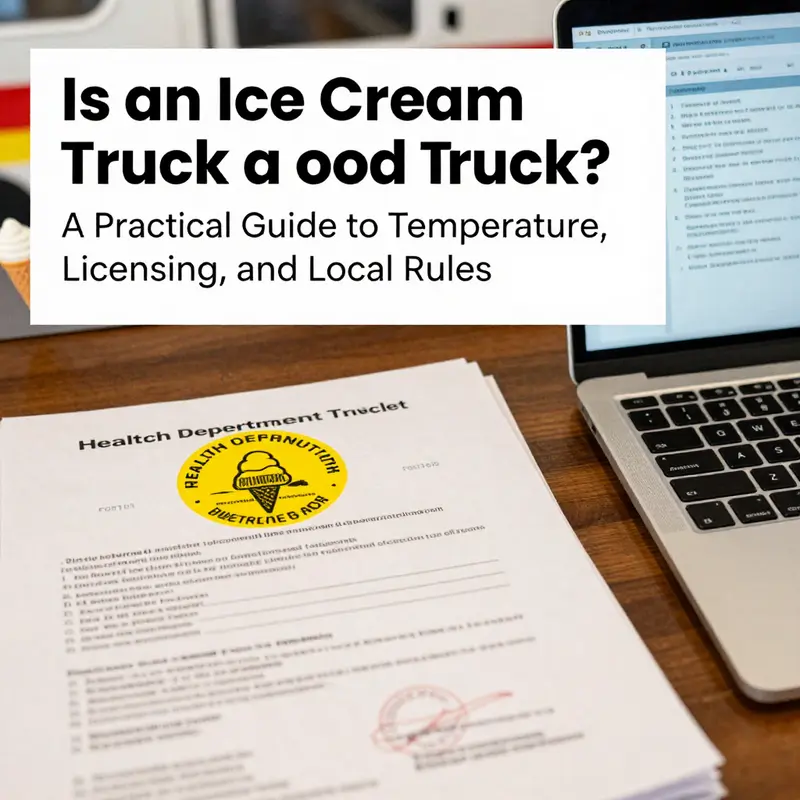
From a licensing perspective, the ice cream truck often shares the same basement-level requirements as other mobile food vendors, yet the surface-level requirements can diverge. The basic permits—business license, health department approval, and food handler credentials—are the entry point. Beyond that, many localities require additional certifications tied to refrigerated transport or frozen-food handling. Some places even create separate registration categories like “frozen dessert vendor” or “mobile dessert vendor” to better track and regulate operations that operate under a more specialized product profile. This specialization is not merely bureaucratic bookkeeping. It reflects practical challenges: maintaining a precise cold chain, preventing moisture intrusion, ensuring that dairy-based products remain within safe temperature ranges, and overcoming equipment failures before a ride ends in a public square at the mercy of temperature swings and weather. Operators rarely eschew the health department; instead, they prepare for a more thorough set of checks, which can include dual-temperature monitoring, calibration logs, and routine equipment inspections that are more frequent than those for many hot-food trucks. When these requirements exist, they shape business plans, driving inventory controls, maintenance schedules, and even the design of the vehicle itself. A vendor who understands this landscape tends to plan for contingencies—spare freezers, backup cooling mechanisms, and robust sanitation protocols—to avoid the kind of compliance breach that can shutter a route mid-season.
Zoning, the public spaces where vendors may stop, and the rules that govern when and where they may operate intersect in telling ways with the ice cream truck’s mission. Zoning laws determine permissible land-use patterns, and for mobile vendors they frequently translate into where a truck may lawfully park and sell. The public-space dimension often hinges on whether a jurisdiction views ice cream trucks as welcome neighbors or as transit elements that disrupt pedestrian flow or contribute to noise and congestion. Some municipalities grant designated spots in farmer’s markets, event venues, or specific commercial corridors, while others restrict unscheduled stops or limit the hours during which a truck can park in particular neighborhoods. The meandering routes that many ice cream trucks enjoy—luring customers with song or a bell and moving on to the next stop—can clash with policies designed to regulate curbside commerce, traffic patterns, and public safety. In practice, this means a vendor may enjoy broad latitude in certain zones while facing prohibitions in others, especially around sensitive spaces such as parks, playgrounds, or near schools during certain hours. The result is a dynamic landscape where the same ice cream truck might be permitted to operate one week in a given district and require permits, route approvals, or even temporary prohibitions the next.
Policy variations across jurisdictions can be particularly vexing for small operators. The literature and practitioner reports point to inconsistencies between what health departments require for temperature control, sanitation, and record-keeping and what traffic authorities demand for curbside access and parking. In some places, the perception that ice cream trucks attract children intensifies scrutiny, prompting stricter rules about where they may stop and during what times. In others, the community embraces the traditional summer ritual of the ice cream truck, creating expedited pathways with friendly policies designed to support small, mobile businesses. This patchwork quality is not merely a nuisance. It shapes business viability, especially for smaller operators who may lack the scale to navigate a labyrinth of permits, inspections, and location-specific restrictions. In such environments, policy scholars have highlighted the tension between regulation that protects public health and regulation that unintentionally suppresses small, mobile business activity. Articles from national outlets have described how such policy inconsistencies can create meaningful barriers to entry and operational sustainability for mobile vendors, including ice cream trucks, emphasizing the need for clearer, more predictable rules that still safeguard safety and urban quality of life.
For operators trying to chart a path through this terrain, the practical path begins with the basics—confirming the regulatory baseline and then layering the ice cream-specific requirements on top. The FDA Food Code provides a model for many state and local reforms and establishes a framework for risk-based controls in mobile vending, including food storage, temperature control, utensil sanitation, and cleanability standards. While local jurisdictions adapt the Code to their realities, the Code offers a consistent benchmark that operators can use to anticipate what regulators will expect. Beyond the federal baseline, local health departments and licensing offices become the actual arbiters of what a specific ice cream truck must do to win approval, obtain permits, and renew those permits year after year. In practice, new entrants often begin by mapping out the regulatory ecology in their city or county: the licensing steps, the inspection cadence, the temperature monitoring requirements, and the zones where operation is permitted or restricted. A highly effective way to approach this is to treat regulation as a dynamic map rather than a checklist. The map changes with public feedback, safety concerns, and shifts in urban planning priorities. The wise operator keeps the map visible and updated, maintaining open channels with the health department and planning staff, and frequently revisiting the city’s public-space rules to anticipate restrictions before they become problems. For those seeking a consolidated overview of how these rules tend to cluster and diverge, a practical resource that gathers the regulatory threads and translates them into actionable steps is worth consulting: Navigating Food Truck Industry Regulations.
The regulatory conversation does not end with compliance basics. It extends into how communities experience ice cream trucks in everyday life. The sensory aspects—the music, the bells, the visual appeal of colorful branding—are part of the business model, but they are also part of the policy conversation. Complaints about noise, perceived targeting of children, or visible congestion can lead to new restrictions, even as communities value the social benefits of these mobile vendors. The balancing act is delicate: regulators seek to protect neighborhoods and schools, while operators seek predictable, fair, and scalable pathways to bring a cherished product to diverse neighborhoods. The guiding principle remains safety and fairness: safety in the sense of rigorous temperature control and sanitation; fairness in the sense of non-discriminatory access to public space and consistent permit processes. In many jurisdictions, that balance is achieved through a combination of standardized health codes, targeted municipal ordnance, and sometimes temporary or conditional permissions during peak seasons. The most successful ice cream truck operations, therefore, are those that anticipate policy variation rather than react to it, building a compliance culture that treats temperature control, sanitation, and documentation as core competencies—not afterthoughts. They also implement proactive public engagement, explaining how they operate, what zones they visit, and when they stop, to minimize friction with residents and regulators alike.
In sum, while an ice cream truck is indeed a type of food truck in a functional and regulatory sense, its path through the urban regulatory landscape is unavoidably textured by the realities of frozen products, temperature risk, and the social dimensions of public space. Vendors who treat their regulatory environment as a living map—staying informed about zoning decisions, permissible stops, and time-of-day restrictions—are more likely to sustain a reliable operation that delights customers without inviting compliance headaches. They understand that the FDA Food Code and state-level interpretations set the baseline, but the local health department, zoning boards, and traffic authorities ultimately translate that baseline into the concrete permissions and constraints that shape each route. For anyone considering entering this world, the best practice is to approach regulation with curiosity and collaboration: study the map, build relationships with the permitting bodies, and design the operational discipline to keep the cold chain intact while weaving through the blocks with minimal disruption. The ice cream truck, after all, travels not just to deliver sweetness but to demonstrate how regulation can harmonize public health, urban life, and small business entrepreneurship in the art of moving food through city streets. As you explore the practical implications, consider the broader ecosystem of mobile vending—the shared challenges that connect ice cream trucks to other food trucks, from parking logistics to permit renewals to community engagement—so that every scoop serves a story of responsible, resilient street-food entrepreneurship. For deeper, practical detail on technical standards and real-world applications, see the detailed article on ice cream truck operations: https://www.craigslist.org/about/icecreamtrucktechinfo.
Sweet Wheels, Clear Standards: Reframing the Ice Cream Truck as a Food Truck in Policy, Economy, and Culture
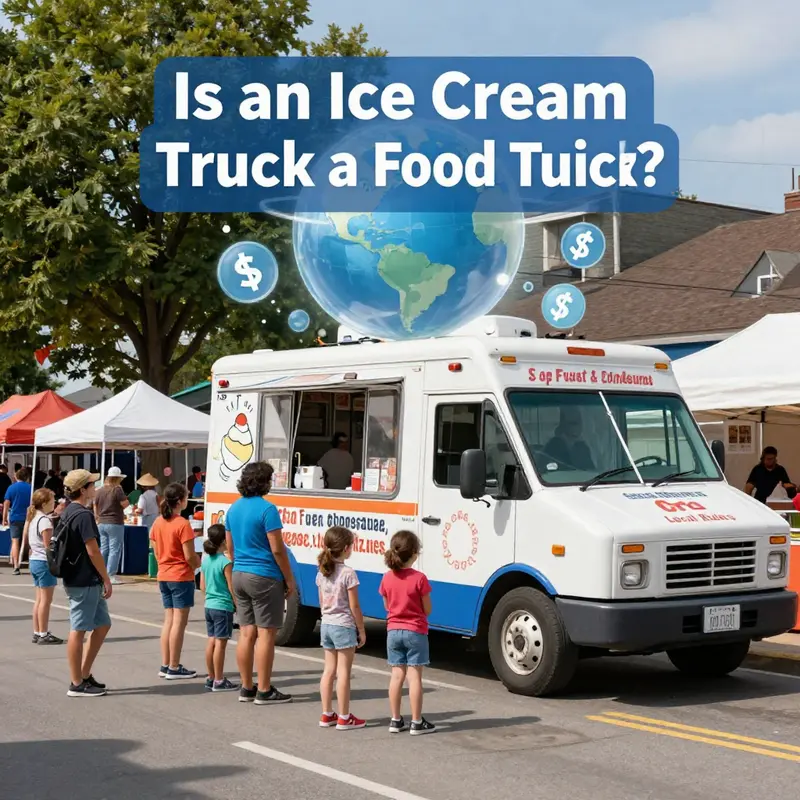
The question of whether an ice cream truck belongs to the broader category of food trucks opens a thread that runs through policy, economy, and everyday life. It is not merely a classificatory exercise; it is an invitation to understand how societies organize, regulate, and value mobile food, and how a single vehicle, humming with a freezer and a chorus of bells, can illuminate the gaps and overlaps in local governance. To uncover the regulatory truth behind this familiar summer staple is to read a map of contemporary food service: a map that shows where convenience and tradition intersect, where the cold chain matters as much as the heat of a skillet, and where the cultural memory of a neighborhood is tied to the rhythm of a truck’s engine and the cadence of its melody. In many places, the ice cream truck fits within the broad umbrella of food trucks. The core logic of mobility, cooking or storage of food for immediate sale, and direct service to customers on the street places an ice cream truck squarely in the same family as other mobile food operations. Yet the differences—specifically its reliance on frozen desserts rather than hot meals—shape regulatory tailwinds: more stringent refrigeration requirements, tighter temperature controls, and specialized inspections that keep products safe when the clock runs down on a summer afternoon.
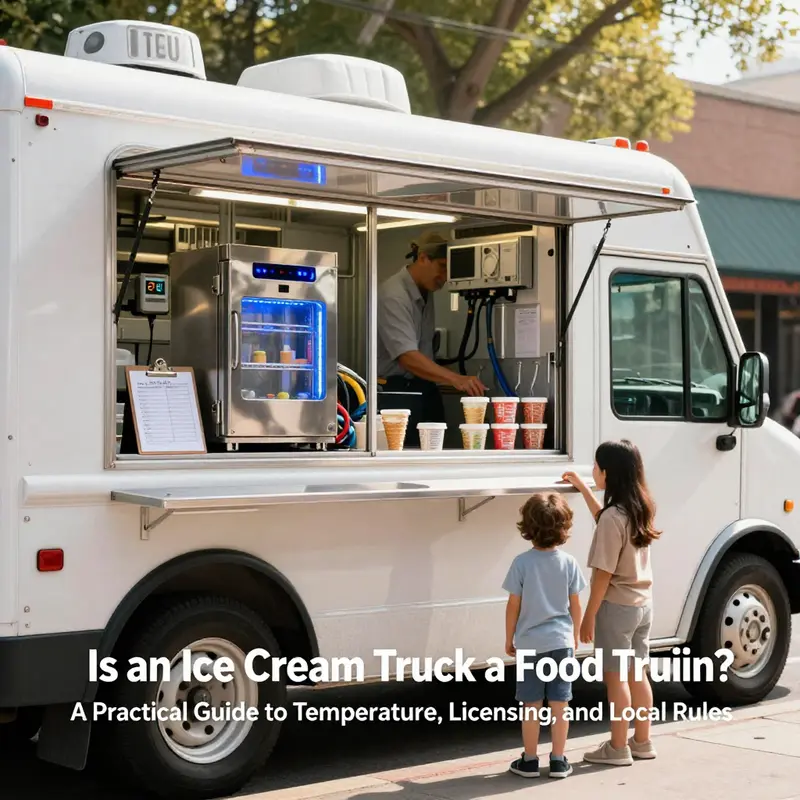
A practical rule of thumb, echoed in regulatory frameworks across jurisdictions, is that a food truck is any vehicle used to prepare, store, and sell food for immediate consumption. Ice cream trucks embody that purpose in its purest form. The core activities are the same: prepare a product, keep it within safe temperatures, and sell directly to passersby who arrive with a sense of urgency and a craving for something sweet. But the ice cream truck’s unique product profile—frozen desserts that must remain in a tight cold chain—means health and safety standards often tilt toward refrigeration, temperature monitoring, and the reliability of freezer equipment. This distinction does not revitalize a separate label so much as shape the regulatory lens through which the vehicle is viewed. The effect is practical: inspectors will scrutinize the integrity of the freezer, the accuracy of thermometers, and the chain of custody that guarantees the product remains within safe temperatures from the moment it is produced to the moment it lands in a cone or a cup.
The licensing landscape follows this same pattern. In many places, the baseline permits for ice cream trucks align with those for other mobile vendors: a business license, a food handler’s permit, and approval from the local health department. Yet the ice cream truck can also require additional or different certifications tailored to cold storage and frozen food handling. Some jurisdictions categorize ice cream operations under a distinct umbrella such as frozen dessert vendors or mobile dessert vendors. This isn’t necessarily a devaluation of legitimacy; it is a refinement that helps government agencies target specific risks associated with frozen products. The result is a licensing ecosystem that accommodates both the familiar cadence of a neighborhood ice cream stroll and the precise, sometimes meticulous, oversight that frozen foods demand. In spaces where schools or parks are involved, or where parks and playgrounds attract particular scrutiny, operators may encounter heightened oversight that tightens registration, inspection frequency, or location-based permissions.
Where regulation meets street practice, the choreography of operations becomes crucial. Zoning laws, parking rules, and designated public spaces create a stage on which the ice cream truck performs. And because music is part of the experience—the jingle that signals a passing cart and draws families out of shaded porches—cities sometimes regulate when and where the music can play. Noise concerns, traffic considerations, and the target demographic—children, families, students in schools—shape where a truck can park and for how long. These constraints illustrate why the ice cream truck is a mobile food business with its own set of stage directions. It is not simply a kitchen on wheels; it is a small, regulated ecosystem that operates within broader urban policy frameworks. The music, the cones, the refrigeration unit, and the seasonal cadence of operations converge to create a distinctive regulatory profile that sits on the boundary between hospitality and municipal governance.
Culturally, the ice cream truck embodies a social ritual as recognizable in the United States as it is in many other Western settings. The image of a truck pulling into a neighborhood on a warm afternoon, bells ringing, children running toward the curb, is a shared memory that crosses generations. This aligns with a broader cultural concept of food trucks as mobile kitchens delivering food and beverages to consumers on the go. The Cambridge Dictionary, which defines a food truck as a mobile operation that cooks and sells food, helps anchor this perspective: the category of food trucks is defined not by the precise menu but by the mobility and the intent to serve ready-to-eat foods from a vehicle. Ice cream, as a frozen offering, fits within that concept while also highlighting how the method of preservation shapes social interaction: the ice cream truck is not just a seller of sweets but a temporary social hub that arrives at playgrounds, beaches, and neighborhood corners. That cultural legitimacy—an emblem of communal summer happiness—strengthens the case for viewing ice cream trucks as integral players in the broader ecosystem of mobile food.
Economically, the ice cream truck sits comfortably within the same business logic that fuels many other food businesses on wheels. The economics of temporary storefronts, the lean overhead compared with brick-and-mortar operations, and the potential for flexible location strategies create a compelling value proposition. The model benefits from the ability to reduce fixed costs and pivot to high-demand locales, a dynamic that has attracted a robust market for mobile food equipment. As of January 2026, market listings illustrate that fully equipped food vans and mobile kitchens—including those specialized for ice cream—can be purchased starting at about three thousand dollars. While price ranges vary with equipment quality, branding, and technology, the core takeaway is clear: the ice cream truck is a mature and accessible node in the mobile food economy. The vehicle becomes a platform not just for frozen desserts but for branding, customer engagement, and seasonal revenue that can scale with community appetite and local events. The ability to offer variations—soft serve, popsicles, novelty cones, or themed offerings—further demonstrates how ice cream trucks participate in market segmentation just as traditional food trucks do. This economic flexibility also makes them a practical entry point for aspiring entrepreneurs who want to test the water before committing to a permanent storefront. In many communities, this is how culinary entrepreneurship begins: with a simple menu, a recognizable vehicle, and a strategy to locate where people gather.
Globally, the mobile dessert phenomenon takes shape in many forms that echo the ice cream truck’s core logic while adapting to local tastes, climates, and regulatory climates. In some regions, the American-style ice cream truck with its jingling melody has inspired local iterations—desert carts, gelato wheels, or shaved ice vehicles—that share the same purpose: deliver a cold indulgence to people who are ready to enjoy it in public spaces. In other contexts, mobile vendors serve frozen desserts in formats that reflect regional favorites, such as gelato carts in Europe or shaved ice routes in parts of Asia. Japan’s approach to mobility, for example, includes automated and semi-automated vending and compact mobile carts that bring both novelty and familiarity to crowded urban neighborhoods. This global mosaic of practice underscores a broader reality: the mobile dessert economy is not a single model but a family of practices that adapt to local governance, consumer expectations, and infrastructure. The existence of standardized, modular mobile kitchen units in supplier markets further supports the idea that the ice cream truck is not a marginal player but a globally integrated component of the mobile food supply chain. This international diffusion speaks to a shared understanding that the essence of food trucks—mobility, immediacy, direct service—translates across borders, even as the details of regulation and operation shift with local conditions.
If one reads the regulatory landscape carefully, the conclusion emerges with clarity: an ice cream truck is a type of food truck, even if it wears a slightly different regulatory hat in some places. The classification is practical, widely recognized, and deeply embedded in how communities meet social needs and economic opportunities. The societal affection for ice cream trucks—an element of cultural memory and shared experience—helps ensure that this vehicle remains a familiar and valued part of the urban and suburban landscape. The economic logic reinforces its viability as a business model, capable of capitalizing on the iconic appeal of the product and the flexibility of mobile operation. The global perspective reminds us that the ice cream truck is one node in a larger, interconnected world of mobile desserts, each adapting to its locale while maintaining the core promise of a simple, delightful treat delivered with speed and care.
In practical terms, this means regulators, entrepreneurs, and communities can approach the ice cream truck with a unified gaze while remaining attentive to local nuances. For operators, it means preparing for a licensing pathway that may mirror other food trucks but with extra emphasis on refrigeration reliability, temperature monitoring, and the handling of frozen products. It means planning for potential site restrictions near schools or in neighborhoods where noise and traffic are living concerns. For communities, it means recognizing the ice cream truck as more than a commodity; it is a social and economic actor that contributes to neighborhood vitality, supports small business, and introduces a portable form of public pleasure. For policymakers and scholars, it provides a case study in how regulatory systems balance uniform definitions with targeted safeguards, ensuring food safety without stifling mobility and enterprise.
On the practical front, those who want a deeper dive into how these regulations are navigated can explore the broader landscape of policy and compliance: navigating food-truck industry regulations. This resource helps illuminate the steps, considerations, and best practices that shape successful and responsible mobile food ventures. It also serves as a bridge to the kind of standards that the FDA Food Code embodies at a national level, while remaining mindful that state and local rules will vary. Consideration of such frameworks reveals a shared aspiration: to enable the joy and convenience of mobile food while preserving public health and urban order. In that sense, the ice cream truck is not a marginal anomaly but a culturally resonant and economically viable member of the food truck family.
For readers who want to explore further how these standards play out on the ground, the following internal resource offers practical guidance aligned with the themes discussed here: navigating food-truck industry regulations. The chapter you have just read synthesizes these ideas into a narrative that connects social memory, market realities, and regulatory logic. In the chapters that follow, the discussion will turn toward how operators translate this understanding into strategic decisions—equipment choices, licensing timelines, and location strategies that ensure the ice cream truck remains a welcome guest in communities rather than a source of contention. The overarching takeaway is simple: the ice cream truck is a food truck by design, and its regulatory journey reflects the broader dynamics of mobile food governance, tempered by the special care required to maintain the cold chain and the public’s enduring appetite for a simple, joyful treat.
External resource: For foundational standards that guide mobile food vending at a national level, consult the FDA Food Code: https://www.fda.gov/food/fda-food-code
Final thoughts
Is an ice cream truck considered a food truck? In most jurisdictions, yes—but with frozen-dessert protections that shape equipment choices, maintenance, and inspections. The four lenses explored here show that temperature control is not just a convenience; it is a public health requirement that informs the choice of refrigeration systems, monitoring practices, and field hygiene. Licensing and permits map the path vendors must follow to operate legally and safely, while zoning and public-space rules define where and when a truck can serve. Finally, societal, economic, and global perspectives remind us that ice cream trucks are more than moving stalls—they are community builders, local employers, and drivers of cultural exchange that adapt to different regulatory climates. For event planners, HR teams, and community organizers, embracing these dimensions means smoother operations, better guest experiences, and responsible growth for mobile dessert vendors. The result is a sweeter, safer, and more connected public space where ice cream on wheels continues to delight while upholding shared standards of health, equity, and collaboration.