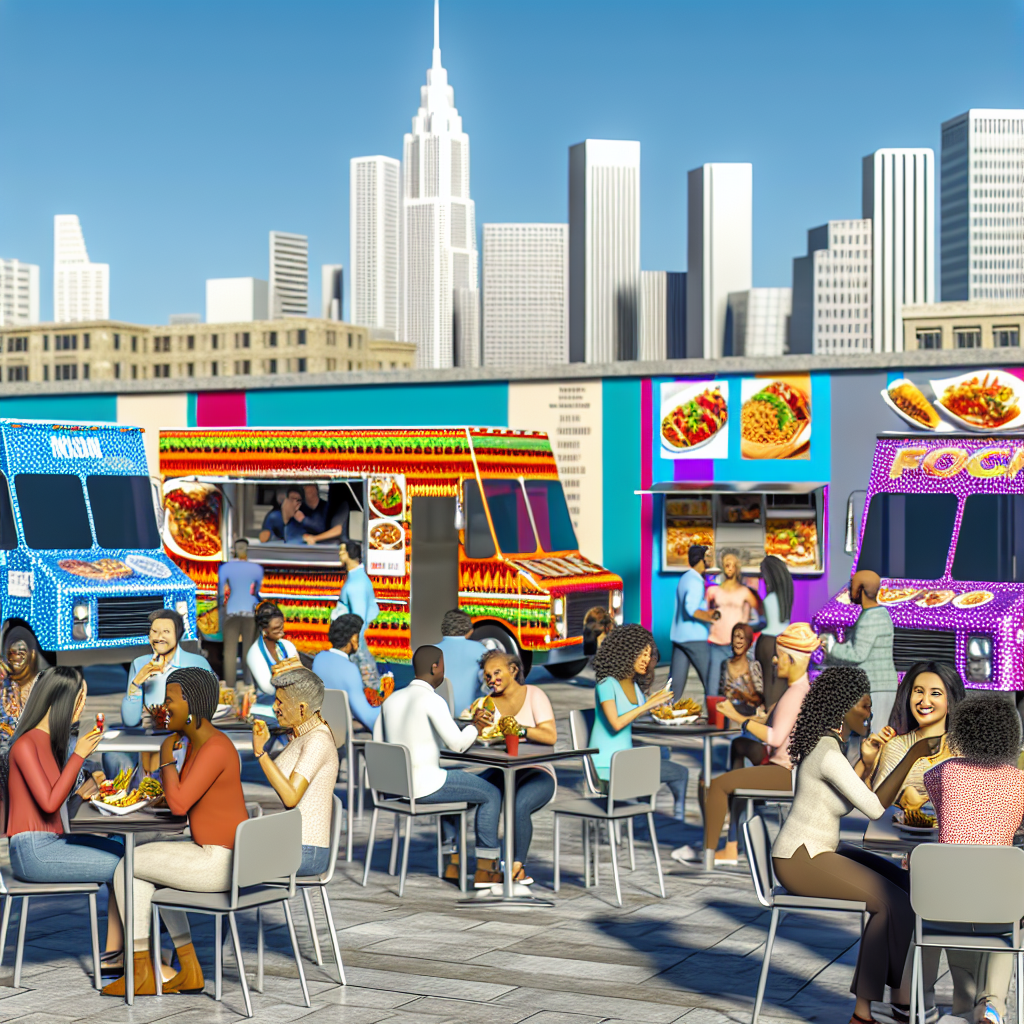
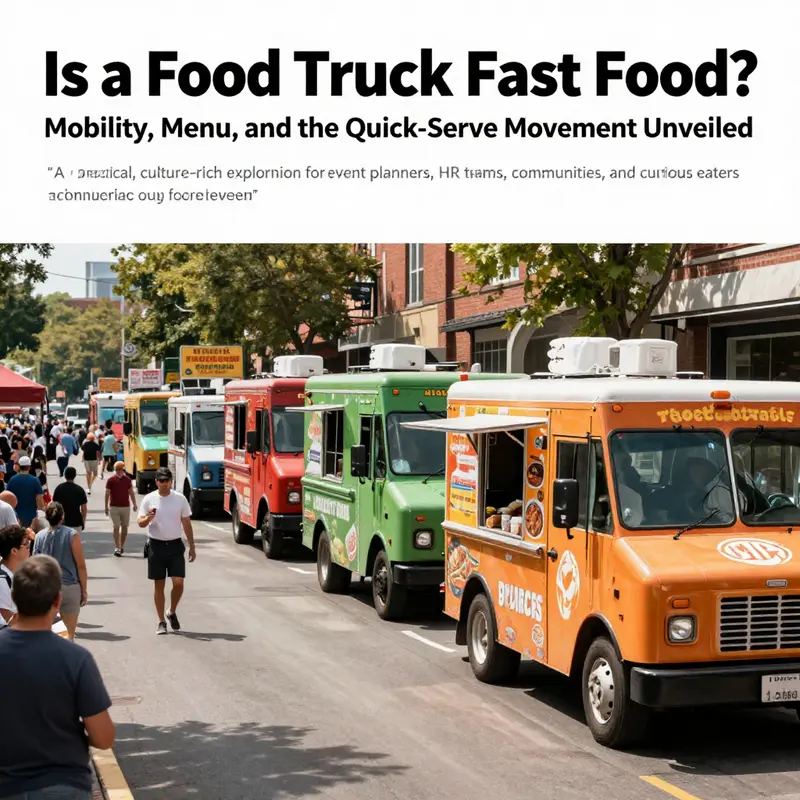
Food trucks are everywhere, reshaping how we think about quick nourishment in public spaces. When we ask is a food truck fast food, we’re really exploring speed, convenience, and the way mobility turns a kitchen into a service engine. This article ties three integrated perspectives together: first, the Mobility, Speed, and Core Characteristics that define fast food on wheels; second, how this model plays out in Practice through menus, service formats, and event culture; and third, the Economic, Societal, and Geopolitical Dimensions that influence where and how mobile kitchens operate. Event planners and corporate admins will find practical guidance for partnerships and on-site experiences; Local Community Groups will see how street food can energize neighborhoods; and Individual Consumers & Food Enthusiasts will gain a deeper understanding of why mobile cuisine feels so immediate and vibrant. Across chapters, you’ll discover how mobility amplifies speed, how standardization and creativity coexist on the curb, and how policy, costs, and culture shape the modern fast-food landscape.
Rolling Kitchens, Speed, and Flavor: Redefining Fast Food Through Food Trucks
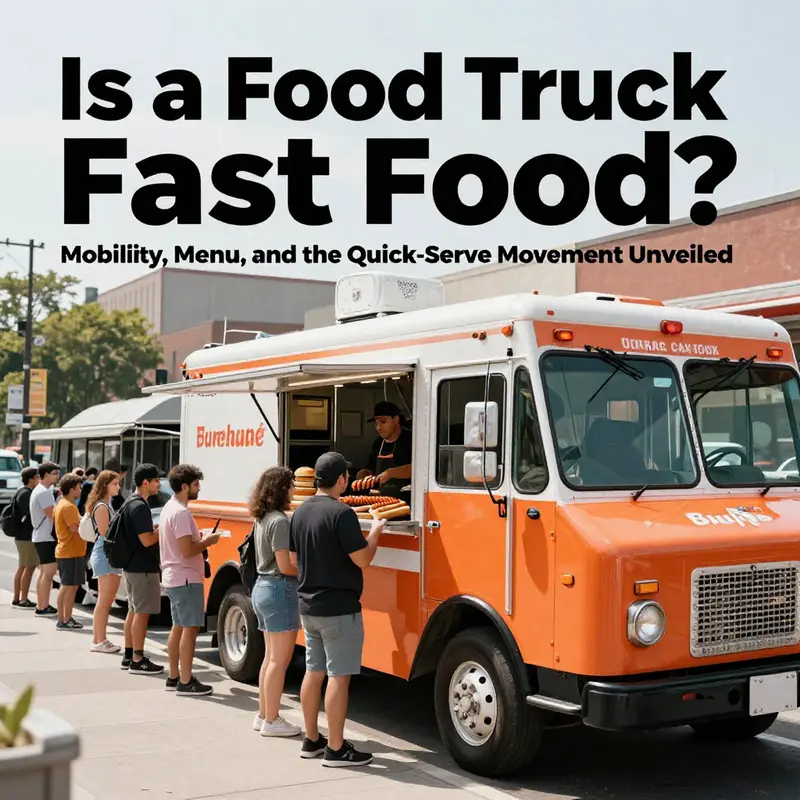
To talk about a food truck is to talk about a kitchen that never settles. It is a way of cooking and serving that folds mobility into the daily rhythm of dining. A food truck operates as a mobile restaurant, a moving stage where chefs can set up shop wherever there is foot traffic, event schedules, or a suddenly hungry crowd. This spatial flexibility is not incidental; it sits at the heart of what makes the food truck a distinct kind of fast food. The core ethos of fast food—speed, convenience, and ready-to-eat items—meets a different kind of energy when the operation itself can relocate at a moment’s notice. In that sense, food trucks embody a hybrid model: fast in delivery, yet capable of evolving in response to place, season, and audience. The Cambridge Dictionary anchors this understanding by defining a food truck as a mobile kitchen for selling food, a phrase that immediately links mobility with quick service.
Mobility is not merely a feature; it is the organizing logic of the enterprise. A truck’s location is an instrument of demand, a tool that allows a vendor to chase peaks in foot traffic, to answer the rhythm of a city’s workday, a festival’s pulse, or a university campus swell. The ability to move means a menu is not a single fixed statement but a living conversation with the street. On a busy sidewalk in the middle of a workday, a truck can serve a line of people who want something hot, fresh, and handed to them within minutes. At an outdoor event, the same unit becomes a focal point where a crowd gathers around the aroma of sizzling components and a carefully designed lineup of plates or bowls. That mobility, in turn, shapes the speed at which food is produced and delivered. The truck’s kitchen is compact by design; every square foot is a strategic decision about workflow, equipment placement, and the choreography of a service window that opens with a practiced fold and closes with a click that feels almost ceremonial. The result is a service model that mirrors fast food in tempo but often diverges in tone, texture, and the story behind each bite.
Equipment and layout are more than mere logistics; they are a language of efficiency. Modern food trucks are engineered to maximize throughput within tight confines. Service windows—whether they fold out, slide open, or hinge along a chassis—enable rapid turnover while maintaining security when the truck is closed. The kitchen is laid out in zones: mise en place arranged to be reachable in a single stride, cooking surfaces designed for brisk, repeatable actions, and a front-of-house area that becomes the last mile of delivery where heat, aroma, and timing converge in a matter of moments. The design choices—compact fryers, precise heat control, streamlined ventilation, and insulated storage—are not cosmetic; they are the practical envelope that enables the fast pace emblematic of the format. In this sense, speed is not only about the final product but about the entire chain from order to plate to pickup. A well-tuned truck reduces the cognitive load on the cook, turning what could be a tense rush into a confident sequence of steps that feels almost rehearsed, even as it adapts to the crowd before it.
Yet speed does not come at the expense of choice. One of the defining tensions of the food-truck model is the balance between standardization and customization. The quick-service mindset asks for consistency, but mobility invites improvisation. Venders often calibrate menus to align with the locale, the season, or the event’s audience, ensuring that what is offered is fresh, relevant, and resonant. Seasonal ingredients—local produce when possible, ingredients that reflect a region’s culinary personality—can become the backbone of the truck’s daily rotation. This adaptability is where the truck diverges from the archetypal fast-food chain, not by rejecting speed but by layering it with a sense of place and craft. The result is a dynamic dining experience: a fast, on-demand meal that leverages the chef’s skill, the supplier network, and the feedback from a live crowd to refine what is served from week to week. In practice, a truck may pair a core, reliable base with rotating specials that test ideas and celebrate local ingredients, cultivating a sense of anticipation that persists even as the service window closes for a moment and then reopens elsewhere.
A further distinction arises when considering the broader aims of today’s mobile kitchens. The rise of food trucks reflects a shift in consumer appetite toward freshness, storytelling, and a willingness to trade the fixed menu for a more experiential dining moment. Rather than simply delivering a familiar quick-service formula, many trucks aim to provide a sense of culinary craftsmanship within a compact, portable framework. The emphasis on freshness—seasonal greens, freshly prepared toppings, and breads or tortillas made with care—softens the edge of speed with the warmth of craft. This is not a retreat from quality; it is an adaptation of quality to a different operating reality. The broader fast-food category still prizes speed and uniformity, but the truck’s appeal often lies in how swiftly it can move between ideas, cultures, and techniques while preserving the integrity of what lands on a plate. Food here is not a single, static product but a conversation that unfolds in public space, inviting passersby to engage with it as they would with a street performance: a brief, memorable, and repeatable moment.
From an economic perspective, mobility is a powerful enabler of experimentation. For aspiring entrepreneurs, a truck offers a lower barrier to entry than a traditional brick-and-mortar restaurant. Rather than committing to a fixed location and the high overhead that comes with it, a vendor can start with a single vehicle, test a concept in different neighborhoods, and adjust the concept in response to what the market reveals. This flexibility is especially valuable in urban environments where real estate is expensive and consumer tastes can shift with the weather, the calendar, or a festival lineup. The ability to relocate also supports a more diverse urban food ecosystem, where multiple small operators can inhabit a single night’s geography, each offering a distinct voice in the crowd of options. The street becomes a laboratory, and the customer—a curious, mobile diner—participates in an economy of quick decisions and ephemeral experiences that still feel meaningful. In places where regulatory and licensing landscapes are navigated with care, trucks can pivot between events, neighborhoods, and campuses, weaving a thread through the fabric of the city that is both economical and democratic in its reach.
The food-truck model does not ignore the realities of fast-food expectations. Service must be swift; orders must be accurate; pickups must be clear. Yet the form also invites a conversation about pace and patience. People may want a quick bite, but they also want to enjoy the aroma of hot oil, the sight of a sizzling surface, and the satisfaction of a plate that looks as good as it tastes within minutes. The job of the cook is to choreograph a sequence of actions that minimizes wait times without sacrificing the sensory impact of the food. This is where craft and convenience meet in the most productive way. Even as the truck roves the urban map, the consumer experience is designed to be crisply paced, friendly, and reproducible, a trifecta that defines modern fast food in the mobile era. The result is not merely speed; it is a curated moment of efficiency and enjoyment that fits a city’s rhythm as neatly as a bus route or a festival schedule.
The idea of a rolling kitchen also frames a broader conversation about how cities consume food. Street-level dining, often undervalued in the discourse on gastronomy, becomes a meaningful layer of the food ecosystem when it is portable, accessible, and responsive. The truck’s presence can enliven a public square, serve a late-afternoon crowd near a transit hub, or provide a culinary stop amid a campus day. In this way, the truck extends the reach of good food beyond the dining room’s four walls and into the social space where people work, study, and gather after hours. The sheer variety of offerings that trucks can host—coffee, ice cream, savory bites, or small plates that pair well with drinks—illustrates the versatility of the format. It is a format that embraces variety yet delivers it with discipline, turning quick service into an opportunity for culinary expression rather than simply a means of mass throughput.
Despite the appeal, the food-truck model is not without its problems. Regulatory hurdles, parking constraints, and the logistics of waste management are real and recurring concerns. Cities vary widely in how they license, inspect, and coordinate street-food activity, and operators must stay agile to comply with evolving regulations. The Vancouver example from contemporary discussions suggests how a single license regime can shape a market—scarcity can compound demand, and limits on where a truck can operate can influence menu choices and hours of operation. Entrepreneurs within this space often become adept at negotiating these constraints, turning licensing realities into opportunities for reliability and consistency. In short, mobility creates opportunity but also demands discipline; speed is only sustainable when paired with careful planning and compliance.
To connect these threads back to the larger fast-food landscape, it helps to imagine the food truck as a crossbreed of speed and story. It shares with traditional fast-food outlets a commitment to quick service and standardized operational tempo. It diverges in how it achieves those ends: through mobility, the ability to curate a local flavor profile, and a willingness to experiment with form and function. The result is a distinctive experience that can feel both familiar and novel. It offers speed without sacrificing the chance to savor and reflect on the moment—the very essence of culinary craft set against the backdrop of a moving stage. This is not merely a clever workaround for the expenses of a fixed-location business; it is a redefinition of what fast food can be when the kitchen travels with the crowd. The on-the-ground reality of daily operations—how orders are assembled, how service windows open and close, how menus turn over, and how trucks migrate from one hotspot to the next—becomes the living proof of how mobility can sustain a fast-food ethos while expanding its horizons. As the street becomes the dining room and the clock the metronome, the food truck emerges not simply as a mobile vendor but as a catalyst for a more responsive, more creative, and more democratic form of fast food.
For aspiring operators, the takeaway is clear: success rests on aligning mobility with a disciplined approach to cooking, service, and customer engagement. The right balance of speed, quality, and adaptability is achieved not by rushing through menus but by treating the service window as a performance space where timing, aroma, and texture cue a satisfying experience. The future of fast food may very well be written on wheels, in the lines that form before a hot, freshly prepared plate, and in the conversations that erupt around a shared taste memory. And as the scene evolves, the essential insight remains unchanged: food trucks are fast food in motion, but they are also so much more than that. They are flexible laboratories for taste, portables of culture, and a testament to how a city’s appetite can shape the way food is imagined, produced, and enjoyed.
For readers curious about how to navigate the practical decisions that come with starting or growing a mobile kitchen, the question becomes not only what to cook, but where to bring it and when to let it go. In the spirit of continuous adaptation, the path forward involves listening to the street, calibrating the kitchen to the crowd, and embracing the cadence of movement as an integral component of service design. The chapter that follows will build on these ideas by turning toward the regulatory, financial, and strategic considerations that surround a food-truck operation, moving from the tactile realities of the service window to the broader landscape in which mobile cuisine thrives. In the meantime, prospective operators can begin to picture their venture as a rolling invitation—a compact, efficient, and creative platform for delivering fast, delicious food wherever the street leads.
To bring a concrete thread into this discussion, consider the practical guidance that seasoned operators often weigh when choosing a path forward. The choice of chassis, kitchen layout, and equipment is not just a matter of personal taste; it is a strategic decision that shapes capacity, speed, and reliability. A truck that prioritizes a streamlined workflow can sustain high-volume periods without sacrificing the quality and consistency customers expect. Similarly, the decision to anchor a concept in a recurring location—such as a campus or a popular event circuit—can provide predictable demand while still offering the flexibility to rotate menus or move to new neighborhoods when opportunities arise. In all cases, the management of risk—whether through inventory planning, staffing, or compliance—remains central to the viability and resilience of the operation. The best operators treat each day as a chance to refine the balance between the immediacy of a quick service and the longer arc of building a loyal following, one hungry customer at a time.
The interplay of speed, mobility, and craft outlined above offers a framework for understanding how a food truck sits at the crossroads of fast food and fresh, local cooking. It is a model that invites curiosity, experimentation, and a willingness to adapt to the city’s ever-changing appetite. As cities continue to grow denser and dining preferences become more diverse, the rolling kitchen stands ready to meet demand with energy, efficiency, and a sense of culinary possibility that is as compelling as it is practical. For those who want to explore this world further, the next sections will delve into the practicalities of launching and sustaining a food truck—capturing the balance of speed and quality in numbers, processes, and a fleet that can travel well beyond its first stop. For now, the essential image remains: a compact kitchen on wheels, moving through urban life, serving fast, flavorful food to a crowd that respects both speed and taste.
External reference: https://dictionary.cambridge.org/dictionary/english/food-truck
For readers seeking a practical starting point on model selection and layout considerations, a detailed guide focusing on choosing the right food truck model can be a useful companion. See this resource for a structured discussion of layout, capacity, and workflow considerations: Choosing the right food truck model.
Wheels of Quick Service: Craft, Speed, and Community in the Practice of Food Truck Fast Food
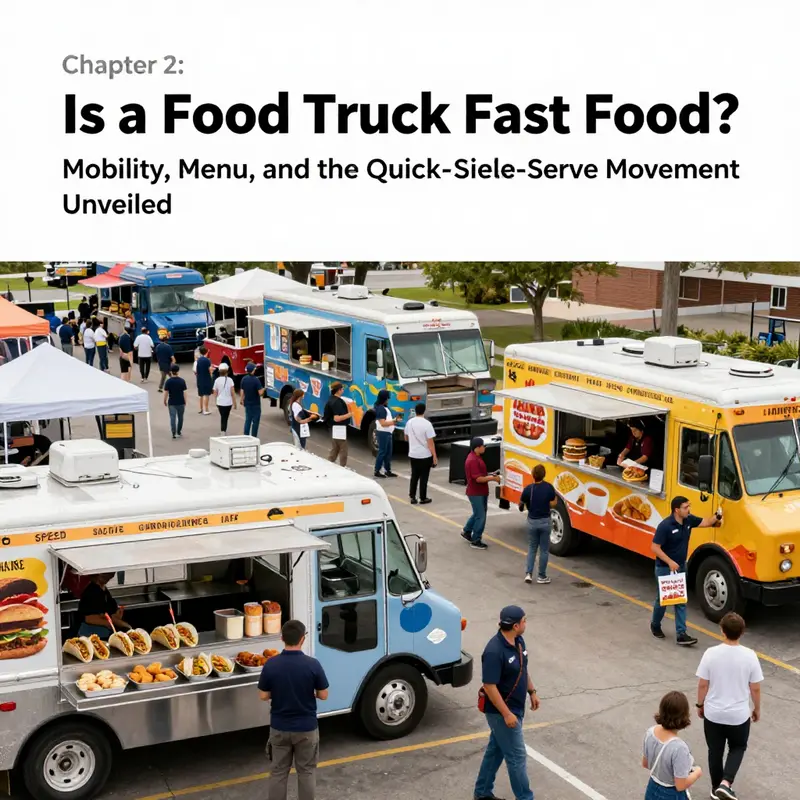
A food truck sits at the intersection of mobility and appetite, a mobile kitchen built for speed and sold on the virtue of instant gratification. In practice, the food truck embodies the fast-food ethos: serve quickly, travel light, and deliver a ready-to-eat meal to people who want nourishment without delay. Yet the social texture around a truck often loosens the harsh edges of mass-produced fast food. It couples efficiency with choice, speed with craft, and portability with a sense of occasion. The result is a form of fast food that travels not just across streets but across ideas of what eating out can mean. The kitchen on wheels is designed to maximize proximity to customers, bringing meals to busy office blocks, campus corners, market days, and festival grounds alike. The core idea remains simple: a customer should walk away with a hot, satisfying item in a matter of minutes, often after a quick exchange at a counter that doubles as a stage for the cooking process itself. In this sense, the food truck operates as a fast-food business model that also hosts a story—one of chef-driven menus, local ingredients, and rapid, on-site service that makes a casual meal feel both accessible and unique.
The practical architecture of a food truck shapes what is possible on the menu and what the service feels like. The kitchen is compact, with cooking surfaces, a small fryer stack, a grill, a prep area, and a modest refrigeration unit tucked into the wheelbase. Everything is scaled for maneuverability and speed. Because space is precious, the menu tends to be streamlined by design, with core items that can be prepared in minutes and kept consistent regardless of the crowd. Yet within that constraint, many trucks push beyond the stereotype of standard fast food. They layer in elevated ingredients, house-made sauces, and topping bar options that invite customization. The result can resemble a chef-driven pop-up more than a takeout counter, even as it lives within the faster, more standardized rhythm of fast food. This combination—speed plus craft—defines the unique practice of food-truck dining.
At the heart of most truck menus are items that are familiar in form—burgers, tacos, fried potatoes, hot dogs, and simple sandwiches—but with twists that reflect locality and whimsy. Gourmet burgers appear with house-made sauces, smoking-tinged toppings, or miso-caramel glazes that brighten a classic formula. Specialty tacos might feature locally sourced meats, citrus-bright salsas, and herbs that arrive from a nearby market rather than a national supply chain. Even the beverages shift beyond the ordinary: handcrafted smoothies, cold-pressed juices, or small-batch iced teas that are prepared on board or assembled at the last possible moment to preserve freshness. And some trucks expand their repertoire with truly artisanal offerings—Neapolitan-style pizzas cooked to order in a compact oven, for instance—where the performance of the cook becomes part of the dining experience. The cuisine you encounter on a truck, then, often reads as fast food in its pace and portability, but with a palate that prizes individuality and a sense of place.
Service models on wheels hinge on mobility and anticipation. A truck is deliberately designed to move toward crowds rather than wait for them to come to a fixed storefront. This mobility expands the potential outlets for a meal, extending reach into festivals, corporate events, farmers’ markets, street fairs, and the everyday corridors of city life. The service rhythm is brisk: orders are taken, items are assembled, and meals are handed to customers in minutes. The conveyor belt of service is aided by practical choices—clear workflow, compact equipment, pre-prepped components, and a layout that minimizes motion. Many operations lean into the idea of a “pop-up” colonizing a neighborhood corner or a university campus for a few hours, then relocating to a new perch when demand shifts. In recent years, whole ecosystems have formed around the idea of the food truck: parks where multiple trucks converge to offer a shared dining experience, sometimes complemented by seating and a communal atmosphere. These spaces amplify the social function of eating out, turning a quick meal into an event that invites conversation, discovery, and a sense of discovery.
Event culture around food trucks is perhaps their most distinctive attribute. Trucks do more than feed bodies; they feed moments. They become social hubs where neighbors meet, colleagues decompress, and students discover new flavors between lectures. Word-of-mouth travels as quickly as a tweet, turning a simple queue into a chance meeting with a chef who explains the provenance of a local pork shoulder or a herb that arrived that morning from a neighborhood garden. The trucks’ presence at events often reshapes expectations about what ‘fast food’ can be: it becomes a platform for culinary storytelling, where outtakes from a chef’s menu, limited-edition specials, and rotating partnerships with local producers generate a sense of novelty that a traditional fast-food chain rarely achieves. In this sense, event culture around trucks fosters a communal dining experience. People linger, photograph meals, compare notes about spice levels, and share recommendations with strangers who quickly become friends. The social function of the truck, supported by smartphones and social networks, expands the reach of the food beyond the bite, converting a quick service moment into a remembered experience.
The distinction between a food truck and the more traditional fast-food model is subtle but real. The fast-food framework emphasizes speed, standardization, and scale. A truck delivers within that framework but adds a layer of customization and local sourcing that is less common in mass-market chains. The emphasis on ingredient quality and chef-driven experimentation distinguishes trucks from the traditional fast-food standard bearer. A truck may offer a signature sauce crafted in-house, or a locally sourced protein that reflects regional tastes. The menu might shift with the seasons, or the stalls at a festival could pair a burger with a beer from a neighboring microbrewery. These elements do not negate the fast-food classification; they enrich it. The core fast-food benefits—speed, portability, and low-friction consumption—remain intact, even as the food earns points for freshness, regional character, and culinary intent. The resulting experience feels both familiar and novel: you can count on quick service, but you may also discover a story that travels with each bite.
Operating in a fast-food lane while meeting higher expectations introduces regulatory and logistical challenges. Health codes, vehicle compliance, and the need for proper permits shape how a truck functions day to day. The mobility itself is a constraint and an opportunity: the truck must remain compliant while navigating different jurisdictions, weather, and parking regulations. The practicality of serving hot, safe food on four wheels requires robust sanitation routines, reliable power sources, and waste management plans that keep a crowded curbline orderly. The regulatory landscape also influences menu design: the choice of equipment, the space for cold storage, and the feasibility of certain cooking methods are all shaped by what is permissible in a given locality. These pressures push truck operators toward smart, modular menu design—items that can be prepared quickly, with minimal cross-contamination risk, and with clear, standardized recipes that ensure consistency across different locations. The ability to adapt to new environments—whether a campus quad, a waterfront promenade, or a pop-up market—depends on a careful balance of compliance, efficiency, and improvisation.
From an economic perspective, the food truck model leverages several advantages that align well with fast-food efficiency while enabling more intimate pricing and stronger direct-to-consumer relationships. Lower manufacturing and real estate costs—relative to full-service restaurants—allow operators to experiment with menus and scale their offerings through multiple locations. The on-site preparation and rapid service support high turnover, a hallmark of fast food, yet the ownership and labor dynamics in trucks can be more flexible. Operators may partner with event organizers, campus administrations, or neighborhood associations to secure recurring gigs that provide predictable revenue streams. This dynamic feeds a cycle of continuous iteration: better sourcing, sharper kitchen choreography, more engaging branding on the vehicle’s exterior, and a clearer understanding of what crowds want on a given day. The economics also invite a crowd-pleasing, chef-driven ethos. A truck can host a limited-edition item for a festival or a weekly special that signals culinary experimentation. In other words, it is possible to maintain high quality while still delivering the speed and portability that define fast food.
The campus and urban environments highlighted in recent observations illustrate how food trucks contribute to a broader food culture. On university campuses, trucks become both a practical dining option and a cultural touchstone. They offer familiar, comforting items that students crave, while also providing a platform for experimentation with globally inspired flavors. The reference to campuses, such as the September 2025 presence on a notable university campus, underscores how vehicles on spoons of steel can integrate into the daily rhythms of student life. These contexts underscore the adaptability of the truck model: a mobile unit can deliver quick meals between classes, cater large athletic events, or participate in a weekly market that builds a loyal following. The social, culinary, and logistical ecosystems that grow around these operations help explain why food trucks have evolved from simple street vendors to essential facets of contemporary urban dining.
To understand the practice of fast food in trucks is to recognize the interplay between spontaneity and sustainability. The service model depends on timely decisions—what items are ready, how long a line has grown, and how to keep people fed during peak times. The sustainability question runs in parallel: how to minimize waste, how to choose packaging that travels well, how to balance flavor with portion control, and how to maintain a nimble supply chain that can adapt to changing local sourcing opportunities. The best trucks manage to orchestrate this balance with a calm confidence that comes from experience. The cooking—short, sharp bursts of heat, crisp textures, bright seasonings—reads as efficient performance, a choreographed routine in which the cook and the truck share a single stage. The audience becomes part of the show: a crowd forms, a few people place orders, and a handful of onlookers lean in to watch a quick sear, or a bottle of sauce being finished with a deft hand. That sense of theater is a defining feature of food trucks, married to the practical demands of fast service.
As with any fast-food format, customers value reliability and predictability. They expect a consistent product that arrives hot, well packaged, and ready to eat. Yet many trucks exceed those expectations by providing a personalized touch. The diner may be invited to customize toppings, adjust spiciness, or swap a side for a local specialty. The same mechanism that makes a burger a familiar staple—bun, patty, toppings—can be layered with nuance to reflect a region’s culinary voice. In such moments, fast food becomes a canvas for regional identity and culinary curiosity, proving that speed and flavor can travel together without collapsing into sameness. This dynamic also supports the broader claim that a food truck is a form of fast food, even as it experiments with tastes and textures that would feel out of place in a fixed, mass-produced system.
The overall effect of this practice is a dining landscape that respects the appetite for speed while inviting a deeper engagement with food as craft. The street, the festival, the campus corner—each location becomes a forum for food to travel, to connect, and to evolve. The experiences are not merely about the immediate meal but about the pattern of choices a diner can make in a single day. You might begin with a quick bite of a high-gloss burger, then switch to a lighter, citrusy taco, and finish with a small, artisanal espresso pulled as a companion to a late afternoon stroll. The rhythm of such choices mirrors the tempo of modern life: rapid, flexible, and interconnected. And in that rhythm, the food truck’s fast-food essence endures—speed, convenience, and a sense that the meal is tailor-made for the moment—even as the quality, the storytelling, and the sense of place elevate it beyond the stereotype of mass production.
For readers who want to dive deeper into the regulatory and practical edges of this world, a practical resource on the governance of one’s own food-truck operation offers a useful map. The material highlights that food trucks sit at the nexus of culinary ambition and vehicle-based compliance, and it points to regulations as a framework for responsible operation while preserving the tempo of service. This is not a constraint to be endured but a design parameter that can inspire smarter, more resilient workflows. In the end, the practice of fast food on wheels reveals itself as a blend: speed and portability, yes, but also craft, community, and a continuous conversation with the people who lines up for a meal on the street. The result is a modern dining form that remains deeply rooted in the core promise of fast food—the nourishment delivered quickly—while expanding what that nourishment can mean in a city’s daily life.
For readers seeking further context, see the broader discussion of fast-food evolution and the rise of mobile kitchens in external analyses that trace how these operations have shaped urban dining and entrepreneurial culture. This broader lens helps explain why food trucks have become indispensables in many urban economies, offering a flexible, people-centered model that complements traditional sit-down dining and outstrips the predictability of standard street food with something more dynamic and participatory.
Internal link reference: navigating-food-truck-industry-regulations
External resource: https://www.theatlantic.com/business/archive/2012/07/the-rise-of-the-food-truck-revolution/
Wheels of Convenience: Economic, Societal, and Geopolitical Dimensions of Food Truck Fast Food
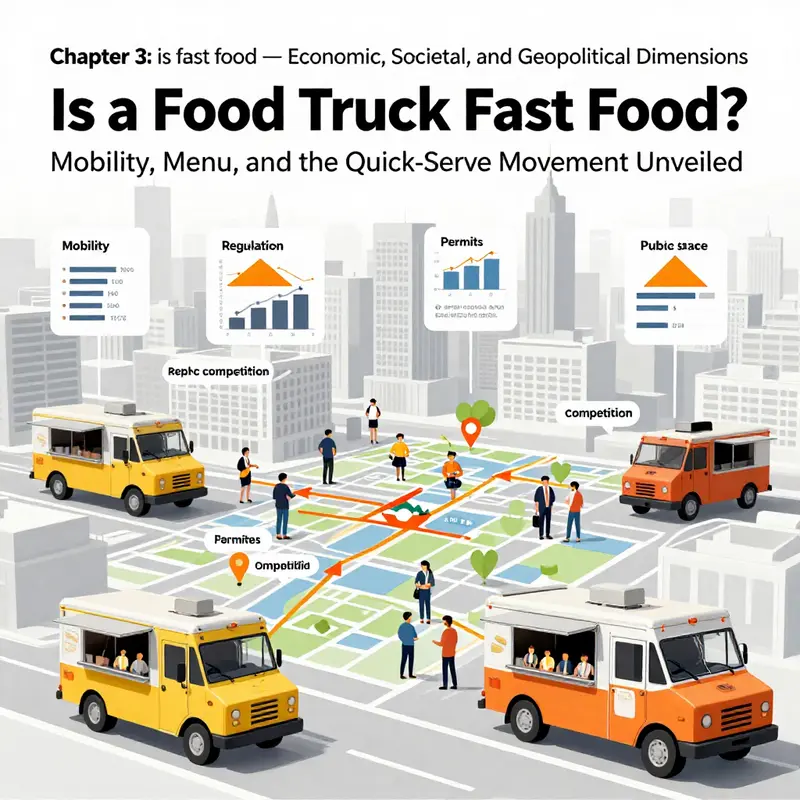
Wheels of Convenience has become more than a metaphor in urban life. It describes a system where speed, portability, and standardization fuse with culinary variety to create a distinctive branch of the fast-food landscape. A food truck is not simply a mobile kitchen; it is a micro-economy on wheels, a curious blend of enterprise, culture, and policy that travels through streets, neighborhoods, and events with a promise of immediacy. When we ask whether a food truck is fast food, the answer emerges from a layered understanding. The quick service model is the bloodstream of the concept: menus designed for rapid preparation and consumption, standardized processes that minimize wait times, and a customer experience calibrated for on-the-go eating or brief, social encounters. Yet the vehicle itself—its mobility, its location flexibility, and its ever-changing context—adds a dynamic that traditional brick-and-mortar venues rarely match. In this sense, the food truck sits at the intersection of speed and place, a phenomenon whose economic logic, social meaning, and geopolitical implications reveal why it endures as a form of fast food even as it expands into more diverse culinary expressions. The chapter that follows takes these three dimensions—economic, societal, and geopolitical—seriously. It treats mobility not as a mere characteristic but as a core driver of how food trucks compete, shape urban life, and negotiate governance across different scales and regions. The discussion weaves together the practical realities of running a truck with broader questions about access, legitimacy, and sovereignty in the urban food economy. Along the way, the narrative acknowledges that while a truck might offer higher quality or niche flavors, its fast-food essence remains anchored in speed, convenience, and the commodified, ready-to-eat experience that defines fast food in the modern city. Within this frame, a single choice—where to park, when to serve, which model to buy—unfolds into complex trade-offs involving capital, labor, location analytics, and regulatory nuance that ripple outward to affect nearby businesses, city planning, and even cross-border supply chains.
The economic fabric of food-truck operation begins with the obvious yet crucial question of entry: what capital is required to turn a vehicle into a kitchen on wheels? The answer centers on the vehicle itself, the kitchen equipment, and the licensure landscape. A truck must meet health and safety standards appropriate for mobile food preparation, and the owner must navigate licensing, vehicle registration, insurance, and, in many places, zoning permissions that allow curbside or parklet service. This bundle of requirements often translates into a substantial upfront commitment, but one that can be offset by the flexibility to move to higher-demand locations, diversify menus, or participate in events that would be inaccessible to a fixed-location outlet. Ongoing costs—gas or electric power, gas and water hookups, refrigeration, maintenance, and the replenishment of perishables—demand careful cash-flow management. The economics of speed are not just about quick service; they hinge on the ability to rotate locations toward peak footfall, negotiate favorable supply costs, and optimize labor hours to match demand without sacrificing food safety or customer experience. The pricing strategy emerges as a delicate balance. Prices must reflect per-unit costs, but they also must account for the premium that mobility and novelty can command, as well as the seasonality that often accompanies outdoor dining. Margins on fast-food staples like burgers, tacos, or fried items can be thin, which makes volume, repeat customers, and rotation of offerings critical. A truck that can segment menus by time of day or season, offering breakfast items in the morning and festival staples in the evening, embodies a dynamic pricing and product-portfolio approach that is difficult to replicate in a fixed venue. The literature on mobile vendors emphasizes that labor is a central axis of profitability, with a spectrum from gig-style, flexible staffing to more formal, closely supervised crews. Training, food-handling competence, and the ability to deliver consistent service in a constrained space contribute to reliability that customers recognize and reward with return visits.
Crucially, mobility itself becomes an economic asset. The ability to reallocate space in real time—moving from a university campus to a business district, from a farmers’ market to a nighttime kerbside market—creates a form of dynamic density that can stimulate adjacent commerce. Parked trucks often attract foot traffic that spills over to nearby restaurants, cafés, and shops, a spillover effect that can be either complementary or competitive depending on how local policies and street layouts incentivize or restrict street vending. The density of trucks in a given corridor, and the cadence of their visits, can shape consumer expectations and influence where new entrants decide to set up shop. In this sense, the economic calculus of a food truck encompasses not only the bottom line of the enterprise but also the broader rhythm of the street economy. Regulation and licensing feed into that rhythm. When cities cap the number of permits, set seasonal or time-bound restrictions, or require highly specific waste-management practices, they shape not just the viability of individual trucks but the structure of the entire mobile food ecosystem. These policies can either reduce fragmentation and chaos or, conversely, create barriers that shelter incumbent operators and deter new entrants.
Beyond the arithmetic of costs and permits, the food-truck economy intersects with labor markets in meaningful ways. The gig or contract nature of some roles offers flexibility that aligns with the trucking lifestyle and the episodic demand patterns common to street food. Yet this flexibility can come at the cost of benefits and stable working conditions. Food-truck labor demands a blend of culinary skill and practical dexterity—knowing how to manage a compact workspace, control temperatures, execute quick prep, and communicate with customers in outdoor environments. Training programs, insurance costs, and wage structures all feed back into the price and quality of the product. In markets where wages increase or where labor protections tighten, trucks may respond by raising prices, broadening menus, or investing in more automation within the portable constraints of a mobile kitchen. The dynamic is not purely microeconomic. It reverberates through urban labor markets, where truck workers become part of a broader discourse about dignity, wages, and the conditions under which informal or semi-formal work is acknowledged and regulated.
The market for food trucks is also shaped by competition and market entry barriers. In dense urban cores, high-traffic windows of opportunity may attract a swarm of trucks, each vying for the same slice of consumer attention. The resulting price competition can compress margins, prompting entrants to pursue differentiation through cuisine, branding, and event participation. Yet mobility itself can dampen cannibalization: a truck that can relocate when one spot becomes saturated or when an event ends avoids a zero-sum struggle with adjacent brick-and-mortar outlets. The relationship between mobile and fixed outlets evolves into a nuanced ecosystem where transit time, fuel costs, and local demand all count as strategic variables. On the regulatory side, the ability to move quickly between jurisdictions introduces a layer of complexity. Cross-city or cross-border itineraries require compliance with varied health codes, permit valuations, and waste-disposal rules, all of which can raise operating costs but also stimulate adaptive, resilient business models. The regulatory patchwork encourages a form of governance that blends standardization with local customization, a balance that keeps the mobile food economy vibrant while safeguarding public health and order.
If the economic dimension tends toward the technocratic, the societal dimension centers on access, culture, and everyday life. Food trucks have become more than convenience; they are increasingly embedded in urban food ecosystems that shape who eats where and when. For many residents, trucks offer affordable, quick meals in neighborhoods underserved by fixed-location fast-food facilities—a practical entry point into everyday nutrition for students, shift workers, and families on tight schedules. Yet affordability is not a universal constant. Price points depend on the local economy, the capacity to source cost-effective ingredients, and the seasonal rhythms of demand. In some districts, trucks broaden access to diverse culinary traditions, acting as portable cultural ambassadors that reframe a city’s identity through the cadence of their menus. The attraction of street food lies not only in speed but also in novelty: the chance to try a new fusion or a familiar staple presented with creative twists. This culinary dynamism fosters cultural exchange and improvisation, a microcosm of urban life where tradition and innovation meet at curbside stalls. The social legitimacy of trucks—how customers perceive safety, cleanliness, and hospitality—depends on consistent practice and visible adherence to standards. Over time, customers learn to judge a truck by its track record: reliable serving times, well-kept equipment, and respectful engagement with communities. In this sense, the public face of fast food on wheels becomes a mirror for urban vitality and social trust.
The societal implications extend to urban space and the night economy. The presence of trucks reconfigures pedestrian zones, evening markets, and informal economies that spill into the surrounding area. They invite walkable, socialized food experiences that can enliven streets after business hours and contribute to nighttime economies that cities seek to cultivate for safety and cultural vitality. Yet the visibility of street vendors also raises questions about space allocation, crowding, and competition for curbside real estate. Municipal planners increasingly treat trucks as partners in city life, designing layouts that harmonize traffic safety, waste management, and accessibility with the need for lively, affordable meals. This governance challenge sits at the heart of the geopolitical dimension as well. Food trucks operate across borders where immigration, labor mobility, and visa policies subtly shape who can work where, how supply chains move, and which cuisines can flourish in new markets. Global street-food networks connect diasporic culinary traditions with local tastes, creating menus that echo migratory patterns and transnational supply lines. The ingredients, equipment, and even the branding of trucks are often influenced by cross-border flows of goods, capital, and ideas. In this sense, the fast-food identity of a food truck is not a local artifact alone but a node in a larger web of global exchange.
Regulation and governance form a throughline that ties economic ambition to social balance. Health codes, waste management standards, and licensing regimes must adapt to the mobile context. Standard-setting bodies increasingly harmonize basic expectations while leaving room for local adaptation. The policy objective is not simply to police trucks but to enable them as part of a city’s food system—supportive services, affordable microfinance for startup owners, and training programs that uplift both operators and their workers. These measures can reduce barriers to entry for aspiring entrepreneurs and improve the quality and safety of offerings for customers. Resilience also matters in policy design. Mobile food vendors faced shocks—from weather to pandemics—that tested their capacity to adapt. Flexible permitting, portable seating guidelines, and streamlined hygienic practices are among the tools cities have used to keep street food accessible while maintaining safety. The broader governance challenge is balancing street vending with urban order, ensuring curbside efficiency without stifling entrepreneurship. It requires a nuanced approach to licensing, with considerations for permit portability, reasonable fees, and conditions that recognize the seasonal nature of the business.
From a geopolitical vantage point, the story becomes even more expansive. Cross-border supply chains for ingredients and equipment mean that a portable kitchen in one city can be powered by a mix of local produce and imported spices, while the branding and flavor ideas originate from global culinary conversations. Regulatory harmonization versus localism emerges as a critical tension: health codes, licensing, and zoning differ across countries and even within regions, shaping how trucks compete and what menus are viable. Global street-food networks enable cuisines to travel quickly on the back of trucks, yet they also raise questions about cultural appropriation, authenticity, and the responsibilities that come with sharing intimate food cultures in foreign markets. Thematic geopolitics—immigration, labor mobility, and visa policies—directly affect the labor pools that trucks rely on. If a city depends on immigrant workers for its vibrant street-food scene, visa regimes and work authorization rules become as consequential as fuel costs and permit fees. Trade policies and tariffs that influence imported equipment, packaging, and safety standards can alter the cost structure and timing of expansion into new markets. Tourism, too, plays a role. Food trucks can contribute to a place’s soft power by offering curated experiences that blend culinary storytelling with local ambience, thereby shaping how visitors remember a city. In this way, trucks become actors in place-making, reinforcing or reshaping perceptions of a city’s culinary identity and hospitality.
The methodological note behind such interpretation rests on a mix of data sources and indicators. Permitting data, street-vending statistics, urban planning documents, and trade data illuminate the macro scale. Consumer surveys, footfall measurements, and social-media analytics offer micro-level insights into preferences and behaviors. Metrics like truck density, average daily revenue, profit margins, labor hours, license throughput, and price points help translate the narrative into measurable trends. When researchers look across regions—North America, Europe, Asia-Pacific, Latin America, and Africa—the differences in regulatory culture and market structure become apparent, but so do shared patterns: the primacy of speed, the importance of location, and the centrality of relationships with local governments and communities. There is still work to be done. Comparative analyses could reveal how different licensing regimes affect entrepreneurship, how waste-management practices influence environmental footprints, and how mobility interacts with urban resilience in times of crisis. The gaps point toward long-term social equity effects, environmental footprints, and policy evolution in an era where urban food ecosystems are increasingly dynamic and interconnected.
To illustrate the breadth of regional texture without turning this into a survey of every city, consider a few illustrative contrasts. In North America, licensing regimes often emphasize safety inspections and curbside access, while in parts of Europe, city-by-city regimes weave health-code integration with street-food culture, prioritizing sustainability criteria alongside urban aesthetics. In Asia-Pacific, rapid urbanization and street-food heritage collide with informality and regulation balancing acts that seek to preserve tradition while modernizing governance. In Latin America and the Caribbean, informal economies and street markets occupy a historical space that social policy and urban development increasingly seek to formalize for social inclusion. Across Africa, youth entrepreneurship in mobility meets regulatory variance, with opportunities for micro-entrepreneurs to spark vibrant food scenes even as cities navigate the outcomes of informal work. These regional snapshots remind us that the fast-food identity of food trucks is not Java-script universal; it is a scaffold that holds different cultural content depending on place.
Policy implications and governance emerge as both constraints and enablers. The challenge is to balance street vending with urban order, traffic safety, and waste management while preserving the spontaneity and accessibility that give food trucks their energy. Licensing design—caps, fees, durations, and portability—can be tuned to support mobility without encouraging chaotic fragmentation. Health, safety, and waste standards must be practical for street contexts and scalable across jurisdictions. Supportive services—microfinance, training, incubators, and co-branding opportunities with events—can reduce the upfront risk and help operators grow responsibly. The resilience of mobile food ecosystems becomes particularly evident in crisis scenarios: weather shocks, public-health emergencies, and supply-chain disruptions all demand flexible, localized adaptation. In such moments, a well-coordinated approach to mobility, safety, and partnerships with local stakeholders can sustain access to affordable meals and maintain livelihoods for vendors and their workers.
The conclusion that emerges from this synthesis is not that food trucks are simply fast food on wheels, but that they are dynamic actors in a broader city economy and a living bridge between local appetite and global exchange. Their fast-food identity—rooted in speed, standardization, and ready-to-consume meals—coexists with a spectrum of strategic choices about location, cuisine, labor, and governance. In doing so, they refract urban life as it is lived: casual, social, and mobile, yet deeply shaped by policy, markets, and cross-border flows. The story invites further inquiry into how these mobile kitchens can be integrated into more equitable, sustainable, and resilient food systems, without erasing the cultural currents that give street cuisine its character. For readers seeking a practical entry into some of these themes, the journey begins with understanding that the choice to launch a truck is not only an economic calculation but a negotiation with place, community, and policy. As one navigates these dimensions, the path toward a thriving, responsible, and diverse mobile food scene becomes less a battleground of competition and more a collaborative act of urban provisioning. The conversation continues, and with it, the wheels keep turning.
For a more concrete entry point into the practicalities of model selection and startup considerations, see this resource on choosing the right food truck model.
Choosing the right food truck model.
External perspective and broader policy context can be explored here: https://www.worldbank.org/en/topic/urbandevelopment/brief/street-vending.
Final thoughts
Across three angles—mobility as the backbone of fast service, everyday practice that blends familiar comfort foods with efficient delivery, and the economic and policy forces that enable or constrain mobile kitchens—it’s clear that is a food truck fast food sits at the intersection of convenience and culture. Mobile kitchens deliver speed and consistency without sacrificing flavor or community connection, making them a practical fit for events, workplaces, and neighborhoods alike. For planners, admins, and enthusiasts, the takeaway is simple: leverage the agility of food trucks to design memorable, inclusive experiences that honor quick service while prioritizing safety, quality, and local collaboration.