In the vibrant atmosphere of food trucks where culinary creativity meets friendly competition, The Great Food Truck Race has become a cherished reality show since its debut in 2010. The 2021 season, brimming with delicious dishes, passionate contestants, and culinary dreams, remains somewhat of a mystery due to the absence of its definitive winner. This article dives into the dynamic world of the show, highlighting contestant journeys, the significance of the unexplained results, and how this has shaped the future of its exciting seasons. Whether you are an event planner, food enthusiast, or part of the local community, let’s explore the vibrant narrative behind The Great Food Truck Race 2021.
From Alaska’s Ice to Miami’s Heat: The Unfolding Story of The Great Food Truck Race 2021
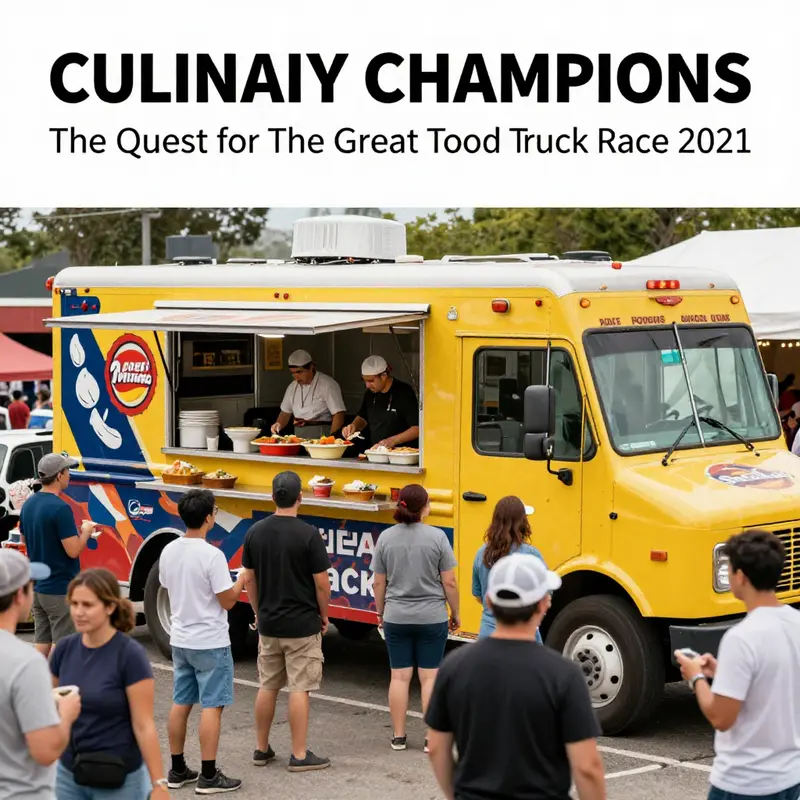
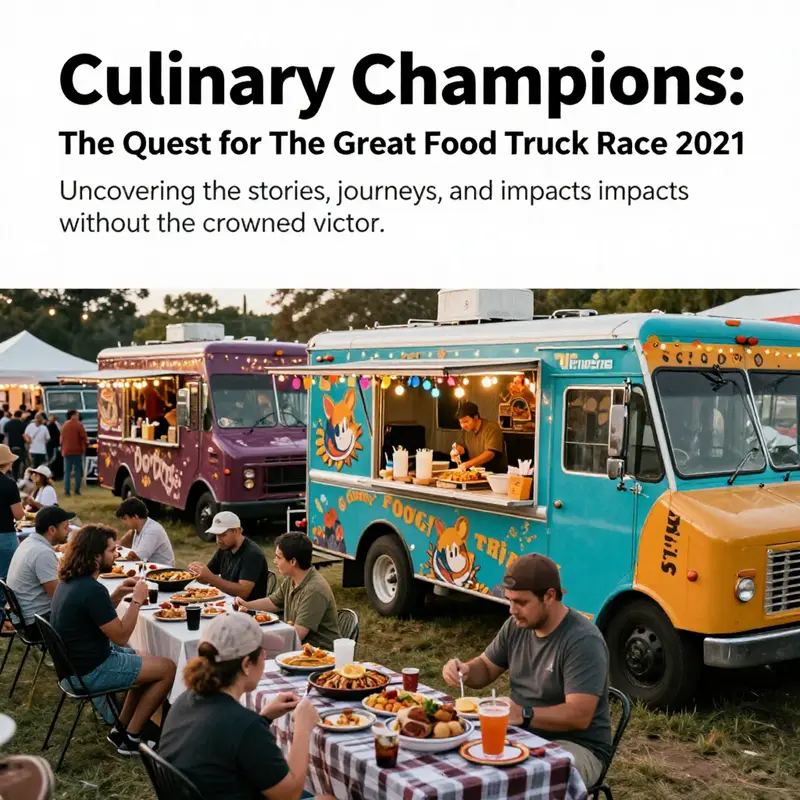
The Great Food Truck Race in 2021 arrived with a charged mix of nostalgia and novelty, arriving as a mid-season touchstone for a franchise that had spent more than a decade refining the art and the chaos of cooking on wheels. Season 14, which premiered in 2021, carried the weight of a long-running series while injecting fresh twists that tested both the chefs’ culinary instincts and their capacity to stay buoyant under the pressure of travel, constant cameras, and canny competition. Host Tyler Florence, renowned for his poised presence, anchored the journey, guiding seven ambitious teams as they rolled from coast to coast, chasing a traditional prize and the symbolic crown of “Food Truck Champion.” The season’s arc was designed as a hybrid of returnee energy and new blood, a deliberate blend that reminded viewers why the show had endured since its 2010 debut: it could be both a culinary showcase and a test of grit, logistics, and teamwork in motion on some of the country’s most challenging roads and markets.
The opening act set a tone that would reverberate across the entire season. The contestants were not strangers to the grind of street-side cooking, yet seven teams presented a spectrum of backstories and cuisines, all of them hungry for the spotlight and the prize. The first episode, an invitation to vie for survival in a harsh, wind-swept environment, unfolded with a twist stark enough to demand quick adaptation: Team strategies would have to contend with the unpredictable, both in terrain and in timing. The competition began in Anchorage, Alaska, a location choice that immediately signaled the season’s willingness to force teams to reconcile their menus with weather, altitude, and the unique demands of an expansive, remote landscape. The challenge was less about showmanship and more about endurance, the kind of physical and mental stamina that can separate the confident improviser from the clever but brittle contestant under pressure. In Alaska, the teams faced a task that felt almost ceremonial in its symbolism: break their food truck keys out of a colossal 200-pound block of ice. It was a provocative metaphor for what lay ahead—breaking free from hesitation, breaking free from doubt, and, if necessary, breaking through obstacles that would feel as impregnable as ice until they found the warmth of their decision-making under fire. The episode was titled “Battle for the North” and aired on March 7, 2021, marking a bold entry that established the season’s tone as one of adversity, resilience, and a certain rugged romance with the wild edge of American geography.
As the races moved south and east, the teams traded the cold glare of Alaska for the sunlit challenges of California’s wine country and beyond. The show often uses location as a silent chef, coaxing contestants to rethink their menus and sourcing strategies. One memorable stop for Season 14 was Napa Valley, where the ambiance of grapevines and the fermentation of local culture offered a different kind of test: a grape-stomping competition, a playful nod to regional identity that still carried real rewards. In many ways, these location-based tasks were more than amusements; they were lessons in how to honor local ingredients without surrendering the signature voice of each truck. The grape-stomping episode, with its kinetic mix of aroma, sweat, and craft, reminded competitors and viewers alike that the journey is as much about listening to place as it is about cooking to perfection.
Among the cast of characters, several names stood out as touchpoints for fans and as reminders of the show’s evolving ecosystem. Notably, Doug Long appeared as part of the Mystikka Masala team during Season 14’s premiere episode, “Welcome Back, Winners,” which aired on June 6, 2021. His presence underscored the season’s inclination to weave familiar faces back into a new narrative, offering both comfort and a test of how past victories could be leveraged when the field had become deeper and more competitive. Anthony Cucurullo, representing Metro Chili, also appeared in two episodes, adding a different texture to the lineup with his distinctive approach to heat, texture, and street-food storytelling. The appearance of a guest judge named Julie in one episode added another layer of nuance, signaling how the panel could expand beyond the familiar cast to bring fresh perspectives to the judging table. These individual threads—returning competitors, new challengers, and a rotating judging presence—gave the season a sense of narrative momentum that kept viewers engaged even as the road trip persisted across weeks and miles.
The season’s architecture leaned heavily on the interplay between nostalgia and renewal. Returning champions from the previous season contributed a dynamic tension, as veteran teams carried with them the ghosts and glory of past wins while attempting to convert that experience into present-day success. The mix of seasoned performers with aspiring newcomers created a choreography of rivalries and alliances that felt authentic, not manufactured, and that is part of why the show could still feel fresh after more than a decade on air. The contestants’ ability to harness lessons from earlier seasons—about efficiency, menu coherence, branding, and customer experience—was repeatedly tested against a backdrop of time pressure, mobile logistics, and the ever-present challenge of standing out in crowded markets. The episodes traveled through a mosaic of American landscapes, each stop designed to stress a different facet of the mobile food business: how you manage inventory in a new city, how you interpret a local palate without sacrificing your core concept, and how you maintain team morale when the clock stretches into long, unpredictable days.
If there is a through line to The Great Food Truck Race’s ongoing appeal, it is the way the format distills a wide set of professional skills into a single narrative arc. Cooking is obviously central, but the show consistently emphasizes entrepreneurship, supply chain nuance, marketing acumen, and the capacity to improvise under pressure. Season 14’s Alaska start and Napa Valley detour offered textbook examples of this synthesis: the teams had to source ingredients quickly, price items to reflect labor and transportation costs, and craft menus that could survive the volatile conditions of a moving kitchen while still delivering something compelling to a discerning audience. The emotional geometry of the competition—the push-pull between ambition and exhaustion, between clever staging and the authenticity of flavor—resonated as strongly as the recipes themselves. The season’s emphasis on endurance also highlighted the brutal economics of food trucks, including the balancing act of financing, maintenance, and insurance that makes or breaks a small enterprise on the road. The show’s producers, in their way, invited viewers to consider the broader realities of mobile food entrepreneurship, not merely the spectacle of televised cook-offs.
Yet, at the end of the day, a question hovered over the season’s arc: who would win? The available documentation from the season did not definitively announce a victor within the sources provided here. The season’s finale in Miami, a city famous for its vibrant street-food culture and its own microcosm of culinary risk-takers, did culminate in a final showdown that felt reminiscent of past climaxes. Teams raced to earn a final prize—reported as a portion of the top prize and tied to a challenge that brought Tyler Florence into direct contact with the contestants at South Point Park. The precise tally of the ultimate winner remains unclear in the sources cited for this chapter, a reminder of how victory in The Great Food Truck Race is as much a matter of episode-by-episode performance, strategic endurance, and audience reception as it is of any single moment at the finish line. The season, however, is remembered for its bold settings, the escalating difficulty of the tasks, and the return of familiar faces who offered a bridge between the show’s history and its current iteration.
In the broader tapestry of The Great Food Truck Race, Season 14 sits at an intersection of continuity and reinvention. The show’s long trajectory—rooted in 2010 but continually refreshed—reflects a cultural interest in food on wheels as both a culinary and entrepreneurial experiment. The Alaska start and the Napa Valley interlude are not just chapters of a travelogue; they are demonstrations of how mobile kitchens must be nimble, globally informed, and locally respectful. The contestants must translate global techniques into street-ready formats while managing the realities of a roving business: a fixed schedule and a moving kitchen, high-stakes public criticism, and the constant pressure to keep menus financially viable without sacrificing flavor. That tension—between craft and commerce—has always been at the heart of the show. Season 14 reinforced it by presenting a cast that was at once familiar and newly competitive, by situating challenges in places that demanded a broad aesthetic and strategic flexibility, and by underscoring a community of food artisans who live at the intersection of cuisine, commerce, and travel.
For those who follow the series with an eye toward outcomes, the ambiguity around the season’s winner offers a reminder of the informal, evolving nature of online archival records. Not every season’s end is captured with the same clarity across all outlets, and the most authoritative conclusions often emerge from a combination of official network summaries, episode recaps, and fan discourse. The result is a mosaic rather than a single, definitive line in the sand. What remains indisputable is the season’s footprint: Alaska’s ice, the drama of seven teams, the spectral presence of returning champions and new competitors, the cultural immersion of Napa’s grape-stomp, and the final sprint that concluded in a coastal finale where the sun and seawater bore witness to a cavalcade of sizzling pans and climbing ambitions. Those elements coalesce into a chapter of The Great Food Truck Race that demonstrates why the show endures: it reveals not just who wins, but how a small, mobile kitchen negotiates limits—of weather, resource, and time—and in doing so becomes a microcosm of the larger American culinary enterprise.
For readers seeking background that complements the narrative on the screen, the LosChifladaTruck blog serves as a practical repository of insights into how food trucks operate beyond the televised arena. The blog offers perspectives on branding, financial planning, and the realities of running a food truck, which provide useful context for understanding the stakes and constraints the Season 14 contestants faced. You can explore those ideas here: LosChifladaTruck blog.
As this chapter threads together the season’s geography, cast, and challenges, it also invites reflection on the broader arc of The Great Food Truck Race. The show’s enduring appeal is not just in the thrill of watching skilled cooks race across the country; it lies in its capacity to illuminate entrepreneurship as a dramatic, communal, and highly sensory pursuit. The trucks are more than vehicles; they are studios of improvisation, laboratories of flavor, and rolling classrooms in business management. Season 14 contributed to that education by pressing teams to think fast about land, sea, and air of supply chains; about how to negotiate permits, parking, and the logistics of events; and about how to connect with communities through a shared joy of food, story, and place. The result is a season that reads like a map of modern American culinary ambition, with its peaks and its valleys, its rustic charm, and its contemporary demands.
While the winner may have remained elusive in the sources at hand, the season’s value extends beyond the final score. It captured a moment when the country, and the food-truck ecosystem within it, was reconfiguring itself for the post-2010s realities—where social media engagement, rapid-fire feedback, and the need for adaptive menus could determine a truck’s success as surely as its signature dish. The contestants who navigated this landscape did more than compete for money. They demonstrated a form of culinary endurance, a willingness to meld regional sensibilities with global technique, and an understanding that the street’s stage is both intimate and expansive—an arena where every decision, from truck design to menu description, can tilt the balance between winning and learning. In that sense, Season 14 of The Great Food Truck Race stands as a microcosm of the broader story of contemporary food culture: mobile, resilient, and relentlessly inventive, even when the ending remains uncertain in the record before us.
For readers who want to trace how Season 14 sits in the continuum of the show, it is worth consulting the episode-level records and archived materials, including the official IMDb page for The Great Food Truck Race Season 14. These sources offer the most direct snapshot of the season’s structure, episodes, and outcomes. And while this chapter has emphasized the season’s mood, challenges, and key participants, the precise naming of a winner may require a more explicit archival check beyond the sources cited here. The narrative remains, however, a vivid portrait of a season that began with ice and ended, perhaps, with a note of ambiguity—yet with an enduring sense of motion and possibility that defines The Great Food Truck Race as a whole.
External reference: https://www.imdb.com/title/tt13998330/
Unsettled Crowns on the Northern Road: The 2021 Great Food Truck Race, Contestants, and the Unwritten Winner
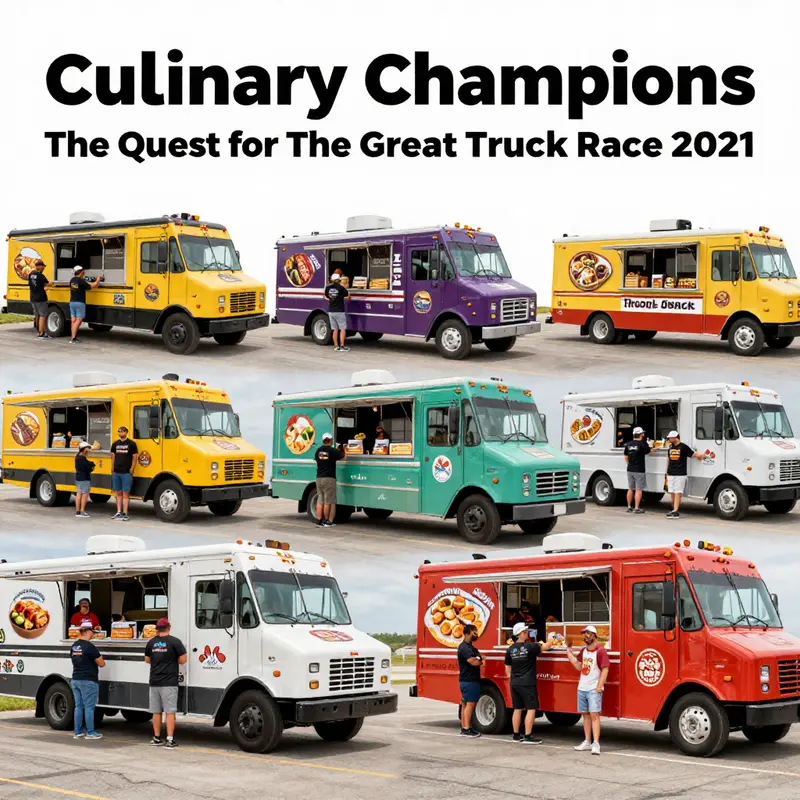
The Great Food Truck Race in 2021 sits at an unusual crossroads in the show’s long arc. Public records, episode guides, and retrospective summaries converge on one practical truth: there is no widely confirmed winner for that year in the standard, accessible channels. This chapter does not pretend to conjure a definitive victor from the fog of online clips and fragmented summaries. Instead, it threads together the season’s visible strands—the teams, the landscapes they navigated, and the storytelling choices that shaped Season 13 and the “Welcome Back, Winners” moment of Season 14—while acknowledging that the final judgment, if it exists in any formal sense, remains elusive in the publicly available archive. The result is a narrative about a year that felt unsettled not because the competition lacked drama, but because the record about its decisive outcome is partial, and the context around its structure invites a different kind of conclusion: persistence, ingenuity, and community matter as much as the crown itself.
In 2021, the showbook was not simply a linear sprint from coast to coast. It was a double feature, a pairing that echoed the franchise’s capacity to reframe its own history. Season 13, billed as Battle for the North, moved the racers into a milieu that tested the nerves as much as the palate. Alaska—the cold bite of long nights, the logistical quirks of getting a truck’s kitchen to perform in extremes—became a proving ground for teams who had to improvise with weather, route planning, and the ever-shifting mathematics of a cross-country scavenger hunt for points, survival, and taste. In this environment, the contestants’ true mettle showed not just in the beauty of their dishes, but in the speed and clarity with which they could pivot when a plan faltered in the face of a storm or a missed waypoint.
Among the most memorable throughlines of Season 13 was Mystikka Masala, guided by Doug Long. Their concept—an Indian-inspired street food forged into a modern, mobile dining proposition—was a reminder that fusion is not merely about combining flavors but about translating cultural stories into a functioning truck operation under pressure. Doug’s leadership carried a balance of warmth and discipline, qualities that often surface in the show’s best teams when the clock counts down and the money at stake is not just the prize but the future of the truck itself. Then there was Breakfast for Dinner, helmed by Harry Poole, whose menu—elevated breakfast items served at dinner hours—proved that novelty, when anchored in solid technique, can travel far. Their presence in six episodes underscored the season’s rhythm: bold concepts, timely execution, and a willingness to endure the season’s grueling pace and sharp eliminations. Harry’s arc, with its moments of risk and resilience, reflected the broader arc of contestants who choose a high-wire act for the sake of distinctive food storytelling.
Meatball Mamas, led by Flora Londre, offered another visceral thread within the ensemble. Their focus on meatball sandwiches and hearty Italian-American fare resonated with audiences who crave comfort with a touch of rustic invention. Flora’s team navigated the trials of the season’s pressure moments, and their four-episode run anchored a narrative of teamwork under strain—the kind of moment the show tends to honor, where synergy or miscommunication can tilt a challenge in a heartbeat. And yet these headline narratives sat within a broader mosaic of competitors whose names—D’Ambria Jacobs, Misti Buard, Nadia Ahmed, Michael Neu, among others—hinted at a tapestry of culinary voices and backgrounds. Each episode layered another texture into the mosaic, revealing how a truck’s crew can be a traveling kitchen and a traveling community at once: a shared space where cultures, ideas, and ambitions interlock as surely as the tires hit the pavement.
Season 14’s Welcome Back, Winners special then arrived as a different kind of repeat performance. Nostalgia, re-entry, and the pressure of legacy framed the opponents as much as their menus did. The season carried the energy of a reunion tour, with past champions stepping back into the arena and the competition reframing itself around the question of what it means to be a winner more than once. The presence of Eden as a guest judge—an external voice added to the regular panel—brought fresh energy, a reminder that the show thrives on evaluating skill not just against time and money but against a broader sense of palate and perspective. This framing makes the 2021 cycle feel less like a single, clean race and more like a curated cross-section of the show’s evolving identity: a celebration of where contestants come from, what they build, and how they adapt when the narrative demands a shift in tempo.
What, then, should we take away from a year whose winner remains formally unsettled in the public record? First, that the show’s power often lies not in crowning a champion alone but in cataloging a center of gravity around culinary risk, cross-cultural storytelling, and the logistics of mobility. The contestants who inhabited Season 13 and the Welcome Back lineup were not just chefs with trucks; they were navigators of a moving kitchen, leaders who could plan a route, estimate ingredients for a dozen crowds, and improvise when a route changed mid-journey. The Alaska episodes, the Gold Rush moments, and the problem-solving tempo that defined the North’s terrain all served to elevate the texture of the competition beyond a single winner’s trophy. In this sense, 2021 fits into the larger story of the show as a year that tested adaptability and collaboration as much as it tested taste.
These themes find resonance in the diversity of cuisines and influences brought to the window of the truck. Mystikka Masala’s Indian-inspired street food is a reminder that global flavors traveling on wheels can become intimate, immediate experiences when the team translates tradition into a tempo that suits a city’s street grid and a festival’s timetable. Breakfast for Dinner’s concept underscores that novelty can be anchored in the familiar when technique and timing are precise enough to turn a playful idea into a crave-worthy routine. Meatball Mamas illustrates how the simplest ideas—well-executed, generously portioned, and warmed by a sense of family—can become a rallying point for a crew under pressure. The other teams, too, are not footnotes but voices in a chorus that speaks to the show’s broader mission: to demonstrate that food trucks, at their core, are about conversation as much as they are about sustenance.
The arc of 2021 is also a story about how the show preserves and presents memory. The official record, as reflected in episode guides and retrospective pages, highlights the 2021 season as a two-part event—Season 13 with its regional, challenge-driven episodes and Season 14’s “Welcome Back, Winners” as a meta-commentary on the show’s legacy. Yet the absence of a clearly documented winner raises questions about how the show’s archives curate endings, and how fans, researchers, and participants read those endings years later. In this sense, the year becomes a case study in the fragility and durability of reality-competition memory: durable in the sense that the contestants’ journeys, the cityscapes, the weather, and the improvisation endure in the imagination of viewers, and fragile in the sense that the formal acknowledgment of a single crown exists as a contested artifact for certain seasons.
For readers who want to chase the record themselves, the episode-by-episode scaffolding and cast lists can be illuminating but do not always provide a clean, conclusive verdict. The show’s archival ecosystem often requires cross-referencing primary sources like network air dates, social media posts from the competing teams, and fan-curated databases. In other words, the record is a mosaic rather than a single mosaic piece. The broader takeaway is not that the 2021 chapter of The Great Food Truck Race failed to crown a winner, but that it reinforced a deeper truth about the show’s ethos: the journey—the creativity, risk, and resilience of cooks on wheels—can be a lasting result in itself. The doughs of the season rise from the stories of the people who made the trucks their stage, and their influence spreads beyond the finale’s spark.
In pursuing a fuller picture, one can also recognize how the show’s format nudges contestants toward a particular kind of narrative leadership. When a season hinges on a regional test in Season 13 and then pivots to a legacy reunion in Season 14, the viewers are offered two lenses at once: how a team performs under the pressure of a map and a clock, and how it survives the long arc of being part of a televised competition that remembers where it came from. The contestants’ names—Mystikka Masala, Breakfast for Dinner, Meatball Mamas, and their peers—become signposts in a more expansive map of American food-truck entrepreneurship. They remind us that the move from concept to operation is as significant as the move from kitchen to street. The trucks are mobile classrooms, and their crews are students of speed, taste, and logistics who learn, stretch, and occasionally falter in a public arena where every mistake is a lesson for future runs.
The absence of a clearly stated victor also invites a reader to consider how the show’s audience interprets success. To some fans, a champion’s crown remains essential, a tangible symbol that ties a season to a neat, repeatable memory. To others, the more textured experience—the weathered corners in Alaska, the clever reimagining of a familiar dish, the way a team collaborates under a time crunch—serves as a richer kind of evidence. In this sense, 2021 functions as a reminder that the Great Food Truck Race is as much about community and the shared craft of cooking under pressure as it is about measuring success with a trophy. It is a narrative about relationships formed on the road, about the improvisational ethics of running a kitchen in the back of a truck, and about how a season can leave an imprint even when its final formula remains quietly unresolved.
Those who crave more concrete anchors in the record can turn to the publicly accessible logs that capture cast, episodes, and sequence, and to the show’s ongoing ability to reflect back on its own past. The season’s chapters—Season 13’s Northwest routes and Alaska entries, followed by Season 14’s nostalgia-infused homecoming—provide a resonant arc that binds the contestants’ journeys to a larger conversation about what it means to be a culinary traveler in the United States. The contestants’ stories—Doug Long’s leadership on Mystikka Masala, Harry Poole’s disciplined creativity on Breakfast for Dinner, Flora Londre’s resilient teamwork on Meatball Mamas, and the broader ensemble that included D’Ambria Jacobs, Misti Buard, Nadia Ahmed, and Michael Neu—suggest a chorus of voices that deserve to be heard beyond a final standings list.
If one wanted to explore further, a practical path would be to trace the episodes’ progression and cross-check with archived fan discussions and episode summaries. Such a search offers a sense of how the season was received in real time and how the narratives around each team evolved as the rounds intensified. It also helps explain why public records might feel incomplete: the show’s emphasis on live competition, the episodic nature of acceleration and elimination, and the long arc of storytelling can outpace the formal tangle of winner announcements. In the end, the 2021 cycle becomes a case study in how reality competition television preserves memory not by reducing it to a single triumph, but by chronicling a period of transformation in which contestants test their limits, refine their crafts, and extend the life of their trucks as mobile theaters of taste.
For readers seeking more context on practical aspects of running a food-truck venture—while staying aligned with the broader themes of competition and resilience—the Loschifladostruck blog offers observations on staying afloat in a volatile market and managing the operational realities of a mobile kitchen. These insights don’t decide a crown, but they illuminate how the contestants’ journeys translate into real-world entrepreneurship. Loschifladostruck blog.
In sum, 2021’s Great Food Truck Race remains a year remembered for its bold ideas, its weathering of northern challenges, and its reminder that a season’s impact can exceed the scope of a single finale. The eight or more teams that took to the road in Season 13, the legacy echoes of Season 14, and the public’s ongoing curiosity about who wore the crown all converge on a central truth: the show’s most lasting achievement might be the conversation it spawns about food, travel, and the power of a well-run kitchen on wheels. To understand that conversation fully, one can trace the episodes, listen to the contestants’ voices, and remember that sometimes, the stories a season leaves behind can be more meaningful than the name of a winner on a trophy.
For an online archival resource that maps the season’s broader arc and per-episode details, see the show’s IMDb page, which collects cast lists, episode titles, and the sequence of events that shaped The Great Food Truck Race in 2021 and beyond. https://www.imdb.com/title/tt1567982/.
The Great Food Truck Race 2021: The Silent Champion and Its Ripples Through Future Seasons
When the calendar turned to 2021, The Great Food Truck Race returned to screens with the familiar mix of road trips, high-pressure challenges, and the relentless push to translate street-level cooking into a winning strategy. Season 13 carried the weight of a pandemic-era hola of renewed television energy, a reminder that food on wheels can still spark big, shared moments even as the world negotiates changing rhythms and new constraints. Within that season’s fold lay a curious paradox: a competition built on visible triumphs and dramatic finales, yet the specific winner of the year did not settle into the public record with the same ease as some previous seasons. The framing of victory in this show usually centers on a team’s ability to endure the twists of a cross-country course, to convert a concept into a crowd-pleasing experience, and to outpace rivals when every clue matters and the clock keeps ticking. In 2021, those measurements still applied with exacting clarity, but the archival footprint for the exact winning team remains more nuanced than a single name on a pedestal. The available materials emphasize the season’s notable contestants, the arcs they rode, and the way that the outcomes fed into a longer conversation about what makes a food truck story durable in a franchise that thrives on mobility, inventiveness, and the chemistry between kitchen and road. In short, 2021’s narrative was less a closed chapter than a hinge, a moment that redirected attention toward the larger ecosystem of the show and the questions that continue to propel it forward long after the final cart has rolled away.
The season’s focal point, Breakfast for Dinner, led by Harry Poole, became a touchstone within this unfolding drama. The project of Breakfast for Dinner—its menu philosophy, its approach to service, and its unique way of turning late-night comfort into a traveling experience—embodied the tension that often defines The Great Food Truck Race. The team’s direction offered a glimpse into how a strong concept, executed with consistent discipline, can translate into fan memory even when the ultimate ceremonial crown remains elusive in the official record. In television narratives like this, the prize is not merely a trophy but a platform. It is the way a season carves a path for the people who participate—their reputations, their future opportunities within the franchise, and their influence on how audiences perceive food, travel, and competition, all of which reverberate through subsequent episodes and later seasons. The absence of a clearly named 2021 winner in accessible summaries does not erase the fact that the season, by any measure, anchored a broader pattern: the winners and near-winners of one year lay down routes that future episodes will reroute, revisit, or redefine.
To understand the impact, one must look beyond the final standings and toward the ways a season’s success is repurposed inside the show’s ecosystem. The Great Food Truck Race has long benefited from a dynamic rhythm: teams come in with distinct identities, fans rally around the personalities they find most compelling, and the producers weave these identities into a network of recurring appearances, mentor moments, and occasional guest appearances that keep the audience connected to what the show has built across multiple seasons. The 2021 arc, with Breakfast for Dinner at its center, illustrates this cadence. The team’s strength lay not only in cooking prowess but in storytelling on the run—how a menu concept could be transformed by the geography of the road, how a team could recalibrate its approach when a clue or a challenge demanded a shift in tactics, and how the social dimension of food—sharing, hospitality, and deliberate pacing of service—could become a narrative engine that sustains interest even when a definitive victor’s name cannot be pinned down at the top of the credits.
That is the deeper logic of a franchise built around mobility. The show invites risk, yes, but it also foregrounds the way a participant network, a cast of recurring personalities, and a lineage of brand stories can outlast any single season’s run. The practical implications of this design are straightforward enough: a season that nurtures a compelling narrative can become a reservoir for talent, a source of recurring visibility, and a platform for teams to leverage future opportunities. When the winners of a season who are still active in the franchise reappear in later episodes—as guest judges, mentors, or on-field contributors—their presence becomes a living bridge between what happened on the road and the evolving identity of the show. Even if the year’s ultimate winner is difficult to verify through official summaries, the pattern of influence persists. The 2021 cycle demonstrates this: a strong team can leave a lasting imprint on the franchise by shaping audience expectation, demonstrating that a winning mindset is not only about securing first place but about inventing a durable practice that the show can mine again and again.
What does this imply for the broader conversation around the show’s history and its future seasons? It implies that a season’s resonance is not solely measured by the person who crosses the finish line first or the exact moment of victory that appears in a recap reel. It is also measured by how the participants’ choices, styles, and collaborations seed new ideas that the producers can revisit later. The way a crew handles a late-night service window, the creativity they apply to an unusual locale, the way they respond when a route is blocked or a constraint tightens the clock—all of these become elements that younger teams observe and study. The effect, in turn, is a continuity: a sense that even when the camera moves on to a new set of competitors, the lessons from earlier seasons are still operational. The unseen winner of 2021, in this sense, is less a single individual or team than a mood—the idea that strategic resilience, brand consistency, and a willingness to adapt under pressure can outlast the uncertain shapes of a season’s final tally.
That mood also touches the show’s relationship with its audience. Fans are constantly crafting their own theories about who deserves the crown, which team’s flavor profile traveled best across the map, and how a certain pair of partners might chart the next leg of the journey. The open, sometimes unresolved, nature of the 2021 result invites continued conversation, a kind of surface-level ambiguity that keeps the discourse alive between seasons. It pushes viewers to consider how a winner’s influence might extend beyond the moment of victory and into the show’s longer-term architecture—how the brand stories of the teams become inputs for future episodes, how the contestants’ charisma and competence become a blueprint for strategies that others echo or subvert, and how the very act of competition—food, travel, and collaboration—becomes a social ritual across audiences who do not merely watch but participate in the unfolding narrative.
In this sense, the 2021 season’s footprint is not a lonely footnote but a hinge upon which the franchise pivots toward a more intricate understanding of success. The winner may not be unambiguously named in public summaries, but the season’s influence travels forward. It helps explain, in part, why later seasons could feel both fresh and familiar at the same time. The contestants who learned under pressure, who reimagined a dish to fit a changing route, or who sustained a team’s momentum against a backdrop of new competitors, carried forward a practical wisdom that older episodes could not have anticipated. The show’s format rewards this long view: the best teams are not simply those who finish first, but those who cultivate a resilient operating system—one that can be ported into future challenges, adjusted to new ingredients, and shared with a community that expects the road to be as important as the destination.
As we consider the enduring arc of The Great Food Truck Race, it becomes clear that 2021’s unresolved laurels serve a different purpose than a conclusive trophy would. They become a case study in how a competition can function as an evolving platform for culinary entrepreneurship, brand storytelling, and collective memory. The teams’ journeys illuminate the ways food trucks can turn street-level innovation into lasting cultural relevance. They remind us that the show’s power lies not merely in who wins but in how the experience of winning—its pressures, its creative pivots, its teamwork, and its public reception—reverberates through every following episode. The season leaves behind a sense of potential, a horizon of possibilities that the producers can populate with new entrants who bring different flavors, different strategies, and new stories while still drawing from the foundational lessons the 2021 cycle offered.
If a single name is missing from the record, the narrative’s richness grows in proportion to the roles that the season’s participants play in shaping the show’s ongoing identity. The Breakfast for Dinner team’s prominence in 2021, whatever the final tally, stands as a reminder that greatness on this stage is not limited to the moment of triumph. It is expressed in the capacity to inspire future competitors, to contribute to the show’s mythology, and to influence the design of challenges, the tone of the episodes, and the emotional cadence that fans come to expect from a cross-country culinary odyssey. The larger story—the one that ultimately binds all seasons together—is not the who but the how: how teams adapt, how audiences connect with food on wheels, and how a franchise can sustain energy by inviting the audience to watch, theorize, and re-engage with a journey that travels far beyond the last plate plated or the last clue solved.
For readers who want to explore a more formal snapshot of Season 13 and to verify the season’s credits and episode-by-episode breakdown, the official IMDb page offers a concise archival record that complements the broader narrative analysis. This external resource provides a structured reference point for the season’s cast, the order of challenges, and the progression of the race across the country. While it may not resolve every question about the year’s ultimate winner, it anchors the discussion in verifiable details and helps map how that season’s outcomes migrated into the franchise’s evolving fabric. The interplay between memory, documentation, and interpretation is precisely what allows a show built on competition to remain ethically open and emotionally resonant for long-time fans and newcomers alike.
In closing, the absence of a clearly named 2021 winner in some recaps is not a gap but a doorway. It invites a richer engagement with the show’s legacy—the way it trains teams to respond to pressure, how it encourages inventive branding and menu design, and how it cultivates a community that reads a season as a shared experience rather than a single victory. The ripple effects touch future seasons in practical ways, from the way contestants prepare for the road to the way producers design challenges that reward both speed and ingenuity. The Great Food Truck Race is, in this sense, less a straight line of winners and losers than a living ecosystem where every season contributes to a broader, more resilient culture of culinary entrepreneurship on the move. The 2021 arc stands as a vital hinge in that ecosystem: a moment that demonstrates how a season can influence what comes next even when the exact laurels remain, for now, less visible in official summaries than the enduring patterns they helped to establish.
External resource: For a detailed record of Season 13, see IMDb: https://www.imdb.com/title/tt1457976/
Internal reference: For broader discussions on how brands on food trucks evolve and how identity shapes audience perception, you can explore insights on branding on wheels in our article here: branding-on-wheels-the-ultimate-guide-to-food-truck-graphics-and-identity.
Final thoughts
As we reflect on The Great Food Truck Race 2021, one must recognize that the absence of a confirmed winner does not overshadow the adventure and stories that unfolded throughout the competition. The various contestants brought their culinary passions to life, leaving an indelible mark on the food truck community. As we look to future seasons, the lessons learned and conversations sparked by the 2021 season will undoubtedly enhance the experiences of both the competitors and the audience. With the ongoing exploration of flavors and talents, the spirit of culinary competition will continue to thrive, inviting food enthusiasts everywhere to participate in the delicious journey.