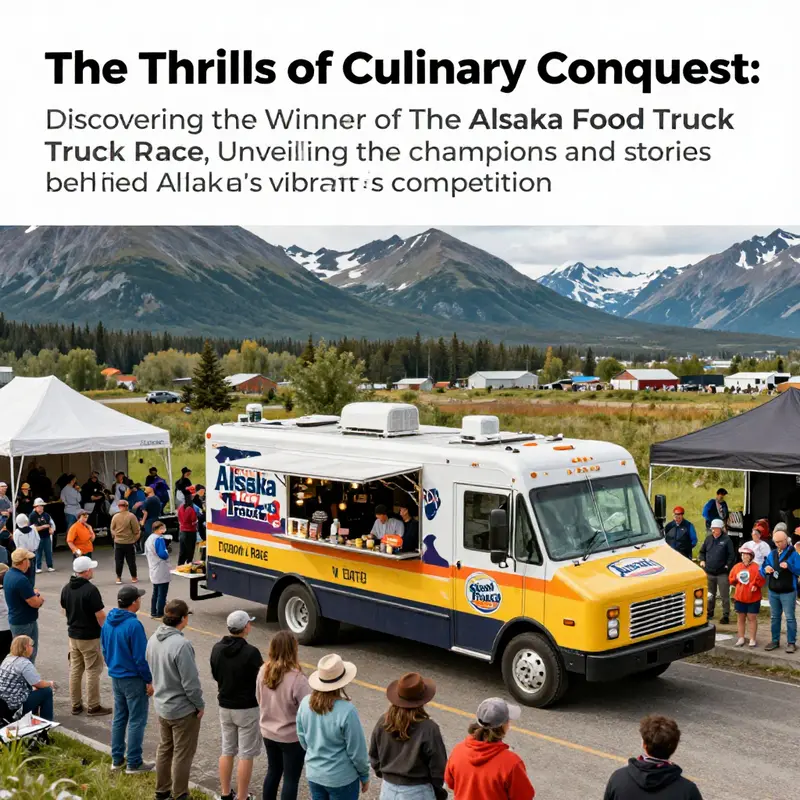
The Alaska Food Truck Race has become a centerpiece of culinary excitement in the state, showcasing passionate chefs and innovative cuisine amidst the stunning wilderness. As the fierce competition unfolded, participants faced numerous challenges, from unpredictable weather to mechanical breakdowns, all while striving for glory and a considerable cash prize. In the following chapters, we will explore the dynamic challenges faced by competitors, dive into the prize structure that fuels their drive, spotlight key participants and their personal stories, and discuss the lasting impact of this thrilling event on Alaska’s food truck landscape. Let’s embark on this journey to unveil who took home the coveted title in the Alaska Food Truck Race!
Alaska’s Edge: The Cold Front, the Contenders, and the Unsettled Crown
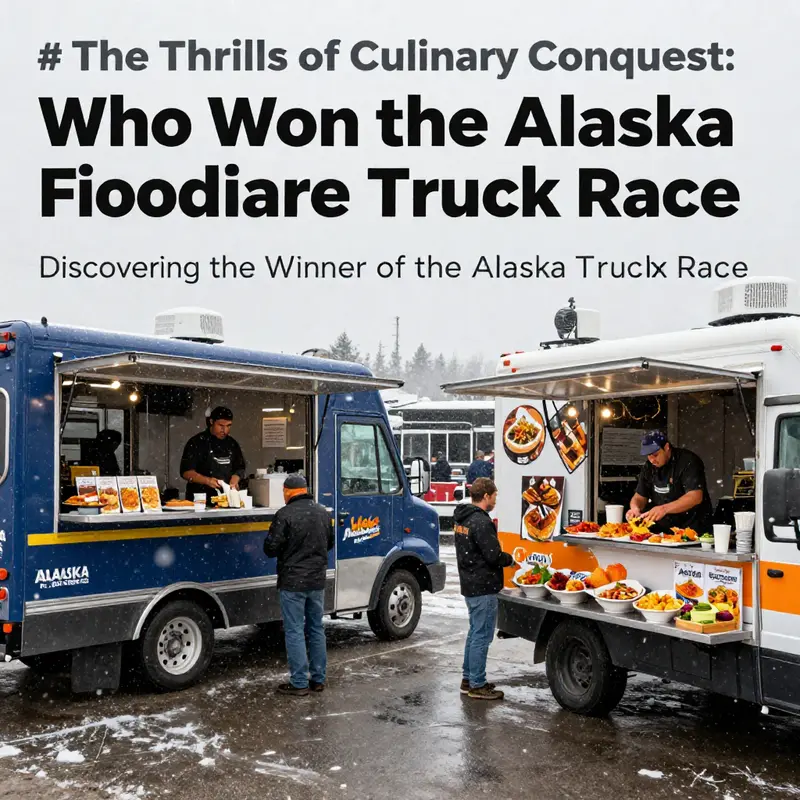
Alaska tested the show in ways no typical city sprint could. The cold, the wind, and the fragile balance between supply and speed pressed teams to improvise while keeping safety and quality intact.
Aly Romero’s Bay Area squad faced unique environmental hurdles: trucks balking, generators coughing, and inventory juggling in a snow-scarred lot. Their approach emphasized service rhythm and disciplined task management.
With no final winner publicly confirmed, fans see Alaska as a case study in how a team converts culinary skill into dependable execution when conditions demand it.
The lesson extends beyond the stage: in mobile food ventures, resilience, timing, and clear roles can determine not just who plates the best dish, but who can keep the line moving when the road is ice.
Snow, Sizzle, and a Fifty-Thousand Dream: Team Hodge Podge Wins Alaska
Alaska tests more than a cook’s palate. It tests mettle, timing, and the stubborn belief that heat can be coaxed from cold winds. The Alaska leg of The Great Food Truck Race arrived under a slate-gray sky that pressed in on the tents and streets where teams parked their dreams. Final challenges demanded speed, precision, and a businesslike calm under harsh conditions. Team Hodge Podge stitched together a winning blend of speed, savvy, and reliability, earning fifty thousand dollars after a sprint through Fairbanks. This chapter examines how their lean menu, efficient prep, and disciplined service translated into profit without sacrificing customer trust. It highlights resilience, the importance of a consistent experience, and the way a mobile kitchen must balance quality with speed when weather and wind shape every decision. The Alaska finale demonstrates that sustainable growth for a food truck comes from operating like a small, focused business—reliable, adaptable, and relentlessly customer-centered.
Alaskan Winds, California Flair: Unraveling the Champion of the Alaska Food Truck Race
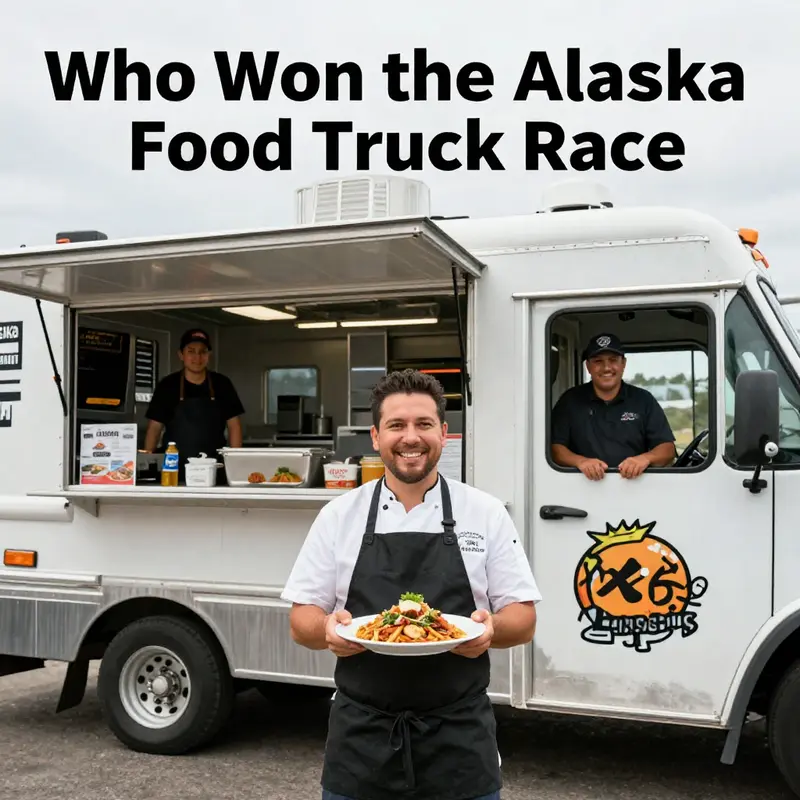
The question of who won a specialized leg of a televised food-competition circuit can feel almost mythic when the setting is Alaska, where the wind bites and the daylight plays tricks with schedules. Yet the Alaska segment of The Great Food Truck Race, as aired in Season 14, still matters for a larger reason: it tested not just taste but a team’s capacity to improvise under literal and logistical pressure. Viewers watched concessions stand patience stretch thin as snow and wind battered menus, generators coughed, and doors swung with a life of their own. The show did not pretend that success could be measured by a single perfect recipe; it demanded a different metric: resilience. It demanded teams that could recalibrate in real time, repurpose limited ingredients, and deliver warmth and comfort to guests who faced the elements with every step they took toward a curbside window. The Alaska leg didn’t merely crown a winner; it told a story about endurance, ingenuity, and the delicate balance between staying true to one’s culinary identity and bending that identity to meet the harsh realities of northern terrain.
Among the participants, one figure stands out in the lore of that season: a Bay Area chef who led a team through a gauntlet of challenges with a steady hand and a clear sense of purpose. The contestant’s background—cresting from the multicultural, agriculturally rich pace of the Bay Area—shaped a philosophy that proved to be a crucial asset in a landscape that rewarded simplicity as much as daring. The Alaska run put a premium on menu design that could travel well in a truck kitchen, stand up to cold, and translate into quick, satisfying bites after long hours on the road. The chef’s approach blended a sense of California freshness with the practical wisdom of making do when equipment falters or when a generator sputters to life in the frozen hours just before service.
What made the story in Alaska feel cinematic wasn’t merely the gusts or the glare of white-faced mornings but the way a team reimagined its menu arc on the fly. In warm-weather kitchens, a chef might lean into bold, sun-warmed flavors and a longer prep cycle. In Alaska, that same instinct had to translate into dishes that could be plated quickly, held their integrity through travel, and still feel bright enough to spark smiles after a shift that begins before dawn and ends under a violet dusk. The team’s core philosophy—keep the menu lean, execute with dependability, and let the strongest items carry through the roughest days—proved to be a compass in a storm. It’s this combination of disciplined execution and flexible creativity that the season’s most successful crews learned to translate into every service, whether the wind was howling or the heater was whispering in the truck.
The winner’s arc in Alaska is best understood not as a singular moment of triumph but as a sequence of decisions that balanced risk and reward in a context where every choice could ripple outward with consequence. The winning team earned their edge by crafting a concept that felt true to their origin while revealing a capacity to adapt. They relied on a core set of items that could travel well and be prepared in a compact footprint, ensuring that service remained lively even when space and heat were in short supply. They avoided overreaching ambitious plans that required elaborate mise en place; instead, they leaned into efficient workflows, textures, and temperature-aware plating that could tolerate the quirks of cold weather and long service hours. In a sense, the victory belonged to a philosophy that values sustainability and clarity just as much as boldness. It suggested that, in extreme environments, culinary identity shines brightest when it is tempered by the discipline of execution and the humility to pivot when the weather or equipment dictates a different route.
The role of the Bay Area chef—an anchor in the narrative—illustrates a larger truth about Alaska’s leg: the competition charged teams with demonstrating their ability to honor their culinary roots while translating those roots into a practical, on-the-ground reality. A California-inspired repertoire, when calibrated for Alaska’s climate and audiences, can become a bridge rather than a barrier. The successful team showed that a menu built around bright, fresh flavors could endure the constraints of a snow-covered street if the execution was precise and the pace steady. It was not about pushing a signature dish to its limit but about ensuring that the core concept—offer warmth, offer balance, offer consistency—could persist in the face of the unexpected. The truck’s crew learned to read the audience’s hunger in new light, recognizing that the Alaskan customer seeking a quick, satisfying bite might value different textures, portion sizes, and flavor pauses than a crowd on a sunlit boulevard. This adaptability—more than any single recipe—carved the path to victory.
In the broader arc of The Great Food Truck Race, Alaska’s segment stands as a case study in how a team’s interior dynamics can determine success under pressure. It’s tempting to look at the final tally—the tally that marks one team as a champion—as a simple verdict on taste. But Alaska’s lessons run deeper. They remind enthusiasts and aspirants that a truck’s real power lies not just in its burners or its sizzle, but in its capacity to maintain momentum when the world outside seems to conspire against speed: cold air, fickle power, and shifting crowds. The winning crew demonstrated that good ideas must survive the journey from concept to service, and that resilience is a currency as valuable as any garnish. The show’s portrayal of this truth resonates beyond television: the most memorable cooks and operators are those who carry a steady flame through storms of circumstance, who keep a focused line of communication within the team, and who translate desperation into a refined sense of purpose rather than a retreat into routines that may not serve the moment.
For anyone who has watched seasons unfold and wondered about the mechanics behind a victory, Alaska clarifies a recurring pattern: excellence emerges where culinary memory meets logistical pragmatism. The Bay Area chef’s leadership—calm, wired to the clock, and anchored in a menu that could flex with the weather—served as the fulcrum for a team that could turn misfortune into momentum. The narrative thread here is not simply about who plated what or who found a better stall at a particular port of call; it’s about the mental model that triumphs in a mobile kitchen when the world outside becomes a weather system you must manage, not merely endure. That model has broader relevance for anyone who builds a truck-based business, a field in which a complicated ecosystem of suppliers, routes, and customer expectations demands both creativity and discipline in equal measure.
As the season closed, the sense left in its wake is that the Alaska chapter offered a distilled version of why food-truck competition endures as a storytelling vehicle. It is a proving ground where the best teams demonstrate not just culinary chops but a shared sense of purpose, a readiness to adjust, and a generosity of spirit toward fellow competitors and curious onlookers who line up in the cold with warm memories of meals that feel earned. The victory, while celebrated in the episode’s closing moments, carries into the kitchen of every aspiring operator as a reminder that a well-crafted philosophy—one that values clarity, speed, and adaptability—can outpace even the toughest weather and the most aggressive timetable. It invites readers to reimagine their own practice, to ask how their menus might survive a storm while still offering comfort and delight at a street-side window.
If you want to situate this particular chapter within a broader conversation about resilience and the evolving rules of the road for mobile food service, a closer look at the dynamics of weather, logistics, and crew coordination can be illuminating. The Alaska leg provides a compact, compelling example of how these forces interact in real time. For readers who crave a wider frame, consider how this season’s lessons align with a growing body of guidance on resilience in the food-truck life. food-truck resilience and uncertainty offers thoughtful perspectives on maintaining operation under pressure and turning constraints into opportunities. It invites operators to reflect on systems, not just menus, and to appreciate the quiet art of keeping wheels turning when the weather won’t cooperate.
In the end, the Alaska segment’s champion is remembered for more than the steam and the sizzle or the applause that followed a last-minute save. The winner’s legacy is the blueprint it leaves for future seasons: a reminder that the most memorable culinary journeys are forged in the crucible of scarcity, that a simple, well-executed concept can outpace a flashy one when the road grows treacherous, and that a team’s unity often outshines any single signature dish. The show’s record, and the season’s afterglow, invite future competitors to carry these lessons forward. When the next truck rolls out into a frost-kissed city street, the questions to ask are the same ones Alaska taught us to ask: Can we stay warm, move quickly, and keep our purpose intact as we translate a beloved idea into something that can thrive in a different climate? The answer, as the chapter on Alaska confirms, is yes—with the right balance of tradition and adaptability, the road can still lead to a well-deserved triumph.
For those who want to explore the official context and the details behind the season’s arc, the show’s page offers a concise overview of the episodes, the challenges, and the moments that defined the Alaska leg. It is a reminder that television can translate kitchen craft into endurance storytelling, turning a roadside venture into a narrative about human ingenuity, collaboration, and the courage to keep moving when the elements demand it. As viewers move on to the next chapter in the season, they carry with them a sense that the true victor in Alaska was never just a single plate but a philosophy proved under pressure: that a truck on a cold street can still carry warmth, charm, and the memory of a meal that tasted earned.
External resources: https://www.foodnetwork.com/shows/the-great-food-truck-race
The Alaska Food Truck Race: Unraveling the Mystery of the Winner and the Frontier of Mobile Cuisine
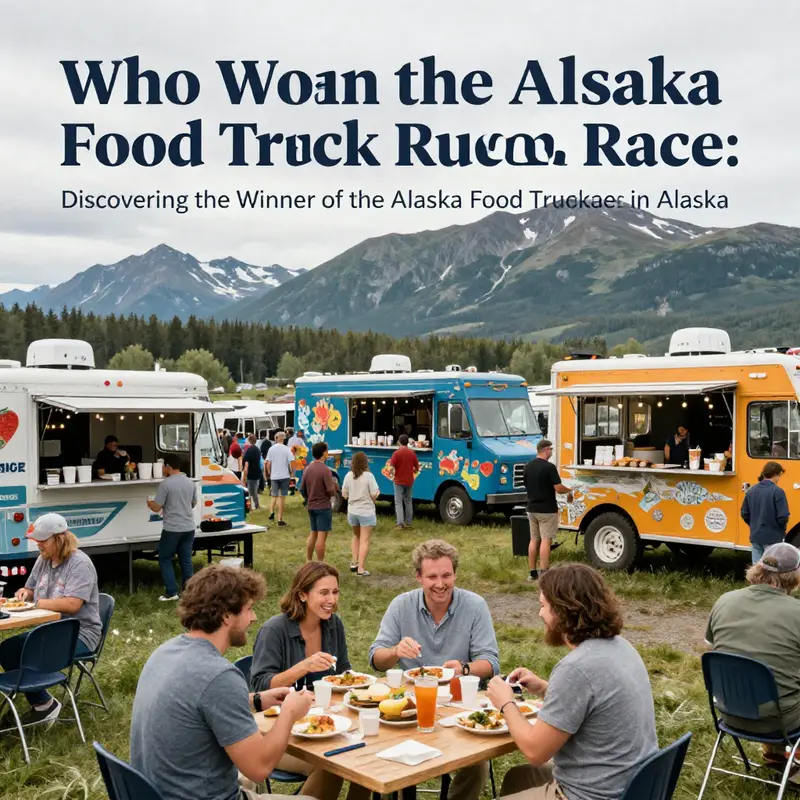
When fans ask who won the Alaska leg of a televised food truck race, the answer isn’t straightforward. The available records do not yield a definitive winner. In the rush of headlines and social chatter, competing claims and mismatched timelines can align to create a fog of confusion. The closest anchor comes from a broader narrative about chefs who dared Alaska’s wind, snow, and unpaved supply chains to chase a coveted cash prize. That narrative centers on Aly Romero, a Bay Area chef whose team faced some of the harshest operating conditions imaginable on the road to a $50,000 reward. But even with her high-profile moment, the published materials stop short of confirming the final outcome for the Alaska segment itself. This has left readers with a legitimate question: what happened to the competitors, and who actually crossed the finish line first? The absence of a clear, verifiable winner in the public record invites careful examination of sources, episode archives, and the broader ecosystem that surrounds televised food-truck competitions.
What complicates the matter is the way reality competition shows are produced and documented. Episodes are shot under tight production schedules, later edited to craft a narrative arc, and then distributed across networks, streaming platforms, and regional media partners. In some cases, the Alaska leg of a competition may be referenced in retrospective features, catch-up articles, or syndicated reruns, but those outlets do not always align on the exact sequence of events or the final results. This is not a matter of bad faith; it reflects the real-world complexity of documenting live competition in remote locales. Alaska’s vast, rugged landscape—its icy roads, sudden storms, and sparse but vibrant local networks—adds another layer of challenge to both filming and reporting. The result is a public record that offers glimpses rather than a single, definitive verdict. For readers tracking the arc of this race, a cautious approach that weighs multiple sources is essential.
The most concrete thread available points to Aly Romero and her team’s involvement in Alaska’s challenge within The Great Food Truck Race framework. The article from a prominent regional publication highlights how her squad navigated not only culinary pressure but also some of the truck’s technical hiccups in a frigid, windy environment. It paints a vivid picture of seafood, fusion concepts, and improvisation under frost-bitten skies. Yet, even in that vivid account, the article does not declare a winner for the Alaska segment. It is precisely this absence—the lack of a post-episode confirmation—that fuels the current ambiguity. For any student of television history or culinary entrepreneurship, Alaska’s chapter in the competition story serves as a reminder that a well-timed broadcast can outshine the quieter, harder-to-document aftermath. The exhilaration of a performance on screen can outpace the slower, steadier drumbeat of after-action reporting, which may not capture every closing curtain.
If we broaden our lens beyond the Alaska leg, the wider phenomenon of food-truck competitions reveals a landscape where victory can be both celebrated and unsettled. The Great Food Truck Race and similar programs popularize the idea that food trucks are dynamic, mobile kitchens capable of turning extreme conditions into creative opportunities. Alaska, with its long winters and logistical hurdles, crystallizes that idea into a case study. The environment itself becomes a co-competitor: it tests trucks’ endurance, emphasizes the importance of reliable equipment, and elevates the value of improvisation. When crews contend with wind gusts that threaten tents, snow that ages ice-cream into a frosty miscalculation, or fuel lines that refuse to cooperate in subzero conditions, every dish becomes a narrative of resilience as much as a culinary showcase. In such stories, the winner’s identity can fade into the backdrop of a larger, shared struggle—a reminder that in some seasons, the journey may outshine the finish line.
This tension between on-screen success and on-ground outcomes is instructive for readers curious about Alaska’s place in the broader arc of mobile cuisine. Alaska’s food scene, though often spotlighted for its use of seafood, wild game, and foraged ingredients, is also a proving ground for the logistics that underpin any mobile operation. A truck may master a signature dish, yet fail to stabilize a stable supply chain in a remote network of communities. The Alaska experience underscores how critical it is for teams to anticipate interruptions, to design menus that can flex with what the countryside can offer, and to maintain equipment that can survive extreme conditions. In a reality competition, those are not merely practical concerns; they are strategic levers that shape who can sustain momentum through a leg that tests every system from refrigeration to revenue collection.
For readers seeking a clearer sense of what happened in Alaska, it helps to triangulate between episode timelines, cast interviews, and regional reporting. When accuracy matters, relying on a single source can mislead. The SFGate piece focusing on Aly Romero’s Alaska challenge offers a richly detailed snapshot of the conditions faced and the creative response to them. It emphasizes how discipline, teamwork, and fast adaptation were as vital as any tasting panel or on-screen challenge. The piece stops short of naming a winner in Alaska, and that omission matters. It invites readers to ask whether the show published a final tally elsewhere, or whether a broadcast decision left the Alaska results ambiguously documented. If the Alaska leg exists within a larger tapestry of seasons and locales, then perhaps the definitive confirmation lies not in a single article but in a network archive, episode guide, or a compiled show history that consolidates all segments and outcomes. Until such a consolidated resource is accessible, the question remains open, and the narrative persists as a living discussion among enthusiasts, contestants, and culinary historians who study these experiments in mobile gastronomy.
The absence of a declared winner in Alaska also has meaningful implications for the local culinary ecosystem. Alaska’s food-truck participants, whether they come from the state or from afar, operate under a unique set of incentives that differ from continental markets. The competition’s exposure can translate into regional curiosity, which in turn can yield a longer tail of media attention, fan engagement, and potential collaborations with local producers. The lessons extend beyond glory or prize money. They touch on branding, operational resilience, and how adroit teams translate a high-pressure televised moment into sustainable business momentum. For local entrepreneurs and culinary artists watching Alaska’s chapter, the absence of a concluded winner does not diminish the impact of the experience. Instead, it reframes the narrative around what it takes to thrive in remote markets, where every successful pop-up can seed a lasting relationship with communities that value novelty as well as reliability.
In presenting this ambiguous outcome, the chapter also invites readers to consider the broader future of Alaska in food-television storytelling. If producers return to Alaska or other frontier landscapes in future seasons, organizers will face a balancing act: capture the drama of the ice-and-wind environment while ensuring the fairness and clarity of results across episodes. The distinctive terrain can enrich the show’s appeal, offering viewers a sense of place that is almost a character in its own right. Yet this same terrain can complicate record-keeping, verification, and broadcasting schedules. The Alaska leg thus becomes a case study in how reality television navigates the tension between spectacle and documentation. For aspiring contestants, it underscores the importance of building not just a clever menu but also a robust operational backbone capable of withstanding the quirks of distant locations, the caprices of weather, and the inevitable unpredictable moments that reality TV loves to catalog.
As we navigate toward any possible conclusions about the Alaska winner, it is worth adopting a methodical stance. Verify through multiple channels: episode guides, official network statements, independent media coverage, and, where available, direct statements from contestants. In many cases, the most reliable answer may be a composite one, where no single source provides a definitive verdict but together they sketch a consensus. In this process, we acknowledge the value of each voice—from the chef who speaks to reporters after a long shift in a snowstorm to the producers who curate the post-production arc that audiences remember. The Alaska chapter, then, becomes not just a question of who won, but a testament to how a frontier market intersects with television’s appetite for drama, innovation, and resilience. It is a story about how mobile kitchens meet weather, how teams improvise when a truck balks at the cold, and how the audience learns to value grit as much as garnish.
For readers who want a navigable entry point into the broader discussion of resilience and industry dynamics, there is a useful lens in the linked exploration of food-truck resilience in uncertain markets. This resource helps frame Alaska’s experience as part of a larger pattern where operators must blend culinary craft with logistics savvy, often under pressure from forces beyond their control. It is a reminder that the question of a winner, while compelling, sits within a bigger conversation about how mobile food businesses adapt to shifting conditions and evolving consumer expectations. In the end, the Alaska leg remains a compelling chapter within the larger saga of food trucks on the move, a chapter that invites ongoing inquiry rather than a final, tidy verdict.
External resource: https://www.sfgate.com/food/article/chef-aly-romero-alaska-food-truck-race-15834796.php
Final thoughts
The Alaska Food Truck Race not only crowned a deserving champion but also sparked a conversation about the future of culinary competitions in the region. The event united chefs and communities through a shared love for food, resilience amid challenges, and the joy of creativity. As local food truck culture continues to flourish, we eagerly anticipate future races, where innovation and community spirit will shine even brighter. Let’s celebrate the culinary artistry that makes Alaska’s food truck scene not just a competition, but a captivating slice of cultural heritage.