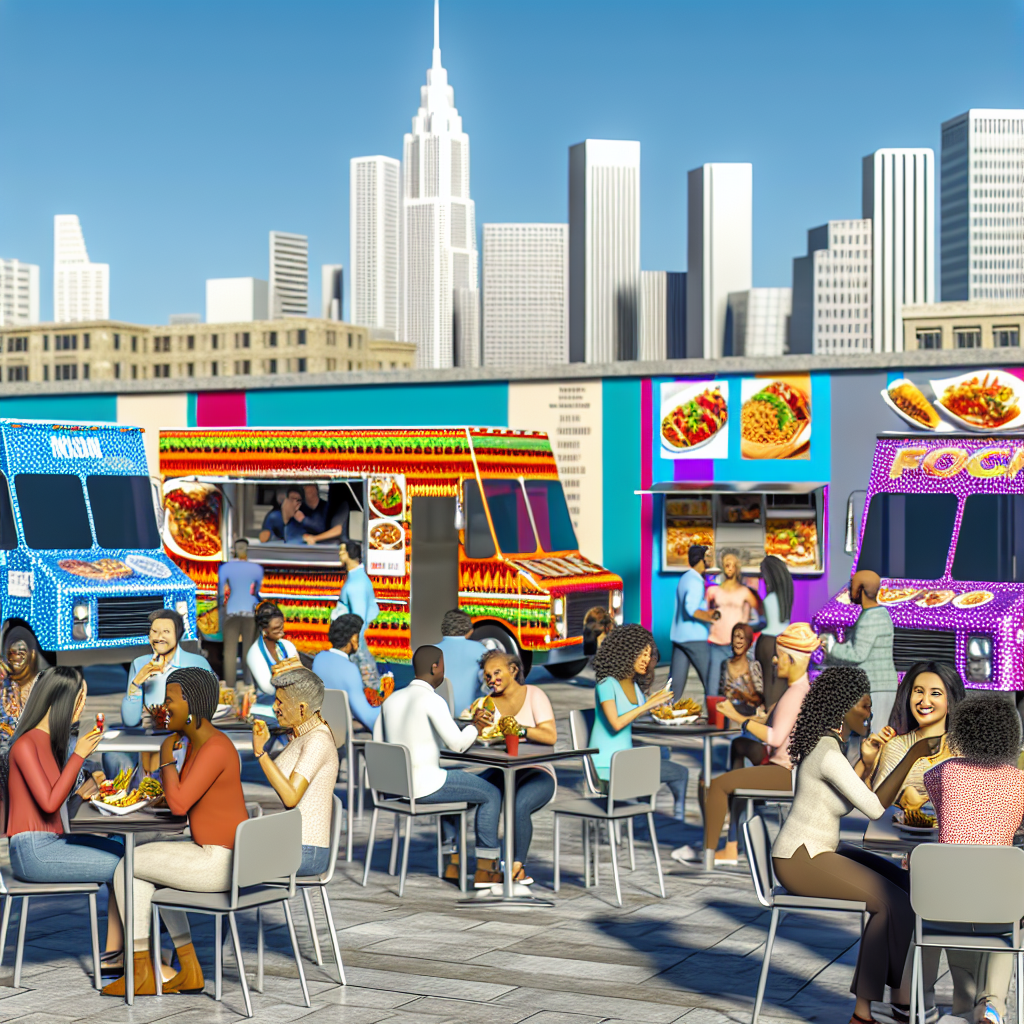
Food trucks are not just mobile kitchens; they are vibrant hubs of culinary creativity that can elevate any event! Whether you’re an event planner aiming to impress guests, a corporate HR team looking to treat your employees, or an individual consumer craving a taste of street food magic, the ability to rent a food truck opens up exciting possibilities for every occasion. This guide will take you on an engaging journey through the best avenues for renting a food truck. We’ll explore online platforms offering a plethora of choices, local companies providing seasonal rentals, and options allowing for specific needs and customizations—making it easy for you to find the quintessential food truck. Each chapter will equip you with the knowledge needed to make your next event unforgettable.
Renting on Wheels: Navigating Online Platforms to Find a Food Truck for Your Mobile Venture
A food truck can be the most affordable door into a food business that travels to customers rather than waiting for them to come to a storefront. In recent years, the barrier to testing a mobile concept has shifted from finding a single truck to finding the right vehicle at the right terms through online platforms. The market now offers a spectrum of options, from fully equipped mobile kitchens to smaller, specialty carts, and it is all mediated through digital marketplaces that connect buyers with manufacturers, rental firms, and operators around the world. For someone weighing a first foray into mobile catering or a temporary push into a festival circuit, the online landscape serves not just as a catalog but as a negotiation table, a project timeline, and a permit checklist rolled into one. The core value proposition across these platforms is flexibility: the chance to pilot a concept, test demand, and scale without the heavy capital outlay of a full purchase.
At the heart of the online rental ecosystem is a platform that aggregates a broad array of mobile food vehicles. Listings typically cover mobile food trucks, barbecue trailers, ice cream carts, coffee push carts, and even fully customized kitchen-on-wheels. The appeal lies in transparency: detailed specifications, clear pricing, and supplier credentials all presented in one place. When you browse such marketplaces, you can compare unit sizes, equipment packages, power configurations, and whether a unit includes water layouts, exhaust systems, and ventilation. The pricing data you’ll encounter on these listings often reflects the diversity of offerings—ranging from entry-level setups to larger, more equipped rigs—so you can calibrate your expectations to the needs of your cuisine, event type, and service model. On many listings, minimum order quantities are modest, sometimes starting at one unit, which is a practical gateway for first-time operators who want to test a concept with a single vehicle before growing their fleet.
One of the most comprehensive sources in this space is a major global marketplace that explicitly lists rental and purchase options for mobile food trucks. This platform aggregates units that can support a range of culinary needs, including customized barbecue trucks, ice cream carts, and coffee mobile kitchens. For a prospective renter, the listings are a starting point to understand what is available, what the equipment entails, and what the supplier terms look like. The platform’s clear presentation of pricing helps you compare options quickly, though it is wise to treat listed prices as starting points that may shift with configuration, location, and duration of rental. It is also common to encounter suppliers that operate from multiple regions, including both foreign and domestic markets, which expands your possible delivery windows and technical support options but may add complexity to shipping and service agreements. The existence of detailed specifications—covering dimensions, power needs, water capacity, and safety features—helps you assess whether a unit can be integrated into your event plans, kitchen flow, and local regulations without costly retrofits.
For anyone who thrives on the immediacy of digital logistics, the broader ecosystem behind these platforms is noteworthy. There are logistics-centric marketplaces rooted in freight and delivery networks that also touch mobile vendors. Platforms that primarily serve trucking and freight needs often host ancillary solutions for mobile businesses that require a vehicle quickly and with minimal friction. They illustrate how the digital infrastructure supporting logistics and transportation has evolved to accommodate experimental retailers, pop-up concepts, and short-term events. Even though these platforms focus on transport, they offer models and features—instant booking, real-time availability, and flexible rental terms—that resonates with food entrepreneurs who want to move fast. The convergence of logistics apps and mobile food services signals a broader trend: the same tech that underpins freight and courier networks is now enabling a more dynamic, on-demand approach to portable culinary ventures.
Beyond the global marketplaces, a cluster of local rental companies in major metropolitan areas plays a crucial role. These firms often provide short-term or seasonal rentals suited to festivals, corporate events, or temporary business ventures. The advantage of local providers is twofold: faster delivery and more direct on-the-ground support, which translates into smoother logistics when you are operating on a tight schedule or in unfamiliar venues. Local rentals also give you a practical touchpoint for vehicle inspection prior to signing a lease, a critical step when you are testing a concept and want to verify that the equipment, safety features, and plumbing and electrical systems are up to standard. The trade-off can be inventory variability and potentially higher daily rates for short-term use, but the upside is a more predictable service chain, easier maintenance coordination, and a clearer path to ongoing local permitting and health inspections.
As you evaluate these avenues, it is essential to begin with a crisp view of your own objectives. What cuisine are you serving, and at what cadence? Are you testing a concept for a single festival or season, or do you anticipate a longer-term street-vending operation? Answers to these questions shape the kind of vehicle you should pursue, the rental term that makes sense, and the level of equipment you need. If you are contemplating a broad menu with fryers, griddles, and refrigeration, your vehicle will need robust power supply arrangements, appropriate ventilation, and a kitchen workflow that minimizes bottlenecks during peak service. If your concept leans toward grab-and-go items such as coffee or desserts, you might prioritize compact footprints and lighter setups. The flexibility of rental platforms means you can adjust your choice as you learn, but that adaptability only pays off if you approach the search with a clear picture of your operating model and a plan for evaluating fit during a trial period.
A practical step in this process is to translate your concept into measurable specifications. You may find that a particular unit size is a better fit than another because it matches your expected customer flow, the space you will operate within, and the staff you plan to employ. On a platform with robust listings, you can compare units by physical footprint, kitchen layout, and included equipment. Prices can vary widely, and listings often annotate whether the price reflects a bare chassis, a mid-range kitchen setup, or a fully equipped operation. In some cases, rental terms are offered with flexible durations, allowing you to pay by the day or by the event, which is especially useful for pop-ups and seasonal programs. The range of prices you will encounter often aligns with the scale of the kitchen and the sophistication of the equipment included. You might see figures that begin around a modest level and extend well into the higher end, especially if the unit comes with specialized cooking modules, premium ventilation packages, or dedicated service support during the rental period.
If you are still narrowing down the best fit for your concept, it can be helpful to consult resources focused on selecting the right model. For example, a dedicated guide on choosing the right food truck model offers insights into how different configurations align with menu strategies, space constraints, and service styles. The linked resource provides a thoughtful overview of model considerations and helps you map your culinary plan to a vehicle design. You can explore that guidance here: Choosing the right food truck model. As you read, keep in mind that the goal of renting is not simply to secure a vehicle, but to secure a vehicle that reinforces your brand, supports your service tempo, and integrates smoothly with your local operating environment.
When you begin contacting suppliers or arranging a rental, you will want to capture a few core data points so you can compare apples to apples. Confirm the nominal footprint and the door-to-door length, width, and height to ensure the unit can access your event space and your storage location during off hours. Check the power configuration, including the type and number of generators or shore power options, as well as the voltage and amperage the unit requires. Water capacity, waste tank size, and the availability of a handwashing station or separate sinks matter for health compliance and for daily operations. Gas and electrical safety features should be clearly documented, along with fire suppression equipment and training materials if you plan to staff the truck yourself. Ventilation systems should be reviewed, especially if you intend to use high-heat appliances or fryers. If the rental includes equipment such as fryers, griddles, steamers, coolers, and a refrigerator, verify that these units are serviceable, calibrated, and included in the rental price or, if not, provided as add-ons with transparent terms.
Another layer of due diligence concerns the handling of permits and insurance. Health department requirements, street vending permissions, and event-specific permits can vary by city and by venue. Some rental arrangements assume you will manage licensing yourself, while others offer advisory support or even bundled services to streamline compliance. Insurance coverage—whether liability, damage, or cargo insurance—will be a critical line item in your cost structure. Ensure the rental contract clearly states who is responsible for damages beyond normal wear and tear, how the vehicle is to be delivered and returned, and what happens if the vehicle arrives late or fails to perform as advertised. The more transparent the contract terms, the easier it will be to avoid disputes that could derail a pop-up schedule or a festival appearance.
Operationally, rental models often include a mix of delivery, setup, and ongoing maintenance support. Some providers offer turnkey solutions that include setup and teardown assistance, staff training, and on-site troubleshooting during the rental period. Others are leaner, requiring you to manage the logistics, the food preparation, and the daily care of the equipment. The choice depends on your capabilities, the complexity of your menu, and how much time and resources you can devote to operations during a busy event window. If you are testing a concept, a lighter support package can be appealing, but if you are planning multiple events in a short span, an assurance of reliable service and timely maintenance becomes more valuable.
Pricing on rental platforms generally reflects the unit size, equipment, and rental duration. A unit with a complete kitchen setup and higher-end appliances will command a higher daily rate than a smaller, simpler module. Listings may show pricing ranges that help you budget at the top level, but deeper engagement with the supplier will reveal potential add-ons and optional services. For example, you may encounter a price bracket that covers the base vehicle with standard equipment, while additional modules such as extra refrigeration units, specialized fryers, or premium ventilation are priced separately. It is not unusual to see prices that range from a modest entry-level setup to more comprehensive packages that exceed several thousand dollars for longer-term rentals. This spread is precisely why you should approach the process with a clear plan for what you will need over the rental period and how you will measure success.
As you chart a path from interest to booking, you should also consider the adaptability of your rental to your brand and concept. The physical shape and the layout of the vehicle can influence how customers perceive your concept and how efficiently staff can operate. If you are exploring a long-term or semi-permanent pop-up, you may want to tilt toward a more robust kitchen layout that can handle higher volumes and a broader menu. If you are testing a short-lived concept, a compact unit that emphasizes speed and simplicity might yield a quicker return on investment and a shorter path to profitability. This alignment between vehicle type and business model is one of the strongest reasons to treat the search not as a one-off purchase decision but as a strategic probe into what works for your culinary vision and your customer base.
In practice, the renting path often involves a staged sequence. You begin with a careful needs assessment, listing your menu concepts, target events, expected service volume, and geographic footprint. Then you browse listings, focusing on units that appear to meet your size, equipment, and power needs. You reach out to several suppliers to confirm availability, discuss rental terms, and request a formal quote that includes delivery, setup, maintenance, insurance, and any required deposits. After you receive proposals, you compare them not only on price but on the reliability of the supplier, the legitimacy of the equipment, and the level of support you expect during the rental period. If possible, arrange a pre-rental inspection or a video check to confirm the condition of the vehicle, the cleanliness of the kitchen space, and the operability of essential systems before you commit. Once you have selected a unit, you will need to coordinate logistics for delivery to your event site, arrange for any required on-site electrical or water connections, and prepare a plan for daily operations that aligns with the kitchen layout and staff workflow.
Across this process, the value of platforms that merge marketplace transparency with logistical support becomes evident. They allow you to iterate quickly—rent one unit for a weekend festival, learn how it performs, and then decide whether a longer rental, a larger kitchen, or a different vehicle configuration makes sense. The ability to pivot without the weight of ownership is a meaningful advantage, particularly for entrepreneurs who are testing a concept or operating in a market with seasonal demand. You are not simply renting a vehicle; you are renting a capability, a service standard, and a temporary operating system that can power a brand’s mobile presence.
To close this loop, remember that you do not have to navigate this landscape alone. Engage in the shared knowledge that exists within the community of mobile food operators, landlords, and service providers. Read listings with a critical eye and use those data points to form a clear picture of what your business requires. But also keep your eyes on the future: digital platforms are evolving, and the ability to book, adjust, and scale in near real time will likely become even more central to successful mobile ventures. The goal is to arrive at a rental arrangement that feels like a low-friction step toward feasibility rather than a barrier that drains your time and budget. When you find a vehicle that aligns with your culinary concept, your site constraints, and your projected service tempo, you will have a reliable, scalable tool to take your business onto the street, into festival grounds, and into neighborhoods you previously could only reach with a borrowed stand or a rented kitchen trailer.
External resource: https://www.alibaba.com
Renting on Wheels: How Local Firms and Seasonal Rentals Open Doors to Ready-Made Kitchens
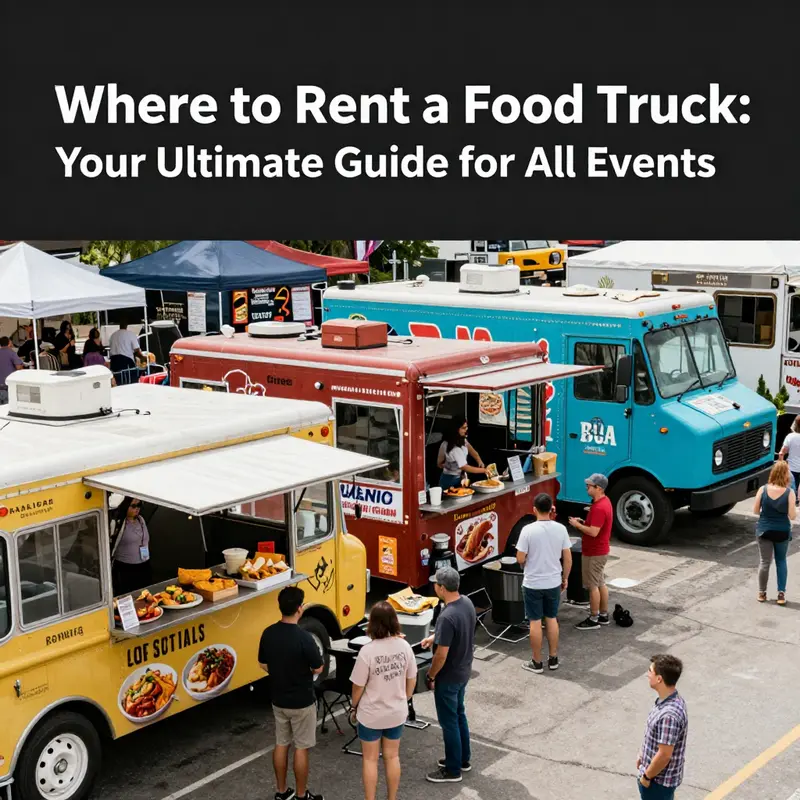
Across the landscape of mobile food service, the question “where can you rent a food truck?” often points to more than a transaction. It signals a practical pathway for testing concepts, fueling temporary events, or launching a new venture without the heavy commitment of ownership. In many regions, you can source rentals through a mix of local specialists and flexible rental networks that tailor fleet options to the season, the event, or the street corner where a dream may become a daily routine. The rental world is grounded not just in the vehicles themselves, but in a web of logistics, support, and timing that make a mobile kitchen viable at a moment’s notice. The emphasis shifts from owning a fleet to accessing a capable kitchen-on-wheels with predictable terms, reliable maintenance, and a setup that matches both menu and venue. For anyone examining this path, the journey begins with understanding the landscape: the kinds of rentals available, who offers them, how pricing works, and what operational realities must be anticipated to keep a pop-up thriving from one festival to the next.
The rental landscape is broad, and it has grown more sophisticated as food entrepreneurs test concepts in diverse contexts. In many regions, you can secure everything from compact push carts and stainless-steel mobile kitchens to fully equipped trailers with refrigeration, ventilation, and cooking systems. The simplest form—small carts or push units—appeals to curbside tasting events, farmers’ markets, and short-term pop-ups that require flexibility more than heavy-duty throughput. At the other end of the spectrum, larger, fully built-out mobile kitchens cater to festivals, catered events, and temporary campuses where volume matters and speed is essential. Some operators even offer mobile bars or beverage-service setups that pair well with gelato stands, coffee carts, or street-food concepts that center on social venues and nightlife. This spectrum means that a renter’s first step is to define the scale of the operation, the menu, and the expected cadence of events.
Where these options live is also evolving. While global sourcing platforms connect renters to fleets across regions and borders, many buyers still find the most dependable matches close to home. Local rental companies in major cities often maintain fleets that can be delivered, tested, and set up for a specific event date. These local providers frequently offer seasonal terms—an arrangement that aligns with peak tourist periods, summer fairs, or holiday markets—so operators can tap into heightened demand without carrying a year-round fixed asset. The value of a local rental goes beyond the vehicle itself. It includes on-site support during a festival, easy instrument swaps if a menu shifts, and the chance to inspect the equipment before committing to a longer-term lease. A hands-on walkthrough can reassure a first-time operator that the gas line, the exhaust system, and the water supply are up to standard, and it gives an immediacy that online listings alone cannot provide.
Within this ecosystem, rental options span distinct configurations. You may encounter stainless steel kitchens with integrated refrigeration and hot‑holding, or you might encounter modular packages that let you customize with a grill station, flat-top griddle, or steam cabinet depending on the day’s menu. Some fleets emphasize mobility and speed, offering diminutive, easy-to-park carts that slide into tight urban spaces. Others emphasize capacity and reliability, with trailers designed for longer shifts and rough weather. The variability means that the decision rests not only on what you want to cook, but where you will operate, how many staff you plan to employ, and how many hours you expect to run the unit each week. A thoughtful rental plan considers not just the kitchen function, but the surrounding equipment that makes a shift possible: a generator, water tanks, waste management, and a backup option if the main system fails mid-event. The aim is to build a turnkey experience that reduces friction—the more you can offload to the rental provider in terms of maintenance, compliance, and incident response, the more time you have to focus on your food and your customers.
In discussing the practicalities, it’s helpful to frame rentals as a three-layer decision: the vehicle itself, the utility needs, and the operational support. The vehicle is the most visible layer. It is the stage on wheels and the brand face you project to the public. A good rental should provide a vehicle that is clean, inspected, and compliant with local vehicle standards. The utility needs are the next layer: power, water, waste, and ventilation. Some sites supply power via a portable generator, while others provide connections to a venue’s electrical system or a dedicated utility line on site. Water supply and waste management can be simple in some configurations and more complex in others, depending on whether your concept relies on fresh water for handwashing, steam, or coffee extraction. The final layer, operational support, determines how smoothly your days unfold: on-site setup and teardown, technician availability, spare parts, and rapid response in case of equipment hiccups. Each layer interacts with the others, and a mismatch—such as a cart that cannot feed a peak-length service due to inadequate power—can quickly turn a promising event into a logistical headache.
From a menu-planning perspective, rental fleets are most valuable when they offer flexibility. A smart rental plan anticipates the typical constraints of outdoor service: weather, crowd flow, and the timing of peak hours. It also anticipates menu evolution. A concept that starts with coffee and pastry may expand to savory bites or dessert items as demand shifts; the rental agreement should account for this by permitting basic modifications or reconfigurations without excessive downtime or cost. When a rental plan aligns with a menu strategy, the operator can test ideas in real-world conditions and iterate quickly. This is particularly important for first-time operators who want to learn what customers actually want, not just what they hoped they could sell from a dream kitchen.
One practical way to navigate rental options without becoming overwhelmed is to begin with a clear picture of event engagement. Think about the kinds of venues you expect to attend most often: street festivals, stadium tailgates, farmers’ markets, corporate events, or campus fairs. Each venue has its own tempo, its own audience, and its own rules about parking, power, and waste. A local rental partner who has experience serving those locations can be a priceless ally. They can advise on the best vehicle type for the typical venue profile, whether a compact cart will be sufficient or a larger trailer is required to sustain a longer service window. They can also provide social proof from other operators who have run similar concepts in the area, including insights about what worked, what didn’t, and what hidden costs emerged after the first few events. For an operator just beginning to explore rentals, this knowledge helps define the minimum viable fleet and the ideal supportive services they should seek.
The path to renting becomes clearer when you position it as a collaboration rather than a one-off rental. A reputable local provider will welcome a conversation about your vision, your expected event calendar, and your anticipated menu mix. They will walk you through the kinds of fleets they maintain, explain how they handle maintenance and cleaning between events, and outline what is included in the rental terms. They will discuss the lead times required to secure a vehicle for a busy weekend and how to handle back-to-back events without overtaxing the unit. They will also discuss insurance coverage, which is often a non-negotiable requirement for events in public spaces. Understanding these aspects early on helps you budget accurately, negotiate terms that are fair, and avoid surprises when the calendar fills up. The more precise you are about your needs, the more likely you are to land a vehicle that feels right on the day it matters most.
To illustrate how this plays out in practice, consider a scenario in which a new concept plans to test at multiple weekend markets during the summer. A rental strategy might begin with a single compact unit to gauge demand and to learn the operational rhythm of a mobile kitchen. As confidence grows, the operator could add a second unit for parallel service at a larger event. Seasonal terms could be defined to align with peak market days, with a clause that allows an extension if a market proves particularly successful. The operator might also request a partner who can provide standby equipment, a contingency plan for power shortages, and a rapid maintenance option if a component needs service during a busy day. In such a scenario, the rental partner becomes not just a supplier but a collaborator who helps steer the venture through its first season of growth. This is the kind of mutuality that often distinguishes a merely rented kitchen from a foundation for a thriving mobile business.
For readers who wish to explore the broader spectrum of rental sources, it is useful to scan platforms that aggregate fleets and match them to event needs. These platforms typically list the available sizes, equipment configurations, and the rental terms. They also help buyers compare options by price, delivery conditions, and the length of the rental window. The capability to filter by menu type, as well as by vehicle features such as steam capability or refrigeration, can save time and help operators avoid compromising on essential tools. A careful buyer will also check for references from other operators who rented the same fleet. Direct feedback about reliability, ease of setup, and the quality of on-site support can be more telling than glossy photos alone. In short, the rental journey is as much about the people who stand behind the vehicle as about the vehicle itself.
As you navigate these options, a critical step is to document the essential needs in a concise checklist. Start with the basics: what menu items will you serve, how many staff will operate, and how long will each service last? Then add the practicalities: where will you stage the truck, what is the maximum allowable vehicle length in the chosen venue, and what power source is available? Do you need a water supply and waste tank, or will the venue offer those services? Is a generator included, or will you supply your own? Will you require a venting system for smoke and steam? What are the cleaning, sanitization, and turnover expectations between events? These questions shape the fleet choice, the rental terms, and the cost. They also determine whether you need an additional vehicle for back-up or if you can handle a stand-alone kitchen for the duration of a weekend festival.
In this local context, the human element should not be overlooked. A reliable rental partner will provide a point of contact for the lead time, a detailed equipment list, and a clear explanation of what is included in the rental, what might incur extra charges, and what the process looks like if something goes wrong during an event. Before signing, request a written summary that includes the vehicle type, the equipment catalog, the service window, what is included in maintenance and cleaning, and the minimum staff support provided by the rental company. A dependable agreement will also specify who handles permit documentation and who coordinates delivery, setup, and teardown at the event site. The more you can transfer to the rental partner—without relinquishing control over your brand and your menu—the more time you will have to focus on your customers and the quality of your food.
For the operator who wants a direct link to ongoing industry reading, there is value in connecting the rental decision to broader guidance on how to choose and configure a food truck. See the resource that discusses Choosing the right food truck model to frame the equipment discussion around menu, space, and long-term strategy. That article, while focused on model selection, offers practical ideas for translating kitchen capabilities into service outcomes and helps anchor the rental choice to a coherent business plan. By anchoring your rental to a model-informed approach, you can ensure your on-site experience remains consistent with your branding and your operational goals.
In sum, renting a food truck or mobile kitchen is not merely a pause in ownership; it is a strategic move toward flexibility, tested concepts, and market responsiveness. The range of available vehicles and configurations, the breadth of local and regional providers, and the seasonal cadence of events all shape an adaptable, performance-ready platform for culinary ideas. The best rental decisions arise from early planning, clear menus, and honest conversations with providers about uptime, support, and safety. When the vehicle becomes a tool that amplifies your food, your service, and your brand, the difference between a one-off event and a scalable mobile venture becomes a matter of careful alignment rather than chance. And while the immediate need is practical—a kitchen-on-wheels ready for an event—the longer horizon invites you to imagine not just the next weekend market, but a season, a city, or a festival circuit where your concept can thrive timed to the pace of the crowds and the rhythm of the streets.
External resource for broader context on global rental options: https://www.alibaba.com/showroom/food-truck.html
null
null
Final thoughts
Renting a food truck can bring a fresh and exciting flavor to any event or gathering, offering unique culinary experiences tailored to your preferences. Whether you choose to go through established online platforms, connect with local companies for seasonal needs, or explore customization options, the variety of choices available is sure to satisfy every craving. So as you prepare for your next event, remember that a food truck can be the cherry on top of an unforgettable experience—delicious food that transcends the ordinary! Get ready to ride the wave of delectable street food vibes!