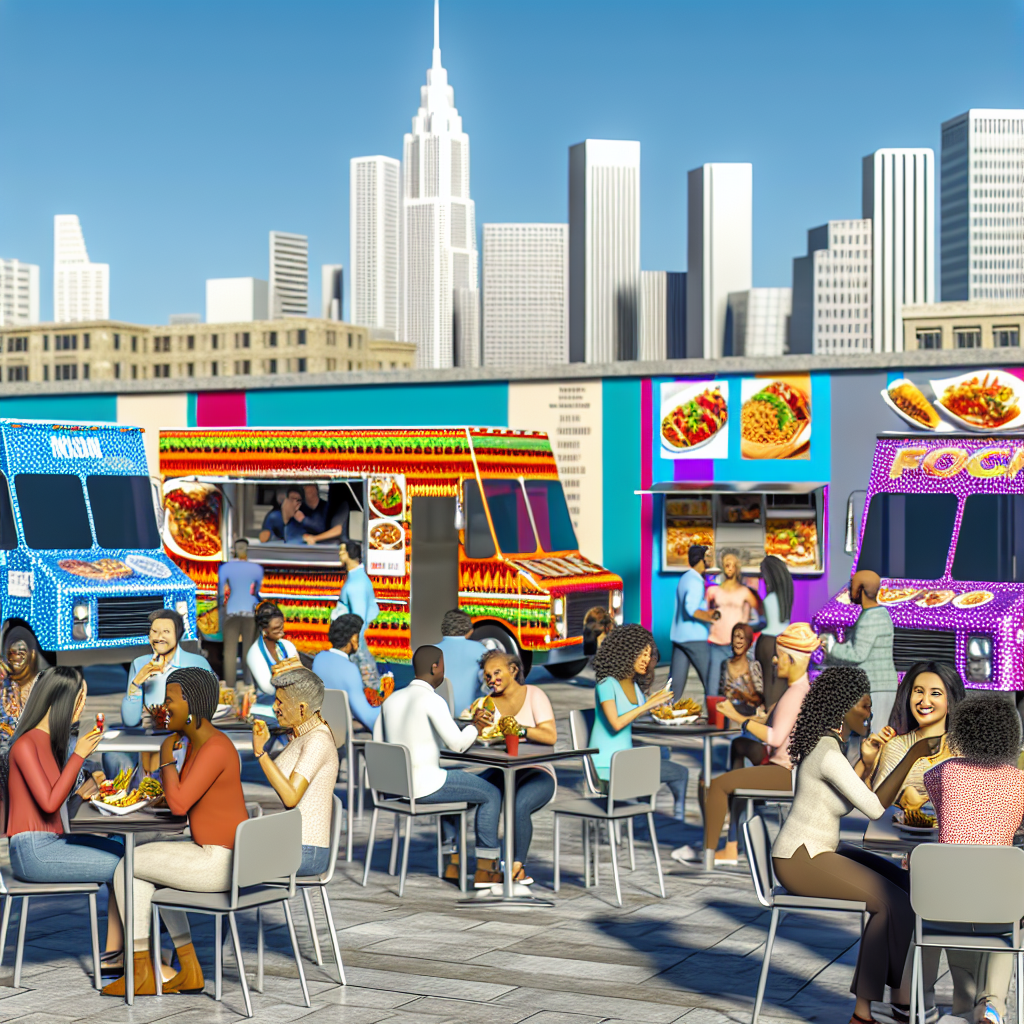
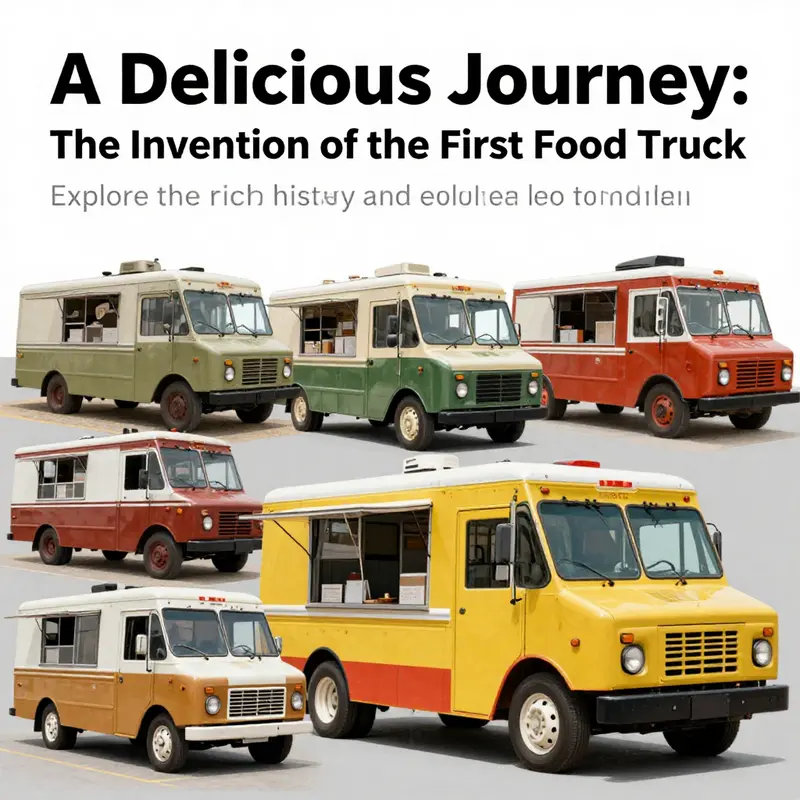
Food trucks have become a vibrant and essential part of culinary culture across communities, offering mouthwatering dishes on wheels. But have you ever wondered when the first food truck was invented? This fascinating journey back to 1930 reveals the origins of these mobile kitchens and how they have transformed over the decades. From early military innovations to the modern-day food truck revolution, we will explore the captivating history, technological advances, and cultural significance of food trucks. Each chapter will unveil key insights into this delicious topic, guiding you through milestones that shaped the food truck culture we know and love today.
null
null
Wheels on the Move: From 19th-Century Carts to a 1930 Military Kitchen and the Birth of the First Food Truck
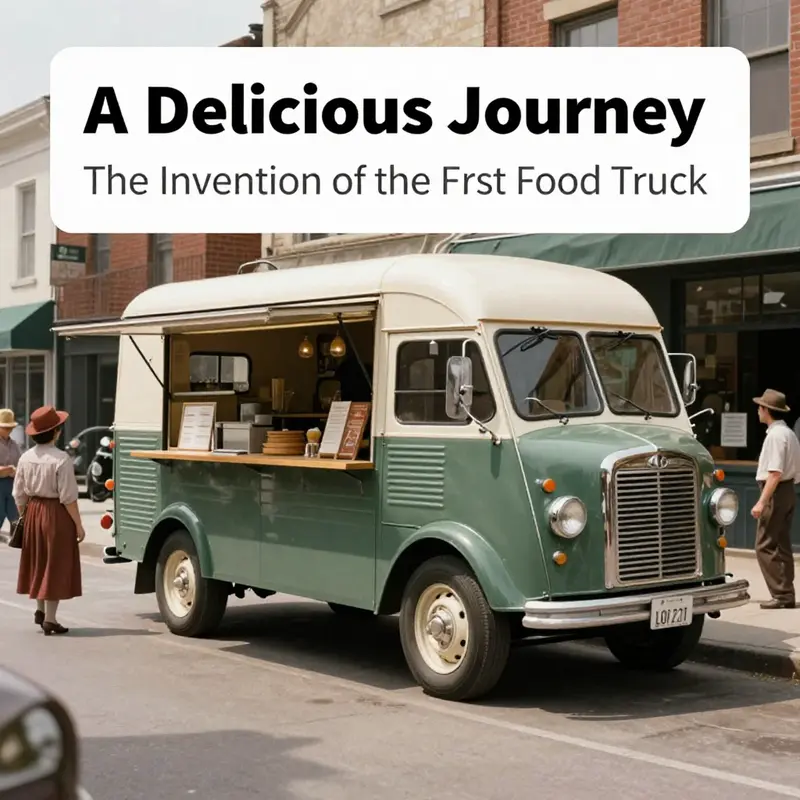
The story of the first food truck is not a tale of a single invention but a long arc that stretches back to the textures of urban life, industrial growth, and the need to feed crowds on the move. While today’s food trucks symbolize a vibrant street economy, their roots lie deeper than the modern van or trailer. They are the inheritors of a century and a half of experimentation with mobile kitchens, portable heat, and the widening reach of city labor. In tracing this lineage, we encounter a layered history in which the 19th century’s accelerations of technology and population density set the stage for a wartime solution in the 20th century, which then evolved into the civilian catering vehicles that populate today’s streets. The question of when the first true food truck appeared thus becomes a question about two shifts that traveled together: the shift from home-based cooking to workplace and street provisioning, and the shift from horse-drawn carts to motorized, self-contained kitchens designed to serve prepared meals wherever people gathered.
The 19th century was a crucible for mobile food, even if the term “food truck” would not be coined for many decades. In the United States and parts of Europe, the rapid expansion of cities and factories created a demand for affordable, quickly prepared meals for workers who spent long shifts in industrial settings or on rail lines. Into this environment rolled horse-drawn carts equipped with small stoves and storage compartments. Vendors sold hot dogs, sandwiches, and other simple foods from wheels that could roll from one factory yard to the next or follow a work force through a shift change. This was less a single invention than a social practice evolving under urban pressure: a way to keep pace with worker speed, a way to standardize simple cooking in a compact footprint, and a way to bring nourishment directly to where labor occurred. The notoriety of the “hot dog cart” in several American cities became emblematic of a broader trend that linked mobility with meals. The carts did more than feed; they helped construct urban rhythm, shaping how workers approached time, break, and sustenance as part of the daily grind.
The technology behind these early ventures was as essential as the idea itself. Metalworking advances, the availability of durable wheels, and improvements in compact cooking devices made it feasible to imagine a small, self-contained kitchen on wheels. These were not just ad hoc stalls but early experiments in turning the street into a temporary dining room. Vendors learned to outfit their vehicles with steam or coal-fired stoves, condiment storage, and basic sanitation in a way that could be scaled from a single cart to a fleet serving an entire neighborhood. The cultural shift toward quick, inexpensive dining found currency in the street’s visibility: a moving line of customers, a portable menu, and the ability to serve a city’s lunch rush without the limitations of a fixed restaurant. In this way, the 19th century’s mobile vendors prepared audiences and markets for the later, more formalized mobile kitchens that would emerge decades later. A practical lens on this era is the broader history of mobile vending, which shows how the street embraced speed and convenience as part of everyday life. For an accessible overview of how these early forms set the stage, see the historical narrative on mobile food vending in the 19th century.
As urban life intensified, so did the sophistication of the mobile kitchen concept. By the late 1800s, a more deliberate class of offerings began to appear. Vendors experimented with layout, heat sources, and food safety within the constraints of a moving platform. The culinary repertoire expanded beyond simple sausages and bread to include a broader array of baked goods, soups, and stews that could survive the transit and the weather. The street became a testing ground for how to keep food hot, safe, and appealing under conditions that ranged from bustling city sidewalks to open-air markets. This evolution did not declare itself as a single invention but as a gradual professionalization of a practice—one that would come to fruition as a true mobile kitchen in the decades ahead. It was that professionalization, more than any one device, that forged the identity of the modern mobile vendor. The 19th-century influence is visible in the way contemporary operators think about mobility, menu diversification, and the logistics of feeding a dispersed audience. The idea that a kitchen can be compact, efficient, and travel-ready has deep roots in these early carts and their successors.
If you want a concise bridge between this past and the mid-20th century pivot, consider how industrial needs begin to demand standardized, purpose-built solutions. The first true “catering truck” emerges in the early 1930s, when Americans faced wartime requirements that demanded reliable, scalable provisioning for troops on the move. This is where historical records converge on a pivotal moment: a vehicle designed specifically to carry cooking equipment, prepare meals, and serve them to soldiers without the need for a fixed kitchen. The transformation is not merely about a vehicle with a stove; it is about an idea—packing a kitchen’s capability into a moving platform and delivering hot meals to a mobile force. The concept formalizes the fusion of two streams: the long arc of mobile food provisioning in civilian life and the disciplined, logistical approach that the military applies to feeding large groups under varying conditions. In this sense, the first true food truck can be read as a product of necessity becoming design. Wartime needs catalyze a construction discipline, and that discipline eventually informs civilian uses after the conflict ends. The details of that early 1930s development are well-documented in contemporary historical summaries, which emphasize the shift from ad hoc mobile eateries to a dedicated cooking vehicle.
The evolution did not stop in 1930. A related advancement occurred in 1937, when a semi-trailer cooking vehicle appeared, marking another refinement in the concept. Think of it as a proof of concept that a kitchen can operate behind a moving platform that remains connected to a support system on the ground, enabling greater capacity and more flexible service. The semi-trailer approach suggested a new model for reliability: a standardized kitchen module that could be towed by a vehicle, detached for operation, and reattached for transit. This step, though modest in appearance, broadened the horizons of what mobile food service could look like and how it could scale across different contexts—from military camps to urban street corners. These mid-century refinements helped dissolve the boundary between a stationary dining room and a roving kitchen on four wheels, a boundary that would continue to blur as social appetite for convenience and speed grew alongside technological progress.
If the 1930s are remembered for the birth of the true food truck, the decades that followed saw the concept migrate from military logistics into civilian commerce, and from a few pioneering operators into a spectrum of forms and styles. The postwar era, with its booming urban population and expanding road networks, offered a fertile environment for experimentation. Street vendors began to imagine more sophisticated cooking setups, safer heat sources, and better insulation to manage weather, noise, and smoke in dense neighborhoods. The ideas of efficiency, hygiene, and mobility moved from the fringes of street food culture to the center of municipal planning and entrepreneurship. Regulations, permits, and safety standards began shaping what a mobile kitchen could legally do, and the market responded with variations in size, layout, and capability. The modern food truck, then, is the product of a continuous dialogue between user needs, technological affordances, and the evolving legal and cultural landscape that governs public food service. This is why the earliest carts from the 19th century and the wartime kitchens of the 1930s feel like chapters in a single, unfolding narrative rather than isolated milestones. They are the hinge points through which a portable kitchen becomes a resilient, resiliently diverse vehicle for feeding people on the move.
The precise moment when a cart becomes a truck—when a vehicle-mount kitchen transitions from novelty to necessity—may be debated, but the throughline is clear. The 19th century taught cities that people must be fed where they work and gather, and the 1930s taught nations how to do this at scale without interrupting the flow of a marching timetable. Together, they established the foundational logic of the modern food truck: a compact, self-contained kitchen on wheels, designed to deliver meals quickly and reliably to people who are busy, on the go, or in between commitments. That logic persists today, even as the food truck has diversified into countless flavors, formats, and operating models. For readers seeking practical context on how this lineage influences today’s equipment choices, the practical guide on Choosing the Right Food Truck Models can illuminate the decisions vendors face when translating history into operational reality.
In sum, the first food truck was not invented in a single moment but emerged out of a historical convergence: the 19th century’s urbanization and industrial tempo, followed by a decisive wartime push in the 1930s that codified mobile kitchens as dependable military assets. The subsequent decades carried that blueprint into civilian life, refining and expanding it into the flexible, entrepreneurial form we now recognize on streets worldwide. If you would like to explore the broader historical arc that connects these early carts to today’s mobile cuisines, an external overview provides additional perspective on how this evolution unfolded across different regions and cultures. External reference: https://www.history.com/news/food-truck-history
Wheels on the Frontline: Tech Convergence and the Birth of the 1930 Food Truck
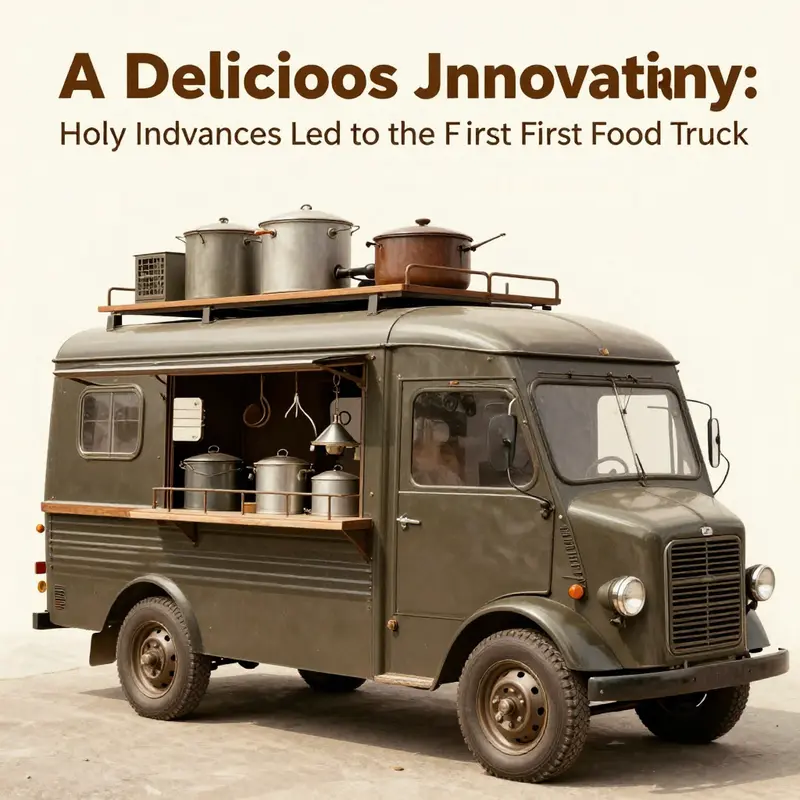
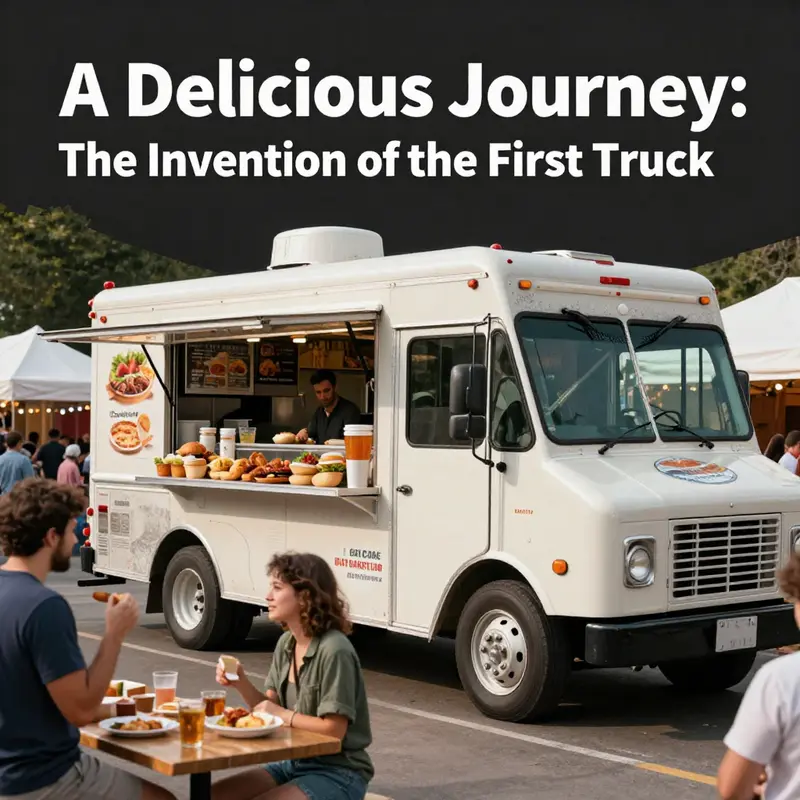
The emergence of the first true food truck did not arrive as a single flash of genius but as a quiet convergence of needs, ideas, and technologies aligned by wartime pressure and urbanizing appetite. When we look past the romantic image of a truck laden with tacos or burgers rolling into a festival, we find a more precise moment in history: 1930, when Americans began to see the mobile kitchen as a practical answer to a pressing demand. The story begins in the military sphere, where the ability to feed troops quickly and reliably under varying conditions mattered as much as the weapons or uniforms issued to soldiers. Yet the line between military necessity and civilian appetite is thin; the same innovations that fed the troops on the front lines would, within a generation, redefine how cities fed themselves. Early 19th-century notions of mobile provisioning existed on the margins—carts trundling through markets, makeshift kitchens in wagons—but it was the 1930s that produced a dedicated, purpose-built catering vehicle that could travel with food, store it safely, and cook it on the move. This is not to suggest that the idea sprang from a single invention. It was the result of layered progress: better ways to keep food cold, safer ways to power cooking equipment, and a logistics mindset that valued speed and reach as much as flavor and price. In the arc of this development, 1930 marks a watershed when the mobile kitchen became a deliberate platform rather than a makeshift adaptation. The public record points to wartime needs and the accompanying push for efficiency as the catalyst that drew these threads together and set a path toward what would become the modern food truck culture.
The technological leitmotif of this transformation centers on refrigeration and the growing ability to preserve perishables during transit. In the early decades of the 20th century, portable refrigeration was no longer a novelty but a working capability for industry and transport. The ability to keep meat, dairy, and fresh produce at safe temperatures while the vehicle roamed from base to base or through crowded urban streets was a prerequisite for any mobile food service that could inspire confidence in both cooks and customers. Before refrigeration, mobile food provisioning faced a serious constraint: perishable ingredients would spoil or lose their quality during short trips, limiting menus and complicating operations. With reliable cold storage, a mobile kitchen could extend its service area, diversify its offerings, and maintain consistent standards across locations. The refrigerator, in other words, did not merely preserve; it expanded the very idea of what a mobile kitchen could do.
Crucially, the emergence of the 1930 catering vehicle was inseparable from the broader social and political context. Wartime logistics demanded that meals be produced and dispensed with speed, discipline, and standardization. The military’s requirement for dependable, efficient feeding solutions accelerated experimentation with compact kitchens designed to fit into a truck chassis or a converted vehicle. The result was not a fancy prototype but a functional system—a cooking space integrated with a transportable cooling area, built to endure the rough rhythms of road travel and long days in service. What began as a roadside solution for sustenance during training and deployment would, in peacetime, translate into a civilian enterprise that could meet urban appetite at street corners, fairs, and festivals with a reliability that diners could trust.
In the background of this historical moment sits a pivotal figure whose work would prove foundational yet quietly understated: the drive to advance transport refrigeration. The early 20th century witnessed a wave of innovations aimed at solving the practical problem of keeping food cold on the move. This was not merely about ice boxes and insulation; it involved practical, engineered systems designed to maintain stable temperatures across varied climates and routes. The incremental progress in refrigeration culminated in a transport refrigeration approach that could be integrated into a vehicle. It was this trajectory that made the concept of a mobile kitchen viable on a mass scale. If a cook could prepare meals on a truck, and the truck could carry ingredients that remained safe from spoilage, then the route from commissary to curbside to customer could be streamlined and predictable. The 1930s, therefore, represent the moment when safety, practicality, and mobility coalesced into a portable culinary service that could traverse city streets without compromising quality.
Among the key figures embedded in this story, Frederick McKinley Jones stands out not merely as a name but as a symbol of a broader technological shift. Jones, a self-taught inventor, advanced the cause of cold food trucking through breakthroughs in transport refrigeration. His work in the late 1930s helped redefine what a vehicle could carry and how long it could preserve perishable goods under the rigors of transit. While the exact commercial branding of his system might enter debates about nomenclature, the essential contribution is clear: by enabling consistent, reliable cooling in moving vehicles, Jones’s innovations dissolved a major barrier to mobile food service. In effect, refrigeration took the fear out of moving perishable ingredients and made mobile kitchens scalable, something that would echo through the decades as food trucks grew from military footnotes into a cultural phenomenon.
This evolution did not erase the image of the earlier mobile vendors who had used carts or improvised vehicles to reach customers. Instead, it reframed the practice. The early 20th century had already seeded the idea that food could travel, but without dependable cold storage, menus remained narrow and inconsistent. The 1930s added a sophisticated layer to this concept. A dedicated cooking vehicle, equipped to prepare meals and preserve them en route, became a legitimate operating unit rather than a roadside curiosity. The transformation was akin to moving from a street stage to a fully equipped theater on wheels, where cooks could deliver hot meals with discipline, and where customers could expect the same level of quality in different locations. The road, previously a barrier to consistent service, became the very stage upon which a new culinary economy could form.
As the decades unfolded, the trajectory from the 1930 inception to today’s varied and vibrant food truck scene continued to hinge on two constants: mobility and safety. The semi-trailer cooking vehicle that emerged around 1937 built on the earlier concept by offering more space and a more robust integration of kitchen and transport capabilities. It expanded the scale at which meals could be prepared and distributed, allowing for more elaborate menus and longer service hours. In the arc of culinary history, this phase marks a turning point where the food truck moved from being a military-adjacent solution to a flexible, citywide service platform. The language of commerce, logistics, and culinary artistry began to intersect on four wheels. The ideas that originated in military supply chains and wartime exigencies were repurposed for civilian markets, festivals, and everyday neighborhoods, gradually shaping a culture that would later celebrate as much as dine on the move.
In looking back, it becomes clear that the first food truck of 1930 was not a solitary invention but a node in a network of technological and social advances. It embodied a confidence that food could be prepared away from fixed kitchens and yet delivered with safety, quality, and speed. The refrigerator’s promise, realized in transport systems that could survive long hauls and shifting climates, gave license to cooks and entrepreneurs to reimagine service models. The mobile kitchen, once an isolated curiosity, began to travel with precision, timing, and warmth—qualities that would define the modern food truck era. This lineage helps explain why today’s diverse fleet of mobile vendors feels both ancient and contemporary at once: it inherits a military-grade reliability and a street-level appetite for novelty.
For readers who want to explore a practical, model-oriented view of how these historic innovations translate into today’s mobile kitchens, the conversation can extend to choosing the right configuration for a modern operation. A thoughtful exploration of vehicle models and layout options can illuminate how that early engineering ethos persists in current decisions about space, workflow, and safety. Choosing the right food truck model offers a contemporary lens on how historical constraints and modern conveniences intersect in the design choices that shape every shift on the curb. This thread—continuity from past to present—helps connect the war-driven beginnings with the entrepreneurial energy that fuels today’s food truck workforce, reminding us that the road to the present is built on the bedrock laid by those early, practical solutions to mobility, safety, and scale.
The narrative also points toward a broader understanding of how technological revolutions occur. They rarely pivot on a single invention; they emerge from a constellation of advances that together alter what is possible. Refrigeration is a prime example. It did not simply allow cold food to travel; it transformed the economics of food distribution, the geography of supply, and the timing of meals. With cold chains in place, producers could plan production and distribution with confidence that quality would be preserved en route. That predictability lowered risks, encouraged experimentation with new menus, and fostered a service mindset that values speed without sacrificing safety. In a sense, the 1930 food truck embodies a milestone in the broader story of how technology enables mobility, adaptability, and scale in the service sector.
As we consider the legacy of this era, it is useful to acknowledge the layered nature of the innovations involved. The mobile kitchen of 1930 did not appear out of a vacuum. It was the result of progress in portable power systems, insulation, the practical integration of cooking appliances into a vehicle, and the new management challenges that came with serving meals beyond fixed locations. It was also shaped by the social and logistical imperatives of the time—the need to feed troops efficiently, to support flexible deployment of resources, and to bring nourishment directly to people wherever they gathered. The combination of these factors created an architecture that could withstand the test of time and, importantly, could be adapted and scaled in the decades that followed. By the late 20th century and into the 21st, that architecture evolved into the thriving industry we recognize today—a mosaic of cuisines, brands, and business models unified by the fundamental principle that good food on wheels is both a delivery mechanism and a social experience.
For readers seeking further historical context on the refrigeration revolution that underpinned this shift, a deeper dive into the life and work of Frederick McKinley Jones provides enriching context. His contributions helped revolutionize cold food trucking and set in motion a series of developments that would echo through every mile of road traveled by mobile kitchens. External readers can explore more about his legacy here: https://www.biography.com/science/frederick-mckinley-jones.
War, Wheels, and the First Kitchen on Wheels: The Military Origins That Gave Birth to the First Food Truck
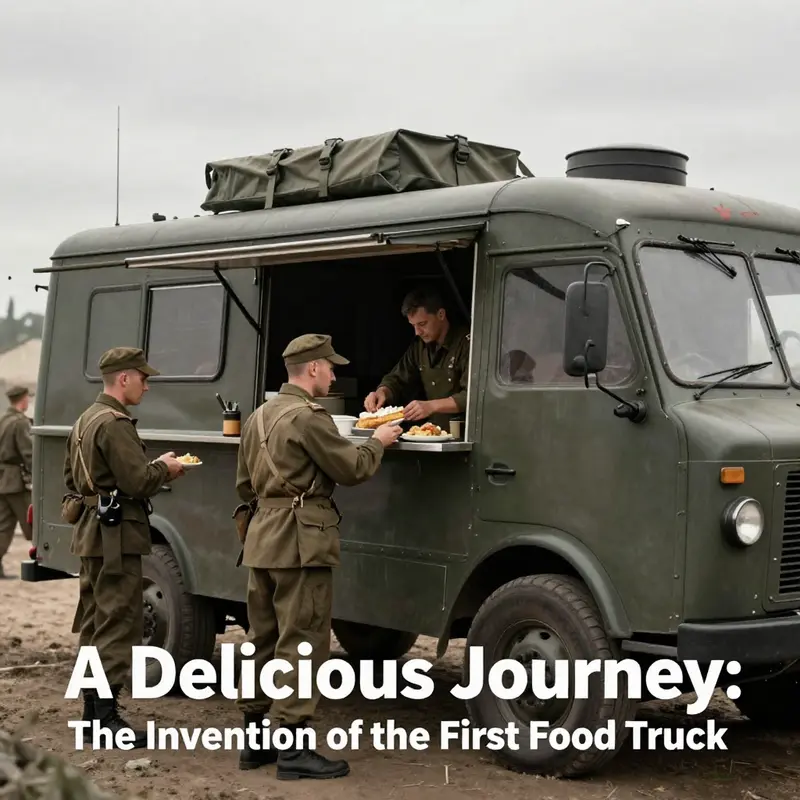
The question of when the first food truck was invented is not a single moment but a lineage of needs, logistics, and ingenuity. In tracing that lineage, we begin with a distinct pair of forces: the stubborn demands of war and the equally stubborn pull of urban life toward portable, efficient commerce. The earliest form of a mobile kitchen, a concept born out of necessity on the battlefield, set the template for a vehicle that could cook and serve hot meals wherever troops stood their ground. In that sense, the military did not merely inspire a service; it created the prototype of a portable dining room that would eventually travel far beyond trenches and tents and into city streets and highways. The journey from battlefield sustenance to the modern food truck is not a straight line, but a braided one, with branches that illuminate both military logistics and civilian appetite for quick, flavorful meals on the move.
The mid-19th century provides the first concrete foothold in this story. In the Bavarian region of Germany, a practical, albeit controversial, experiment unfolded when a man named Cant Lamfort loaded cooking utensils onto a four-wheeled cart in 1853. This arrangement, primitive and far from glamorous, marks the rough arc of the mobile kitchen: it was mobile, it promised hot meals on demand, and it challenged prevailing expectations about how meals could be prepared and delivered under fire or fatigue. What happened next did not jump straight to today’s food trucks. Instead, the idea of a cooking apparatus that could travel with war-tired soldiers slowly matured through decades of conflict and changing technologies. The harsh lesson of the battlefield was clear enough: to feed troops efficiently, you needed mobility, reliability, and speed—the very traits that would later define the modern mobile kitchen used in civilian commerce.
The turning point arrives with a more deliberate, purpose-built solution in 1930, when American forces field-tested and refined a dedicated mobile kitchen vehicle for soldiers. The invention of the first true field cooking truck did not occur in a vacuum; wartime needs pressed engineers and logisticians to conceive a vehicle that could carry not only fuel and gear but a compact kitchen capable of producing hot meals at forward posts. This vehicle represented a shift from improvised arrangements to purpose-designed equipment. It was not merely a wagon with a stove; it was a mobile micro-kitchen, a small factory on wheels, designed to sustain energy and morale amid the hardships of movement and combat. The significance is not only practical; it is conceptual: food service on the move could be scaled, standardized, and deployed with precision, turning a battlefield necessity into a replicable model for civilian use once peace returned or the next frontier called.
A few years later, in 1937, the semi-trailer cooking vehicle emerged. This refinement widened capacity and improved maneuverability, allowing longer cooking runs and greater service reach without sacrificing the speed and efficiency the earlier designs had demonstrated. Although it would be years before civilian entrepreneurs adopted something akin to these configurations, the underlying logic—move the kitchen to the customer, instead of bringing the customer to the kitchen—was now proven. The military’s ongoing drive to enhance logistics and sustainability under pressure acted as a catalyst for innovations that would later migrate from camouflage and field manuals into city grids and street corners.
Across the Atlantic, a parallel evolution was underway in Europe during the mid-20th century. German manufacturers, while constrained by postwar reconstruction, developed field cooking vehicles that broadened the scope of what a mobile kitchen could be. These machines began to be exported beyond their borders, reaching markets that valued mobility, durability, and simplicity of operation. The idea of a dedicated, mobile cooking unit traveled with technicians, soldiers, and merchants, gradually seeding the concept of a host of four-wheeled or trailer-mounted kitchens that could be deployed in various environments. By the Gulf War era, the influence of these early mobile kitchens had become evident in large-scale procurement by Western militaries and their allies. The TF K250-type field kitchen, widely used in modern operations, demonstrated how the mobile kitchen could function as a force multiplier—feeding, sustaining, and boosting the resilience of troops when supply lines stretched or horizons shifted rapidly.
If one follows the chain of invention, the field kitchen on wheels stands as the direct predecessor of today’s food truck. Its core function—mobile cooking and on-site service—became the DNA of the modern mobile-food fleet. Yet the broader, civilian dimension of the concept began to crystallize earlier. Historical scholars and library databases note that in the early decades of the 20th century, mobile restaurants began to appear as urban life and commerce demanded more flexible food service. The dispersion of people into metropolitan cores and the rise of time-constrained workers created a habitat for quick, ready-to-eat meals that could pivot with the street’s tempo. The military’s innovations, therefore, did not simply seed a niche invention; they supplied a robust, scalable template for a public that craved variety, speed, and local flavor in a portable form.
In the narrative of this transformation, two timelines converge. On one track lies the battlefield’s relentless search for reliability under pressure; on the other, the city’s appetite for accessible food that travels with the rhythms of modern life. The first practical vehicles that could cook on the move proved the feasibility of serving hot meals outside a fixed kitchen. In the eyes of planners and craftsmen, mobility ceased to be a compromise and became a strategic advantage. As cities grew and traffic surged, entrepreneurs began to test and refine the idea in civilian markets, turning military know-how into commercial know-how. The challenge they faced remained the same: how to deliver a consistent, high-quality meal quickly and safely to people who were on the move themselves. The methods differed—different engines, different layouts, different safety standards—but the principle endured: feed the crowd wherever the crowd happened to be.
This is where the story ties back to the broader question of when the first food truck was invented. The earliest, recognizable spark—the mobile kitchen on a four-wheel cart—is linked to 1853 and a Bavarian experiment. The more widely cited, modern formulation of a food truck appears in the early 20th century, driven by wartime needs and the evolution of mobile catering vehicles. The narrative is not a simple chronology but a layered tapestry showing how military necessity accelerated innovation, which in turn shaped civilian food service practices. The mobile kitchen’s journey from the field to the street marks a shift in how people think about eating: from a fixed, location-bound service to a flexible, on-demand experience that travels with the day’s movement. And as the 20th century unfolded, the methods refined in war zones would quietly lay the groundwork for a global culture of food-on-wheels that thrives in urban centers, fairs, and pop-up moments alike.
To readers tracing the arc from battlefield provisioning to the modern street, the moral is clear: the first food truck was born from necessity, a blend of military logistics and culinary craft, and then reshaped by social change. The earliest experimental setups show how mobility and heat, fuel and food safety, could be reconciled in a machine that did more than transport; it cooked, plated, and served. In time, civilian operators learned from these principles, tweaking capacity, comfort, and service to fit malls and markets, festivals and neighborhoods. The result is a living heritage in which the simple act of turning a key can summon a meal and a mood, a reminder that the hunger for mobility in food is as old as the concept of moving with the times.
For further reading on the historical trajectory, see external historical overviews that document the early field kitchens and their evolution into modern mobile catering. Internal readers might also explore practical considerations for today’s industry, such as choosing the right configurations and models for a mobile kitchen, which echo the historical lessons learned on the marching routes and in the industrial workshops of the 20th century. Choosing the right food truck models offers a contemporary lens on how the lessons of the past inform present-day decisions about mobility, space, and service. As this chapter has shown, the origins of the modern food truck are inseparable from military ingenuity and the enduring human drive to eat well, wherever we stand.
External reference: https://www.sohu.com/a/345678901_123456
null
null
Final thoughts
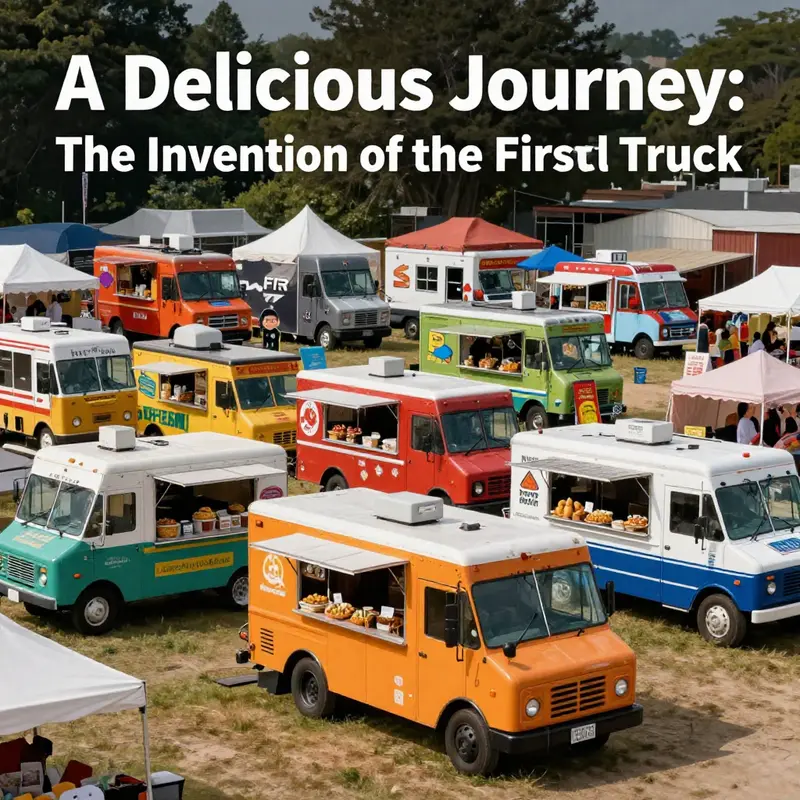
The story of food trucks is not just about mobile kitchens but a reflection of cultural innovation and culinary exploration. From their military origins in the 1930s to the diverse food scene we enjoy today, food trucks have continuously adapted to meet our evolving tastes and preferences. This journey through history highlights their significant role in bringing people together through food, community, and creativity. Whether you are an event planner looking to elevate your gatherings or simply a food enthusiast eager to experience local flavors, the world of food trucks offers endless delicious possibilities.