
For many aspiring truck drivers in Pennsylvania, the journey begins not just with steering the wheel but also finding the right school tailored to their training needs. One of the pivotal aspects often considered by potential students is whether these institutions provide essential services like lodging and food. As we traverse through this guide, we’ll break down the options available at various truck driving schools, shedding light on financial considerations and helping you make an informed choice. Chapter one helps you understand the myriad of truck driving schools and their food and lodging offerings. Chapter two delves into the financial implications—do they cover food and lodging? Finally, in chapter three, we will compare the availability of these amenities across different schools, equipping you with the necessary insights to navigate your options confidently.
Lodging on the Road: How Pennsylvania Truck Driving Schools Handle Housing and Meals During Training
In the world of truck driving training, the question of lodging and meals often surfaces early and repeatedly. Even as students imagine the rig, the road, and the test for a commercial driver’s license, they also confront practical details that can influence not only the total cost of training but the daily rhythm of study, practice, and rest. In Pennsylvania, the landscape is nuanced. The common thread across many programs is clear: lodging and food are not universally included as a standard part of every curriculum. Yet the same field that yields a broad spectrum of driving schools also presents real options for students who need housing or meal plans to stay focused, safe, and enrolled for the length of an intensive training track. The way schools handle housing and meals, or choose not to, often lines up with the program length, the intensity of on-site practice, and the underlying philosophy of the school about student reliability, safety, and completion rates.
To understand how Pennsylvania programs approach lodging and meals, it helps to picture the typical training structure. Most full time CDL training tracks run in an immersive, week after week cadence. Students may spend several weeks in a concentrated block of classroom learning, simulator practice, and behind the wheel with instructors. When the schedule is long and days are packed, some schools see true value in housing students on site or in a closely managed network of nearby housing options. The goal is simple but significant: reduce outside distractions, unlock full attention to competency, and minimize travel fatigue that can erode performance during this demanding phase of the learning curve. In practice, however, the adoption of housing or meal provisions varies a great deal by program, by campus, and by geography within the state.
The arithmetic of a school’s decision often boils down to costs and logistics. Housing programs are expensive to operate, and they reframe the price of training in a way that must be justified by outcomes. For some student cohorts, particularly those enrolled in comprehensive, full time training tracks, housing and meals are presented as part of the total tuition package. In these cases, a student might pay a lump sum and receive a room, a bed, and access to a dining option or meal plan during the entire training spell. For others, the housing is not included, and students need to arrange their own lodging, meals, or both. The difference is not only about dollars; it touches on the day to day experience of learning. A student who is sleeping on site may have longer block hours and less friction in attending early morning sessions, whereas a student who commutes or finds off campus lodging must factor in travel time and perhaps a longer daily setup routine.
Yet both approaches can coexist within the same market. Some programs offer housing as part of an intensified, weeklong boot camp that runs as an on campus live-in experience. Others provide housing and meal options through partnerships with nearby properties, often at negotiated rates for students. And there are programs that maintain a pay-as-you-go model, where lodging and meals are neither included nor offered as a credit toward tuition. In practice, this mix means that prospective students cannot assume a blanket rule across Pennsylvania. They must verify precisely what a given school offers before committing, and the best sources of clarity are the admissions office, the program brochure, and any posted policy documents.
The absence or presence of lodging has tangible implications for a student’s budget and planning. When a school provides housing, the total downshift comes in the form of predicted monthly expenses. A housing plan often carries a per diem cost or a fixed weekly rate that covers not only a bed but basic amenities, possibly utilities, and sometimes a simple meals option. Even when meals are included, the quality and scope of the menu may vary. Some programs negotiate with campus dining services to offer a set menu, while others arrange a more flexible meal plan that can accommodate dietary restrictions. The upshot is that the student can focus more fully on learning,, but the cost structure shifts from a la carte lodging and meals to a bundled experience. On the other hand, when housing and meals are not included, students must allocate funds for rent, groceries, or the occasional cafeteria option near the campus. The day to day experience can still be efficient and comfortable if the student is adept at budgeting and if the school maintains a curated list of nearby housing and dining options with favorable access to training facilities.
It is also important to recognize that Pennsylvania is a diverse state with urban cores, suburban campuses, and rural training hubs. The cost and availability of housing near a given school depend on regional dynamics as well as the scale of the training operation. In more urban or densely populated areas, housing may come at a premium, but there can be multiple nearby options, including student-style housing and budget-friendly extended-stay motels. In less dense regions, housing may be more affordable, but the supply of nearby options may be tighter, requiring longer commutes or the use of partner properties that shuttle students to the campus.
With lodging and meals understood as separate decision points, students should consider several practical questions as they evaluate programs. First, what is included in the tuition package? Is there on campus housing, and if not, what are the recommended lodging options? Are there any partnerships with local hotels or apartment complexes that offer discounted rates for students, and are there any residency requirements, such as a minimum length of stay or curfews that govern student housing? The answer to these questions should be explicit in the admissions materials or should come directly from the admissions staff with a clear breakdown of weekly or monthly costs. Second, what is the daily routine like in the program? Does the schedule demand early starts and long days with minimal breaks, increasing the relevance of convenient meals or on-site dining? Are there restrictions around leaving the campus during training blocks, which might affect a student who lives offsite? Third, are there any financial supports tied to living expenses? Some programs allot stipends or per diem allowances to offset lodging or food costs, often tied to specific training tracks, completion milestones, or successful performance. And finally, how do students negotiate dietary needs, medical needs, or accessibility requirements within a housing or meals framework? The more transparent a school is about these dimensions, the easier it will be for a prospective student to decide if the program aligns with personal circumstances and budget.
Guidance from the field suggests that a practical starting point for students is to contact the admissions office with a simple dossier of questions. Ask about the inclusions for housing and meals, but also about what the school does not include. Request a current sample schedule so that you can gauge how housing arrangements would fit into the day. If the school offers on-site housing, seek a tour that includes the living area to assess space, safety, and the environment. If there is no on-site housing, ask for a list of recommended properties and a rough map of travel times from each option to the training site. Some institutions publish a list of preferred lodging partners with negotiated rates, which can simplify budgeting and reduce the risk of paying higher street rates. The more proactive a student is in this stage, the better equipped they will be to avoid surprises once they enroll.
It is also wise to look beyond the campus itself and consider the broader community. Pennsylvania towns hosting truck driving training programs often have a range of amenities that matter to trainees. For many students, proximity to grocery stores, pharmacies, and quick dining options influences the overall training experience. Where housing is provided, students may still benefit from access to nearby services for personal needs, errands, or downtime. Conversely, when housing is off campus, the choice of neighborhood and the safety of the surrounding area become essential considerations alongside rental costs. In all cases, the aim is to create a sustainable living situation that supports learning, safety, and eventual career success.
Where possible, always check official sources first. School websites, official admissions portals, and state labor resources offer the most reliable snapshots of what is included in a given program. The Pennsylvania Department of Labor & Industry, for example, maintains information about the licensing and training landscape that can illuminate typical program lengths, costs, and the kinds of support programs associated with vocational training. The U.S. Department of Labor’s Occupational Outlook Handbook provides a broader context for what to expect in the truck driving field, including training pathways, typical time commitments, and the spectrum of cost structures for different training settings. While these sources do not replace a direct inquiry to the school, they help frame expectations and provide a reality check against marketing claims that can sometimes overpromise what a program delivers in terms of housing and meals.
As students weigh options, the personal dimension should not be overlooked. Training can be intense, with long hours behind the wheel and in the classroom. When a student has a reliable housing and meal arrangement, the focus can stay squarely on mastering the essential skills: vehicle control, safety protocols, logbook compliance, route planning, and the nuanced practice of shifting, backing, and coupling. The path to a CDL is as much about discipline and endurance as it is about technical know-how. In a Pennsylvania setting, where the road network is varied and the weather can be unforgiving in winter, having a predictable daily routine matters. The value of a housing or meal arrangement, then, is measured not merely in dollars saved or spent but in the steadiness it lends to a demanding learning process.
For students who navigate a program without on-site housing, a disciplined approach to budgeting can still enable a smooth experience. A practical strategy is to create a week by week budget that includes rent or mortgage, groceries, meals, transit or commuting costs, and incidental expenses. Many students discover that packing nutritious meals for long training days saves money and time while avoiding the disruption of frequent meals. A robust plan often includes a contingency fund for unexpected transportation costs or minor emergencies. In such scenarios, the student who leverages nearby community resources, campus counseling services, and student support programs will likely find the training journey more manageable, even without the leverage of on-site housing.
While stateside specifics matter, one open question remains universal for every training path in Pennsylvania: how does lodging influence outcomes? The evidence across districts suggests that when students can reduce the friction of daily logistics, their ability to stay engaged, learn at pace, and complete the program improves. Conversely, for some learners, the flexibility and independence of arranging their own lodging and meals can be more compatible with their personal circumstances, schedules, or family obligations. The key is transparent information and clear expectations from the school, combined with a solid personal planning effort from the student. The road to a CDL is a long and winding one, and housing or meals are not the destination but rather a navigational aid that can shape the journey in meaningful ways.
To offer readers a concrete, practice oriented pointer while staying grounded in reality, consider what practical steps to take next. Start by locating the admissions page for your target programs and download the current catalog or fact sheet. Read the sections that detail what is included in the tuition and what options exist for housing and meals. Then reach out to the admissions team with a short list of questions, including whether there is on-site housing, what the monthly cost would be if housing is included, whether there is a meal plan and what it covers, and whether any living expense stipends are available and under what conditions. If you are evaluating multiple programs, create a side by side grid that captures the core numbers: total tuition, housing and meal inclusions, estimated monthly living costs, and any additional fees. This exercise helps prevent sticker shock and reveals subtle differences that can tip the balance toward one path or another.
As you digest the information, remember that the decision is not exclusively financial. The right program must align with your learning style, your schedule, and your long term goals. If you value a tightly structured day that minimizes travel time and maximizes time in practice, a campus with on site housing and a structured meals plan can be a compelling choice. If you prefer independence, with more control over your schedule and daily routines, a program that does not provide housing may be preferable, provided you can secure affordable, convenient, and safe lodging. Either way, the objective remains the same: a robust, efficient, and supportive training experience that leads to a strong CDL, a dependable skill set, and a pathway to steady work on the road.
For readers seeking ongoing guidance on budgeting, program selection, and the specifics of logistics in the trucking space, there are resources that collect practical insight and experience from people who have already walked this path. For instance, the following resource offers a broad perspective on finances and planning in the trucking world, with a focus on the realities faced by new owners and operators as they navigate the costs of securing a vehicle, maintaining a business, and managing everyday expenses. It can be a useful companion as you compare what a school offers with what you will need to finance and sustain during training. And for more practical guidance on how to balance training with daily life, you can explore the insightful discussions hosted on the Lost Road of Logistics community through the blog, which includes a range of tips and case studies that echo the budgeting discipline required for training programs. the LoschiFlaDoTruck blog provides perspectives that can help frame the financial planning aspect alongside the educational choices.
Still, the core message remains straightforward. Lodging and food provisions differ by program, and a careful buyer should verify precisely what is and is not included. This is not just about saving money; it is about ensuring a stable, distraction free environment in which to learn the heavy responsibility of operating a commercial vehicle. When you step into a Pennsylvania truck driving program, ask directly, demand clarity, and map your logistics as you would map a new route. The road to a dependable CDL begins long before you turn the wheel. It begins with the decisions you make about where you sleep, what you eat, and how you plan to study. By approaching lodging and meals with the same seriousness you bring to practicing a lane change or a backing maneuver, you position yourself to complete the program with confidence and to transition smoothly to the next chapter of your career.
External resources and state level guidance can add important texture to your planning. The state and federal resources provide a scaffold for understanding typical cost structures, common program lengths, and the kinds of financial supports that vocational training programs may offer. While each school has its own policy, the overarching principle is that you should have a transparent picture of living costs as part of your overall investment in training. And as you gather information, keep in mind that the right program is one that reconciles your financial reality with your educational needs, your personal wellbeing, and your long term career trajectory. The balance you strike will shape not only the months you spend in training but the years you spend as a professional driver on Pennsylvania roads and beyond.
External resource: Top-rated truck driving schools near Allentown, PA on Yelp
Housing on the Road: Do Pennsylvania Truck Driving Schools Include Lodging and Meals?
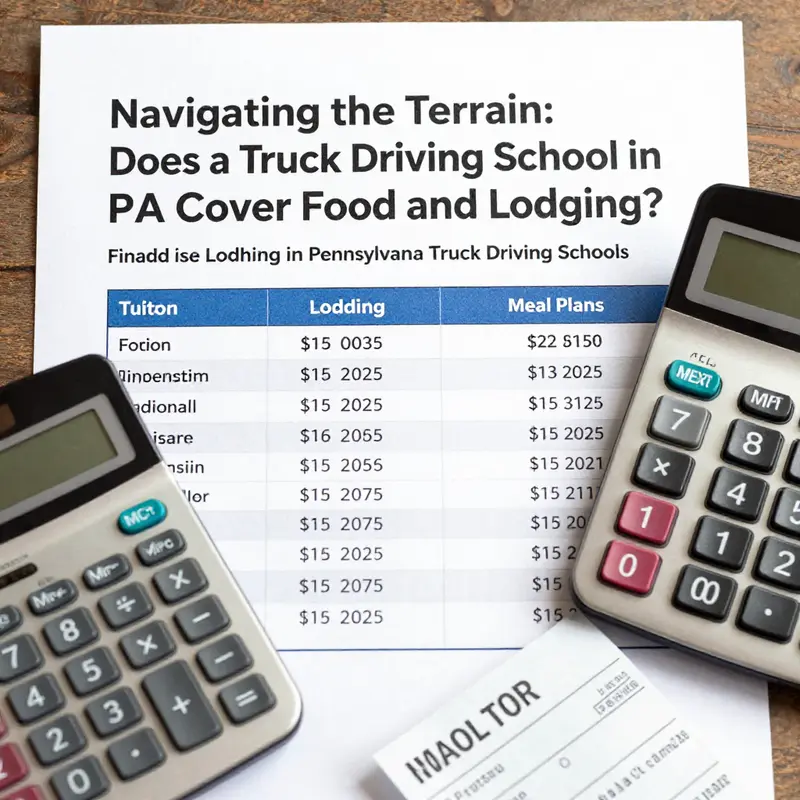
The question of whether a Pennsylvania truck driving school pays for lodging and meals is not a one-size-fits-all answer. Across the state’s varied training landscape, options shift with the duration of the program, the school’s philosophy, and the logistics of the schedule. Some schools bundle housing and meals into premium or immersive offerings, while others leave those costs to the student’s own arrangements. The result is a mixed picture that future students must navigate with careful questions and clear budgeting.
In many longer, more intensive training tracks, on-site lodging makes practical sense. When a program runs for several weeks with full-day hands-on practice, keeping students on campus can reduce delays caused by commuting, align sleep schedules with training blocks, and foster a cohesive cohort that learns together. In these contexts, a dormitory or resident facility paired with a meal plan can be marketed as part of a holistic training experience. The on-site environment is designed to minimize downtime, maximize practice hours, and create a culture of safety and discipline that translates to real-world driving on a range of routes and conditions. For students juggling family responsibilities or working part-time alongside schooling, on-site lodging can be a meaningful bridge to finish the program without the added stress of long daily commutes.
Yet the standard model in many Pennsylvania truck driving programs remains tuition-based with lodging and meals treated as separate expenses. In this framework, students pay for instruction and access to equipment, while housing and meal costs are borne by the learner as part of their overall living arrangements. The distinction often appears during the enrollment process, when admissions staff outline what is included with tuition and what must be arranged independently. If a student plans to relocate or live near the campus for the duration of training, the cost picture will depend on local housing markets, food habits, and the student’s chosen lifestyle. Shorter courses, part-time formats, or non-residential tracks typically do not include lodging or meals, making those expenditures a discrete budget line item.
For students evaluating options, the practical approach is to contact the school directly and ask pointed questions about what is included and what is optional. A program page may list housing as part of a dedicated package, but real-world availability can vary by cohort size, funding, and the timing of admissions. The admissions office can confirm whether housing is guaranteed for all students in a particular track, whether it is contingent on demand, or whether it is offered only to certain groups, such as those enrolled in full-time, campus-based cohorts. Similarly, meal plans may be bundled with housing in some packages but sold separately in others. The bottom line is that lodging and food are not universal benefits in Pennsylvania truck driving education; they are negotiated benefits that depend on the program, the duration of study, and the desired level of student support.
In thinking through the value of lodging and meals, it helps to map the decision not only to the immediate training but to the broader trajectory of a student’s career. A fully residential program can deliver more uninterrupted practice time, enabling quicker mastery of driving maneuvers, on-road etiquette, and safety protocols. It can also reduce the friction of daily logistics, freeing up mental space for learning. On the other hand, if a student already has housing secured or if the program’s schedule allows for a stable daily commute, paying for lodging separately may be more economical and align better with personal obligations. The choice often comes down to a mix of convenience, cost, and the student’s readiness to adapt to a structured, intensive routine.
The variability among Pennsylvania schools means that prospective students should approach their planning like a research project. Start with a clear sense of the program length, daily hours, and whether the school expects live-in arrangements. Then compare total costs across three scenarios: (1) tuition with on-campus housing and meals included, (2) tuition with housing or meal plans offered as optional add-ons, and (3) tuition alone with students arranging their own accommodations and meals. In this comparison, it is essential to account for ancillary costs that often accompany lodging choices, such as security deposits, utilities, internet service, and transportation to and from training sites or partner facilities.
Beyond cost, consider the practical implications for training quality and safety. On-site lodging is sometimes paired with a more regimented schedule that mirrors the demands of a professional driving career. Students may benefit from early mornings, late practice sessions, and coordinated meal times that keep energy levels steady through long days of instruction. The institutional emphasis on safety can be reinforced by campus life that supports structured routines, peer accountability, and access to tutoring or mentoring during downtime. These factors can indirectly influence a student’s retention, performance, and confidence behind the wheel.
As with any vocational program, the reliability of what’s promised matters as much as the cost. The best approach is to verify details with the school’s own materials and to seek out current student or alumni perspectives. A prospective student should ask about housing guarantees, the type of accommodations (dormitory, apartment-style, or partner housing), the proximity to training sites, and what meals look like in a typical week. Is there a full meal plan, or only discounted meal options? Are there kitchens available for student use, and what standards govern cleanliness and food safety? Are there quiet study spaces and laundry facilities on-site to support a serious learning atmosphere? These questions help reveal not only the economics but the day-to-day lived experience of training.
Because housing and meals tie closely to the overall cost of attendance, it is wise to view lodging as a component of the long-term return on investment. The investment calculus should weigh the potential acceleration of skill development against the immediate outlays for lodging and meals. In practical terms, a program that includes housing can shorten the path to full credentialing by reducing downtime and ensuring students can focus more consistently on driving practice, regulatory compliance, and vehicle inspection routines. In contrast, a program that requires students to secure their own living arrangements offers more flexibility but can introduce variability in learning cadence if personal constraints interfere with study time or practice opportunities. The key is to measure not only the price tag but also how the program structures its days and whether that structure fosters a repeatable, high-quality training experience.
The realities of Pennsylvania’s geography also shape lodging considerations. The state hosts a mix of urban training hubs, suburban campuses, and rural facilities. The cost of living and the ease of access to a campus can swing considerably from Pittsburgh or Philadelphia to smaller towns that host private training centers. For students who prefer the security and certainty of campus-based housing, the choice may hinge on a campus’s location, its partnerships with nearby housing providers, and the support services available to residents. For those who thrive with more independence or who already own housing, a commuter option might be a more attractive, cost-conscious path. In any case, understanding the campus environment and the surrounding community is part of evaluating whether lodging and meals are a wise use of resources.
The guidance from national labor and workforce agencies reinforces a practical approach to budgeting and expectations. Vocational training, including truck driving programs, is a significant investment, and the total cost should reflect both tuition and living expenses. The U.S. Bureau of Labor Statistics and related labor resources describe how training costs vary by program length, intensity, and the level of institutional support offered. While these general guidelines do not replace school-specific details, they help set a framework for evaluating offers and avoiding sticker shock. Prospective students should resist vague assurances and seek precise figures for every line item: tuition, housing, meals, fees, equipment, and any required uniforms or safety gear. If a school includes lodging, ask for a written schedule of what is included, what is not, and how and when payments are due.
For those who want a broader sense of student life and practical tips as they navigate these choices, one resource worth consulting is the school’s own blog. It can provide anecdotes about day-to-day routines, housing experiences, and the realities of balancing study with practical training. The blog can offer a window into campus culture, helping students gauge whether a given program’s living arrangements align with their expectations and lifestyle. the blog.
As you weigh lodging and meals in the calculus of a Pennsylvania truck driving career, it is also wise to consider the broader professional horizon. A well-structured program, whether it includes housing or not, should connect you to meaningful hands-on practice, realistic schedules, and a plan for job placement after graduation. Look for schools that emphasize real-world readiness, including simulator time, range work, and on-road experiences across diverse routes and traffic patterns. The ability to translate classroom instruction into dependable, safe operation on day one matters far more than any single feature like an on-site cafeteria plan. If a program can demonstrate how lodging or the absence of lodging aligns with its practical training model and job placement outcomes, it can be a strong indicator of how well the school prepares students for the road ahead.
Finally, the journey toward deciding on a Pennsylvania truck driving program—whether lodging is included or not—benefits from careful planning and honest budgeting. Start with a transparent cost estimate that includes tuition, housing if applicable, meals, and all fees. Consider your own living arrangement needs, future financial obligations, and the potential for income during and after training. If a program promises a high density of practice hours and a supportive learning environment, factor those qualitative benefits into your comparison of raw cost versus value. The aim is to emerge not just with a credential, but with a program experience that equips you to start earning and building a career with confidence. For broad guidance on training costs and program scope, refer to national resources such as the Bureau of Labor Statistics and related labor market materials.
External resource: https://www.bls.gov/
What to Expect When Schools Do — or Don’t — Cover Lodging and Meals for Trucking Students
Understanding the landscape of lodging and meal support for truck driving trainees
When you evaluate training options in Pennsylvania, lodging and meal support often determine whether a program is practical. Programs vary widely. Some include on-site housing and meals. Others expect students to handle their own arrangements. That difference changes the true cost and the stress level for learners. It affects timelines and how quickly a student can focus on behind-the-wheel instruction.
Full-time residential programs are more likely to include housing and meals. These programs are often intensive and run daily for consecutive weeks. They are designed so trainees can live on-site or in nearby partner housing. The arrangement helps students concentrate on training and reduces commuting time. Conversely, short courses or part-time evenings rarely include living support. Those formats assume trainees return home each day.
Providers that bundle accommodations typically do so in one of three ways. First, some operate dorm-style housing directly on campus. Students live in shared rooms or small apartments managed by the school. Second, other schools arrange partnerships with local motels, extended-stay hotels, or rooming houses. The school negotiates a reduced rate, and students pay the housing provider. Third, a few schools include meal plans or cafeteria access; these may be run by the school or by a partner food service contractor. All three models aim to reduce friction for trainees, but the level of convenience and cost control varies.
If a training site does not advertise housing or meals, assume that students must arrange them. That scenario is common in many towns and suburban areas. In those cases, you should budget for short-term rental or hotel costs. Factor in commuting expenses if you choose off-site housing. Also consider how meal costs add up. Eating out three times a day is far more expensive than grocery shopping and preparing food in a communal kitchen.
Financial assistance and stipends change the equation. Some schools include living stipends for eligible students. Other trainees qualify for federal or state financial aid that covers living expenses while enrolled. Veterans using education benefits may receive a housing allowance through their benefit package. Workforce development grants and trade school scholarships occasionally cover a portion of housing or food costs. Eligibility rules differ by program, so it is essential to verify your qualification early.
Employer-sponsored training introduces a different dynamic. In some apprenticeship or company-sponsored programs, the employer covers lodging and meals for the trainee while on site. That support is more common when a company recruits students directly and guarantees a job upon completion. Employers may use per diem allowances to cover meals and incidental expenses during training. When evaluating offers, ask whether a per diem matches local cost-of-living and whether it will be paid during both classroom and driving phases.
Quality and safety of housing matter as much as cost. Dorm-style options can vary from clean, secure rooms with laundry to basic shared spaces with limited oversight. Hotels may be comfortable but costly. Temporary rentals or sublets often require a minimum stay. Investigate security features, proximity to the training facility, and whether the housing is within walking distance or needs a car. Some training centers can help arrange roommates to lower costs. Always confirm who is responsible for utilities, cleaning, and repairs.
Meal logistics are another practical concern. Programs that offer cafeteria service may provide set meal times and balanced plates. That convenience can help trainees maintain a routine. If no plan exists, students should evaluate kitchen access. Having a communal or private kitchen enables simple meal prep and reduces food costs substantially. Grocery delivery, meal-kit services, and local takeout also affect budgets. Remember that dietary restrictions may make cafeteria plans less attractive. Plan accordingly if you have special needs.
For students relocating temporarily, short-term housing and storage options deserve attention. Short-term leases, extended-stay hotels, and month-to-month rentals provide flexibility. Many students also use storage units for large items they do not need during training. When planning, account for security deposits and refundable fees. Book accommodations early for peak enrollment periods to avoid last-minute price spikes.
Transportation between housing and the training site can add time and money to your schedule. If the school does not provide shuttle service, check public transit routes, rideshare availability, and parking policies at the training center. Paid parking or limited spaces can be a hidden cost. If you will commute, estimate fuel, tolls, and wear on your vehicle. Some trainees save by carpooling with classmates.
How to inquire and negotiate: a practical approach
Do not rely solely on website listings. Many schools update housing arrangements seasonally or make ad hoc partnerships with local lodging providers. Call the admissions office and ask direct questions. Request written details about any housing or meal support. If a school partners with a motel or hotel, ask for the partner’s name, negotiated rate, minimum stay, and whether there is a deposit. For on-campus housing, ask about room types, occupancy limits, and whether utilities and internet are included.
If a program lacks formal housing, ask admissions whether they maintain a list of local rentals or private landlords who have previously hosted students. Some schools keep a bulletin board—or a digital bulletin—where incoming trainees post housing offers. Ask about potential roommates among incoming cohorts. Many students find affordable options by networking with classmates rather than relying on the school.
Negotiate when possible. If you will pay full tuition upfront or enroll in a batch, ask whether the school can extend its negotiated lodging rate. If a program guarantees a job placement or recruiter visits during training, use that leverage to request a housing discount. Employers that recruit directly may agree to cover housing costs for skilled candidates. Inquire about scholarships or emergency funds available to students who face sudden housing hardship.
Budgeting: realistic numbers to use
Create a clear weekly budget for housing and food. Typical short-term hotel stays can range significantly by town. Extended-stay options or shared rentals often cost less per night. A reasonable planning method is to calculate a conservative baseline for your location, then add a contingency of 10–20% for incidentals. Include utilities, laundry, parking, and internet in housing estimates. For food, plan a baseline for groceries and modest dining. Preparing most meals at a shared kitchen will reduce costs dramatically.
Sample budget items to list and estimate:
- Weekly housing cost (dorm, motel, extended-stay, or sublet)
- Utilities and internet if not included
- Grocery cost for one person per week
- Average cost for two occasional takeout meals per week
- Transport costs between lodging and training site
- Laundry, parking, and incidental fees
- One-time moving or storage expenses
Planning for schedules and meals is as important as price. Training days can be long. If you need to cook, choose quick, nutritious meals that can be prepped in bulk. Plan breakfast options that travel well. If your housing lacks proper refrigeration, prioritize nonperishable and ready-to-eat items.
Safety, documentation, and lease details
Before you move, read any housing agreements carefully. Check clauses on refunds, cancellations, and conduct rules. Know what happens if the training schedule changes. Keep a copy of all correspondence with the school about lodging and meals. If a school has a housing partner, confirm who handles maintenance and complaints.
Consider renters’ insurance for personal items in shared housing. Understand the liability rules for school-managed rooms. For short-term stays, ask about emergency procedures and local medical services. If the training site is in a small town, verify grocery and pharmacy access before you arrive.
When to involve workforce agencies and benefits offices
If your training is supported by a government grant or workforce program, speak with your case manager about living allowances. Many workforce agencies provide vouchers for housing or stipends for trainees. If you are a veteran or otherwise eligible for benefits, contact the benefits office to confirm whether your allowance covers the training period.
A few training centers work closely with local employment agencies. Those partnerships sometimes include funding for living expenses. The advantage is that these funds may reduce your out-of-pocket costs. However, they often require timely paperwork and strict attendance records. Stay organized and submit documentation early.
Checklist of questions to ask admissions
Ask direct questions and get answers in writing:
- Is housing provided or arranged? If so, is it on-site or off-site?
- Who pays housing fees: the school, student, or employer sponsor?
- Are meals included? What type of meal plan exists?
- What is the typical weekly cost for housing nearby?
- Are there student discounts with local hotels or restaurants?
- Does the school maintain a housing referral list?
- Is a shuttle or transport provided between housing and the training facility?
- Are there emergency funds or scholarships for housing needs?
Practical next steps for prospective trainees
Start by calling admissions early. Ask for a housing contact or coordinator. Join online forums or class groups to connect with other trainees seeking roommates. Prepare a short budget and list of acceptable housing types. If you will relocate, secure flexible accommodations with reasonable cancellation rules.
For financial planning, consider reading practical guides that address early ownership and cost management for life on the road. One such resource offers step-by-step financial tips tailored to newcomers in trucking and related fields: financial tips for first-time truck owners.
If you want to see how a local training center lists facilities and student feedback, consult regional review profiles and directories. These often reveal whether past students found lodging and meal arrangements helpful or burdensome. For one local listing with details and student comments, see this community profile: https://www.yelp.com/biz/american-driver-training-academy-west-chester
By approaching lodging and food as part of the training plan, rather than an afterthought, you can control costs and reduce stress. Clear communication with the school, careful budgeting, and early planning make the difference between a smooth training experience and avoidable disruptions.
Final thoughts
Choosing the right truck driving school is pivotal not just for your education but also for your overall experience as a student. With the various lodging and food options available in Pennsylvania, it’s crucial to consider what fits your needs best. As you embark on this journey, weigh the benefits of schools that provide accommodations and meal plans against those that do not. Being well-informed will not only help you budget effectively but will also enhance your training experience, allowing you to focus on becoming a skilled driver.