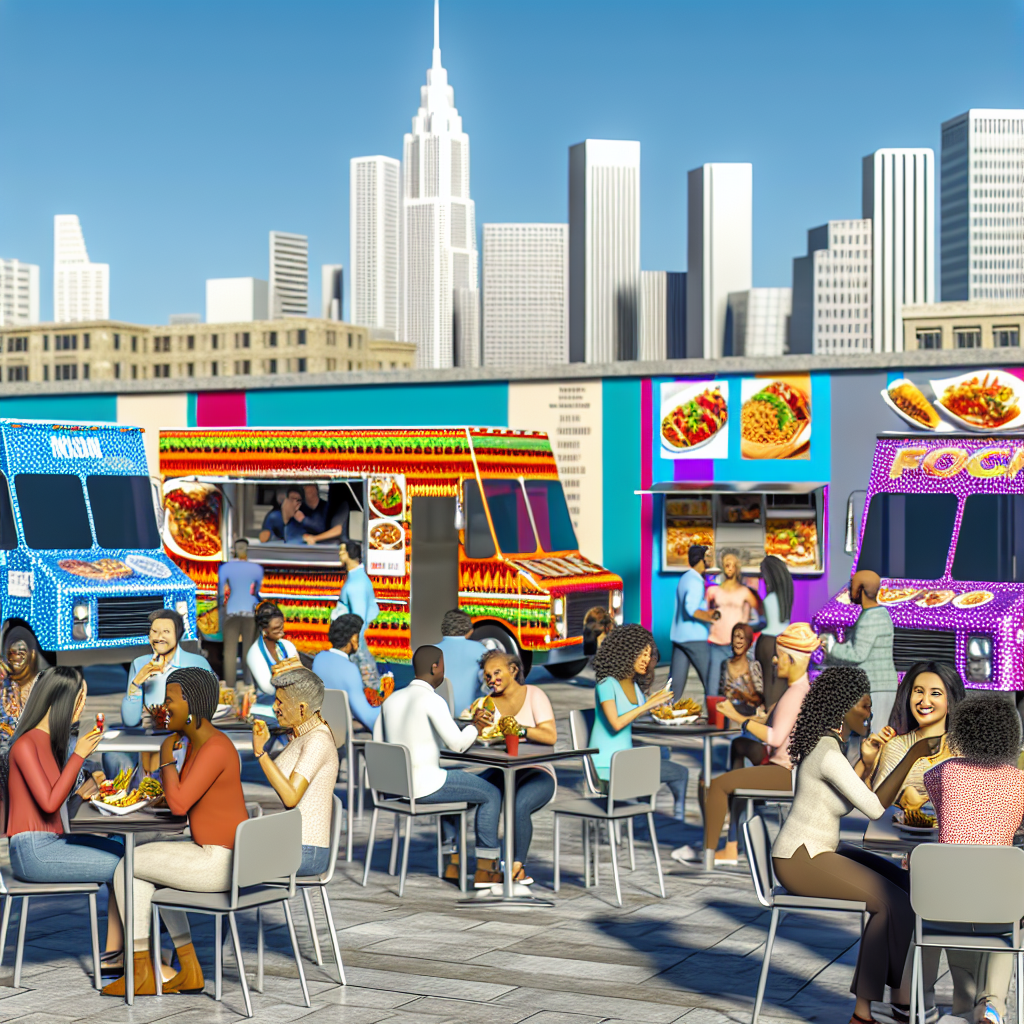
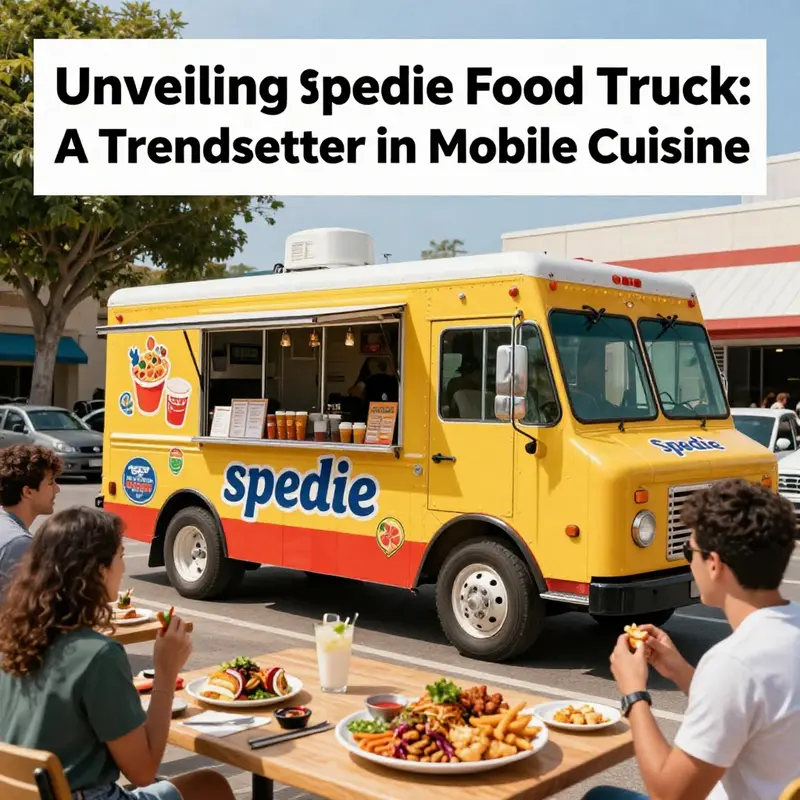
Food trucks have transformed the culinary landscape, offering diverse cuisines to the masses through mobile ventures. But what exactly is a spedie food truck? While traditional food trucks serve an assortment of comfort foods and gourmet options, the concept of ‘spedie’ adds a unique twist that speaks to culture, community, and creativity. This article aims to dive deep into the world of spedie food trucks—addressing what they are, their cultural significance, and the economic opportunities they present. We will start by clarifying the concept behind spedie food trucks, explore their rising popularity and cultural impact, and finally, illuminate their potential as viable businesses in today’s food service industry. Join us on this flavorful journey!
Spedie on Wheels: Unraveling the Mystery of a Spedie Food Truck and the Real Language of Mobile Cuisine
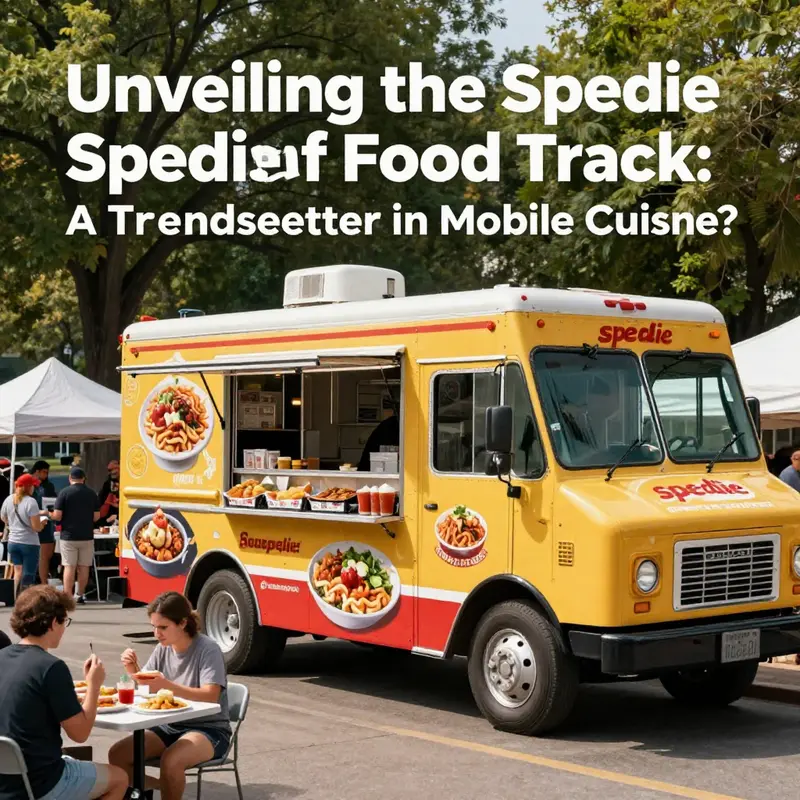
When people stumble upon the idea of a spedie food truck, they often stumble right after it. The phrase itself is not widely documented in the language of modern food commerce, and the research that informs this chapter suggests that spedie, as a term, is more likely a misspelling, a regional nickname, or perhaps a brand label rather than a distinct, recognized category. Yet the very question—what’s a spedie food truck?—opens a broader, richer conversation about how mobile kitchens operate, how they choose a culinary identity, and how they navigate a cityscape that is increasingly crowded with flavors, permits, and competing demands for foot traffic. In that sense, the term becomes a doorway into the more durable, well-documented world of food trucks: the trucks that roll through streets, campuses, festivals, and corporate campuses to deliver meals with speed, personality, and a form of culinary mobility that has reshaped modern eating. This chapter does not pretend to locate a universal definition for spedie. Instead, it asks what a spedie impulse might reveal about the bigger story of mobile food, and what such an impulse would require to translate from curiosity to a sustainable business on four wheels.
Across much of the globe, food trucks are understood as kitchen on a chassis. They are not merely a kitchen on wheels; they are a compact, highly designed system that stores ingredients, cooks, assembles, serves, and sometimes even lets customers watch the process. This requires a careful balance of equipment, workflow, and space. In the United States, the evolution from chuckwagons and lunch wagons to the modern gourmet truck is a tale of flexibility and adaptation. A truck can be anything from a converted van with a single grill and a couple of coolers to a fully equipped, high-output kitchen on a truck body that resembles a tiny restaurant inside. The objective has always been mobility without sacrificing the ability to produce food that is consistent in taste, temperature, and presentation. The sources illustrate a spectrum of menus—fast enough for a street corner or office park, yet sophisticated enough for a street fair or a food-focused festival. The result is a diverse ecosystem in which operators experiment with concepts that might include regional specialties, ethnic cuisines, or niche twists on familiar favorites. In this landscape, a spedie concept would sit along a continuum: it could be a focused, single-dish concept or a broader platform that offers several skewered or grilled items rooted in the same technique, each designed to travel well and appeal to broad audiences.
If the term spedie is a misreading, a reinterpretation, or a regional nickname, the essence remains instructive. It invites us to imagine a mobile kitchen that centers on a distinct technique or flavor profile, then asks how such a concept could be scaled, marketed, and sustained on the road. One possibility is to anchor the menu in a technique that travels well: skewers, marination, and quick flame contact. A spedie-inspired truck might favor skewered meats, marinated in bright, punchy blends, then finished with a quick sear or grill for the passenger who loves a crisp exterior and a juicy interior. The practical appeal of skewers—portable, easy to portion, adaptable to different marinades—aligns neatly with the realities of a mobile operation. A truck that emphasizes skewers would still need a well-thought-out line of defense against the heat and humidity of outdoor cooking: a plan for reliable refrigeration, a compact yet capable grill or multiple small cooking surfaces, an efficient prep counter, and a service window designed for speed without sacrificing food safety.
There is a larger ethical and logistical layer to consider as well. A spedie concept would require careful attention to sourcing, to ensure that the meat and accompanying ingredients meet safety standards while also supporting local suppliers whenever possible. The modern mobile kitchen economy rewards reliability and consistency as much as novelty. A customer who tries your spedie dish once, or even twice, wants to know that the tasting experience will be the same in a park as it is at a festival. That consistency rests on a disciplined approach to inventory, to cross-contamination control, to precise temperatures, and to a menu that can be produced within the truck’s constraints. The truck’s footprint—its counters, sinks, and storage—becomes a design problem as much as a culinary challenge. The operator must plan a kitchen that is not only compliant with local health codes but also optimized for a smooth, repeatable throughput. There are moments in the day when a line forms, and a skilled crew can move customers through the window with speed and care; there are other moments when the truck must pause, recalibrate, and replenish. A spedie concept would need to anticipate both rhythms and build resilience into its operations.
What makes a food truck a compelling business model is not just the food, but the mobility that allows a brand to meet people where they are. A spedie-inspired truck could ride that logic to create a distinctive identity that travels. The branding question is not merely about a logo or a color scheme; it is about how the truck’s choreography—how it cooks, how it serves, how it communicates with customers—becomes a story they want to tell repeatedly. The narrative around a spedie-inspired menu could emphasize heritage and technique: a nod to Italian-American grilling traditions, a promise of bright, simple ingredients, and a sense that every skewer is crafted with attention to marination time and flame control. Even if spedie itself remains a term of uncertain standing in the literature, the opportunity to translate a regional or technique-driven concept into a mobile experience is very real. The challenge is to translate a concept into a consistent operational routine, a well-designed kitchen, and a path to sustainable revenue.
The day-to-day life of a food truck, regardless of its theme, is a story of logistics dressed in edible form. A typical operation begins long before the first customer arrives. The crew may wake to inventory their perishables, confirm that all equipment is functioning, and run through a brief mise en place that ensures every screw, grate, and pan will support a fast, safe service. The cooking space must be arranged for efficiency: hot equipment arranged so that the front-line cooks can access ingredients and utensils without stepping on each other’s toes, cold storage that preserves freshness without risking cross-contamination, and a washing area that complies with health standards while keeping the line moving. In many cities, the health department requires plans that outline the truck’s plumbing, ventilation, and waste management, a reminder that mobility does not absolve the operator from responsibility. The financial side is never far away either. A spedie concept would have to account for food costs, labor, fuel, insurance, permits, and potential event or vendor fees. Even with robust demand, margins in the street-food sector are often tight. The successful operator learns to design a menu that balances profitability with appeal, and to source ingredients that offer the best possible yield without compromising flavor. This is where the concept edges closer to the heart of the spedie question: how a small, mobile kitchen can convert curiosity into a reliable routine.
In practice, the menu design for a spedie-inspired truck would likely emphasize a handful of anchor items rather than an exhaustive catalog. A skewered protein—marinated, grilled, and served on a fresh bread or with a side that travels well—would form the core. A secondary line might offer a few complementary items that resonate with the same flavor family: perhaps a vegetarian option based on grilled vegetables with a similar marinade, a light salsa or chimichurri that brightens the dish, and a simple starch that absorbs the flavors without overpowering the main skewers. Each item needs to be quick to assemble, forgiving of minor delays, and resilient to the variables of outdoor service. The operator would fine-tune portions to ensure uniformity across shifts and days, a process that often requires a few pilot events to calibrate. In this sense, a spedie concept, or any niche concept on wheels, is less about grand improvisation and more about disciplined routine: repeatable steps, precise timing, and a consistent sensory experience that customers remember and seek out again.
From a cultural perspective, the mobile kitchen is a laboratory for taste, performance, and adaptation. It is where chefs test ideas in real-time, reacting to the weather, the crowd, and the competition on the street. The public’s appetite for diverse flavors—whether the cuisine veers toward comfort, nostalgia, or novelty—creates a fertile ground for an idea like a spedie-inspired truck to thrive, provided there is a clear concept, a bookable schedule, and a strategy for building loyal customers. A brand built around a distinct technique, a memorable flavor profile, or a particular regional inspiration can cultivate a following that extends beyond a single city block or festival circuit. The best operators understand that the value of a mobile kitchen lies not only in the food but in the expedition—the sense that a truck can bring a specific mood, memory, or cultural touchpoint to the street. Even without a universally recognized term like spedie, there is a universal appeal in seeing skilled cooking unfold in a compact, efficient space, and in knowing that the next location might offer a slightly different audience, weather, or opportunity for connection.
The practicalities of parking and navigating public space are another layer of the spedie conversation. The modern food truck must negotiate a world of permits, staging areas, and parking rules that vary by city and neighborhood. A concept built around skewers and quick service benefits from locations with high foot traffic during lunch hours, near office parks, universities, or busy tourist corridors, where passersby are open to trying something new and seasonal. For evenings and weekends, partnerships with events and local markets can help a fledgling concept gain visibility and test a broader audience. The vehicle itself becomes a stage and a storefront, and the operator has to design not only the food but also the experience around it. That means a service window that invites customers to watch the food being prepared, a friendly, efficient crew that can manage lines without sacrificing quality, and a brand story that people want to share with friends and family. The cultural significance of food trucks, including niche offerings that may be inspired by regional specialties or artisanal techniques, is not just about flavor. It is about how mobility enables a kind of culinary democratization: good food that travels can reach people who would not otherwise have the chance to discover it.
If one readable lesson emerges from the literature, it is that the most successful mobile concepts combine clarity of vision with flexibility in practice. The spedie idea, if it exists as a concept in any particular locale, would need to translate its vision into a robust operations blueprint. The blueprint would cover the kitchen workflow, the menu math, the supply chain, the permits, the insurance, and the day-to-day discipline that ensures consistency and safety on the curb. It would also address customer experience—how to greet customers, how to summarize a compact menu in a few seconds, and how to keep a line moving while maintaining quality. The best operators establish rituals: a pre-service briefing that aligns the crew on the day’s targets, a standard of plate appearance that travels well, and a closing routine that cleans as efficiently as it serves. The speed and simplicity of service are as important as the flavor itself, because in the world of street food, time is food’s currency. A sharp, well-executed spedie concept would try to maximize that currency while preserving the craft of the cooking and the integrity of the ingredients.
The question, once again, is not only about whether there exists a formal category called a spedie food truck. It is about what such a concept reveals about the mobile kitchen economy: the hunger for mobility, the appetite for niche flavors, and the endless experimentation that defines contemporary street dining. In that sense, the spedie question acts as a lens through which to view the broader reality of food trucks. It invites us to consider how a kitchen on wheels can be designed from the ground up to deliver both delight and reliability, to travel without losing identity, and to adapt to a landscape that prizes speed, consistency, and flavor. The mode of service—on a curb, at a festival, in a campus quad—remains a platform for culinary experimentation, a stage where technique meets audience, and a proof that good food can be both portable and memorable. If spedie remains a speculative term, the underlying principles it suggests are very real and highly actionable for anyone thinking about launching, scaling, or refining a mobile food venture.
For readers seeking a practical bridge from theory to action, a reminder: the core competencies that support any successful food truck—menu design, kitchen layout, safety compliance, and customer engagement—are portable skills. They translate across themes and concepts, including those that might be labeled spedie in some locales and not in others. The food truck is not a static business plan; it is a kinetic process, evolving with weather, demographics, and the opportunities that arise when a cart becomes a small restaurant on wheels. If you are drawn to the idea of a spedie-inspired menu, you are really drawn to a larger, universal impulse: to bring flavorful, well-made food to people on their way somewhere else, to do it with efficiency, and to build a recognizable identity that travels as reliably as the exhaust from the truck’s grill. That is the essence of mobile cuisine: a careful blend of technique, logistics, and storytelling on four wheels.
As you weigh the possibility of a spedie concept, consider not the label but the design philosophy behind it. What makes a dish travel well? What kind of equipment makes sense for an on-the-go kitchen? How do you craft a menu that can be executed cleanly in a small space, while still offering meaningful choice and a sense of place? These questions are not merely theoretical. They shape the actual steps a future operator would take—from choosing the right truck model to securing permits and lining up early shifts that can harvest the day’s best traffic. For deeper context on the operational choices that define mobile kitchens, you can explore practical guidance from industry resources that discuss model selection, regulatory navigation, and resilience in the freight and food truck world, which collectively illuminate the craft behind the concept.
For a broader overview of how food trucks operate and to situate the spedie idea within the larger ecosystem of mobile cuisine, see the external resource on food trucks. It provides a foundational look at the history, technology, and social role of mobile cooking on wheels, which can help frame any niche concept against a wider backdrop.
External reading: https://en.wikipedia.org/wiki/Food_truck
Internal reading: For insights on choosing the right truck model and aligning your vehicle choice with your concept, consider resources that discuss model selection and space planning in a practical context. As you read, pay attention to how real operators balance ambition with feasibility, and how their layouts and menus reflect the realities of street-service life. A useful starting point for this planning is the discussion of choosing the right food-truck model, which highlights how space, power, and workflow intersect with branding and customer experience. Choosing the right food-truck model.
Speed on the Street: Debunking the Spedie Myth and Tracing the Living Pulse of Mobile Cuisine
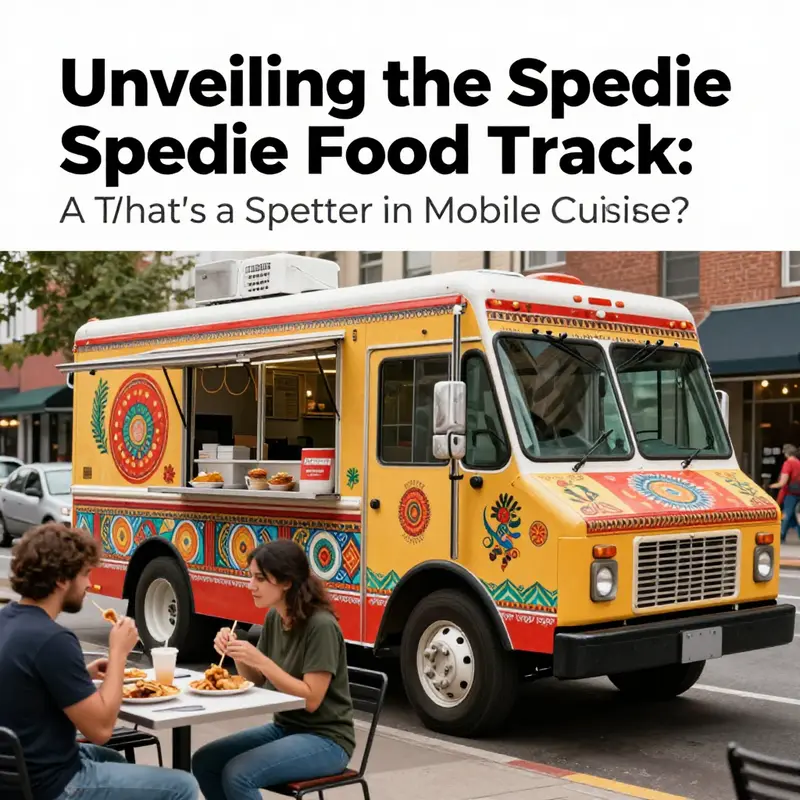
The city’s edge is never still when a fleet of wheels carries the promise of a meal. Food trucks have remade the urban palate by turning streets into a rotating marketplace where chefs swap the fixed confines of a brick-and-mortar kitchen for the mobility of a van, a truck, or a flatbed. This mobility matters as much as the menu. It reshapes access, choice, and culture, knitting together neighborhoods through shared aromas and the thrill of discovery. In this chapter, we explore a larger conversation about what a spedie food truck could mean in theory and what the actual landscape says about mobile cuisine. More importantly, we acknowledge a terminological snag: there is no widely recognized or documented concept known as a “Spedie Food Truck” in the major sources that map the American food truck phenomenon. That absence is itself a clue about how terms travel, shift, and sometimes vanish when new labels collide with established practice. The term may be a mishearing, a regional nickname, or a fictional placeholder, but it does not anchor itself in the documented ecosystem of mobile food vendors. To ground the discussion, we should first step back and consider the broader currents that have propelled food trucks to prominence and then return to the question of naming and identity—how a term travels or fails to travel in the mouths of vendors, regulators, and diners.
Food trucks emerged from older forms of mobile provisioning—the chuckwagon, the lunch wagon, the pioneer cart—and matured into a major urban and suburban ecosystem after the pressures of the late-2000s economy. The logic was simple and powerful: a kitchen on wheels could reach a larger audience with lower fixed costs than a brick-and-mortar restaurant, while offering chefs a flexible platform to test ideas, refine techniques, and respond quickly to demand. The resulting culture celebrates speed and adaptability, not merely speed in service but speed to market for concepts that might otherwise struggle to secure permanent real estate. The very cadence of a week in a food-truck calendar—early morning prep, late-night shifts at pop-up events, and a rapid feedback loop from customers—became part of the craft. In this sense, the “spedie” label would need to align with a narrative about rapid service, nimble logistics, or a distinct cuisine that thrives on fast-paced dining moments. Yet the evidence, at least in March 2026, points toward a different reality: the most enduring stories about speed are not about a single cuisine but about how a culture as a whole embraces mobility, improvisation, and the democratization of flavor.
One recognizable thread in this culture is the way dessert-focused trucks have elevated indulgence into a portable art form. Deep-fried treats, sometimes dressed with playful toppings or elevated sauces, have found an audience that appreciates both nostalgia and novelty. These trucks succeed by creating a sensory moment that pairs a familiar texture with a surprising finish. The appeal is not simply the sweetness; it is the storytelling of a roadside encounter—standing in a queue, watching a caramel halo swirl over a fresh batch, and sharing the moment with friends who are new to a neighborhood or revisiting a familiar corner with a different appetite. The dessert trend illustrates how the mobile platform can support specialized micro-enterprises that thrive on a concentrated concept. It shows an important principle of the broader movement: culinary innovation often travels best when it travels light and fast, with a clear promise and a crisp delivery model.
Beyond desserts, the mobility of these kitchens enables cuisines from around the world to appear in places where a traditional restaurant might not have existed otherwise. A city block can become a tasting menu for several hours as different trucks roll in, each carrying a distinct cultural vocabulary—regional Italian, Korean barbecue, Thai street noodles, or modern takes on Mexican staples. The phenomenon works because the truck serves as a moving translator. Diners who might have needed to travel far for a particular dish can encounter it in a local park, a business district, or a university campus. This access matters because it invites a broader audience to expand its palate and its cultural understanding. It also invites chefs from diverse backgrounds to test ideas with a real, paying audience, to receive immediate feedback, and to iterate quickly. In this sense, the food truck is not merely a kitchen on wheels; it is a cultural exchange hub that travels with modest overhead and a willingness to adapt to the rhythm of a city’s day-to-day life.
In considering any potential term like spedie, it’s useful to acknowledge how language around food evolves. The lack of a widely recognized spedie concept in the mainstream sources is not a verdict on the value of speed as a dining principle; it’s a reminder that language often lags behind practice. A successful concept in the food-truck world tends to crystallize when it clears a few essential hurdles: a well-defined menu that can be executed consistently in a compact space, a clear brand story that resonates in a crowded market, a regulatory and safety posture that keeps operations compliant without smothering flexibility, and a connection to customers that extends beyond the slow, deliberate act of dining to the immediacy of a social moment. When you combine these elements, the speed becomes less about the tempo of the line and more about the precision of the system—the ability to move in and out of a location with minimal waste, to sustain quality across dozens or hundreds of service hours, and to scale by retracing the same winning formula in new neighborhoods.
The question of mis-spellings and regional labels matters because it reveals how branding works on four wheels. If a term like spedie begins to appear in chatter or on a social feed, it will be challenged by the same realities that shape any food-truck identity: Is the concept distinct enough to warrant its own category? Does it offer a repeatable experience that diners can recognize and seek out? Can it be sustained by a consistent supply chain, compliance with health codes, and reliable refrigeration and power sources in outdoor environments? These are not abstract concerns. They are the operational backbone of mobile commerce. A concept that cannot translate from rumor to repeatable execution will struggle to take root, regardless of how catchy its name might be.
For readers and restaurateurs who wonder about a spedie label, the most constructive approach is not to insist on a new label but to examine what a theoretical spedie truck would have to prove in practice. It would likely hinge on speed as a core value—speed of service, speed of delivery, or a brand promise of “fast, friendly, and flavorful.” It would need a concise, scalable menu that can be prepared quickly without sacrificing quality. It would require a deployment model that optimizes routes and locations, perhaps by focusing on high-traffic corridors, office clusters, or events that demand high throughput. It would also demand a story that connects with an audience beyond those who crave novelty; in other words, a spedie truck would need to earn a reputation for reliability and taste, not just speed. And crucially, it would need to survive the rigorous scrutiny of regulators who oversee street vending, food safety, and vehicle compliance. These are the universal anvil and hammer of any mobile business. The term becomes less important than the evidence of capabilities it promises.
The broader narrative of food trucks, then, is a narrative of built trust in a moving ecosystem. Trust is earned not by novelty alone but by the consistency of experience when a truck rolls into a neighborhood. Diners come back not for a singular moment of delight but for the promise that the next encounter will be as good as the last. That consistency is anchored in practical routines: a kitchen that can operate at scale on a portable set of equipment; a crew that can maintain hygiene, speed, and courtesy in all kinds of weather; a supply chain that can weather disruptions and still deliver quality; and a brand that communicates clearly what customers can expect. When those elements align, a food truck becomes more than a place to eat; it becomes a social artifact that locals coin and visitors remember. The speedier moments—whether measured by the pace of the queue or the tempo of the cook’s hands on the grill—signal a broader meaning: the city’s appetite for flexibility and the chef’s appetite for experimentation. It is this marriage of speed with craft that has driven the cultural impact of mobile cuisine deep into the urban imagination.
If we shift from speculation about a spedie truck to a more grounded analysis of what makes a successful food truck, the thread of cultural exchange remains central. The mobile format invites not only diversity of cuisine but also diversity of voices. A single day can feature multiple cooks from different backgrounds sharing a street corner and a common platform. In practice, that means more than just offering a variety of flavors; it means offering a set of relational experiences—how the vendor greets a regular, how a driver negotiates a crowded curb, how a team handles a last-minute change in weather or a sudden influx of customers. These micro-interactions accumulate into the social texture of a neighborhood. They are the real currency of the food-truck economy, often more valuable than the profit on any single dish. The people behind these trucks—owners, cooks, drivers, and support staff—shape a dynamic, improvisational workforce that learns by doing and shares knowledge through networks of other operators, suppliers, and patrons. In this light, the idea of a spedie truck can be reframed as a case study in how a brand, a menu, and a crew align to create a dependable, resonant experience on wheels.
To bridge the gap between theory and practice, it is useful to consider how a reader might evaluate or imagine a spedie concept without creating false expectation. First, clarify the core promise: is the focus on speed, on a particular set of dishes, or on a culture of rapid, responsive service? Second, test the operational viability: can a compact kitchen consistently produce the chosen dishes within a tight timeframe while meeting health and safety standards? Third, think about the audience and location: in which neighborhoods, at what hours, and in which social contexts would such a concept thrive? The answers to these questions are rarely found in a glossy marketing pitch. They emerge from on-street testing, customer feedback, and iterative refinement. In this sense, a spedie concept—if it exists in some regional or informal capacity—would likely be a story of persistence, not a single revelation. It would be a story of a team learning to balance speed with quality, and of a community embracing a new kind of mobile culinary expression.
Within this framework, we can acknowledge a broader truth about the food-truck landscape: while the “spedie” label may not be a recognized category, the hunger for quick, tasty, and culturally diverse meals continues to expand. The ecosystem rewards those who can translate culinary ideas into portable experiences that travel across neighborhoods and time. It rewards those who can pair a compelling narrative with operational discipline. And it rewards those who can listen to the city—the ways its people speak about food, about speed, about what they want to eat at a given moment—and translate those voices into a menu that adapts to changing tastes and conditions. That is the essence of mobile cuisine: not a static product, but a living system that travels and grows with the city.
For readers who want to explore the mechanics behind these translations, one useful resource lies in the branding and identity side of the mobile kitchen story. A strong brand on wheels does more than attract attention; it helps a truck communicate its promise quickly and clearly in a crowded street. The visual language—logo, color palette, typography, and even the layout of the truck’s side—serves as a shorthand for what customers should expect. It frames the menu, the level of formality, and the texture of the dining experience. A well-executed brand can reduce cognitive load on a passerby, guiding them to a decision in a moment when choices are abundant. If a reader wishes to dive deeper into how branding on food trucks can crystallize a concept into a recognizable identity, see the practical guide on branding on wheels. branding-on-wheels-the-ultimate-guide-to-food-truck-graphics-and-identity.
In sum, the absence of a widely recognized spedie truck term does not diminish the significance of what the broader movement teaches us about service, culture, and entrepreneurial resilience. The real story lies in the capacity of food trucks to translate culinary curiosity into accessible, repeatable experiences. The real story is in the people who drive these kitchens—from the chef who designs the menu to the crew who ensures every order travels from grill to customer with care. The real story is in the social life of the street: the way a queue forms, the way a crowd disperses with a shared sensation of having discovered something new, the way a neighborhood recalibrates its sense of place by welcoming a roaming kitchen into its daily rhythm. If there is a spedie in the future, it will be a narrative built on that same foundation: speed shaped by craft, culture expressed through flavor, and place defined by movement. Until then, the food truck remains a living laboratory where cuisine, community, and mobility converge, transforming a city’s palate while reminding us that the best meals often arrive when we least expect them—on wheels, in the open air, and with a story to tell.
External reading for context on the broader movement reinforces this perspective. For a comprehensive overview of trends, innovations, and cultural impact, see the coverage on food trucks from a leading national publication. It provides a broad map of where mobile dining is headed, including how chefs leverage the platform to test ideas, engage communities, and navigate regulatory landscapes. This external resource offers a backdrop to help readers situate any discussion about specialized terms within the larger ecosystem of mobile cuisine: https://www.eater.com/food-trucks
Note: The discussion above centers on the established landscape of U.S. mobile food vendors and uses a hypothetical reflection on a term that appears not to be widely recognized within the documented sources. This framing keeps the chapter cohesive with the overall article topic and aligns with the documented evidence about trends, cultural impact, and the evolving nature of food-on-wheels.
Rethinking the Spedie Food Truck: Economic Viability, Niche Craft, and the Mobility of Plant-Based, Dessert, and Cultural Cuisines on Wheels
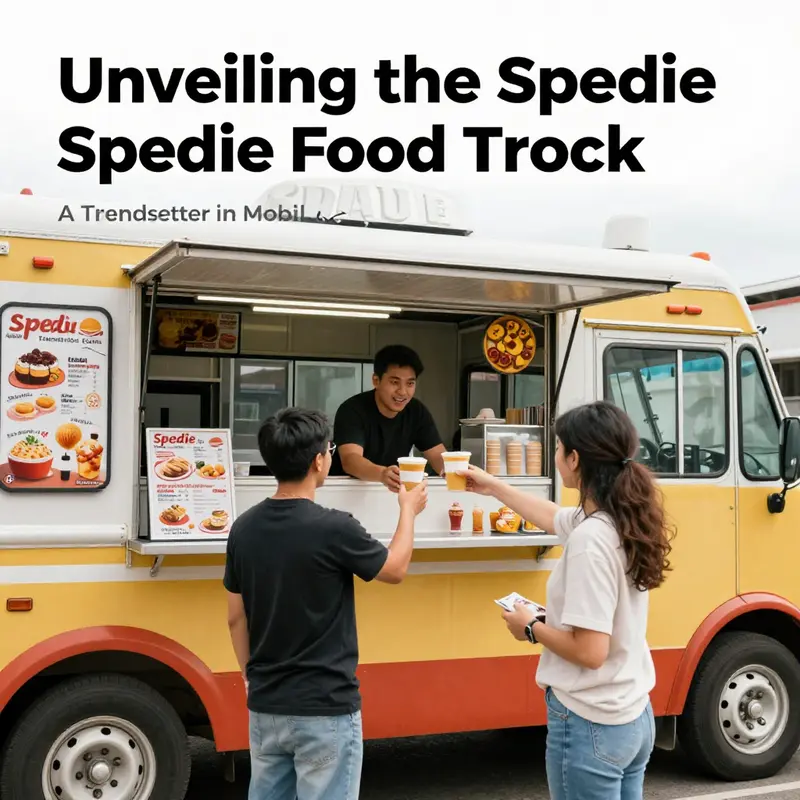
The phrase spedie food truck may not appear in the standard lexicon of American mobile kitchens, and the sources available to us leave little evidence that a term as specific as spedie has a defined place in the industry. Still, the idea behind it—mobility, culinary specificity, and the possibility of a distinctive brand—resonates with the broader arc of food trucks today. What if a spedie food truck exists more as a concept than as a fixed label? What would it take for such a venture to be economically viable, to carve out a sustainable niche, and to align with the evolving expectations of diners who crave speed without sacrificing ethics, flavor, or story? The following exploration treats the spedie idea as a hub for a flexible, modern mobile kitchen that could specialize in plant-based fare, desserts and bakery items, or culturally diverse menus. It is a narrative about business architecture on wheels, a narrative that threads market demand, operational discipline, branding, and the regulatory environment into a coherent path toward profitability and impact.
The reality of mobile food in the United States hinges on the tension between mobility and margins. A spedie food truck, framed as a compact yet capable kitchen on wheels, must decide early what it will be known for, how it will reach customers, and how it will sustain itself through cycles of demand and seasonality. The economy of such a venture rests on a few fundamental levers: capital layout and debt service, operating costs, revenue channels, and the ability to scale through events or recurring contracts. The electric propulsion and energy efficiency narrative adds another layer. In an era when sustainability is both a consumer preference and a corporate obligation, signaling responsibility can be as important as signaling flavor. The Electric Food Truck Guide points to plant-based menus as an enduringly popular niche with strong audiences in urban campuses, farmers markets, and environmentally conscious neighborhoods. The logic is straightforward: plant-based items can be economical to produce at scale when ingredients are sourced thoughtfully, and electric appliances can lower energy costs and improve the kitchen’s operational footprint. Yet there are genuine tradeoffs. Organic produce, specialty products, and small-batch ingredients can push up costs, and appealing to meat-centric palates remains a challenge for some plant-forward concepts. This is where a spedie truck’s precise positioning matters most: it can combine culinary intention with operational efficiency to create a distinctive value proposition that stands apart from broader, generic street food.
The plant-based avenue is one plausible path for the spedie concept. A truck centered on quinoa bowls, vegan burgers, and cold-pressed juices can ride the wave of wellness culture while reducing kitchen emissions through electric systems. The business logic is compelling on two fronts: first, the target audience tends to be concentrated in specific locales—college campuses, eco-conscious neighborhoods, and festival scenes—where demand for quick, nutritious meals is high. Second, the use of electric equipment lowers energy costs and enhances kitchen reliability, because heat and cold storage can be delivered with minimal noise and fumes that would otherwise complicate event or street settings. The cost calculus, however, must account for higher ingredient prices in organic or specialty produce, and for the challenge of maintaining broad appeal across varied customer segments. A spedie plant-based concept would need strategic menu design that balances familiarity with novelty, enabling repeat visits while still encouraging impulse purchases. Branded packaging, clear nutritional cues, and a lean supply chain are essential to avoid price erosion and to preserve margins as volumes grow. In this sense, the spedie truck becomes not only a cook on wheels but a brand vehicle that communicates health, sustainability, and taste with every mile.
Dessert and bakery configurations offer a parallel track with strong profitability potential. The premium nature of artisanal pastries, cupcakes, and specialty coffee can command higher price points in event-driven settings, at festivals, and during market seasons. The Electric Food Truck Guide notes that electric power contributes to a cleaner aroma footprint and a more pleasant customer experience, crucial in environments such as outdoor weddings, corporate gatherings, and high-end fairs. The margins on desserts can be robust, especially when the truck deploys a limited but highly curated menu and focuses on quality, consistency, and speed. The challenge here involves maintaining product quality under varying ambient temperatures, ensuring consistent bake times in a compact kitchen, and managing waste and inventory efficiently to prevent spoilage. A spedie bakery on wheels would need smart batching strategies, reliable energy management, and partnerships with local suppliers to keep ingredients fresh and costs predictable. The potential reward is a scalable model built on premium pricing, recurring event gigs, and repeat customers who associate the brand with celebration and indulgence. The key, again, is disciplined operations paired with a distinctive narrative that elevates the mobile dessert experience beyond a simple sugar fix to a memorable, shareable moment on the street and at venues.
Culturally diverse menus expand the spedie concept in another compelling direction. Regions like South Africa showcase how food trucks can function as edible ambassadors, presenting Durban-style curries, Cape Malay bobotie, and Mediterranean mezze with authenticity and storytelling at their core. In such models, the truck becomes a vehicle not only for food but for culture, memory, and the curiosity of passersby. The niche advantage is clear: a well-curated menu can build a loyal following in neighborhoods hungry for bold flavors and a sense of place. The downside is equally visible. Cultural curation requires careful sourcing, labor-intensive preparation, and a marketing narrative that educates diners without stereotyping. It also demands sensitivity to regional tastes and regulatory frameworks that may govern spice blends, sourcing claims, and labeling. A spedie truck that embraces this route must choreograph its supply chain to maintain authenticity while keeping costs in check. It should also prioritize customer education—perhaps through a simple storytelling approach on the truck’s tarp, or through interactive experiences at events—that deepens engagement and justifies price points. The result can be a unique, high-identity business that travels to communities, becomes a catalyst for cultural exchange, and builds a brand that stands apart in crowded markets.
Across these avenues, the choice of vehicle architecture matters as much as the menu. The logistics of a mobile kitchen decisively shape profitability. Box trucks, with their generous workspace and storage capacity, can support larger menus and more ambitious production, making them ideal for catering and large-volume operations. Yet they come with higher fuel costs and more industrial energy needs unless electrified. An electric box truck trades those concerns for lower operating costs and a smaller environmental footprint, but it requires careful planning around charging, power management, and the ability to stage the kitchen in a way that maintains efficiency during busy service windows. For a spedie concept that leans on sustainability and speed, a compact, highly maneuverable vehicle with modular equipment might offer the best balance—enough workspace to execute a tight menu, simple energy demands, and the flexibility to operate in tight urban spaces. The science behind food trucks underscores this balancing act: space, workflow, and energy consumption must align with demand patterns and marketing strategy. The goal is a kitchen that is not only functional but also a brand asset that travels smoothly from one location to the next, leaving a consistent impression of reliability and character.
Regulatory concerns loom as steady background music in the spedie narrative. The Atlantic’s framing of food trucks as mobile kitchens that race across regulatory landscapes—yet continue to adapt—remains as relevant as ever. Licenses, health inspections, fire safety, waste management, and parking rules collectively determine when and where a truck can operate. For a concept that promises to switch menus and locations with seasonal gusto, regulatory navigation is not a one-time hurdle but an ongoing discipline. Operators must build systems that track permits, renewals, inspections, and insurance across multiple jurisdictions, especially if the plan includes festival circuits, college campuses, or corporate fleets. The financial impact of regulatory compliance can be significant, but the payoff is resilience: a business that can pivot to meet demand while staying within the law becomes a trusted partner for event organizers, universities, and neighborhood markets.
Within this regulatory and operational framework, branding emerges as more than a cosmetic consideration. A spedie truck has to communicate its essence in a single glance: what it offers, why it matters, and how it tastes. The vehicle becomes a moving billboard that reinforces the menu narrative and the values behind it. A strong on-wheels identity can attract loyal customers who identify with the brand’s story, whether it centers on plant-based purity, artisanal pastry craft, or cultural storytelling. This is where the craft of branding—color palettes, typography, signage, and packaging—plays a pivotal role in long-term profitability. A cohesive brand can reduce marketing waste, increase word-of-mouth referrals, and command premium pricing by conveying quality and consistency at every touchpoint. For operators who want to seal this identity with practical, scalable marketing practices, drawing from established playbooks on on-wheels branding offers tangible guidance. The brand’s voice should travel with the truck, through the menu design, the way staff engage with customers, and the choreography of service during peak periods. If the spedie concept aims to be more than a fleeting food truck idea, branding must be treated as a core asset rather than a cosmetic add-on. A deliberate approach to branding helps align the entire operation—from supplier selection and menu development to pricing and customer experience—around a single, credible story that endures as the truck moves from one venue to another.
Economic viability is not merely a set of numbers. It is a living system that integrates customer demand, menu discipline, vehicle choice, energy strategy, and regulatory navigation into a coherent strategy. A spedie food truck cannot rely on luck or novelty alone. It must cultivate a consistent operation model, a pricing architecture that protects margins, and a location strategy that optimizes reach while limiting time on the road between gigs. This means defining a target mix of revenue streams—daily sales at markets, scheduled events, and repeat contracts with campuses or companies—and designing processes to harvest those streams efficiently. If a truck can reliably secure a handful of recurring events each month, with additional revenue flowing from one-off gigs, the business becomes less vulnerable to the unpredictable swing of weather, foot traffic, or festival lineups. In practice, this translates into a financial plan that segments fixed costs such as vehicle payments, insurance, and licensing from variable costs like ingredient sourcing, energy use, and labor. It also means building a robust cash flow model that accounts for seasonality, peak event seasons, and the lag between inventory purchases and revenue realization. A disciplined approach to financial modeling, guided by the kind of annual operating expense analyses discussed in broader food-hub contexts, helps operators forecast profitability, identify break-even points, and test scenarios under different market conditions. While the spedie concept may be hypothetical in terminology, the financial discipline required to translate a concept into a credible business is very real.
An honest assessment of the market reveals opportunities and risks in equal measure. The consumer appetite for experiential dining—where a brief, memorable encounter with a mobile kitchen becomes a social moment—continues to grow. The appeal of plant-based and culturally diverse menus dovetails with sustainability narratives that resonate with students, urban workers, and festival attendees who want to eat well without compromising ethics. Desserts and bakery items offer the allure of indulgence and social sharing, which can drive impulse purchases and event-based revenue. The spedie truck, as a flexible, design-forward concept, has a natural advantage if it can fuse flavor, speed, and sustainability into a single, repeatable service pattern. Yet there are constraints that must be respected. Ingredient costs can fluctuate, especially for premium or niche offerings. The capital required to acquire and outfit a vehicle, obtain permits, and carry adequate insurance is nontrivial. The need to maintain consistent quality across multiple venues places a premium on staff training and streamlined processes. The marketing challenge is to communicate a clear identity in a crowded marketplace where many trucks share streets and festivals. The path to success lies not in a single breakthrough moment but in a sequence of disciplined choices: menu clarity, reliable sourcing, robust energy management, and a branding strategy that anchors the business in meaningful consumer associations.
To bridge theory and practice, operators can learn from broader industry conversations about food truck economics and operation. The literature emphasizes the value of controlled experimentation, careful location scouting, and a willingness to adapt menus to the realities of each venue. A spedie concept that aims to thrive across plant-based, dessert, and cultural niches would benefit from a phased rollout—starting with a focused core menu at a few carefully chosen sites, then expanding to seasonal variations and event-based bookings as operations demonstrate reliability and profitability. The experience of similar ventures suggests that the most resilient models combine strong branding with operational simplicity. A truck that can deliver consistently high-quality dishes, quickly serve large lines, and transition smoothly between locations is more likely to build recurring demand and secure long-term partnerships. The future of the spedie food truck, if it is to exist as a credible, profitable idea, lies in turning the concept into a repeatable system rather than a one-off novelty.
For readers who want to situate this discussion within a broader financial and strategic framework, consider how the economics of a food hub or mobile kitchen might inform a spedie project. Annual operating expense analyses from related fields offer a blueprint for budgeting, scenario planning, and capital allocation. They remind us that profitability is ultimately a function of disciplined cost control, revenue diversification, and a compelling, differentiated value proposition that can be consistently delivered in diverse environments. The spedie concept, in this framing, becomes a case study in how to balance ambition with practicality: how to translate a bold culinary idea into a business that travels, serves, and endures.
In closing, the spedie food truck—whatever precise terminology may eventually attach to it—points toward a broader vision of mobile culinary entrepreneurship. It is a model where niche expertise meets mobility and where sustainability, taste, and culture converge in a way that makes a lasting impression on customers and communities. The challenge is to move from concept to operation with a plan that respects market realities, regulatory requirements, and the realities of running a lean, efficient kitchen on wheels. If executed with discipline and creativity, a spedie truck could become a recognizable, trusted option in the urban foodscape—an embodiment of speed, flavor, and responsible business that travels where people gather, eat, and celebrate.
Internal resource: For a deeper dive into branding strategies that align with a mobile kitchen’s identity, see Branding on Wheels: The Ultimate Guide to Food Truck Graphics and Identity. https://loschifladostruck.com/branding-on-wheels-the-ultimate-guide-to-food-truck-graphics-and-identity/
External resource: For an external perspective on the economics of mobile and hub-based food ventures, refer to the analysis of operating expenses in the food-hub sector. https://www.researchgate.net/publication/378546215EconomicViabilityofaFoodHubBusinessAssessmentofAnnualOperatingExpenses
Final thoughts
The spedie food truck stands out not just as a culinary trend but as a symbol of community and innovation. As food trucks continue to evolve, so does the concept of what they can offer. Spedie food trucks encapsulate this evolution, blending cultural authenticity with business opportunity. For event planners, local communities, culinary enthusiasts, and entrepreneurs alike, the spedie food truck presents a unique partnership opportunity, enhancing events and bringing a touch of deliciousness to everyday meals. With the right approach and community engagement, the potential for a spedie food truck can be a fruitful venture!