Tipping at food trucks can be a gray area for many food enthusiasts and event organizers alike. It’s not just about the food served at these mobile kitchens; it’s about acknowledging the time, effort, and love that go into each dish. As event planners, corporate HR teams, local communities, or simply passionate consumers, understanding the tipping etiquette at food trucks can enrich your culinary experiences. This article will navigate four essential aspects: the service provided at food trucks, the visibility of tipping cues, the rise of digital payment systems, and the ownership structures behind these street-side gems. As you read on, you’ll discover how tipping at food trucks can express appreciation for quality service and foster community support.
Tipping at the Window: How to Read Service, Signals, and the Right Gesture
Tipping at the Window: How to Read Service, Signals, and the Right Gesture
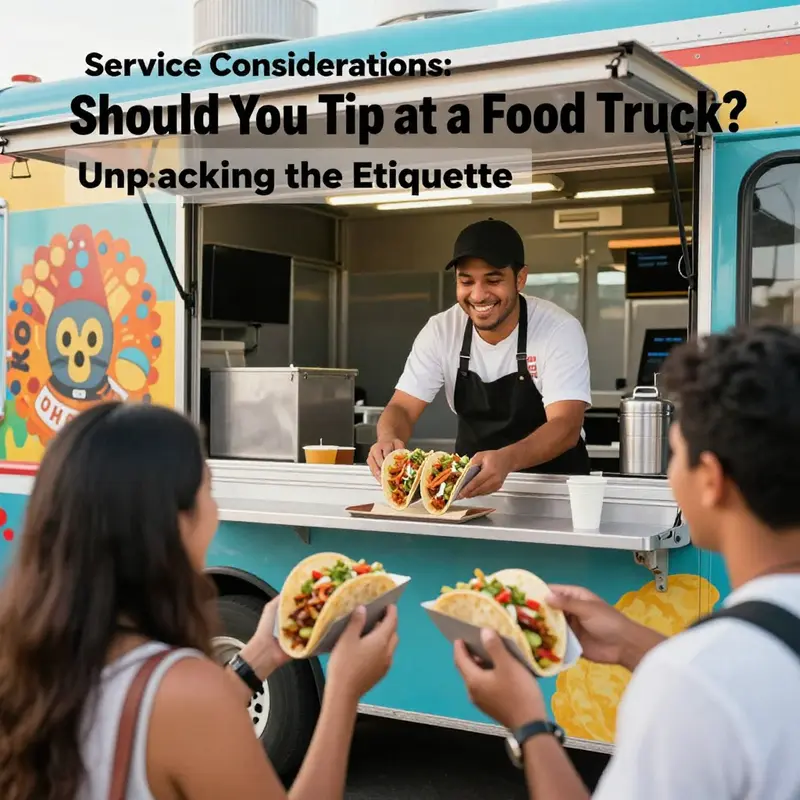
Standing at a food truck window is simple. You order, you wait a short while, and you walk away with a meal. The exchange feels brief. That makes tipping seem optional. Yet what looks like a quick transaction often hides hours of unseen work. The person handing you food may have spent the morning prepping, the overnight sourcing ingredients, and the week managing permits and equipment. Recognizing that labor is the heart of modern food-truck tipping etiquette. A thoughtful tip communicates more than money. It honors skill, risk, and a small business’s tight margins.
Food trucks vary. Some are staffed by people focused solely on speed. Others run full, kitchen-style operations on wheels. Some are owner-operated, where the person taking your cash is also the operator. These differences shape what tipping means. When you tip an employee, the gesture directly supplements wages. When you tip an owner, it contributes to the owner’s livelihood and validates their craft. In both cases, a tip functions as feedback. It tells the vendor that their food or service lifted your day.
Several visible signals make tipping easier to decide. A jar labeled “tips” near the window is the clearest. It removes ambiguity and invites small change or a dollar or two. Many modern point-of-sale devices will also prompt you for a tip. Those screens usually present preset options, such as a small percent or a flat amount. When a digital prompt appears, it’s polite to choose one option, even the smallest. Leaving nothing when asked can feel like a refusal of the service. For truly casual, prepackaged snack stands where nothing is prepared to order, leaving a tip is less expected. But if a truck cooks to order, boxes and bags food for you, or handles busy crowds, a tip is an appropriate form of recognition.
Beyond signals, consider the workload. Food truck staff juggle multiple roles. They cook, serve, and clean in a confined space. They manage inventory that must be transported and kept fresh. They maintain equipment that faces harsher wear than a stationary kitchen. Those responsibilities often fall on a tiny team. If one person manning the window has prepared and served your meal during a busy period, tipping is a simple way to say thank you. A small percentage recognizes that their labor matters.
Local norms matter. In some cities, tipping food trucks is common. Regulars expect to leave a few dollars. In other places, tipping at small vendors is rare. If you see other customers dropping cash into the jar, follow their lead. If you find yourself at a special event, such as a festival or a late-night gathering, tipping becomes more important. Long lines and tired vendors at those events deserve extra consideration. Conversely, if you pick up a wrapped sandwich on your way to work and the truck is empty, a tip still counts. Even a modest amount signals appreciation. It also helps build goodwill for future visits.
A practical guideline: think small percentages. Tipping between 5 and 10 percent aligns with current social expectations for takeout-style service. That range is lower than the traditional sit-down restaurant norm, yet it still rewards service. On a $10 meal, that means $0.50 to $1.00 as a percentage tip. If you prefer flat amounts, many customers round up to the nearest dollar or drop a couple of bills in the jar. During peak hours, or when your order is complex, aim toward the higher end of the range. When someone has gone above and beyond—with custom requests or fast, friendly service—consider tipping more.
How you tip matters as much as how much. Cash is the most versatile option. It avoids confusion over whether tips go to staff or owners and reaches the vendor immediately. If you only carry card, digital tipping is usually acceptable. Many trucks use card readers that let you add a tip when you pay. Those tips may be processed differently depending on the truck’s payroll. If the reader shows a prompt, it indicates the owner expects tips to be shared with workers, or at least that tips are welcome.
When a tip is refused, respond politely. Some owners feel awkward accepting tips. They may see a tip as money going to their business rather than compensation for a worker. If an owner demurs, respect that choice. You can still show appreciation in other ways. Buy an extra small item. Leave a positive review online. Follow and promote the truck on social media. Those actions can have lasting value, especially for a small operation working to grow.
Tipping also plays a role in economic fairness. Pay structures for food-truck staff often leave little room for generous wages. Owners must manage fuel, permits, and food costs. Tips help close that gap. Especially during bad weather, heavy traffic, or long festival days, a tip reflects recognition of increased effort and risk. For many vendors, a pattern of small tips from regular customers makes a measurable difference in cash flow. Think of your tip as a direct, personal contribution to a local business’s sustainability.
There are moments when tipping is less expected. If a truck serves mass-produced, prepackaged items with minimal handling, tipping isn’t required. If you use a delivery app or a third-party service that adds convenience fees, check whether drivers or the vendor benefit from those fees before adding a tip at the truck itself. Also, when ordering at self-service kiosks or when a vendor explicitly declines tips, follow their lead. Good etiquette allows for discretion.
Consider alternatives that still support vendors when tipping feels awkward. Buying an extra snack or beverage raises the purchase total. Leaving a glowing online review boosts visibility. Mention the truck to friends or order from them again. For owners, resources on running a profitable mobile operation matter. If you want to go deeper, look at guidance aimed at new operators. A helpful resource on startup finances is available for first-time food-truck owners. It explains cost management, pricing, and cash flow basics. Sharing that information with an owner or recommending it can be valuable—especially for operators who are learning the business side of the trade.
If you’re unsure about the right approach, default to a small tip. The smallest gestures add up. When repeated across many customers, those coins and bills accumulate into meaningful support. Tips also shape relationships. Regular patrons who tip create a reciprocal dynamic. Vendors remember them. Service improves, and interactions become friendlier. For many food-truck owners, repeat business and word-of-mouth matter more than any single tip.
Beyond money, respect the service context. Be patient during busy times. Keep orders simple if the line is long. Offer a smile or a thank you. Those small courtesies cost nothing and lift morale. Tipping complements polite behavior, but it does not replace it.
Finally, tipping is a personal decision grounded in context. It is not a strict rule carved in stone. Consider the effort behind your meal, the signals at the truck, local customs, and your own budget. If you can, err on the side of generosity. Small financial gestures sustain independent vendors. They also affirm the unique place food trucks have carved into local dining scenes. Whether you leave a dollar, five percent, or skip a tip on a prepackaged item, do so informed and intentional.
For a practical summary: look for a tip jar or digital prompt, factor in service complexity, and aim for 5–10 percent on average. Use cash when possible, or add a card tip if prompted. Support owners by promoting their business if they refuse tips. When in doubt, a modest tip and a sincere thank you are unlikely to be misplaced.
External reference: For a clear overview of this etiquette and contemporary expectations, see the reporting on tipping at food trucks from ABC News. (https://www.abcnews.com/food/should-you-tip-at-food-trucks-etiquette-no-one-talks-about)
Internal resource: For owners seeking financial advice, consider this guide on financial tips for first-time food truck owners: financial tips for first-time food truck owners.
Visible Cues, Quiet Rules: Reading When to Tip at a Food Truck
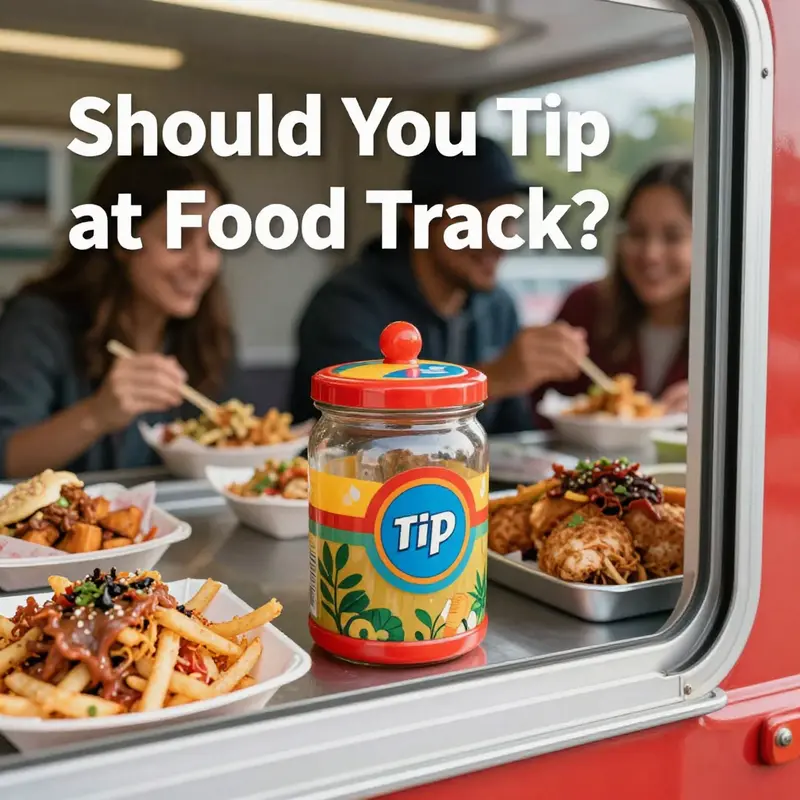
When you approach a food truck, the choice to tip often depends on what you can see. The presence of a tip jar or a prompt on a payment screen does more than ask for spare change. These signals shape expectations, communicate reliance on gratuities, and give quick guidance when you aren’t sure what the local norm requires. Understanding these visible cues helps you act with respect for the vendor’s work. It also helps you avoid awkwardness when the person making your meal is also the one taking your payment.
Start with the simplest and most obvious sign: the tip jar. A clear jar, a decorated cup, or a chalkboard note reading “tips appreciated” sends a direct message. That message is practical. Many food trucks are run by small teams or solo owners. They handle long prep hours, sourcing, equipment maintenance, and often the sales and the cooking by themselves. A tip jar gives customers a quick way to acknowledge that effort. When you see one, leave something if you can. Even a small amount is meaningful. Five to ten percent is a common, reasonable range when the transaction is quick and the order is small. For more involved or time-consuming orders, or when the truck is packed, consider tipping more.
Digital payment prompts are the modern equivalent of a tip jar. When a card reader presents options—$1, $2, 10%, 15%—it is doing more than facilitating payment. It reflects local habits and vendor expectations. Many vendors configure these prompts after watching what other local businesses do. When you tap “no tip” repeatedly in a neighborhood where tips are common, it can stick out. Conversely, in some areas the prompts are rarely used, and selecting one is still novel. If the reader asks, it is polite to choose a modest option. If you cannot, a handwritten thank-you or a friendly nod helps, but it doesn’t replace gratuity for vendors relying on tips.
Visibility also includes signage and staff behavior. Read any menu board or wall postings for explicit guidance. Some trucks note that “tips are split among staff.” Others will state that a service charge is included. If a gratuity is included, tipping extra is optional. If a service charge or mandatory gratuity is added, the sign should explain how it is distributed. When a vendor openly mentions relying on tips to support the small business, that is a social cue to contribute. Staff who hand you food directly, manage a complex order, or offer personalized service are also signaling that the labor goes beyond running a simple transaction.
Context matters. A food truck at a busy lunch spot near offices operates differently than one at a weekend festival. At a weekday location with a steady line, staff may have refined an efficient assembly-line approach. A quick buy there might merit a smaller tip. At an artisan event or a farmers’ market, where every order is made to order and presentation is personalized, a larger contribution is fair. Festivals can add complication. Many vendors pay substantial fees to participate at large events. Some include those costs in pricing; others do not. Visible cues like signs or tip jars still apply. If in doubt, ask the vendor—most appreciate the conversation.
Consider the ownership structure when deciding whether to tip. Tipping an employee differs from tipping a business owner. Many trucks are owner-operated. Tipping them can feel like tipping the business itself, rather than supporting hourly workers. Still, a tip recognizes individual labor. When the owner is the one cooking and serving, your gratuity is an acknowledgment of their personal time. If a truck has several staff members, your tip might go to a shared pool. Visible notes near the ordering window often clarify how tips are used, and they help you make a more informed choice.
Observe how the staff interact with customers. If the person taking money is also preparing meals and juggling orders, it’s reasonable to tip. If you place a large, complicated order and they manage it professionally while staying friendly, tipping becomes more appropriate. Visibility extends to the workload you see. A crowded truck with a single worker steaming and chopping is a clear indicator that tips will be used. Small, quiet trucks with multiple staff members behind the window may already have wages factored differently. Still, visible tip jars or digital options are signals worth following.
Local culture and city habits shape what you should do when you see tipping cues. In some cities, tipping at food trucks has become routine. Regulars expect it, and vendors plan around it. In other places, the custom is less established. If you travel often, watch what locals do. If you can’t, default to small, courteous tips when prompted. When a tip jar is absent and a reader has no prompt, you’re free to leave nothing. But if you received extra attention or a custom dish, imagine what you would do in a sit-down context, and match that level of gratitude proportionally.
How you tip matters. Cash in small denominations is immediate and useful. A one-dollar bill slipped into a jar can make a difference. For larger orders, larger bills are appropriate. If you pay by card and the reader provides tip options, selecting a modest percentage keeps the interaction seamless. When a vendor prefers electronic tips through a specific app or platform, follow their visible instructions. Leaving a kind note or a positive review on social media also adds value, but it does not replace tips when staff rely on them.
There are times when tipping is less clear. When the truck is part of a larger catering or festival where servers are hired by the event, the visible cue may indicate the event policy rather than the vendor’s. If a tip jar is labeled for event staff specifically, direct your tip accordingly. If a truck’s menu says, “Gratuity included,” look for further explanation. Some trucks include a service charge to support employees. Others add a fee for card payments that vendors explain on signage. Those notices count as visible cues that change your decision.
Visibility can also mislead. A tip jar might be present simply as a habit rather than necessity. A digital prompt could be configured by a third-party payment company, not the vendor. When signs are unclear, a polite question is acceptable. Asking, “Do tips stay with the team here?” or “Is there a split?” is direct but unobtrusive. Vendors often appreciate the chance to explain. Their answers will align with the visible cues and help you decide whether to tip and how much.
Reading the cues becomes easier with practice. Take the habit of scanning the ordering area for jars, signs, and card reader prompts. Watch how other customers behave if you can. When you see consistent tipping by regulars, follow suit. When you see no one tipping and no prompts, tipping is optional. Use visible signals as a social script. They save time and reduce uncertainty while honoring the vendor’s work.
Visible tipping cues have broader consequences for food truck operations. For many owners, tips supplement tight margins. Vendors often invest deeply in their craft and equipment, and their profit can be thin. When customers leave tips, those funds may go toward paying staff, buying quality ingredients, or keeping a vehicle running. If you want to understand that business reality further, consider resources aimed at food truck finances. Practical guides like financial tips for first-time food truck owners explain how owners plan for costs and how tips fit into their budgets. Linking what you see at the window to the vendor’s broader needs creates better empathy and better decisions.
Ultimately, visible cues are your best guide when deciding whether to tip. A tip jar, a payment prompt, or a sign explaining gratuity policy communicates vendor expectations. When in doubt, be generous within your means. A small tip acknowledges the labor behind your meal. It recognizes the person behind the window. And it respects the operational reality of independently run trucks. If you prefer not to tip, do so respectfully. Skip the jar with a smile or say thanks as you leave. But if you want a straightforward rule: when you see a tip jar or a digital prompt, contribute something. Your visible generosity often has an immediate, practical effect.
For further perspective on these cues and on tipping etiquette specific to mobile vendors, see the related reporting on customary practices and vendor expectations at Food & Wine: https://www.foodandwine.com/tips-for-tipping-at-food-trucks
When the Screen Asks: Navigating Digital Tips at Food Trucks
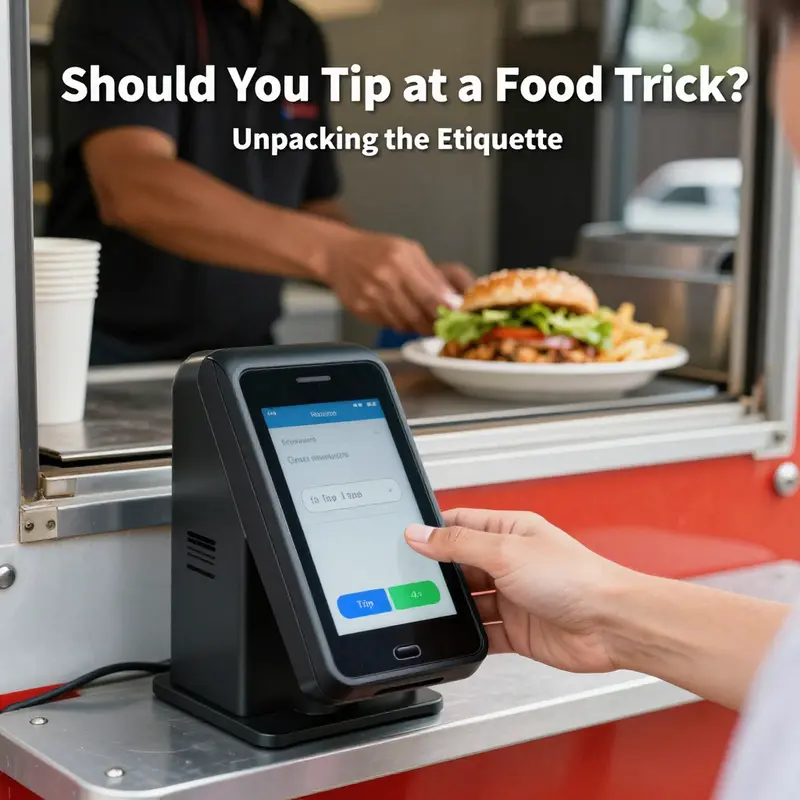
When the Screen Asks: Navigating Digital Tips at Food Trucks
Digital payments have changed how we pay for tacos, bowls, and late-night sandwiches. The small touchscreen on a portable card reader now prompts for a tip the same way a table-side tablet might. That shift has made tipping at food trucks more visible, immediate, and—sometimes—awkward. Understanding why those prompts appear and how to respond helps you support workers while keeping your spending sensible.
Food trucks are no longer always a box of quick, low-cost items. Many operate with restaurant-level commitment: carefully sourced ingredients, seasonal menus, and long prep days. That effort doesn’t disappear because the food is handed through a window. When a digital payment screen offers preset tip percentages or a custom amount, it is signaling that tips are welcome. For many operators, those small additions matter.
Why the prompt exists is practical as well as cultural. Card readers were designed to capture the same behaviors found in sit-down restaurants. Vendors enable tipping options because customers increasingly expect them. In dense urban markets, a tip prompt aligns food trucks with other food-service experiences. It also acknowledges that card transactions can obscure the informal exchange of cash that once allowed rounding up or small bills to be left on the counter.
When you see options like 10% and 15%, a simple guideline is useful. Leaving a modest tip—around 10%—is a reasonable gesture for quick counter service. If the truck is busy, the staff juggle multiple tasks: cooking, plating, taking orders, and managing payments. A 10–15% tip recognizes that labor. For smaller orders, leaving a flat dollar amount may feel more appropriate. Rounding up or adding $1–2 is common and appreciated.
Many people hesitate because the person taking payment may be the business owner. Tipping an owner feels, to some, like paying the company rather than rewarding service. While that discomfort is understandable, remember tips are income. For owner-operators, a tip offsets long hours and business risk. When staff are employees, tips can make a tangible difference in their take-home pay. Either way, tipping at the prompt supports the people behind your meal.
Not every situation requires a tip. If the truck clearly functions like a fast-food counter with low-margin, self-service items and a single staff member handling a quick, low-effort exchange, you might skip a tip. A helpful rule is to consider effort, time, and complexity. If your order involves special requests, customization, or extra time during a rush, tipping becomes more appropriate.
Cash remains a simple alternative. A visible tip jar signals appreciation in the traditional way. If you prefer to avoid the digital prompt, carry small bills and drop a dollar or two into the jar. Cash tips go directly to the staff without card processing fees. When possible, ask politely how tips are distributed. Many trucks split tips among workers, while others let owners keep them. If you want to support staff specifically, cash gives you control.
Digital tips, however, have advantages. They are trackable, contactless, and convenient. For some vendors, card-based tips are easier to manage into payroll or bookkeeping. But note that card networks and processing systems sometimes deduct fees on tips or delay distribution. Small businesses may incur costs when card tips are processed, so a modest cash tip can be more efficient for workers.
Social context matters. In cities where tipping culture is strong, the expectation to tip at a food truck is higher. Local norms influence what feels polite. If you visit a popular metropolitan area, follow the crowd: if most customers tip at the prompt, it’s courteous to do the same. Conversely, in areas where tipping at a counter is rare, a tip may surprise the operator but will still be appreciated.
Handle digital prompts in a way that fits your budget. If a reader offers 15% and you want to give less, there is usually a custom field. Enter a dollar amount that matches your intent. For a $10 meal, $1–$2 is a fair, visible gesture. For larger orders, a percentage makes sense. Avoid defaulting to the highest percentage because it is quicker; tipping should be intentional. Small, thoughtful choices add up when many customers act the same way.
Consider special circumstances. If you’re ordering multiple items for a group or placing a large catering order, the tip expectation increases. Large orders often require extra prep time and coordination. For festivals and events where service is slower due to crowds, a tip helps offset the strain. If you pick up food during a private event or from a truck that offers table service, treat the interaction like a casual restaurant and tip accordingly.
Transparency helps. Some trucks post signs explaining how tips are used. A short note that tips go to staff, or that the owner uses tips to cover payroll, clarifies the impact of your contribution. If a vendor lacks such transparency and you care about how tips are handled, a polite question can provide clarity: “Do tips go to staff?” Most operators appreciate the interest and are willing to explain.
There are rare moments when a tip may not be appropriate. If service is rude, or if the preparation is careless, withholding a tip signals dissatisfaction. Be measured: if the issue is a genuine mistake, sometimes a friendly correction yields a fix and still merits a small tip. Complaints are best handled calmly, not via refusal to tip in a way that could embarrass a worker.
For food truck owners and managers, the rise of digital tips is an operational concern. Prompt design matters: offering a clear, modest set of choices encourages tipping without pressuring customers. Signage explaining tip distribution increases trust. Owners also need to weigh transaction fees on card tips versus the administrative ease of digital tracking. If you’re curious about running a food truck effectively, practical advice on managing finances and operations can help. For actionable guidance, see this resource on financial tips for first-time food truck owners.
As a customer, balance fairness with practicality. When a screen asks, respond with a conscious decision, not a reflex. A small tip recognizes effort and supports local food entrepreneurs. If you tip in cash when possible, you may boost workers’ take-home pay. If you tip on the reader, do so intentionally—choose an amount that reflects the service and your budget.
Ultimately, tipping at a food truck is a personal choice shaped by context. The appearance of a digital prompt is a courteous invitation, not a mandate. Treat it as an opportunity to acknowledge labor, reward care, and invest in the small businesses that add variety to street food scenes. A modest, consistent approach—rounding up, leaving a dollar or two for small orders, or choosing 10% for larger ones—makes the practice manageable. When you leave a tip, you help sustain the people and passion that bring vibrant food trucks to your neighborhood.
External reference: https://www.seriouseats.com/should-you-tip-at-food-trucks-etiquette-across-different-us-cities
Who’s Behind the Window? How Ownership Shapes Whether You Should Tip at a Food Truck
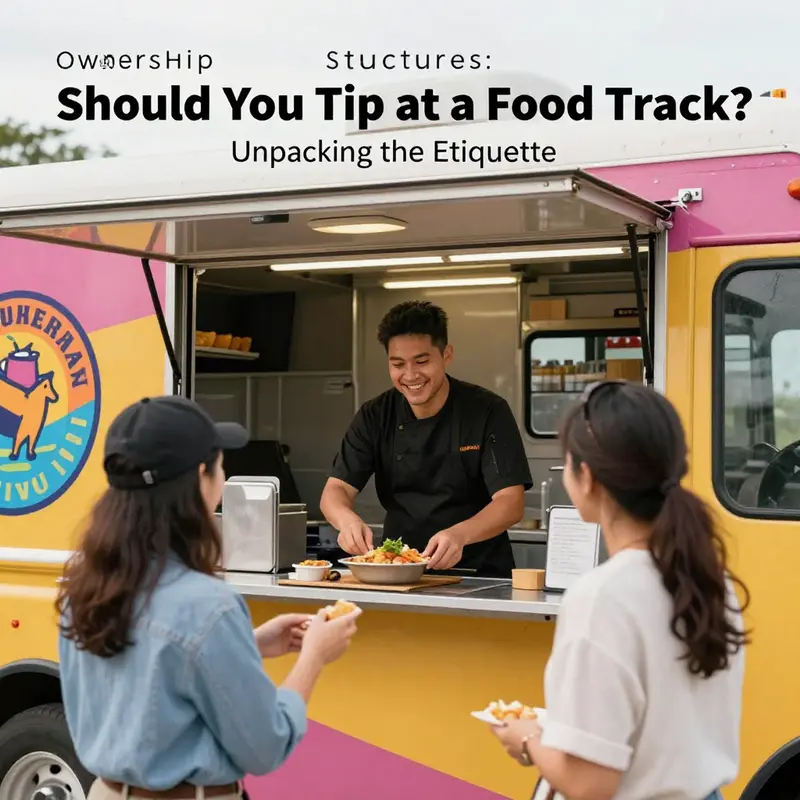
Understanding who runs a food truck makes tipping clearer. Ownership structure changes the nature of service, the flow of money, and the social expectations around leaving a tip. When you place an order at a food truck, you might be interacting with a sole operator, a small team, or crew members who work for someone else. Each arrangement carries different implications for why a tip matters and where it goes.
Many food trucks are small businesses built and run by their owners. A sole proprietor may do everything: sourcing ingredients, prepping, cooking, taking payments and cleaning up. Tipping in that situation can feel awkward. You are effectively giving extra money to the person already running their own business. Yet recognizing the labor behind that single window is meaningful. Owners often work long hours, pay for supplies out of pocket, and sometimes earn modest take-home pay after expenses. A tip, even a modest one, is a direct way to acknowledge that labor. It can also be a practical support when the business has thin margins.
Other trucks mimic restaurant staffing. They may employ a few cooks, servers or a dedicated cashier. In those cases, tipping more clearly benefits staff who rely on customer generosity. When a team member hands you a meal and interacts with you, a tip functions the same way it would at a counter-service cafe. If you can tell roles are split—one person cooks while another handles money and customer interaction—think of your tip as a small wage supplement for the person who served you.
Ownership models also include small partnerships and cooperative setups. Two or three partners might share duties: one manages operations, another handles finances, a third runs service. These arrangements blur the line between owner and employee. A partner who stands at the window is still an owner, but that person is also providing labor at the point of sale. In practice, customers treat these scenarios similarly to other staffed trucks. A tip recognizes the labor performed, whether the tip goes into personal pockets, a shared pot for partners, or a payroll pool.
Then there are trucks tied to larger brands or food-service groups. A few chains operate mobile units as extensions of established restaurants. These trucks may have more formal payrolls, established tipping policies, and sometimes higher-priced menus. When a truck is part of a larger business, tipping etiquette aligns more closely with brick-and-mortar norms. Staff members often depend on tips to reach a reasonable hourly income, and digital payment systems may prompt for standard percentages.
A growing factor is the use of digital payments and tip prompts. Over two-thirds of trucks now accept cards, and many display suggested tip amounts at checkout. These prompts subtly shape customer behavior. If your payment screen asks for 15% or offers suggested dollar amounts, the truck signals that tips are appreciated or expected. In these moments, consider whether the prompt reflects staff wages or simply a convenient way for the business to supplement revenue. Either way, responding with a small tip is a recognized social norm.
The type of service matters as much as ownership. If you order, pay, and pick up food quickly with minimal interaction, tipping is less obligatory. If staff prepare food to order, customize items, communicate dietary changes, or take time to explain the menu, their effort aligns with more traditional service. Long lines and busy shifts increase this expectation: staff are juggling orders and pacing service under pressure. Tipping becomes a way to say, “I see the work you’re doing.” Even a dollar or two per order shows appreciation and adds up meaningfully over a busy day.
For owners who both run and serve, think of a tip as a gesture of support rather than a requirement. Many people prefer to leave cash directly if possible. Cash tips are immediately accessible and don’t involve card-processing fees or digital splits. If a tip jar is visible, placing cash inside sends a clear signal: this is income that will benefit the people working that shift. If payment is digital and the system calls for a tip, choose a modest percentage or a small fixed amount. Either choice helps and avoids awkwardness.
Understanding local customs also helps. In some cities, tipping mobile vendors has become common. Neighborhood habits vary by region, event, and customer base. At festivals or markets, vendors often expect tips because service tends to be more involved and venues attract patrons used to tipping. At regular weekday lunch spots, the expectations might be lower. If you’re uncertain, watch the crowd. Observing others is a quick guide to local practice.
There are also ethical considerations around tipping owners. Some observers argue that tipping should not be necessary to make small businesses viable. They say the responsibility lies with the business to pay fair wages. That critique is valid and worth considering, but customers operate within existing norms. A tip does not fix systemic wage problems, but it can ease immediate strain for people who prepare your meal. When the person behind the counter is an owner, your tip supports that business directly and can help sustain it through slow periods.
If you want to be deliberate about where your money goes, a brief question can help. Ask, “Does the tip go to staff or the owner?” or “Do tips get shared among the crew?” Many vendors will explain their policy quickly. If tips are pooled for staff, that may encourage a slightly higher contribution. If the owner confirms tips support their business, a small tip is still a personal endorsement.
When a truck participates in an event managed by an outside organizer, the revenue split might be more complicated. Some events charge fees or require vendors to pay a percentage of sales. In such settings, tips can make a real difference. The truck has additional costs beyond typical operating expenses, and tips help offset those burdens for workers and owners alike.
Another factor is kitchen location. Some trucks prepare food entirely on board. Others use a commissary kitchen where prep happens elsewhere. If most prep work happens off-site, you might assume the labor is less visible and therefore less tip-worthy. But staff still complete final assembly, plating, and service at the truck. Tip for the on-site service you see, not the hidden work you don’t.
A practical approach: match your tip to service level and how the tip will be used. For brief, no-frills pickups, a dollar or two is sufficient. For made-to-order meals, personalized service, or times when staff are clearly busy, consider tipping 5–10% or more. If the truck displays suggested percentages at checkout, follow those prompts if you can. Handy rules of thumb include rounding up the bill, adding a small dollar amount, or choosing the lowest suggested percentage when pressed.
Finally, consider consistency. Regular customers who tip reliably build goodwill. They help a truck stay profitable and foster positive relationships with staff. If you find a favorite truck you visit often, make tipping part of your routine. Owners notice repeat patrons who show support. That consistent generosity can influence menu offerings, opening hours, and the long-term survival of a local favorite.
Tipping at food trucks sits at the intersection of etiquette and economics. Ownership structure influences expectations, but behavior is also shaped by service type, local norms, and practical realities. A small tip is rarely wrong. It recognizes the labor behind the meal and supports the people who make it. If you want more practical advice tailored to operators, the guide on financial tips for first-time food truck owners can help explain where those extra dollars go and why they matter in a small mobile business.
For broader industry trends and data on tipping in the mobile food scene, see the National Food Truck Association’s research on tipping and payment habits: https://www.foodtruckassociation.org/research-trends
Final thoughts
Tipping at food trucks may not be a hard-and-fast rule, but it certainly reflects appreciation for the craft and service involved in providing delicious eats on the go. By considering the aspects we’ve discussed—service quality, visibility cues, digital payment systems, and the unique ownership structures of food trucks—you’re better equipped to make a fascinating decision on whether to tip. Whether you’re an event planner organizing food for an occasion or a foodie enthusiast savoring the flavors, your tips can help sustain these small businesses while enhancing your culinary adventures.