Tipping food truck caterers can be a tricky affair; it’s not just about giving a few extra dollars, but recognizing hard work and exceptional service. Whether you’re planning a wedding, corporate event, or just hitting up a local food truck at a festival, understanding how much to tip can enhance the overall experience for both guests and caterers. This guide explores the nuances of tipping in different settings—private events, public gatherings, and more—while also considering cultural influences and individual circumstances. Dive in as we break down the essentials to ensure you’re tipping appropriately and fostering great service in the food truck community.
Sizing the Gratuity: Understanding How Much to Tip a Food Truck Caterer at Private Events

Tip sizing for private-event feasts is more than arithmetic. It is a quiet conversation about value, logistics, and the role of a food truck team in shaping a guest experience. When a mobile kitchen arrives for a wedding, a corporate retreat, or an intimate milestone, the service goes beyond simply serving meals. It involves a coordinated ballet of setup hours, on-site cooking, continuous service, and, often, a careful wrap-up that leaves the venue clean and ready for the next act. In this context, tipping is less a mandatory add-on and more a gesture of appreciation for that orchestration. Etiquette guides converge on a familiar range: tipping between 15% and 20% of the total catering fee is commonly recommended for private events, mirroring the standards you’d apply to waitstaff or dedicated bartenders in a formal setting. But the reality behind that guidance is nuanced. The food truck team may operate as a small crew, sometimes a sole proprietor who handles everything from planning to plating. The act of tipping, therefore, becomes a conversation about effort rather than a rigid rule.
The first layer of reasoning is clear: the price you pay for a private-event catering arrangement rarely includes gratuity. Even when a contract outlines a services package, the client-facing price typically accounts for food, equipment, staffing, and transportation, but not a tip. The implication is straightforward. A tip should be offered as a personal thank-you for the care and skill that shaped the event’s culinary moments. That care shows up in many forms. The cooks may adjust menus to reflect dietary needs, source specialty ingredients, and manage substitutions under time pressure. The servers keep the line moving during peak moments, facilitate clean service flows for plated or buffet-style dining, and manage guest interactions with a calm efficiency. Drivers and setup crews may handle logistics in unpredictable spaces, negotiate parking, and safeguard equipment in variable weather. Each role, from mise en place to final wipe-down, contributes to the guest experience in ways that aren’t always visible to guests but are felt in the satisfaction of the event hosts. In a private setting, tipping acknowledges this entire continuum.
When you weigh the amount, the 15% to 20% range is a practical starting point. It aligns tipping for private or intimate events with the broader hospitality standard. If the service follows a model closer to full-service catering, where staff interact with guests at table or station, and where the team curates the dining atmosphere alongside the event planner, the comparison to traditional waitstaff generosity becomes natural. In such cases, tipping at the higher end of the range rewards the enhanced service, coordination, and personal touches that distinguish a well-executed food truck experience. On the other hand, if your event features a straightforward drop-off or a simple self-serve setup, with limited on-site staffing and a door-to-table rhythm that resembles casual dining, tipping toward the lower end of the spectrum remains appropriate. The crucial factor is the service quality and the degree to which staff guided the guest flow, ensured safety and cleanliness, and maintained composure amid the bustle. The aim is not to mechanically apply a percentage, but to reflect how much you value the service delivered.
A practical approach helps hosts and guests alike. Begin by reviewing the contract and any explicit gratuity language. If gratuity is included or if the contract specifies a service charge, you may adjust your tipping decision accordingly. Many organizers assume that the presence of a service charge substitutes for a separate tip, while others leave the tip entirely to the host’s discretion. In the absence of explicit guidance, a prudent method is to calculate tip on the overall catering fee, rather than on the food cost alone, and consider the level of service provided. For example, if the total catering fee is two thousand dollars and the service is standard but polished, tipping at 15% would amount to three hundred dollars. If the service included special menu customization, multiple coordinated cook times, and attentive guest handling across an event spanning several hours, tipping at 20% could reach four hundred dollars. That difference is not just math; it’s a reflection of the incremental value that a more complex service model offers.
The narrative you tell through tipping is also a reflection of relationship and trust. For private events, you may receive a single bill from the truck operator or a coordinator, or you may interact directly with the person who did most of the heavy lifting on event day. In either case, the act of tipping often finds its way to the people who managed the on-site operation: the lead cook, the sous-chef or prep lead who stayed late to wrap up, the service captain who kept the flow organized, and the driver who navigated logistics with a calm, problem-solving demeanor. If the operator works alone, there is still room to acknowledge the broader effort by offering a substantial tip through a card or cash payment at the end of service, while also leaving a note of thanks. The gesture can feel especially meaningful if the staff had to improvise due to a weather change, a last-minute dietary substitution, or a demanding guest count. The sound of gratitude in the form of a tip carries sticky warmth into the post-event circle, the kind of signal that helps a small business grow through repeat work and word-of-mouth referrals.
To add depth to this picture, consider how you break down the gratuity within your overall event budgeting. If you’re new to planning with a food truck, you may be balancing several moving parts: the food, the venue, the timeline, and the expectations of your guests. In many cases, tipping is not merely an afterthought but a deliberate line item that influences the experience you deliver. It is wise to have a candid, early conversation with the event organizer and the truck operator about expectations. The operator may be willing to outline which portions of the service are included in the quoted price and which aspects hinge on gratuity. Before finalizing your budget, you can consult resources on related financial planning for trucking ventures to get a broader sense of how gratuities fit into end-of-service economics. For readers who want a broader sense of how gratuities fit into broader financial planning for first-time owners of food-truck ventures, there is a resource that lays out practical considerations in clear terms. financial tips for first-time food-truck owners.
When the day arrives, timing matters as well. A tip given at the end of service, as staff are packing up or when they prepare to depart, reinforces a sense of closure and appreciation. Cash tips are traditional because they allow the recipients to receive the gratuity directly, but many operators also accept card-based tips or tips added to a final invoice. If you choose to tip in cash, consider having the tip envelopes ready and clearly labeled, with a note that specifies the party’s gratitude for the specific service you received. If the event runs longer than anticipated or the staff demonstrate exemplary hospitality in the face of a challenging moment, adding a little extra above the baseline percentage can be a meaningful gesture. Conversely, if the service falls short of expectations due to issues outside the team’s control, you may opt for a smaller tip or hold firm on constructive feedback instead, while still recognizing that some factors are truly outside the team’s control. A thoughtful approach is to pair the tip with positive, specific feedback about what went well—whether it was the way the staff handled dietary restrictions, the way they organized lines to minimize wait times, or how they maintained a clean, efficient service area.
It is also worth recognizing how tipping practices can vary by the nature of the private event itself. A wedding often carries a different cadence than a corporate meeting or a milestone birthday. A wedding may call for a more generous gesture, reflecting the scale of planning involved and the quality of service expected by guests who may be unfamiliar with the truck as a venue alternative. A corporate event, where there is a focus on punctuality, reliability, and a polished onsite presence, may justify tipping toward the higher end if the staff demonstrated deliberate coordination with the event timeline and venues’ security requirements. A more intimate private dinner with a few close friends can be served with warmth and attention rather than spectacle; in that case, tipping at or just above the lower end of the recommended range can still convey appreciation. The key is to observe the service quality in real time and to calibrate your gratuity accordingly, without letting the moment pass without acknowledgment.
Outside of personal tipping choices, professional considerations also guide decisions in this space. If you are a wedding planner, a venue coordinator, or a private-event organizer who works with multiple trucks, you might standardize tipping expectations across engagements to ensure consistency and fairness. In such multi-event contexts, gratuities can be built into project budgets or allocated to a staff gratuity pool so that each team receives recognitions consistent with the level of service delivered. The subtle point is that tipping is not merely a one-off act; it can be the start of a constructive, ongoing relationship. When guests perceive meticulous attention to detail, they are often more inclined to leave tips that reflect the quality of the service and to advocate for the team in future invitations. And the signals that good service sends—reliability, willingness to adapt, genuine hospitality—build a reputation that helps a fledgling food-truck operation travel from one private event to the next with growing confidence.
In sum, tipping a food truck caterer at a private event is a thoughtful practice grounded in fairness and reciprocity. It acknowledges the behind-the-scenes labor, aligns with established hospitality norms, and reinforces the partnership between clients and operators. The 15% to 20% guidance serves as a practical compass, but the real heart of the decision rests on the quality and character of the service delivered. If you took away nothing else, take away this: a tip is more than a number. It is a living expression of gratitude for the craft, the care, and the collaboration that transformed a meal into a memorable chapter of your event. For hosts who are new to this world, the best course is to view tipping as part of a broader budget conversation—one that balances value with generosity and recognizes that every dollar spent on service has a ripple effect on a small business that depends on appreciation to sustain itself. And for readers who want to braid this practice into a broader financial plan for future ventures, the linked resource on financial tips for first-time owners offers a pragmatic doorway into the subject. For broader etiquette context beyond the private-event scope, this BBC piece provides a survey of tipping norms and the ways they adapt to changing times: https://www.bbc.com/news/business-68432100.
Gratitude on the Go: How to Tip Food Truck Caterers at Public Events and Pop-Ups
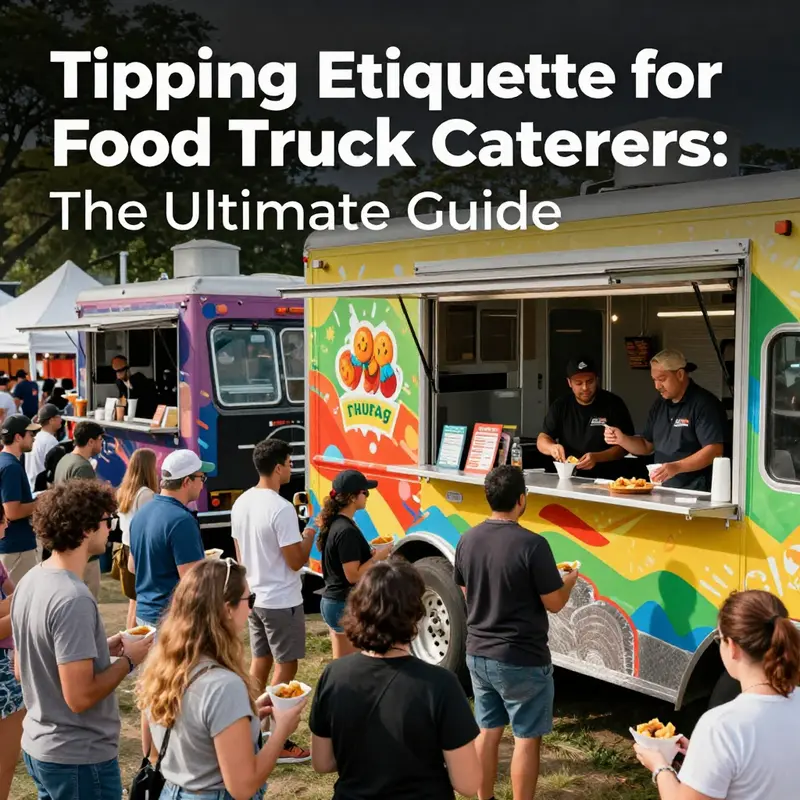
A bustling public event is a study in momentum—vendors lacquered in aprons and grease, staff moving with practiced speed, and lines that weave through the crowd like a living map. In this setting, tipping becomes more than etiquette; it is a concrete way to acknowledge the labor that makes a quick, satisfying meal possible. Unlike a sit-down restaurant where servers clearly delineate their service, a food truck crew operates in a different rhythm. They balance space constraints, high foot traffic, and the unpredictable quirks of weather and crowd flow. Yet the same impulse that drives generous tipping at a fine dining table holds here: appreciation for care, efficiency, and a job well done under challenging conditions. The question, then, is not simply how much to tip, but how tipping aligns with the service delivered and the context of the event. The answer is nuanced, grounded in practical guidelines and shaped by the realities of mobile catering.
At the core, tipping at public events and pop-ups follows a two-track logic. First, for single-item purchases—think a sandwich, a small plate, or a dessert—the price range often lands in the lower double digits. When items fall between $8 and $12, tipping a dollar or two is common. Alternatively, tipping around 15 percent of the total order is an equitable alternative if the interaction was swift but the staff still demonstrated courtesy, efficiency, and attention to detail. When the customer count is large, and the crew handles multiple orders with accuracy, a slightly higher per-item tip can accumulate into meaningful support for the workers who shoulder long preparation hours and the constant hustle of a busy service window. This dual approach—$1–$2 per item or 15 percent of the bill—recognizes that a quick bite still arises from a team effort and not merely a momentary transaction.
But tipping becomes more clearly warranted when the service extends beyond a simple grab-and-go. In pop-up environments, especially those serving groups at festivals, office lunches, or private gatherings, trucks can offer customized catering services—event-specific menus, on-site staffing, and setup coordination. In these scenarios, tipping 15 to 20 percent of the total catering fee aligns with broader restaurant and event catering standards. The higher range reflects not just the food itself but the orchestration involved: additional staff, the logistics of arranging a temporary service space, the risk management around dietary restrictions, and the unseen labor of keeping food hot, fresh, and visually appealing in variable outdoor conditions. The guideline remains a practical compass rather than a rigid rule, calibrated to the degree of service provided and the scale of the event.
In practice, many food trucks operate with a “no tipping” policy for walk-up customers. This stance can feel at odds with the generous spirit of public dining, where a well-handled queue, a friendly greeting, and a well-timed refill of a sauce or beverage deserve recognition. The effect of tipping in such settings is nuanced. A tip signals appreciation for service that goes beyond the mere exchange of money for a plate. It recognizes the staff’s ability to manage high-traffic environments—parks, festivals, business districts—while maintaining a consistent standard of warmth and attentiveness. A small tip, such as a couple of dollars per order, still conveys respect for the effort required to operate a mobile kitchen, where costs like refrigeration, fuel, and permits compound quickly with every event.
To translate these norms into a practical approach, consider the cadence of the event and the level of personalization involved. If you are ordering a single item and the line moves efficiently, a $1–$2 tip is common and well-received. If you find the service standout—perhaps the staff offered recommendations, accommodated dietary preferences, or kept your beverage topped during a long queue—rounding up to $2 or more is appropriate. For larger orders or organized catering—say a 50-person office lunch or a private party with multiple menu options—the tipping frame shifts toward the 15–20 percent range of the total catering fee. In these cases, tipping is less about the act of paying for food and more about acknowledging the orchestration of a mobile kitchen under specific conditions and time constraints. The numbers are not a punitive standard but a flexible expression of gratitude that matches the intensity of the effort involved.
Beyond the numerical guidelines lies a broader ethos about fair compensation and the sustainability of small, mobile operations. Food trucks must contend with a host of ongoing costs: the upkeep of specialized equipment, fuel for long drives and continuous cooking, maintenance of hot and cold storage, insurance, and the necessary permits that keep their wheels turning. A tip is, in effect, a small counterbalance to these fixed and variable costs, a tangible acknowledgment that the service provided carries overhead borne by the workers as they navigate a fast-paced environment. When a crew demonstrates resilience—keeping lines moving in a crowded festival, adjusting to weather shifts, or reinstating a cook line after a rush—it becomes reasonable to reflect that effort in a tip. A calm, patient demeanor under pressure is itself a form of labor, the value of which tip-based appreciation can help sustain.
The social nuance of tipping also invites a mindful approach to the no-tipping culture that some trucks foster. If a truck explicitly discourages tips, a respectful alternative is to show appreciation through generosity in other forms: a kind word to the crew, a public compliment, or a note of thanks to the event organizers. In situations where tipping is accepted, carrying small, ready-to-hand cash or making room for a quick card transaction can streamline the act, ensuring that the moment of gratitude does not become a burden or delay for others waiting in line. The key is to avoid forcing a tip where it is not appropriate and to seize opportunities where genuine service warrants recognition. The more personalized the interaction—the crew offering menu guidance, adjusting spice levels, or ensuring guests with dietary restrictions are accommodated—the stronger the case for tipping as a direct reward for that extra care.
For planners and hosts budgeting for mobile catering, it helps to view tipping as part of the service ecosystem rather than as an afterthought. If you anticipate a significant service lift—such as a custom menu, on-site staffing, or extended service hours—include a tipping reserve in your budget. In some cases, the event may have a built-in gratuity structure, but often it relies on the goodwill of guests and the discretion of organizers. When I speak with event teams and truck operators alike, there is a shared understanding that tipping is both a personal gesture and a practical signal of value. It communicates that the staff’s extra steps—setting up stations efficiently, managing crowded spaces, or responding to last-minute dietary requests—are noticed and rewarded. This shared understanding helps sustain morale in a field where margins can be tight and the hours can be long.
An important practical note concerns the timing of tips. For single-item purchases, tipping at the moment of service is natural and unobtrusive. For larger catering engagements, tipping at the end of service or in installments that correspond to major milestones—such as post-delivery setup, mid-event service, and final cleanup—can be appropriate if the event runs across hours or multiple shifts. If you are part of a group and want to simplify the process, consider pooling a collective tip amount and distributing it to the crew, ensuring that those who directly contributed to the event receive recognition. The overarching aim is to reflect a fair exchange: the tip should go to the people who delivered the service, not to the business as a bulk profit, and it should be commensurate with the effort observed.
For readers who want a practical framework to navigate these decisions, it helps to think in tiers. Tier one is a modest, respectful acknowledgment for quick, routine service—a tip in the $1–$2 range or 15 percent of a small order. Tier two applies when the service is a step above in personalization or scale, where 15–20 percent of the total catering fee is a fair mark of distinction. Tier three is for exceptional, high-touch service—when staff stay attentive across a long event, address a broad range of guest needs, and maintain a high standard of presentation throughout. In all cases, the intent should be clear: the tip is a token of appreciation for labor, logistics, and care, not merely a price supplement. And as with any rule of thumb, exceptions will occur; the important part is to align your action with the service you observed and the value you perceived.
In curating tips for a chapter on tipping food truck caterers at public events, a practical takeaway emerges: tipping should reflect effort, not just expenditure. If a truck provides a simple meal in a busy setting, a small tip can still carry meaning. If the truck serves as the centerpiece of a catered event, tipping becomes part of the reciprocal relationship that enables service excellence in a mobile, dynamic environment. To plan with confidence, consider the context—the item price, the service complexity, and the event format—and let these elements guide your generosity. And when the interaction includes extras—custom menus, dietary accommodations, staff coordination, or on-site setup—the tipping decision should mirror the additional labor those extras require. This approach preserves fairness for workers who shoulder the practical demands of mobile service and supports a culture of gracious, thoughtful tipping that matches the unique realities of food-on-wheels.
For readers seeking further practical budgeting insights from those who live this world, see Financial tips for first-time truck owners. This resource offers grounded perspectives on costs, staffing decisions, and the realities of running a mobile kitchen, which can influence how you think about tipping as part of a broader financial picture. Financial tips for first-time truck owners
External resource: for a broader, industry-backed perspective on tipping etiquette, see the external guide. Food & Wine tipping etiquette guide
The Gratitude Equation: Decoding What Shapes Tipping for Food Truck Caterers
Tipping a food truck caterer sits at the intersection of generosity, context, and service nuance. It is not a rigid ritual with a fixed number, but rather a practiced gesture that honors the effort behind a mobile kitchen. The truck is more than a line on a bill; it is a small, moving team that orchestrates delivery, service, and cleanup in environments that test speed, accuracy, and hospitality. In discussing tipping etiquette as of 2026, the guiding thread remains simple: tipping should reflect the overall value received, the complexity of the event, and the visible care shown by the crew. The result is a thoughtful, situation-aware approach rather than a one-size-fits-all rule. To understand how to read that value, it helps to map out the factors that influence tipping amounts and how they show up in real events, from intimate private parties to large public gatherings.
First, service quality often carries the most weight in tipping decisions. A food truck that arrives on time, maintains steady temperatures, and serves with a smile tends to inspire more generosity. Attentiveness—people who notice dietary restrictions, accommodate requests without delay, and keep lines moving without feeling rushed—creates a tangible sense of care. In a mobile setting, where space is compact and coordination must be flawless, even small acts of attentiveness—refilling drinks, prompting guests to move efficiently, or double-checking orders—can turn routine service into memorable hospitality. When guests feel seen and valued, tipping follows in a way that reflects that positive impression. Service quality is also about reliability. A crew that communicates clearly about timing, keeps the line orderly, and sticks to agreed-upon service windows reduces stress for hosts and guests alike. A dependable crew earns trust, and trust translates into a higher willingness to acknowledge the effort with gratuity.
Event type is another shaping force. The social expectations surrounding tipping shift with the occasion. Weddings and corporate events commonly involve more elaborate planning and higher service standards, which in turn elevate tipping expectations. Guests often anticipate a higher level of coordination from a mobile team that must complement formal moments, manage a longer service period, and sometimes extend into cleanup or post-event logistics. In these contexts, tipping between 15% and 20% of the total catering fee is a customary recognition, aligning with what many servers and bartenders receive in traditional venues. The larger the event and the more intricate the service, the more the tip becomes a practical reflection of the crew’s extended role—from setup to breakdown, from carving through long lines to balancing presentation with throughput. At casual gatherings or intimate private parties, tipping tends to be more flexible, but guests who notice extra care or a willingness to adapt to changing needs may still lean toward the higher end if the experience feels especially seamless.
Location matters in subtle but meaningful ways. Urban centers with dense dining cultures and higher costs of living often cultivate stronger tipping norms than rural environments where customers may be balancing tighter budgets or less exposure to tipping conventions. The same service in New York City might prompt a more generous gratuity than the equivalent service in a slower town, not because the food is better or worse, but because expectations and local customs shape how guests perceive value. Cultural nuances also color tipping behavior across regions. In some communities, tipping is almost a social reflex, while in others it may be more discretionary. The effect is not simply one of wealth or closeness to a destination; it’s about what guests believe is appropriate in their local dining landscape. A savvy host or guest will calibrate expectations to these norms and adjust generosity accordingly, recognizing that a fair tip is a signal of appreciation that travels with the truck back to its home base as a quiet affirmation of professional standards.
Customer expectations are the invisible dial adjusting tipping amounts. When guests have a clear understanding of what constitutes good value—whether that value is speed, accuracy, or a warm welcome—tipping aligns with that perception. People who know the industry norms and who feel they have received fair value are more likely to tip in proportion to their gratitude. Conversely, if a service feels misaligned with expectations—long wait times, repeated misorders, or a lack of attentiveness—guests may retreat to a smaller tip or, in some cases, none at all. Yet even in less-than-ideal moments, tipping remains a barometer for recognizing effort; a tip can acknowledge the crew’s attempt to salvage a difficult situation. It is a gentle reminder that the service ecosystem works on mutual goodwill, with tip amounts acting as a kind of currency for appreciation and encouragement.
Beyond the visible acts of service, the behind-the-scenes effort deserves equal attention. Food truck catering often involves hours of preparation, sourcing ingredients, and maintaining equipment that must survive long days on the road. The tip, in this sense, is a compact acknowledgment of the entire labor continuum—from early-morning prep to late-evening teardown. This broader lens supports a practical rule of thumb: when the service involves substantial preparation, specialized handling (such as accommodating dietary restrictions or allergen management), or rigorous post-event cleanup, tipping toward the higher end of typical ranges can be a fair reflection of the overall workload. It is a way for guests to honor the relentless effort that makes the experience possible, even when the moment of service itself is short and fast.
With these factors in play, the numbers you see in everyday guidance begin to feel less like prescriptions and more like flexible guidelines. For catered events, the conventional range of 15% to 20% of the total catering fee provides a credible benchmark because it aligns with broader tipping standards for professional hospitality and acknowledges the comprehensive service across setup, service, and cleanup. In more casual settings—such as a pop-up appearance at a festival or a street-food gathering—the tipping landscape is looser. Here, some guests opt for a few dollars per head or a few dollars per order, typically ranging from $1 to $5 depending on the scale of the interaction, the complexity of the orders, and the impression left by the service. The autonomy here matters as well: a sole proprietor or a small crew who manages every facet of the operation—food preparation, order taking, cash handling, and on-site logistics—will often appreciate a personal gesture that acknowledges the extra effort involved in juggling all those responsibilities in a bustling environment.
One useful way to translate these norms into action is to hold the tipping decision up to the context rather than a fixed rule. If you are organizing a wedding reception with a food truck, for example, you are likely balancing a carefully crafted guest experience with a ceiling on the overall budget. In such cases, aiming for the higher portion of the tipping spectrum—toward 20% of the total catering fee—can be a meaningful investment in ensuring the staff feel valued and motivated to deliver flawless service through long hours. At a corporate event that prioritizes efficiency and precision, tipping in the 15% to 20% range sends a clear signal that professionalism is recognized as part of the event’s success. In a community festival or a city block pop-up, where guests might interact with a single operator who also handles background chores, tipping on the lower end of the broader range or sticking to per-guest expectations can still convey appreciation while staying aligned with the budget constraints common to large public gatherings.
The practicalities of tipping also deserve practical guidance. Consider tipping in a way that mirrors how you would tip in a traditional restaurant setting, but with awareness of the unique structure of mobile catering. If you are attending a private event where the truck has a lead contact or an event supervisor, you can offer your gratuity to the lead staff member, who then distributes it among the crew. If a portable station operates more like a brigade, with separate cooks, servers, and support staff, a shared tip can be pooled to recognize the team’s joint effort. Some guests prefer to tip in cash at the point of service to ensure the gratuity goes directly to the staff who served them. Others choose to include a tip as part of their payment to the event planner or host, who then allocates it. In any case, the gesture should feel personal and appropriate to the moment. If the service has been particularly adaptive—handling dietary restrictions smoothly, delivering on a difficult order, or managing a large crowd with grace—a note accompanying the tip can add meaningful context and reinforce that goodwill.
To keep this guidance grounded in real-world practice, many guests find it helpful to think of tipping as a two-part gesture: a base gratuity that acknowledges ordinary service, and an additional acknowledgment for exceptional moments. The base tip reflects reliability, courtesy, and efficiency, while the extra amount signals appreciation for special care—the willingness to go the extra mile under pressure, the capacity to handle the intricacies of dietary needs, and the patience shown when crowds swell and lines lengthen. This approach preserves generosity as a response to value while ensuring the tip remains proportionate to the scale of the event and the quality of execution. It also allows for flexibility when event budgets or guest expectations differ dramatically from one occasion to the next.
For readers who want to deepen their understanding of tipping norms beyond the anecdotal, industry research offers data-backed context. The National Restaurant Association maintains an archive of tipping trends that helps readers situate food truck tipping within broader hospitality norms. This external data can illuminate how consumer behavior shifts with economic conditions, regional differences, and evolving expectations about service in mobile settings. For those who plan or manage a food truck operation, engaging with this data can be a practical way to calibrate pricing, staffing, and tipping policies so they reflect both guest expectations and the realities of running a mobile kitchen. See the broader industry insights at the tipping trends resource, which provides a framework for interpreting gratuity in a changing service landscape.external resource: https://www.restaurant.org/Research-and-Data/Tipping-Trends
As you navigate tipping decisions, consider also the broader picture of budgeting and financial planning for a mobile food operation. The way you structure tipping expectations can influence how much you allocate toward crew compensation, staff retention, and ongoing training. If you are a guest who wants to contribute more generously, understanding the tipping culture around food trucks can help you calibrate your contribution in a way that feels meaningful to both you and the crew. And if you are a truck owner or a manager, articulating a transparent tipping approach to clients and guests can reduce ambiguity and cultivate a culture of appreciation that sustains morale, especially during peak service times. The right tipping approach respects the labor invested and reinforces the social contract that makes the experience of dining from a mobile kitchen feel personal, communal, and rewarding.
For hosts and guests who want to connect practical tips with deeper insights, a practical resource can be useful for planning and budgeting. See financial tips for first-time food-truck owners for guidance on budgeting, staffing, and contingencies that intersect with tipping decisions. This link provides a gateway to understanding how tipping sits within a broader financial plan for a mobile food operation, including how to price service, manage variable labor costs, and anticipate the economic realities of long, demanding events. The broader takeaway is that tipping, when framed as part of a thoughtful hospitality strategy, becomes a lever for quality and reliability rather than a mere add-on.
In sum, tipping food truck caterers is not a fixed ritual but a nuanced practice shaped by service quality, event type, location, and guest expectations. It rewards the visible acts of care and the unseen labor that keeps a mobile kitchen humming across venues and hours. Whether you are commissioning a wedding feast, distributing snacks at a corporate gathering, or enjoying a festival’s casual flavors, let tipping reflect the full spectrum of work behind the scenes. When done with clear intent and fair consideration, tipping strengthens the relationship between guests, hosts, and the crews who bring a taste of hospitality to the road. The result is not just a moment of generosity, but a sustained signal that excellence on wheels deserves recognition and support.
Tips in the Digital Street: How Culture, Cards, and Community Shape Tipping for Food Truck Caterers
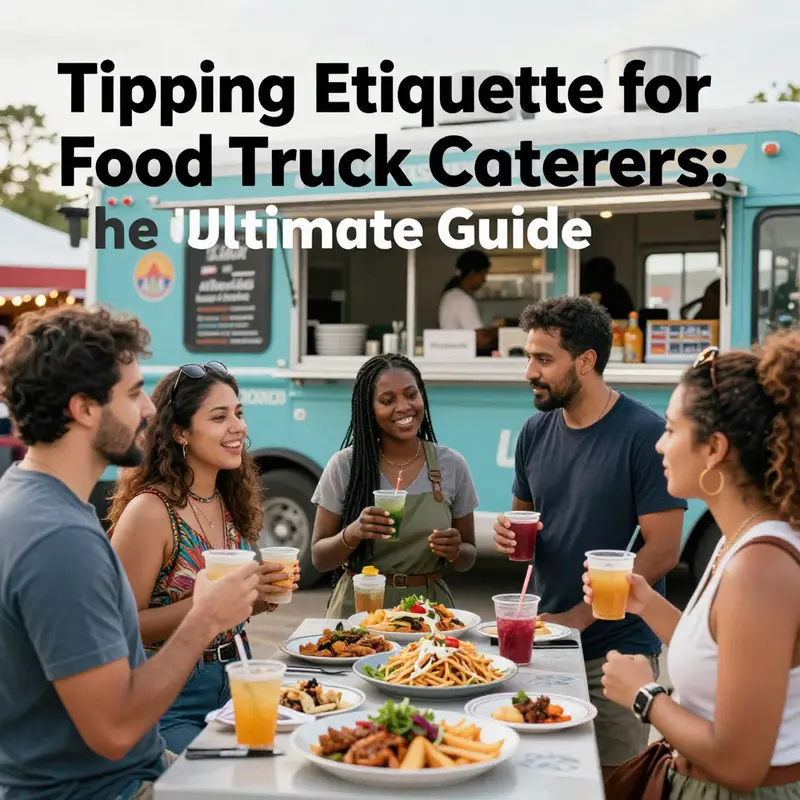
Tipping has long been a measure of appreciation in service cultures, but the loom of modern payment tech and shifting social norms has rewoven what counts as appropriate gratitude for food truck caterers. The scene is no longer solely about a handful of coins dropped into a jar or handed to a server after a long meal; it is now a digital ritual that unfolds in a few taps and screens. The shift is not merely about convenience or speed. It is about recognition—the willingness of customers to acknowledge the labor behind every hot dish, the hustle of setup, the careful choreography of taking orders, and the tireless effort that goes into keeping a kitchen on wheels running through long events, crowded markets, and rain-soaked street corners. In 2026, tipping etiquette for mobile food vendors has become a blend of tradition, technology, and local custom, a triad that guides how much is offered, when it is expected, and how the gesture is perceived by the crew who feed communities on the move.
Technology sits at the heart of this evolving etiquette. Card readers and digital prompts have become the norm for most mobile vendors, turning what used to be a cash-based, discretionary act into a visible, transactional point of appreciation. After a customer swipes a card, many trucks present an on-screen prompt for a tip, typically in the 15% to 25% range. This design choice does more than remind customers to acknowledge service; it normalizes tipping as a routine part of the purchasing process. A 2026 study from the National Restaurant Association highlights the ripple effect: more than sixty percent of mobile food vendors report receiving tips regularly, a striking increase from a decade earlier when tipping was far more sporadic in quick-service settings. The implication is clear—skipping a tip on a digital screen can feel conspicuous, even if the customer did not intend to signal disapproval. The online prompt becomes a social cue, nudging behavior toward a norm that increasingly treats tipping as part of the transaction rather than a discretionary add-on.
Yet culture and geography continue to shape how these digital prompts play out. Some urban pockets cultivate a tipping culture that rewards familiarity and consistency. In a city like Austin, for example, regulars often leave modest, frequent tips—one or two dollars—that acknowledge the repeated value of a trusted vendor who knows the crowd and can deliver complex dishes with speed and accuracy. It’s a pattern born from a sense of community and reciprocity: you tip people you see often, who know your preferences, and who contribute to a vibrant street-food ecosystem. In other places, tipping may be looser, viewed as optional rather than expected, especially where dining norms emphasize speed and efficiency above all else. The result is a mosaic of etiquette, where what counts as a generous gesture in one neighborhood might be considered standard in another. The cultural tapestry is not static; it evolves with the local economy, the presence of competing vendors, and the broader conversations about fair wages and labor value that ripple through municipalities and market days alike.
Beyond location, the context of the service itself matters. For wedding receptions, private parties, and longer engagements, the conventional envelope of tipping expands to reflect the broader service scope: setup, service during the event, and post-event cleanup. The guidance that has gained traction suggests tipping between 15% and 20% of the total catering fee, with the upper end reserved for teams that handle complex logistics, late-night service, and meticulous teardown. In the world of food trucks, where a crew might include cooks, servers, and sometimes a dedicated lead, this range mirrors the practices that diners are familiar with in traditional catering. It recognizes not only the skill of preparing and presenting food but also the coordination required to adapt to a venue, guest count, and any special dietary requests with grace under pressure. It is worth noting that cash tips can still carry weight in settings where the crew is paid hourly or by the job, but the digital era has anchored a transparent expectation that tips reflect effort across the entire service continuum, from first contact to final sweep of the area.
Money, however, is only part of the picture. The social dimension—the signaling function of tipping—plays a crucial role in sustaining quality and trust in an economy that prizes mobility and flexibility. From a game-theoretical perspective, tipping operates as a signal of goodwill, a nonverbal contract that future service quality will be met or exceeded. When a customer leaves a generous tip, the implicit message is that the eater valued not only the taste of the food but the attentiveness of the team, the speed of service during peak hours, and the clean, organized approach to handling crowds. This signal can reinforce positive outcomes: faster response times, more proactive communication about menu changes, and a willingness to accommodate special requests. In turn, vendors who perceive consistent tipping signals may invest in better equipment, more streamlined workflows, and even more robust staff training, creating a virtuous cycle that benefits both the crew and the community that supports them.
The social fabric surrounding tipping also reveals the degree of variation across cities and neighborhoods. A 2024 survey, cited in industry analyses, shows a growing trend: 68% of customers report tipping on takeout orders at least occasionally, up from 42% in 2020. Takeout tipping is a particularly telling gauge of evolving norms because it captures a behavior that is often done without the direct presence of staff for the customer who purchased the meal. The shift suggests that people are increasingly aware of the broader labor that goes into food preparation—kitchen, prep, and support staff—beyond the visible frontline—and they are inclined to show appreciation even when they do not witness the whole service arc. For vendors, this trend translates to a broader base of tipping that isn’t confined to high-activity events or table service; it recognizes the ongoing contributions of teams who ensure quality and consistency across all touchpoints, from ordering to pickup to possible drive-thru or curbside interactions.
The practical implications for customers are nuanced. When tipping digitally, patrons should balance the courtesy of recognition with an awareness of service quality and complexity. A simple heuristic—consider the effort, complexity, and timing of the service—can be a useful guide. If a food truck is handling a large crowd at a festival, where the crew must juggle multiple orders, troubleshoot dietary restrictions, and maintain food safety standards amid heat or rain, tipping toward the higher end of the typical range can be a meaningful gesture. In a smaller, less hectic moment, a tip in the mid-range may suffice. The culture of the truck itself can also shape expectations. A crew that clearly communicates wait times, explains menu options, and manages line flow with patience and humor often earns a more generous response from patrons who appreciate the extra care. Conversely, if service is slow due to a particularly chaotic shift or unclear operations, a tip that reflects the experience—efficient yet fair—can communicate that the customer recognized the difficulty without dampening the goodwill.
A related dimension is the way tips are perceived when they are given at different stages of the engagement. For long events, some guests prefer a contingent approach: a modest initial tip for setup and early service, followed by additional tipping as the event progresses and the crew demonstrates exceptional teamwork or solves problems promptly. This approach aligns with expectations around labor value in event settings, where the workload is not uniform and the stakes are higher for successful execution. It also resonates with the idea that tipping can be dynamic, evolving with the event’s course and the crew’s responsiveness. For guests who want to participate in this fluid model, a combination of a baseline tip and a flexible add-on—especially after a moment of standout service—can be both practical and appreciated.
The internal culture of the food truck, too, matters. Some crews build a tipping-friendly ethos into their brand by sharing stories of long hours, careful sourcing, and the artistry of their craft. This narrative deepens patrons’ appreciation and can lift tip levels as guests feel more connected to the people behind the food. Acknowleding that the labor extends beyond the sizzling plates—to the hours of prep, the maintenance of equipment, and the travel involved in bringing fresh ingredients to a street corner—helps customers see tipping as a fair reflection of the entire value chain, not merely a reward for taste. In this sense, the tip becomes a bridge between the consumer’s momentary gratification and the logistics that sustain a food truck’s reliability and character day after day.
There is also an ongoing dialogue about how tipping interacts with wages and labor standards. While tipping is not legally required, it functions in a system where workers in mobile food operations often depend on customer gratuities to augment base pay. This reality has pushed some customers to reassess what constitutes fair compensation, particularly when digital prompts seem to push for higher percentages. The broader conversation emphasizes fair wages, transparent pricing, and the role of tipping as recognition rather than a mechanism to supplement substandard wages. For individuals who want to participate in this conversation through their actions, contributing a mindful tip—reflective of service quality and context—becomes a practical, personal stance in support of labor fairness. In a market where the lines between fast, friendly service and artisanal craft blur, tipping is part of a broader commitment to valuing hands-on work and the communities those hands feed.
From a practical standpoint, customers who want to ground their tipping decisions in reliable guidance can lean on the broader patterns the industry has observed. For takeout and quick interactions, small, steady tips—one to five dollars when the totals are modest—are common and carry a sense of personal connection to the vendor’s daily life. For events that demand orchestration—multiple staff, special dietary accommodations, and careful food safety management—the recommended range of 15% to 20% of the total catering fee for private or public events offers a balance that acknowledges the full scope of labor and the elevated service standards required. In this setting, a tip of 20% or more may be appropriate if the crew demonstrated adaptability, cleanliness, and a high level of hospitality under pressure. The distinction between cash and digital tipping persists, but the rising trend shows that customers are increasingly comfortable tipping through digital means when the service meets or exceeds expectations. This reality aligns with the larger shift toward a service economy that values visible labor and prompt acknowledgement of those who deliver it.
For readers seeking practical, hands-on steps to navigate tipping in a way that reflects both culture and personal values, one strategy is to observe local norms, especially in neighborhoods where street food has deep roots. Communities with established street-food traditions often expect a steady, modest tipping culture, while newer markets may encourage more discretionary generosity as a way of fostering goodwill and loyalty. In addition, customers can consider the broader context of the event—the level of complexity, the duration, the quality of communication, and the vendor’s ability to manage crowds while keeping food safe and hot. If the service stands out in any dimension—speed, accuracy, warmth, or problem-solving—the tip should acknowledge that merit. Conversely, if a customer experiences a straightforward transaction with no notable extras, a standard tip within the middle of the customary range remains a respectful practice.
The modern tipping landscape is also a reminder of the value of providing feedback beyond pesos and pennies. A kind note to the vendor, a follow-up compliment, or a brief positive review can reinforce the goodwill created by a tip and encourage consistent service quality in future interactions. The combination of digital prompts, local culture, and thoughtful feedback creates a resilient ecosystem where food trucks can thrive while customers feel connected to the people who bring their meals to life on the street. For readers who want to explore more about how tipping practices intersect with branding and customer experience on the road, the branding on wheels narrative offers a rich lens into how a truck’s identity can influence, and be influenced by, the generosity of its patrons. See the branding on wheels guide for a deeper dive into how visuals and storytelling on the truck relate to the customer’s perception of value and service quality.
For a broader view on evolving tipping norms and how they are shaping the service economy, contemporary industry analyses point to a changing baseline in many urban markets. The conversation is not about compelling customers to tip more, but about recognizing the labor involved and supporting the people who convert raw ingredients into shared moments of delight. It is about empathy in the fast-moving street-food arena, where a polite smile, a clear explanation, and a well-timed thank-you can be as meaningful as the tip itself. The digital tipping prompts can be a powerful tool for reinforcing generosity, but they work best when paired with a genuine commitment to service quality, fairness in compensation, and respect for local cultural expectations. In the end, tipping is a social practice that travels with a community—across markets, neighborhoods, and digital interfaces—and it remains most meaningful when it signals a sincere appreciation for the craft, the care, and the people who keep the food moving on the street.
For readers who want a broader, data-driven look at tipping trends across the industry, the National Restaurant Association’s tipping trends 2026 report offers a comprehensive portrait of how customers are tipping in various segments of the foodservice landscape. You can explore the wider analysis here: https://restaurant.org/research/tipping-trends-2026. To connect with practical tips and ongoing discussions relevant to food-truck operations and tipping culture, you may also find value in exploring the industry’s distributed conversations and hands-on guidance available on professional blogging platforms and vendor resource pages, including dedicated discussions that delve into how to manage tipping in events, maintain morale among mobile staff, and balance customer expectations with fair wages.
If you’re curious about how a truck’s public-facing branding intersects with customer generosity, consider a closer look at the design-centered narratives that many operators use to convey hospitality, quality, and reliability. A thoughtful approach to branding on wheels not only communicates value but can also shape how customers perceive tipping as part of the overall experience. For instance, a strong, cohesive brand message that highlights food integrity, service warmth, and reliable delivery often correlates with higher customer appreciation and, in parallel, larger tips, as patrons feel more connected to a story they want to support.
In sum, tipping a food truck caterer in 2026 sits at the intersection of evolving technology, local customs, and the personal connection between customers and crews. It is a practice that rewards labor, signals quality, and reinforces a street-food culture that is increasingly integrated with digital convenience. The numbers tell part of the story, but the broader narrative is about community, trust, and shared appreciation for the often unseen groundwork that makes a great bite possible—from the early prep hours, through the live service, to the cleanup after the last plate has been served. And as norms continue to shift, the most enduring guidance remains simple and human: tip what the service earns your respect, in a way that reflects the moment and the locale, and let the act of tipping become a small but meaningful bridge between a hungry crowd and the people who feed it with care.
Internal reference note: for perspectives on how branding and customer experience intersect with tipping culture, you can read more at the branding on wheels guide. branding on wheels: the ultimate guide to food truck graphics and identity .
Final thoughts
Understanding how much to tip a food truck caterer is not just a matter of calculating a percentage; it’s about appreciation and building relationships in the community. Through private events, public gatherings, and varying cultural influences, one thing remains clear: tipping is integral to celebrating the dedication and passion of food truck teams. With the right insights, you can contribute positively to the experience and ensure that both guests and caterers feel valued and connected.