Launching a food truck in Texas blends culinary ambition with practical planning. For event planners, corporate HR and admin teams, local community groups, and curious food lovers, knowing the budget landscape is the first step to turning a tasty idea into a thriving pop-up. Realistically, the total startup price tends to fall between $50,000 and $100,000, but the real story lies in how the pieces fit together: the vehicle that carries your menu, the kitchen setup that makes it work, the licenses that keep you compliant, and the insurance, branding, and operating capital that protect and propel your business. In the chapters that follow, we break down costs into core buckets—Vehicle Purchase and Kitchen Setup; Licenses, Permits, and Regulatory Compliance; Insurance, Marketing, and Operating Capital—then walk through practical case scenarios and planning resources. Expect concrete numbers you can compare, tweak for your city, and apply to your event schedules. Whether you’re coordinating a corporate tasting, a community festival, or a neighborhood gathering, this guide helps you budget smartly while honoring Texas hospitality and flavor.
Texas on Wheels: Launching a Food Truck
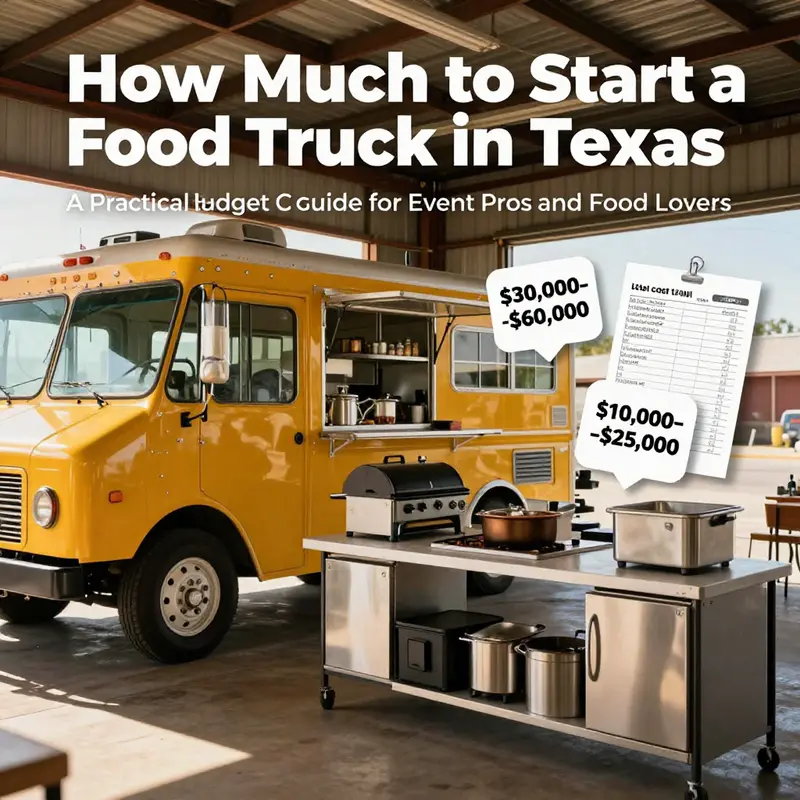
Launching a food truck in Texas blends culinary ambition with budgeting. The two big anchors are the vehicle and the kitchen equipment. A used unit might cost roughly $30,000 to $60,000, while a brand-new truck or trailer can land in the $60,000 to $100,000 range or more. Beyond the chassis, essential equipment adds another $10,000 to $25,000. Licenses and permits vary by city and county, with typical business license fees from $50 to $300, food service permits from $100 to $300, and mobile vendor permits from about $100 to $1,000. Insurance costs include commercial auto, general liability, and possibly workers compensation if you hire staff. Marketing and branding usually run $1,000 to $5,000. Initial inventory and working capital commonly require $5,000 to $15,000. A practical startup budget for a compliant, scalable operation often falls in the $50,000 to $100,000 range, though exact numbers depend on vehicle type, location, and menu. Thorough planning, a clear service plan, and careful cost controls help reduce risk. External resources on trailer options and financing can provide useful benchmarks.
Permits on the Move: Charting Texas Food Truck Licenses, Compliance, and the Real Price of Entry
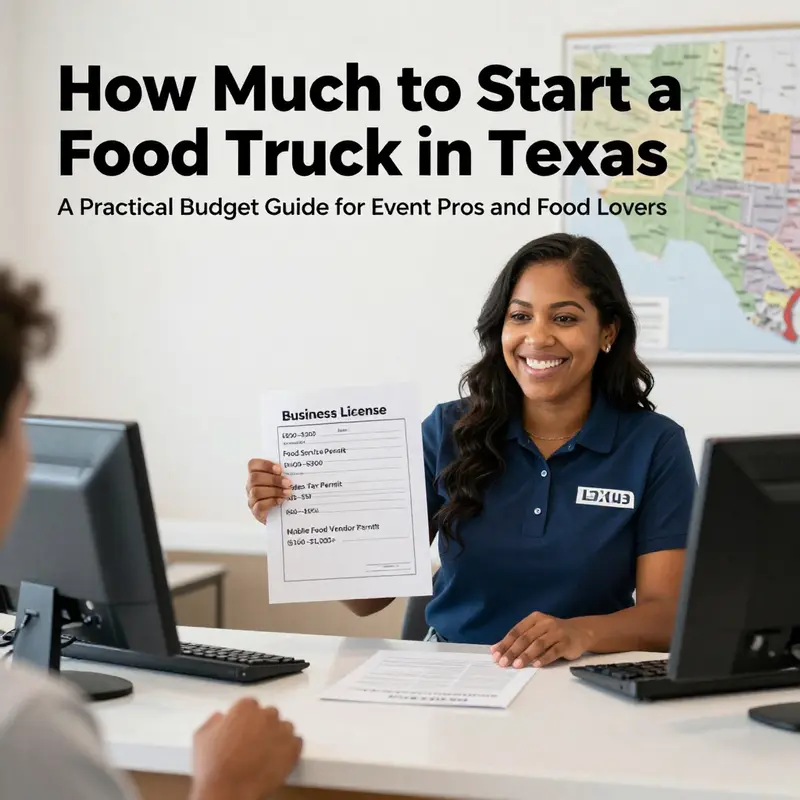
When you start a food truck in Texas, compliance is part of the daily operation, not a one-time hurdle. It shapes where you park, how you store food, and how you budget for the business. This chapter outlines the licenses, permits, and regulatory steps that govern a mobile kitchen in the Lone Star State, and it translates the red tape into concrete actions you can plan for.
The journey starts with the state health authority. The Texas Department of State Health Services (DSHS) requires a Food Service Permit for most mobile food operations. The permit confirms your truck meets health and safety standards and travels with you to each service location. Applications typically ask for a menu overview, equipment list, floor plan, and documentation showing handwashing facilities and hot‑holding capabilities. Fees vary by operation size and can range from modest amounts into a few hundred dollars. The permit process also includes inspections focused on sanitation, temperature control, and overall food safety culture.
Beyond the state, local rules come next. Most Texas cities require a local business license and a separate mobile food vendor permit issued by the city’s health department or permitting office. Local permits may have separate inspection schedules and renewal dates, and fees can differ substantially by city. Plan on recurring annual costs and align them with your budgeting. Local standards reflect zoning rules, commissary requirements, vehicle inspections, waste handling, and other practicalities that affect daily operations.
If you expect to sell taxable goods or hire staff, you’ll interact with other state agencies. The Texas Comptroller handles sales tax registrations and related business taxes. The Texas Workforce Commission governs unemployment insurance and wage reporting for employers. Your business structure (sole proprietor, LLC, etc.) can influence filing requirements and insurance needs.
Health inspections are a steady companion to licensing. Routine checks verify safe food handling, proper temperatures, and sanitary truck interiors. Failures can trigger fines or permit suspensions until corrective actions are completed and re‑inspected. Investing in food safety training and clear internal processes reduces risk and supports smoother inspections.
Insurance complements licensing. A typical package includes commercial auto for the truck and general liability for the business, with costs varying by coverage level and risk. If you hire employees, workers’ compensation may come into play. Include these premiums in your annual cost model to protect the venture rather than surprise you later.
Budgeting and planning help you turn licenses into a predictable expense. In practice, total state and local permits plus basic registrations often land in the low thousands when you account for the core permit, local permits, and registration. Build a simple compliance calendar alongside your business plan, scheduling renewals a few weeks before due dates and setting aside funds for inspections and insurance.
For further guidance, consult state and local resources. The Texas Department of State Health Services site offers the framework for mobile food vending, and local city resources provide region-specific requirements. External reference: Navigating food-truck regulations. External resource: Texas Department of State Health Services – Mobile Food Vending: https://www.dshs.texas.gov/foodtruck/
Chapter 3: Insurance, Marketing, and Operating Capital—Navigating the Texas Food Truck Startup Equation
Launching a food truck in Texas is less about spectacle and more about a precise financial map that protects your investment while you test the market on crowded streets and busy avenues. The state’s food culture is varied, and Texas demands that a new mobile kitchen be both compliant and resilient enough to weather the first season’s surprises. The chapter that follows looks beyond the glossy aspect of rolling out a truck. It focuses on three core pillars that often determine whether a startup survives its first year: insurance, marketing, and operating capital. These elements aren’t afterthoughts to be solved once the menu and truck are chosen; they are the scaffolding that supports every other decision—from where you park to how you staff, price, and promote your dishes. Understanding how these pieces fit together in the Texas landscape helps you dodge costly missteps and accelerates your path to steady cash flow.
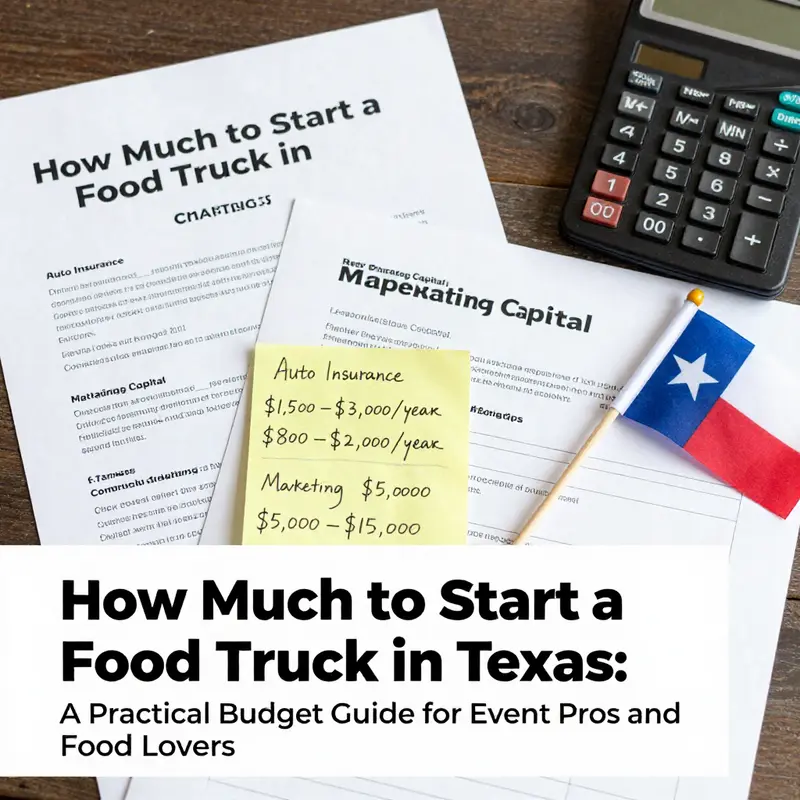
Insurance sits at the center of risk management for a mobile operation. In Texas, the cost of protecting a food truck typically falls into a predictable range, but the exact figures hinge on several factors: the truck’s value, the coverage limits you select, the driving record of your operators, and whether you bundle coverages. A commercial auto policy for a food truck often runs between $1,500 and $3,000 per year, depending on the vehicle, the targeted routes, and the level of liability limits you carry. General liability insurance protects your operation against claims of injuries or property damage that might occur at a parking site, a festival, or a private event, usually priced in the ballpark of $800 to $2,000 annually. If you hire staff, workers’ compensation becomes part of the equation, though many smaller operations start without this coverage and scale up as they add employees. For a Texas startup, mapping out an insurance strategy that aligns with your anticipated hours of operation, traffic volume, and menu complexity is not a luxury—it’s a governance discipline that keeps a business afloat when the unexpected happens, from a slip in a kitchen line to a setback caused by a faulty appliance.
Beyond the policy papers, the act of insuring your truck translates into more than a monthly premium. It shapes the confidence you bring to lenders, landlords, and customers. When a city or county requires additional permits, as some Texas municipalities do for mobile vendors, the cost of compliance can interact with your insurance needs. For example, a city may require an endorsement or a separate rider for special events, which, while modest in isolation, can accumulate if you chase every pop-up and festival in a region as large as the Dallas–Fort Worth basin or the Houston metro. If you plan to hire cooks or servers, you’ll also want to discuss workers’ compensation with carriers who understand food-service risks, from burns to ergonomic strains. In short, insurance is not just a safety valve; it is a strategic instrument that shapes how aggressively you grow and how robustly you respond to misfortune while keeping customers satisfied and staff protected.
Marketing, in contrast, is the loud, visible sign that you exist in a crowded field. The initial outlay may seem substantial, but Texas’s competitive dining scene rewards clarity, consistency, and targeted reach. A practical marketing investment often covers a well-crafted website, a compelling social media presence, and a branding package that translates to food photography, uniforms, and signage that stand out in the throng. The ballpark for a first-time branding and marketing setup sits around $2,000 to $5,000 for the essentials—logo design, signage, a domain, and a basic digital footprint. Ongoing marketing—across platforms like Instagram, Facebook, and local event calendars—typically requires a monthly budget of about $500 to $1,000 to maintain visibility, test campaigns, and participate in community events. The goal is not to flood the region with ads, but to create a recognizable, repeatable experience that makes customers seek you out rather than stumble upon you. In Texas, where large, diverse populations are quick to form loyalties to a vendor with a clear story, your branding becomes your most important ambassador. That is where the internal link to the branding guidance can be especially helpful. For a comprehensive take on how to present your truck as a moving brand, see the branding on wheels guide to food truck graphics and identity. This resource helps translate a menu into a consistent on-truck display, a compelling color palette, and a set of uniforms that reinforce your story on every stop. branding on wheels — the ultimate guide to food truck graphics and identity.
Marketing also means choosing the right channels for the right moments. In Texas, cultural events, farmers’ markets, and office districts near growing neighborhoods offer high foot traffic but require precise timing and a respect for local regulations. A truck that looks the part but cannot be found by potential customers defeats the purpose of a strong marketing plan. That tension—being visible without overextending your spend—drives a lot of the early budgeting. A practical approach is to align marketing spend with short-term sales milestones: when you cross a certain weekly revenue threshold, you reinvest a portion of profits into enhanced branding, more frequent posting, and partnerships with event organizers. The point is not to chase every opportunity but to cultivate a reliable cadence of engagements that builds a loyal following over a few months. In Texas, that cadence can be the difference between wandering and thriving, especially in markets where food trucks share streets with established brick-and-mortar vendors who have long-standing public trust.
Operating capital—the funds kept aside to cover the day-to-day engine of the business—often determines whether you survive the early months or face a cash crunch just as seasonal appetite shifts begin. Experts commonly recommend setting aside three to six months of operating expenses before you launch, a cushion that covers ingredients, fuel, parking fees, utilities at your parked location, wages, and unexpected repairs. For a modest Texas operation, those months can translate into a reserve around $15,000 to $30,000, depending on your scale, menu complexity, and parking habits. That reserve matters not only for payroll and stocking staples but also for the occasional misstep in a permit process, a delay in a festival payout, or the need to replace a burned-out component in the kitchen line. The discipline of funding an operating cushion shapes how quickly you can respond to opportunities. It gives you time to optimize your menu, test a new sauce, or adjust a price point in response to shifting costs without risking the business’s ability to pay rent for a lot, gas, or a needed repair.
All three pillars—insurance, marketing, and operating capital—interlock with the broader cost structure of starting a Texas food truck. The typical total initial investment, often estimated in ranges between $50,000 and $100,000, reflects not just the truck and the kitchen but the security blanket you build with insurance, the attention you pay to branding, and the financial runway you secure. A more modest, strategic approach—using a repurposed van or leasing a mobile unit—can shave several tens of thousands from the upfront cost, but it also shifts the risk profile and the long-term financing strategy. Texas law requires a careful eye on health permits and local permissions; while these are not the most glamorous line items, they are the gatekeepers who determine when and where you can operate. The Texas Department of State Health Services and local health departments outline the permitting framework, including the costs that may range from a modest processing fee to a few hundred dollars for a mobile vendor permit in certain jurisdictions. The regulatory web you navigate is not a barrier to entry so much as a map of the responsibilities you accept as you stand at the curb with a sizzling pan and a plan.
From a practical standpoint, the trio of insurance, marketing, and operating capital should be treated as ongoing commitments rather than one-time expenditures. Insurance is renewed annually, with occasional policy reviews as you add staff or expand the menu. Marketing evolves with your brand and market testing; you should expect to adjust dollars spent as you observe what drives foot traffic, conversions, and repeat business. Operating capital is the longest-lasting investment, and it should be replenished as profits accrue and as you scale. The balance you strike among these elements will color every decision—from where you park and how long you stay, to how you price your offerings and what you prototype for future menus. In the Texas context, where many streets are saturated with lunch crowds that crave variety and speed, having this balance right helps you carve out a sustainable niche rather than a short-lived novelty.
To reinforce the practical path forward, a few additional considerations help connect the three pillars to a realistic startup plan. First, align your insurance coverage with your actual routes and hours. If you expect frequent festivals and a heavy interstate presence, higher liability limits and additional endorsements may be prudent. Second, design a marketing plan that respects local rhythms—train staff to speak to the story behind your truck, use authentic photography of the food, and maintain a simple, repeatable message across channels. Third, reserve a conservative operating cushion that matches the slowest months in your calendar, increasing only after you have demonstrated reliable sales velocity. These steps reduce the risk that a single weekend downturn can ripple into weeks of unpaid bills or late payments to suppliers.
For readers seeking deeper regulatory specifics, consult state and local resources when planning your licensing and permit strategy. The Texas Department of State Health Services provides mobile food vending guidelines and compliance expectations, and the Texas Comptroller of Public Accounts offers essential guidance on sales tax and business registration. Such references anchor your early budgeting in the structural realities of Texas operations and support the confidence you need to invest thoughtfully in insurance, branding, and cash flow planning. External regulatory guidance can be found here: https://comptroller.texas.gov/business/
Counting the Cost to Roll: A Practical Roadmap for Starting a Texas Food Truck
In Texas, the dream of a food truck sits at the crossroads of culinary ambition and street-side logistics. The state’s vast roadways, thriving urban cores, and food-loving communities create a fertile scene for mobile eateries. Yet behind the sizzle lies a finance equation that can make or break the venture. Upfront investment typically ranges from tens to hundreds of thousands of dollars, depending on whether you buy a used truck or commission a brand-new, fully customized vehicle. A solid budget starts with a clear map of major cost blocks and an honest appraisal of your menu, service model, and target markets. A well-structured plan acts as a lifeline to weather slow days, permit changes, and the inevitable maintenance costs of a vehicle on the move.
Think in layers: a core vehicle platform, a kitchen and service system that fits your menu, the legal and financial scaffolding to stay compliant, and the branding and supplier relationships that attract customers. A higher upfront investment in a new truck often yields efficiency and a stronger brand image, while a carefully paced secondhand purchase can accelerate entry when paired with disciplined budgeting for equipment upgrades, permits, and insurance. Texas regulations, insurance norms, and local permit regimes shape these tradeoffs but do not overturn them: this is about building a sustainable, repeatable dining experience that can scale across neighborhoods and seasons.
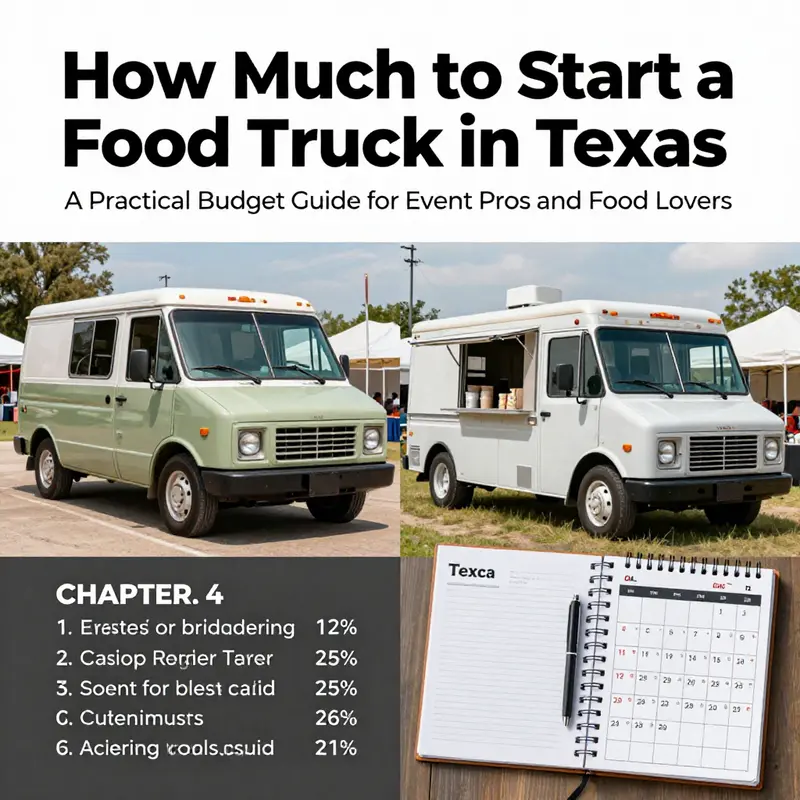
Vehicle purchase forms the backbone of your cost framework. A used food truck can be a pragmatic entry point, typically priced between $30,000 and $60,000. It won’t arrive with all the bells and whistles, but it can serve as a reliable platform if you perform a thorough pre-purchase inspection and plan for upgrades. A brand-new, custom-built truck can range from $60,000 to $100,000 or more, depending on size, build quality, and features like refrigeration and multi‑station zones. The decision often boils down to your menu, desired pace, and your appetite for risk in year one. If you aim for a premium dining experience with precise temperature control and a distinctive look, the higher upfront cost can pay off in smoother operations and a stronger first impression.
Behind the vehicle lies the kitchen, a modular system that must support your menu with safety and reliability. Essential items—grills, fryers, refrigerators, sinks, storage, and a robust POS setup—typically run between $10,000 and $25,000, depending on quality and customization. In Texas, rapid turnover and long service hours test equipment, so stainless steel that withstands heat and humidity can reduce replacement costs over the life of the truck, even if it carries a higher upfront price.
Licensing and permits form a separate layer of costs reflecting Texas’s approach to public health and commerce. A business license, typically $50 to $300, a Food Service Permit or Food Truck Permit from local health authorities, often $100 to $300, and a Sales Tax Permit from the Texas Comptroller’s Office, typically free to a modest amount. Mobile Food Vendor Permits vary by locality and can range from a modest sum to several hundred dollars. In major cities like Dallas or Houston, annual permits can be $500 to $1,000 or more, depending on inspections and renewals. These figures reflect a reality: compliance is a predictable cost of doing business on wheels.
Insurance provides a safety net and adds to the annual burden. A commercial auto policy for the truck might run $1,500 to $3,000 per year, while general liability insurance can range from $800 to $2,000 annually. If you hire staff, workers’ compensation is often mandatory in many cases. Consider a bundled policy that covers both vehicle and kitchen operations to minimize gaps in coverage.
Branding and marketing complete the core setup. A practical starting budget for logo design, signage, social media, and a basic website is often around $1,000 to $5,000, with higher investments for a more elaborate branding package or ongoing campaigns tied to events and menus. A thoughtful branding investment supports word-of-mouth growth and the shareability of your truck’s look. A strong opening push can turn passersby into long lines and repeat customers.
Initial inventory and supplies complete the immediate picture. You’ll need ingredients, packaging, cleaning supplies, and inventory controls. A prudent starting point for stock is roughly $2,000 to $5,000, with a buffer for waste, seasonal demand, and supplier delays.
Operating capital for the first three to six months is highly variable. Parking fees or commissary rents, utilities, fuel, wages, and unplanned repairs require a cushion—typically $5,000 to $15,000 in the early days. The reserve helps cover basics and bridges the gap until throughput and revenue stabilize.
To anchor these blocks in real terms, two common pathways illustrate the spectrum of startup costs. One newcomer might opt for a new, custom-built truck after weighing the menu, neighborhoods, and schedule against the higher upfront cost. Another path uses a pre-owned unit with kitchen upgrades and a local footprint built gradually. In practical numbers, a representative total startup cost might look like this: a used truck around $40,000, kitchen equipment $15,000, licenses and permits $1,000, insurance for the first year $2,500, marketing and branding $3,000, initial inventory $3,000, and operating reserve $10,000, totaling roughly $74,500. This blended approach shows how the same idea can enter the market at varying scales while staying professional and compliant.
Cost-reduction paths can include starting with a repurposed van or leased mobile unit, cutting upfront investments to roughly $20,000 to $30,000. Even with a lean start, fundamentals remain: working capital, health and safety compliance, and a plan to scale once customers begin to flow.
Two market scenarios highlight the same math in different contexts. In Austin, a newcomer might choose a new, custom-built truck with a robust branding and a modest operating cushion, totaling around $128,000. In Dallas, an established vendor expanding to a second unit might leverage existing relationships, purchase a pre-owned truck, and focus on upgrades and branding, totaling roughly $65,000. These outcomes reflect market realities—vehicle price, customization level, and regulatory environment—shaping the budget while underscoring the need for reliable suppliers and aligned sourcing with Texas standards from day one.
Beyond the numbers, success hinges on disciplined sourcing and relationships. The Texas ecosystem of manufacturers and equipment suppliers who understand mobile kitchens can reduce missteps and align with health and safety norms. The practical takeaway is to coordinate procurement with Texas regulations—starting with vetted equipment and a chassis designed for heat and long hours, then layering in refrigeration, plumbing, and durable prep surfaces. Industry sources emphasize working with suppliers who understand local codes, inspections, and typical permit lead times. This alignment can save weeks of delays and thousands of dollars in avoidable expenses.
For guidance, consider pairing budgeting with long-term planning resources. A companion article offers budgeting baselines and planning tips for first-time food truck owners, with templates, checklists, and scenarios adaptable to Texas conditions. Always consult state and local sources for permits and compliance, including the Texas Department of State Health Services for mobile vending guidance and the Texas Comptroller for sales tax and business registration details. City and county portals in Dallas, Austin, San Antonio, and Houston provide local context and costs that influence your budget.
Finally, the broader sourcing ecosystem matters. National networks and regional hubs concentrate experience in Texas-area markets, where suppliers understand hot summers, long shifts, and the rhythms of street fairs. For entrepreneurs exploring options, reputable supplier networks and industry marketplaces let you compare price, lead time, customization capabilities, and compliance history. Due diligence here can save weeks of delays and thousands of dollars. In short: plan diligently, secure permits, and reserve operating capital aligned with your growth path.
Final thoughts
Bringing a food truck to life in Texas is a journey that blends flavor with feasibility. By separating costs into vehicle and kitchen investments, licensing and compliance, and insurance plus operating capital, you can create a realistic budget that matches your goals—whether you’re orchestrating a major festival footprint or building a neighborhood favorite. The key is to compare options, plan for the long weekend rush, and build a contingency cushion for maintenance, fuel, and staffing. With a clear path and smart budgeting, your Texas mobile kitchen can roll confidently from first bite to lasting impact.