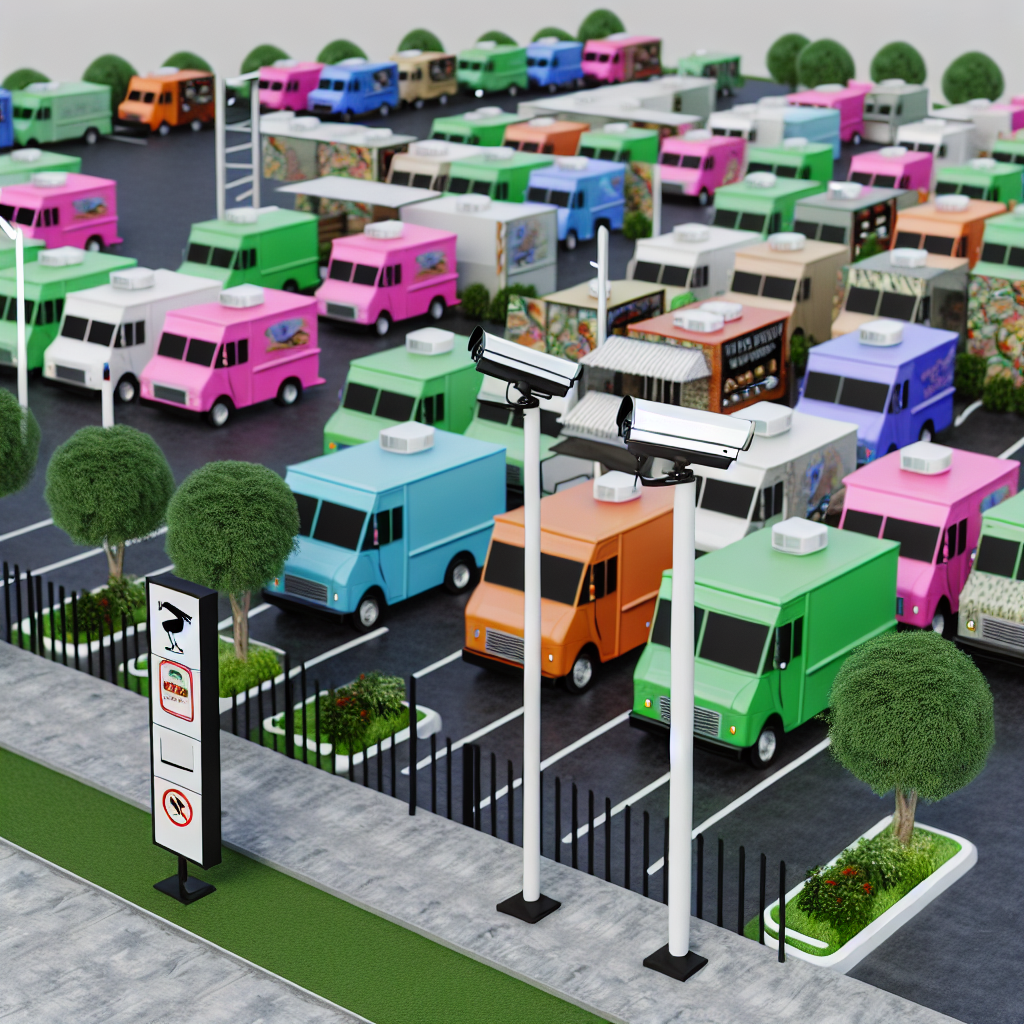

Delving into the world of food trucks reveals a vibrant landscape filled with culinary delights, entrepreneurial spirit, and, importantly, lucrative opportunities. For event planners, corporate teams, food enthusiasts, and local community groups, understanding the earning potential of food trucks is essential. This exploration will unearth how much a successful food truck can make annually, before and after expenses, and how various factors like location and seasonality play a crucial role in shaping profitability. Each chapter unfolds a piece of the financial puzzle, bringing you closer to grasping the dynamics of a thriving food truck business.
Rolling Revenue: What a Successful Food Truck Really Earns in a Year
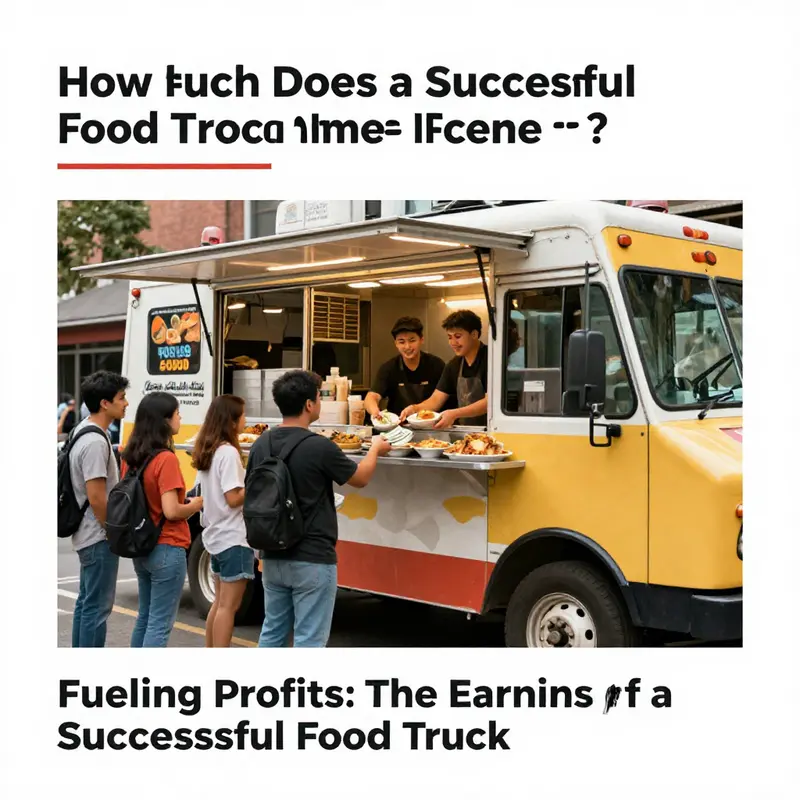
Rolling revenue in the food truck world starts with a simple question: what does a truly successful operation bring in over twelve months? The answer is not a single number, but a set of figures that reflect market opportunity, daily demand, and the operator’s choices. The global market was valued around $4.15 billion in 2024 and is projected to grow to about $6.87 billion by 2029, a compound growth rate near 6.5%. Those market signals show momentum, but they do not guarantee a particular truck’s cash flow. For a single truck, size matters, but execution, efficiency, and disciplined budgeting determine whether the yearly tallies translate into sustainable profits. The journey from revenue to profitability hinges on location, menu design, scheduling, and cost discipline. This chapter treats revenue as a starting point and then dissects margins built through pricing, waste control, and reliable operations. Readers should expect a dynamic range, not a fixed outcome, because each truck writes its own arithmetic.
To ground this discussion, consider a real-world example with a full-year operating income of $363,000. This is gross revenue, not the take-home pay. After subtracting the costs that fuel day-to-day operations, net profit came to $93,100 for the year, with about $229,900 in costs and $40,000 in depreciation. Those numbers illustrate a fundamental truth: sales volume alone does not determine profitability. Fuel bills, ingredient costs, insurance, licensing, maintenance, and labor all chip away at the top line. When a truck hits a high revenue mark but carries heavy overhead or waste, the bottom line can lag. The practical takeaway is that revenue and profit live in different spheres, connected by how tightly expenses are controlled. The split between cost of goods and operating expenses often reveals where a business should focus improvement efforts.
Location and demand shape top-line revenue as surely as menu design shapes margins. In dense urban corridors or near large office campuses, a truck can ride a steady stream of lunch and dinner traffic, pushing weekly revenues toward six figures during peak months. Yet higher revenue brings higher costs: parking or permit fees, elevated insurance requirements, and more frequent equipment replacements. A lean, fast-turnover menu can minimize waste and stabilize every dollar spent on ingredients, while a broader menu may draw more customers but raise prep complexity. The balance between these choices is not a one-time decision but an ongoing optimization as competition and tastes shift. Seasonal events, nearby developments, and even the weather can swing demand enough to require quick operational pivots. Events like fairs and corporate gigs can spike revenue but require additional permits and logistics.
Rural routes can offer different economics. The volume may be lower, but overheads can be more manageable. Rent, permits, and labor costs often run leaner, and competition can be softer. The result can be stronger margins if the operator aligns offerings with local preferences and builds steady repeat business. Seasonal patterns still matter; winter weather, school breaks, and event calendars can compress sales. The key is to anticipate these rhythms with flexible scheduling, adaptive menu items, and careful fuel planning. Across geographies, the central question remains: how much of the top-line revenue survives as profit after all expenses are paid? The answer depends less on geography than on cost discipline and service efficiency. Local supply chains and price volatility for ingredients also play a material role in annual outcomes.
Profitability hinges on controlling two broad categories: cost of goods sold and operating expenses. A commonly cited target for well-run trucks is a net margin of roughly 10% to 30% of total sales, with margins fluctuating with seasonality and market conditions. A powerful top line can still be undermined by unnecessary waste or by pricing that does not reflect rising costs. Even a strong revenue figure can be eroded by high fuel bills or frequent maintenance that disrupts schedules. The art is to keep both sides of the ledger lean: optimize ingredient costs, packaging, and beverages, while managing fuel, wages, insurance, licensing, depreciation, and marketing. When costs stay in check, margins improve and profits follow. The real test is whether the business can sustain these margins through slower seasons or market shocks. Depreciation deserves careful handling because it affects cash flow even though it is a non-cash expense. Equipment wear—ovens, grills, refrigeration units—demands a predictable replacement plan to avoid outages. In the example, the depreciation figure of $40,000 underscores the need to budget for asset renewal. Planning ahead reduces surprise capital outlays and protects service quality. Integrating depreciation into the financial plan improves cash flow, supports ongoing marketing and staffing, and keeps the operation ready for growth. For a developing truck, a thoughtful depreciation schedule and tax planning can unlock opportunities to reinvest in the fleet without sacrificing daily service. Financing choices, lease terms, and interest costs also shape long-run profitability.
Operations matter as much as menus. Geography, scheduling, and event participation shape revenue in ways that do not always appear on monthly reports. Route optimization lowers needless fuel miles; batch cooking and pre-prepped components cut prep time and speed service. Smart inventory management reduces waste and preserves margins. Every saved dollar in cost of goods sits at the heart of profitability, while every saved dollar in labor lowers the risk of overtime. The essential practice is to align staffing with anticipated demand and to price strategically based on location and time of day. When these choices work in concert, revenue can translate into meaningful profit rather than just a busy shift. The chapter that follows emphasizes practical steps to tighten each lever.
These dynamics explain why a single revenue figure never tells the full story. A truck can reach significant revenue in a market favorable to speed and volume, and with rigorous cost control, net earnings can climb toward six figures for top performers. Yet reaching those outcomes requires more than culinary talent; it requires a mindset focused on continuous improvement, data tracking, and disciplined cash flow management. For readers evaluating their own potential, practical financial tips can translate theory into everyday practice, including guidance found at the article financial tips for first-time food-truck owners that helps beginners and seasoned operators alike reduce risk while scaling revenue.
Beyond individual numbers, the broader industry context matters. Government data remind us that self-employment in food service covers a wide spectrum of outcomes. The median annual wage for self-employed food service workers hovered around $57,000 in 2023, reflecting the diversity of businesses and the reality that many operators run lean, small-scale outfits with varying levels of profitability. Top performers, however, can exceed the average by investing in brand, guest experience, and operational efficiency. The contrast between the median wage and the revenue achievable by a successful truck highlights the potential for upside, provided the business is steered with a clear plan and disciplined execution. Treating profit as the ultimate measure of success, not merely revenue, becomes the north star for many operators.
To translate these insights into a practical forecast, imagine a mosaic of revenue streams. A core lunch crowd, steady dinner trade, festival appearances, and occasional catering create multiple channels that reduce risk tied to any single source. Each channel has its own cost structure, with some offering higher margins than others. The cumulative effect, when managed well, yields a coherent annual picture. The math becomes a collaboration among branding, menu engineering, and field operations. Price points should reflect value and the local willingness to pay at different times and places. The calendar becomes a map, and the market becomes the compass. A well-planned year balances peaks and slow periods, helping cash flow stay steady even as seasonal winds shift. This integrated view links planning to profitability and helps readers prepare for the realities of running a mobile kitchen. Diversification reduces risk and stabilizes year-to-year earnings.
External reference: https://www.bls.gov/oco/ocos085.htm
Profits on Wheels: Unpacking What a Successful Food Truck Takes Home After Expenses
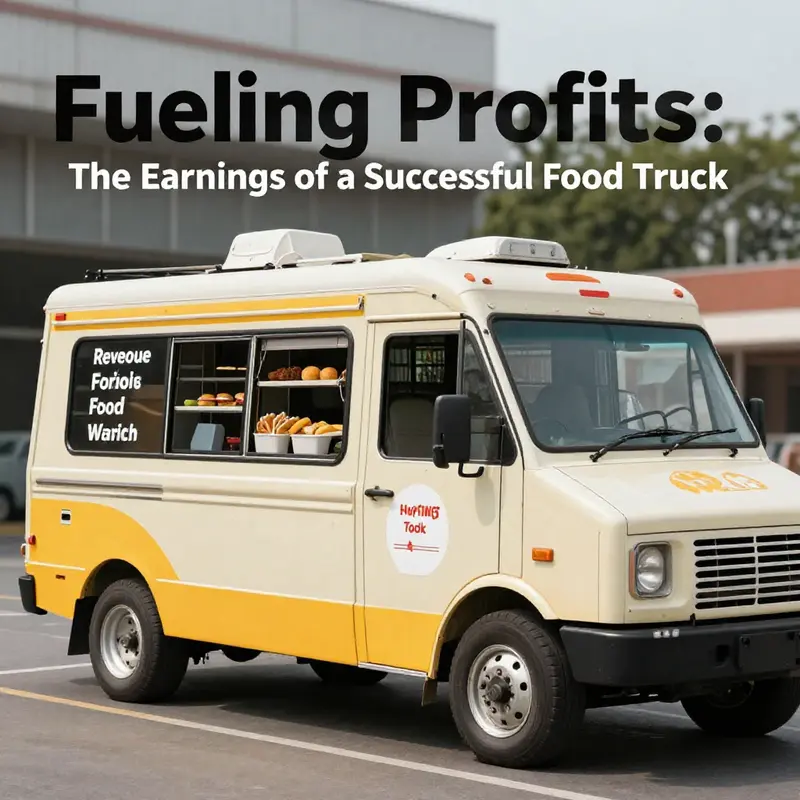
A successful food truck sits at a flavorful crossroads where bustling streets, savvy operations, and disciplined finance meet. The promise is clear: strong sales in a mobile kitchen can translate into meaningful profits, but the path from top-line revenue to take-home pay is shaped by a constellation of variables. Location, menu design, operating hours, and the quality of cost management all push a truck toward or away from profitability. In practice, a well-run truck in a high-traffic urban setting can generate annual revenues in a broad band, often cited as roughly $200,000 to $400,000. That range reflects moments of peak weekday foot traffic, double-booked events, and the kind of steady daily flow that earns regulars and converts casual passersby into repeat customers. Yet revenue alone tells only half the story; what sits on the other side of the ledger—the expenses—ultimately determines what, if anything, the owner takes home as profit.
Among the essential expense categories, three stand as the most consequential. Food costs typically run about 30–35% of revenue. When every dish is carefully portioned, suppliers are negotiated efficiently, and waste is minimized, those costs can be steadied without sacrificing quality. Labor, which includes cooks, servers, and sometimes drivers, generally accounts for 20–30% of revenue. This slice is the pivot for many operators: invest enough in staff to deliver consistent food and service, while avoiding overstaffing on slower days or during off-peak seasons. The remainder stretches across fuel, permits, insurance, equipment maintenance, and marketing. In aggregate, these operating costs press down on the bottom line, but the way they are managed can push the net margin higher or lower than expected.
Across industry discussions, net profit margins for a profitable food truck commonly fall into roughly a 10% to 20% band. Put differently, with revenue in the $200,000 to $400,000 range, net profit might land somewhere between about $20,000 and $80,000 annually, assuming the operation runs with a balanced mix of efficiency and demand. That range aligns with the logic that higher volumes in strong markets can yield larger absolute profits, but they can also demand heavier investment in labor, inventory, and fleet upkeep. In more temperate terms, a truck in a thriving market could eclipse the median, while one in smaller towns may enjoy lower overheads but face stiffer headwinds in daily demand. The contrast is not merely academic; it shows up in the realities of planning, pricing, and scheduling.
The landscape is further nuanced when you bring into play seasonal fluctuations and regional nuances. Cold weather, early sunsets, or inclement conditions can dampen outdoor sales, while festivals, lunch crowds, and late-evening gatherings can temporarily boost revenue. For context, the U.S. Bureau of Labor Statistics tracks self-employed food service workers, offering a broader lens on the economics of running a mobile kitchen. The median annual wage for this broader group, including operators who may not be in the top tier of profitability, sits at a level that signals both opportunity and challenge for hands-on operators. Top-performing trucks with strong branding, loyal followings, and robust cost controls can far exceed the average, especially when they scale through event work, catering partnerships, or multiple trucks sharing a single efficient back-end system.
To move from a revenue forecast to a reliable sense of take-home pay, most operators rely on a straightforward, if disciplined, equation: Net Profit = Annual Revenue − Total Expenses. This formula may sound obvious, but it is the engine behind every strategic choice. It reframes decisions about menu pricing, supplier contracts, staffing models, and even the daily route where a truck parks. If a truck can consistently bring in $250,000 to $350,000 in revenue, the real question becomes how lean it can run without compromising the customer experience. Small shifts—how many hours are billed at peak demand, how much is spent on emergency inventory, or how efficiently a prep schedule is arranged—can translate into meaningful swings in the bottom line.
For operators seeking a practical handle on these dynamics, a few concrete practices stand out. First, understand the margin levers that have the biggest impact. Food costs, already a major line item, respond quickly to menu design and supplier relationships. A menu with fewer items but higher-margin offerings can stabilize both kitchen workflow and profits by reducing waste and complexity. Second, labor costs reward careful scheduling and cross-training. A well-trained crew that can rotate between core tasks without downtime improves service speed and keeps labor in check. Third, reliable fuel consumption, maintenance, and insurance costs emerge from consistent vehicle upkeep, timely preventative maintenance, and smart routing that minimizes empty mileage. Marketing, too, need not be an extravagant expense to be effective. A targeted seasonal campaign, a loyalty program, or event partnerships can lift sales without ballooning the marketing budget.
As a framework for practical calculation, consider a hypothetical but plausible scenario that many operators compare against. Imagine a truck generating $300,000 in annual revenue. With food costs at 32% of revenue, that is $96,000. Labor at 25% of revenue comes to $75,000. Add in the remaining category—fuel, permits, insurance, equipment maintenance, and marketing—at 18% of revenue, totaling $54,000. Summing these core costs yields $225,000 in expenses. Subtracting from revenue leaves $75,000 in net profit. That figure implies a margin of 25% on revenue and aligns with the upper end of the commonly cited range. It also illustrates how a disciplined operation can press beyond average expectations. Of course, every truck faces its own mix of variables; a slightly different revenue mix, or a shift in any single cost category, can nudge the bottom line up or down. The essential discipline is to measure precisely where the money goes and to forecast with a planning discipline that mirrors the actual weekend rushes and the quieter weekday midday hours.
For readers seeking a practical starting point in financial planning, there is real value in engaging with resources that model these outcomes. A well-designed profit calculator can be a powerful tool for testing “what if” scenarios. By inputting anticipated revenue, food costs, labor, and other expenses, owners can establish a baseline, stress-test pricing, and explore how changes in hours, menus, or supplier contracts might affect the bottom line. The calculator provides a transparent view of how a decision—such as extending peak hours in a busy district or tightening portion control on a signature item—can alter net profit. This kind of modeling supports better decisions about pricing, staffing, and inventory management, helping operators move from guesswork to data-informed strategy. If you want to experiment with such modeling, you can explore a widely used online tool that offers similar scenarios and outputs: https://www.foodtruckprofitcalculator.com/. It serves as a practical companion to the step-by-step thinking described above and can help illuminate how margins expand or compress under different operating conditions.
For those who want to weave practical guidance into their planning with an eye toward steady growth, consider the value of structured learning and peer insights. One useful resource path focuses on the financial essentials that every first-time owner should grasp. It presents a clear overview of budgeting for the truck, forecasting cash flow, and prioritizing investments that yield the best return in the short and medium term. A concise, accessible set of tips can be a valuable companion to the numbers and the dashboards. For readers who want a concise primer on financial fundamentals tailored to the food-truck world, see the practical guidance offered in the linked materials about starting and financing a mobile kitchen. The emphasis remains on keeping costs aligned with revenue, maintaining quality, and building a brand that draws customers back again and again. This kind of approach helps ensure profitability is not a plateau but an ongoing trajectory.
In the end, profitability is not a fixed target but a dynamic outcome that reflects both external conditions and internal choices. A truck thriving in a busy market must balance speed, flavor, and service with a steady, disciplined eye on costs. The best operators treat pricing as a strategic tool, not a fixed gimmick; they monitor waste as a controllable expense, and they view labor as an investment in reliability and customer satisfaction rather than a fixed cost to be minimized at every turn. The result is a sustainable rhythm: a business that can respond to demand, absorb the inevitable bumps, and still deliver a meaningful profit that rewards the hard work of the team and funds the next round of menu experiments.
To readers who want to connect the numbers to a broader strategy, the invitation is to explore the practical, field-tested guidance found in industry-focused resources. These perspectives emphasize the importance of aligning menu engineering with cost control and customer value, while maintaining the flexibility needed to respond to shifting urban appetites. The path to profitability is iterative: model, measure, adjust, and learn from each season’s patterns. By treating profit as a dynamic target rather than a static goal, operators can cultivate a resilient business model that sustains not only today’s sales but tomorrow’s growth as well. And through disciplined forecasting and prudent experimentation, a food truck can continue to turn the drive-by interest of a passerby into a loyal line of customers—and a meaningful, consistent profit for the team behind the wheel.
For readers seeking continuing guidance, you can reference the practical financial tips for first-time food-truck owners as a starting point for building a sustainable framework. financial tips for first-time food-truck owners Integrating these insights with the revenue and cost dynamics described above can help shape a robust plan that translates daily hustle into durable profitability. And for a precise, scenario-based tool that helps translate these concepts into numbers, the external resource mentioned earlier remains an accessible option that many operators find illuminating as they chart the next phase of growth.
Profit on the Move: Key Factors That Shape a Food Truck’s Earnings
Profit on the Move: Key Factors That Shape a Food Truck’s Earnings
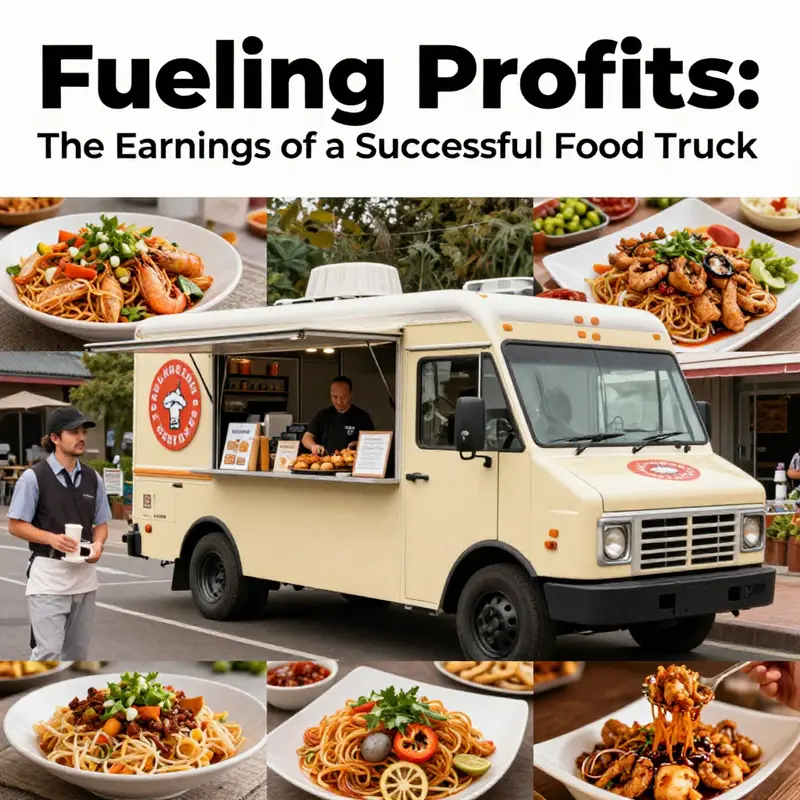
A successful food truck earns money not from a single number but from a coordinated rhythm of location, operation, and brand. Revenue scales with where you park, how fast you turn tickets, and how effectively you market to a crowd that moves from place to place. Net profit depends on cost control as much as top-line sales, and the best operators balance volume with margins to build sustainable cash flow.
Five arenas determine the arc of profitability: where you operate, whom you serve, how efficiently you run the kitchen, how you present yourself to the market, and how well you adapt to changing conditions. Dense urban cores and high-traffic event zones can deliver big volumes but come with higher costs and tougher competition. Smaller towns offer steadier demand and simpler permits but may require sharper menu framing and more regular customers.
Operational efficiency turns potential demand into real earnings. A compact, well-organized kitchen minimizes waste, speeds service, and reduces overtime. Efficient planning also saves fuel and maintenance costs, especially for a truck that moves between sites. Consistency in quality and timing helps convert first-time buyers into repeat customers and loyal brand ambassadors.
Alignment of branding and menu strategy with local tastes matters as much as the truck itself. Clear branding helps customers recognize your concept across locations, while data on sales mix and feedback informs menu tweaks that fit the market. Flexibility to adjust hours, routes, and offerings in response to seasonality or events is a competitive edge rather than a concession.
In practice, operators should start with disciplined budgeting for food cost, labor, and overhead, then layer in pricing, menu engineering, and a reliable route plan. Treat each location as a micro-business with its own demand curve, and build a calendar that balances peak opportunities with slower periods. The better you understand the interplay of these factors, the more predictable the path to profitability becomes.
null
null
Seasonal Winds and Revenue Currents: Maximizing a Successful Food Truck’s Annual Take
Seasonality shapes not only daily operations but the size and shape of an annual take for a mobile kitchen. When the calendar turns, customer mood, spending patterns, and event opportunities shift in ways that require a disciplined plan. A well-run truck can translate seasonal opportunities into a durable, year-round income by pairing adaptive menus, strategic locations, and rigorous financial discipline. Understanding the seasonal rhythm is not optional; it’s a core driver of profitability.
During late spring through early fall, good weather broadens the audience. Festivals, farmers markets, campus events, and office districts can deliver high-velocity sales and higher average tickets as customers grab quick, satisfying options between meetings or activities. High-margin staples like specialty beverages or fresh-baked items often widen profit margins when demand outpaces basic costs. The challenge is to scale service without compromising quality and speed.
Winter and shoulder seasons test resilience. Daylight shortens, foot traffic ebbs, and some customers migrate indoors. Operators respond by refining the menu to emphasize warming, comfort items that travel well and stay appealing in transit. Proximity to indoor venues, office complexes, or transit hubs becomes a revenue lifeline. Staffing plans should scale with demand, not with weather alone, and a lean schedule can protect margins when events are sparse.
Across the year, disciplined cost management matters as much as clever promotions. Seasonal demand changes fuel and fuel efficiency, inventory turnover, and labor utilization. Pre-negotiate supplier terms, keep flexible menus, and build buffers for price swings in ingredients that shift with the calendar. A robust cash flow plan is essential: fund the lean months with profits from peak periods and maintain reserves to weather gaps between seasons.
Marketing and branding should tell a seasonally resonant story. Consistent visuals and messaging earn trust, while timely promotions keep customers engaged. Data helps refine the mix: track item-level sales, peak windows, and average ticket size to tune menus and pricing. Sustainability practices, such as cleaner power options and responsible sourcing, can reinforce loyalty across the calendar.
Implementation starts with a simple, living calendar and a flexible playbook. Map peak windows, identify backup venues, and schedule a rotating menu that preserves brand identity while pivoting to seasonal tastes. Build a stock plan that aligns with event calendars, and create a payroll plan that scales with demand. Review performance after every major season to identify what worked, what didn’t, and where to adjust for the next cycle.
For operators new to the game, focus on core competencies: quality, reliability, and a clear value proposition that travels with the truck. Track progress with a few practical metrics—gross revenue by month, margin by item, and labor hours per event—and use the insights to optimize year over year.
Final thoughts
In conclusion, the world of food trucks brims with potential for those willing to understand the financial landscape. From annual revenues to the impacts of location and seasonality, successful food truck owners harness their business savvy, culinary creativity, and adaptability to thrive. By grasping these essential components, anyone interested in the food truck industry—whether event planners, community organizers, or enthusiastic consumers—can appreciate the journey of these mobile kitchens and their financial outcomes. Here’s to exploring and supporting the success of food trucks everywhere!