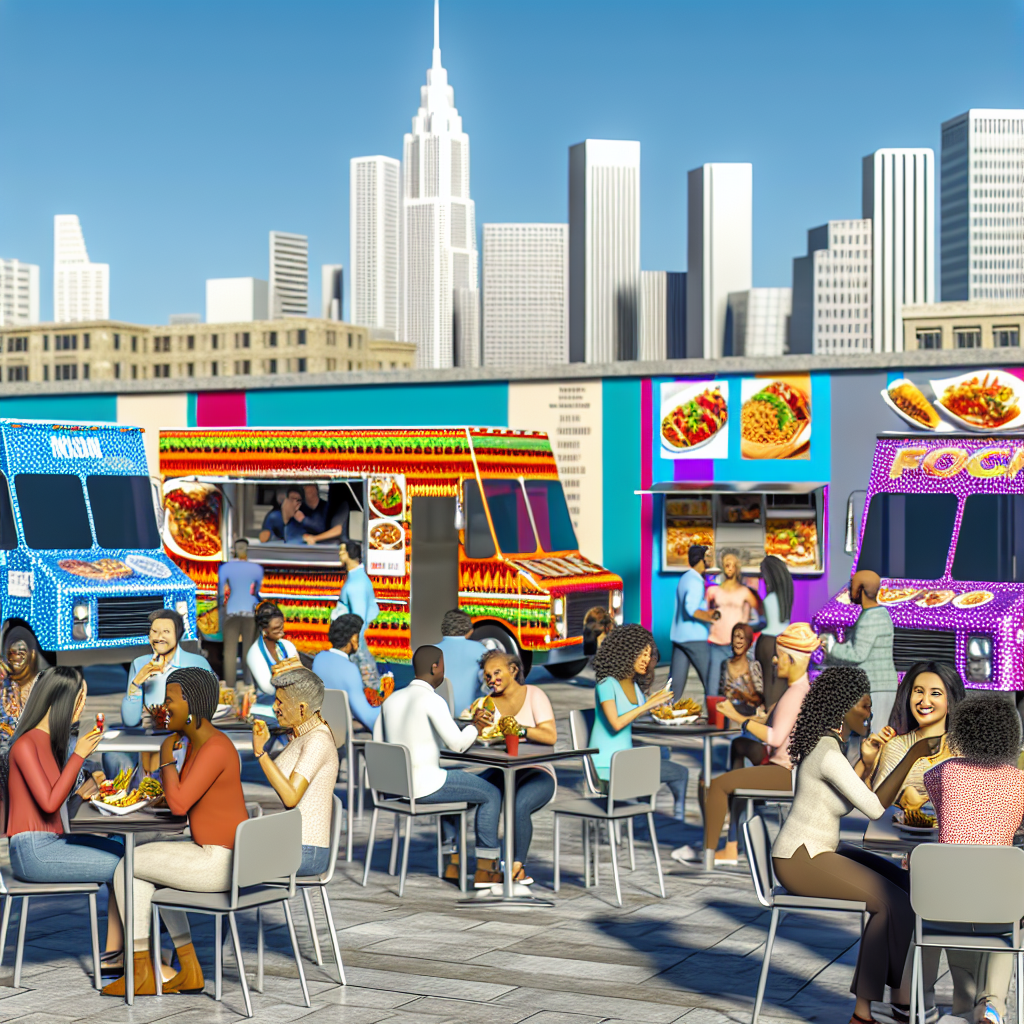
Food trucks are a delightful fusion of fast food and gourmet dishes, often bringing culinary magic right to our streets. For event planners, corporate organizers, and food lovers alike, knowing how to find these mobile kitchens opens up a world of delicious possibilities. Whether you’re looking for a catering option for your next big event, or simply craving some street tacos, this guide equips you with the essential tools and strategies. From dedicated apps and websites to vibrant local events and social media updates, plus tips for exploring urban hotspots, we’ll help you track down the best food trucks in your area. Each chapter dives into unique methods that will ensure you never miss out on a culinary adventure again!
Track, Taste, and Time: Discovering Food Trucks Through Apps, Maps, and Real-Time Updates
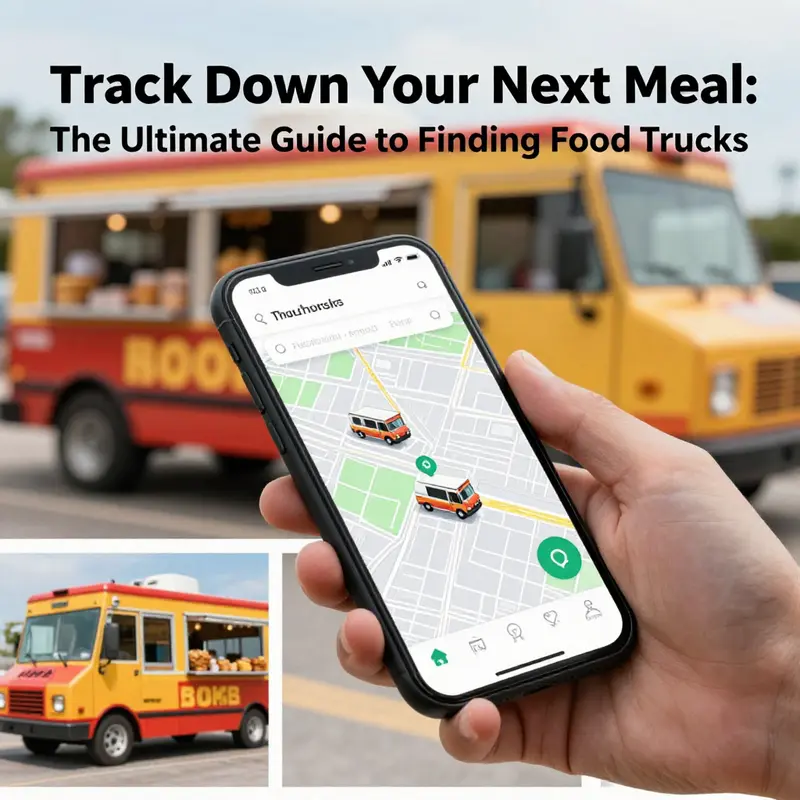
Locating food trucks has shifted from a game of rumor and luck to a practiced routine that blends digital precision with street-level curiosity. Today’s hungry urban explorer carries a pocket-sized toolkit that can sift through dozens of itineraries in seconds, then distills them into a short, executable plan. The goal is simple in words yet nuanced in practice: find a mobile kitchen that serves what you want, where you want it, when you want it. The path from search to bite is paved by a mix of online directories, map-based services, live- status updates, and the kind of on-the-ground spotting that comes from walking city blocks during peak hours. The result is less about chasing a single location and more about following a grid of signals that converge at the moment you’re ready to eat. To guide this pursuit, you can lean on a few complementary tools that have become indispensable for urban diners, freelancers on lunch-hour patrols, families planning weekend outings, and late-night adventurers chasing new flavors. The approach I describe here is built on the idea that a robust search for food trucks rests on three pillars: breadth of sources, timeliness of information, and an intuitive way to translate data into action. The breadth comes from combining comprehensive directories with event calendars and social updates. Timeliness means favoring platforms that let operators post real-time locations and menus. Actionability comes from translating that information into a clear plan—where to go, when to go, and what to order if you see a lineup and a queue that matches your appetite. When you hold these pillars in balance, your odds of landing a satisfying meal climb dramatically, whether you’re in a familiar city or exploring a new one.
The first pillar is a family of apps and websites designed specifically for food trucks. These platforms are built to aggregate a wide array of trucks by location, cuisine, and roaming patterns, and to refresh that data as trucks move from one hot spot to another. One of the most useful features of these directories is real-time status updates. A good directory doesn’t just list a truck’s last known location; it shows where trucks are currently parked and whether they are actively serving. That small detail can be a game-changer when you’re pressed for time or trying to avoid an endless hunt through a map that shows only yesterday’s whereabouts. In practice, these tools let you create a mental map of where trucks tend to cluster in your city at different times of day and week. You start to notice patterns—lunch-hour neighborhoods near business districts, clusters around transit hubs, or riverfront promenades that evolve with the weather and the season. The trick is to treat the directory as a starting point, not a final answer. A quick skim of a few trucks in the same neighborhood can tell you which streets are hot and which corners are quiet, letting you adjust plans without driving in circles.
Another pillar is the map-based approach that many people already rely on for everyday navigation. Google Maps, in particular, has become a versatile companion for discovering mobile kitchens by simply searching for “food trucks near me” and then filtering by distance, rating, or timing. The advantage of map-based search is the continuous overlay of geolocation with live data. Some trucks transmit live status through the map, showing whether they are in service at the moment, which can save you a trip to a location that’s already emptied out. The challenge, of course, is that not every truck updates a status within the same window, and some may switch spots abruptly. That is why the strongest approach uses map data in concert with a dedicated directory. The two together can confirm a truck’s current presence and give you the confidence to head out with a plan rather than a wish.
The third pillar, social media, remains indispensable in the life of a mobile eatery. Most trucks maintain active accounts on Instagram and Facebook where they post daily locations, menu updates, and special offers. A new post about a location can serve as a time-stamped beacon you can rely on, especially when the truck isn’t yet listed in a directory. Following a truck’s feed also helps you anticipate menu changes and seasonal specials, which can affect your decision about where to go and what to order. The social feed becomes a kind of live menu, supplementing the static information you gather from directories and maps.
In recent months, a newly launched platform emerged as a notable addition to this ecosystem. Designed to help users locate nearby food trucks quickly and efficiently, the app places real-time operator updates at the center of the experience. The founders launched the service after a frustrating search during a visit to a major southern city, recognizing the need for a centralized, user-friendly space where diners can see current truck locations, current menus, and upcoming events all in one place. The platform is free for users and invites food truck operators to register and update their locations and menus in real time, creating a centralized hub that makes discovering delicious options easier than ever. While the platform is still in its early stages, its emphasis on real-time data and a clean, intuitive interface has resonated with people who want to plan a temporary lunch route without juggling multiple apps. The city of focus at launch has been Birmingham, Alabama, where a growing network of operators has begun to use the platform to reach customers who previously found it hard to track them down. The story behind this effort highlights a broader shift in the food-truck ecosystem: data reliability and speed are becoming as critical as the quality of the food itself. In a landscape that prizes spontaneity, the ability to trust a live update makes the difference between chasing a dream and enjoying a meal.
For anyone who wants to explore this evolving space, a practical path is to begin with the broad directories to map out the general terrain and then layer in live updates from operator-specific feeds and the city’s event calendars. Event calendars—whether on city pages, local tourism boards, or community platforms—highlight regular gatherings where multiple trucks park and operate in one place. Parks and downtown districts often host recurring lunch events or weekend markets, and these occasions can create a reliable cadence for planning. Checking Eventbrite, Meetup, and local social channels ahead of time can reveal a sequence of events that will let you taste multiple cuisines with minimal travel. The advantage of hitting a single event is obvious: you can sample a range of options without chasing trucks across a wide urban area. The trade-off is that events have their own rhythms and crowds, so arriving early or late can dramatically affect your experience. A balanced approach is to identify a couple of events that align with your taste and schedule, then use the real-time tools to decide which truck to chase as the date approaches.
All of these tools are designed to be complementary, not competitive. Each source has strengths and gaps. A directory may have the most comprehensive listing, but if it lags on live status, a server-status alert from an operator’s feed can save you a wasted trip. A map filter can help you gauge distance, but it doesn’t tell you where the crowd will be or which truck has the menu you crave. Social updates can forecast a truck’s exact menu and price changes for the day, but they won’t always reflect the trucks’ immediate physical locations. The key is synthesis: start with a broad map of possibilities, then verify with live updates, and finally validate with fresh social posts and event listings. This approach reduces the cognitive load of planning a food-truck excursion and increases the likelihood of finding something fresh and delicious in time for lunch, a late-afternoon snack, or a late-night bite.
A practical example can illustrate how this synthesis works in a real city. Imagine a weekday around noon in a city known for its culinary diversity and a cluster of riverfront walkways. You begin by scanning the comprehensive directory for trucks reported to be in or near the central business district. You note three trucks with compelling menus and favorable recent reviews. Then you pull up the map and filter by distance, watching where those trucks are currently parked. One truck appears to be actively serving near a pedestrian plaza, another is closer to a transit hub but with a longer line, and a third is flagged as “nearby soon” based on a live-capable update from the operator. You cross-check social feeds to see if any of them have posted a tail-end menu item for the day or a time-limited offer. If the plaza location looks crowded and the transit-hub truck has just posted a new vegetarian option, you can adjust your plan accordingly. Perhaps you choose the plaza for a quick bite and switch to the transit-hub truck if you’re aiming for something specific before catching a train. The point is to let the data flow guide your direction rather than forcing a single choice ahead of time. The more you allow real-time signals to inform your route, the higher your chance of walking up to a truck that still has what you want and a line that moves at a pace you can tolerate.
One subtle but important factor often overlooked is the etiquette of the hunt itself. Food truck culture thrives on reliability, consistency, and a touch of humor in the face of unpredictable city rhythms. When you rely on digital signals, you are participating in a system that depends on human activity: operators updating their locations, cooks adjusting menus, and organizers broadcasting events. Respect for the people behind the wheel matters as much as the information you gather. If you plan to chase a truck at a festival or in a busy zone, give yourself a little buffer time. The best moments occur when you arrive before the peak rush, where the line is manageable and the kitchen is still cranking out some of the day’s freshest offerings. If you arrive late, you might still find a hidden gem, but the risk of a long wait can be higher and the menu can be pared down. The best approach blends patience with preparedness: check multiple sources, set a couple of backup options, and be ready to pivot without losing your appetite.
The Birmingham focus mentioned in the new platform’s early rollout matters for two reasons. First, it demonstrates how a localized launch can catalyze a broader national pattern. When a platform grows roots in a specific city, it can tailor its features to reflect local habits, truck schedules, and event calendars that a generic national directory might miss. This local emphasis also helps operators polish their online presence in a way that improves discoverability for customers who rely on the latest, most precise information. Second, a city-specific roll-out often means a tighter feedback loop between diners and drivers. When the data arrives faster and is more accurate, drivers can coordinate with event hosts and venues, and diners can trust the signals they’re following. The result is a more resilient ecosystem: fewer stale updates, more reliable location data, and fewer moments of frustration when a preferred truck vanishes from the map without explanation.
For readers who want to explore practical tactics in more depth, consider this approach: start by choosing one or two directories that you trust for your city. Then subscribe to or routinely check the truck operators’ social feeds for updates that aren’t reflected in the directories yet. Add in the city or festival calendar to plan around larger gatherings. Finally, use a map-based app to verify current positions and to calculate the walking or transit time to reach a chosen truck. If you discover a new platform that emphasizes centralized real-time updates, treat it as an experimental layer to layer onto your existing routine. The beauty of this modular system is that you can expand or shrink it to fit the pace of your day and the appetite you’re feeding.
As you become more fluent in this search language, you’ll notice that the most successful food-truck chasers aren’t chasing a single truck; they are chasing a reliable pattern of access. They know which neighborhoods deliver the most consistent options at lunchtime, which events attract the best crowds, and which trucks tend to offer flavor profiles that match their personal tastes. They understand that a good hunt is not just about the next bite, but about reducing the friction between desire and satisfaction. The difference between a good experience and a great one often comes down to timing and trust. Timing is the alignment of the truck’s current location with your available window. Trust is built when you see consistent updates that accurately reflect what is on the menu and where the truck is parked. When you combine these forces, you transform a casual wander into a purposeful treasure hunt that rewards curiosity and planning alike.
Toward that end, the most practical advice is straightforward: use the breadth of sources to map the field, lean on real-time updates to confirm the moment of action, and let social posts and events finalize the plan. Don’t become over-reliant on any single source. Treat each resource as a lens, each lens offering a different angle on the same cityscape of mobile cuisine. And above all, remember that the goal is not to chase the most trucks, but to find the right trucks—those that serve what you crave at the right time and place. The more you practice this approach, the more it becomes second nature to roam the city with intention, read the signals in real time, and pair your hunger with a sense of adventure. In the end, the chapter on finding food trucks becomes a chapter about urban navigation itself: how to read a city’s appetite, how to move with speed and respect through crowded streets, and how to savor a meal that arrives at the moment your curiosity reaches its peak.
If you want a concise entry point into a resource that emphasizes centralized real-time updates—an approach that complements the directories and social feeds described here—you can explore the concept of a unified platform that aggregates truck locations, menus, and events. Such a tool represents a significant step toward making the city’s mobile kitchens as accessible as your favorite neighborhood cafe. It’s not just about convenience; it’s about transforming a casual hunt into a reliable routine that makes good meals inevitable rather than incidental. As platforms evolve, the interplay between operator updates and consumer expectations will continue to shape how you plan your next food-driven outing. The more you lean into a system that prioritizes timeliness, clarity, and variety, the more you’ll discover that the best meals often arrive when you’ve learned to follow the trail of signals rather than chase the destination alone.
For readers who want to delve deeper into the practical mechanics of how to navigate around parking and queuing challenges—topics that often surface once you’ve found a truck—the following resource offers structured guidance. Mastering the art of locating and reaching food trucks efficiently is a skill that grows with experience, but the guidance in that article can help shorten the learning curve and improve your odds of getting from point A to point B with minimal hassle. Mastering Food Truck Parking Challenges
As you continue to iterate on your approach, keep in mind that digital tools are most powerful when they amplify your human sense of place. They don’t replace the joy of wandering a city block, tasting a new dish, and striking up conversations with cooks who are passionate about their craft. They augment that joy by ensuring you don’t waste precious minutes chasing a location that’s already moved, or by letting you time your arrival so you can savor the moment when a truck opens its window and the aroma of frying oil signals that dinner is about to begin. With the right blend of directories, maps, social feeds, and event calendars, you can turn any urban day into a thoughtfully planned tasting tour—one that respects both your hunger and the dynamic rhythm of the streets.
In closing, if you’re new to the hunt, start with the simplest routine: check one reliable directory for current trucks in your area, cross-check with a map-based search to verify location, glance at social posts for any last-minute updates, and scan the day’s events to identify opportunities to sample multiple menus in a single outing. If you’re curious about new developments in the space, you’ll find that the most promising tools are those that promise real-time clarity and a centralized view of where food trucks are and what they’re offering. That combination—breadth, timeliness, and a clear path to action—turns the art of finding food trucks into a predictable routine rather than a random encounter. It’s this blend of technology and street-level discovery that makes the experience both reliable and deeply rewarding, whether you’re in a familiar city or exploring a new one for the first time.
External resource: For broader context on emerging platforms and their approach to organizing mobile culinary options, you can visit the external site that chronicles these developments in real time. This resource complements the discussion above by offering additional perspectives on how new platforms aggregate, verify, and surface information about food trucks.
Where the Crowd Eats: Tracking Food Trucks with Local Events and Social Media
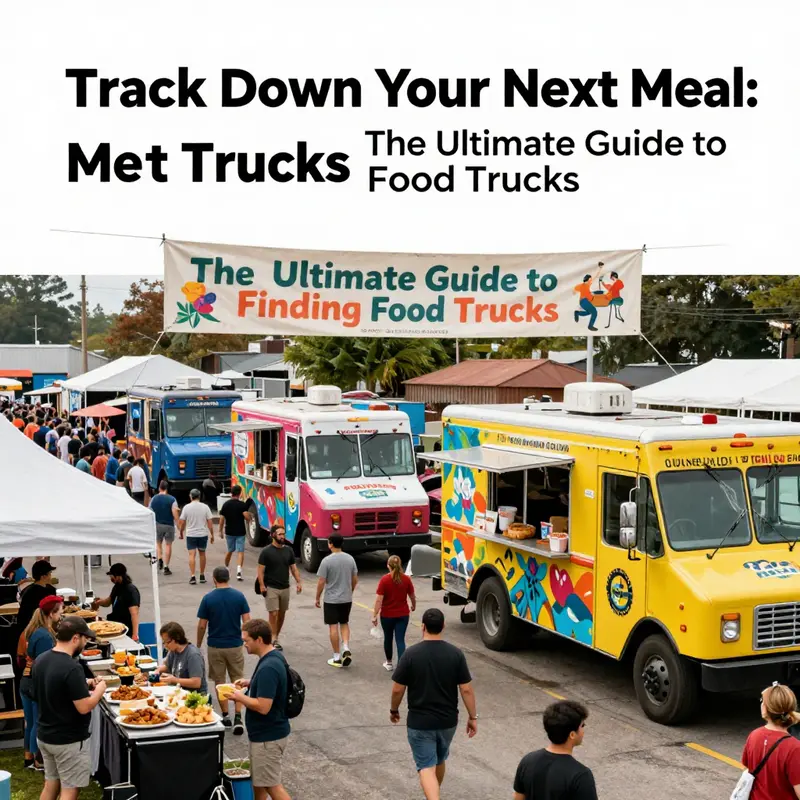
Finding a food truck often feels like joining a scavenger hunt, but the right blend of local event knowledge and social media savvy turns that chase into a reliable routine. Events concentrate trucks into predictable patterns. Social channels turn those patterns into near–real-time signals. When you learn to read both the calendar of the neighborhood and the live stream of posts, you can find mobile kitchens consistently, whether you’re chasing lunch near an office park or seeking dinner at a weekend festival.
Start by thinking in terms of rhythms. Food trucks rarely operate at random. They follow daily and seasonal flows shaped by commuter patterns, market schedules, and festival planners. Weekday lunch crowds draw trucks to central business areas. Weekend markets, concerts, and community gatherings pull several trucks into a single venue. If you track those rhythms, you will know where to look on which day and at what time. That makes the difference between luck and a repeatable strategy.
Local event calendars are the backbone of that strategy. Municipal websites, neighborhood newsletters, and community boards collect scheduled gatherings and public markets. These listings show where organizers plan to place vendors and which events regularly feature mobile food. Subscribe to newsletters and set simple calendar alerts for recurring events that list food vendors. Over time, you build a mental map of where trucks concentrate on Tuesdays, Thursdays, and weekends. When you see an unusual event added to the calendar, treat it as a potential chance to sample trucks you rarely see.
Use groups and neighborhood forums as amplifiers of those calendars. Residents and event organizers often post updates in city or neighborhood message boards. A short post can tell you which trucks will attend, offer tips about best times to arrive, or warn about long lines. Those posts are especially valuable because they highlight local quirks: a park gate that opens late, a generous shade tree that fills up tables quickly, or a contractor that reassigns parking and forces vendors to a different lot. Learning these small, local details saves time and makes visits more pleasant.
Crowdsourcing is powerful. If you are unsure where a truck will be, ask in a neighborhood group or thread for recent sightings. People who eat there regularly often respond fast and tell you whether a truck favored a particular alleyway or plaza. This is particularly useful for trucks that rotate locations frequently. A simple question posted early in the day can produce several field reports by lunchtime.
Social media is where event schedules turn into immediate signals. Many food truck operators post daily location updates, menu specials, and timing changes. Visual posts let you confirm whether a truck set up at a site, whether there is still seating, and whether the lines are manageable. A short video or an image showing a parked truck and a lively crowd gives you a clear sense of the scene.
Think of social channels as a discovery funnel that goes from broad to precise. Broad signals include event pages, hashtags, and community reposts announcing that a market is happening. More precise signals are a truck’s own posts reporting its exact parking spot, the menu for the day, or a brief window when a popular dish will be available. The most precise signal is a live update or story that verifies the truck is still there. By watching for signals at each level, you can move from just knowing an event exists to knowing which truck to walk to.
Set up a simple notification system. Follow a handful of trucks whose food you like. Add community event pages and market organizers to the same list. Use saved searches and notification settings on the platforms you use most. That creates a push stream of updates that keeps you informed without constant searching. When a favorite posts a last-minute change, you get an alert and can adjust your plans.
Search techniques matter. Instead of generic searches, use location-based queries and local hashtags. Look for posts tagged with the event name, the neighborhood, or the market. Geotagged posts are gold: they show the exact block and sometimes reveal nearby amenities like seating or restrooms. If a truck posts a map snapshot or a street-view photo, you can often tell which curb cut or parking lot they are in. That short circuit saves you from wandering half a mile down the block.
Engage respectfully. When you message a food truck, keep it short and polite. Ask whether they will be at a certain market and what time they expect to arrive. Operators often appreciate direct messages because they serve customers and plan logistics. If they share a location window, trust that it may shift due to traffic or other commitments. Treat posts as authoritative but fluid. If a truck says “arriving around noon,” expect a small margin for change.
Festival and market days are special. They concentrate many trucks into one footprint, so they are efficient tasting sessions. Arrive early to beat lines and secure seating. Use the event map if organizers publish one. Some event pages list vendors in advance. If they do, scan the list for trucks you want to try. On busy days, vendors sometimes run out of popular items, so plan to try your top choices first.
Timing is everything. Lunch peaks generally fall between 11:30 a.m. and 2:00 p.m. Evening service often begins around 5:00 p.m. and gains momentum after 6:30 p.m. But local conditions change these rules. In areas with later nightlife, trucks may start service later. In neighborhood markets with families, peak sales might be earlier. Use a mix of calendar knowledge and recent social posts to pick the right arrival window.
Learn where trucks legally park. Municipal parking rules and permit boards shape vendor placement. Trucks often show up in designated vending zones, permitted curbside spots, and parking lots rented for weekend markets. If you know the city’s vending policy, you can predict likely parking choices. This is especially true near transit hubs and office districts where permits are common. If you are curious about permit locations, look for city maps of approved vending zones or follow local food vendor associations for guidance.
Observe the space when you arrive. Trucks pick spots based on access, shade, and foot traffic. A truck might prefer a sunny corner near a playground, a shady bench cluster by a fountain, or a curb cut that allows quick customer flow. These micro-decisions are visible: trucks orient toward where queues will form without blocking pedestrian traffic. Noticing these preferences helps you spot trucks earlier as you walk into a venue.
Leverage community networks for anomalies. When a truck is late or has an unexpected change, owners and customers post updates quickly. If a truck disappears from an event, check community channels for reroutes. When trucks cover private events, their public posts sometimes note they will be closed to walk-up customers. That saves you a wasted trip.
Photos and short videos are clues. A posted image showing a nearby landmark, art mural, or storefront helps you triangulate a truck’s spot. If a truck’s feed shows a line spilling into a specific direction, follow the trail. If you can’t find the truck by sight, use worker uniforms and signage as identifiers. Many trucks share distinct colors or logos that make them visible even in crowds.
For more proactive finding, cultivate a short watchlist. Pick five trucks you want to track, add them to a list in your preferred social platform, and check only that list during a busy day. This focused approach reduces noise and gets you information about the trucks you actually want to eat from. Rotate the list seasonally so you discover new trucks and return to old favorites.
Use community-driven mapping and review features when available. When people tag trucks on community maps, those tags often persist and create a visible pattern over weeks. Look for clusters on those maps indicating regular stops. Reviews will sometimes mention time-of-day habits, like “this truck is always at the river plaza on Fridays.” Those remarks build a local pattern that helps you plan visits.
Respect the ecosystem. Food truck operators balance multiple costs and responsibilities. They juggle fuel, staff, permits, and supply limits. Social channels let them manage customer expectations by signaling menu shortages and timing. When a truck posts that a certain item is sold out, accept the update. Good etiquette is to ask about the next scheduled appearance rather than demand service at a private booking.
If you manage a group outing, use social tools to coordinate. Share a screenshot of a truck’s location post and suggest arrival times. Many trucks accept group orders for events, so a direct message asking about bulk options can secure a menu for your group. Use the truck’s public contact details and respect their ordering policies.
There are safety and accountability benefits to this approach. Social channels create a public record of where trucks were parked and what they served. When community members notice a problem, a quick post can rally support or alert authorities. That collective visibility helps preserve community standards and can even assist in recovering equipment in rare theft cases.
Combine online signals with simple offline habits. Walk the edges of markets to spot trucks tucked away from main paths. Ask other vendors for tips; they often know which trucks return regularly. Carry small cash for vendors who may have limited card capabilities. Bring a reusable container or utensils when markets encourage sustainability—some vendors reward such behavior with quicker service.
Finally, treat your search as both practical and playful. The best discoveries come when you mix deliberate planning with openness to surprises. Let event calendars provide the schedule backbone. Let social posts fill in the real-time details. Use community knowledge to triangulate the exact spot. Over time you will learn local rhythms intuitively and find food trucks with confidence rather than luck.
For insights into how operators manage parking and where vendors typically set up, see the guide on Mastering Food Truck Parking Challenges.
For a closer look at how social networks have helped communities track and protect trucks, see this detailed external report: https://www.nytimes.com/2025/04/03/food/truck-social-media-location-updates.html
Where to Wander in the City: Reading Streets to Find Food Trucks
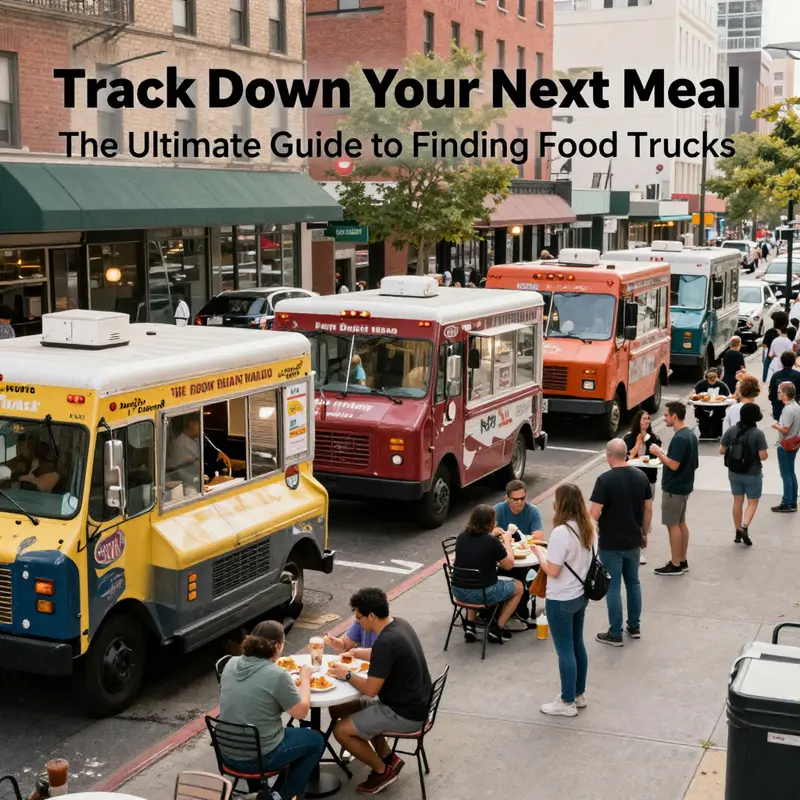
Where to Walk and What to Watch For
Finding food trucks in an urban landscape is as much about reading the city as it is about following tips. Food trucks do not appear at random. They follow patterns shaped by human movement, municipal rules, and small-business logic. If you learn to spot those patterns, you can find the best trucks without chasing every lead. This chapter maps the habits of mobile vendors, explains how cities make space for them, and gives practical ways to explore urban areas so you encounter more trucks, more often.
Food trucks gather where people gather. That may sound obvious, but it points to a simple strategy. Start by identifying concentrations of foot traffic. Transit hubs, business districts, university quads, and markets attract predictable flows. Office workers create steady daytime demand. Tourists and shoppers generate weekend peaks. Late-night crowds bring a different set of trucks, often with comfort food and quick bites. Visit these zones at peak times. Lunch hours, early evenings, and weekend afternoons will usually yield the richest variety.
Beyond general crowd flows, look for designated zones. Many cities recognize the value of formalized spaces for mobile vendors. These zones may be plazas, curbside lanes, specially set-aside lots, or parcels within municipal markets. They are easy to spot once you know what to look for: painted curb markings, signage about vending hours, clusters of utility hookups, or a line of trucks on a single street. These areas become mini food hubs where trucks rotate through scheduled slots or settle for the day. When you find one, you’ve found a reliable source of variety and quality.
A second layer of pattern comes from event calendars. Pop-up festivals, night markets, and outdoor concerts often bring together dozens of trucks. These events concentrate choice and create a lively atmosphere. Local parks and waterfronts are common hosts. Business improvement districts sometimes coordinate weekly or monthly gatherings that pair trucks with live music or family activities. Following event listings in your neighborhood helps you plan visits when many trucks are in one place.
Regulation shapes where trucks can and cannot park. Cities use licensing, permits, and zoning to balance vendor opportunity with pedestrian access. In some places, officials have created flexible models that let vendors respond to demand without obstructing sidewalks or traffic lanes. Elsewhere, strict rules push trucks into formal lots or event spaces. Learn the local rules to understand why trucks appear where they do. Where vending is restricted on sidewalks, trucks are more likely to use vacant lots, municipal parks, or private property corridors. Where authorities embrace mobile commerce, you will often see trucks integrated into streetscapes and transit nodes.
Design interventions influence truck locations too. Some municipalities invest in infrastructure that makes vending easier. Things like electrical hookups, waste stations, and designated loading bays make specific sites attractive. Look for clusters of small permanent fixtures in public spaces; these often indicate a deliberate effort to host food vending. Cities that support mobile vendors may also offer shared facilities, such as small kitchens or storage, which concentrate vendor activity near those resources.
Case studies from around the world show how different approaches shape a city’s truck scene. In one city, municipal planners introduced dynamic, time-sensitive stalls that shift allocation with foot traffic. The idea is to match vendor placement to shifting demand. In another district, authorities established dedicated mobile-vendor zones near transit stations. Both approaches reduce congestion and elevate vendor visibility, creating orderly, profitable hubs.
Elsewhere, markets and infrastructure coexist in creative ways. There are places where vendors line railway tracks during scheduled intervals. Vendors set up, then fold away in rhythm with arriving trains. That kind of choreography draws tourists and locals alike. In other cities, small-scale truck parks near train stations or green spaces provide legal, serviced sites for daily vending. These parks attract repeat customers because the experience is predictable: you know where to go, what to expect, and which trucks tend to rotate through.
The experience of tracking trucks in the city is also a cultural journey. Each neighborhood brings a signature. Immigrant districts may offer regional specialties that reflect long-standing culinary ties. Tech and creative neighborhoods attract trucks with inventive menus and fusion flavors. Food truck gatherings often function like cultural marketplaces, where disparate cuisines coexist and influence one another. Seeking trucks in different neighborhoods gives a fast tour of a city’s culinary diversity.
Practical exploration starts with a simple walking plan. Pick a hub, and circle it. Walk the main arteries and the side streets. Trucks sometimes hide down alleys or tuck into small parking lots that are invisible from the busier thoroughfare. Turn corners deliberately. Visit both the busier edges and the quieter interior streets. You will notice patterns: a group of trucks near a theater, a regular truck parked at a corner where office workers pass, or a weekend-only cluster near a park.
Timing matters. Lunch brings a predictable line of trucks to office districts. Later in the evening, entertainment districts bloom with trucks offering heartier, late-night fare. Weekends broaden the geography, with markets and festivals drawing trucks into residential neighborhoods and waterfronts. Plan visits to match the type of food you seek and the crowd you prefer.
Talk with truck operators when you can. They are often generous with tips. Ask where they have good sales or which nearby locations draw customers at different times. Truck staff will tell you about regular events, private bookings, and seasonal shifts. Ask whether a truck rotates through multiple locations during the week. Many operators follow a weekly schedule, moving between office parks, neighborhoods, and event lots. If they have a reliable rhythm, you can learn it quickly.
Observe the signage and short-term infrastructure around trucks. Temporary menus, chalkboard signs, and folding tables often indicate a truck operating on a transient permit or participating in a pop-up market. Conversely, permanent fixtures like fixed utility boxes or built-in seating signal a more established vending area. Those established areas usually have multiple vendors and a steady flow of customers.
Street life also signals opportunity. Outdoor seating, public art, and bike racks signal a welcoming environment. If a public plaza has new landscaping, benches, or lighting, it’s likely a site the city wants to activate. Food trucks follow activation. Conversely, empty sidewalks and neglected lots are less likely to host diverse, high-quality vending unless a special event is occurring.
Seasonality shapes the map. Spring and summer months open up parks, waterfront promenades, and late-night scenes. Colder months push many trucks indoors or to sheltered lots. Some cities host winter markets that relocate trucks into heated venues or covered arcades. When exploring, consider seasonal programming. A truck that closes for winter may reappear in spring at a festival. Keep a mental calendar of major seasonal events.
Transportation choices influence access. Biking and walking make short detours easy. Public transit can be useful for reaching hubs that are slightly beyond comfortable walking distance. If you drive, scout parking options near known vending zones. In busy neighborhoods, walking from a nearby lot is often faster than trying to park on the street.
Safety and comfort are important. Choose well-lit areas and busy streets when exploring at night. Respect lines and local norms. Many trucks accept cash and noncash payments; it helps to have small bills for quick transactions. If a truck appears unlicensed or operating from a precarious spot, be cautious and prioritize vendors in legal, safe locations. These vendors typically have better food handling practices and clearer operating hours.
Leverage local community resources. Neighborhood groups, business improvement districts, and cultural centers often post schedules for local gatherings that include trucks. Bulletin boards in libraries and community centers can list weekly markets. These grassroots channels often reveal smaller, high-quality gatherings that larger listings miss.
If you want to explore with some structure, compile a short list of neighborhoods and hubs to visit on rotation. Assign days of the week to each hub. Over a month, you will develop a personal map of where trucks appear and when. This low-effort routine will reveal a city’s rhythms without needing constant searching. Keep notes about favorite trucks and scheduled events. Over time, you will build a network of reliable stops.
Urban design and planning will continue to shape vending opportunities. Cities experimenting with dynamic stall allocation and flexible night markets show that policy can transform chaotic vending scenes into vibrant, accessible food corridors. Investments in small infrastructure—charging points, water access, and waste disposal—have outsized effects. They lower barriers for operators and increase the quality of offerings for customers.
Supporting a food-truck ecosystem means more than finding a truck. It means choosing trucks that operate responsibly and in legal spaces. That supports vendor sustainability and helps vendors secure more access over time. When trucks thrive in designated hubs, they attract consistent customers, and cities respond by creating more enabling infrastructure. The best way to influence how cities host trucks is to participate: show up at legal markets, support well-managed zones, and give feedback to local officials when you see thoughtful public design.
Finally, remember that finding food trucks is a practice of curiosity. It rewards patience and local knowledge. Each walk through a city reveals new clusters and new flavors. As you become familiar with hub locations, permit patterns, and seasonal shifts, you will spend less time searching and more time enjoying the food and conversation that food trucks uniquely offer.
For a concrete example of how a city can blend tactical planning with vendor needs, see reporting on the tidal stalls initiative that adapts space allocation by time and demand: https://www.people.com.cn/zhongguo/2026/0210/456789.html
For practical help on navigating parking and placement issues from an operator perspective, explore this guide to mastering food truck parking challenges: https://loschifladostruck.com/mastering-food-truck-parking-challenges/
Final thoughts
Finding food trucks can be as exciting as enjoying the delicious food they serve. With the strategies outlined in this guide, you can confidently navigate the mobile cuisine landscape. Whether you use apps designed specifically for truck tracking, engage with local events, or explore the sizzling urban settings of your city, your next great meal is just around the corner. So grab your friends, put on your food-loving hat, and hit the streets to uncover the savory delights that food trucks have to offer!