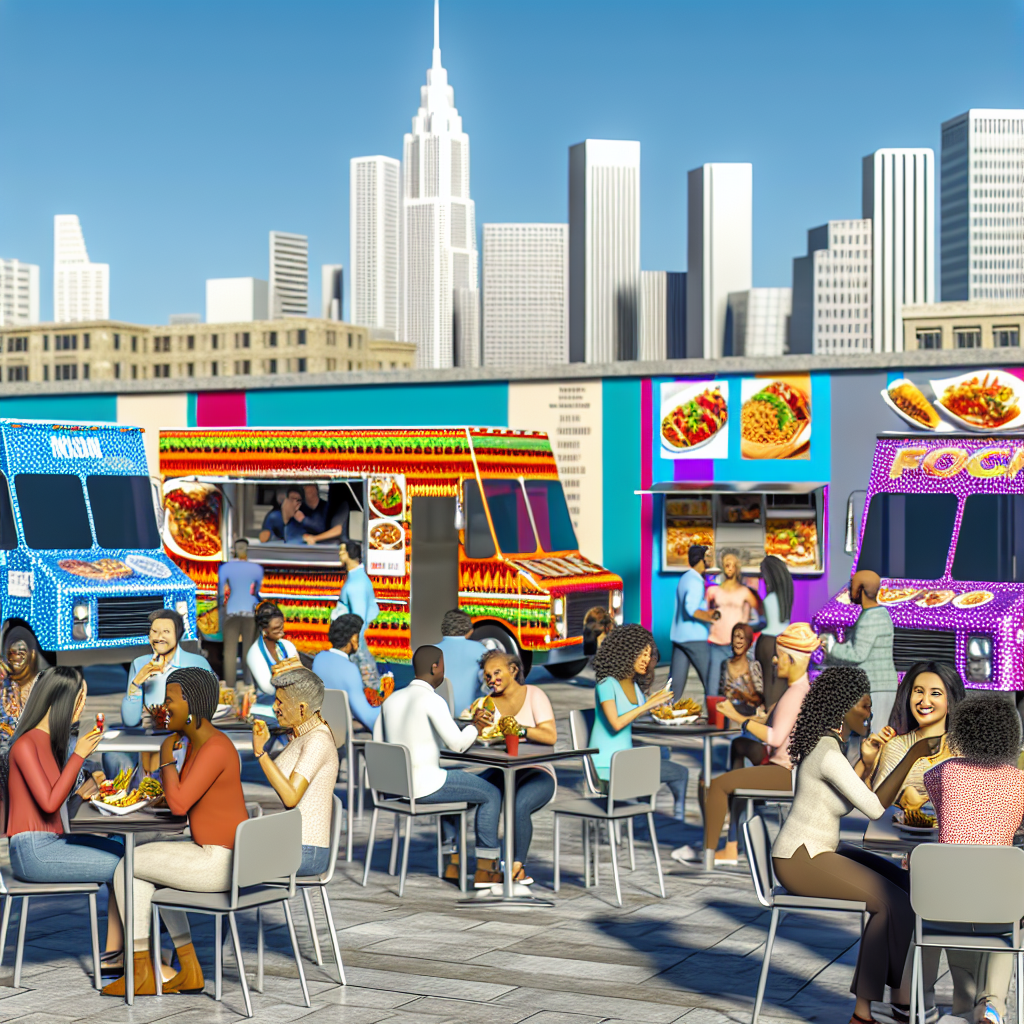
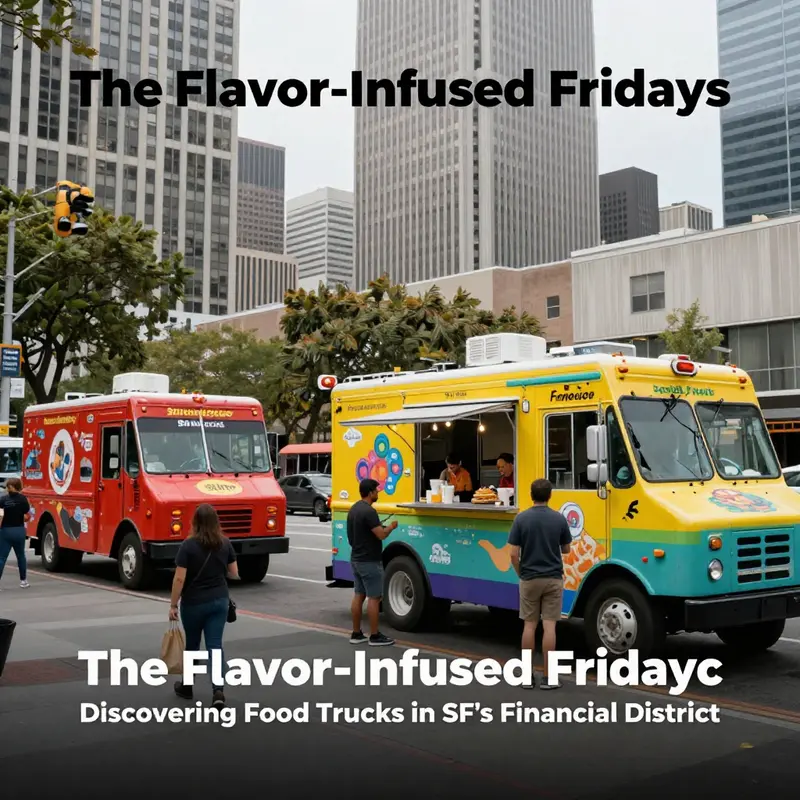
Every Friday in the Financial District of San Francisco, food trucks come alive with flavors and social energy, turning typical workdays into culinary adventures. Whether you’re an event planner looking to coordinate catering, a corporate HR team seeking team-building experiences, or just a food enthusiast craving delightful street fare, the pulsating atmosphere offers something for everyone. This article explores where to find these food trucks within this bustling district, focusing first on the popular Off the Grid event at Salesforce Tower, then shifting to Spark Social SF, emphasizing the importance of food truck events in urban areas, and highlighting how they shape customer experiences and dining trends. By the end, you’ll be well-equipped with knowledge on how to stay updated with the latest food truck lineups to make your Friday lunch a flavorful success.
Friday Feasts on the Tower Plaza: Tracing San Francisco’s Financial District Food Truck Circuit
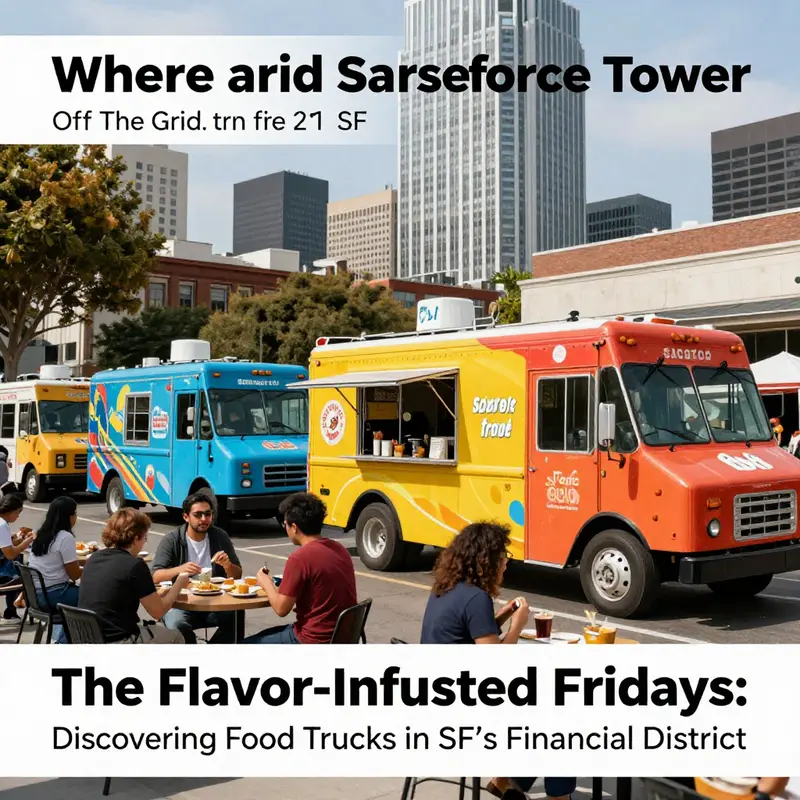
When Friday arrives in San Francisco’s Financial District, the streets begin to pulse with a particular cadence. The air, usually clipped to the neat lines of downtown, loosens just enough for aroma to drift from one avenue into the next. On Fridays, the plaza around Salesforce Tower becomes a living corridor of smells, sounds, and limited-time menus. It’s not just a meal; it’s a weekly ritual that turns a business district into a marketplace where workday rhythms blur with the joy of discovery. The scene is quietly dramatic: polished glass, brisk foot traffic, and a line of wheels that glisten under the morning sun. People pause, consult their schedules, and let the scent of something hot and fresh pull them away from screens and meetings for a moment of communal eating. The choice feels curated by the city itself—executives in tailored coats, downtown dwellers in easy layers, and curious visitors who wandered from the ferry to the tower while searching for a taste of the city’s edible storytelling.
At the heart of this Friday experience sits Off the Grid Salesforce Tower, a name that may feel like a familiar landmark even for those who have never stood in its shade. The event unfolds on the Salesforce Tower plaza, at 415 Mission Street, a stone’s throw from the heartbeat of the Financial District. The schedule is reliable enough to become a weekly refrain: midday hours that invite a temporary shift in the day’s tempo. Vendors arrive with the confidence of seasoned performers, carrying kitchens on wheels and the confidence that a busy crowd will give them a chance to shine. The space is designed for movement as much as for tasting. There are long banquettes for the stack of conversations that often accompany a break, and there are pockets of shade where colleagues can trade quick notes about the day’s priorities while tasting a small piece of something extraordinary. The atmosphere is energized by live music—enough to lift a conversation without drowning it—and by the outdoor seating that makes the experience feel almost seasonal, as if the city itself has declared a long, delicious spring that lasts through the early afternoon.
What makes Friday at Salesforce Tower particularly special is the rotating lineup. The event curates a selection of local food trucks and vendors, each bringing its own story, its own twist on a familiar format, and its own moment to be discovered by someone who only comes to the plaza for a lunch break. The range is broad by design: you’ll encounter options that run the gamut from rustic, slow-smoked favorites to vibrant, street-food-inspired bites. You might find a pack of trucks offering gourmet tacos with inventive toppings that make you rethink what a tortilla can hold. Other trucks bring rotisserie-style preparations, their grills turning with a rhythm that signals a quick but soulful approach to comfort food. For the more adventurous palate, there are offerings drawn from far-flung street-food traditions, reimagined with a San Francisco sensibility—bright spices, fresh herbs, and a nod to seasonal produce sourced from regional producers. And if you’re in the mood for something sweet, there are desserts that balance richness with a light touch, the kind that leave a lingering smile rather than a heavy aftertaste. The point is not merely to feed a crowd but to present a micro-ecosystem of flavors, each one a story told with heat, smoke, and the precision of a professional kitchen on wheels.
The experience benefits from a sense of accessibility that feels specific to the city’s Friday frame. The plaza is easy to reach via public transit, a practical convenience that complements the event’s purpose: to offer a generous, high-quality lunch option without requiring a long detour from the workday. The organizers emphasize freshness and local sourcing, a reminder that the food trucks here are not just about speed but about craft. This combination—attention to ingredients, a rotating roster that keeps the sense of novelty alive, and the social pull of a shared outdoor meal—creates a distinct Friday energy. People come with colleagues, friends, and sometimes family, all drawn by the same unspoken invitation: to slow down just enough to appreciate a well-made bite in the middle of a busy week.
Yet the joy of this setup hinges on the dynamic between predictability and surprise. The schedule becomes a guide rather than a rule, because last-minute changes can occur as trucks navigate weather, equipment needs, or city permitting quirks. That is why the most informed visitors check the Off the Grid website and the event’s social channels in the run-up to Friday. The official pages offer the current lineup and any special pop-ups that might appear for a given week. This small ritual—glancing at the day’s ticket of trucks before stepping out the door—turns a routine lunch into a small, anticipatory moment. It also underscores a broader truth about the Financial District’s Friday food truck ecosystem: it thrives on collaboration and reliability. The organizers, trucks, and diners participate in a rhythm that rewards punctual arrivals, quick service, and an openness to try something new.
From a planning perspective, Friday’s Salesforce Tower event is approachable whether you’re chasing a quick bite or planning a longer, more social lunch hour. The seating is ample but not endless, so early arrival pays off if you’re particular about where you sit or which truck you want to line up behind. For those who must squeeze in a late lunch, the rotating lineup often means a second wave of options as the day progresses. The proximity to other downtown conveniences means you can pair a meal with a stroll along nearby corridors of commerce or with a quick retrieval of a needed item from a nearby shop or café. And for anyone curious about how this model fits into the broader city’s food truck landscape, a visit to related industry insights can provide context on how these fleets manage throughput, maintain quality, and adapt to fluctuating demand across a busy urban week. If you’re exploring these links, you’ll discover practical considerations that extend beyond what’s on the platter and into the mechanics of running a mobile kitchen in a dense urban core.
The culinary reach of Friday’s Salesforce Tower lineup invites reflection on how a city negotiates space, food, and work. These trucks are not just providers of sustenance; they are ambassadors of a dynamic, mobile cuisine that travels across neighborhoods and into the workplace. The rotating nature of the event keeps the experience fresh, while the consistent time window creates a reliable ritual that many look forward to. In a city famed for its culinary diversity, the Salesforce Tower plaza becomes a stage where the artistry of street food meets the discipline of a corporate calendar. It’s a reminder that food trucks can function as a bridge between two worlds—the swift, efficient tempo of downtown business and the slower, more reflective pleasure of shared eating. For those who track the city’s edible culture, Fridays in the Financial District offer a concentrated snapshot of how mobility, community, and taste converge in a single block of urban life.
If you’re planning a Friday around this scene, it helps to think of it as a compact, outdoor dining district rather than a single vendor’s menu. You’ll be navigating the possibilities with the awareness that each truck brings something different to the table. A careful approach is to sample a few bites from diverse trucks, pairing them with a seat in a sunny or shaded spot, depending on the day’s weather. This approach makes the visit feel less like a hurried sprint and more like a micro-adventure that matches the city’s own pace on Fridays. As you wander, you’ll notice how the crowd’s flow mirrors the plaza’s architectural rhythm—the way pedestrians bend around the plaza’s open space, step into the shade of a nearby stairwell, or linger near a line long enough to swap a quick compliment with the person in front. The shared sense of place is the thread that binds the experience together.
For readers seeking a wider lens on how these dynamic, mobile kitchens fit into a broader culinary economy, a broader narrative exists in the linked resource below. It offers context on how these crews balance profitability with performance, how they navigate regulation, and how bold flavors can emerge from chefs and cooks who adapt to daily constraints. If you want a practical, business-minded glimpse into the operational realities that underpin these Friday gatherings, consider following a recommended blog that discusses the daily realities of mobile food ventures and the way owners craft resilient models in the face of uncertainty. That perspective helps connect the deliciousness you experience on the plaza with the underlying discipline that makes such gatherings possible week after week.
For readers who want to learn more about industry perspectives and local food-truck culture, this internal link provides a gateway to practical insights and case studies: Los Chifa Los Truck blog.
External resource: to explore the official coverage and real-time updates from the event, you can consult the Yelp event page here: https://www.yelp.com/events/off-the-grid-salesforce-tower-san-francisco
Friday’s Fleet of Flavor: Navigating the Rotating Mobile Kitchens of San Francisco’s Financial District
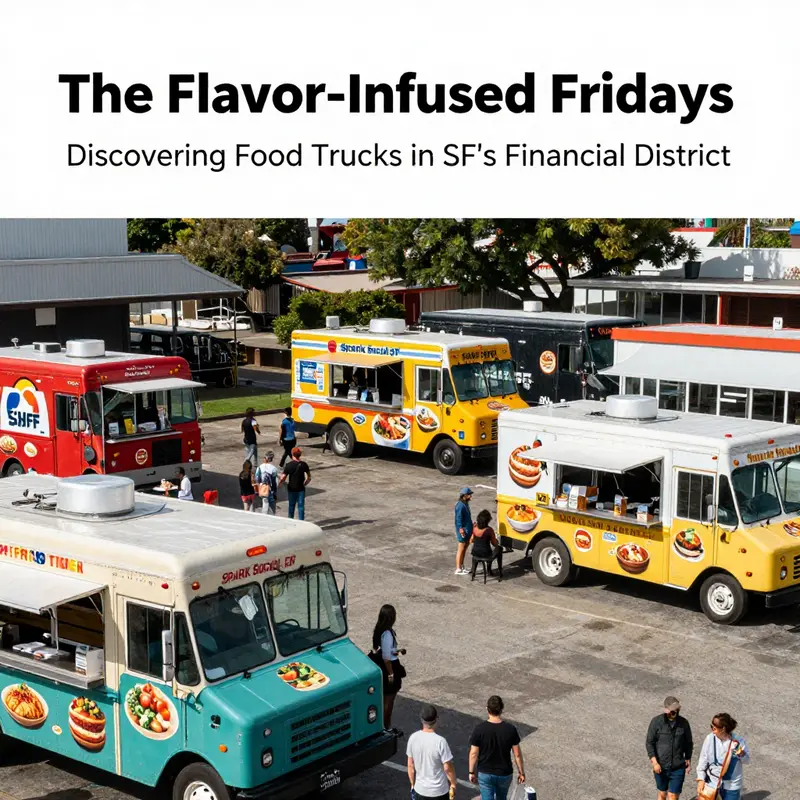
The Financial District of San Francisco takes on a different tempo as Friday noon approaches. The glass towers catch the late-mingled sun, and the sidewalks start to drift with the cadence of people trading a shorter workday for a longer lunch. In this part of town, the city’s appetite is a weather system: gusts of aroma, a chorus of chatter, and the steady murmur of anticipation as a fleet of mobile kitchens arrives to redefine the midday meal. On Fridays, the district becomes a staging ground for a rotating lineup of meals that arrive from rolling kitchens, turning a concrete landscape into a temporary marketplace where speed, variety, and efficiency matter as much as the flavor profiles themselves. Rather than a single storefront, the Friday rhythm is built from a sequence of stops, each with its own character, each offering a chance to sample something well beyond the standard lunch park fare. The scene is less about a fixed menu and more about an evolving menu that mirrors the city’s own pace: brisk, purposeful, and occasionally surprising. In this environment, a major, recurring gathering around a towering downtown landmark anchors the day. Think of a large, curated street-food corridor that unfolds in the shadow of a towering core of commerce, where the lineup shifts weekly and keeps pace with the appetite of hundreds of office workers and visitors who are always on the move. The key point for anyone curious about where to find the best options on a given Friday is simple: there is a dependable hub that hosts a rotating collection of vendors, and nearby, another operator quietly maintains a steady presence that draws a different sequence of guests. The first hub functions like a curated market in a park—except the park is a plaza, and the vendors are compact kitchens mounted on wheels. The second pillar of the Friday hour is a mobile kitchen group that tends to linger near the district’s most recognizable business towers, offering a familiar yet varied lineup. The combination creates a real density of options, with scent trails that lead the curious toward the heart of the action and the queues that form with the rhythm of the workday. What makes Fridays in this stretch particularly engaging is not only the variety but also the way the schedule is handled. The day tends to run within a known window, which helps both the eager eater and the operator plan for peak moments. A typical lunch window is roughly between 11:00 a.m. and 2:00 p.m., and crowds often begin to gather shortly before 11 as people step out of elevators and want to settle into a meal before returning to the desk. The lineup is not static; it shifts from week to week, with new faces joining the familiar favorites. This fluidity is part of the appeal. Followers of the scene know to keep an eye on the calendar and social feeds for the exact truck lineup, which can change from Friday to Friday. In practical terms, what this means for someone planning a Friday visit is that the loop is predictable in structure but dynamic in content. The popular gathering around the tall tower is complemented by an adjacent ecosystem that hosts a network of mobile kitchens across the hour and the day. For those who want a more stable, alternative flavor profile, there is a well-known operator in the area who maintains a steady presence during the week, particularly around lunch, and who contributes to the sense of continuity in the district’s food scene. This balance between the rotating lineup and the steady presence gives Friday in the Financial District its distinctive flavor: a mix of familiar comfort and bold experimentation, all within a few blocks’ walk and a few minutes’ worth of decision fatigue as the clock ticks toward the 2:00 p.m. mark. It is this dynamic that draws people back week after week. The scene is built not only on the food but also on the ritual of the hunt itself—the deliberate walk between trucks, the quick study of menus, the decision made with a smile or a sigh, and the moment when the first bite arrives and the day seems to tilt toward a more human cadence. It is a slice of city life that speaks to the way urban workplaces can intersect with culture, mobility, and gastronomy without turning the experience into a chore. The environment rewards those who arrive with patience and curiosity, because the rotating nature of the offerings means there is always something new to try, a new combination of textures, and a chance to learn the lay of the land through the lens of someone else’s craft. The best approach for first-time visitors to this Friday rhythm is to acknowledge the two pillars of the scene: the fixed anchor around the tall downtown landmark that hosts a rotating roster of vendors, and the nearby operator with a more stable footprint that still participates in the Friday flow. Planning helps, but flexibility is essential. If you intend to sample multiple stalls, it’s worth noting that lines can form quickly, especially as the sun climbs and the lunch period reaches its peak. A quick strategy is to map out a preferred order: start near the pillar of the day’s largest crowd, then move outward to catch a second and then a third option before returning to a final pick for the last bite. This approach minimizes backtracking and reduces the risk of a long wait, which is a boon for anyone juggling schedules, meetings, or a tight deadline. The sensory experience alone is worth the effort. The air becomes a mosaic of spices and smoke, the sizzle of hot griddles and the clatter of utensils mixing with the surrounding city sounds—speaking voices, distant subway rumble, and the hum of conversations about meetings, deadlines, and weekends. Even the air feels different here, carrying a light, almost festival-like energy that comes with a shared expectation: the chance to discover something small yet meaningful in a busy weekday life. For those who are curious about the operational side—the logistics, the permits, and the ebbs and flows that allow a truck to anchor itself near a downtown tower on a weekly basis—the practical realities matter as much as the tasting notes. The crew must navigate urban parking constraints, street-closure schedules, and the need to coordinate with property management and local authorities to ensure the space remains accessible and safe for diners. It is not just about cooking appetites but about moving in a city that rarely slows down. In that sense, the Friday rhythm becomes a study in urban resilience and entrepreneurial agility. The two groups that anchor the scene each contribute something complementary: one provides a curated, ever-changing tasting menu—tempting the palate with something surprising each week—while the other offers a semblance of continuity, a familiar touchpoint that regulars can count on when schedules are tight. The result is a lunch-hour tapestry that invites both repetition and discovery, a microcosm of the city’s broader approach to work, food, and community. For readers who want to delve deeper into the practicalities of operating a food-truck business in such a demanding urban environment, there is a wealth of guidance available. A useful resource to explore is Financial tips for first-time food truck owners, which covers essential considerations for budgeting, pricing, and planning in a competitive market. This kind of guidance helps illuminate how operators balance the availability of rotating menus with the costs of running a mobile kitchen in a dense, high-demand district, and it offers practical steps for those who are looking to enter or scale their own ventures in similar urban settings. The Friday rhythm in the Financial District is thus not just a matter of where to eat; it’s a narrative about how the city negotiates space, appetite, and time in a way that supports both business and community. If you are planning a Friday visit, consider that the exact lineup can vary, so a quick check of the latest postings is worthwhile. The most reliable way to confirm which trucks will be present on a given Friday is to consult the official event calendar and to follow the connected social channels for real-time updates. In this context, a robust Saturday-to-Friday cadence makes sense: the appetite returns, the trucks rotate, and the conversation about food, work, and place continues to unfold in the heart of the metropolis. For readers who want to explore more about what it takes to run a mobile kitchen amid the city’s complex ecosystem, there are longer discussions and case studies available that address everything from parking choreography to resilience in freight markets. Much of the practical wisdom centers on planning, timing, and the ability to pivot when schedules shift, all of which are part of the everyday life of the Friday fleet. And while the specifics of which vendors will appear can vary, the core experience remains constant: a shared moment when many people pause, taste something new, and join in the city’s ongoing tradition of turning a downtown street corner into a lively, edible crossroads. Real-time updates about the Friday lineup—and the broader schedule for the Financial District—can be found on the external events page, which serves as the primary source for the most current information. For readers who want a more foundational look at how these mobile kitchens get their start and how they sustain themselves in a competitive urban market, a selection of deeper reading on related topics is available through internal links such as Financial tips for first-time food truck owners. Financial tips for first-time food truck owners. This blend of rotating flavor and stable operational practice mirrors the balance many urban vendors strive for in a city that rewards both adaptability and consistency. For anyone looking to verify the day’s exact lineup or to catch the latest update on a Friday, the practical step remains the same: check the official calendar, observe the scene, and let the city guide you to the next bite. External resource: https://www.offthegridsf.com/events/sf-financial-district
Friday on the Corner: How Food Trucks Turn San Francisco’s Financial District into a Walking Culinary District
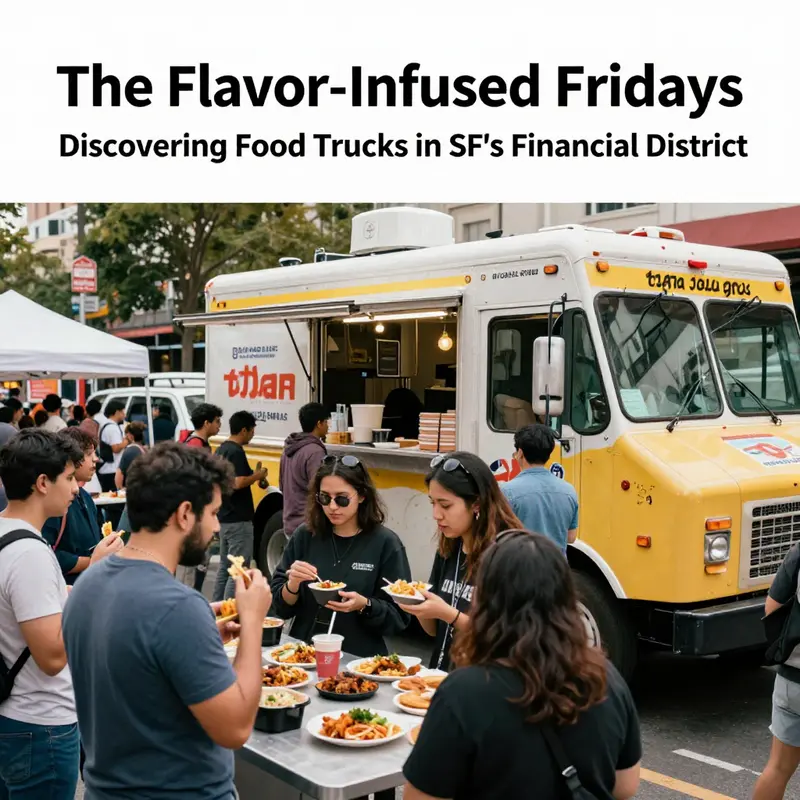
On Fridays the Financial District in San Francisco wakes with more than the rattle of elevators and the clack of heels. It wakes with steam, sizzling onions, and the hum of conversations that sketch a temporary street market between glass towers. For many workers, the day’s food choice arrives on wheels, rolling in to the base of Salesforce Tower or drifting along nearby corners where sidewalks widen for a short afternoon festival. The most recognizable heartbeat is the weekly Off the Grid Salesforce Tower event, a rotating constellation of beloved trucks that park, park, and then move on to another block, bringing a quick-draw feast to an otherwise businesslike landscape. The lineup changes from week to week, so no two Fridays feel identical. If this sounds like a small festival rather than a lunch line, that’s because it is: a carefully choreographed reflection of the city’s appetite to blend commerce with community, convenience with curiosity.
At the Salesforce Tower site, the energy is practical and celebratory at once. The trucks cluster near the base, setting up under shade structures or beneath the tower’s gleaming facets. Workers, visitors, and locals converge to sample a rotating selection of top-rated vendors who offer a spectrum of flavors and textures: from handheld classics that refashion the everyday into something celebratory, to international street food that hints at distant neighborhoods, to pastries and desserts that offer a sweet pause between meetings. The environment includes outdoor seating where possible, a soundtrack of light tunes, and a sense of crowds moving with the clock rather than against it. The food choices are not merely about sustenance; they’re about speed, opportunity, and a little culinary risk-taking. The result is a microcosm of the city’s broader food culture, compact enough to fit into a lunch hour and expansive enough to invite discussion about flavor, origin, and craft.
Nearby, Spark Social SF adds another layer to Friday’s culinary map. Though not anchored in the same financial district block, it maintains a rhythm that many Friday wanderers learn to anticipate. Trucks and pop-ups may drift in and out, guided by permits, weather, and the day’s demand. The site’s footprint is looser, more fluid than the Salesforce Tower event, but its presence in the same general neighborhood creates a complementary circuit for food lovers who want a longer route, a broader menu, or a late-afternoon bite. On Fridays, you can often find a mix of familiar favorites and new experiments, a rotating guest truck here, a regional specialty there. For anyone planning a precise visit, monitoring the truck calendar and social posts becomes part of the ritual, because the exact lineup shifts with the week and sometimes with the hour.
Planning a Friday feast in this part of the city means embracing two realities: schedules and spontaneity. The official Off the Grid site is the most reliable compass for Salesforce Tower, showing the weekly lineup, times, and any entry requirements or security considerations. On the ground, a quick stroll along the block can reveal the unadvertised surprises or last‑minute changes. Spark Social SF adds a parallel stream of updates through its own channels, which can be more real-time and responsive to conditions. This is a city that respects timing but also welcomes chance—if a truck you crave is running a few minutes late, the street becomes a stage where neighbors chat, compare bites, and decide to linger or pivot. The charm lies in watching a planned route unfold against the backdrop of a fast city that never fully stops moving, even as the aroma of street food makes a more deliberate invitation to take a break.
Beyond taste, Friday truck rows contribute to a broader urban economy. They act as economic catalysts by offering a platform for small, independent cooks to reach a dense, paying audience without the overhead of a brick‑and‑mortar restaurant. That lower structural barrier invites experimentation—the kind of menu that might not survive a conventional lease but can thrive in a mobile kitchen. The urban workers who rely on these options gain access to varied meals at reasonable prices, which helps maintain a sustainable lunchtime ecosystem in a district dominated by finance and law. The cultural impact is equally evident: a spread of international cuisines emerges in a few blocks, reflecting the city’s own mosaic of communities. Food trucks become ambassadors, trading stories through spice, aroma, and presentation, and turning flat sidewalks into places where people pause, ask questions, and share recommendations.
Many trucks make sustainability a practical practice. They choose packaging designed to minimize waste, emphasize local ingredients when possible, and operate with lean margins that reward efficiency. The result is a kind of culinary mindfulness stitched into the daily rhythm of the district. When lines form, they generate more than revenue; they generate conversations about food, trade, and regional specialties. The sight of a queue outside a truck becomes a subtle invitation for colleagues to step away from screens and into a common moment. Such moments matter in a place where public spaces can feel procedural instead of communal. The Friday market, in this sense, acts as a small but meaningful intervention—an open-air extension of the city’s dining scene that invites collaboration across departments, teams, and even neighborhoods beyond the Financial District.
To truly understand the logistics of moving a fleet through a dense business corridor, it helps to consider the practical side: parking, permits, and load-in flow. The act of selecting a site, setting up, and breaking down in tight streets is a choreography that requires coordination with property managers, city agencies, and event organizers. If you’re curious about the mechanics of parking and vehicles in constrained urban spaces, a resource on mastering food truck parking challenges offers grounded insights into route planning, queue management, and safety considerations. It’s not just about finding a curb; it’s about balancing access, safety, and neighborly relations so that a Friday ritual remains smooth and respectful for everyone nearby. Mastering Food Truck Parking Challenges. The article frames practical tips that resonate with the specific pressures of the Financial District, where every minute of parking equals a shared consensus about how a street can breathe for a few hours.
Real-time updates and a sense of the moment define Friday in this part of town. While the longer arc of the week builds a narrative of businesses and clients, the Friday truck rows compress that narrative into a few blocks and a single afternoon, making the urban fabric feel both predictable and surprising. The official source remains the reliable beacon: a schedule that can guide you to the exact trucks, their hours, and any changes in the lineup. For rain or shine, the combination of a planned calendar and spontaneous discoveries shapes a distinctive urban dining routine that locals and visitors soon come to anticipate. In the end, Friday’s food trucks in San Francisco’s Financial District are more than a convenient lunch option; they are a seasonal chorus of flavors, a social space that invites cross‑pollination between workers and residents, and a practical demonstration of how a city can adapt its streets to celebrate food as an everyday, shared experience. For real-time updates on which trucks will be present on a specific Friday, refer to the Off the Grid Salesforce Tower schedule. External resource: https://www.offthegridsf.com/events/salesforce-tower
Friday Food Truck Footprint: Customer Experience and Dining Trends in San Francisco’s Financial District
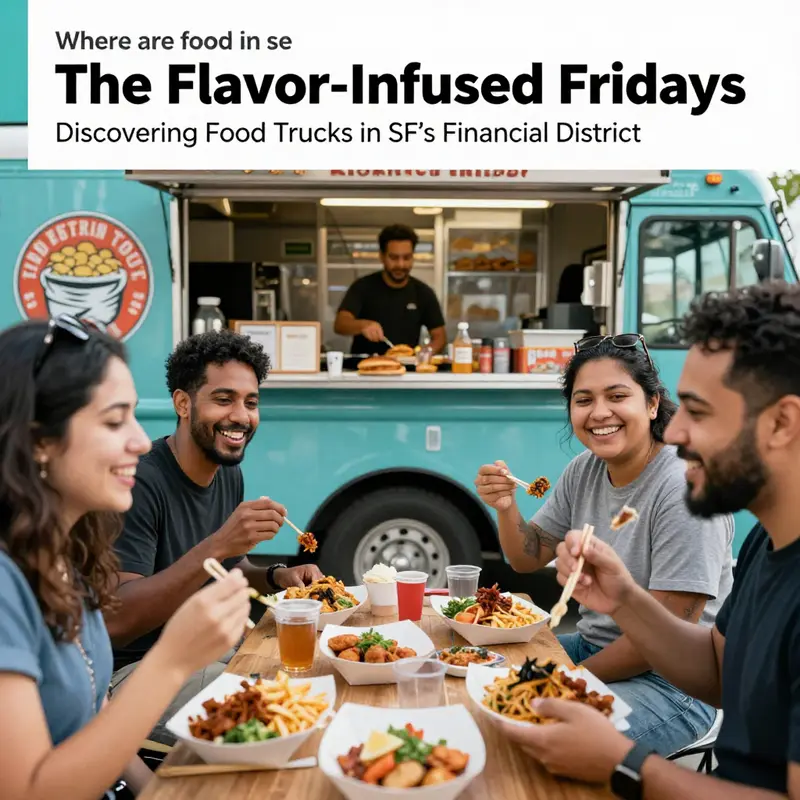
Friday in San Francisco’s Financial District folds the city’s fast pace into a different kind of appetite. The towers keep their ground, the morning rush dissolves into a steady hum, and at midday the sidewalks become a corridor of steam and spice. The rhythm is unmistakable: a handful of curated, street-side kitchens congregate where office towers meet public space, offering a rotating menu of quick, high-quality bites. This setup isn’t just about feeding bodies; it’s about feeding a culture that prizes speed without sacrificing flavor, efficiency without sacrificing curiosity. On Fridays, the usual lunch detours expand into a mini food court on wheels. The space is communal, the lines become social, and a simple stroll toward the curb can feel like a brief escape from the corporate cadence of the day.
If you were to map the Friday food truck circuit in this part of the city, you’d start with a central hub near a towering business complex that serves as both anchor and stage. It functions like a curated marketplace, where a rotating selection of trucks lines up to meet a steady stream of professionals looking for variety, quality, and speed. The concept is classic in its appeal: quick service, diverse cuisines, and a sense that you’re sampling a world of flavors without straying far from a familiar daily routine. The exact lineup shifts from week to week, so the best way to know what’s on the menu is to check the organizers’ updates and the trucks’ social feeds. This is a deliberate, event-style approach to urban dining that turns a lunch break into a moment of choice and discovery rather than a routine pit stop.
A second notable cluster sits a bit farther afield but remains within easy reach of the Financial District’s daily crowd. It’s a space where energy is high and invention is part of the experience. Here, the scene feels livelier, and the offerings often reflect contemporary dining trends—seasonal ingredients, plant-based options, and sustainable sourcing play prominent roles. The customer experience in this setting benefits from a sense of spontaneity and variety. People wander from stall to stall, sampling a few bites here, a spicy taco there, a wood-fired slice or a polished, globally inspired bowl. The emphasis on freshness is not an afterthought; it’s a signal that convenience and quality can coexist in a single line outside a glass-and-steel skyline. This interplay—between a disciplined workday and the loosened norms of street food—produces a particular cadence: quick in, quick out, yet with moments for conversation, a bite that lingers in memory, and a sense of regional flavor evolving with the day’s mood and the season’s supplies.
From a customer’s point of view, the charm lies in efficiency without the rush. The best lunchtime encounters combine speed with an anchor of reliability. You know you’ll get something tasty within a short wait, and you know your money won’t suddenly feel like a gamble as you choose between a succulent sandwich, a vibrant bowl, or a crisp handheld that travels well through the afternoon. The cashless options and clear signage smooth the transaction, while the pickup windows remove guesswork from the moment of hunger to the moment of bite. The social aspect also matters. Colleagues gather with their plates in a way that signals a temporary community formed around shared taste. The space invites photos, quick conversations, and a post-lunch stroll that dissolves the edge of the afternoon before it begins to weigh on the body.
Beyond the immediate queues and tasting flights of the hour, Friday’s food truck culture in the Financial District is a reflection of broader urban dining trends. It embodies a demand for convenience that doesn’t erode quality, a desire for variety that respects busy schedules, and a rhythm that accommodates a workforce that moves with the pulse of a city that never fully rests. The menus often reveal a mindfulness about dietary preferences and sustainability. It’s not unusual to encounter plant-forward options, transparent sourcing, and creative takes on familiar favorites. There is a growing appetite for dishes that feel familiar yet are prepared with a contemporary twist, offering comfort with an edge of novelty. The result is a dining landscape that rewards both the curious eater and the time-conscious professional.
In conversations with regulars, a few patterns emerge that help explain why Fridays feel different here. The first is predictability in the best possible sense: the core hub is a dependable meeting place for the lunch crowd, a known point on the map where a diverse spread awaits. The second pattern is adaptability. The same stretch can host a Filipino-Mexican fusion concept one week and a wood-fired Neapolitan pizza concept the next, depending on schedules and partnerships. The third pattern is community. Even without a formal restaurant, the district’s Friday axis becomes a place where colleagues share bites, swap recommendations, and discover new flavors together. The social experience amplifies the value of the food, turning a quick lunch into a small, shared event that punctuates the workday with a moment of collective curiosity.
Technically, the logistics are as important as the flavors. The organizers optimize for high turnover, keeping lines moving while preserving the quality that makes customers return. Vendors lean on streamlined menus with clear, visually engaging displays. Orders are designed to be precise, portions balanced for quick eating, and pickups calibrated to avoid bottlenecks at peak times. This careful choreography—between the trucks, the staff, and the urban environment—transforms a busy street corner into a reliable dining option that staff can trust and visitors can explore. It’s a model of urban mobility that respects both the constraints of the city and the appetite of its residents.
For those who want a deeper dive into the operations behind the scenes, there are practical resources that capture the realities of running street food in these conditions. Operators often rely on social media to share daily schedules, driving engagement and enabling customers to plan around the exact trucks and times they wish to visit. This real-time information makes the experience feel personal and responsive, not merely transactional. And while the emphasis is on speed and variety, there is room for a moment of choice that resonates with human curiosity: a chance to compare a savory bowl, a smoky slice, or a delicate handheld while the afternoon passes and the skyline changes color.
To help readers connect the practicalities with the broader dining landscape, consider a practical resource that examines the specific challenges of mobility and parking for trucks in dense urban zones. For operators navigating the complexities of urban streets, a focused guide like loschifladostruck.com/mastering-food-truck-parking-challenges/ offers insights into maneuvering and setup in tight city spaces. This kind of practical perspective complements the anecdotal experience of the Friday circuit, illustrating how planning, permits, and curb space all contribute to a smooth, enjoyable lunchtime.
The narrative of Friday dining in the Financial District is not just about food; it’s about place. It’s about the way a city’s business heart negotiates time, appetite, and community in the same breath. It’s about seeing a curb as a stage, a line as a signal of shared need, and a menu as a map of cultural exchange. The trucks, with their portable kitchens and their adaptable schedules, become agents of urban life. They catch the attention of a workforce that values speed and taste alike and turn it into a daily ritual that many look forward to rather than endure. In this sense, the Friday food truck footprint is more than a transit-timed snack run. It is a living thread in the fabric of the district, weaving together economy, appetite, and human connection into a single, constantly evolving tapestry.
For readers who want to explore the wider implications of these shifts, the Friday circuit stands as a microcosm of how urban dining is adapting to modern rhythms. It demonstrates how mobility, culinary creativity, and social media can converge to create temporary, adaptive food communities that align with the demands of a highly professional, highly diverse workforce. The trend points toward more dynamic lunchtime ecosystems in major business districts, where outdoor centers, pop-up concepts, and rotating menus offer both novelty and reliability. And it suggests that the future of urban dining may lie in the balance between curated experiences and the freedom of spontaneously discovered flavors, all anchored by a shared appetite for convenience, quality, and community.
External reference: https://www.yelp.com/biz/off-the-grid-salesforce-tower-san-francisco
Friday Flavor Trail: A Cohesive Guide to Navigating San Francisco’s Financial District Food-Truck Scene
The Friday rhythm in San Francisco’s Financial District has its own tempo. As the workweek’s cadence shifts from boardrooms to lunch breaks, the streets around 415 Mission Street begin to thin of pedestrian traffic and swell again with the sound of sizzling griddles, clanging lids, and a chorus of hungry voices. The scent of spices rises with the fog that sometimes rolls off the bay, and in that moment the district feels both familiar and fleeting, a place where mobile kitchens converge for a few hours and then dissolve back into the city’s grid. The scene is less a single storefront and more a rotating gallery of flavors, each truck a temporary exhibit, each menu a tiny story told in a handful of bites. The way to experience it well is less about chasing every truck and more about reading the day’s mood and the layout of the space itself.
The central hub on most Fridays sits at a prominent tower-front campus that anchors the Financial District’s midday murmur. On the calendar, the hours are carved in stone: a mid-morning opening, a steady flow of guests through the lunch window, and a gentle wind-down as the afternoon light shifts. This is not a fixed parade of vendors; it’s a curated parade, with a rotating lineup that reflects the city’s diverse appetites. The core idea is simple: a rotating set of culinary vendors line up in the plaza or adjacent loading zones, offering an array of cuisines that showcase the city’s immigrant roots, modern pantry experiments, and the kind of comfort foods that make a busy workday feel doable again. The exact trucks change week to week, which is part of the appeal. You might arrive with a plan, but the lineup can surprise you in the best possible way as you decide between a smoky barbecue bite, a bright-tart craft element, or a fragrant pad of spices that reminds you of a street market abroad.
To navigate this landscape with confidence, the most reliable guide is the official calendar maintained by the organizers who run Fridays in the district. This calendar details who will be present on a given Friday, the start and end times, and the precise locations where trucks will set up for the day. It’s a practical tool that keeps pace with the city’s unpredictabilities—weather, street work, or special events can shift a schedule in a heartbeat. If you’re planning a lunch out or a casual Friday stroll with colleagues, you’ll want to check that calendar before you head out. The page itself reads like a live map: a list of vendors, a map pin for each truck’s current site, and notes about any changes to hours or access. The idea is to provide a clean, up-to-date snapshot so that you can decide in real time what you’ll sample and where you’ll position yourselves for a quick bite or a longer tasting session.
The breadth of options is part of the district’s appeal. In one corner you might find a bright, citrus-bright taco truck offering heat and brightness in equal measure; in another, a smoky, slow-braised stalwart that turns a simple sandwich into something reminiscent of a weekend cookout. There are vegetarian options and protein-forward choices alike, and a steady stream of fusion ideas that blur lines between street food and kitchen experimentation. This isn’t about a single cuisine—it’s about a curated compass that points toward discovery. For first-time visitors, the challenge isn’t finding a truck but choosing a starter: a small, satisfying bite that won’t derail the rest of the afternoon or something more adventurous for a longer taste session. Either way, flexibility is the name of the game, and the city’s lunchtime choreography supports both quick bites and leisurely grazing.
There is often more than one cluster for Friday trucks in the area. In addition to the main gathering near the tall, bustling tower, other nearby pop-up spaces or designated spots can host additional trucks, depending on the week’s schedule and space permitting. These secondary spots don’t always resemble a steady, predictable lineup; instead, they leverage the same nationwide logic that makes food-truck culture so dynamic: mobility plus modular menus equals variety, and variety attracts different crowds at different times. If you’re a regular who appreciates the comfort of certainty, you’ll still want to check the official calendar for the day’s primary lineup, then keep an eye on the surrounding blocks for any new arrivals or last-minute shifts. The overall feel is of a city in motion—an evolving street-food festival that travels with the sun and the wind.
For practical planning, consider how you’ll approach the experience. The district is well served by public transit, and many workers walk or bike to the area, so the lunchtime rush can feel like a moving tide rather than a single hour. If you’re driving and choosing to park nearby, the logistics can be trickier, since curb space is precious and time in the lot is often limited. This is where the idea of “mobility” becomes essential: knowing the exact pickup points, understanding when trucks set up, and allowing enough time to roam and sample a couple of bites before returning to the grind. Because the crowd moves with the schedule, a little patience can yield a richer, slower-paced lunch. It’s not just about eating—it’s about absorbing the city’s pulse in a concentrated, flavorful moment, about sharing a table with strangers who quickly become fellow explorers as the line snakes toward the window and the aroma of onions, peppers, and roasted meat fills the air.
The culinary landscape on these Fridays is a testament to SF’s appetite for experimentation, but it also respects the city’s love of comfort and familiarity. You’ll often see a crowd that looks like a cross-section of the neighborhood: professionals in suits and sneakers, freelancers with laptops closed for a spell, students following a class break, and families who’ve squeezed a quick moment of relaxation into their afternoon. The social energy is as important as the food itself. People trade recommendations with the same ease with which a line forms—it’s casual, it’s fast, and it’s wonderfully human. This is the essence of the Friday food truck scene in the Financial District: a friendly, ever-changing street-food neighborhood that adapts to the needs of the city’s busiest hours while still feeling intimate enough to be a shared experience.
For readers who want a deeper dive into the logistical side of these operations, there’s a practical angle worth noting: parking and loading zones around a heavy lunch corridor require a careful balance of access, timing, and courtesy. A focused guide to parking challenges—offering strategies for finding the best spots, navigating curb-space restrictions, and maximizing convenience for your crew—can save you a lot of time and stress. See this resource for a concise look at parking dynamics and how to maneuver through the occasional bottlenecks that pop up when the area is packed with lunchtime crowds. mastering food truck parking challenges
Ultimately, the Friday food-truck experience in the Financial District is about embracing the moment. It’s a reminder that a city’s culinary map isn’t static; it’s a living, breathing document that grows with the day’s weather, the ebb and flow of workers, and the whimsy of cooks who chase fresh ideas as eagerly as customers chase new flavors. If you’re planning a visit, treat the schedule as your baseline rather than a rigid plan, and use the rest of the afternoon as a window into what the district’s mobile kitchens can offer on any given Friday. And if you want more context about how people discover and evaluate these mobile eateries—what draws a crowd, how lines form, and what makes a truck a staple in a neighborhood for a season—you’ll find a thoughtful blend of user insight and practical tips in the wider conversation around food-truck culture in urban cores. While crowds and curiosities shift, one thing remains constant: Friday in the Financial District invites you to taste the city as it happens, one wagon, one smell, one decision at a time.
For real-time confirmation, check the official calendar and updates for the day’s layout. The calendar reflects the current set of trucks, their locations, and any weather-related changes that might alter hours or access, so you’re not left chasing a moving target. It’s the most dependable way to keep your plans aligned with the street food’s tempo. And while you’re exploring, you can also browse local reviews and listings that offer community perspectives on recent Friday experiences, though these sources may lag behind the live schedule. If you’re visiting with colleagues, consider coordinating a pre-lunch strategy: identify a couple of trucks you want to sample, map out a short loop, and leave a little buffer for conversation and quick tastings before returning to your desks.
External resource: https://www.offthegridsf.com
Final thoughts
Food trucks have transformed the lunch experience in San Francisco’s Financial District, bringing excitement, diversity, and community together every Friday. From Off the Grid’s curated events at Salesforce Tower to the vibrant ambiance of Spark Social SF, these rolling kitchens offer an array of flavors that satisfy every craving. Understanding the significance of these gatherings allows us to appreciate how they enhance urban life, influence dining trends, and create memorable customer experiences. To enjoy this vibrant food culture, keep an eye out for event updates and line-ups to make the most out of your Fridays. It’s time to fuel your afternoons with shared meals, new flavors, and lively company!