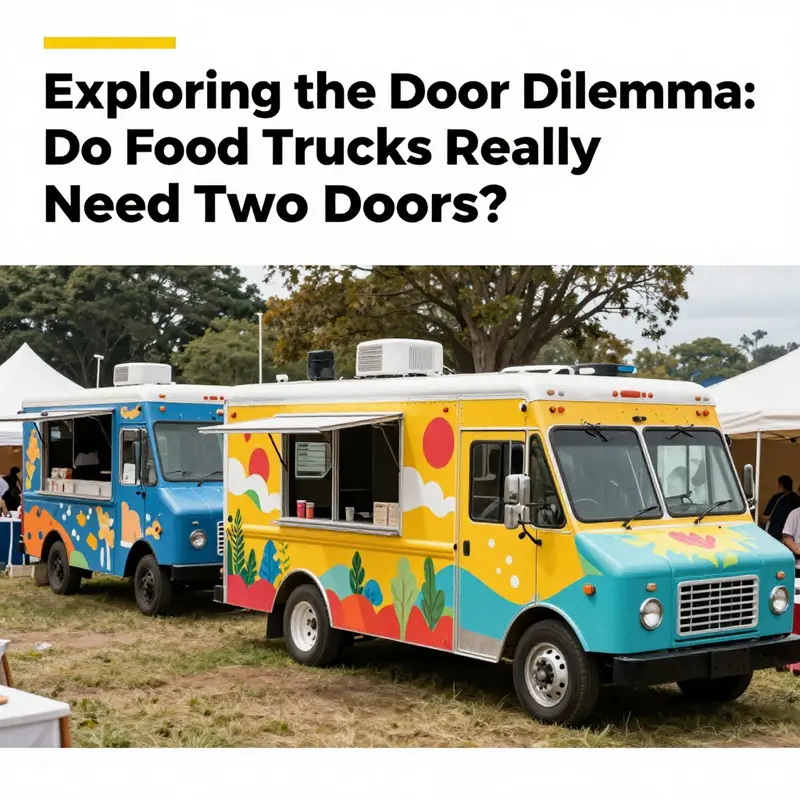
In the vibrant world of food trucks, where operational efficiency meets culinary creativity, the question of door design often sparks lively debates. It’s not just about aesthetics; it’s about how a food truck operates, serves its customers, and adheres to regulatory standards. As we dive into the nitty-gritty of whether a food truck needs two doors, event planners, corporate HR teams, community groups, and food enthusiasts will find crucial insights related to service efficiency, space utilization, health regulations, and customization options. Join us as we unravel the factors that influence door requirements and how they play a pivotal role in the success of mobile culinary ventures.
Doors in Motion: Designing Operational Efficiency for Food Trucks—Do You Need Two Doors?
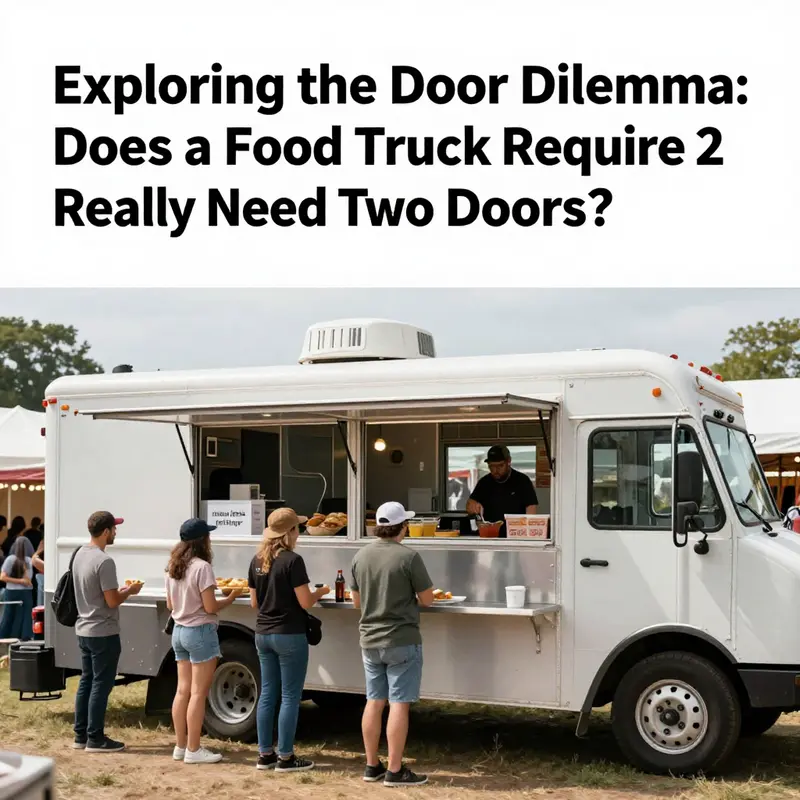
A food truck is a compact kitchen on wheels, but it is also a dynamic service space. The doors you choose are not decorative fixtures; they are vital elements of workflow, safety, and temperature management. In the world of mobile food, the question of whether two doors are necessary depends on how a truck is laid out, what it serves, and how staff move through the space. The simplest trucks can excel with a single service door and a well-planned window. Yet as the menu expands, or as service volumes rise, a second door can become a quiet engine of efficiency, reducing bottlenecks and smoothing the handoffs between cooking, finishing, and serving. The decision rests on practical needs rather than a universal rule. When you weigh the options, you are really weighing how people, processes, and equipment interact in a small, high-velocity environment.
Size and layout matter more than a fixed policy. A small trailer or a compact truck may function brilliantly with one large service window that opens directly to customers. In that setup, a single primary door can be enough for staff to move behind the scenes, fetch ingredients, and switch between cooking zones. The window becomes the focal point of interaction, and the kitchen side remains accessible through a door placed for staff traffic. On the other hand, larger trucks with bigger kitchens and more equipment often benefit from splitting functions across two or more access points. A front service door facing the customers, paired with a second door toward the rear or side for staff movement, creates a natural division of labor. A separate door can even serve as an entry to refrigerated compartments or to storage areas, allowing inventory to be retrieved without sending staff through the cooking line.
In practice, the two-door approach is less about branding a truck with a rigid blueprint and more about engineering a workflow. The front door and service window set up the customer experience: it is the point of contact, the touchstone of speed and consistency. A second door – often positioned at the back or on the side – supports back-of-house operations, where onions are diced, sauces are stirred, and cold storage is accessed. The choreography becomes smoother when staff do not have to squeeze through a single doorway while orders are being plated or when a rush is underway. The design philosophy here is straightforward: minimize cross-traffic through the service interface while preserving quick access to the kitchen and to storage.
The conversation about doors also touches on health and safety. Local regulations sometimes outline how food preparation areas must be separated from customer access, how door interfaces must seal, and how frequent handoffs occur between zones. Two doors can help maintain that separation, ensuring that food handling, cleaning, and waste disposal remain organized and compliant. But it is not solely about compliance; it is about reducing risk in a fast-moving environment. A well-sealed exterior door protects against drafts, humidity, and pests, particularly in coastal or humid climates where hardware wear is a real concern. Robust hinges and reliable latching systems become essential. These components are not afterthoughts; they are the backbone of dependable performance when doors swing dozens or hundreds of times a day.
From a design perspective, the layout should invite intuitive movement rather than force staff into a cramped maze. A single, well-positioned service door can define a clean line of interaction with customers while keeping the kitchen behind a closed, organized space. But when two doors are in play, the emphasis shifts to flow. The exterior access door, often paired with a service window, enables staff to serve customers directly from the prep area. This means a line can form along the curb with customers being served through the window while cooks continue producing meals inside. The second door then becomes a conduit for kitchen circulation, enabling a smoother pass from chopping boards to fryers to plating stations without clogging the service window.
This division of space is not merely about speed. It also supports cleanliness and equipment longevity. Temperature-sensitive items and refrigeration units demand controlled access. A dedicated door for the cold storage area reduces cold air loss, which in turn lowers energy use and keeps perishables at safer temperatures longer. When staff repeatedly open and close a single door to reach both hot and cold zones, the interior air balance shifts, potentially impacting product quality and kitchen comfort. A second door mitigates these swings by creating separate access points for different operational streams. Even the choice of hardware—strong hinges, weather-resistant latches, and properly aligned seals—speaks to the same goal: minimize downtime and maximize reliability in a high-traffic environment.
The practical benefits of two doors become clearer when you consider real-world service rhythms. A two-door configuration can support simultaneous activities without forcing team members to improvise around a single access point. For example, while a cook finishes a batch inside, another staff member can greet customers at the window and take orders. With two doors, the path from order to plate does not require a single cross-traffic corridor; instead, staff operate in parallel lanes that converge at a controlled point of service. This parallelism translates into higher throughput and shorter wait times, especially during peak hours. It is not magic; it is a carefully designed channelization of space and motion, which a two-door setup helps to realize without sacrificing safety or quality.
Of course, the two-door configuration is not a universal remedy. Some concepts thrive on minimalism, reduced maintenance, and tighter footprints. A single door with a focused workflow can be a lean solution that keeps costs low and management simple. The choice should align with the business model: the menu complexity, the expected customer volume, the geographic footprint, and how the truck will be deployed—festival circuits, street fairs, or long-term street-adopted service. Pairing the door strategy with a thoughtful layout—where prep zones, cold storage, and service areas map cleanly to traffic patterns—creates a robust system that can scale as demand grows. If your plan centers on rapid, high-volume service with a lot of inbound and outbound movement, two doors are more than a convenience; they become a strategic asset.
As you navigate these decisions, a resourceful step is to consult a framework that links layout choices to operational outcomes. For those exploring the strategic angle of door placement within the broader model, the topic of choosing the right truck model can be instructive. It helps you see how different configurations influence not only workflow but also cost, maintenance, and resilience over time. See more on that facet in the guide titled Choosing the Right Food Truck Model. Choosing the Right Food Truck Model.
In the broader schema of mobile food operations, doors are part of a larger discipline: the efficient choreography of a compact kitchen. Every inch matters, and every hinge operation contributes to reliability under pressure. The most durable setups anticipate wear, with doors that resist corrosion in damp or salty environments, where coastal climates put hardware under constant strain. The science behind this goes beyond mere function. It touches energy efficiency, workflow discipline, and the customer experience. A door that seals properly reduces gusts that can disrupt fryers, heat lamps, or pastry lines. It also helps staff keep sauces and ingredients at the right temperatures, ensuring that a dish that travels from pan to window remains consistent in flavor and texture.
To be sure, the presence of two doors invites a thoughtful evaluation of space use. Not every truck can accommodate two doors without sacrificing essential equipment or working surface. Some designs benefit from a single, larger, more versatile service window that accommodates both customer interaction and rapid handoffs to the kitchen crew. In other setups, a dedicated exterior door is paired with a separate door that accesses a pantry, dry storage, or refrigeration bay. The key is to map the doors to the actual work zones: customer-facing service, hot kitchen circulation, cold storage, and waste management. When these zones align with clear access paths, the doors stop feeling like mere entry points and start behaving like active instruments of efficiency.
The conversation naturally circles back to legitimacy and practicality. Two doors are not a guaranteed upgrade; they are a functional choice whose value grows with the complexity of the operation. They offer tangible gains in service speed, staff separation, and energy efficiency, but only when the layout and the equipment support that separation. The decision hinges on how you intend to produce, plate, and deliver meals, and how you plan to handle peak demand without sacrificing safety or cleanliness. A well-considered door strategy, integrated with a thoughtfully arranged kitchen footprint, can transform a mobile kitchen from a simple vehicle into a high-velocity service engine.
In the spirit of informed decision-making, consider the factors that most often determine success: menu breadth, expected traffic, climate, and maintenance capacity. A modest menu at a steady downtown location might perform beautifully with one door and a streamlined window. A multi-item menu that travels to events across hot days, humid bays, or windy coasts may benefit from dual doors that separate the crowd flow from the kitchen’s inner rhythms. If you choose two doors, plan their positions to maximize line velocity while preserving safety. Install doors with seals that resist wear, hinges that operate smoothly after dozens of cycles, and latches that stay secure through jolts and vibrations on the road.
The larger point is clear. There is no one-size-fits-all rule about how many doors a food truck must have. The door strategy should be an extension of the business model itself. It should reflect how you intend to interact with customers, how you want to protect your ingredients and equipment, and how you will train staff to move with precision in a tight space. When these elements align, doors become enablers rather than bottlenecks. They unlock faster service, better temperature control, and a safer, more predictable operation. And in a market where reliability and speed are inseparable from reputation, that is a competitive advantage you can plan for long before the first order is rung up.
For readers looking to anchor these ideas in a broader planning framework, a deeper dive into door specifications and the mechanics behind dependable operation can be useful. For more detailed insights into hinge specifications and their impact on door performance, see the external guide: https://www.example.com/fast-food-truck-door-hinge-guide. This resource offers a technical lens on hardware choices that can elevate a two-door setup to robust, long-term reliability.
External resource: https://www.example.com/fast-food-truck-door-hinge-guide
Two Doors or One? How Access Design Shapes Space Use and Efficiency in a Food Truck
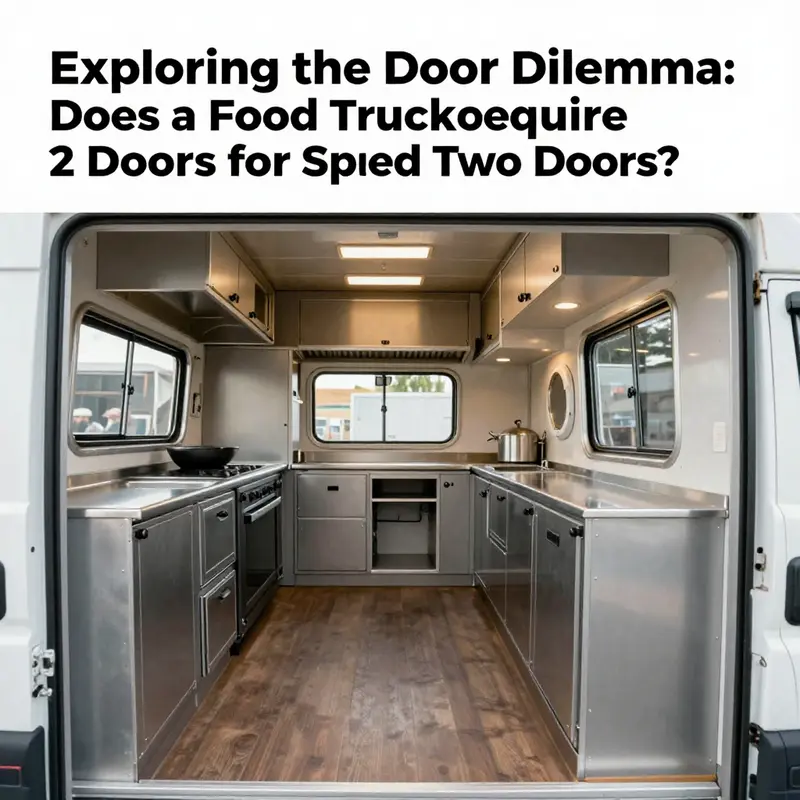
Design choices about access points determine how a food truck breathes, moves, and serves. Whether a truck needs two doors is not decided by a rule. It is decided by how the space will be used, how people will move through it, and what the operation must deliver every day. This chapter examines those decisions and their practical consequences for workflow, safety, climate control, maintenance, and long-term adaptability.
A food truck is a compact kitchen on wheels. Every square inch has purpose. Doors are more than entryways. They are tools for zoning. They influence how staff flow, where equipment sits, and how quickly orders leave the window. A single service door and window arrangement can work well for small menus and one- or two-person crews. It reduces weight and complexity. It also concentrates activity in a narrow corridor. That concentration can slow service during peaks and raise safety risks when handlers and customers gather in limited space.
Adding a second door changes that dynamic. A rear or side staff door separates service traffic from kitchen operations. It creates distinct zones for prep, cooking, and delivery. Staff can receive deliveries, move trash, and access storage without crossing the customer area. That reduces congestion at the service window and keeps hot or sharp equipment away from the public side. In events with high footfall, this separation alone often improves throughput by minutes per order, which compounds into many more orders served each shift.
The benefits of dual access reveal themselves in three practical ways: operational flow, environmental control, and maintenance access. Operational flow improves because tasks are routed. One door becomes the customer interface. The other becomes the logistics door. Staff can stage ingredients and restock inside without interrupting cooks. It also allows a dedicated entrance for staff at the start and end of a shift, improving safety and speeding handovers.
Environmental control matters because cooking generates heat, grease, and steam. A second door helps create cross-ventilation. When paired with properly sized exhaust hoods and vents, a rear or side door reduces internal temperatures and prevents hot spots near windows. Cooler kitchens protect staff, prolong equipment life, and reduce the load on air conditioning. This is especially important for trucks that use heavy equipment such as fryers, griddles, or combination ovens.
Maintenance access is less glamorous but equally important. Quick access to refrigeration units, generators, plumbing connections, and waste compartments minimizes downtime. A rear door that opens to a small service platform or to ground-level access can make repairs faster. That reduces lost revenue and avoids service interruptions during busy days.
Not every operation needs those advantages. A tightly focused menu and low traffic may favor a single door. The trade-off is tighter choreography inside the unit. Operators must design with efficient reach, vertical storage, and multi-use surfaces. A single-door setup often benefits from folding or sliding features, compact refrigeration units, and careful placement of sinks and waste bins to keep the main passage clear.
Door placement also interacts with vehicle length and curbside realities. In some markets, trucks park at the curb with customers served from the sidewalk side. A side service window paired with a rear staff door maximizes customer access while keeping deliveries out of the way. In other cases, trucks operate from event lanes or festival rows where rear access is impractical. Knowing where the truck will operate most often should shape the door plan.
Safety and code compliance are non-negotiable. Local health and safety codes influence the number, size, and placement of doors and windows. Emergency egress, clearances around cooking equipment, and access for inspectors are commonly mandated. Consult regulations early and design doors to meet them without last-minute alterations. For practical guidance on navigating regulatory requirements, refer to this resource on navigating food truck industry regulations.
Door type and hardware are equally important as door count. Hinges, latches, and seals determine durability in mobile environments. Heavy-gauge hinges resist wear from constant opening and closing. Corrosion-resistant finishes matter in coastal or high-humidity regions. Self-latching and locking handles add security when the truck is unattended. Consider door seals that prevent grease and smoke from escaping into customer areas or seeping into service windows. These details maintain the integrity of the interior layout and the comfort of staff.
Workflow-driven layouts benefit from thoughtful door sizing and placement. A wider staff door simplifies moving bulky crates and trash bins. A sliding door can save clearance space and reduce the risk of striking equipment or people. If the truck will host more than two staff on shift, a second door wide enough for two people to pass improves flow. For operations that expect frequent restocking, a dedicated service hatch or smaller utility door to refrigeration or storage can be a useful compromise between a single-door simplicity and the full separation of a dual-door configuration.
Consider also the effects on service speed and customer perception. When customers wait behind a single narrow window while staff move in and out, the experience can feel crowded. Separate doors present a cleaner image. Customers see a professional separation between customer service and kitchen work. That perceived professionalism can increase customer trust and willingness to wait in line. For brand-conscious operations, the difference is meaningful.
Space utilization decisions extend to interior ergonomics. A second access point allows designers to orient equipment so paths are short and tasks flow in sequence. Place refrigeration near receiving, prep areas near refrigeration, and cookline equipment arranged so plated items move straight to the service window. With two doors, a natural linear flow emerges: receiving to storage to prep to cook to service. This reduces unnecessary steps and keeps the work area organized.
There are also cost and resale factors. Installing a second professionally framed door adds weight and complexity. It can increase upfront costs for fabrication and fitting. However, kitchens that remain ergonomic and compliant retain more resale value. Prospective buyers often look for flexible layouts that can handle different menus. A design that allows conversion between single-door and dual-door usage can command a higher price at resale.
Adaptability matters for seasonal or event-based businesses. A truck that must pivot between lunchtime curbside in a downtown district and evening festival service benefits from multiple access points. For example, a rear door dedicated to receiving during festival setups keeps the service window free for queueing customers. During quieter weekday runs, that rear door can be locked and used only for maintenance. Designers who plan for modularity save time and avoid costly retrofits.
Finally, consider the human factors. Staff morale is affected by physical layout. Tight, obstructed workspaces increase stress and the likelihood of mistakes. Clear, unobstructed routes reduce fatigue and improve job satisfaction. A well-planned second door creates breathing room. It reduces collisions during rushes and gives staff a predictable path for entering and exiting the work area.
Every truck should be designed around measurable needs. Start by mapping typical shifts and service scenarios. Count staff, note peak times, and list required deliveries. Sketch how ingredients and trash will move in and out. From that map, determine whether a second door solves core bottlenecks or simply adds complexity. If the bottleneck is customer throughput at the window, consider a wider service opening or efficient POS placement before adding a second door. If the bottleneck is supplies or staff cross-traffic, a second door will likely deliver clear benefits.
In practice, many successful trucks blend approaches. They use a primary service window with a single staff door that includes a small, dedicated utility hatch for refrigeration access. Others install a full second door when their menu, crew size, or service volumes demand it. The decision should be evidence-based, not aesthetic. Observe typical service days. Measure how often staff must cross customer paths, and estimate time lost in those crossings. Those data points make the decision objective.
Ultimately, the question is not simply whether a food truck requires two doors. It is whether two doors will materially improve the truck’s ability to do its job. For many operations, a second door is a performance multiplier. For others, streamlined single-door designs deliver lower cost and sufficient efficiency. Evaluate trade-offs in light of workflow, climate control, maintenance, regulatory compliance, and resale value. A door is a strategic design element, and when placed with intention, it turns constrained space into an efficient, resilient kitchen.
For further reading on how truck body composition and access points support scalable industry projects, see Grace Holden’s design guide on food truck body specifications: https://www.foodtruckdesigns.com/food-truck-body-composition-specifications
Doors, Workflow, and Health Codes: When a Food Truck Needs Two Entrances
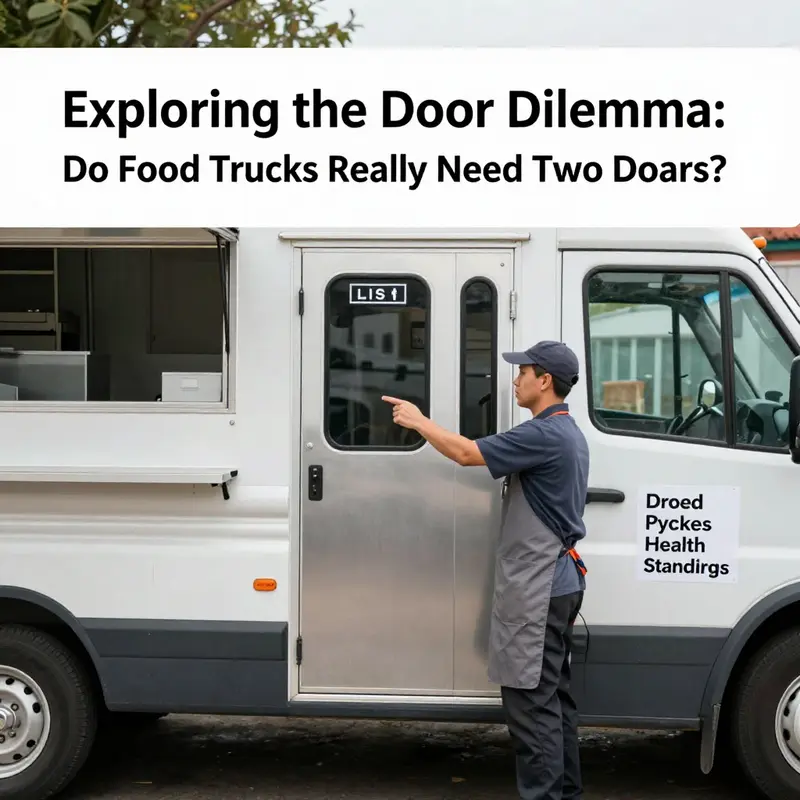
Does a food truck need two doors to satisfy health standards? The short answer is no. Regulations rarely mandate two doors for every mobile food unit. Instead, health authorities focus on functional outcomes: preventing cross-contamination, maintaining a one-way food flow, enabling safe egress, and ensuring sanitary operations. Those outcomes can be achieved with one door, two doors, or a combination of doors and service windows. The decision rests on design, operations, and local code interpretation.
Design reviewers and inspectors typically evaluate how a truck’s layout supports hygienic food handling. They look past door counts. Inspectors ask whether staff can move from clean zones to potentially contaminated zones without backtracking. They check if food, utensils, and packaging follow a logical path from storage to preparation, then cooking, then service. A single access point can support that path. So can multiple doors. What matters is the absence of cross-traffic between raw and ready-to-eat stages, and clear separation between customer and food-prep zones.
A common reason operators add a second door is to separate functions physically. With one rear or side door reserved for deliveries and staff entrance, and a front or side service window for customers, the risk of customer intrusion into the kitchen drops. Staff can receive ingredient deliveries without walking through the service area. Trash can be removed through a separate exit away from food prep. These practical gains improve sanitation and often simplify inspector approval. In small trucks, however, space may not allow separate doors. Owners then rely on strict operational controls: scheduled deliveries during off-hours, clear signage, and staff protocols that prevent cross-contact.
Emergency egress plays a second regulatory role. Fire and building codes, applied by local authorities, require safe exits from confined spaces. For many mobile units, a single door may be acceptable if it meets size and clearance rules and if additional emergency exits exist, such as an openable service window or a roof hatch. In other cases, codes demand a second dedicated exit. This requirement stems from safety, not hygiene. When planning doors, consult the fire marshal or the health department early. Meeting both health and safety requirements prevents costly retrofits.
Material and hardware choices for doors matter for hygiene and durability. Doors that open outward or slide reduce the risk of staff contact with the inner food-prep surfaces. Stainless steel or food-grade coated doors resist corrosion and are easier to sanitize. Hinges and latches must withstand repeated use and cleaning. In coastal or humid climates, corrosion-resistant hardware is essential. Self-closing mechanisms, magnetic seals, and tight-fitting thresholds prevent pest entry and limit heat loss from refrigerators. While not regulatory specifics, these features support the sanitary outcomes regulators seek.
Window service design often substitutes for an extra door. A well-placed service window can separate customers from the kitchen and satisfy food safety reviewers. The window should be large enough for safe service and for passing plated food without contamination. Staff should never turn their backs to cooking equipment to receive payments or interact with customers. If the window is the primary customer interface, plan staff movement so that deliveries and waste removal do not cross that area.
Handwashing access is a pivotal requirement that ties directly to door decisions. Health codes demand a conveniently located handwashing sink within the food-prep area. A door that forces staff to walk across customer zones to reach a sink undermines compliance. Position sinks so staff can access them without contaminating food surfaces. If a layout with one door makes this difficult, a second door or rearrangement of interior fixtures may be the simplest fix. The design must allow staff to wash hands immediately after handling raw food or waste.
Another consideration is temperature-controlled storage. Large refrigeration units often need service access that does not interfere with the main workflow. If the only access to a refrigerator is through the customer-facing door, the risk of temperature excursions and contamination rises. A separate access point for refrigeration, or an exterior service hatch, helps maintain food safety. This arrangement streamlines restocking and reduces the time doors remain open.
Operational realities also influence door choices. Trucks that serve high-volume events benefit from separate service and staff doors. Line management improves, and customer interactions are faster. Low-volume or niche trucks can succeed with a single well-managed opening. Consider staffing levels, menu complexity, and typical service environments when deciding. A truck that shifts between markets may choose modular door options that adapt to different settings.
Inspections are where theory becomes practice. Health inspectors look for clear separation between dirty and clean operations. They note whether staff movements create risk. If a single door results in repeated inspector comments about cross-contamination, retrofitting a second door could be necessary for continued approval. Conversely, if checkpoints for sanitation, handwashing, and food handling score well, an inspector may mark a single-door layout acceptable.
Permits and plan reviews are practical gatekeepers. During the permitting stage, local health departments often require detailed floor plans. These plans should show door locations, service windows, sink placement, and equipment layout. Submit clear, dimensioned drawings and explain operational procedures. If a plan shows a potential risk, reviewers may require modifications. Proactively addressing concerns—such as adding a separate delivery hatch or specifying self-closing doors—speeds permit approval.
Cost and maintenance are real trade-offs. Installing a second door means cutting into a vehicle shell, reinforcing frames, and adding hardware. That increases build costs and introduces another maintenance item. On the other hand, a second door can reduce labor time, limit contamination risk, and save money by avoiding fines or forced retrofits. Evaluate these trade-offs during the design phase, and consider lifetime costs, not just the initial build price.
Seasonal and mobile considerations matter too. Vehicles operating in cold climates need insulated doors and reliable seals to prevent energy loss. In hot climates, door placement should aid ventilation and heat management. Doors used for deliveries may be fitted with removable covers to block dust and pests when parked in dusty sites. Choose doors that are simple to seal and clean after each service.
Compliance is local. The FDA Food Code describes principles such as single-direction flow, separation of clean and dirty tasks, and accessible handwashing. Local health departments interpret and apply those principles. For precise answers, consult your local authority early. Where regulatory language leaves room for interpretation, showing a well-thought-out plan that meets the objectives—rather than the exact number of doors—will usually win approval.
Practical recommendations follow from these realities. Start your design with workflow diagrams. Map every staff movement from receipt to service and waste removal. Identify points where customer and staff traffic might intersect. Design doors and windows to minimize those intersections. Specify durable, easy-to-clean door materials. Ensure that handwashing sinks are accessible without crossing primary food-prep zones. Plan for emergency exits that satisfy fire safety authorities. Finally, keep documentation of your operational procedures and cleaning schedules to demonstrate compliance during inspections.
A second door is a tool, not a mandate. It solves specific problems: separating deliveries, creating a distinct customer interface, and providing emergency egress. When those problems exist, two doors often become the most efficient solution. When space, cost, or operational style make a single door preferable, thorough procedures and smart layout choices will meet health objectives. The deciding factor is whether the chosen design reliably prevents cross-contamination, provides safe staff movement, and meets local safety codes.
For a deeper look at the regulatory principles that shape these decisions, review local plan-review guidance and the national framework commonly used by local agencies. Helpful planning resources are available that explain how layouts and equipment support compliance. You can also explore practical guidance on managing regulatory complexity in the industry by consulting resources like navigating food truck industry regulations. For federal policy detail, see the FDA Food Code which outlines the sanitation and operational goals health departments enforce: https://www.fda.gov/food/fda-food-code/2022-food-code
Two Doors, One Mission: Reimagining Door Configuration for Efficient Mobile Kitchens
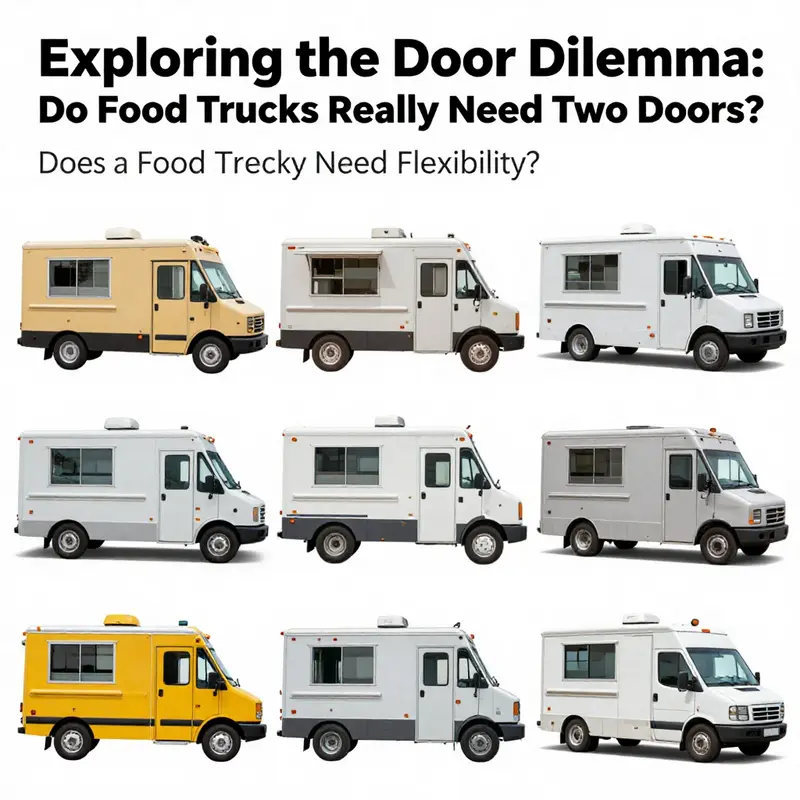
Doors in a food truck are more than gateways; they are essential elements of a compact, high-stakes workflow. There is no universal mandate that every truck must have two doors. What matters is whether the door configuration supports a robust, repeatable, safe, and clean operating rhythm that aligns with the menu, the staffing, and the environments where the truck operates. In practice, many operators discover that two doors can unlock a faster, smoother service, especially in busy environments. A front service door or window serves as a welcoming portal for customers, while a back or side door creates a dedicated channel for kitchen activity, deliveries, and access to refrigeration and storage. When these two channels are designed with discipline, they reduce the friction that often bogs down service lines: customers wait for orders that are not yet plated; staff must cross through a crowded zone to fetch ingredients; and waste or cleanup tasks interrupt the flow of orders. The doors, properly planned, become a form of choreography rather than mere openings. They guide movement so that parallel tasks take place side by side without colliding in a single congested doorway.
To understand why two doors can be a strategic asset, it helps to hold a mental image of the typical food-truck operation as a small, modular workshop on wheels. A front door with a service window creates a controlled interface for customers. Behind that interface, cooks line up their workstations along a corridor-like layout, with the range, ventilation, prep table, and cold storage arranged in relatively close proximity to minimize transit time. A second door, positioned at the rear or along a side wall, connects the kitchen to the cold box, dry storage, and waste area. This second doorway acts as a direct artery for staff, reducing the need to weave through customer traffic to fetch ingredients or to deposit finished plates. The result is a cleaner kitchen zone, less crowding in the service area, and a clearer boundary between front-of-house and back-of-house activities. The customer-facing window remains the main point of contact, but the back door becomes a line-level convenience that speeds up routine tasks and limits cross-traffic, a feature that matters as orders pile up during peak periods.
The practical implications extend beyond speed. Two doors can improve the quality of service by enabling better separation of tasks. When a single doorway carries both customer interaction and back-of-house movement, staff must frequently negotiate a shared space, which increases the likelihood of delays and near-misses. A dual-door layout, by contrast, creates a natural corridor: one door faces the customer, fostering a predictable exchange of goods and payment, while the other door opens into the kitchen area where ingredients are prepped, cooked, and organized for pickup. This separation not only accelerates throughput but also reinforces safety practices. With proper zoning, cooks can keep hot surfaces and cold storage within their own controlled zones while customer traffic stays in its lane. This reduces the chances of contamination or cross-contact, which is paramount in health-conscious food service and in environments with rapid customer turnover. It also provides a more intuitive path for staff training. New hires can be oriented to the two-door system as a straightforward workflow: greet and take orders from the front; move ingredients and finished items through the back door; and maintain a clean, orderly space around both entrances.
Of course, the upside of two doors comes with a set of trade-offs. Space inside a mobile kitchen is precious, and every doorway eats into usable square footage, reduces the width of prep lanes, and demands careful weather sealing to maintain a stable internal climate. In coastal or humid climates, doors become points of entry for moisture, salt spray, and corrosion; thus, the hardware must be chosen with durability in mind. Hinges, latches, and auto-locking devices should be designed to withstand frequent use, exposure to the elements, and the constant vibration of a vehicle in motion. The right hardware contributes to reliability and reduces downtime caused by misaligned doors or jammed seals. The aesthetics and feel of the service area can also be affected by door placement. A double-door configuration demands precise alignment with the service window and the kitchen line so that the doors open away from each other in a way that minimizes congestion and interference. A poorly located door can become a source of confusion, forcing staff to navigate a tight corner or squeeze past a cooking surface to reach a needed item.
Another important dimension is the role of the menu and the scale of operations. For menus with many components or frequent cross-station transfers, two doors can support a smoother, more modular workflow. A broader menu often requires rapid access to multiple stations, containers, and ingredients. In such cases, the front door is the face of the operation, while the back door acts as a backroom passageway—an extension of the kitchen that keeps the action out of the customer space. A single, well-designed door might suffice when the menu is compact or when the service model emphasizes a single-serve, high-turnover pattern. In a dessert truck or a coffee-focused unit, for example, a single door paired with an efficient pass-through can deliver high reliability without overbuilding the floor plan. The key is to tailor the layout to the actual flow of work, rather than to adopt a configuration simply because two doors seem like a prestigious or standard feature.
The regulatory frame around door configuration emphasizes safety, sanitation, and environmental control more than a rigid architectural rule. Health and safety guidelines typically require that doors be easy to clean, maintain proper separation between raw and ready-to-eat areas, and provide safe egress in emergencies. They do not mandate two doors as a universal requirement. Instead, they reward thoughtful design that prevents cross-contamination, maintains proper refrigeration temperatures, and ensures quick, safe cleaning and sanitization. In addition to sanitation considerations, weatherproofing and energy efficiency become practical concerns. Doors are part of the thermal envelope of a truck, and a leaky seal can undermine insulation, forcing equipment to work harder to maintain temperatures. This is especially true in extreme climates where a malfunction or poorly sealed door can cause equipment failure or food spoilage. Operators should consider door materials with corrosion resistance, satin-finish stainless surfaces that are easy to wipe down, and gaskets that hold up to frequent opening and closing, all chosen with the truck’s typical operating environment in mind.
The decision to pursue a two-door configuration should therefore be anchored in real-world planning rather than theoretical speculation. It starts with a careful assessment of peak throughput. If your model promises parallel tasks at or near capacity—such as taking orders while others prepare and plate—two doors may yield measurable gains in speed and consistency. If, however, your crew is small and your menu is simple, a single door, complemented by a robust pass-through and a layout that minimizes walking distance, can deliver reliable service with fewer moving parts to maintain. The most critical element is alignment: the doors, the kitchen zones, and the service window must be designed so that the handoffs flow smoothly, like dancers following a practiced routine. If the staff training reflects that routine, the doors become a reliable stage for a predictable performance rather than a source of friction.
For operators eager to connect theory with practice, there is value in consulting design guides and real-world case studies that illuminate how different layouts perform under stress. The broader literature on mobile kitchen design consistently notes a link between workflow optimization and door configuration. In any design discussion, a door is viewed through the lens of throughput, sanitation, safety, and climate control. A two-door system often shines when the service model is built around a steady cadence of orders and a kitchen line that can operate with minimal cross-traffic. Yet the best choice always rests on the specifics: the truck size, the available chassis, the local regulations, the climate, and the staffing pattern. The answer, then, is situational rather than universal. A door configuration is a strategic variable that should be tested, measured, and adjusted as the business grows, rather than a fixed attribute to be decided at the outset. In closing, the practical takeaway remains clear. A food truck does not inherently require two doors. The decision hinges on the operational model, space, and the degree to which the doors contribute to a safer, cleaner, and faster service. If the goal is to maximize throughput during peak demand while preserving food safety and ease of cleaning, a well-planned two-door configuration can be a powerful asset. If the line is modest and the menu lean, a single door paired with a strong pass-through and a disciplined kitchen layout might deliver the most efficient result with fewer qualifications and maintenance demands. The core principle is straightforward: treat door configuration as an engineering problem within the service design. When you conceive of doors as workflow enablers rather than optional embellishments, you can tailor your truck to your service model, the places you serve, and the pace at which you expect to grow—whether at a bustling city corner, a crowded festival, or a quiet campus setting. The two-door approach can adapt to different contexts if tested and refined. For readers seeking a deeper dive into the technical nuances behind door design, practical perspectives tied to layout decisions and everyday operations exist in design guides that cover door hardware, hinges, and service interface considerations. The takeaway is simple: use door configuration as a deliberate design lever, not a decorative feature, and iterate as the business evolves.
Final thoughts
In the end, whether a food truck requires two doors boils down to a mix of operational efficiency, thoughtful design, adherence to regulations, and the unique identity of each business. For food truck owners, event planners, and food enthusiasts alike, understanding these factors can lead to smarter decisions that enhance service and customer experiences. Ultimately, the right number of doors—be it one, two, or more—should align with the specific operational needs and visions for success in the exciting realm of mobile cuisine.