The vibrant food truck scene isn’t just about mouthwatering dishes and lively gatherings; it’s also a microcosm of diverse employment opportunities. From the dedicated kitchen team working behind the scenes to the food truck managers overseeing the operation, the financial landscape of food truck employees varies widely. Understanding how much food truck employees make is crucial for event planners, corporate teams, local organizations, and food enthusiasts eager to connect and collaborate. Throughout this journey, we will dive into hourly wages, examine specific roles and their salaries, and uncover the various factors that influence compensation within this exciting industry.
Behind the Window: The Real Hourly Pay of Food Truck Employees
How much do food truck employees make? The short answer depends on role, location, and how the truck runs. A fuller answer reveals patterns that explain why some crew members earn close to minimum wage while others bring home rates that rival traditional restaurant positions. Recent aggregated data shows the average hourly pay for food truck staff in the United States is about $20.18, a figure roughly 39% above the national average. That headline number combines many different roles and experience levels. When you look closer, the variation tells a practical story about work, responsibility, and opportunity on wheels.
Across the mobile food sector, wages reflect the balancing act of small teams, fast service, and variable sales. At the lower end, a Kitchen Team Member averages about $12.26 per hour. These employees often handle washing, simple prep, and maintenance. Their jobs are essential, but they usually require less formal culinary training. Moving up, general Cooks average around $15.32 per hour, while Prep Cooks average $16.97. Line Cooks typically earn about $18.44 per hour, reflecting their responsibility for running stations during peak service. Food Truck Managers command the highest hourly rates in the roster, averaging $19.62 per hour. These figures come from job posting data collected over the past 36 months, offering a current snapshot of compensation across the industry.
Understanding those numbers requires context. Food truck work commonly involves compressed teams, long shifts, and a high pace during short service windows. That intensity is a major reason pay can be competitive. A single cook often manages multiple stations. Cross-training increases an employee’s value and can justify higher wages. Managers in small operations also handle ordering, scheduling, compliance, cash handling, and sometimes marketing. Those additional tasks make the managerial rate closer to a small-business supervisor wage than a line cook’s wage.
Location and demand shape pay dramatically. Trucks operating in big cities or tourist hotspots typically process higher volumes. High foot traffic, events, and office-lunch crowds boost hourly sales and the ability to pay better wages. Conversely, trucks in less populated areas often face limited daily customers and constrained payroll budgets. Local minimum wage laws matter, too. In regions with higher mandated wages or strong labor markets, truck owners must offer more competitive rates to attract staff. The cost of living in a metro area filters down to pay expectations. An $18 hourly rate may feel generous in one town and barely livable in another.
Shift timing and event work also affect earnings. Special events, festivals, and late-night shifts can lead to premium pay. Many trucks offer extra dollars for weekend or evening work. Tips become a significant variable as well. Unlike many sit-down restaurants, food trucks often rely on cash transactions, and tipping behaviors vary by market. In busy urban centers, tips can meaningfully augment hourly wages. In markets where digital payments dominate, tip capture may be lower unless the truck actively solicits or facilitates tipping.
Experience, certifications, and culinary skills also influence pay. A worker with solid grill experience, speed, and familiarity with portable-equipment constraints is more productive than a novice. Certifications like ServSafe or local food handler permits signal reliability. Those credentials often translate to higher starting wages. Employers value employees who can manage inventory, minimize waste, and keep ticket times short. Staff who can upsell, manage peak flows, and help streamline prep make the truck more profitable. Profitability directly affects how much owners can afford to pay.
Beyond wages, many food truck jobs offer nonwage benefits that matter to employees. Flexible hours attract people seeking part-time work or second jobs. Exposure to event work can also lead to networking opportunities in catering and hospitality. However, formal benefits such as health insurance, retirement plans, and paid leave are less common in mobile food operations. Owners with multiple trucks or stable revenues sometimes provide limited benefits. For most employees, the predictable advantage is flexible scheduling and the chance to build practical culinary experience quickly.
When assessing a job offer or negotiating pay, workers should consider more than the posted hourly rate. Ask whether tips are pooled or kept individually. Clarify whether overtime applies and how it’s calculated. Understand who covers uniform costs, transportation for off-site events, and whether meal discounts exist. If the truck staffs big events, determine whether travel time is paid and whether per diem applies. Small differences in policy can add up to significant take-home pay variations.
Owners and managers can use wage strategy to attract skilled staff while maintaining margins. Cross-training employees to cover multiple roles reduces the need for extra hires. Offering incentive pay tied to sales or upselling can align worker goals with profitability. For example, short-term bonuses for meeting weekend sales targets or small commissions on add-ons encourage staff to increase revenue. Transparent scheduling and predictable pay help retain crew who might otherwise prioritize stability elsewhere.
For employees aiming to increase their hourly earnings, practical moves work well. Cross-train across stations. Learn basic management tasks, such as inventory control and simple bookkeeping. Work toward certifications that local health departments or clients respect. Volunteer for festivals and peak shifts, which often pay higher. Track personal efficiency and ticket times; data-driven conversations about raises make negotiation more credible. Shifts that demonstrate leadership or consistent sales growth put employees in line for promotion to manager roles or higher hourly tiers.
At the managerial level, pay reflects administrative responsibility and the hidden costs of running a mobile kitchen. Managers not only cook, but they also forecast demand, manage vendor relationships, schedule staff, and ensure compliance. Those duties justify the higher hourly rate and, in some cases, salaried arrangements. For owners, hiring a manager typically reduces oversight burdens and increases operational stability. That reliability often offsets the added payroll cost.
It helps workers to understand the owner’s perspective. Many truck owners report annual incomes between $40,000 and $60,000. Those figures vary widely with location, menu pricing, and operational efficiency. Owners must balance payroll with fuel, permits, food costs, and maintenance. If overheads spike, wages can stall. When business is brisk and efficiency improves, owners can be more generous. Transparent communication about sales trends and the potential for bonuses fosters employee trust and motivates higher performance.
Wage comparisons across the broader foodservice industry show food trucks can be competitive, especially for sharper-skilled staff. The compressed staffing model creates opportunities for higher hourly pay than some entry-level dining positions. But that competitiveness is not universal. Trucks that rely on inexperienced staff or operate in low-volume markets may still pay near minimum wages. For workers evaluating multiple opportunities, consider total compensation: base pay, tipping potential, scheduling flexibility, and opportunities for skill growth.
Operational decisions can widen or narrow pay ranges. Menu complexity changes labor needs. A single-item menu optimized for speed reduces prep time and might require fewer skilled cooks, lowering wages. Conversely, a diverse menu with multiple stations demands specialized cooks and higher pay. Efficient prep systems and well-designed workflows cut labor hours per ticket, creating room for better wages. Similarly, strategic event targeting and higher-margin items improve revenue per labor hour, which supports wage increases.
For those who want a real-time pulse on pay trends, industry data sources provide updated insights. Job posting aggregators and salary pages track changes in regional demand and wage bumps. Checking these resources helps employees and owners benchmark fair pay. If you plan to make a career in the mobile food industry, use these numbers to guide training choices and negotiation strategies.
If you are an owner evaluating payroll choices, consider practical resources on financial planning for new truck operators. Thoughtful budgeting and cash-flow planning improve your ability to pay competitive wages and retain staff. For guidance on managing startup finances and payroll decisions, review a concise resource that covers essential planning strategies for new truck owners: financial tips for first-time food truck owners.
For the most up-to-date salary figures and detailed breakdowns by position and region, consult comprehensive datasets that track food truck staff salaries across the United States. These sources show current averages and the range for each role, helping guide fair wage decisions. (External reference: Indeed’s food truck staff salary data provides ongoing updates and regional detail: https://www.indeed.com/salaries/food-truck-staff-salary.)
Inside the Pay Window: What Food Truck Employees Earn and Why It Changes
Food truck work pays differently than a restaurant job. The kitchen is smaller, hours are often irregular, and income mixes wage, tip, and occasional bonuses. For an employee deciding whether to join a truck crew, those differences matter. They explain not just how much money appears on a paycheck, but how stable that paycheck will be, how quickly earnings can grow, and what trade-offs exist between cash and security.
Across the United States, the typical food truck staff hourly rate sits near $17.04, roughly 18% higher than the average for all occupations. That headline figure masks a wide range. Entry-level kitchen team members earn about $12.26 per hour, while prep cooks are closer to $16.97. Line cooks commonly make around $18.44, and managers can reach roughly $19.62 per hour. Companies with stronger branding, targeted routes, or higher-volume events may pay more. One example shows a company average near $51,595 annually, about 9% above the national average for similar work. Those figures illustrate how roles and employer strategy shape pay.
Knowing these averages helps, but turning them into a realistic expectation requires context. Location matters first. Urban cores with high foot traffic and expensive cost-of-living often pay more per hour. Trucks in downtown districts or near universities can sell more quickly, generating larger tip pools and enabling owners to offer higher base wages. Conversely, trucks in rural or low-traffic locations rely more on contracted events and slower daily sales, which restrains pay.
Experience and skill level are the next levers. Someone who runs the line efficiently, manages multiple orders, and keeps food quality consistent is more valuable than someone learning to juggle a grill and a fryer. Prep cooks with knife skills and speed reduce food waste. Line cooks who can maintain a steady ticket time during rushes increase throughput. Those skills are measurable and negotiable. Training and cross-training raise an employee’s worth and often lead to higher hourly rates or manager-track promotions.
Tips and incentive structures change the arithmetic significantly. Some trucks pool tips and divide them evenly among staff. Others split tips based on role, hours worked, or point-of-sale tracking. A truck that keeps a transparent tipping policy makes earnings predictable. When tips are substantial, a base wage can be lower; when tips are thin, wages need to compensate. Peak seasons—festivals, summer lunch rushes, and holiday events—can create temporary windfalls. Labor shortages during those seasons often push base wages higher as owners compete for reliable crews.
Company-specific benefits also shape compensation. A truck that offers paid time off, health stipends, or rapid promotion paths may pay slightly less hourly but deliver greater total rewards. Branded and franchise-style mobile operations may provide steady routes, marketing support, and a predictable schedule, enabling higher annual salaries for employees. Independent trucks that rely on the owner’s local network may pay less in base wages but offer flexible hours and profit-sharing opportunities.
Beyond pay, non-monetary factors affect satisfaction and long-term earning potential. Flexible schedules allow employees to work around other commitments. The chance to learn management, sourcing, and menu engineering can lead to chef roles, catering positions, or ownership. For many crews, the social environment and variety of work are part of the compensation package.
For owners and managers, setting wages is a balancing act. Labor costs typically account for 25–35% of revenue in the food business. Trucks must price menus to cover food cost, rent or permit fees, vehicle upkeep, and labor. Raising wages without increasing efficiency risks squeezing profit margins. Successful operators track labor productivity—sales per labor hour—and adjust routes, menu complexity, and staffing to keep labor costs sustainable while remaining competitive in the job market.
Legal and administrative requirements also constrain pay. Local minimum wages, overtime rules, and mandatory benefits vary by state and city. Employers must report tips properly and handle payroll taxes, worker’s compensation, and recordkeeping. Misclassification of workers as independent contractors when they function as employees can create liabilities. These compliance costs influence how much an employer can pay and whether they prefer a higher base wage or more generous tip policies.
Employees should consider tax and reporting realities. Tip income is taxable and must be reported if it exceeds a set threshold. Employers with tip credit policies must follow specific rules to ensure base wages meet legal requirements. Understanding how tips are reported and pooled helps workers plan and avoid surprises at tax time.
Practical steps to improve earnings are straightforward. Cross-train between positions to become more indispensable. Seek shifts during high-traffic events and festival seasons. Learn the point-of-sale system and suggest efficiency improvements. Those who can run a shift, manage inventory, or take on light administrative duties often move to supervisory or managerial pay tiers. Negotiation is possible; come to conversations armed with metrics—average ticket time improvements, waste reduction, or consistent sales data—that show your value.
For trucks hiring staff, messaging matters. Advertising a competitive hourly rate along with transparent tip policies attracts skilled applicants. Offering predictable schedules and clear advancement paths reduces turnover. Some owners supplement wages with performance bonuses tied to daily sales goals or customer satisfaction metrics. These bonuses align incentives and motivate crews without permanently inflating base labor costs.
Seasonality and gig work overlap in food truck employment. Some employees combine truck work with catering gigs, pop-ups, or part-time restaurant shifts. That flexibility can increase annual income but complicates scheduling and tax reporting. For those considering food truck work full-time, tracking average weekly hours and factoring in off-season slowdowns gives a more accurate annual income estimate.
How does owner income relate to employee pay? Owners often report incomes between $40,000 and $60,000 annually. That range reflects broad variation in location, menu pricing, operational efficiency, and event bookings. While owner income is separate from employee wages, it indicates the financial ecosystem of the truck. Higher owner revenue generally allows for higher employee pay. Conversely, struggling trucks must find ways to offer attractive non-monetary benefits or efficient schedules to retain staff.
Looking ahead, pay trends will continue responding to labor market dynamics. When local markets tighten and reliable staff are scarce, wages rise. When foot traffic rebounds, tip pools expand, and productivity increases, total compensation improves. Trucks that invest in efficient workflows, clear roles, and worker training tend to sustain higher pay and lower turnover. In many markets, food truck pay already equals or exceeds comparable restaurant roles when tips and seasonality are considered.
There are practical negotiation tactics for employees. Ask for a trial period with a transparent wage and tip agreement. Propose a tiered wage structure tied to certifications or time-in-role. Volunteer to train new hires for a small supervisory premium. Keep a log of contributions—tickets processed, mistakes avoided, or shifts covered—and present it during reviews. Employers often respond to clear, evidence-based requests rather than general complaints.
For managers making hiring decisions, think long term. Competitive pay reduces turnover and training costs. Implement a consistent tip policy and communicate it clearly. Use software to track sales per labor hour and adjust staffing. Consider non-wage perks like flexible time off, referral bonuses, or occasional profit-sharing after profitable events. Those investments pay dividends in service quality and employee retention.
Finally, stay informed. Wage data evolves, and local regulations change. Consult reputable sources for up-to-date occupational data and regulatory guidance. For broad industry statistics and occupational outlooks, the U.S. Bureau of Labor Statistics is a reliable resource: https://www.bls.gov/ooh/.
If you are an aspiring truck employee, focus on skill development, understand tip policies, and evaluate total compensation, not just the hourly rate. If you manage or own a truck, balance competitive pay with operational efficiency and legal compliance. Doing so will keep your crew motivated and your operation profitable.
Wheels, Wages, and the Market: How Location and Role Shape What Food Truck Staff Earn
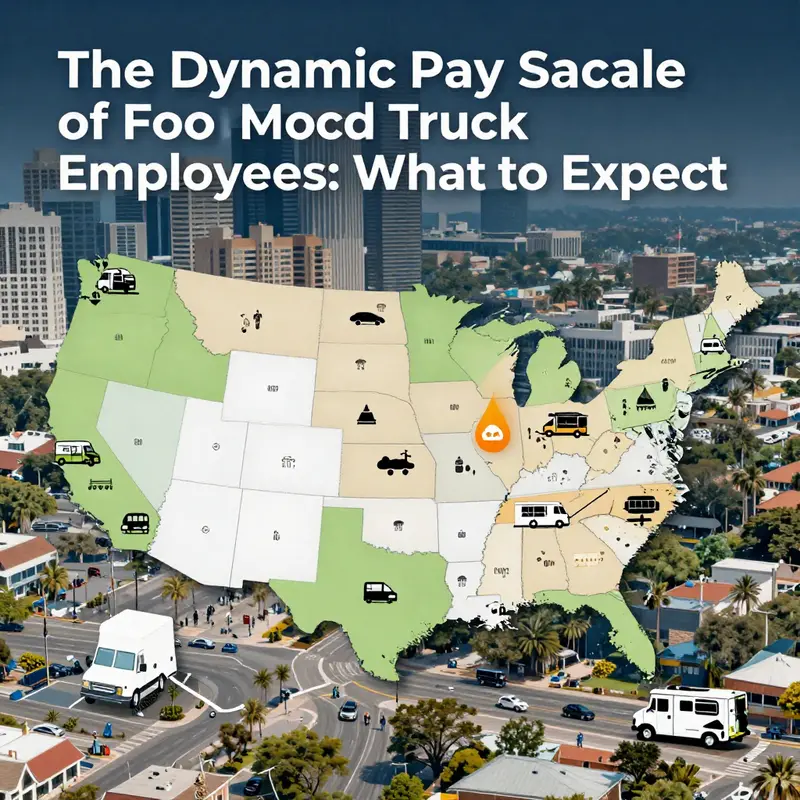
Salaries in the food truck world do not settle into a single number. They drift with the wind of location, the levers of the business, and the demands of the job. Across the United States, data from labor markets show a broad spectrum of hourly pay for food truck staff, reflecting both the practical realities of day-to-day operations and the broader economics of the cities where trucks park and serve. The latest figures place the national average for food truck staff around the high teens per hour, with notable variation by role and by the type of operation. For a full-time worker, that translates into a modest annual figure that can be markedly different depending on how many hours a truck operates, how predictable those hours are, and whether the operation provides additional benefits or incentives. This chapter examines how location, truck type, and job responsibilities interact to shape the wages earned by people who keep the wheels turning and the orders flowing in a mobile food economy that is both resilient and highly local in character.
A first lens to consider is the simple arithmetic of the job across the country. On average, reported wages for food truck staff hover in the upper teens per hour, with a substantial chunk of the workforce earning near or above the mid-to-high teens. When you multiply by a typical full-time schedule, the annual picture aligns with figures in the low to mid-thirties thousands, though a single truck’s calendar can stretch the math in either direction depending on peak seasons, event calendars, and hours of operation. These numbers reflect a market that is often more fluid than a stationary restaurant, where the rhythm of the day is tied to street traffic, farmer’s markets, festivals, and nightlife. The mobile format creates both flexibility and volatility: workers may find themselves in high-demand zones on weekends and off-peak periods during weekdays. The net effect is a wage landscape that rewards those who can align their hours with when customers want to buy.
Location stands as the most conspicuous driver of pay disparities. In major metropolitan hubs where demand and competition for workers are intense, wages tend to rise to meet the elevated cost of living and the higher operating expenses that come with crowded urban streets. In cities like New York, San Francisco, and Los Angeles, it is not unusual for experienced staff to earn above twenty dollars an hour, particularly for roles that demand skill and speed in a crowded service environment. In tight labor markets there is also a premium for reliability and consistency; trucks that demonstrate steady customer flow and strong turnover may justify higher starting pay or more generous shift differentials to keep experienced hands on board. Conversely, in smaller towns or rural markets, where cost of living is lower and competition for hours can be thinner, starting wages and average pay tend to align closer to the national average, occasionally dipping below it for less experienced roles. In these environments, the same truck may recruit from a smaller pool of workers, which can impact scheduling and retention as demand fluctuates seasonally or with local events.
The type of food truck itself also shapes pay, sometimes in nuanced ways that reflect the economics of a given concept. Premium or specialty trucks—those offering gourmet or artisanal fare, plant-forward cuisine, or unique cultural offerings—often operate with higher price points and, by extension, healthier margins. This financial cushion can translate into larger payroll budgets, allowing for above-average wages to attract and retain talent who are capable of delivering high-quality, consistent product in a fast-paced setting. The math becomes a circle: better margins enable higher wages, which in turn attract staff who can sustain the premium experience that commands those margins. In contrast, trucks serving more basic fare—with tighter price points and thinner margins—may rely on lean staffing and more modest wage scales, especially in markets where consumer price sensitivity is high and competition from brick-and-mortar operations is intense. The operational model matters as well: a truck that routinely handles a steady stream of lunch crowds in a dense downtown corridor may offer different wage dynamics than one that operates mainly at weekend festivals in a semi-rural region.
Job role and responsibility are another axis along which pay diverges. Within the crew, the most junior positions, such as kitchen helpers or entry-level food prep, tend to be on the lower end of the wage spectrum. In the data that has accumulated over recent years, a kitchen team member often earns in the lower range, while more specialized kitchen roles can push wages higher. For example, a prep cook generally earns more than a basic kitchen aide because of the skill set and reliability required to prepare ingredients and line up the day’s mise en place. Line cooks, who manage more complex cooking tasks and output under time pressure, command higher wages still. Finally, management roles—those that oversee operations, scheduling, inventory, and customer experience—tend to sit at the top of the hourly ladder among the front-line staff. The same underlying demand that pushes location-based wage floors also defines the upper envelope for managerial wages, especially in trucks that operate at higher volume or in markets with sophisticated customer expectations.
A closer look at the numbers helps illuminate how strongly these factors play out. The average wage across the sector sits near the mid-teens to low twenties per hour, which, when translated into annual income for a full-time worker, yields figures around the low-to-mid thirty thousand range. This is a generic portrait; the real picture becomes clearer when you map earnings to a pair of practical realities: hours and responsibilities. A line cook in a busy urban truck who clocks extended evening shifts and weekend peaks may push past the average for their role, while a prep cook or kitchen helper working more predictable, limited hours in a smaller market may fall below that line. Managers, who shoulder the added burden of scheduling, labor compliance, and guest experience, frequently approach or surpass the higher end of the wage spectrum for frontline employees. These dynamics underscore a recurring theme: the more control a worker has over the quality and consistency of service, the greater the potential for higher pay.
How this translates for people choosing where to work is not simply a matter of chasing higher numbers. It involves weighing the total value proposition: the reliability of hours, the potential for tips or bonuses, the alignment with personal lifestyle, and the opportunities for professional growth. In urban centers, even when base wages rise, workers may face longer commutes, more intense work environments, and higher living costs. In smaller markets, the trade-off might be more manageable hours and a sense of steadier demand, but with fewer opportunities for rapid wage advancement or exposure to a wider range of culinary styles. For workers who want to grow, the path might involve moving from a kitchen support role into a more skilled cook position or stepping into a supervisory seat where decision-making and customer interaction become central. The route to higher pay, then, often runs through a combination of demonstrated skill, reliability, and willingness to work when demand demands it most.
From the operators’ viewpoint, the wage structure is a function of price, demand, and the cost of doing business. A truck owner must balance the need to attract capable staff with the imperative to manage operating costs, which include not only wages but also fuel, permits, insurance, maintenance, and the sometimes volatile rent for a curbside pitch or festival slot. In highly competitive locations, owners might offer higher starting wages or launch shift differentials to secure dependable teams amid a crowded field. In markets where the labor pool is thinner or where training costs must be absorbed for certain roles, higher wages can be a strategic investment. The premium for premium fare is not merely about the product on the plate; it is also about delivering a service experience that aligns with brand promises in a bustling street setting. A truck that proves it can maintain consistent quality and service during peak periods may justify a higher payroll in exchange for greater customer satisfaction, faster line turnover, and repeat business that sustains margins.
One practical takeaway for workers is clear: mobility can be a powerful lever. If you are flexible about where you work and the hours you take, you can position yourself for higher pay in the right markets or with the right type of truck. For example, a worker who is willing to operate in a high-demand urban corridor during lunch and dinner rushes may see larger earnings opportunities than someone who sticks to a limited, non-peak schedule in a smaller town. Likewise, pursuing roles with greater responsibility—such as lead cook or shift supervisor—can yield wage gains that outpace simple hourly increases over time, especially as those roles also position a person for supervisory experience that is attractive to other employers.
To connect the dots between location, type of truck, and job role, think of the wage landscape as a living map rather than a fixed chart. The map shifts with changes in consumer demand, the scale of events, and the competitive landscape. When a city hosts a major festival or a seasonal dining trend spawns a cluster of premium trucks, wages can rise as operators compete for a smaller pool of highly skilled staff. When margins tighten, the same operators may tighten wage scales or adjust hours to sustain a viable operation without compromising service quality. For workers, this means that staying attuned to local market conditions and actively seeking opportunities in environments that reward skill and reliability can make a material difference in earnings over the course of a career in the mobile food sector.
The broader takeaway from this analysis is that pay in the food truck sector is not a single metric but a constellation of factors that interact in meaningful ways. Location, truck type, and specific job responsibilities each carry weight, and their combined effect defines the daily reality for most employees. The numbers available from labor market data provide a useful guide, but the story behind those numbers is dynamic and grounded in real-world constraints and opportunities: the costs of renting space, the costs of ingredients, the costs of labor, and the ever-present question of how to deliver value to customers in a way that sustains both the business and the people who keep it moving. If you want to explore more of the current wage landscape, including how wages are shaping up in real-time across different roles and regions, you can read up on the latest salary data and trends from Indeed, which aggregates thousands of postings to reflect market shifts over time. You can also explore deeper into how operators plan their staffing around location and concept by examining resources related to choosing the right food truck model, which highlights how strategic choices about truck type and market focus can influence not only menu and branding but also the compensation structure that supports a capable, motivated team. See the internal reference on choosing the right food truck model for more on how concept selections intersect with staffing needs and wage expectations.
In sum, the pay landscape for food truck employees is shaped by a triad of forces: where the truck operates, what kind of cuisine and service it offers, and what job responsibilities a team member assumes. Each factor nudges the compensation in different directions, and the interplay among them creates a spectrum rather than a single price tag. Workers who understand this spectrum can navigate toward roles and markets that align with their goals, while operators who balance margins with wages can sustain a team that not only survives but thrives in a highly competitive on-the-street economy. For anyone weighing where to start or how to advance in this field, the path is as much about choosing the right market and concept as it is about mastering the craft on the kitchen line.
External resource: For ongoing, real-time wage data across food truck roles, see the Indeed salary page on food truck employee salaries at https://www.indeed.com/salaries/food-truck-employee-salaries.
Final thoughts
In the captivating realm of food trucks, understanding the financial dynamics surrounding employee wages helps foster informed decisions. The hourly wages, diverse roles, and numerous factors influencing salaries come together to create a vivid picture of this culinary industry. Aspiring food truck owners, event planners, and food enthusiasts alike can benefit from recognizing these insights, paving the way for successful and collaborative ventures. Let’s celebrate the hardworking individuals bringing joy and flavor to our streets, knowing that their contributions are valuable and their earnings reflective of the creativity and effort they invest.