Food trucks have become a vibrant fixture in Australia’s culinary landscape, captivating food enthusiasts and communities alike. These mobile kitchens not only serve delectable dishes but also generate impressive revenues, especially when strategically located and well-managed. Understanding the potential earnings of food trucks can enlighten event planners, corporate teams, and consumers about their financial viability and the culinary experiences they bring. This article dives deep into the economic aspects of food trucks, revealing daily, monthly, and annual earnings, and exploring the factors that drive their income, to provide a comprehensive overview of how much food trucks make in Australia.
Rolling Revenue on the Move: Understanding the Daily Earnings Pulse of Australian Food Trucks
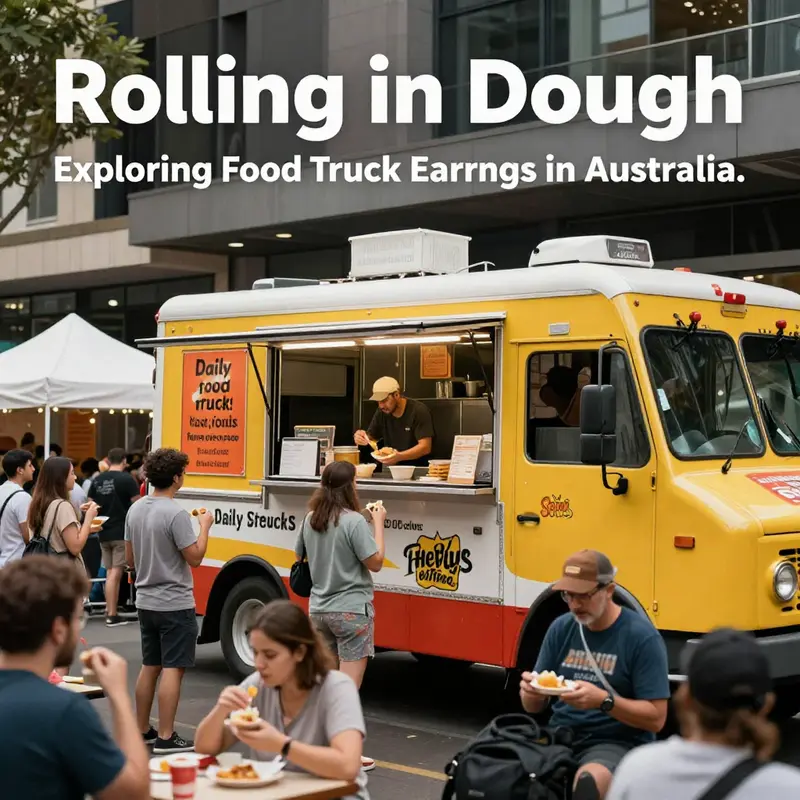
On a Friday afternoon, somewhere between a train station approach and a park shaded by gum trees, a food truck hums with activity. The counter clacks, the grill sings, and a line of customers forms with the rhythm of a coastal tide. It’s a small theatre of commerce, where the scene changes daily yet follows recognizable patterns: high foot traffic, competitive menus, and the weather casting a decisive shadow over demand. This is the daily heartbeat of the Australian food truck scene. Across coastal cities and inland hubs alike, operators measure success not by grand yearly projections alone but by the precise cadence of daily earnings. The broad truth is simple and practical: income is highly contingent on where you operate, what you serve, how long you stay open, and how well you adapt to changing tastes and crowd moods. When a truck stands at the right corner during peak hours, it can turn an ordinary weekday into a stretch of brisk turnover; when it misses the mark, the same corner can feel like a dry stage where sales wane with the weather or the competition. The numbers behind these experiences are as varied as the cities they inhabit, and they reveal a spectrum that is both alluring and demanding for the aspiring operator.
To understand the daily earnings of Australian food trucks, you have to hold two truths in your hand at once. First, there is real, measurable upside in the best locations during the best times. Second, there is cost and risk that can erode the same upside if you misjudge location, timing, or menu discipline. In practice, a truck parked in a high-traffic urban area—think the core zones of Perth, Sydney, or Melbourne—can pull in between roughly $1,500 and $3,000 per day during peak periods like weekends, festivals, or city events. Those figures sit in a narrow band that reflects both the premium customers pay for variety and the premium you pay to access that traffic. Yet the same truck in a more competitive or less accessible site can see daily receipts fall into the $500 to $1,200 range, and even that broader band often depends on the fleet’s efficiency, the strength of the vendor’s lure, and the prevailing weather on a given week. It’s a calculus of place, pace, and price—an arithmetic that operators learn by observation, iteration, and a willingness to adapt quickly as crowds shift shape from season to season.
The narrative becomes slightly more concrete when you widen the lens to monthly and annual frames. A well-managed food truck that keeps costs in check and runs efficiently can expect to earn somewhere between $45,000 and $90,000 per month in gross revenue. That range acknowledges not only the variability of daily sales but also the reality that some months are punctuated by festivals and contract gigs that spike takings, while others are defined by more routine days with steady but modest demand. It’s important to distinguish gross revenue from net income, because the same daily flow that generates impressive receipts must also cover a spread of ongoing expenses. Fuel to reach the event or venue, fresh ingredients, labor costs, insurance, and equipment maintenance all eat into the bottom line. The general expectation for net income, after accounting for these costs, places many profitable operators in a net range closer to $70,000 to $150,000 annually. This is not a guaranteed profit figure but a practical expectation built from a mosaic of typical cost structures, pricing strategies, and operating hours observed across the sector.
Those numbers invite a closer look at the factors that carve out profitability in this mobile food universe. Location remains king, but it is not the only ruler. A truck near corporate campuses, universities, or large office clusters can harvest a steady stream of lunches and early dinners, while weekend markets and recurring events provide a concentrated burst of customers who are primed for quick meals. The texture of the menu matters just as much as the foot traffic. Health-conscious options—organic ingredients, vegan and gluten-free choices, or locally sourced produce—have become more than trend notes in cities like Perth and Sydney. They attract a segment of customers who are willing to pay a premium for perceived quality or ethical sourcing, and they also build loyalty across repeat visits. The revenue math benefits from a diversified menu that can cross-sell beverages, desserts, or snack items during the same service window, improving average ticket size without necessarily adding proportional costs.
Strategic participation in events and markets often acts as a multiplier for daily earnings. Events such as twilight markets, street festivals, and food-truck clusters concentrate thousands of visitors in a defined time window, converting crowds into cash more efficiently than casual street vending. The Bayswater Twilight Markets and other similar gatherings have earned reputations as significant revenue drivers for local operators, especially during holiday seasons like Christmas and Easter when crowds gather with a purpose: to sample a spectrum of flavors, enjoy live ambiance, and linger longer for a meal that feel like a social moment as much as a quick bite. In practical terms, event participation can push daily revenues upward by a meaningful margin, sometimes enough to turn a modest weekday into a record-setting shift. These event dynamics—paired with recurring gigs at popular venues—create a reliable backbone for many operators who otherwise would contend with the variability of daily foot traffic in urban cores.
The workforce side of the equation adds another layer to the daily earnings picture. Data from Indeed places the average hourly wage for food-truck employees at about $34.43 AUD. That figure is roughly 13% higher than the national average for similar roles, underscoring the higher operational costs that come with running a food truck: the need to attract capable cooks, servers, and crew who can maintain speed and quality in a high-pressure selling environment. This wage premium also hints at a broader narrative about service quality and customer experience. When the crew is well staffed and well trained, service appears seamless, customers feel valued, and the line moves efficiently. High service standards can translate into higher average orders, more repeat customers, and, ultimately, steadier daily earnings. Of course, higher wages must be balanced with price strategy and productivity, otherwise they become a drag on profitability. The balance is delicate: you pay for skill and speed, but you must convert those investments into tangible revenue gains.
From a business-model perspective, food trucks offer clear advantages that can magnify earnings when managed with discipline. They combine relatively low startup costs with the agility to shift to hot markets in response to demand signals. A truck can relocate with a purpose, positioning itself in a different locale or at a new event with minimal downtime. In practice, profitability comes from a combination of high turnover and high-margin items. The cost structure for a typical meal—the price range of roughly $20 to $30 AUD—tends to be favorable when you can keep the cost of goods sold in the neighborhood of $5 to $8 AUD per meal. In other words, gross margins can exceed 70% when volume and efficiency align. The challenge is sustaining that efficiency while maintaining quality, managing supply chain risk, and navigating the fee structures that some event sites impose for space, electricity, and waste disposal. For operators who grasp the balance between speed and quality, the margin story becomes both possible and repeatable across multiple gigs.
The earnings narrative is also shaped by the seasonality embedded in Australian life. The year brings a pulse of outdoor dining that is strongest in the warmer months and during festival seasons. The Christmas and Easter periods often bring a surge of shoppers who are in the mood to explore new flavors and support local businesses, and many operators time their menus and marketing to align with these peaks. Weather, of course, can either amplify or dampen demand. An unexpected rain shower, a heatwave, or a sudden cold snap can shorten lunch windows or deter festival-goers, compressing daily revenue into a shorter but louder burst later in the day or on subsequent weekends. Savvy operators model these patterns, building flexibility into hours, stock, and staffing so that vulnerability to the weather becomes a manageable risk rather than a show-stopping event.
If the daily earnings story sounds alluring, it’s important to keep a realistic frame around the range of outcomes. The income you can generate is not merely a function of smart pricing or a good recipe; it is also a function of how well you execute operationally on a day-to-day basis. A well-rounded operator will build a predictable rhythm: a pre-event preparation that minimizes waste, a service flow that reduces wait times, and a post-service debrief that captures lessons for the next shift. The most successful teams treat every service window as a chance to optimize: to test a slightly different pricing approach, to rotate menu items to see what resonates, to refine the pacing of the line, and to calibrate inventory so that spoilage does not erode margins. These improvements accumulate, turning what could be a precarious daily adventure into a stable business rhythm. The root truth remains simple: earnings arise where demand meets delivery—where a truck can serve quickly, consistently, and with a degree of culinary distinction that convinces customers to return.
In sum, the daily earnings reality for Australian food trucks is a spectrum shaped by geography, timing, menu strategy, and operational efficiency. The strongest signals point toward robust potential in high-traffic urban centers and during events that draw large crowds, with healthy margins achievable when costs are controlled and the price-to-portion relationship is sensibly managed. For operators, the discipline of daily planning—forecasting demand, mapping routes to recurring gigs, and maintaining a lean cost structure—will determine how often the best-case numbers become the routine standard rather than the exception. This is not a get-rich-quick narrative; it is a posture of constant tuning: adjusting to crowds, learning from each service, and iterating toward a sustainable daily earnings rhythm.
For those ready to translate this pulse into practiced financial practice, practical planning matters. Small shifts in scheduling, route optimization, or menu focus can move daily revenue meaningfully. Even the most confident operators acknowledge that the difference between a profitable day and a merely decent day often rests on a few well-placed decisions about where to stand, when to open, and how to price, all while keeping a close watch on costs and cash flow. The goal is not just to chase peak days but to cultivate a steady cadence of turnover that compounds into predictable monthly and yearly outcomes. In that spirit, the broader market context and the practical steps you take at street level become one continuous thread: a thread that ties the energy of the marketplace to the satisfaction of the customer and, ultimately, to the health of the business you are building.
To this end, many operators seek actionable insight beyond the day-to-day arithmetic. They build playbooks that blend price experimentation with cost control, a routine of fleet and equipment maintenance, and a cadence of supplier negotiations designed to lock in quality without inflating overhead. The numbers—daily, monthly, and annual—are not just benchmarks; they are navigational beacons that help you steer through the inevitable uncertainties of the street. A realistic forecast anchors your planning, yet you still need the flexibility to pivot when a new festival arrives on the calendar or when a university term begins and ends with a different brick-and-mortar crowd. In practice, successful earnings depend on a disciplined blend of predictability and adaptability, a balance that defines the daily life of the food truck operator as much as the flavors that animate the menu.
Within this landscape, the question of scale remains relevant but not determinative. A single truck can generate significant earnings in the right circumstances, but the same framework scales with multiple units, shared back-of-house logistics, and a coordinated presence across several venues or events. In many respects, the Australian market rewards those who combine streetwise pragmatism with a smart appreciation for consumer preference. The market is broad—projected to grow robustly in the period from 2026 to 2033, with the overall market value cited around AUD 1.2 billion for the period spanning 2019 to 2030. This growth is not a guarantee of success for every operator, but it signals a favorable environment for capable teams who can harness demand, manage costs, and create memorable dining moments in a mobile setting. It is a landscape where the art of earning daily becomes the craft of sustaining a business over months and years, a craft that blends culinary appeal with disciplined financial management.
For a more practical lens on the financial toolkit that underpins daily earnings, it is worth exploring how operators translate flows into sustainable profit. A typical meal pricing range of AUD 20–30 with a cost of goods around AUD 5–8 yields margins that can exceed 70% on a gross basis. Those margins, however, hinge on efficient service, careful waste management, and an agile supply chain. In the daily routine, the efficiency of the service—how quickly orders move, how accurately orders are fulfilled, and how effectively the crew handles peak times—becomes almost as important as the recipe. A well-managed crew can push through volumes that lift daily receipts into the higher end of the spectrum, while poor throughput can cap daily earnings at a fraction of what the market could bear. It is a reminder that profitability in the street is as much about tempo and process as it is about product quality.
As the chapter draws toward a close, the broader lessons crystallize into a practical orientation for aspirants. Daily earnings are real, but they are also contingent on a pattern of smart decisions: where to stand, when to stand, what to serve, and how to price for value in the eyes of the customer. The best operators craft routines that align with city rhythms and event calendars, while maintaining the discipline to adjust in the face of weather, competition, and evolving tastes. The outcome is a daily revenue stream that fluctuates with the pace of the city yet remains navigable through careful planning, continuous learning, and a willingness to refine both menu and method. In that sense, the daily earning story is not a single figure but a dynamic practice—a continuous loop of observation, action, and adjustment that becomes the backbone of a resilient food truck business.
For readers seeking a compact starting point for financial planning that complements these insights, one practical resource focuses specifically on the finances of running a food truck and the questions first-time owners commonly ask. financial tips for first-time food-truck owners offers guidance on budgeting, cash flow, and cost control strategies designed for the street-level realities described above, helping translate daily receipts into sustainable profitability. As you consider the next steps, remember that the daily earnings figures are best viewed not as fixed targets but as a range that reflects the market’s real-time opportunities and constraints. The capability to navigate that range with confidence is what separates operators who merely survive from those who consistently command a reliable daily rhythm across the year.
External perspective can further illuminate the earning potential by situating these Australian experiences within a wider market context. Global or regional market analyses point to a growing appetite for mobile food concepts and indicate that the Australian segment is well positioned to capitalize on this momentum. For those seeking to widen their lens beyond daily operations to strategic market opportunities, an external resource provides a broader view of the market trajectory and competitive dynamics shaping the sector: https://www.marketresearchfuture.com/reports/australia-food-trucks-market-2732. This connection offers additional context on growth drivers, consumer trends, and the variety of brands and concepts that populate Australia’s food-truck landscape, helping entrepreneurs calibrate expectations as they design their own path through daily earnings and long-term profitability.
Money on Wheels: Tracing Monthly and Annual Earnings of Australian Food Trucks
When you step into the Australian food truck scene with a plan to trade on wheels, you are entering an economy that blends mobility, culinary variety, and location-driven demand. The chapter that follows threads together how much these mobile kitchens can theoretically earn over a year and how those numbers translate into months of cash flow, costs, and the real profitability after all expenses. The big picture is clear: the market is large and growing, but earnings are not uniform. They hinge on where you operate, what you serve, how you operate, and when you show up for customers who crave convenient, flavorful options in a busy urban tapestry.
To ground the discussion, consider the market scale and turnover figures that industry analyses routinely cite. The broader Australian food truck segment is part of a sizable, cross-border dining economy. In historical and forward-looking assessments, the sector has been valued at around USD 1.2 billion for the period from 2019 to 2030. That figure captures a wide array of operators—from small, single-truck businesses to larger fleets that participate in ongoing events and markets. For the individual truck, turnover tends to fall within a more modest band. Across the country, annual turnover—what the business brings in before subtracting operating costs—typically ranges from AUD 65,000 to AUD 250,000. The better performers, the ones that consistently draw crowds, can push past AUD 500,000 in a year. The spectrum matters because it frames expectations for how monthly earnings accumulate and what kind of margins can reasonably be achieved.
These numbers are not just abstract. They reflect a cost structure that is central to profitability. For example, the cost of real estate—namely how much rent or fees you pay to park or operate—tends to absorb roughly 8 to 18 percent of annual turnover for many operators. That range is significant because it directly narrows the cash left over for ingredients, labor, fuel, insurance, and maintenance. Vehicle-related expenses typically run from about 1 to 4 percent of annual turnover, a reminder that the truck itself, while a revenue-generating asset, also requires ongoing care. These percentages, while generalized, provide a practical lens for budgeting and forecasting.
In practice, the financial planning for a food truck is a study in contrasts. A truck seeded for high foot traffic—located near offices, universities, or densely populated entertainment districts—might see daily revenue spikes during peak hours or weekend events. On a good day in a busy urban area, a truck can pull in between AUD 1,500 and AUD 3,000 in peak periods. But not every day fits that script. In less accessible locations or during quieter periods, daily revenue may hover between AUD 500 and AUD 1,200. The reason this matters is simple: the calendar matters as much as the calendar year. Weekends, festivals, university terms, and seasonal markets can shape daily outcomes, and thus the monthly and annual totals.
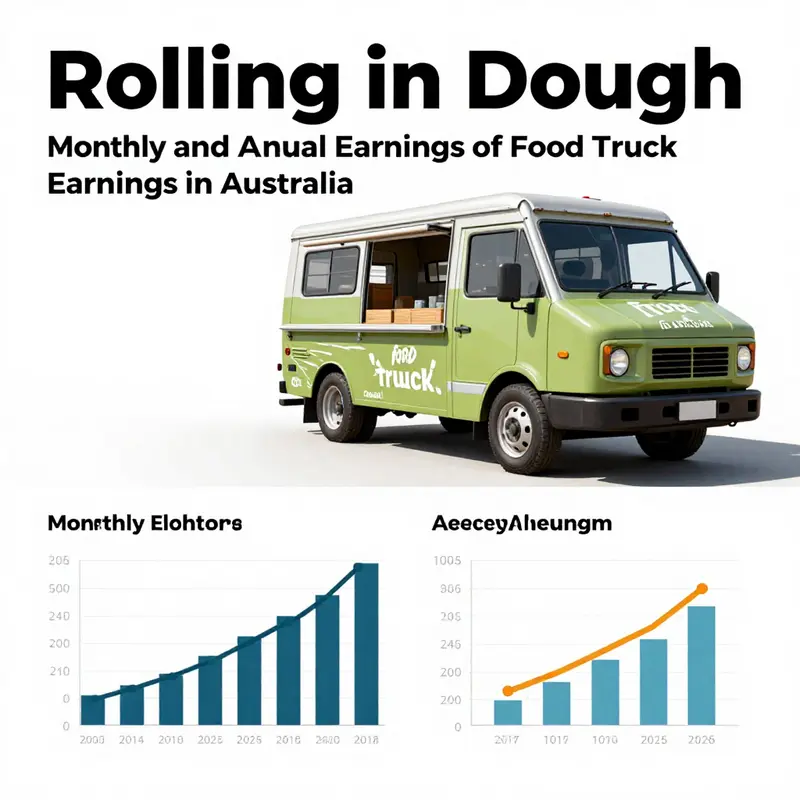
From a budgeting perspective, these daily fluctuations translate into monthly earnings that are highly sensitive to seasonality and event calendars. While the industry literature does not publish a single definitive monthly figure for every operator, it is possible to translate annual turnover into a practical monthly expectation. If a truck earns AUD 100,000 in turnover over a year, the rough monthly total is about AUD 8,333. If turnover reaches AUD 200,000 annually, monthly revenue tightens to roughly AUD 16,667. These numbers are revenues, not profits. They set the stage for a deeper dive into what is left when you subtract the costs that are neck-and-neck with any hospitality business: ingredients, fuel, labor, insurance, licensing, and maintenance.
In the Australian context, labor costs are an important piece of the puzzle. In major cities like Sydney, Melbourne, and to a slightly lesser extent Perth and Brisbane, the average annual salary for food truck staff sits around AUD 60,034. This figure reflects a local labor market that values hospitality skills and dependable service, and it underscores the point that people costs often form a stable, recurring expense. The wage reality is not merely about paying people; it is also about the reliability and quality of service that drives repeat customers and positive word of mouth. Staffing decisions—whether to hire full-time on a rotating schedule or to rely on casual, festival-based help—have a direct effect on profitability during peak periods and lull times alike.
Taken together, the monthly and annual earning narratives reveal a central truth about food trucks in Australia: there is potential for substantial earnings, but success hinges on disciplined financial management and a keen awareness of the local market dynamics. The two numbers that nearly every operator monitors are turnover (revenue) and net profit (what remains after costs). Turnover can be robust when the truck is in the right place at the right time, but net profit depends on controlling the costs that relentlessly eat into margins. The musical chairs of location, events, seasonality, and cuisine type is why there is no single “average” earnings figure that fits every operator. There is, however, a compelling through-line: the core markets, most notably Sydney and Melbourne, contribute a disproportionate share of total revenue, reflecting their density, dining culture, and consumer willingness to spend on on-the-go meals.
From a geographic perspective, the concentration of revenue in the two largest metropolitan hubs is well documented. Sydney and Melbourne together account for around sixty percent of total food truck income in Australia. This is not only a function of higher population density but also of a robust cafe-culture and a nightlife economy that sustains food trucks after dark and into the weekend. Perth and Brisbane follow, with a growing number of trucks that carve out a niche by tapping local tastes and seasonal produce. The implication for operators is clear: choosing a location is a decisive strategic choice, one that can push annual turnover toward the upper end of the range if it aligns with high footfall, captive audiences, and a calendar replete with events. Conversely, entry into markets with lower traffic or more competition can dampen daily earnings even if the cuisine is high quality and well marketed.
The narrative around events is central to an Australian food truck’s earning potential. Community markets, twilight events, and recurring fairs such as those in Bayswater and other local councils have become significant revenue drivers for mobile vendors. These events attract thousands of visitors and create an environment where people are more willing to try new foods, especially when the truck offers a distinctive, on-trend option—think health-forward, organic, or gluten-free choices that resonate in urban centers. The resonance of such events is not merely anecdotal: operators frequently report robust sales during prominent holiday periods like Christmas and Easter, when crowds gather, lines form, and the sense of occasion elevates impulse purchases.
For operators who want to translate these dynamics into practical budgeting, the ability to forecast monthly earnings hinges on a clear understanding of event calendars and location strategy. A truck that plans to monetize weekends and festival seasons can achieve higher average daily revenues, and those gains compound across a month or year when combined with ongoing regular hours in a high-traffic neighborhood. The yield from events should not be underestimated; it is common for trucks to treat festivals as a capstone revenue opportunity for the year, sometimes earning enough in a single weekend to offset several weeks of more routine operations. Given the mix of city density and creative cuisine, it is understandable why many owners view events as essential to their annual plan.
The market calculus also extends to the broader industrial context—the formal market size and projected trajectory into the mid-2020s and early 2030s. A recent, credible industry assessment estimates the Australian food trucks market to be worth about USD 1.2 billion across the 2019–2030 horizon. While this does not translate directly into per-truck earnings, it provides a frame for the competitive intensity, supply chain resilience, and consumer appetites that shape daily and weekly demand. Within that landscape, individual trucks show variation in turnover; the high end of the spectrum—where a truck earns in excess of AUD 500,000 annually—reflects those operators who maximize location, optimize menu appeal, and maintain tight cost controls.
An important practical note concerns what those earnings look like in real terms for a truck owner who actually runs the business. If we anchor on typical ranges, annual turnover of AUD 65,000 to AUD 250,000 suggests a wide spread. The upper tiers imply a sophisticated approach: multiple shift coverage, an appealing and scalable concept, and a fit with recurring event calendars. The lower end may reflect one truck, modest operating hours, or limited geographic reach, but does not necessarily indicate failure. It often signals the beginning of a learning curve, a period in which the operator refines supply chains, reduces waste, and experiments with location strategies until they find a sustainable foothold.
To move from turnover to profit, owners must subtract a suite of costs. Rent or licensing for space and the right to operate in a chosen location is a fixed or semi-fixed expense that tends to scale with turnover, hence the 8–18 percent rule. Ingredient costs vary with the menu and supplier relationships, but should be kept under control by menu engineering and waste reduction. Fuel is a constant companion to mobile operations, often a significant variable cost that grows with miles logged and the efficiency of routes. Insurance is a nonzero line item for risk management and compliance, and maintenance is essential for keeping the vehicle dependable and safe on the road. Each of these costs compresses the margin, and the interplay among them explains why even trucks with high turnover may not achieve proportionally high net profits.
The earning story is not merely arithmetic. It rests on a practitioner’s discipline—sharply managing the daily grind while staying adaptable to shifting customer preferences. In Australian city centers, demand for fast, reliable meals is persistent, but the spectrum of tastes is broad. A truck that authentically mirrors local food cultures, while maintaining a consistent service standard, will earn customer loyalty and command a premium for convenience and quality. A truck that spreads itself too thin—oversaturating the market or offering a diffuse menu that dilutes its identity—may see turnover rise but margins stay flatter as costs climb. The ethical of this business, from a long-term perspective, is to balance ambition with discipline, scaling thoughtfully as the brand and operation mature.
When operators think about month-to-month planning, the financial psychology shifts toward the rhythm of the calendar. Weekdays can create steady, if modest, revenue streams, especially near campuses or office precincts when lunch crowds flock. Weekends and evenings, on the other hand, are the time windows where spikes happen, often with lines forming and patrons willing to spend more for options that feel tailored to the moment. The best operators anticipate this rhythm by scheduling staff around peak hours, adjusting menus to match demand, and ensuring inventory turns translate into consistent revenue rather than creeping waste. The monthly view becomes a disciplined cycle of opening windows, closing maintenance tasks, and adjusting the course based on what the prior weeks reveal about customer flow and appetite.
Adding a practical, human dimension to the numbers, the wage scale matters not only for gross pay but for the quality of experience customers receive. In the Sydney market, the average annual wage for food truck staff sits around AUD 60,034, underscoring the role of people in delivering speed, accuracy, and hospitality. Skilled cooks and efficient servers who can work in tight spaces and handle high-pressure service windows are a valuable asset indeed. Operators who invest in their teams—through training, fair scheduling, and safe working conditions—often find a multiplier effect in customer satisfaction, repeat business, and positive online feedback. That, in turn, feeds turnover and supports the feasibility of higher-margin pricing strategies during busy periods.
The market’s future orientation is another layer to consider. The Australian scene is not static; it evolves with urban development, regulatory changes, and consumer trends toward convenience and sustainability. As cities grow and dining options multiply, the appetite for mobile, flexible food access remains strong. The duration and intensity of growth into 2026 and beyond are subject to external factors, but the underlying demand for accessible, diverse food experiences is not fragile. Analysts anticipate continued expansion in core markets, driven by a combination of event-driven revenue, a steady flow of casual lunch and dinner customers, and a willingness to experiment with new concepts in the mobile catering space. This optimism aligns with the broader narrative that the sector’s value is not simply in the day-to-day earnings but in the potential for scale, replication, and a durable niche within the urban food ecosystem.
For readers seeking practical guidelines to aspiring operators, the lesson is clear: anchor your planning in a realistic turnover range, then design a cost structure and staffing model that preserve healthy margins. The ability to forecast monthly earnings with reasonable confidence comes from a well-mred calendar of events, a consistent route or location plan, and a menu tuned to the tastes and wallets of your target customers. The broader market studies provide a backbone for those calculations, but the daily discipline—the careful management of inventory, the efficient use of fuel, and the investment in reliable equipment—will determine whether a truck sits at the middle of the pack or rises to the top of the class.
To connect practical planning with the resources and principles that seasoned operators rely on, consider a practical financial planning resource that aligns with the chapter’s focus on budgeting, forecasting, and prudent cash management. For practical budgeting strategies and insights from experienced operators, financial tips for first-time food-truck owners can be a helpful starting point. The material emphasizes core topics such as cash flow management, cost control, and the specificities of operating on a wheel-based business model. It is not a substitute for bespoke budgeting tailored to your market, but it can serve as a foundational companion as you build the arithmetic around turnover, costs, and margins.
In sum, the monthly and annual earnings of Australian food trucks reflect a landscape of opportunity tempered by cost discipline and market positioning. The most profitable operators combine a well-chosen location, a distinctive and desirable menu, efficient operations, and a capability to weather the inevitable fluctuations of demand. They understand that turnover alone does not tell the full story; it is the net income—the amount left after every line item is paid—that reveals the true health of the business. The story of earnings in Australia is not a single trajectory but a constellation of micro-narratives—each truck its own ledger of success, challenge, and learning—that collectively shape the growing cityscape of on-demand dining on wheels.
External perspectives can broaden the lens beyond the anecdotal and the regional. For those who want a broader market context and directional forecasts, a comprehensive industry report published in the early part of the decade and updated for the mid-2020s provides a macro view of market size, growth trajectories, and city-level dynamics that influence the earning potential of mobile food businesses. While the core earnings math for any given truck remains anchored in the specifics of location, menu, and efficiency, understanding the broader market helps operators calibrate expectations and plan for scale. External resources can thus complement the practical, on-the-ground budgeting that governs daily operations and long-term profitability.
As the space evolves, it will be increasingly common to see operators blending traditional street-food concepts with more contemporary, health-forward offerings. The customer base is interested in speed and quality, but also in variety, authenticity, and value. The best performers are those who align their business model with these preferences—combining quick service, a clear identity, and lean operations that can weather seasonal ups and downs. In a country as diverse as Australia, the opportunity to adapt menus to local tastes and seasonal ingredients is a strategic advantage that can translate into higher turnover and more stable margins over time. The earnings picture, then, emerges not only from the cash that flows in during a busy weekend but from a steady cadence of sales, waste minimization, and a disciplined expense structure that keeps profits resilient against the inevitable ebbs and flows of demand.
For readers who want to continue exploring the economics of mobile dining, the road forward involves translating these high-level figures into your own business blueprint. Start with a conservative turnover target based on location and event prospects, then build a cost framework that reflects local wages, insurance, fuel, and maintenance. Track performance month by month, adjust your strategy for peak seasons, and use the experience of peers—through community networks and industry data—to refine your approach. The journey from a single truck to a flourishing micro-empire is incremental, built on reliable service, repeat customers, and a relentless focus on cost control and customer value. In that sense, the question of how much a food truck makes in Australia is less a single number than a dynamic story of throughput, efficiency, and the art of turning mobility into sustained profitability.
External resource: https://www.kenresearch.com/industry-reports/australia-food-trucks-market-opportunity-size-brands-2026-2033
Riding the Revenue Wave: How Location, Cuisine, and Events Shape Australian Food Trucks’ Earnings
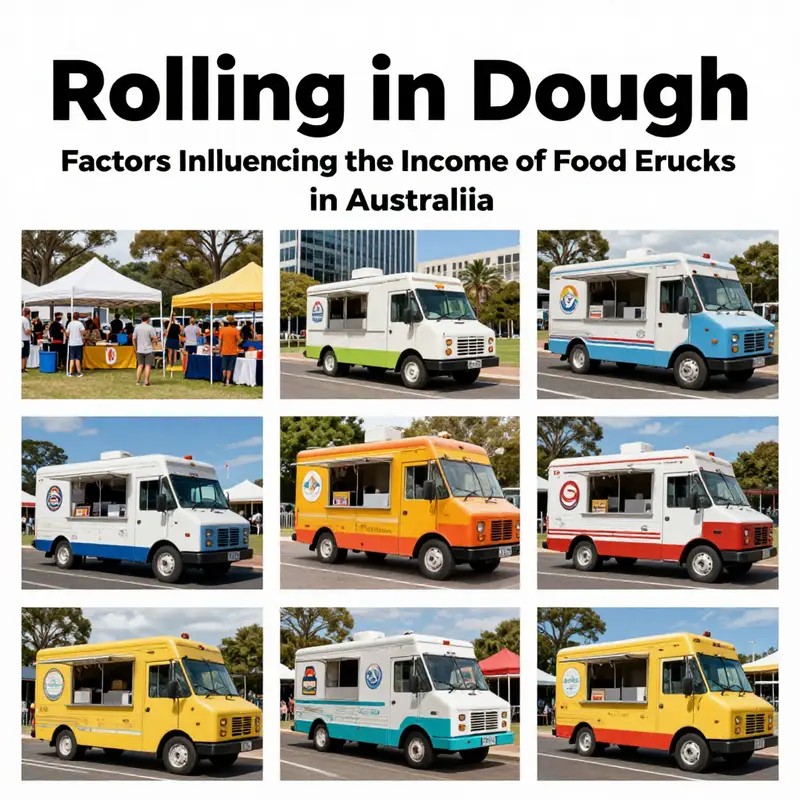
The income story of food trucks in Australia unfolds as a living map, not a fixed number on a set of balance sheets. It is written in the language of places, rhythms, and encounters—where crowds collide with clever menus and where a single high-traffic corner can swing a truck from a quiet weekday into a brisk weekend. The question of “how much do food trucks make in Australia?” is best answered not by a single statistic, but by a tapestry of interwoven factors: where you operate, what you serve, when you roll up, and how you ride the seasonal tides of city life. From the outset, observers and operators alike notice a broad spectrum of outcomes. In pockets of peak demand—think central business districts, university campuses, or festival seasons—a well-managed truck can pull in substantial revenue during a single day, with figures commonly cited in the range of one thousand five hundred to three thousand dollars on weekends or during events. But scale and seasonality bend this picture. In highly competitive or geographically dispersed markets, daily receipts can dip to five hundred to twelve hundred dollars, while some operators, who optimize scheduling and menu design, harvest higher margins through consistency and repeat business. When these daily ebbs and flows accumulate, the monthly picture often settles into a broad corridor. A well-run truck might report gross earnings in the neighbourhood of forty-five thousand to ninety thousand dollars per month. This is not net income; it is a gross slice that must still cover fuel, ingredients, labor, insurance, vehicle maintenance, licensing, and other overheads that creep into every line item of a daily hustle. Yet the broad cadence of these numbers still leaves room for substantial profitability. Across a year, profitable operators can present annual gross income ranging from roughly five hundred forty thousand to as much as one million eighty thousand dollars, with net profits typically hovering somewhere between seventy thousand and one hundred fifty thousand after costs. The delta between gross and net is not a mystery; it mirrors the reality of scarcity and abundance in a mobile kitchen economy. When a truck enjoys high demand at events or in foot-traffic corridors, it may push margins upward; when it contends with spillover competition, price sensitivity, or unscheduled downtime, the margins compress, even as the same menu can still generate steady flows if managed with discipline. These outcomes point to a central insight: profitability in Australia’s mobile food business is less about chasing a single average figure and more about orchestrating a precise alignment of location, timing, and cost control. The same core activities that power a bustling boulevard stall can be scaled for a food truck, but the truck’s economics hinge on rapid deployment, smart routing, and the ability to convert presence into repeat customers. Consider location as a living, breathing variable. A truck parked near a cluster of offices or a campus tends to experience a predictable cadence. Lunchtime crowds ripple through streets, and evening shifts can ride the social energy of after-work gatherings. In these environments, daily revenue tends to sit toward the higher end of the spectrum, particularly when the menu offers speed, value, and consistent quality. The urban infrastructure—the proximity to transport nodes, the availability of parking, the ease of pickup and drop-off for customers—enters the risk/return calculus as an invisible but decisive factor. It is no accident that a number of high-traffic markets, pop-up corridors, and recurring community events have emerged as focal points for growth. In Western Australia, for example, recurring gatherings such as twilight markets or waterfront festivals transform ordinary weeknights into revenue spikes. The Bayswater Twilight Markets and similar events have become anchor points for many operators, offering thousands of visitors in a concentrated window. Operators who plan ahead—mapping menus that can be prepared quickly, forecasting stock needs precisely, and marketing aggressively in advance—tend to lock in higher volumes during these periods. The logic feels intuitive, yet it is rarely simple in practice. A truck needs not only a stellar recipe but a reliable crew, a steady supply chain, and an ability to pivot when a festival line winds longer than anticipated or when weather disrupts outdoor footfall. Here, the seasonal heartbeat of the business comes into sharper focus. Australia’s climate allows for a dynamic event calendar—markets bloom during festive seasons, and school holidays can become fertile ground for family-oriented stalls. The seasonal rhythm, in turn, shapes procurement strategies. A savvy operator calibrates their menu to anticipate what crowds will crave as temperatures rise or fall, trading heavy, slow-cooked offerings for quicker, semiautomatized formats in heat waves or leaning into comfort foods when a chill sets in. The menu, then, not only reflects culinary curiosity but also the practical economics of speed, waste, and reusability of ingredients. A well-chosen recipe can be prepared rapidly and with fewer cooks on the floor, reducing labor costs while preserving portion control and taste. In this sense, cuisine is as much a profit lever as a cultural statement. The growing appreciation for authentic and diverse cuisines has opened doors to premium pricing for unique dining experiences. Asian fusion, Middle Eastern street food, and Latin American specialties—these categories resonate with urban audiences hungry for novelty that still feels approachable. On the supply side, the relative cost structure of these offerings matters. Some ingredients may be affordable staples in bulk, while others require careful sourcing to maintain both authenticity and consistency. The ability to deliver quality at scale, repeat customers, and a strong social media presence becomes a chain that connects culinary identity with revenue potential. The social dimension of the business cannot be overstated. A food truck’s reputation travels through the online channels that modern consumers rely on for discovery and validation. A robust social media presence acts as a continuous marketing engine, helping to stage daily locations, announce menu changes, and gather feedback from customers who become loyal advocates. The digital footprint is not merely promotional; it is a diagnostic tool. By tracking engagement around posts, check-ins, and comments, operators glean which locations are working, which items are popular, and which times of day generate peak demand. This information translates directly into scheduling decisions, inventory planning, and staffing models. It also feeds into a vendor’s resilience strategy. The more a truck can adapt to changing conditions, the less vulnerable it is to market shocks. Yet the path to resilience is not without barriers. The food truck business is capital-intensive from the outset. A reliable vehicle, proper cooking equipment, and compliance with health and safety standards demand a significant upfront investment. Ongoing maintenance, insurance, and regulatory permits add layers of fixed costs that must be absorbed even during off-peak periods. These fixed costs can be daunting for new entrants, helping to explain why the sector remains more accessible to operators who already carry capital reserves or who can secure favorable financing. In this environment, the border between opportunity and challenge is drawn by the operator’s ability to manage cash flow. A common pattern among successful trucks is to pursue a high utilization rate of their assets. The same truck that roams a business district on weekdays might pivot to events on weekends, or vice versa, creating a diversified revenue stream that cushions the business against a single source of demand drying up. Event participation is a powerful amplifier of income. The capacity to secure space at high-profile markets or ongoing festivals translates into a predictable crowd and elevated impulse purchases. In markets where recurring events exist—community-led markets, seasonal fairs, and cultural celebrations—operators often report revenue bumps during holiday seasons, driven by a combination of increased foot traffic and the willingness of attendees to spend on food while socializing and enjoying performances. This is a crucial point for anyone evaluating the feasibility of entering the space: events can catalyze growth, but they require thorough preparation and a robust risk management approach. The competitive landscape, too, shapes the income trajectory of food trucks. Australia’s market is layered with established vendors who have built durable brands, loyal customer followings, and economies of scale that help them absorb costs more effectively. For newcomers, the initial hurdle is not simply finding a good recipe; it is also carving a niche within a crowded field, along with navigating licensing, parking, and park-time restrictions that govern where and when a truck can operate. The combination of branding and location yields a multiplier effect. A strong, recognizable identity contributes to repeat business and helps customers remember where they found the truck on the map. This reinforces the value of a clear, consistent voice—one that speaks to the cuisine, the culinary story, and the emotion of the experience. The social narrative, then, becomes a component of the business plan itself: a way to cultivate a loyal audience, secure recurring lineups at events, and create a sense of anticipation about where the truck will appear next. In synthesizing these forces, one can understand how income is generated and stabilized across the year. Location and event participation drive top-line revenue, while menu design, procurement, labor, and maintenance determine the bottom-line profitability. The dynamics of consumer demand for convenience and affordability—especially in densely populated urban settings—support a steady stream of orders during peak hours. Yet this is balanced by the need to deliver consistent quality, maintain a precise cost structure, and manage supply chains so that price points remain attractive while margins stay intact. The trend toward diverse and authentic cuisines adds a degree of premium potential, though it also introduces sourcing complexities that require careful planning and supplier relationships. From a practical standpoint, a prospective operator should think in terms of a routine that blends location scouting, event calendars, and menu engineering into a coherent operating plan. The daily ritual may begin with checking the forecast and confirming shifts with staff, followed by a rapid stock audit, and then a strategic decision about where to position the truck for the next eight to twelve hours. If an operation is near an office corridor, for instance, lunchtime becomes a predictable revenue pulse, followed by a dip before early evening commuters reemerge. In a festival setting, the challenge is less about dining cadence and more about pacing service lines, maintaining quality at high throughput, and ensuring that supply keeps pace with demand during the entire event window. The meticulous orchestration of these variables is what converts potential revenue into realized income. It also underscores the importance of planning and professional management for those seeking to scale the enterprise. A word about the costs that shave off gross revenue is essential. Fuel, ingredients, labor, insurance, and maintenance are the main watchpoints. Each of these costs fluctuates with activity level and location. A truck that spends more hours in high-traffic zones may incur higher fuel costs, but the same investment can yield more orders and faster throughput, creating a favorable margin if managed well. Ingredient costs hinge on the ability to negotiate with suppliers and minimize waste; this is where recipe design and portion control exert real leverage. Labor costs scale with hours worked and the efficiency of the crew. Training, rostering, and cross-utilization of staff can reduce payroll costs per unit of output. Insurance and maintenance, though less variable, add a steady undercurrent of expense that operators must continually account for in profit projections. The broader economic cycle—rising costs of living, inflation, and changes in consumer behavior—will also imprint itself on the income profile. In times of rising food prices, customers may still be willing to pay for the experience, but price sensitivity increases. Conversely, when events attract large crowds with discretionary budgets, demand can surge even if costs are higher. In sum, the income potential of food trucks in Australia is a dynamic blend of revenue efficiency and cost discipline. The best operators treat location, timing, and menu as a single, living system—one that adapts to weather, calendars, and consumer moods with the agility of a well-tuned engine. They blend high-traffic urban lanes with the unpredictability of markets, craft menus that travel well in a mobile kitchen, and maintain a disciplined approach to stock and staffing so that every shift adds value. For readers considering entry into this space, a practical path involves absorbing both the tactical tips and the strategic mindset that support steady growth. A useful resource for foundational financial guidance can be found in this guide on financial planning for first-time truck owners. It emphasizes cash flow management, budgeting for permits, and building reserves to handle the slower months. Readers can find these insights at the following link: financial tips for first-time food-truck owners. This awareness complements the data-driven perspectives discussed above and helps bridge theory with daily practice. As the market matures, operators also observe a widening appetite for experiential dining on wheels. The ability to curate a brand narrative, connect with communities, and participate in recurring markets has become as essential as the recipe itself. The social fabric around food trucks—community markets, art walks, cultural festivals, and student unions—creates a halo effect, drawing people to a brand even when the price point for a single item is higher than fast-food alternatives. In this sense, profit is not merely a function of the menu but a function of culture—how well a truck can weave its food, story, and presence into the fabric of urban life. The long-run potential for income growth in Australia is therefore tied to the ability to sustain this integration. It requires patience, capital, and a willingness to navigate regulatory environments that govern where and when a truck can operate—factors that, while sometimes frustrating, shape the competitive landscape in ways that reward those who plan ahead and execute with consistency. For anyone seeking a more expansive view of market dynamics and financial performance drivers, Market Research’s Australia Food Truck Market Overview offers a comprehensive context that can help set realistic expectations and identify where growth is most likely to occur in the coming years. External resource: https://www.marketresearch.com/report/australia-food-truck-market-overview-2030/
Final thoughts
The earnings of food trucks in Australia reveal a diverse and lucrative landscape, shaped by various factors that can significantly influence success. From strategic location choices to menu offerings that resonate with local tastes, food truck owners have the potential to thrive in this dynamic market. Whether you’re organizing an event, planning catering options, or simply indulging your culinary curiosity, understanding these earnings can guide your decisions and highlight the value that food trucks bring to communities throughout Australia. Embrace the food truck revolution and explore the unique dining experiences they offer!