Ever wondered how much a food truck makes when catering? This vibrant sector of the food industry is gaining traction, and understanding its financial dynamics is crucial for event planners, corporate HR teams, community organizers, and food enthusiasts. This article dives into the intricacies of food truck catering, shedding light on revenue variations based on events, clientele, and market trends. Throughout our journey, we’ll explore pricing strategies, location impacts, operational costs, and future market growth potential—each chapter offering unique insights that build a holistic picture of food truck catering profitability. Join us as we dissect the revenue streams of this delicious industry!
Catering on Wheels: Understanding Revenue Variability for Food Trucks
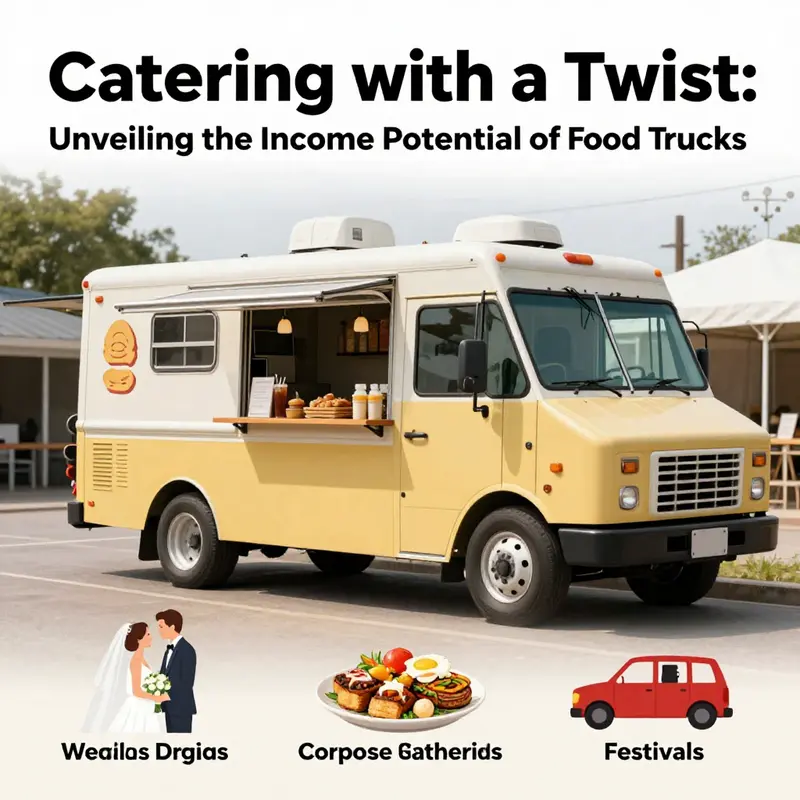
Catering changes the rhythm of a food truck’s income. It shifts the conversation from steady daily sales to highly variable, event-driven opportunities. The image is familiar to many operators: weekends filled with weddings, corporate gatherings, and festivals, each with its own price tag and logistical puzzle. What emerges from the data and the field is a picture of income that’s decidedly elastic. On the one hand, catering can magnify margins and accelerate revenue in bursts that far outpace typical walk-up sales. On the other hand, it demands disciplined pricing, precise planning, and the capacity to deliver a consistent guest experience without letting the logistics crumble under the weight of a big booking. The result is a financial landscape where the same truck can produce very different outcomes depending on the venue, the client, and how well the operation scales for a one-off event or a cluster of bookings in a month.
At the most general level, a food truck’s monthly gross revenue often sits in a broad band—from about $20,000 up to $50,000—driven by geography, menu price points, and operating hours. Catering tends to sit at the higher end of that spectrum, because it aligns with premium pricing per guest and the ability to command added value with customized menus, service style, and event-worthy presentation. When a single catering engagement is priced per person, the math can look dramatically favorable. It’s not unusual for catering quotes to land in the range of roughly $15 to $30 or more per attendee, depending on factors like the formality of the event, the location, and the level of service (food stations, chef interaction, or plated service). Even conservative estimates suggest that a well-booked truck can generate several thousand dollars from a single event. A 100-person corporate gathering, for instance, at $30 per person, sits at about $3,000. Push that price to $50 or more per person, and the same headcount can exceed $5,000. These figures illustrate why many operators pursue catering as an essential revenue stream alongside standard daily sales.
The accentuating factor here is scale and repeatability. A truck that builds a strong catering calendar can stack consistent, higher-margin revenue on top of its base operation. The margins in catering can be higher than standard service due to premium pricing and the efficiency of serving a larger group from a single setup, which can reduce some per-guest costs when the operation is well organized. Yet margins are not auto-magical. They hinge on a careful balance of food costs, labor, travel, equipment needs, and the ability to staff for peak service windows without overextending the team. This is where the backbone of a catering operation—clear menus, precise estimates, and a robust supply chain—meets the front-facing edge of marketing and client management. For operators, the real upside is the potential to convert a single, lucrative booking into ongoing relationships with event planners, venues, and corporations who repeatedly hire vendors for annual conferences, galas, or seasonal festivities. The consistency of those relationships can smooth revenue cycles and provide a steadier platform for cash flow through the year.
Thinking about the broader market helps ground these numbers. The food truck market’s growth story registers not only in occasional high-ticket events but in the expansion of the sector itself. The market’s value has climbed into the billions, with projections suggesting continued expansion into the mid-to-late decade. This growth is driven by a blend of consumer appetite for convenient, experiential dining and the evolving infrastructure that makes mobile provisioning easier—digital permitting platforms, better mobility ethics, and the increasing sophistication of catering-ready setups. The trend toward urban dining and the appetite for distinctive, on-site culinary experiences amplify the appeal of catering as a revenue lever for trucks that can shift from street-side sales to event-based service. When the market strengthens, so too does the willingness of clients to pay for a turnkey mobile experience that includes not just food, but brand experience, service consistency, and the convenience of a fully managed, on-site culinary event.
Operationally, catering changes the calculus in meaningful ways. Seasonal demand becomes a more pronounced factor, with holiday celebrations, weddings, and corporate cycles concentrating revenue opportunities into specific windows. For operators who do this well, recurring bookings—annual galas, monthly staff parties, or quarterly conferences—can anchor a predictable portion of the calendar, while one-off events fill the rest of the year with high-value engagements. As the world shifts toward electrified, purpose-built mobile kitchens, ownership costs can improve over time, translating into lower per-event operating expenses for trucks leaning heavily on catering. The economics of catering also depend on logistical execution: the choice of menu, the time needed for setup and breakdown, travel distances, and the staffing model. A well-planned menu can minimize waste and speed service, while a precise crew schedule avoids overstaffing a slower event and underresourcing a peak window. In other words, the same crew that handles daily service can, with careful planning, deliver premium event experiences without inflating labor costs beyond the revenue they generate per event.
The narrative of revenue for catering trucks is also colored by how operators market themselves. The best-performing caterers in the mobile space lean into real-time social media engagement, client relationships, and a brand that communicates reliability, flavor, and a distinctive service experience. Positive client testimonials, polished event photos, and a rapid quoting process all contribute to higher close rates and the ability to command premium pricing. In a fragmented market—where many operators are independent—the ability to differentiate through branding, the quality of the guest experience, and reliable execution becomes a meaningful competitive advantage. This is where the intersection of culinary identity and operational rigor matters most: clients may choose a truck not only for the menu but for the confidence that the team will bring a flawless, on-time service that makes their event easier and more enjoyable.
For operators who want a practical sense of scale, it helps to consider a few illustrative scenarios. If a truck books four catering events a month, with an average event price around $2,500 to $4,000, monthly catering revenue could range from roughly $10,000 to $16,000 or more. Add in a handful of smaller, recurring bookings—say, ongoing festival weekends or monthly community events at $1,000 to $2,000 each—and the catering slice of revenue can climb higher, especially during peak seasons. Of course, one must subtract costs—ingredient costs, staffing, transportation, and any venue fees—but the core takeaway remains: catering has the potential to deliver substantial, event-driven revenue that complements, rather than competes with, regular walk-up traffic.
From a market perspective, the growth trajectory supports these assumptions. The global food truck market has shown steady expansion, with a path projected toward multi-billion-dollar valuations. This expansion is a reminder that more venues and organizers are open to mobile catering as a preferred option for hosting diverse experiences—from intimate weddings to large-scale corporate gatherings. The drivers of growth—convenience, urbanization, and the increasing ease of launching and scaling mobile operations—also align with the opportunities catering provides. For operators, the message is clear: strong catering performance hinges on combining competitive pricing with exceptional execution, while leveraging digital channels to reach event organizers and secure bookings faster.
With all these factors in view, one practical way to approach revenue planning is to treat catering as a portfolio within the business. Build pricing that reflects value and complexity, create menus that scale with guest counts, and standardize operating procedures so every event meets a consistent standard of quality. In parallel, invest in client-facing processes—clear proposals, timely follow-ups, and a credible showcase of past events. The payoff is a revenue stream that not only adds a revenue layer but also reinforces brand equity and client relationships that endure beyond a single event. For operators seeking to anchor their approach to numbers and planning, a structured mindset about cost control, pricing discipline, and service excellence can translate into a sustainable, high-margin catering practice that works in concert with daily sales.
For readers looking to ground these concepts in practical budgeting and strategic planning, see financial-tips-for-first-time-food-truck-owners for guidance on mapping costs, pricing, and cash flow as catering opportunities scale. This chapter’s narrative likewise aligns with the broader industry picture, which underscores steady growth and a shifting mix toward more lucrative, event-driven revenue streams. As markets evolve and consumer demand for experiential dining accelerates, catering on wheels becomes not just a sideline but a central channel through which a well-run food truck can diversify income, optimize margins, and build a brand that thrives both on the street and at the heart of events.
External resource: https://www.grandviewresearch.com/industry-analysis/food-trucks-market
Catering on Wheels: Revenue, Clientele, and Smart Pricing for Food Trucks
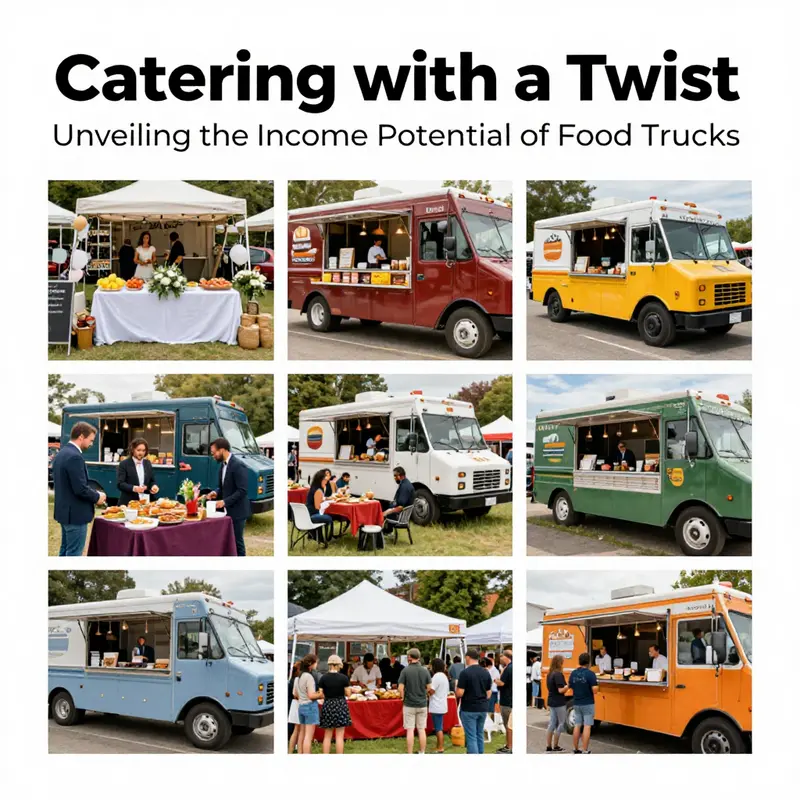
Catering has emerged as a defining revenue channel for food trucks, a way to turn a flexible mobile kitchen into a high-impact event service rather than a daily street-facing operation alone. The move from steady but modest daily sales to high-value, event-driven work changes everything about financial planning and growth. When a truck commits to catering, it is not abandoning the street; it is expanding capability. The goal is to balance consistent demand with the potential for premium pricing at weddings, corporate functions, festivals, and private parties. The result is a business that can weather slow days on the curb by leveraging high-ticket bookings elsewhere while preserving the agility that makes a mobile kitchen appealing in the first place. In practical terms, catering can stabilize income while amplifying total earnings, especially when operators pair dependable service with a well-marketed menu that travels well and dazzles with presentation. The core idea is simple, even if the execution is nuanced: catering income often comes from fewer events, but those events command much higher per-guest revenue and can carry additional fees for logistics, staff, and setup. This combination can shift a business from a good month to a standout one, particularly as demand for experiential dining continues to rise.
The numbers help illuminate the potential. For many food trucks, monthly gross revenue generally lands in a broad band—from roughly $20,000 up to $50,000—when the truck operates at full tilt, serves a diverse clientele, and blends standard menu sales with occasional catering engagements. The same logic that pushes daily sales higher in peak markets also unlocks catering upsides. A single well-timed corporate event, wedding, or festival appearance can shift the revenue mix decisively. In a typical catering scenario, a 100-person corporate event priced at $30 to $50 per person yields between $3,000 and $5,000 for one event. Larger or more upscale events can push that figure higher still, especially if the menu is premium, the service level is elevated, or the event incorporates live cooking stations, branded presentation, or themed decor. It is common for operators to complement per-guest pricing with fixed fees that cover logistics, staffing, and equipment transport, further increasing profitability. When the event catalog expands to include multi-day festivals or a sequence of smaller gatherings, the cumulative effect on monthly earnings can be substantial, often with greater predictability than the feast-or-famine rhythm of street sales. In this sense, catering acts as a lever that can raise overall business resilience while opening doors to audiences that trust a truck to deliver not just a meal but a curated experience. For operators who want to build a reliable pipeline of events, the blend of recurring gigs and one-off marquee bookings can become a core engine of growth. To support decisions around pricing and budgeting, many seasoned caterers rotate through tiered offerings and add-ons that reflect different client motivations—from affordability for intimate gatherings to premium experiences for high-profile occasions. A practical approach encourages staggered packages: Basic packages for smaller gatherings, Premium packages with signature items and themed presentations, and Add-ons like live stations or custom branding that can be bolted on as the client’s needs evolve. A typical catering price stack may also include a service or event setup fee—often in the range of $200 to $500—to cover logistics, staffing, and transport. This fee, while small in isolation, contributes meaningfully to the bottom line when multiplied across a busy event calendar. The discipline of pricing is a key driver of profitability, and it is here that trucking operations can differentiate themselves through thoughtful packaging and precise cost control. For operators who want a structured yet flexible framework, the pricing conversation should start with the client’s goals and the event’s scale, then layer in menu value, service quality, and the operational costs that make a given price point sustainable over time. The conversation can also address dietary options and customization, which are especially valuable at weddings and corporate functions where guests increasingly expect accommodations like gluten-free, vegan, or nut-free choices. Dessert-focused trucks, for example, leverage visual appeal and customization to command higher per-person pricing, often at $15 to $25 per person for a curated dessert bar. A wedding dessert spread for 100 guests could bring in roughly $1,500 to $2,500, with room for growth when the menu features artisanal or premium items and the service includes a memorable display. The revenue profile shifts further when a truck can operate as a full-service caterer with event staff, setup teams, and branded presentation that elevates the guest experience beyond simply eating. For many operators, the arithmetic becomes straightforward: the more guests served at higher price points, the greater the total revenue, and the more opportunities arise to expand into similar high-value events. The pricing strategy itself becomes a signal of quality and reliability, encouraging clients to book early and to return for future events.
This is where the broader market dynamics intersect with day-to-day decisions. The food truck sector is expanding as demand for mobile, experiential dining grows. The global market was valued at about USD 4.42 billion in 2025 and is projected to reach around USD 6.06 billion by 2030, a compound annual growth rate of roughly 6.5 percent. This trajectory is driven by urbanization, a renewed appetite for convenient yet distinctive dining experiences, and improved digital permitting that lowers the barriers to entry for new operators. Social media and real-time marketing play a crucial role here: boards and feeds that feature vibrant visuals of food, live stations, and interactive setups attract event clients who want both delicious fare and a show. Electric-powered and purpose-built trucks further sharpen the economics by reducing fuel and maintenance costs over the long term, making catering a more scalable, full-time option for operators who want to grow beyond weekend pop-ups. Digital licensing portals and shared commissaries are simplifying compliance and logistical planning, enabling newer entrants to enter the catering space with confidence. In other words, the economic logic is not just about higher prices; it is also about doing more with less—leveraging efficiency gains, standardized service models, and a sharper turnkey proposition for events. When operators combine attractive pricing with dependable execution and a compelling client experience, catering can significantly elevate monthly income and stabilize revenue streams across the calendar.
For those building toward this model, practical budgeting and financial discipline matter just as much as culinary craft. It is not enough to chase big checks; one must also manage cash flow, staffing, and ingredient costs with care. A well-structured approach to bookings, contracts, and deposits helps ensure that a calendar remains viable and that payables do not outstrip revenue during lean weeks. The point is not simply to chase a few blockbuster events, but to cultivate a balanced mix of bookings that keeps the operation humming without overextending staff or inventory. If you are looking for a practical framework to start with, our guide to financial basics for first-time food-truck owners offers actionable steps to price effectively, forecast cash flow, and assess profitability across a range of event scenarios. You can explore that resource here: financial tips for first-time food-truck owners.
The takeaway is clear: catering can be a potent multiplier for a food truck’s income when combined with careful pricing, strategic event selection, and operational efficiency. The right blend of high-value clientele, well-structured packages, and value-added services can push per-event revenue into the several-thousand-dollar range, while repeat bookings and referrals build a reliable pipeline. As the market continues to grow and as digital tools simplify outreach and compliance, catering remains a central pathway for trucks that want to scale beyond daily curbside sales. The key is to align menu design, service style, and logistical planning with the expectations of event organizers who are willing to invest in a memorable experience. By balancing premium offerings with scalable pricing and streamlined operations, a well-positioned food truck can expand its culinary footprint, increase its profitability, and sustain growth in a market that rewards creativity, reliability, and guest satisfaction. External data that contextualizes this growth reinforces the opportunity: the industry’s size and projected trajectory provide a framework for forecasting and strategic planning, underscoring the potential for catering to become a core driver of revenue rather than a supplementary revenue stream. External resource: https://www.grandviewresearch.com/industry-analysis/food-truck-market
Catering on Wheels: How Location and Market Trends Shape a Food Truck’s Earnings
When a food truck pivots from the steady cadence of daily lunch crowds to the high-stakes cadence of catering events, earnings become a story of leverage. It is not only how many hours the truck runs, but where it runs, whom it serves, and how deftly the operator translates a guest count into a price that covers costs and still leaves room for growth. Catering revenue sits atop the baseline income from regular service, and its cadence can redefine a season. A smart operator treats each event as a micro-business: a four-hour window with a defined guest headcount, a chosen menu, and a clear price structure that reflects both labor and logistics. The result is a layered income stream where stable daily sales meet the occasionally lucrative burst of a corporate gala, a wedding reception, or a festival performance. In this chapter, the core question is not just what a catering gig pays, but how location and market conditions magnify or mute those payments over time, and how savvy operators align their menus, pricing, and operations with the evolving tastes of diners and the shifting dynamics of events calendars.
Location remains the single most powerful determinant of catering revenue. In dense urban cores, near business districts, stadiums, convention centers, and transit hubs, foot traffic interacts with event-driven demand to create opportunities that are simply less available in suburbs or small towns. A truck parked near a campus during graduation season or beside a corporate campus during lunch hours can convert traffic into bookings at a premium. These environments often yield higher per-guest spending because attendees expect variety, speed, and quality, and they are accustomed to paying for convenience. The same logic applies at large-scale events—festivals, charity galas, or sports venues—where the appetite for diverse, on-demand meals meets an audience ready to invest in experience. Catering revenue can be significantly amplified when a truck has access to dedicated event spaces or popular festival corridors that bring in high volumes during fixed time windows. Operators who cultivate relationships with event organizers, planners, and venue managers can lock in recurring engagements, turning a few marquee gigs into a dependable revenue backbone.
The numbers behind location-driven earnings are instructive, even when they need to be interpreted within a range. In the United States, the food truck market has shown sustained growth, with a recent valuation around 1.16 billion USD in 2026 and a projected climb to roughly 1.59 billion USD by 2031 at a 6.53 percent CAGR. What this signals is not merely rising sales but an expanding appetite for mobile dining as a staple within urban landscapes. It also underscores the viability of catering as a increasing fraction of overall income when operators align with market demand for convenient, high-quality, mobile options. Urban centers and high-traffic areas have become proving grounds where a well-executed catering offer can fetch premium pricing per guest, especially at upscale or corporate events where attendees expect polished service, specialty menus, and reliable execution. The operational implication is clear: if a truck can consistently position itself near the action—near parks staging outdoor concerts, near corporate campuses for lunch programs, near stadiums for game day tailgating—the potential for lucrative catering jobs rises in tandem with the capacity to handle volume and maintain food quality.
Market trends reinforce why location matters and why operators should cultivate a diversified catering toolkit. The broader market is not static. The global food truck segment is forecast to grow from roughly 2.88 billion USD in 2026 to about 4.17 billion USD by 2034, a compound annual growth rate around 4.7 percent. Another set of projections paints an even more expansive future, with some estimates reaching as high as 7.87 billion USD by 2030, underscoring intense investor and consumer interest in mobile dining. These projections speak to macro-level consumer shifts: a preference for convenient, diverse, and high-quality options delivered where people work, play, and gather. They also reflect ongoing specialization within the mobile sector. Operators who lean into trends such as plant-forward or fusion menus, beverage pairings, or craft coffee alongside savory mains can carve out distinctive niches that command higher catering premiums. A truck that pairs a signature dish with a beverage concept—say a tailored coffee or artisanal tea offering—can broaden the per-person price and extend revenue across multiple events in a season. The implication here is simple: market trends reward operators who adapt their menu architecture and service model to the tastes that communities actually crave, rather than clinging to a single, fixed concept.
From the practical perspective of pricing and execution, catering earnings hinge on a careful balance of menu design, guest count, and operating efficiency. A common street-to-catering transition involves pricing by headcount with a clear minimum, while also providing tiered add-ons for premium experiences. For example, a 100-person corporate event at a modest price point might yield between 3,000 and 5,000 USD, depending on the menu composition, service style, and whether beverages are included. That range is a useful benchmark for operators when presenting proposals to planners: it demonstrates the scale of opportunity without promising outcomes that cannot be delivered safely. Of course, larger or more upscale events push well beyond that baseline, especially when longer service times, custom menus, or gourmet accents are added. The math scales with guests and complexity. A 300-person outdoor festival tasting, priced appropriately, can push revenue dramatically higher than a standard lunch rush, especially if the vendor can move quickly, maintain consistent quality, and optimize staffing without compromising safety and service speed. These calculations remind us that catering economics are not simply a function of per-guest price but of the entire event ecology: how the menu, service format, staffing, and logistics align with the venue and date to minimize downtime and maximize throughput.
Operational strategy plays a decisive role in translating market trends into tangible dollars. Equipment that supports catering’s unique demands—reliable refrigeration for perishable ingredients, robust warming equipment, sufficient power sources for extended service, and flexible layouts that accommodate different event setups—becomes an investment with a clear payoff. Trucks that can adapt to outdoor settings, from wind-resistant tents to portable hand-washing stations, reduce risk and open more doors. Menu planning for catering also benefits from modularity. A core set of crowd-pleasers can be scaled to meet various guest counts, while a smaller, premium option can attract premium gigs without complicating logistics. The best operators build pricing structures that cover base costs and contingency margins: fuel, labor, insurance, permitted licenses, and incidentals. And they budget for marketing to sustain a steady stream of inquiries. The rise of social media and digital outreach helps an operator shift from waiting for referrals to actively seeking events. A well-curated portfolio, clear service packages, and timely follow-ups can convert inquiries into confirmed bookings, especially when coupled with a reputation for reliability and a track record of on-time delivery in demanding environments.
To deepen this strategic orientation, operators should consider how to position themselves within the broader ecosystem of event caterers and venue partners. Cultivating relationships with event planners, corporate coordinators, and festival organizers can secure recurring contracts that stabilize revenue across seasons. A truck that becomes a preferred partner for a handful of venues or planners can secure a calendar of booked dates, reducing the revenue volatility that sometimes accompanies reliance on a handful of one-off gigs. This relational approach underscores a larger theme: location is not just about physical proximity to foot traffic but about being embedded in the networks that generate demand. The more the truck is seen as a dependable, high-value partner—capable of delivering consistent quality and adapting to a range of event formats—the more opportunities will flow in from repeat clients and trusted intermediaries.
For operators seeking practical inspiration or a blueprint for aligning catering with current market realities, the path often begins with a simple audit: where are the repeating events, which venues host regular corporate gatherings, which neighborhoods have the strongest festival calendars, and what are the prevailing price points for catering services in those environments? A thoughtful audit informs the pricing model, the staffing plan, and the menu design, ensuring that every catering engagement contributes meaningfully to the bottom line while upholding the brand promise of the truck. And as with any dynamic market, continuous learning matters. Tracking events, revenue per event, guest counts, and operating costs creates a feedback loop that helps refine future bids and optimize operations. The landscape is promising, but success comes from a blend of strategic positioning, practical execution, and disciplined financial management.
For further practical insights on how to translate market momentum into steady catering income, you can explore the Loschifladostruck blog for hands-on guidance and real-world scenarios. the Loschifladostruck blog. In parallel, a broader market perspective underscores why this path is increasingly attractive to mobile vendors. The sector’s growth is resilient across urban centers and regional markets alike, supported by consumer demand for convenient, diverse, and high-quality mobile dining options. As cities and event calendars continue to evolve, catering remains a potent avenue for food trucks to diversify income, raise their average order value, and deepen customer relationships. For readers seeking a deeper dive into the market sizing and long-term trends that frame these opportunities, consider reviewing external market analyses that offer a wider lens on the trajectory of the food truck sector. MarketsandMarkets provides a comprehensive view of how catering within the mobile dining space is expected to expand as part of the broader food service evolution: https://www.marketsandmarkets.com/Market-Reports/food-truck-market-34792187.html
Catering on Wheels: How a Food Truck Can Grow Through Event Catering
When a food truck leans into catering, the business shifts from steady daily sales to high-impact events that can redefine the bottom line. Catering is not a separate business model so much as a growth engine layered onto regular service, and its value is measured not just in per-item margins but in the premium pricing and the scale of a single engagement. The income potential is real, but highly sensitive to location, event type, and the ability to convert a one-off booking into recurring partnerships.
The broader landscape is trending upward, as more operators discover mobile catering for weddings, corporate functions, and large gatherings. This trend matters because it signals demand for event-ready, portable cuisines; savvy operators are learning how to extract more revenue from each engagement through menus, service levels, and add-ons that travel well and scale.
To assess profitability, operators look beyond revenue to costs. COGS tends to run around thirty to forty percent of gross revenue; ongoing operating costs typically range from thirty to fifty percent. For example, forty thousand dollars monthly gross might yield twelve to sixteen thousand dollars in COGS and twelve to twenty thousand in operating costs, leaving a net profit in the approximate range of ten to twenty-five percent with disciplined cost control.
The strategic implications include packaging per-event pricing with per-person charges and add-ons such as premium packaging, staffing tiers, extended service hours, and on-site demonstrations. A well-structured catering package often commands a higher per-person price than the same food would fetch in casual service. This pricing power, combined with batch production and efficient logistics, can tilt economics toward healthier margins as revenue grows.
Practical actions to maximize profitability: prioritize events that align with strengths and geography; build a pipeline with event planners and venues; negotiate bulk purchasing to push down COGS; leverage social media as a booking engine; and maintain a repeatable service model that scales with staff. Staffing, menu planning, and inventory control are key levers that influence margins, waste, and on-site execution.
The human side matters: training, clear pre-event planning, and reliable equipment reduce miscommunication and downtime; strong relationships with venues and planners drive referrals and repeat bookings; and operational discipline turns a few big checks into a stable, growing business over time.
For first-time owners, practical budgeting and financial planning resources can be valuable; the sector continues to expand as mobile vendors partner with venues and audiences seeking speed, flavor, and convenience.
Beyond the Sizzle: Realizing Catering Revenue for Food Trucks and the Market’s Evolving Momentum
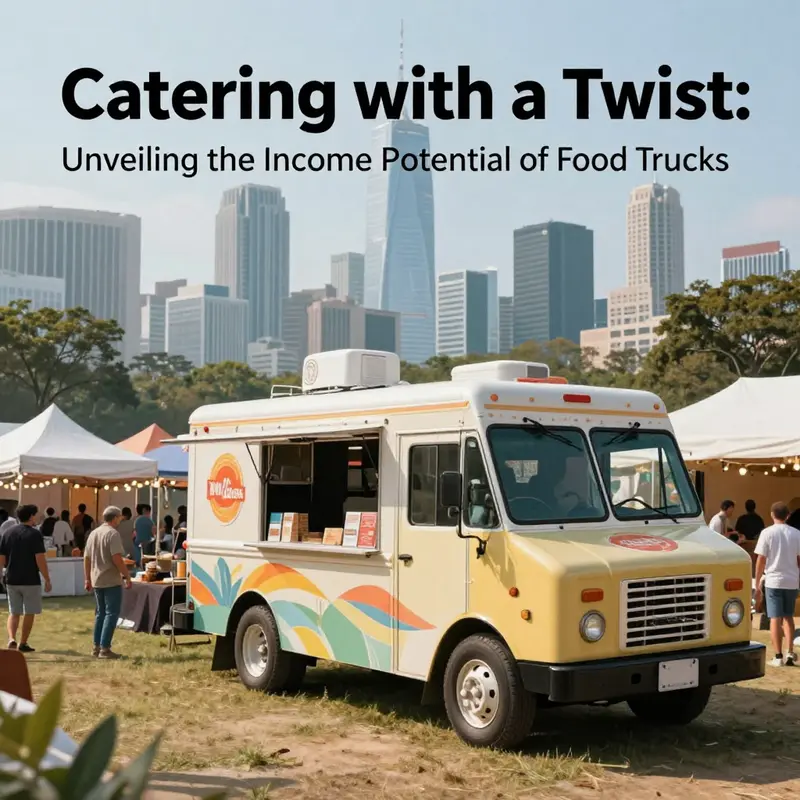
The appeal of catering for a food truck lies not just in the occasional marquee event, but in a steady expansion of revenue streams that leverage the truck’s existing kitchen, staff, and brand. When a truck shifts from street service to catering, the economics can shift dramatically. Regular, location-driven sales in high-foot-traffic corridors often produce a dependable base, but catering unlocks a higher per-person price point and the potential for concentrated, high-margin days. In practical terms, many operators report monthly gross revenues in a broad range that stretches from twenty thousand to fifty thousand dollars, depending on geography, menu price points, and hours devoted to servicing events. Catering amplifies that ceiling by turning a single well-executed event into a substantial lift in monthly numbers, especially when the operator builds a portfolio of recurring corporate clients, weddings, and festivals. This is not a simple add-on; it is a strategic shift that can redefine profitability if it is paired with disciplined planning and a clear understanding of event economics.
The core math behind catering earnings is straightforward, yet the specifics matter. A typical corporate event with around one hundred guests charging between thirty and fifty dollars per person yields between three thousand and five thousand dollars for the truck. Larger, more upscale affairs can push the same event into the five-figure zone, particularly when menus are tailored to the client and include premium components or elaborate service formats. These numbers, while illustrative, underscore a broader principle: catering events often carry higher margins per guest than traditional walk-up service because the truck can optimize staffing, logistics, and menu design for a defined headcount and venue. The challenge, of course, is filling the calendar with these opportunities and delivering a reliable product that aligns with client expectations, timelines, and budget.
To understand what a food truck can realistically make from catering, it helps to balance the big-event potential against the practical realities of costs and capacity. Catering typically requires a combination of staff who can execute set-up, service, and breakdown, plus the equipment to handle a larger, more controlled service environment. The operational costs—fuel, insurance, permits, and the depreciation or rental of specialized catering gear—rise with the scale of events. Yet these costs can be controlled with smart planning. A crew that can flex from a four-person street team to a six- or eight-person catering crew for peak events, combined with efficient mise en place, can keep labor costs manageable while still delivering high-quality fare. The result is a cost structure that, when executed well, sustains healthy margins even as you scale the number and size of events on the calendar.
This is where the broader market context matters. The food truck sector has grown to a global value that has attracted attention from investors and operators alike. As of 2025, the market was valued around four-point-four-two billion USD, and projections put it at approximately six-point-zero-six billion USD by 2030. This trajectory translates into a compound annual growth rate of roughly 6.5 percent. While catering-specific data is not always broken out in every study, the implication for operators is clear: demand for mobile, customizable, and uniquely branded dining experiences is expanding. The catering niche benefits from this growth because events—whether corporate settings, weddings, or festivals—demand not just food but an experience. A food truck that can craft a memorable one can command premium pricing, secure repeat engagements, and benefit from word-of-mouth and social media amplification that are uniquely suited to mobile vendors.
As operators evaluate whether catering should become a larger share of their business, several structural questions arise. How many events can a truck realistically service in a month? What are the peak seasons for corporate gatherings or weddings in your area, and how does this align with your other operating hours? What menu types oscillate most effectively between price and scale? The answers are highly local and depend on the logistical footprint of the truck, the size of the event, and the level of service offered. A standard, mid-priced catering package might combine a curated menu, warm serving stations, and a compact service team to service a few hundred guests at a time. A premium package could include bespoke menu development, extended service, and specialized equipment, raising the per-event revenue substantially. In this context, the skill set of the operator—seasoned menu engineering, contract negotiation, and meticulous logistics planning—becomes a core driver of profitability.
The role of innovation in this space cannot be overstated. Digital permitting, streamlined licensing portals, and the emergence of shared commissaries are lowering entry barriers and accelerating the scale potential for new operators. These infrastructure shifts make it easier to obtain the permits needed to service events quickly and reliably, which in turn expands the pool of events a truck can realistically pursue. On the client side, social media and real-time visibility turn a good catering offering into a discoverable and desirable service. An operator who couples a strong catering menu with active event marketing, timely proposals, and a solid portfolio of past engagements can convert inquiries into bookings with greater efficiency. In practice, a well-branded truck that can demonstrate a proven track record at weddings, corporate functions, and regional festivals often commands higher margins than pure retail sales alone because clients pay for stress-free execution and a reliable hospitality experience.
In thinking about growth, it is useful to frame catering not merely as a series of one-off orders but as a pathway to scalable operations. Franchising and the rise of standardized service models are beginning to reshape how independent operators approach catering. While the market remains distributed with many owner-operators, these emerging structures offer potential efficiency gains, more predictable quality, and easier onboarding for new staff. This is especially relevant in urban markets where permit processes and regulatory requirements can be complex. A cohesive model—one that harmonizes recipe standardization, staffing templates, and turnkey event logistics—allows operators to ramp up catering capacity without sacrificing consistency. The pursuit of efficiency gains, including the move toward sustainability with electric powertrains and purpose-built chassis, serves multiple purposes. It reduces long-term operating costs, supports city zero-emission initiatives, and appeals to clients who value responsible and future-forward hospitality experiences.
Of course, catering earnings are not simply a function of price and headcount. The seasonality of events, location-specific demand, and client acquisition costs all shape the bottom line. In regions with strong corporate cultures and high-value weddings, catering revenue can form a meaningful portion of annual earnings. In other markets, festivals and weekend events may fill the gaps, complementing steady street sales while allowing the truck to maintain a steady operating rhythm. For operators who pursue a balanced mix, the path to stability lies in a disciplined sales pipeline: predictable outreach to event planners, a catalog of pre-priced packages, and a system for rapid customization within a defined price band. When these elements align, catering not only increases revenue but also enhances brand visibility, creating a virtuous cycle where more bookings lead to more referrals, which in turn sustains higher-priced engagements.
The narrative around catering revenue is not complete without acknowledging the broader market momentum that supports it. The trend toward experiential urban dining, paired with the ease of reaching diverse audiences through digital channels, keeps catering attractive for food trucks. The growth story—driven by urbanization, consumer demand for convenient and engaging dining options, and the ability to reach audiences with precision through digital platforms—augurs well for operators who want to expand beyond street-side sales. The forward-looking landscape also emphasizes sustainability and efficiency, as operators pursue more cost-effective and environmentally friendly operations. Electric propulsion, modular serving setups, and scalable team configurations contribute to a model where catering can grow with fewer headaches and lower long-term costs. This combination of demand, efficiency, and infrastructural support makes catering a central pillar for many trucks seeking to transform occasional high-value gigs into a sustainable, scalable business.
For operators charting a course into catering, there is practical wisdom in drawing on established financial planning perspectives and learning from those who have navigated the transition successfully. As with any business expansion, it pays to start with a clear pricing framework, a menu that scales, and a rigorous understanding of event-level profit. A practical approach to budgeting may include reserving a portion of the event price for contingency costs, building in margins that reflect the added logistics and staff required, and maintaining a flexible, modular menu that can be adapted to different client needs without fragmenting the kitchen. Those who study the craft and economics of catering can better anticipate the sweet spots—events that deliver premium value while preserving a manageable level of risk. For readers seeking practical financial guidance, a trusted starting point is available through practical financial tips for first-time food-truck owners, which offers a grounded framework for budgeting, pricing, and planning as you dip into catering and event-based work. financial tips for first-time food-truck owners.
Looking ahead, the catering segment of the food truck industry appears poised to continue its ascent. The market’s expansion, the increasing sophistication of event clients, and the ongoing efficiency gains through technology and shared infrastructure all support a durable revenue path for operators who invest in catering as a core capability. As operators refine their menus, optimize their staffing plans, and leverage digital channels to build a robust booking pipeline, catering becomes less of a side hustle and more of a strategic growth engine. In this environment, the most successful trucks will blend culinary distinction with reliable execution, creating memorable experiences that justify premium pricing and foster lasting client relationships. The result is a business model capable of delivering meaningful revenue while also expanding brand reach and influence within a crowded, rapidly evolving marketplace. For readers who want a broader market context, external research provides a comprehensive view of growth trajectories and market dynamics shaping the food truck sector today and into the next decade, including the customer demand drivers that make catering a particularly attractive avenue for expansion.
External resource for further market context: Grand View Research provides an in-depth analysis of the broader food truck market, with projections and drivers that illuminate why catering revenue matters within the larger growth story. https://www.grandviewresearch.com/industry-analysis/food-truck-market
Final thoughts
Catering with a food truck presents a unique opportunity to tap into a growing market filled with potential for significant income. By understanding revenue variability, pricing strategies, and location impacts, event planners and food enthusiasts can better navigate this delicious landscape. As the popularity of food trucks continues to rise, staying attuned to market trends and operational costs will ensure long-term success. The financial benefits are limitless for those ready to embrace food truck catering as part of their culinary repertoire!