
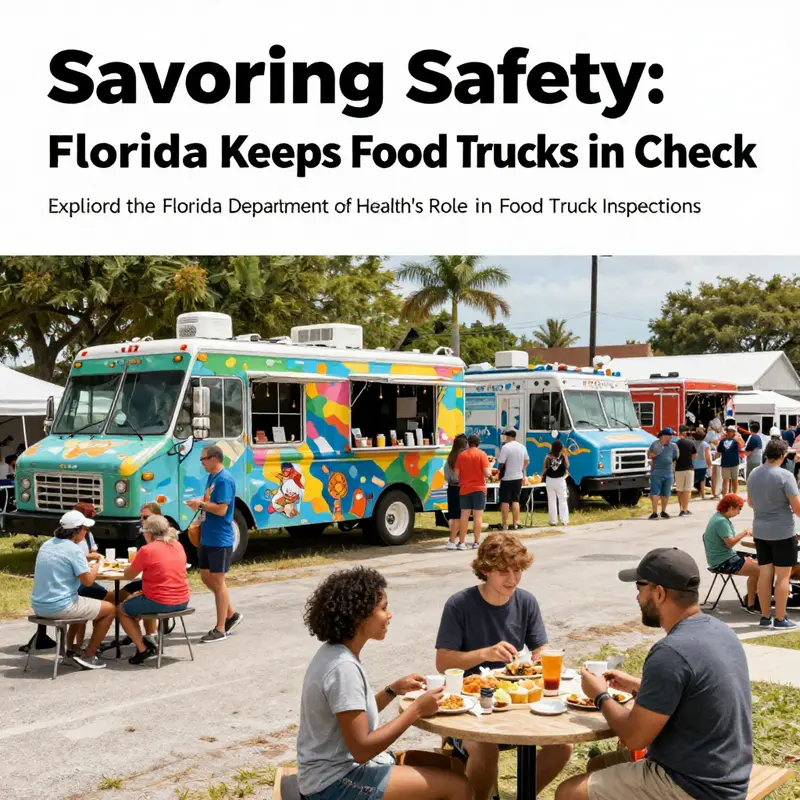
Food trucks have transformed into a beloved staple of Florida’s culinary landscape, delighting locals and tourists alike with their diverse menus and vibrant atmospheres. However, with this booming popularity comes a crucial responsibility: ensuring that every bite is safe and healthy. The Florida Department of Health (DOH) plays a pivotal role in making this happen. In the following chapters, we’ll delve into the food safety regulations guiding these mobile eateries, uncover how inspections take place, see how the public can access inspection records, and highlight the ongoing compliance efforts by the DOH. Strap in for a tasty journey into the world of food truck safety!
Guardians on Wheels: Florida’s Health Inspectors Safeguard the Mobile Kitchen
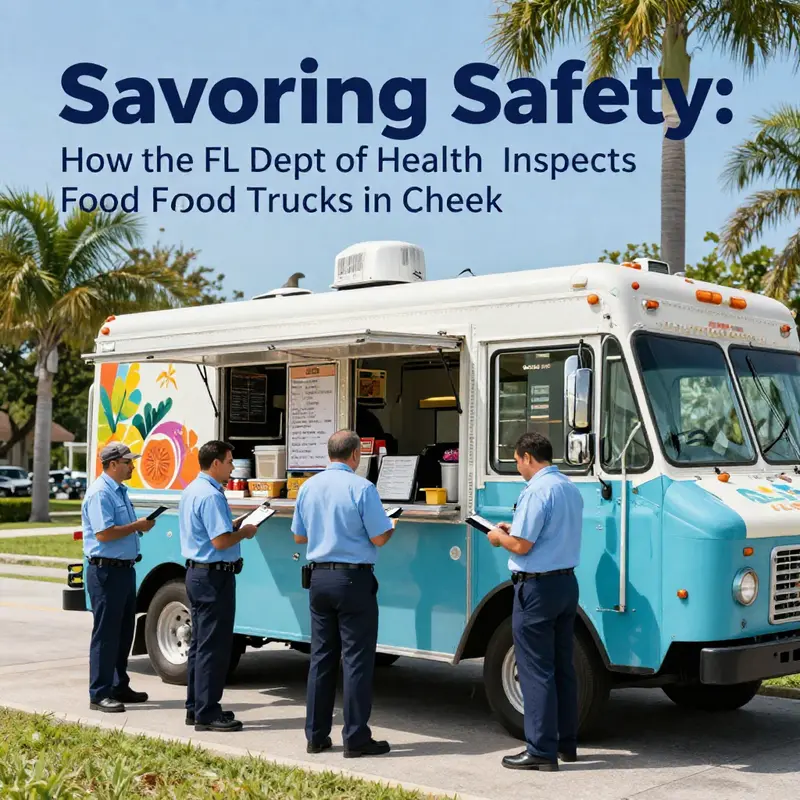
In Florida, the mobile kitchen travels from street corners to festival grounds, carrying a promise of safe, clean, and properly prepared food. The Florida Department of Health, through its Division of Food Safety and Inspection, relies on county health departments to verify that promise in everyday practice. Inspections of mobile food establishments are practical checks aimed at preventing illness, catching risky patterns before outbreaks, and giving communities trustworthy dining options wherever a truck parks.
The oversight translates into regular, unannounced visits. Inspectors arrive at busy corners or waterfronts with a checklist, evaluating temperatures, cleaning routines, and staff who cook and serve. The emphasis is on consistent standards that travel with the truck across climate zones, and inspectors work under state guidance while serving at the county level. This layered structure creates a safety net for vendors and the public.
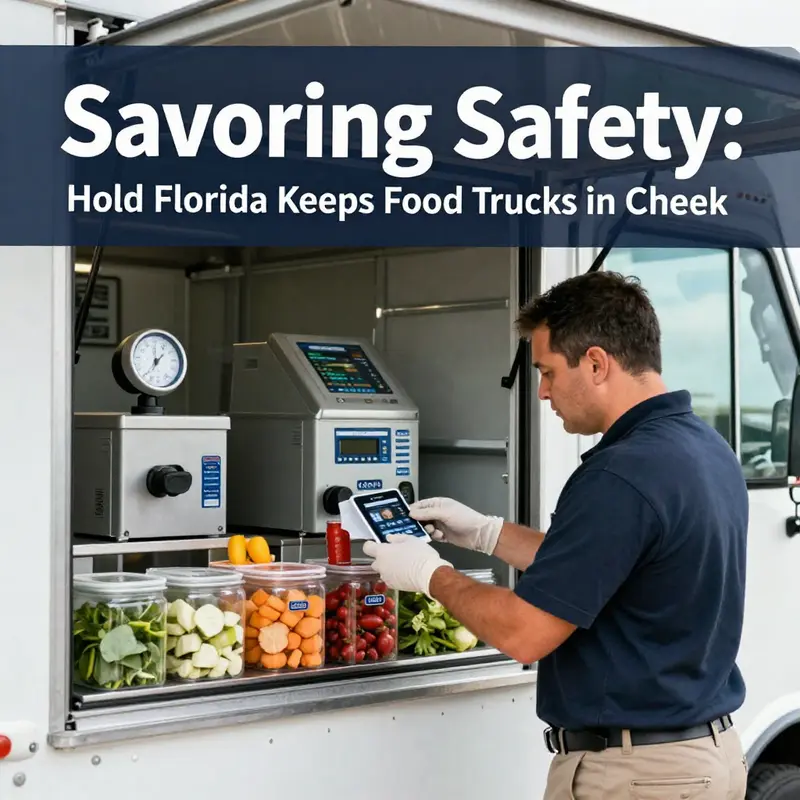
The scope is broad yet focused on the realities of a mobile kitchen. Food safety is a lived practice, happening in cramped spaces, during peak service, and in changing weather. Core domains include temperature control, handwashing facilities, sanitation of equipment and surfaces, pest management, and staff training. Hot foods must stay hot, cold foods cold, and cold-chain equipment must be accurate and reliable. Inspectors review temperature logs, calibration records, and the procedures used to prevent time-temperature abuse.
Handwashing and sanitation receive close scrutiny. A mobile unit must have a sanctioned handwashing station with soap and towels, functioning drainage, and staff who wash before handling food, after using the restroom, and after any potentially contaminating task. Cleanliness of equipment and workspace is evaluated, including grills, prep surfaces, and storage areas, as well as the routines for cleaning, sanitizing, and air-drying.
Pest control is another priority. Inspectors look for integrated pest management, sealed doors where appropriate, waste handling, and regular removal of trash from the unit. Training records show staff have completed required food safety coursework and can demonstrate knowledge of safe cooking temperatures, cross-contamination prevention, and allergen management. A truck that can explain its safety plan demonstrates a culture of preparedness that translates into safer service.
In practice, a typical day involves external observations of handwashing and waste management, followed by internal checks of thermometers, cold holding units, labeling, and the availability of a person in charge who can explain procedures. Inspections are quick yet meticulous because a mobile unit’s space and movement can hide lapses that would be obvious in a stationary kitchen.
Public reporting and permits form an important part of the system. Florida maintains a process for publishing inspection results, enabling residents and event organizers to review a truck’s performance. Public records encourage operators to strive for consistent compliance. For those seeking a truck’s history, local health departments provide access to reports and trends, usually through an online portal.
While regulations vary, the underlying design remains consistent: clear expectations for temperatures, contamination prevention, cleanliness, and documentation; policy at the state level implemented through county practice; and transparency to the public. The inspectors’ role is to protect the public by partnering with operators to build reliable daily routines that support safer meals for customers on the go. For more information, resources and example reports can be found through official Florida health channels.
On the Front Lines of Florida’s Food Safety: How the Department of Health Inspects Food Trucks
When diners pull up to a smoky grill or a bright-tinted cart in a sunlit lot, they rarely stop to wonder about the safety checks that stand between pleasant flavor and a public health concern. Yet in Florida, the chain of authority that keeps mobile kitchens from becoming hotspots for illness is real, structured, and consistently applied. The Florida Department of Health (DOH) does more than issue warnings or respond to outbreaks; it delegates a hands-on duty to ensure that every mobile food establishment, including food trucks, complies with state and local regulations designed to protect people who rely on a quick lunch or a late-night snack. The core idea is simple, even if the execution is meticulous: public health authorities must verify that the food truck’s operations do not introduce risk into the already fast-paced environment of traveling meals. This responsibility, carried out through a cooperative framework with local county health departments, forms a statewide safety net that travels with every wheel change, every new event booking, and every shift change of staff.
At the heart of this framework is a division that coordinates and standardizes the inspection process while leaving much of the day-to-day work to local environmental health professionals. The DOH’s Division of Food Safety and Inspection sets overarching expectations and policy, ensuring that rules for temperature control, cross-contamination prevention, sanitation, and documentation are consistently understood across counties. The practical, on-the-ground work, however, is carried out by licensed environmental health specialists from the county health departments. They are the ones who strap on a badge of expertise and walk the truck’s service window, asking for the paperwork, watching how food is stored, and assessing the cleanliness of the cooking area. The partnership between state guidance and local execution is what makes Florida’s inspection regime both uniform and responsive to community needs. In this arrangement, the inquiry is not a one-off event but a continuous, evolving process that reflects the realities of mobile food service—road-side crowds, pop-up events, and the improvisational nature of outdoor dining.
The inspection itself is not a mere glance or a perfunctory check. It is a structured assessment conducted in a way that minimizes disruption to operations while maximizing safety. The inspector looks across several critical domains. First is food handling: how ingredients are received, stored, and moved from prep to cooking to service. Proper handling is about minimizing opportunities for contamination and about ensuring that the person who prepares the food follows established hygiene practices. Second is temperature control. The inspector checks that cold foods are kept on appropriate ice and refrigeration and that hot foods are held at temperatures that inhibit bacterial growth. Temperature control is not about guessing; it is about adherence to documented standards designed to preserve food quality and safety throughout service. Third is sanitation, which covers both equipment and surfaces. The cleanliness of prep surfaces, cutting boards, utensils, and the interior of the truck’s service area is examined. The inspector also notes whether there is a reliable supply of potable water and whether handwashing facilities are present and functional. Fourth is personal hygiene. The staff must demonstrate that they do not transfer pathogens to food through unclean hands or improper practices. Finally, the inspector assesses waste disposal and pest control. Waste must be managed in a way that does not attract or harbor pests, and the truck must demonstrate that it has a plan for maintaining a sanitary environment even in the midst of a busy service window.
Documentation forms a critical part of the process. An operator is expected to present valid food handler permits for staff, proof of liability insurance, and evidence of past inspection records. These documents are not mere paperwork; they are part of a larger verification that the operation has the training, financial responsibility, and ongoing oversight necessary to meet public health standards. The emphasis on documentation also supports accountability. If questions arise later about a particular routine or incident, there is a clear trail that inspectors and operators can follow. The process is not a punitive ritual but a collaborative set of practices that help food trucks operate safely in diverse environments—from a quiet street corner to a bustling festival in a crowded park.
Evaluations occur under a schedule that reflects the realities of Florida’s regulatory landscape. In many counties, inspections are conducted on a regular cadence—often annually or biannually—so operators know when to expect a review and what to prepare for. Yet Florida’s system is not a clockwork routine; it remains adaptable. Unscheduled inspections may occur in response to complaints, reported health concerns, or observed violations during a prior visit. This is a crucial feature of public health oversight: it allows the state to respond to real-time conditions while maintaining a broad promotional emphasis on proactive compliance. A truck that demonstrates consistent adherence to regulations over time gains the confidence of both the local authority and the customers who rely on its safety record. Conversely, repeated or severe violations can trigger more formal enforcement actions, including notices that require prompt correction, potential fines, suspension of operations, or even permanent closure in extreme circumstances. The consequence structure is designed not to penalize for the sake of punishment but to incentivize continuous improvement and to safeguard the public’s health.
One of the most important features of Florida’s inspection framework is transparency. After each inspection, the results are typically made publicly available through online portals managed by the state or local health departments. This openness allows customers to make informed choices and gives operators a clear and public record of their performance. For a layperson, the idea is straightforward: a pass on inspection means the truck has met established standards, and a badge or sticker may accompany that pass to signal to customers that the truck is in compliance at the time of inspection. If a truck receives a nonpass rating or if violations are cited, the operator receives a formal notice detailing the required corrections and a timeframe to implement those changes. The emphasis is not only on identifying problems but on providing a clear path to remediation. In this sense, inspections are framed as part of a continuous quality improvement loop rather than as a single punitive judgment.
For operators, understanding the process can be a powerful tool. In practice, preparation starts well before the truck hits the road: it begins with cultivating a culture of cleanliness, routine maintenance, and meticulous documentation. Operators are often encouraged to keep refrigeration units and hot-holding equipment maintained and calibrated, to implement standard operating procedures for safe handling, and to ensure that every level of staff has access to appropriate training and certification. The goal is to establish a predictable, compliant operating model that translates into safer food, fewer violations, and a smoother experience during inspection. The path to compliance is not about heroic improvisation on event night; it is about building reliable systems that support safe food handling under pressure and in varied environments. In turn, operators can anticipate the kinds of checks inspectors perform and arrange their spaces so that critical tasks—such as washing hands, sanitizing surfaces, and monitoring temperatures—are visible, verifiable, and routine.
Public records of inspection outcomes are a powerful resource for diners who want to understand the safety track record of the trucks they encounter. This transparency contributes to consumer confidence and helps communities identify consistently compliant operations as they plan events or choose where to eat. For those who own and operate mobile kitchens, the public nature of inspection results encourages ongoing adherence to best practices because it creates an external incentive to maintain standards—not only to avoid penalties but to protect the reputation of the business and the health of customers. The relationship among the DOH, county health departments, and the operators themselves is anchored in shared responsibility. The regulator sets expectations and enforces them; the operator commits to daily practices that align with those expectations; and the public benefits from a safer, more predictable dining landscape.
An important nuance often overlooked by casual observers is the way the DOH coordinates with local jurisdictions. Florida’s health regulations are implemented through a collaborative mechanism in which county health departments perform most inspections, guided by DOH standards and policies. This arrangement balances statewide consistency with local adaptation. Some counties may tailor inspection frequencies or procedures to local conditions while staying within the framework that ensures minimum safety criteria are met. The division does not abandon oversight; rather, it provides a reference point for the field and a centralized repository of guidance that supports uniform interpretation of rules. For operators, this means that if you plan to operate across multiple counties or participate in events sponsored at the county level, you will encounter a familiar set of expectations, even as you adjust to the specifics of each event environment. It also emphasizes the value of staying current with regulatory developments, because changes in rules, new sanitation technologies, or updates to permissible practices are communicated through this state-local network.
To those navigating the world of mobile food service, a practical takeaway is to engage proactively with regulatory resources. The DOH maintains a portal for inspection reports that provides a direct window into the state’s enforcement and compliance record. Reviewing these records can help operators benchmark their practices against a wider field and can assist food service teams in identifying areas where routine maintenance or training would be beneficial. In parallel, operational teams can consult guides that discuss broader regulatory landscapes and how to approach inspections with confidence. For readers who want to explore this context further, there is a resource that offers a broader lens on the regulatory environment: Navigating Food Truck Industry Regulations. This chapter’s emphasis on safety is tightly connected to that broader context, which helps readers see how the day-to-day duties of a truck on the road fit into a larger governance framework that protects public health while enabling entrepreneurship and community dining experiences.
For diners and organizers who want to verify the safety posture of a food truck they plan to patronize or hire for an event, the inspection outcome is a practical, tangible signal. The process is not designed to categorize trucks as inherently safe or unsafe forever; rather, it reflects a snapshot of performance on a given day with the expectation that operators will address any issues promptly. This dynamic is part of the strength of Florida’s system: it rewards consistent compliance while offering clear mechanisms for remediation when lapses occur. The sticker or sign that accompanies a pass is more than a certificate of compliance; it is a visible reminder to operators that safety is an ongoing obligation and to patrons that their health is a shared priority. It is this culture of accountability, reinforced by the DOH’s oversight, that allows food trucks to flourish without compromising public health.
As the mobile dining economy continues to grow, the inspection framework remains a cornerstone of responsible service. It provides a steady foundation for safe operations while accommodating the innovation and flexibility that make food trucks a vibrant part of Florida’s culinary scene. The process normalizes a routine cadence of checks and updates, anchoring operational standards in evidence-based practices rather than anecdotal assurances. In this sense, the Florida DOH inspection regime does more than enforce rules; it builds trust. It reassures customers that their meals are prepared in spaces that meet validated standards, reassures event organizers that vendors can be relied upon to meet health and safety expectations, and supports operators in maintaining high-quality, compliant practices through ongoing education and transparent reporting. The result is a public health system that recognizes the realities of mobile food service—where speed and spontaneity meet the need for rigorous hygiene—and responds with a disciplined, clear, and accessible approach to safety.
For readers seeking direct sources about the official process and current inspection data, the Florida Department of Health provides access to Food Service Establishment Inspection Reports, which detail inspection findings and outcomes for individual establishments. This official resource serves as the public-facing mechanism by which Florida’s health authorities communicate safety performance and adherence to standards across the state’s mobile food landscape. It is a reminder that, even in the fast-paced world of food trucks, safety remains methodical, checkable, and accountable. If you want to explore the authoritative records or look up a specific truck’s inspection history, you can visit the official portal that hosts these reports.
Internal link note: For a broader orientation to the regulatory landscape that shapes how these inspections are implemented, consider reading about the topic of navigating food truck industry regulations. This context helps connect the day-to-day discipline of food safety with the larger policy framework that governs what operators must know and do. By understanding both the procedural elements and the regulatory environment, readers gain a more complete picture of how the Florida DOH inspection program operates at the intersection of public health and entrepreneurial activity.
External resource: For official inspection reports and current regulatory guidelines, see the Florida Department of Health’s Food Service Establishment Inspection Reports portal. This external reference provides direct access to inspection outcomes and supporting documentation, reinforcing the transparency and accountability that underpin the state’s approach to mobile food safety. https://www.floridahealth.gov/diseases-and-conditions/food-safety/food-service-establishment-inspection-reports
In sum, the Florida DOH does inspect food trucks, and it does so in a way that merges statewide standards with local execution. The inspections are purposeful, the outcomes actionable, and the process transparent. For operators, staying aligned with these expectations means building robust, well-documented practices that withstand both routine checks and the occasional ad hoc review. For the public, it offers a trackable pathway to trust—an assurance that the food served from a wheel and a window has been scrutinized and found compliant, and that there is a clear route to remedy if issues arise. The system is not perfect, nor is it meant to be; it is an active, ongoing commitment to protecting health in a setting that thrives on speed, mobility, and flavor. And in that commitment lies the practical answer to the question that began this chapter: yes, the Florida Department of Health inspects food trucks, and its structured, transparent approach safeguards the shared space where florida’s mobile kitchens operate.
Public Health Inspections of Florida Food Trucks: How the DOH Keeps Mobile Kitchens Safe
In Florida, inspections of mobile food establishments, including food trucks, are a routine part of public health oversight. Local county health departments carry out inspections under the Florida Department of Health framework, ensuring that safety standards are met across the mobile food sector. The goal is to protect the public by verifying proper handwashing, correct temperature control, clean facilities, and safe food handling in transit and service.
Inspectors review how food is received and stored, monitor hot and cold holding temperatures, check surfaces and equipment for cleanliness, and confirm that pest control and waste management practices meet state requirements. They also assess the truck layout for safe workflow and cross-contamination prevention, as well as proper documentation, such as food safety plans and supplier records.
Inspections are usually scheduled but can be triggered by complaints or follow-up investigations. If a deficiency is found, the inspector documents the violation, categorizes its severity, and requires corrective actions. The intent is corrective and educational, not punitive, helping operators improve practices over time.
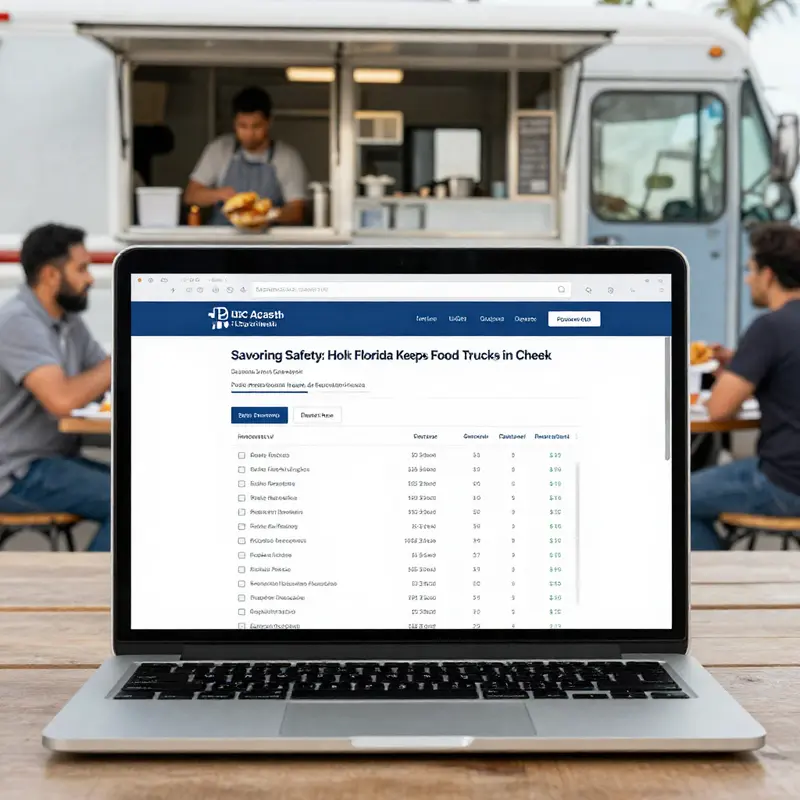
Transparency is a central principle. The Florida Food Service Inspection Program (FSIP) hosts an online portal where the public can search for a truck’s inspection history by name, location, or license number and view scores, violations, and actions taken. This public access supports informed dining choices and accountability for operators.
For operators and event organizers, the system encourages consistent safety practices and reliable records. Counties apply state guidelines with local context, recognizing different environments while preserving core safety standards. The overall framework balances public protection with the realities of mobile food service.
Readers seeking more detail can visit the official FSIP page for records and guidelines, and explore individual truck reports to see how inspections unfold over time. The public ledger of inspections represents a dynamic tool for safety, transparency, and trust in Florida’s mobile food economy.
On Wheels Under the Watchful Eye: Florida’s Department of Health and the Inspection of Food Trucks
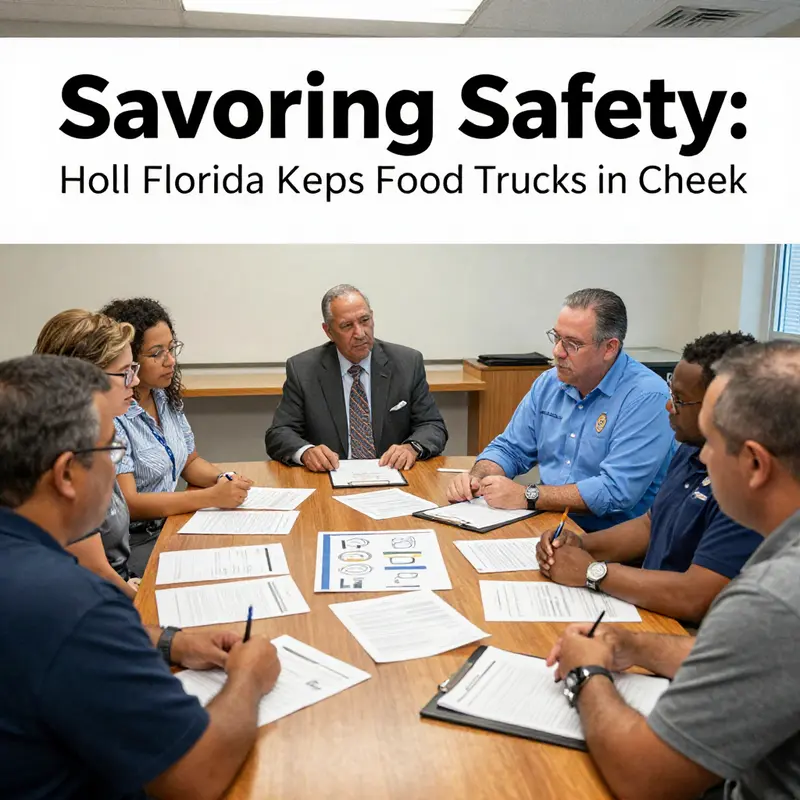
In the bustling ecosystem of Florida’s street cuisine, food trucks operate as moving storefronts that must meet the same health and safety standards as brick-and-mortar restaurants. The Florida Department of Health (DOH) occupies a central role in safeguarding public health by overseeing, guiding, and enforcing those standards for mobile food establishments. This oversight is not a single, isolated mandate handed down from on high; it is a collaborative, on-the-ground practice implemented through a network that includes the DOH’s Division of Food Safety and Inspection and the local county health departments that perform many routine tasks in the field. The arrangement reflects a recognition that public health is both statewide in its requirements and local in its execution. The DOH sets the framework, while county agencies, with their boots on the curb, ensure it is implemented wherever a truck peddles its fare across the state’s many counties. The inspection reports that result from this work are often posted publicly, enabling consumers and operators alike to verify compliance and understand where improvements are needed. For a practical entry point into the regulatory landscape, operators and readers can explore resources and follow-up information on the state’s official portal that hosts food service establishment inspection reports, which include mobile vendors. These reports are a public record of how well a given operation adheres to established food safety practices and what actions, if any, are required to align with the rules.
The DOH’s oversight rests on a triad of core functions: establishing a safety framework for mobile food service, training and guiding local inspectors to apply that framework consistently, and communicating results to the public. The Division of Food Safety and Inspection is the statewide home base for policy and standards, but when it comes to day-to-day inspections, the work is carried out by local health departments. This arrangement allows inspectors to be geographically proximate to the trucks they evaluate, offering an opportunity for quicker follow-up, more frequent checks, and a better grasp of location-specific challenges. The public-facing component of this system—the inspection reports—transforms compliance into transparency. Anyone can visit the Florida Department of Health’s online reporting portal to review a truck’s inspection history, the severity of any violations, and whether those violations were corrected within specified timelines. This blend of centralized policy and local execution creates a regulatory cadence that moves with a truck’s journey as it circulates through different neighborhoods and counties. The value of such a system becomes especially evident when considering the mobile nature of the enterprise; a truck’s schedule can span markets, fairs, and parks, creating a dynamic that fixed-location restaurants do not encounter with the same frequency or breadth. In this context, the DOH’s approach—clear standards, local enforcement, and public accountability—offers a coherent path toward safer food service wherever the wheels take the business.
At the heart of the inspections is a practical examination of what keeps food safe from the moment it is prepared to the moment it reaches the customer. Inspectors evaluate several critical domains: temperature control, cross-contamination prevention, personal hygiene, and the proper storage of ingredients and finished products. While the specifics of enforcement may vary by county, the underlying expectations are aligned with state and local food safety regulations designed to minimize the risk of foodborne illness. The emphasis on temperature control reflects a basic principle of food safety: perishable items must be kept out of the danger zone, where bacteria can grow rapidly, and must be kept at temperatures that preserve quality and safety. Cross-contamination prevention is another foundational tenet, ensuring that raw products do not come into contact with ready-to-eat foods and that separate utensils and surfaces are used for distinct tasks. Personal hygiene—handwashing, clean uniforms or aprons, proper glove use where appropriate, and management of illness among staff—receives careful attention because the human element remains a frequent source of lapses in safety. Beyond these, inspectors verify that equipment, food storage, and the overall sanitation of the truck meet established standards. They look for proper storage of ingredients, clean and sanitized preparation surfaces, adequate access to hot and cold water, cleanable and functional handwashing sinks, and the presence of pest-control measures. In short, inspectors assess whether the operation can be trusted to handle food safely in a setting that is constantly in motion and exposed to changing environments.
The inspection process itself is built to accommodate both the routine, scheduled oversight that keeps the system steady and the responsive, complaint-driven checks that address specific concerns raised by the public. Routine inspections establish a baseline of compliance for each operation, while complaint-based inspections provide a mechanism for addressing observed or reported violations that could pose an immediate risk to public health. In practice, this means an operator might be visited on a predictable cycle by a local health department or may be asked to address a particular issue sooner if a complaint emerges. The dual approach helps ensure that mobile vendors maintain a consistent standard while also being responsive to new or evolving situations as they travel from location to location. Once an inspection is completed, the findings are documented in a formal report. Violations—ranging from minor to significant—are noted, and corrective actions are typically required within a defined timeframe. Depending on the severity and nature of the violations, follow-up inspections may be scheduled to confirm that corrective measures have been implemented. This ongoing cycle of inspection, correction, and verification is the mechanism that keeps food safety practices current across Florida’s diverse mobile food landscape.
For the operator, this process can feel complex because it traverses multiple jurisdictions and moves with the truck’s itineraries. The mobile nature of food trucks imposes practical hurdles for consistent oversight. A truck might be inspected in a county that has a robust program and ample inspector presence, then operate in another county with a leaner staff or different interpretation of rules. While the DOH provides a unified framework, the reality on the ground is a mosaic of local practices. This mosaic can lead to variations in how clearly a rule is articulated, how quickly corrections are enforced, and how aggressively enforcement actions are pursued. The DOH recognizes this challenge and has invested in standardization efforts that aim to harmonize procedures across counties. Training programs, standardized checklists, and shared guidelines are among the tools used to reduce inconsistencies while preserving the flexibility required to address local conditions. The ultimate goal is not to diminish the accountability that a public health inspection provides but to ensure that the safety expectations are clear, equitable, and achievable for all operators regardless of where their truck happens to be parked.
Beyond the mechanics of inspections, the DOH’s work includes education and outreach designed to help operators understand and meet their responsibilities. The educational resources offered by the department are intended to reduce violations by giving operators practical advice on how to organize a mobile kitchen, how to manage inventories, how to maintain proper documentation, and how to train staff in safe practices. This emphasis on proactive education complements the inspection regime. When operators understand the why and how of the rules, they are better positioned to preempt issues before inspectors arrive. It is this combination of education, transparent reporting, and standardized inspection practices that supports a mobile food sector that is both vibrant and safe.
The public-facing aspect of this framework—inspection reports—adds a layer of accountability that benefits consumers and operators alike. The reports provide a historical snapshot of how an individual truck performed on specific dates, what violations were recorded, and whether the operator subsequently addressed those issues. Public access to this information can influence decisions by customers and event organizers, who may seek out trucks with stronger safety records. It also incentivizes operators to maintain high standards consistently, not merely to pass an inspection on a single day. In this sense, the regulatory approach reinforces a culture of safety that travels with the truck, rather than being tethered to a single location. The availability of inspection outcomes online invites ongoing dialogue about best practices and draws attention to areas where training and resources can have the greatest impact. It is a reminder that food safety is not simply a regulatory hurdle but a continuous commitment that follows the truck from one crowd to the next.
For readers who want to explore these topics in more depth, a practical entry point to the regulatory landscape is a resource that consolidates and clarifies the rules governing food trucks. It offers operators a consolidated view of expectations, tips for compliance, and strategies for building a compliant program within the realities of mobile service. This kind of resource can be especially valuable for first-time operators who are charting their course through the regulatory terrain. In addition to internal references, it is useful to consult the official records and the state’s guidance to understand how the system functions in practice. The official DOH portal that hosts inspection reports provides one way to verify past performance and to gauge ongoing compliance across the fleet.
For those who want a direct route to understanding the broader regulatory environment in a practical, operator-friendly way, consider a resource that maps the regulatory landscape for mobile food service. This material, while not a substitute for the official compliance manuals, offers insights into how the different pieces of regulation fit together in everyday operation. It can help operators anticipate what inspectors might focus on and how to design a kitchen in a truck that inherently supports compliance. To access such guidance, you can follow this navigational route: Navigating Food Truck Industry Regulations. The text for this link is embedded here as a practical bridge to a deeper understanding of the regulatory journey that accompanies every mile traveled by a mobile kitchen.
In addition to public inspection reports and educational resources, the state also maintains a series of formal standards and procedures that underpin every local inspection. The Florida DOH makes clear that a standardized approach, while implemented at the local level, aligns with statewide expectations about safe food handling, sanitation, and documentation. The aim is to ensure that regardless of where a truck operates within Florida, the core requirements are the same, and the obligations of the operator are transparent and enforceable. The DOH’s efforts to standardize procedures are ongoing, acknowledging that resources and local capacity can influence how strictly and consistently rules are applied. To support these efforts, digital reporting systems have been introduced to streamline record-keeping, facilitate data sharing among counties, and provide clear audit trails for inspectors and operators alike. When a truck moves from one county to another, it is hoped that the digital systems help preserve continuity of oversight, ensuring that a truck’s compliance status travels with it in a manner that is logical and fair.
All of these elements—inspection protocols, challenges of mobility, standardization efforts, educational programs, and public reporting—interlock to form a comprehensive approach to food safety for mobile vendors in Florida. The result is a framework designed to protect public health without unduly stifling the growth of a dynamic and popular segment of the food-service landscape. It is a system that recognizes the unique demands of operating on wheels and seeks to meet them with a combination of rigorous inspection, clear communication, and ongoing education. For operators, that means a clear roadmap: understand the standards, prepare thoroughly, maintain documentation, and view inspection results as a tool for continuous improvement rather than a one-time hurdle. For the public, it means a transparent mechanism by which to assess safety performance and make informed choices about where to eat or how to plan events.
To check on a specific truck’s past performance, interested readers can consult the official portal where inspection reports are published. The portal provides access to results by facility, county, and date, making it possible to look up the inspection history for a mobile vendor, understand what issues were found, and see how quickly corrective actions were completed. This transparency supports accountability and fosters trust between operators, regulators, and the consuming public. It also helps to highlight best practices across the fleet and to identify areas where additional training or resources could have the most meaningful impact on safety.
External resource: For official standards and authoritative guidance, refer to the Florida Department of Health’s Food Safety page, which outlines the state’s framework for safe food handling, licensing, inspections, and related public health protections. https://floridahealth.gov/programs-and-services/food-safety/index.html
Final thoughts
The Florida Department of Health’s inspection of food trucks is an essential part of maintaining food safety and public health in our state. Each inspection ensures that food trucks not only meet legal standards but also provide delicious meals that can be enjoyed with peace of mind. Whether you’re an event planner, HR specialist, community group, or simply a food enthusiast, understanding these protocols can help inform your choices and keep our culinary adventures safe. Our appreciation for food trucks can be enhanced by knowing they are held to high safety standards, ensuring that every delightful bite is both tasty and hygienic.