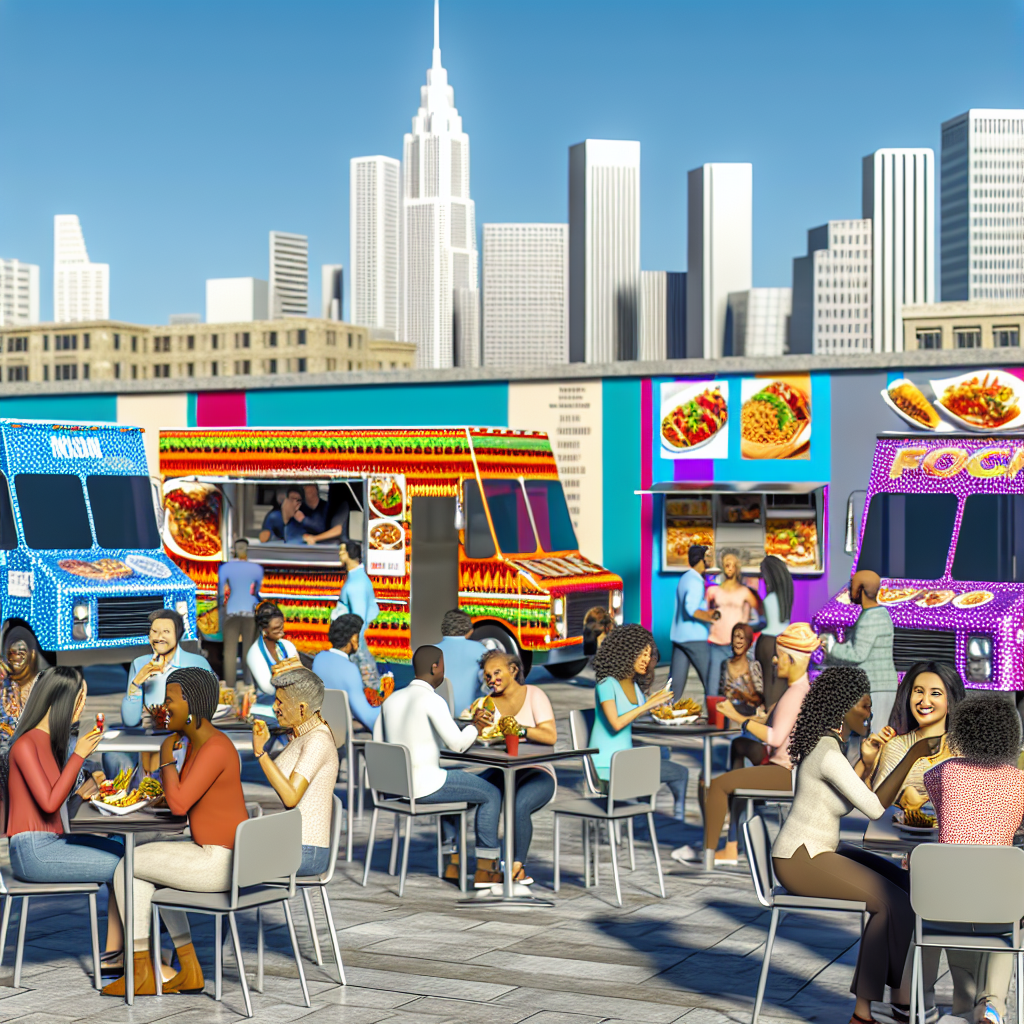
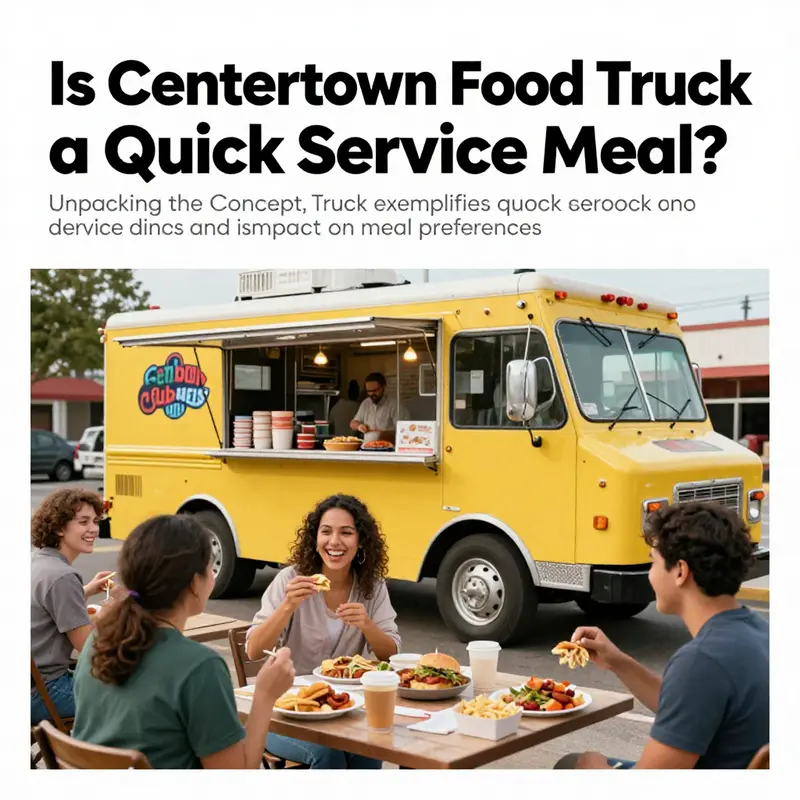
The ever-growing food truck trend has mesmerized food enthusiasts and event planners alike, offering a flavorful array of conveniently prepared meals. Among these mobile kitchens is the Centertown Food Truck, notable for its ability to serve delicious ready-to-eat dishes. But how does it stack up against traditional quick service meals? This article unpacks the essential components of the quick service meal concept through five chapters focusing on Centertown. We’ll dive into understanding quick service meals, the importance of speed and efficiency, a comparative analysis with quick service restaurants, the economic implications of mobile dining, and consumer preferences shaping the food truck scene. Sit back, grab a snack, and let’s explore whether Centertown Food Truck truly fits the quick service meal bill!
Why Centertown Food Truck Qualifies as a Quick-Service Meal: Operations, Design, and Customer Expectations
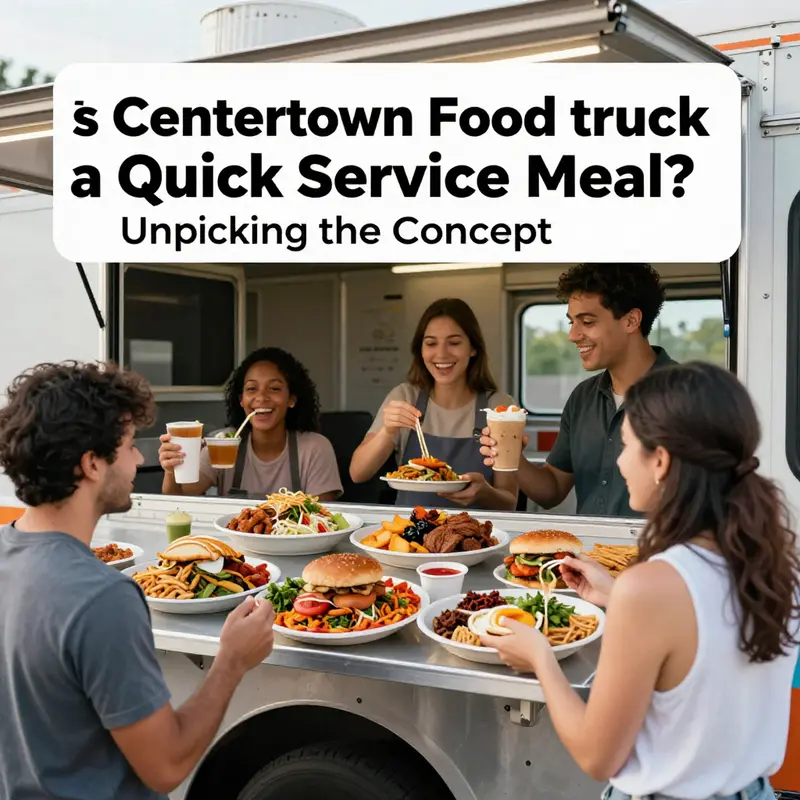
Centertown Food Truck as a Quick-Service Option
The Centertown Food Truck fits the quick-service meal model through its operational choices, menu design, and customer experience. Quick service is not defined by a building or a franchise tag. It is defined by speed, simplicity, predictable value, and operational efficiency. When those elements come together on wheels, a food truck becomes the mobile equivalent of a quick-service outlet.
At its core, quick service prioritizes a short path from order to hand. Centertown Food Truck achieves this with a focused menu of handhelds and fast-prep items. Hot sandwiches, tacos, fries, and similar offerings are naturally conducive to rapid assembly. The menu avoids lengthy cooking processes and complex plating. That design reduces preparation steps, lowers the chance of bottlenecks, and shortens customer wait times. A compact menu also supports consistent quality. Staff can execute a small set of recipes quickly, which preserves speed and taste.
Mobility is a practical advantage in the quick-service equation. The truck can position itself where demand concentrates during peak windows. Office corridors, transit hubs, and event perimeters are typical places with predictable lunch influxes. By moving to high-traffic micro-markets, Centertown Food Truck increases throughput without relying on fixed footfall. Mobility effectively multiplies short service cycles across locations, amplifying the quick-service characteristic.
Equipment choices on a food truck also mirror quick-service logic. Limited kitchen space encourages selection of multi-functional appliances and flat workflow layouts. Griddles, fryers, and steamers that support continuous production are common. These tools enable batch preparation and rapid final assembly. Minimal cooking complexity reduces staffing requirements and training time. The result is a compact, efficient production line that meets quick-service benchmarks for speed and consistency.
Customer expectations shape and confirm the truck’s quick-service identity. Patrons seeking a fast meal expect predictable timing, simple ordering, and affordable pricing. Centertown Food Truck delivers on these points with visible preparation, clear pricing, and easily communicated choices. Customers can order, see the assembly, and receive their meal within minutes. This transparency reinforces the perception of fast service and value.
Operational systems further solidify the quick-service experience. Point-of-sale terminals, order displays, and streamlined payment options reduce order handling time. Staff choreographing prep, cooking, and hand-off tasks keeps service moving. Prepping common components in advance—sauces, toppings, and pre-cooked proteins—shortens assembly time during peak demand. Packaging is also selected for quick consumption and transport. Sturdy wrappers, clamshells, and single-hand options make the meal easy to eat on the move, aligning with quick-service behavior.
Throughput metrics matter. A food truck that turns over dozens of orders in an hour demonstrates the same throughput intent as a small fast-casual counter. Measuring average service time per order and peak-minute capacity helps maintain standards. Centertown Food Truck can use these metrics to refine menu offerings and staffing models. Improving throughput often means refining the menu to focus on the highest-margin, fastest-to-prepare items.
Menu engineering balances speed with variety. While simplicity supports speed, customers still value choice. The truck can offer modular items that combine a few base proteins with varied toppings and sauces. This approach delivers perceived variety while maintaining efficient prep. Limited daily specials provide novelty without complicating the core operations. Portion decisions and pricing must remain consistent to preserve the quick-service promise of predictable value.
Health, safety, and regulatory compliance are part of what makes a mobile meal legitimately quick service. A predictable, safe product earns repeat customers. The truck’s small footprint does not excuse adherence to health standards. Centertown Food Truck follows routine cleaning cycles, proper cold chain practices, and clear allergen communication. These practices minimize risk and reduce the chance of service interruptions.
Regulation can shape both route planning and service flow. Understanding local permitting, parking rules, and health codes allows the truck to operate in peak areas without surprises. For practical guidance on those constraints, see this resource on navigating food truck industry regulations. Complying with rules keeps operations stable, which preserves the quick-service reliability customers expect.
Staffing models in a quick-service truck are lean and focused. Cross-trained team members handle cooking, assembly, cashiering, and delivery. Such flexibility reduces idle time and creates redundancy during rushes. Brief, role-specific training emphasizes speed, portion control, and customer interaction. This training fosters a uniform service standard across shifts.
Branding and presentation matter in a quick-service context, even for a food truck. Clear signage, visible menus, and consistent packaging communicate value. A recognizable visual identity helps customers find the truck quickly, reducing search time and shortening the overall transaction. Simple menu boards and legible pricing further accelerate decision-making.
Pricing strategy supports the quick-service label when it targets accessibility and predictable value. Competitive price points and clear combos or meal deals simplify purchasing choices. A quick-service meal should feel like an efficient use of time and money. Bundled offerings that pair a main item with a side and beverage reinforce that perception.
Customer experience touches also include queue management and order pickup logistics. A separate pickup area or clearly marked pickup time reduces crowding and speeds flow. Clear communication about wait times, and efficient handling of mobile orders, help maintain a steady rhythm. Technology integrations that display order status reduce confusion and shorten perceived waits.
Perceived value depends on speed, quality, and price. Centertown Food Truck’s quick-service claim holds when it consistently delivers on all three. Fast assembly, a satisfying portion, and transparent pricing create repeat customers. Ambience and seating are secondary in the quick-service definition. The focus remains on the meal and its delivery speed.
There are limits to the comparison with brick-and-mortar quick-service outlets. A truck cannot replicate the seating or extended menu of a larger counter service. It also faces weather, parking, and supply-chain challenges that can affect consistency. These constraints influence menu decisions and operational redundancies. Yet the advantages—mobility, lower overhead, and local adaptability—make the truck an efficient quick-service alternative.
Viewed through the lens of service design, the Centertown Food Truck meets the key attributes of a quick-service meal. It prioritizes short preparation time, streamlined menus, efficient workflows, and accessible pricing. Mobility enhances the model by aligning supply with demand across micro-markets. With focused operations and compliance awareness, the truck delivers the fast, reliable meals typical of quick-service providers.
For practitioners seeking concrete guidance on configuring carts and trucks for fast service, the following external resource outlines technical specifications and best practices relevant to mobile quick-service operations: https://www.sba.gov/business-guide/starting-a-business/business-food-cart-explained
Speed, Setup, and Service: How Centertown Food Truck Qualifies as a Quick-Service Meal
Speed, Setup, and Service: How Centertown Food Truck Qualifies as a Quick-Service Meal
The Centertown Food Truck demonstrates the key elements that define a quick-service meal: rapid preparation, predictable turn times, compact infrastructure, and mobility that brings food where people already are. Its kitchen is a condensed, purpose-built workspace. Appliances are selected not for versatility but for throughput. Griddles, fryers, and heated wells sit within arm’s reach of counter staff. Ingredients are portioned and prepped for fast assembly. These design choices remove friction points in the service chain. The result is an ability to move customers through the line with minimal delay, which is the central promise of quick service.
Operational rhythms support that promise. Staff work in a tight choreography tailored to busy windows. One person takes orders, another assembles, and a third handles payments and pickups. Menus emphasize handheld items and dishes that require short, consistent cook times. This menu strategy matters. It reduces variation and eliminates long tail preparation tasks that slow service. Even specialty toppings are prepared ahead, in controlled batches, to prevent unexpected bottlenecks during peak demand.
Physical constraints shape both advantages and limitations. The truck’s compact footprint reduces the distance staff travel between stations. That saves seconds on each order, which add up during rush periods. Power and refrigeration systems, though, create trade-offs. Limited onboard refrigeration forces tighter inventory cycles. Power capacity limits simultaneous use of high-draw appliances. When the menu expands to include many heated or chilled components, those systems strain. During high-demand events, the need to manage temperature-sensitive components or to operate multiple appliances concurrently can increase order fulfillment times.
Location and mobility amplify the Centertown Food Truck’s quick-service identity. Mobility lets operators place the truck in pedestrian-rich corridors, next to transit hubs, or near event foot traffic. Being where people naturally pass or gather reduces the time customers need to find their meal. It also supports high turnover because foot traffic translates directly into continuous demand. That said, mobility is not a cure-all. Parking availability and municipal regulations can limit where and how long the truck can stay. These constraints influence throughput in two ways: they determine exposure to customers and they affect the predictability of service windows. When parking options are limited or enforcement is strict, operators spend time scouting or moving, which interrupts service flows.
The truck’s design also prioritizes quick setup and teardown. Slide-outs, pop-up awnings, and service windows create a rapid transition from travel mode to service posture. Crew checklists streamline opening tasks, from warming ovens to assembling condiment stations. These routines shave minutes off startup time and extend productive hours during short events. In markets where events run on tight schedules, the ability to be fully operational within a few minutes adds measurable value.
Supply chain and inventory planning matter more for mobile kitchens than for brick-and-mortar quick-service restaurants. Limited storage forces frequent restocks or smaller batch cooking. Consistent menu items that rely on long-lasting ingredients help maintain speed. When operators introduce perishable or high-variation items, they must balance customer interest against the risk of service slowdowns. Tools like pre-portioned packaging, simplified assembly guides, and visual order boards help maintain tempo and accuracy. Those tools are small investments that drive steady throughput.
Customer expectations shape perceived speed as much as actual service time. Patrons approaching a food truck expect short lines and fast delivery. When the experience aligns with those expectations, the service qualifies clearly as quick service. Conversely, a long line with irregular wait times erodes that identity, even if individual orders are prepared quickly. Crew communication and visible progress cues—such as display boards or call numbers—help manage expectations. They reduce perceived wait time and keep the flow moving.
Technology plays a growing role in achieving quick-service performance on a truck. Mobile point-of-sale systems, contactless payments, and online preordering reduce transaction time. Kitchen display systems and order timers coordinate cooks and servers, preventing duplication and idle intervals. Simple real-time inventory alerts prevent menu items from being advertised when they are out of stock. Each technology increment removes small inefficiencies that otherwise accumulate into substantial delays. For an operation like Centertown, these tools are cost-effective ways to sustain quick service during busy shifts.
Staffing strategy must prioritize cross-training. With fewer hands and less space, employees must be versatile. Cross-trained crew members keep line movement steady when someone steps away for restocking or equipment checks. Predictable shift patterns during high-traffic times also help. Experienced teams anticipate demand patterns and peak hours. They plan prep quantities accordingly and adjust on the fly when demand deviates from forecasts. That operational discipline is a hallmark of quick-service providers.
Regulatory and safety requirements introduce another dimension that affects speed. Food safety standards mandate certain handling practices and temperature controls. Compliance is non-negotiable. During inspections or when protocols change, operators may need to slow assembly temporarily to meet requirements. Properly maintained equipment and clear SOPs reduce the impact of these requirements on service speed. Planning for compliance—rather than reacting to it—keeps service consistent and fast.
Finally, the menu design and portion logic align directly with the concept of quick service. The Centertown Food Truck focuses on dishes that can be assembled in predictable sequences. Portion-controlled ingredients, modular recipes, and reusable prep templates allow a small team to serve a high volume without sacrificing quality. When menu innovations are introduced, they are evaluated against a service-time standard. If an item cannot be produced and delivered within the established throughput window, it is either reworked or reserved for limited-time runs that adjust crew and equipment accordingly.
Taken together, these elements show why the Centertown Food Truck fits the quick-service category. Its physical layout, focused menu, operational procedures, and mobility produce the speed customers expect. Constraints like refrigeration limits, power capacity, parking challenges, and regulatory demands create variables that operators plan around. Those compromises do not negate the truck’s quick-service nature; instead, they shape how quick service is implemented on a mobile platform. For operators, the objective is clear: optimize every small step so the sum of them delivers fast, reliable meals to people on the move. For customers, the benefit is convenience without a long wait.
For a deeper look at how parking and site selection influence throughput and overall performance, see the practical guidance on mastering parking constraints in mobile food service: mastering food truck parking challenges.
Further technical details about mobile kitchen design and performance can be found in an industry overview of food truck specifications and structure: https://www.foodtrucks.com/dessert-food-truck-specifications
null
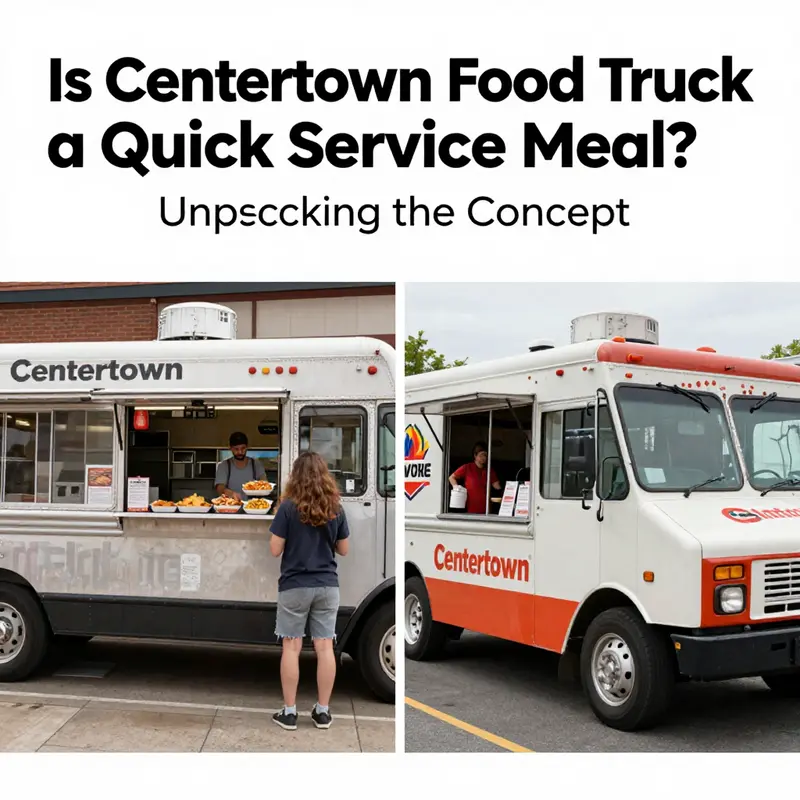
null
On the Move, In Demand: The Centertown Food Truck and the Economics of Quick-Service Meals
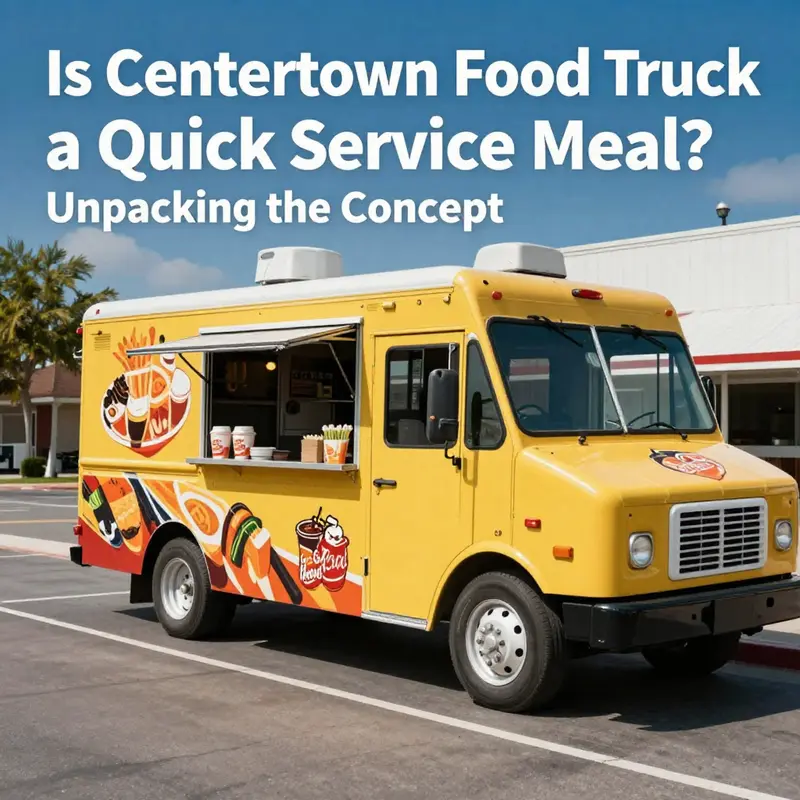
The quick-service model is defined less by a single dish than by a disciplined choreography of service speed, menu simplicity, and high turnover. Customers arrive hungry, place an order that is instantly recognizable, watch it move from grill or fryer to bag or wrap, and depart with little delay. In that sense, a well-tuned food truck operation in a crowded urban corridor can embody the essence of quick service as fully as a brick-and-mortar counter. The Centertown Food Truck embodies this logic in both intention and outcome. It has positioned itself as a fast, affordable option for people who want a reliable meal without the frills that accompany sit-down dining. The research on quick-service meals, including the role of mobile vendors, supports this alignment. Food trucks, especially ones focused on handheld snacks like hot items, sandwiches, and fries, are described as fitting the quick-service model because they excel at speed, efficiency, and convenience. They operate with lean cooking setups, designed to handle a steady stream of customers rather than a la carte dining complexity, and they thrive in high-foot-traffic areas where speed drives volume. The Centertown truck sits squarely within this framework by design and result, serving meals that are easy to prepare, easy to carry, and easy to repeat day after day.
From a broader industry perspective, the argument that Centertown belongs in the quick-service family rests on several converging threads. First, the core infrastructure of the operation mirrors the quick-service playbook: a compact footprint, streamlined workflow, and a menu that emphasizes speed and portability. Second, consumer expectations have evolved toward speed, value, and predictability, especially in urban cores where meals are often timed around commutes, meetings, or quick breaks. The quick-service dining plan models popular in large leisure and entertainment brands reinforce the same logic—fast, redeemable meals at numerous locations—an ethos that translates well to mobile formats. The Centertown Food Truck, with its emphasis on fast, affordable meals, demonstrates how the same economic and operational drivers that shape established quick-service chains also empower nimble mobile vendors to compete effectively.
In practice, the Centertown truck’s offerings—designed to be handheld, minimally complicated in preparation, and forgiving of the busy urban pace—align with the quick-service recipe for success. The food truck format inherently lowers some barriers that brick-and-mortar QSRs face, namely the capital-intensive build-out and ongoing real estate expenses. This mobility translates into cost flexibility, enabling adjustments to pricing, sourcing, and hours to respond to shifting demand. The result is a business model that can endure the same macroeconomic pressures that affect larger quick-service brands while preserving the flexibility to pivot quickly when conditions change. The research you’re drawing on notes that inflation and shifting consumer spending patterns have pushed some diners toward lower-cost options, a trend commonly described as the two-tier economy. In such a climate, a well-positioned food truck that delivers value without sacrificing quality can maintain relevance even as others struggle with margins.
The Centertown operation has faced the same overarching dynamics—rising ingredient costs, labor pressures, and the need to balance affordability with quality. Yet the truck’s ability to keep menu items simple and cost-controllable has helped sustain customer loyalty. A key piece of the puzzle is menu design. Quick-service menus tend to favor items that can be prepared quickly, with limited equipment and training demands, while still offering a degree of customization. Centertown has leaned into this by offering a core set of popular items and a few flexible add-ons. The result is a predictable kitchen rhythm that minimizes missteps during peak hours and reduces waste, a dual win for speed and cost containment. In conditions of uncertainty, the ability to adapt—whether through daily specials, regional ingredients, or portion adjustments—becomes a competitive advantage rather than a vulnerability.
Economic context matters deeply in shaping this narrative. Inflation and labor costs press against every food-service operator, but the mobility of a truck affords a degree of resilience that fixed-location concepts may lack. When ingredient costs rise, a mobile operator can reprice or substitute with similar items that maintain the same perceived value. This is especially important in markets where price sensitivity is acute. The research underscores that consumers, in a two-tier economy, will chase value—defined not merely as the lowest price but as the best combination of price, speed, and taste. The Centertown model, with its emphasis on quick service and affordability, is well positioned to capture that value equation without compromising the customer experience.
Geography adds another layer to the strategic calculus. A 2025 analysis using Square data illustrated how local pricing dynamics shape demand in different regions. Consumers in some markets show a stronger preference for dairy-forward options, while others favor traditional meat-and-starch compositions. For a mobile operator like Centertown, these insights translate into actionable choices: which menu items to foreground on a given day, which suppliers to source from, and how to price offerings to reflect regional costs and preferences. The advantage of being mobile is that adjustments can be made more rapidly than a fixed-location concept can manage. A truck can swing into a high-foot-traffic corridor during lunch rush or reposition to capture evening footfall, testing variations in pricing or menu mix with little long-term commitment.
This flexibility is not merely tactical; it also has strategic implications for labor, supplier relationships, and waste. Labor in a smaller, mobile operation tends to be more adaptable. Staff training focuses on speed, coordination, and consistency rather than complex culinary technique, enabling faster onboarding and lower labor costs per unit of throughput. Supplier relationships can be more dynamic as well, with the possibility of negotiating shorter lead times or seasonal substitutions to keep prices stable. Waste management, too, benefits from a shorter supply chain and a tighter menu, reducing the risk of spoilage and off-spec product. All these factors converge to reinforce Centertown’s viability within the quick-service category, proving that mobility does not preclude scale; rather, it can enable disciplined scale at lower fixed costs.
The single most important takeaway from the economic lens is this: quick service is less about a formal brand category and more about a disciplined operating model. A food truck that prioritizes speed, consistency, and value can be indistinguishable in practice from a quick-service counter in a mall or transit hub. Centertown demonstrates this visibly in its daily rhythm—rapid order fulfillment, predictable portions, and a menu that travelers and locals alike can trust. The case for its quick-service status is strengthened by the broader ecosystem of mobile dining, where handheld formats and compact kitchens are standard features. The research narrative you have compiled emphasizes that the combination of speed, portability, and affordability is not an exception in this space but the defining pattern of modern quick-service dining. Centertown sits squarely within that pattern, translating those principles into a street-level reality that feels effortless while still being a carefully managed business.
From a strategic perspective, the Centertown experience offers a practical blueprint for other mobile operators thinking about how to balance efficiency with customer value. The emphasis on quick turnover means that demand prediction and operational discipline become the core competencies of the business. When the crowd lines up by the curb and the clock is ticking, the team’s ability to deliver hot, well-prepared food in minutes becomes the metric by which success is measured. In markets where price competition is intense, the capacity to offer affordable, customizable meals without compromising quality becomes a durable differentiator. The Centertown model shows that quick service in a mobile format is not a compromise but a deliberate positioning choice that leverages mobility as a strategic asset.
For operators considering the same path, one practical takeaway is to consult model choices as you would when selecting a foundational business framework. The decision to anchor a mobile operation in quick service should align with your speed-to-service goals, your menu simplicity, and your willingness to adjust pricing in response to local conditions. A reference point that helps guide these choices is the broader literature on food-truck models and the strategic considerations behind them. See Choosing the right food truck models for a concise synthesis of how different configurations influence throughput, labor needs, and cost structure. The Centertown experience reinforces that alignment between operational design and market demand can yield a resilient, scalable model even in economically volatile times.
External context adds texture to this narrative. Analysts point to macroeconomic forces—rising costs, shifting consumer priorities, and the volatility of discretionary spending—that shape the outlook for quick-service formats. While large, established chains may weather these storms with bundles and promotions, nimble mobile operators can respond more quickly to evolving conditions. The Centertown case mirrors this dynamic: it faces higher input costs, yet it can reframe its value proposition through price adjustments, portion control, and menu tweaks that preserve appeal across diverse customer segments. In short, the economic pressures that threaten the profitability of fixed-location QSRs can sometimes be navigated more deftly by a well-tuned food truck that remains faithful to the core rapid-service promise.
As the discussion continues across the ecosystem, Centertown’s example serves as a reminder that quick service remains defined by process and pace rather than a particular plot of real estate. The truck doesn’t merely serve meals; it serves an operating philosophy that treats speed, value, and mobility as competitive levers. In an era of inflation and shifting consumer expectations, those levers can be the difference between a shopper who grabs a quick bite and a regular who returns because the experience feels reliable, fair, and aligned with their day’s tempo. The Centertown narrative thus contributes to a broader understanding of how quick service translates from a concept into a lived, everyday practice on streets and avenues across the country.
External reference: What fast food’s downturn says about the U.S. economy. https://www.bbc.com/news/business-68497212
On Wheels, in a Hurry: How a Centertown-Style Mobile Kitchen Embodies Quick Service
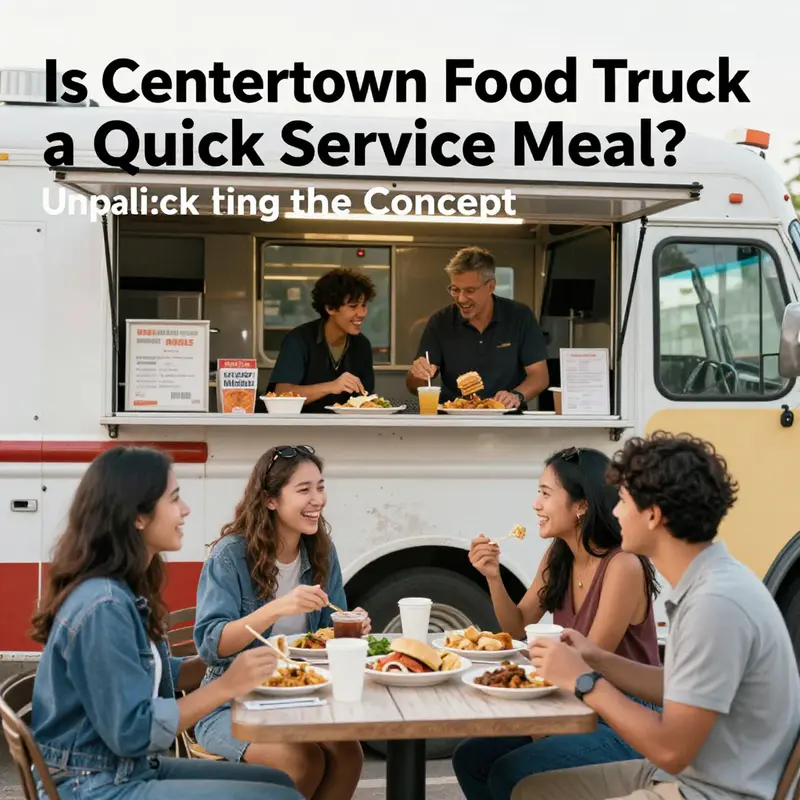
A quick service meal is defined not merely by speed but by a deliberate alignment of pace, practicality, and predictable quality. When a Centertown–style mobile kitchen rolls into a park, a boardwalk, or a summer festival, it embodies that definition in a tangible, observable way. The core attributes are speed of service, a streamlined setup, and food that travels well from counter to customer. In practice, the model relies on compact, efficient equipment, a menu focused on handheld items, and a service flow designed to minimize dwell time for the customer while maximizing turnover for the operator. The result is a dining experience that feels fast, reliable, and accessible—exactly the kind of meal that fits the quick service category. Even as chefs in these environments craft bold flavors and varied profiles, the guiding principle remains constant: deliver sustenance swiftly, with few complications, and at a price point that encourages return visits during peak hours of outdoor activity.
Consumer expectations are a moving target, yet certain tendencies remain stable enough to anchor a quick service assessment. Speed, plain and simple, remains the most valued attribute. Modern diners want to decide quickly, order with minimal friction, and receive their food in the shortest possible time. Alongside speed, convenience holds its own as a critical criterion. People increasingly seek meals that fit busy schedules or a casual setting where lingering over a long, formal dining experience is not the goal. A Centertown–style truck meets these expectations by presenting a compact, legible menu that highlights well-loved staples and a few novel options that can be prepared rapidly. The emphasis on handheld items—fries, hot sandwiches, tacos, wraps, and similar fare—matches the requirement for minimal table service interactions and straightforward assembly at the point of sale. In this way, convenience is not an afterthought but a design principle woven into every step of operation, from pre-prepped ingredients to an order flow that minimizes wait times.
Yet quick service is not about sameness or sacrificing flavor. The growth of variety within the quick service space, particularly among mobile vendors, reflects a broader cultural shift toward customizing the dining experience without slowing it down. A Centertown–style mobile kitchen can blend familiar favorites with nuanced toppings, regional twists, or seasonal components, all while maintaining a pace that supports long lines in high-traffic settings. The result is a flexible offering that can respond to shifting crowds and changing weather, accommodating a broad spectrum of taste preferences without compromising efficiency. The trend toward broader choice within a fast-casual framework has, in effect, redefined what “quick” can mean. It is not merely about speed but about delivering a curated, personalized moment in a setting where people are often dining alone or in small groups and want quick, reliable options they recognize and enjoy.
The operational environment of a Centertown–style truck reinforces its alignment with quick service. These mobile kitchens typically anchor themselves in high-traffic locales—city parks during weekends, venues near beaches during the summer, and other crowded public spaces where foot traffic surges at predictable intervals. The mobility itself is a strategic advantage. Rather than being anchored to a fixed brick-and-mortar footprint, the truck can reposition to chase demand, adjust to event schedules, and capitalize on footfall patterns. This mobility supports the essential quick service objective: short wait times and rapid order fulfillment, even in the midst of peak hours when queues can stretch and nerves may tighten. The physical footprint of the operation—limited cooking space, energy-efficient refrigeration, and compact point-of-sale systems—further enforces speed. The equipment is chosen not for culinary experimentation alone but for reliability and rapid response, ensuring that a customer’s order is completed with consistent quality and predictability. When the truck is set up in a park or along a boardwalk, the rhythm of service becomes almost choreographed: greet, take, assemble, hand over, and move on. The cadence of this sequence is a critical competency, cultivated through practice and streamlined workflow rather than sheer culinary horsepower.
In this model, service dynamics play a central role. The potential for customization—toppings, sauces, and add-ons—introduces variability in preparation time. Yet the quick service ethos anticipates and manages this through thoughtful design. Pre-prepped topping stations, modular assembly lines, and clear kitchen zones help maintain pace even when orders diverge. The emphasis on refrigeration and power supply is not merely a constraint but a driver of efficient service. The truck’s layout often includes a cold storage backbone that keeps ingredients close at hand, reducing the need for lengthy retrievals during busy periods. A well-planned arrangement also shortens travel distances for staff, which translates directly into faster service and a smoother customer experience. In effect, the quick service advantage emerges from a combination of disciplined process, reliable equipment, and a menu that favors speed without sacrificing the sensory appeal that motivates diners to return.
Trends in mobile dining add another layer of context to why a Centertown–style truck is considered a quick service option. The broader movement toward mobile dining emphasizes efficiency as a core value, but without compromising flavor or the integrity of the dining experience. Rather than a simplistic speed chase, the mobile sector is evolving toward a balanced intersection of speed, quality, and flexibility. Operators experiment with digital ordering, curbside pickup, and pre-orders for events, weaving technology into the fabric of daily operations. In this environment, quick service is not just about rapid fulfillment; it is about delivering a reliable, repeatable experience that customers can count on, even when the lineup is long or the weather is less than ideal. Moreover, the mobile format inherently supports a high degree of adaptability. A truck can respond to crowd dynamics, weather shifts, and event rhythms with a degree of agility that is harder to achieve in a stationary venue. This adaptability reinforces the idea that quick service is as much about process resilience as it is about speed of execution.
From a consumer behavior perspective, the movement toward mobile dining aligns with a preference for variety and immediacy. People are attracted to the idea of choosing from a curated selection of handheld items that travel well, are easy to eat on the go, and can be enjoyed in a moment of leisure or transit. A Centertown–style mobile kitchen, with its focus on fast, affordable meals, fits squarely within this expectation. The interplay between speed, convenience, and value becomes a compelling reason for customers to choose the truck over other quick-service formats, particularly when the line lengths, energy costs, and perceived value align with the impressions of efficiency and reliability. And because the truck operates in public, open spaces, it benefits from the social dynamics of shared meals, spontaneous decisions, and the communal energy of outdoor dining. These factors contribute to a perception of accessibility that is intrinsic to the quick service category, reinforcing the truck’s legitimacy as a fast-service option.
As the landscape of quick service continues to evolve, the emphasis on mobile efficiency remains a defining feature. The Centertown–style truck embodies a practical synthesis of speed, convenience, and flavor. Its ability to deliver quick meals in high-traffic environments, while accommodating a degree of customization and variety, illustrates how the quick service model translates beyond brick-and-mortar norms. This synthesis is not a mere adaptation but a deliberate design choice: to provide a reliable, enjoyable dining moment that respects time as a precious resource. In this framing, the truck is not a compromise on quality but an embodiment of a modern promise—speed without sacrificing taste, flexibility without chaos, and accessibility without the need for a planned, sit-down experience. It stands as a contemporary illustration of how quick service can be both practical and pleasurable in the very settings where people crave nourishment on the move.
For readers seeking a complementary perspective on the material and structural aspects that enable these mobile operations to sustain speed and consistency, a broader technical overview can be explored in the external resource that examines the material composition, key features, and industrial benefits of mobile food units. Inside Food Truck: Material Composition, Key Features, and Industrial Benefits.
Internal resources can deepen understanding of how brands present themselves on wheels. A useful companion piece on branding and identity for food trucks discusses how visual design, signage, and curb appeal influence customer perception and drive faster decision-making in a queue. To explore those practical branding considerations, you can read Branding on Wheels: The Ultimate Guide to Food Truck Graphics and Identity, which offers actionable guidance on creating a cohesive on-site presence that reinforces the quick service narrative. The blend of branding with operational efficiency helps explain why the quick service label is not just a timer on a clock but a holistic user experience that customers recognize and trust, even in the bustle of a crowded venue.
In sum, the classification of a Centertown–style mobile kitchen as a quick service meal rests on a constellation of factors: rapid service, a compact and efficient equipment layout, a menu designed for fast assembly, and a responsive operational approach that thrives in high-traffic settings. The consumer demand for speed and convenience, coupled with the mobile operator’s ability to adapt to event schedules and crowd dynamics, reinforces the alignment with quick service norms. While customization and variety add depth to the offering, the underlying processes—prepped components, streamlined assembly, and a fast, reliable handoff at the counter—ensure that the experience remains efficient, affordable, and satisfying. This integrated perspective helps explain why mobile food vendors, especially those that specialize in handheld, easily consumable items, are increasingly embraced as quintessential quick service options in contemporary dining.
External resource: https://www.foodtrucks.com/insights/inside-food-truck-material-composition-key-features-industrial-benefits
Final thoughts
In conclusion, Centertown Food Truck embodies the essence of quick service meals through its focus on speed, efficiency, and customer satisfaction. As we analyzed its role within the broader context of quick service dining compared to traditional restaurants, its economic impact, and evolving consumer preferences, it becomes evident that this food truck not only meets but often exceeds the expectations for quick service meals. For event planners, corporate teams, and food enthusiasts alike, recognizing and appreciating the quick service model can lead to more personalized and satisfying meal experiences. The growing acceptance of food trucks like Centertown reflects changing dining habits and the excitement they bring to our food landscape.