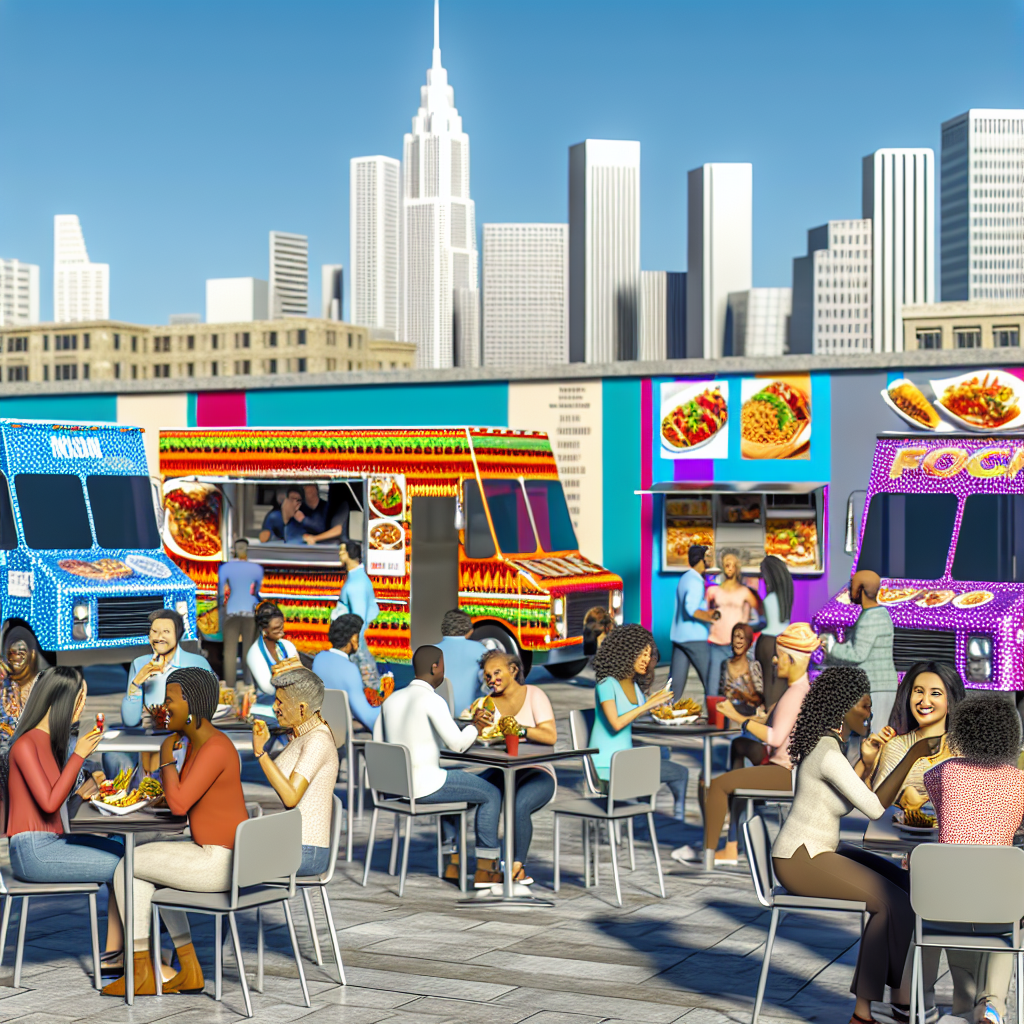
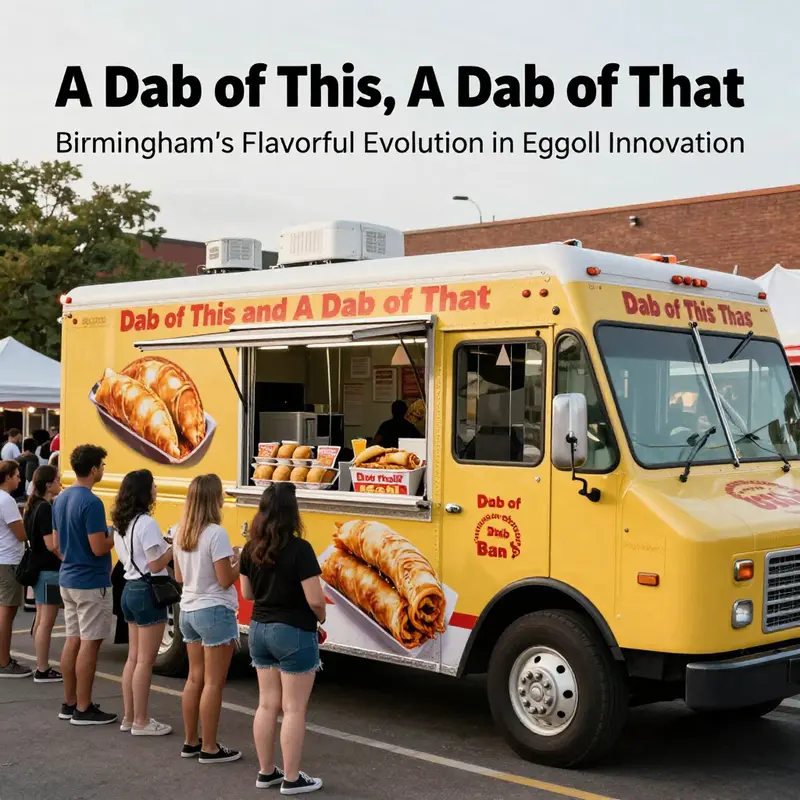
In the heart of Alabama, a dab of this a dab of that food truck has turned handheld eggrolls into a celebration of creativity. Based in Center Point and operating Tuesday through Saturday, this Birmingham staple blends bold flavors with a nimble, people-first ethos. The truck’s 15-strong roster ranges from comforting classics to adventurous甜香 twists, all designed for gatherings big and small—from corporate events to neighborhood pop-ups. As planners seek memorable catering that travels well and speaks to diverse palates, this mobile concept offers both a practical model and a cultural experience: a shared bite that sparks conversation, collaboration, and community. Across three chapters, we’ll explore how origins shaped the menu, how operations scale without losing soul, and how social reception and marketing amplify impact in local ecosystems. Each section builds toward a holistic view of what makes a food truck not just a vendor, but a partner in successful events, employee engagement, and community delight.
Origins on Wheels: Crafting Fusion and Storytelling in A Dab of This, A Dab of That
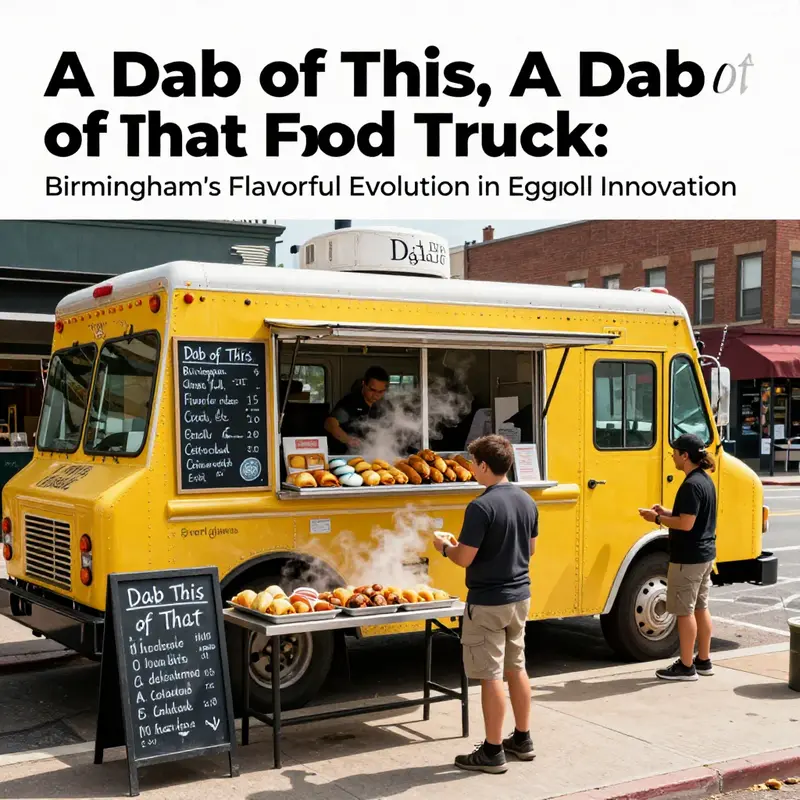
The idea behind A Dab of This, A Dab of That grew from a practical impulse: bring familiar flavors into a modern street-food dialogue. The truck signals this through a name that invites mixing, movement, and a sense of dialogue with the city. In Center Point, Alabama, the project found its anchor in a place where cultures meet and opportunities to connect with neighbors come naturally. The origin isn’t a single spark but a cadence of experiments, a willingness to treat a handheld bite as a canvas for memory, place, and possibility. Each fry and fold is a note in a longer conversation about belonging and adaptation on crowded sidewalks and busy corners.\n\nThe broader street-food lineage informs the approach: mobile vendors across generations became cultural hubs and conduits for immigrant stories. The fusion concept here leans into versatility, not novelty for novelty’s sake. The eggroll wrapper becomes a stage for regional flavors and personal histories, allowing comfort foods to travel with a city, changing with the local ingredients and seasons. The result is a portable narrative that tastes like home yet feels like the next destination, a bite that invites conversation as much as satisfaction.\n\nThe operational heartbeat is rhythm and responsibility. The truck is designed to be fast, consistent, and responsive to weather, foot traffic, and community events. Hours are tuned to when neighborhoods gather, with days partitioned for sourcing, cooking, and connection. The practice of moving through streets is a form of cultural mobility, a way to test ideas, gather feedback, and scale gradually without heavy overhead. This mobility becomes a form of economic agency that can empower cooks from diverse backgrounds to share their stories.\n\nThe menu itself, described as broad in filling options, serves as a map of cultural storytelling. Each choice carries echoes of street-food roots and home kitchens, balanced to maintain textural contrast and a satisfying crunch. The aim is a bite that remains accessible to curious regulars and inviting to new guests, a tool for conversation that travels well. By treating the handheld as both anchor and invitation, the brand frames cuisine as evolving rather than fixed, a living archive in motion.\n\nFor readers who want to situate the project in scholarship and practice, sources on mobile kitchens, social equity, and urban storytelling offer useful lenses. A community-minded approach to street food can align with broader conversations about belonging and opportunity, nourishing not only palates but networks of mentorship and local pride. The narrative here aspires to be inclusive: a story of origins that invites others to trace their own routes into shared meals, neighborhoods, and creative ventures. The city becomes a gallery, the truck a vehicle, and every bite a line in a story of travel, collaboration, and accessible creativity. If readers want to explore further, they can consult related discussions and practitioner blogs that chronicle the day-to-day life of mobile food ventures and their place in urban culture.
Wheels of Flavor: The Lean, Mobile Engine Behind a Gourmet Eggroll Concept
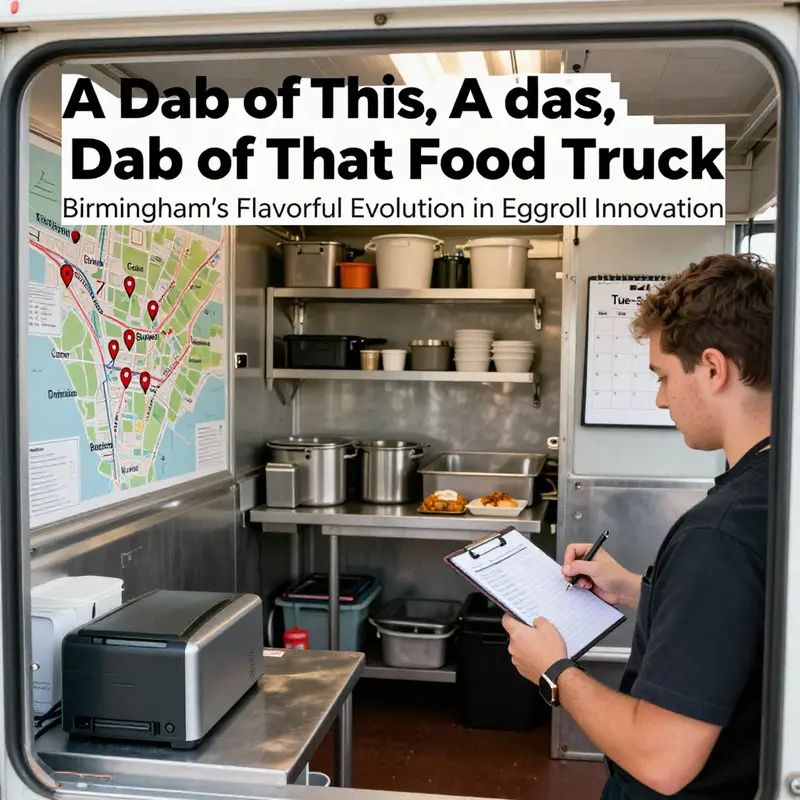
A mobile gourmet kitchen thrives not just on a clever concept, but on how efficiently it moves through space, time, and customer appetite. In the heart of the Birmingham region, a small but purposeful food truck has built its reputation by turning a single, handheld idea into a roaming dining experience. The core of its story is not merely the 15 distinct eggroll flavors it offers, but the way those flavors are produced, presented, and delivered on a lean, nimble platform. The truck operates with a focused mission: to bring high-quality, snackable cuisine to people where they work, congregate, or linger for events. The result is a living showcase of mobile entrepreneurship, where culinary curiosity meets operational discipline, and where flavor travels as far as the truck can. The narrative of this venture moves through three intertwined threads—operations, footprint, and economic model—each reinforcing the others in a ripple of efficiencies that make a bold idea financially viable and practically repeatable across markets and seasons.
At its essence, the truck is a compact kitchen on wheels designed to maximize speed, consistency, and visibility. The vehicle itself doubles as storefront, kitchen, and branding canvas. This triad of functions minimizes the need for separate spaces, aligns the customer journey with the point of sale, and reduces the friction that often accompanies food service in a transition from brick-and-mortar ambitions to a mobile reality. The mobility is not merely a convenience; it is a strategic choice that operationalizes flexibility. The business can chase high-traffic windows—the lunch rush downtown, weekend festival crowds, neighborhood farmers’ markets, and corporate events—without being tethered to a single fixed address. This mobility is more than a marketing tactic. It is a deliberate capability that informs staffing needs, ingredient sourcing, and even how the menu evolves with demand and weather.
The person who steers this operation learns early that the menu’s strength lies in its specificity. Fifteen variants of eggrolls—each with a distinct profile drawn from global inspirations—offer a curated scale of choice that feels both adventurous and approachable. The fillings are designed to travel well, stay crisp, and deliver a satisfying bite in a handheld format. The accompanying sauces, while varied, are crafted to complement the fillings without overpowering them. It is a delicate balance: the more flavors available, the more important it becomes to maintain a consistent standard across every order. The kitchen’s choreography—assembling, rolling, sealing, frying, and saucing—must be rehearsed in a way that a single operator or a small team can reproduce hundred percent consistently, even as the truck pivots between venues and shifts.
This emphasis on a limited, well-executed module is not accidental. It reflects a practical understanding of food-truck economics, where margins per unit, speed of turnover, and overhead control determine long-term viability. The truck’s pricing strategy is anchored in the promise of gourmet quality delivered through a familiar, accessible format. The perceived premium—the idea of a chef-driven snack perched on a crispy shell—allows the operator to command a favorable margin without pricing out the everyday market. Relative to more traditional quick-service standbys, the raw ingredients for each eggroll are not cost-prohibitive. When packaged in a manner that communicates attention to detail, even modest price points can yield robust unit economics due to a combination of high-margin appeal and efficient production.
The operational model leans into mobility as a core asset. Rather than absorbing the fixed costs tied to a brick-and-mortar footprint, this venture invests in a compact, well-branded mobile unit that serves as both kitchen and storefront. This design philosophy underpins rapid setup and teardown, enabling the truck to relocate between events with minimal downtime. It also helps the brand stay visible in diverse locations, with branding that functions as a moving billboard. The physical footprint is deliberately tight, but the branding language—clear, bold, and appetizing—creates recognition from a distance and invites a closer look at the menu when a line forms.
As with many lean mobile concepts, the business benefits from a streamlined operating cost structure. The absence of a long-term lease reduces monthly financial commitments and the ongoing need for a large staff. The crew, often just one or two people, can manage both cooking and customer interaction. The model relies on simple, repeatable processes that can be trained quickly, meaning new operators or seasonal staff can come up to speed with minimal friction. This agility translates into a resilience that is particularly valuable in markets where demand fluctuates with events, weather, or seasonal trends. The economics are further enhanced by the straightforward supply chain: ingredients that are shelf-stable or easily stored, tools and equipment that serve multiple functions, and a menu that remains stable enough to deliver consistency yet flexible enough to rotate flavors in response to feedback.
If there is a signature advantage to this approach, it lies in the alignment of product, process, and location. The eggrolls are crafted to travel well during short trips between curbside service and event tents. Frying or finishing techniques are chosen to preserve crispness and texture, ensuring that a delicate crunch survives a few minutes in a warm display or a short ride to the next stop. The sauces accompany the eggrolls in a way that emphasizes dip-and-dine convenience rather than elaborate plating, enabling quick service while still delivering a chef-driven flavor profile. This balance of form and function matters: it means customers can order, pay, and eat in a matter of minutes, all while feeling that they have received a premium product. In practical terms, the unit economics begin to reveal themselves: high-margin, low-cost-per-unit products, when paired with high-volume throughput, can produce a cash flow that sustains operations and allows the business to reinvest in branding, equipment upgrades, or larger-scale events.
Customer engagement follows naturally from this structure. The mobile nature of the operation makes social media updates more than a marketing tactic; it becomes a real-time pulse on where the truck will be and what will be hot on a given day. Real-time location updates on platforms that are friendly to bite-sized, shareable content help cultivate a sense of spontaneity and anticipation. Loyal customers learn to track the truck for timely updates, while new customers discover the concept through well-timed posts that capture the sensory appeal of the offerings—the aroma of a fried shell, the shimmering glaze, the color of a finished roll showcased in a clean, appetizing photo. The business invests in small but meaningful loyalty mechanics that reward repeat visits, encouraging customers to collect points, earn freebies, or unlock members-only flavor previews. The net effect is a growing, repeat customer base that travels with the truck as it moves from location to location, instead of a single, stationary audience.
The footprint of the operation is designed for efficiency as much as for visibility. A compact kitchen module stores everything needed for quick service, and its layout supports a logical flow from order to fry, to folding, to saucing, to packing. Waste management is integrated into the day-to-day routine—containers for spent oil, packaging materials, and general trash—so that cleanup remains efficient between locations. The footprint design also emphasizes branding as a constant in motion. Bold color schemes, readable signage, and a consistent logo treatment create a recognizable silhouette on the street, a signal to potential customers that a chef-driven experience is nearby. This is branding on wheels in its most practical form: it sells not only the product but the idea of a moving, premium snack experience that can show up at the exact moment a craving hits.
From an economic perspective, the model is intentionally lean. The initial investment required to begin operating a mobile kitchen—equipment, vehicle modifications, and branding—tends to be modest compared with many other entrepreneurial routes. In cases similar to this mobile concept, the figure can be under five thousand dollars, depending on the scale of the unit and the extent of any retrofitting. That relative affordability lowers the barrier to entry and enables the operator to test the market with a minimal financial risk. The ongoing costs—the cost of ingredients, fuel, insurance, and occasional maintenance—remain controllable because the business runs with a small crew and a simple menu. Rather than chasing a single location with long-term lease obligations, the truck can pursue multiple daily service points. Each stop is an opportunity to generate revenue while reinforcing the brand’s reputation for quality, speed, and novelty. The multiplicative effect of serving many places in a week helps compensate for the variability of any one location’s foot traffic, while the lean overhead means fewer stubborn fixed costs to carry through slow periods.
The economic logic extends beyond the day-to-day numbers. This is a model built for scalability, not in the sense of growing into a large, brick-and-mortar chain, but in the sense of expanding reach and opportunities. As demand grows, the truck can add more service windows at events, hire additional staff during peak seasons, or partner with organizers to secure recurring vendor slots at farmers’ markets or corporate gatherings. The modularity of the unit makes such scaling feasible without abandoning the core philosophy: a small, well-managed operation that emphasizes quality, speed, and a memorable customer experience. The lean approach does not ignore risk; it acknowledges it and builds in the redundancy of mobility and diversification. If a festival assignment dries up, the truck can pivot to a steady daily lunch crowd near business districts or campuses. If a new flavor is not hitting with customers, the team can adjust the menu, remove low performers, and push stronger flavors in the next rotation. In this way, resilience becomes a feature of the business design, not an afterthought.
The broader takeaway is a reminder that a food truck with a focused culinary anchor can be powered by a surprisingly simple economic engine. The combination of a compact, efficient kitchen, a small but talented team, a flexible location strategy, and a menu optimized for high-margin, low-cost-per-unit outputs creates a foundation on which steady revenue can build. The model thrives on a disciplined approach to inventory, a keen eye for demand signals, and a commitment to consistent quality. It is not about chasing every trend at once; it is about curating a core experience—one that is delicious, reliable, and portable—and delivering it with the speed that only a mobile kitchen can offer.
For readers interested in the practical path toward establishing a similar mobile venture, the guiding principle is to begin with the vehicle as a strategic asset. The truck should function as a kitchen, a storefront, and a branding mechanism in one compact package. Its design should enable quick setup, straightforward maintenance, and a reliable method for reproducing the recipe execution at scale. The menu can be a vehicle for experimentation, but the production process must be repeatable and efficient. The pricing should reflect the premium quality and the convenience of a handheld item while staying accessible to a broad audience. And the marketing plan should leverage the street-level energy of events and the ongoing dialogue with customers via social channels and loyalty incentives. In time, this approach can yield a modest yet meaningful footprint that travels far and wide, inviting new fans to discover a little bite of gourmet hospitality wherever the truck happens to roll.
This chapter’s arc, though focused on a single movement through the urban landscape, resonates with a broader lesson: mobility, when paired with a disciplined, chef-driven, high-margin concept, can redefine what small food businesses can achieve. The combination of 15 distinct flavors, a careful selection of fillings and sauces, a methodical kitchen workflow, and a lean economic spine forms a model that is not just viable but potentially repeatable in other markets. The truck’s journey, while rooted in a specific place, suggests a transferable template for aspiring operators who seek to blend culinary curiosity with the pragmatism of mobile entrepreneurship. The next chapters will illuminate how the brand’s footprint shapes its community presence, how partnerships and events broaden its reach, and how the economic model adapts as the business scales its horizons beyond Birmingham’s city lines. Until then, the road ahead remains a well-lit corridor of opportunity, inviting the truck to roll toward new neighborhoods, new faces, and, of course, new flavors to savor.
For a broader, practical frame on the economics and mechanics of mobile food ventures, see the industry overview and guidance provided by the U.S. Small Business Administration, which outlines trends, profitability considerations, and key steps for starting a mobile food operation: https://www.sba.gov/business-guide/starting-a-business/mobile-food-truck.
As a practical prompt for readers contemplating the next move, consider the decision-making arc reflected in the linked resource about choosing the right food truck model. It invites readers to weigh layout, equipment needs, and capital requirements against their ambitions and risk tolerance. For a direct, relevant doorway into that conversation, explore the discussion at Choosing the right food truck model, which offers a concise synthesis of factors that influence a mobile kitchen’s design and operational fit.
Chapter 3: Rolling Perceptions of a Dab of This and a Dab of That — Social Reception, Branding, and Community Impact
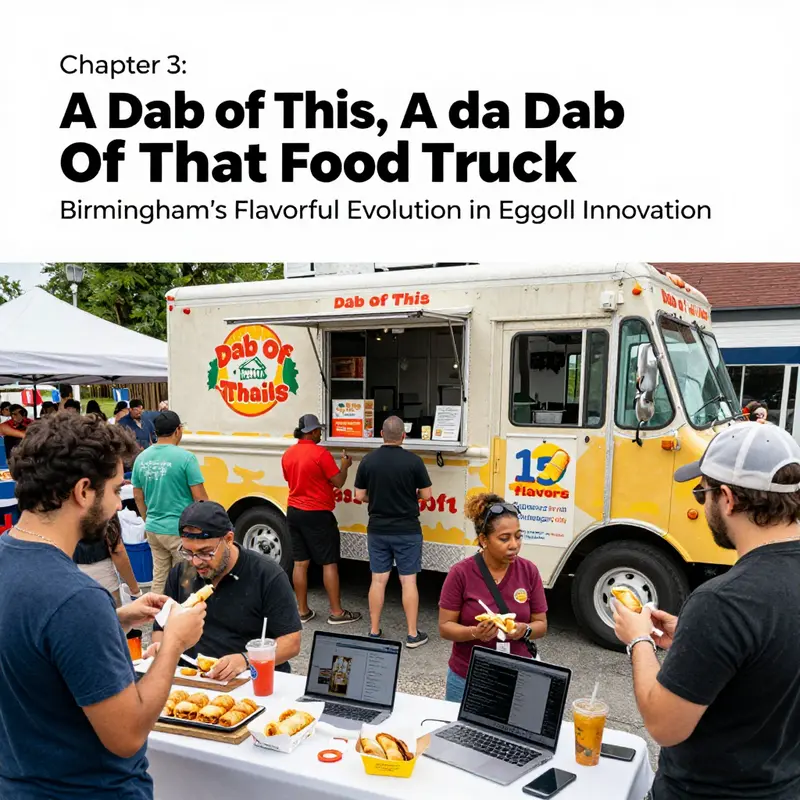
From the moment the window opens and the first peppery aroma curls into the air, a Dab of This and A Dab of That rolls through Birmingham with a purpose that goes beyond feeding stomachs. In a city famed for its music, its food culture, and its insistence on resilience, the gourmet eggroll truck stitches together a compact kitchen, a mobile stage, and a conversation about what a small business can do when it moves with the street. This truck operates out of Center Point, Alabama, threading a path through town from Tuesday to Saturday, with Mondays reserved for rest and refuel. Its menu—fifteen distinct eggroll flavors—speaks to a culinary curiosity that refuses to settle for a single signature. The wrapper, crisp and steaming, holds a range of fillings that toggle between familiar comfort and surprising twists. Savory notes meet hints of sweetness in handheld parcels that invite a bite and a story, a moment in which texture, aroma, and memory collide. The format is simple, yet its implications are wide: the portable meal functions as a social instrument, a catalyst for conversation, and a small but persistent engine of local gathering. In this sense the truck’s value emerges not only from what ends up on a plate but from the way it travels across spaces, inviting neighbors to share a table, even if only for a moment as the wind shifts and the steam wanders down the block.
The social space around a mobile kitchen like this becomes a kind of social barometer. In urban centers, gourmet trucks are often celebrated as entrepreneurial demonstrations—visible proof that food, design, and business acumen can fuse into a portable brand that travels. They become shorthand for innovation in the local economy, and their success stories circulate as inspiration for others who dream of starting a venture without a fixed storefront. Yet the broader ecosystem also reveals tensions. Operators who come from immigrant or minority backgrounds may navigate a labyrinth of zoning rules, licensing requirements, and neighborhood scrutiny that can feel as much about power and perception as about food safety. In some contexts, public sentiment shifts quickly—what is perceived as a legitimate business in one corridor can be cast as informality in another, a reflection of how class, race, and access to capital shape policy and practice. The branding and presentation of the truck matter deeply. Clean signage, predictable hours, steady staffing, and transparent pricing translate into legitimacy in the eyes of both regulators and customers. A vehicle that looks orderly, ready, and professional reduces friction with authorities and softens the edges of suspicion that can attach to any operation that moves rather than sits still. These dynamics, though abstract, become practical realities for daily operations, shaping where the truck can park, how long it can stay, and how often it can return to the same corner.
Marketing today grows in a landscape where screens are as important as sidewalks. Social media is not a novelty but a central vector for reach, trust, and community building. A customer who catches a glimpse of a steaming eggroll on an Instagram feed may decide to track the truck’s next location with almost ritual precision. The tactile appeal of a good photo—steam rising, a glossy bite, the crisp sheen of fried dough—becomes a promise of experience. Real-time updates about where the truck is parked, which flavors are hot and fresh, and what specials might be available can convert a casual passerby into a regular visitor. Behind-the-scenes glimpses—prepping fillings, testing spice blends, or adjusting heat levels—invite viewers to feel part of a culinary process rather than a mere transaction. The narrative around the food is as important as the food itself: a story about craft, curiosity, and a willingness to experiment with flavors that honor both tradition and novelty.
An integrated brand story helps the truck translate appetite into loyalty. Consistency in visuals, tone, and service signals to customers that they are engaging with a professional business, not just a kitchen on wheels. Brand signals extend beyond the plate: the truck’s color palette, typography on the menu, the way staff greet customers, and the cadence of posts all contribute to a sense of reliability. In this framework, branding is not ornament but infrastructure—the social glue that attracts attention, builds trust, and invites repeat visits across weeks and seasons. For those seeking practical guidance on how a mobile kitchen can cultivate a lasting identity, the concept of branding on wheels offers a compact blueprint. It emphasizes how a visual identity, aligned with a consistent customer experience, can empower a small operation to gain visibility in crowded streets and diverse neighborhoods. branding on wheels is a useful touchstone here, illustrating how design choices translate into credibility with customers and regulators alike. In this sense, the aesthetic of a truck—its signage, its color story, its menu presentation—becomes as determinative as the flavors it serves.
Beyond the counter, the social and cultural impact of a mobile kitchen radiates through neighborhood life. Food trucks bring affordable, diverse dining options to areas that may lack easy access to varied cuisines. They become temporary social hubs where locals and visitors exchange stories, share tables, and discover common ground over a shared plate. For aspiring entrepreneurs, the truck model offers a lower barrier to entry than a brick-and-mortar restaurant, enabling hands-on learning about sourcing, inventory, pricing, and customer service. The presence of a truck can stimulate foot traffic, support adjacent small businesses, and contribute to a sense of place—the idea that a corner can be a meeting point rather than a mere transit node. The fifteen flavors on this truck embody a microcosm of culinary experimentation, where familiar Southern comfort collides with broader global influences. Each flavor set acts as a bridge between cultures, inviting curious eaters to explore while remaining anchored in local identities. The hours—operating from Tuesday through Saturday and closing Mondays—create a dependable rhythm for regular patrons and for organizers of pop-up markets, school events, and community festivals that seek a consistent, high-quality vendor.
The community dimension is only as strong as the infrastructure that supports it. Policy, parking, sanitation, and licensing—these are not abstract topics; they are the steps that allow a truck to linger safely, to serve reliably, and to earn a place in the urban economy. In practice, that means designated vending zones, clear rules about waste management, and accessible pathways to legal operation for smaller players. In many regions, digital platforms that connect vendors with customers can reduce friction by simplifying location updates and payments, while also enabling regulators to monitor compliance without smothering entrepreneurial energy. The broader ecosystem thus swings between enabling opportunity and enforcing safety, between celebrating mobility and safeguarding neighborhoods from disruption. The framing of these policies can influence public perception as much as the day’s menu. If a truck is perceived as a legitimate business with transparent practices, its social reception rises in kind and so does its access to supportive networks, including neighborhood associations, event organizers, and local media.
In this light, the story of a Dab of This and A Dab of That becomes more than a tale of tasty bites. It becomes a case study in how a mobile kitchen negotiates visibility, trust, and community value. The truck’s presence in Birmingham, with its regular schedule and its standout menu, anchors it as a fixture within a dynamic urban fabric. People encounter it on street corners, at markets, and near schools, creating a rhythm that feels both intimate and expansive. The chef or cooks behind the window, seen in glimpses of prep work or in quick banter with customers, transform what might be a fleeting encounter into a moment of connection. In those moments, marketing outwardly functions as hospitality inwardly, a form of invitation that asks people not only to taste but to participate in a shared experience. This is where the conversation about social reception becomes a conversation about the kind of city a community wants to cultivate: one that makes space for bold flavors, for new business owners, and for the kinds of cross-cultural exchanges that occur when a handheld meal becomes a social catalyst.
As the chapter surveys these threads, a clear pattern emerges. Food trucks like this one reveal a dual influence: they shape public perception while being shaped by it in turn. The brand’s outward appearance and online presence guide policy perceptions, while on-the-ground performance—speed, consistency, warmth—prunes the edges of how regulators and neighbors view the enterprise. The cycle is ongoing, and its pace is set by the cadence of the truck’s moves, the strength of its relationships with customers, and its capacity to adapt to changing tastes and regulatory environments. For Birmingham and surrounding communities, the phenomenon is a reminder that a single vehicle can be a locus for cultural exchange, economic opportunity, and everyday delight. It is not merely a way to eat; it is a way to experience a city in motion, to understand the social fabric that binds people to place, and to glimpse how mobility can translate into shared memory and collective growth.
External resource: CNN coverage of food trucks’ impact on economy and community
Final thoughts
Across origins, operations, and outreach, the a dab of this a dab of that food truck demonstrates how a bold idea can become a reliable partner for events, workplaces, and communities. The origins reveal a menu designed to spark curiosity and conversation; the operations model proves that scale can honor quality and speed; the social and marketing footprint shows how genuine engagement translates into loyalty and local pride. For event planners, HR teams, and food enthusiasts alike, the truck offers not just a meal but a collaborative experience—one that travels, adapts, and leaves a lasting impression wherever a crowd gathers.