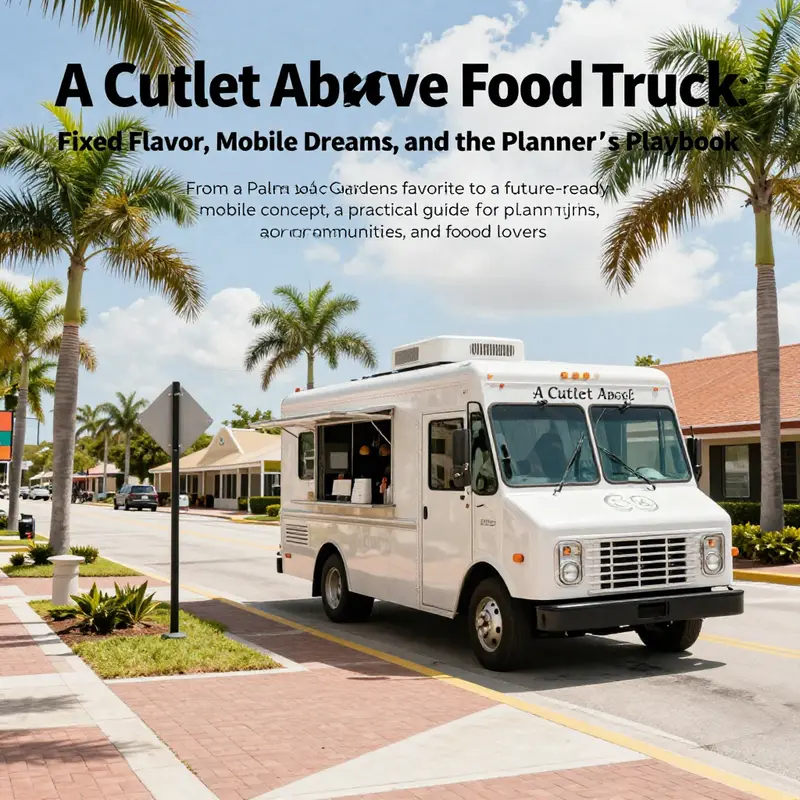
Palm Beach Gardens is home to a beloved cutlet specialist whose reputation hinges on precise technique, premium ingredients, and a storefront experience that invites lingering conversations. For event planners, corporate teams, community groups, and curious food lovers, the question isn’t just about flavor—it’s about how a fixed-menu tradition could travel. A Cutlet Above operates from a fixed location today, yet the appetite for mobile, on-demand cuisine is undeniable. Imagining a cutlet-forward food truck invites questions about logistics, safety, and guest experience, all without sacrificing the essence of what makes the brand special. This piece weaves three tightly connected strands to guide practical decision-making. Chapter 1 grounds the discussion in the current business model and location status of A Cutlet Above. Chapter 2 translates mobile-kitchen realities into actionable parallels, spotlighting equipment and workflow. Chapter 3 maps market dynamics and digital platforms that help teams track live truck activity and seize opportunities as they arise. The result is a holistic view that empowers event planners, HR and admin teams, community organizers, and food enthusiasts to plan smarter, partner more effectively, and delight guests with bold, well-executed cutlets.
Chapter 1: A Cutlet Above’s Footprint — Tracing the Current Status and the Quiet Possibility of a Mobile Revival
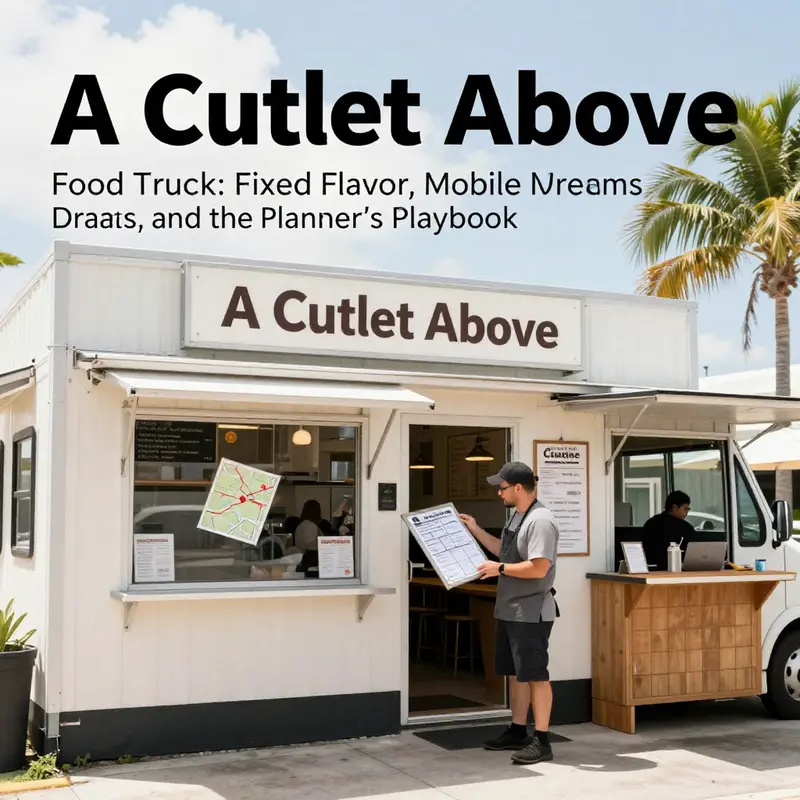
On Northlake Boulevard in Palm Beach Gardens, a stretch that has watched many culinary ambitions come and go, a familiar name once signified a precise standard of comfort and flame-kissed pride: A Cutlet Above. The place specialized in cutlets that felt crafted with reverence, a handful of recipes that built a reputation around texture, crust, and a balance of tenderness with a lightly seared exterior. For regulars who wandered in after school or work, the restaurant offered more than a meal; it offered a signal that a particular kind of Southern-tinged, pan-seared refinement could thrive in a market that skewed toward convenience and speed. Yet, like some delicate dishes that require a quiet, steady flame, the business model behind A Cutlet Above revealed a different kind of resilience, one measured not only by the palpable aroma in the dining room but by the stubborn clarity of its status in the public record.
As of the most recent, well-documented update in February 2026, the brick-and-mortar presence at that Palm Beach Gardens address has closed its doors to dine-in service. The storefront is no longer listed as an active, open-every-day operation, and the footprint—once a small stage for a focused menu—appears to be empty in a way that suggests more than a temporary lull. The absence of new posts, new hours, or renewed signage on major business directories signals a shift that goes beyond a routine seasonal pause. For a community that remembers the sizzle of that kitchen, the question lingers: was the closure a temporary retreat to regroup, or a permanent exit from the traditional restaurant scene? The available information does not confirm a pivot into a new format under the same brand name.
One of the telling nuances of this moment is how the market has treated the possibility of mobility for a brand built on a core dish—cutlets that celebrate a careful breading, a precise oil temperature, and a minimal but deliberate set of accompaniments. In culinary business terms, it is not unusual for a once-stationary concept to explore a mobile extension. Food trucks, after all, are a way to meet customers where they gather, to test new neighborhoods, and to keep a brand visible in the public realm when rent costs and foot traffic pressures on a fixed site push back against margins. Yet in the case of A Cutlet Above, the public-facing record offers no clear evidence that the kitchen has rolled into a truck or a pop-up format. There is no confirmed registration of a mobile unit under the name, no visible fleet, no documented permits trailing across municipal portals that would typically accompany a move from a static dining room to a wayfaring kitchen.
The absence of a definite transition is more than a bureaucratic footnote. It shapes perceptions about the life cycle of a niche restaurant in a bustling consumer market. A cutlet-focused concept sits at the intersection of comfort and technique. The dish invites nostalgia and curiosity in equal measure, but it also depends on a predictable rhythm: a steady supply of chicken, breadcrumbs with a particular bite, fats and temperatures that yield a consistent crust, and a service model that can be scaled to support daily diners. When a brick-and-mortar operation closes, it triggers a reexamination of those variables. A restaurant’s survival depends not only on the quality of its core product but on the reliability of its revenue streams, the affordability of its real estate, and the ability to adapt to shifting consumer expectations. The question then becomes not only whether the brand could function as a truck, but whether the market environment would support such a transition, and whether the operators themselves would want to pursue it in a landscape where costs and competition have grown more intense.
From a consumer’s vantage point, there is a quiet but meaningful distinction between a closed restaurant and a mobile concept that simply isn’t visible. The handoff between identity and availability is delicate. A Cutlet Above’s legacy, built in part on the clarity of its dish, would seem to lend itself to a second life in a mobile format, where a well-designed vehicle could carry the same culinary proposition to neighborhoods, events, and markets that value speed without sacrificing the craft that defines a cutlet. But craft alone is not the sole currency in the mobile economy; the vehicle, the licensing, the insurance, the crew, and the fleet’s schedule all operate as a synchronized orchestra. Each component must align with the others to translate the promise of a cutlet from a dining room into a moving kitchen that can serve a consistent product while traveling between miles, festivals, and street fairs.
What makes this moment particularly instructive is the way it intersects with a broader set of dynamics in the food-truck ecosystem. The research materials emphasize that a legitimate mobile unit relies on a shell that can weather long hours on the road, insulation that preserves heat and safety, and exterior construction that resists the wear and tear of frequent use. In practical terms, many mobile kitchens in the United States use durable 304 stainless steel exteriors, paired with robust fireproof insulation—30 millimeters thick in many designs—to protect cooks and customers alike. This is not merely a matter of branding; it is fundamental to food safety, energy efficiency, and the reliability of a business model that must operate with strict schedules and consistent service across days and nights, often in unfamiliar locations.
If A Cutlet Above had considered a mobile evolution, the theoretical blueprint would have required careful planning. It would have entailed decisions about the vehicle type—whether a compact trailer, a flatbed with a built-in kitchen, or a truck with a passenger compartment for staff and a front-facing service window. It would entail securing operating licenses, health department approvals, and the long-term viability of rotating menus that preserve the essence of the original cutlet-focused approach while allowing for the flexibility demanded by street-level entrepreneurship. In this sense, the idea of a food truck represents a parallel track to the restaurant’s brand essence: the same commitment to quality, the same attention to technique, but delivered through a mobile platform that accepts risk as a constant companion. The tension between tradition and mobility is not a critique of either path; it is a recognition that each path tests a different set of operational muscles. A fixed site tends to reward consistency, steady foot traffic, and predictable overhead. A mobile unit rewards reach, adaptability, and the ability to read a changing cityscape where opportunities appear in the gaps between brick-and-mortar establishments.
That is where the public record, the practical constraints of running a food business, and the memory of a local dining scene converge. The absence of a documented shift into a mobile format does not close the possibility of future revival, but it does place a high degree of uncertainty around the immediate future of the brand in its current form. The landscape of Palm Beach Gardens and the wider South Florida food economy has become increasingly dynamic, with pop-ups and satellite kitchens frequently appearing as low-cost experiments or temporary reimaginings of established concepts. In some cases, a retailer may reemerge as a different entity under new management or branding, while preserving certain menu signatures. In others, a beloved concept fades, leaving behind only a handful of social-media posts and the lingering taste of a dish that once defined a customer’s dining routine.
To understand what might come next, it helps to examine the ecosystem from which mobile food businesses emerge. The modern mobile kitchen thrives on three pillars: visibility, reliability, and compliance. Visibility is about meeting customers in places where they already congregate—food markets, festivals, evening events, and strategic areas with foot traffic. Reliability is about schedule and consistency; customers should know when and where to find a favorite dish and that it will taste the same every time. Compliance encompasses health and safety standards, licensing, vehicle maintenance, and labor regulations. In the absence of a confirmed mobile incarnation for A Cutlet Above, those pillars apply as a benchmark for any hypothetical revival rather than a retrospective description of what currently exists.
A deeper read of the available public signals also invites a broader reflection on how a community perceives a brand that has closed its doors. For some, the end of a local favorite becomes a narrative about the fragility of small business. For others, it triggers curiosity about whether the concept could reappear, perhaps in a different form—an opportunity to reframe a beloved dish within a new business model. The gap between the past and a potential future becomes a space for storytelling, a place where food writers and local gourmands test hypotheses about what could have been and what could still be. In this sense, the current status is not simply a factual update; it is a prompt for dialogue about culinary identity, entrepreneurship, and the evolving ways people experience fast-casual dining in a region that prizes both novelty and memory.
From the perspective of someone exploring the economics of mobile food, there is also value in looking beyond a single brand to the larger currents shaping the field. The literature and industry resources that routinely analyze food-truck ventures highlight a common refrain: the path from concept to street is paved with careful financial planning, a solid supplier network, and a flexible, resilient front-line team. The social dynamics of a truck crew, the choreography of service, and the art of maintaining a sharp menu on wheels require a different kind of discipline than the one that sustains a stationary kitchen. In practice, this means that many operators approach a potential transition with a phase of experimentation—small-scale pop-ups, collaborations with other brands, or a limited fleet in a few chosen neighborhoods—to build confidence and refine the operational playbook before committing to a full-scale mobile rollout.
For readers who want to ground these considerations in practical examples, there are resources that illuminate the economics and logistics of life on the road. One useful touchstone is the body of content produced by experienced truck operators who discuss everything from choosing the right vehicle to managing maintenance and regulatory compliance. A reader could explore the practical wisdom shared on the blog run by a prominent food-truck operator collective, which covers topics from financial planning for new truck owners to the nuances of tariff impacts on equipment and supply chains. The value of such resources lies not in drawing a direct equivalence with A Cutlet Above, but in offering a realistic framework for understanding what a mobile extension of the brand would entail, and what kinds of probabilities would have to align for such a transition to become viable in a market like Palm Beach County.
If the idea of a future mobile iteration remains appealing, there is another layer worth considering: how a brand’s signature dish translates into a mobile format. Cutlets, by their nature, are a comfort-driven, high-appeal item that can travel well when prepared with discipline. Yet maintaining the quality that differentiates the dish requires attention to workflow, heat management, and turnover. The mobile kitchen’s heartbeat is its ability to deliver a consistent, crave-able product in a tight time window, often with a high pace of service. The choreography of breading, frying, resting, and service must be tuned to minimize variability while maximizing throughput. That is a technical challenge, but it is also a cultural one: consumers come to a truck not just for a dish but for the ritual of it—the sensory cues of the sizzle, the aroma that signals an affordable, hand-crafted meal, and the sense that a brand is making a deliberate choice to meet them on a curb or in a market where the city’s rhythm dictates its own appetite.
In the end, the current chapter of A Cutlet Above’s public story remains open in a particular way. The doors are closed in the historical anchor of the Northlake Boulevard address, and there is no confirmed nod toward a moving kitchen that would physically relocate the brand’s core offering. Yet the appetite for a refined cutlet experience persists in the local imagination, and the possibility of future revival—whether in the same form, in a reinvented version, or as part of a broader portfolio of concepts—continues to invite conversation among restaurateurs, event organizers, and curious patrons. The absence of a concrete answer should not be read as a definitive verdict on the brand’s fate, but as an invitation to watch how entrepreneurial imagination negotiates the friction between tradition and innovation. The market rewards clear signals, prudent planning, and the capacity to translate culinary identity into a living, moving enterprise when the moment calls for it. Until such signals emerge, the best way to understand A Cutlet Above’s present status is to acknowledge the gap between memory and possibility—the space where a brand’s past glory meets the practical realities of modern food entrepreneurship.
For readers seeking practical guidance on how a food-truck venture might approach a concept like this in a market with similar demographics and consumer preferences, the landscape offers concrete lessons. The planning process would begin with a careful assessment of local demand, seasonal variability, and the legal requirements for mobile food service in the relevant municipalities. It would then move to supplier negotiations, ensuring a steady supply chain for premium cutlets, breadcrumbs, and oils, while also considering the menu’s flexibility to accommodate neighborhood tastes and event-driven demand. The vehicle choice would need to balance capacity with agility, optimizing the layout for rapid assembly, frying, and service while ensuring safety and compliance with health codes. A minimal, repeatable menu often underpins success on wheels, with a focus on core strengths and a few well-executed add-ons that can travel well. The cost structure would include the initial investment in the vehicle, ongoing maintenance, fuel, insurance, and labor, alongside the recurring costs of food inventory and compliance fees. While these considerations are general, they reflect the practical framework that any brand contemplating a mobile extension—whether or not it bears the same name—would have to navigate.
If you want a deeper dive into the realities of operating a food truck, including case studies, model comparisons, and strategic considerations, consider perusing industry-focused resources that distill the lessons from many operators into actionable guidance. A well-curated blog in the broader mobile-food space offers insight into choosing the right truck model, planning for regulatory challenges, and designing branding that travels as well as the food does. These discussions can help illuminate what a hypothetical mobile revival for a cutlet-focused concept might require, and what a thoughtful, measured approach could achieve for a brand seeking to honor its legacy while adapting to a new retail reality.
In summary, the current status of A Cutlet Above rests at a quiet crossroads. The physical location appears closed, and there is no verifiable documentation of a transition to a food truck or other mobile format under the same name. The absence of a bright, current update does not erase the possibility that the brand could reemerge in a different form. It does, however, underscore the importance of evidence-based planning and a disciplined approach to exploring mobility in a market where consumer appetite for convenient, high-quality fare remains strong. Those who miss the dish may linger on the memory, while others may watch closely for signs of a revived concept that can translate the essence of that cutlet into a fresh, street-ready experience. And for readers with a curiosity about how mobile operations translate culinary craft into a traveling business, the field offers a robust set of practical lessons and strategic considerations that can guide future explorations, whether or not they involve the same dish or the same brand.
Internal resource for further context on moving parts of a mobile kitchen and related strategic considerations can be found at Los Chiflado’s Truck blog. This resource curates practical insights about the workflow, regulatory navigation, and financial planning necessary for someone considering a first-time foray into food-truck ownership or expansion, including how to structure a business for resilience in a shifting market. While it does not speak to the specific fate of A Cutlet Above, it provides a useful framework for understanding what a hypothetical mobile iteration would need to address to be viable in a market with a palate for well-executed comfort dishes. For readers seeking the most up-to-date status on A Cutlet Above itself, the best current reference is the business listing maintained by the public review platform, which continues to document the last known active state of the location. Yelp listing for A Cutlet Above Palm Beach Gardens
Rolling the Perfect Cutlet: Mobile Kitchen Choices and Equipment Parallels for A Cutlet Above
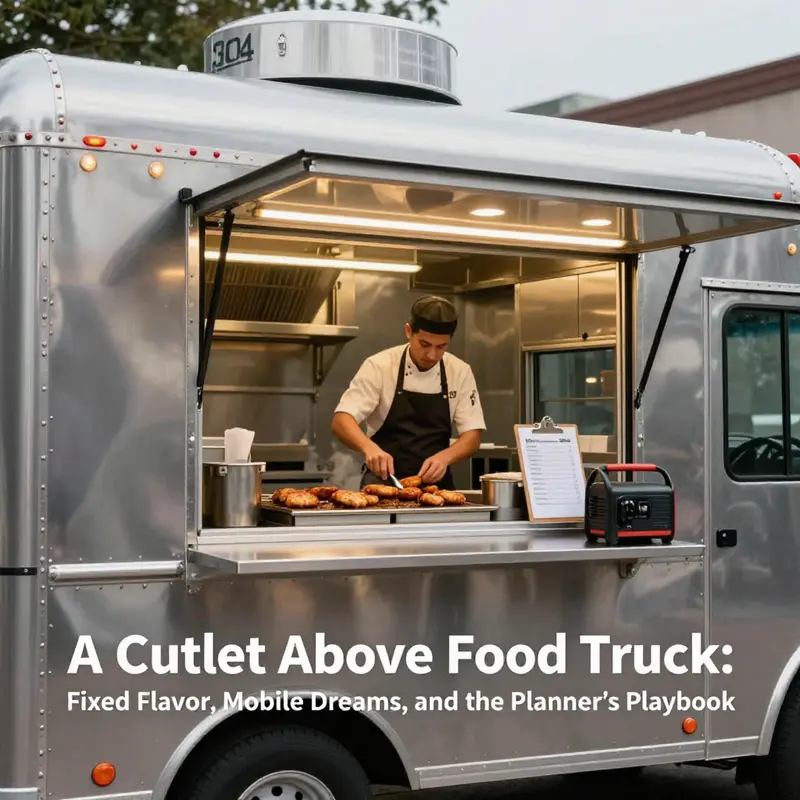
The question of translating a beloved, fixed-location cutlet concept onto the street requires more than nostalgia for a signature crunch. It demands a holistic rethinking of how a kitchen moves, breathes, and performs under shifting conditions. When a chef focused on precise searing and consistent breading considers a mobile kitchen, every element—structure, workflow, equipment, safety, and location strategy—must align with that culinary promise. This chapter maps those choices and shows how the decisions that make a great cutlet in a brick-and-mortar kitchen find new expression on wheels.
At the heart of a reliable mobile operation is the vehicle shell. A truck or trailer is not merely a box with wheels; it is the stage where speed, heat, and craft meet. Durable, corrosion-resistant exteriors and reinforced frames reduce long-term maintenance and protect critical systems from road stress and weather. Insulated interiors and secure anchoring points keep equipment stable and reduce thermal loss, which matters when a batter-dipped cutlet needs consistent oil temperatures. Stability while parked is as important as stability while driving: locking wheels and reinforced supports prevent shifts that can throw off delicate timing and cause safety hazards during service.
Designing the internal layout starts with the rhythm of a cutlet station. Prep, breading, frying, resting, and plating should flow in a linear sequence to minimize cross-traffic and contamination. Benches or counters should be stainless and flush-mounted to allow easy cleaning. Storage needs to be close at hand: refrigerated drawers for proteins, dry shelving for batters and crumbs, and a small blast-chiller or insulated holding cabinet to preserve finished portions before service. Plumbing and waste systems must be efficient so drains and sinks do not interrupt prep, and ventilation should be robust enough to remove frying fumes without creating drafts that change oil behavior.
Cooking equipment choices mirror the priorities of a cutlet-focused menu. A deep fryer designed for continuous service must deliver steady, recoverable temperatures. A burner or flat-top provides options for finishing or heating accompaniments. Convection or combi ovens add versatility for batch cooking and regenerating items without frying. All surfaces that handle batter, crumbs, or oil should be easy to reach and designed for quick maintenance. The ability to disassemble and access components for cleaning not only meets health standards but extends equipment life and preserves flavor consistency.
Power and utilities change the calculus for every decision. Gas lines, electrical circuits, and water tanks limit what can live in a given footprint. A small, high-efficiency generator or a shore-power option allows heavier appliances, but requires planning for fuel storage and ventilation. Tanks for fresh and gray water must be sized to match anticipated service volumes, with pumping solutions chosen to maintain steady sinks and avoid downtime. Electrical loads should be calculated conservatively; start-up currents for fryers and refrigeration can be high. If the plan includes long-running events or remote locations, redundancy in engines or backup power avoids losing temperature control mid-service.
Safe operation is non-negotiable. Vehicles must meet roadworthiness and food safety standards to operate legally and sustainably. Certifications that indicate compliance with vehicle and electrical safety provide reassurance to permitting authorities and insurers. Inside the kitchen, fire suppression systems above fryers and cooking lines protect staff and property. Proper extinguishers and accessible shutoffs are essential, and staff training in their use is part of operational readiness. Anti-slip flooring and clear egress paths reduce injury risk during peak service when the kitchen becomes a choreography of motion.
Regulatory compliance also shapes menu design and daily procedures. Local health departments often specify the layout of sinks, refrigeration requirements, and acceptable heat sources. Fuel type restrictions and ventilation rules can limit equipment choices or require adaptations such as ventless fryers and condenser-based refrigeration. Licensing and parking permits will dictate where and when a truck can trade, and understanding those constraints informs the most efficient route and event strategy.
A single-minded focus on the cutlet still benefits from menu flexibility. A tight menu reduces prep complexity and waste. But offering complementary items—salads, sides, simple sandwiches—allows the truck to serve different traffic patterns and weather conditions. Design the menu so most items share components: the same breading station can service different proteins; a single fryer can handle multiple batters if oil management is disciplined. Cross-utilization keeps inventory lean and speeds service without diluting the core product.
Workflow optimization extends to human factors. Space in a mobile kitchen is precious, and roles should minimize unnecessary movement. Position the primary cook where they can monitor oil and heat while accessing batter, tongs, and plating area. A secondary role can manage orders, plating, and running a small finishing station. Durable, intuitive storage keeps tools and disposables within reach. Lighting must be sufficient for precision work during early morning or late-night shifts, and climate control—fans, heaters, or insulated panels—ensures staff can perform consistently across seasons.
Material selection influences both daily performance and long-term brand reliability. Stainless steel surfaces resist corrosion and are simple to sanitize. Heat-insulating layers in walls and floors protect staff and reduce energy demands. Fire-rated insulation and non-combustible materials around cooking lines are not decorative choices; they reduce the likelihood of catastrophic failures. Weight matters too—lighter composite materials can improve fuel economy and handling, but durability must not be sacrificed for savings.
Maintenance planning is a form of preventive cooking. Scheduled checks of burners, fryers, seals, and refrigeration systems reduce unexpected downtime. Replaceable wear parts—thermostats, filters, gaskets—should be stocked in small quantities to allow quick fixes on the road. Regular oil filtration lengthens fry cycles and preserves flavor, while careful record keeping of maintenance extends equipment life and helps predict capital replacement timelines.
Logistics determine whether the truck is an extension of a restaurant or an independent venture. For a brand moving from a fixed location, maintaining consistency is essential. Use identical ingredients, replicated prep techniques, and clear recipe standards. A portioning system helps guarantee each cutlet meets the brand’s sensory expectations. If the truck is a standalone operation, engineering workflows that fit a single-operator model will reduce labor costs and simplify service.
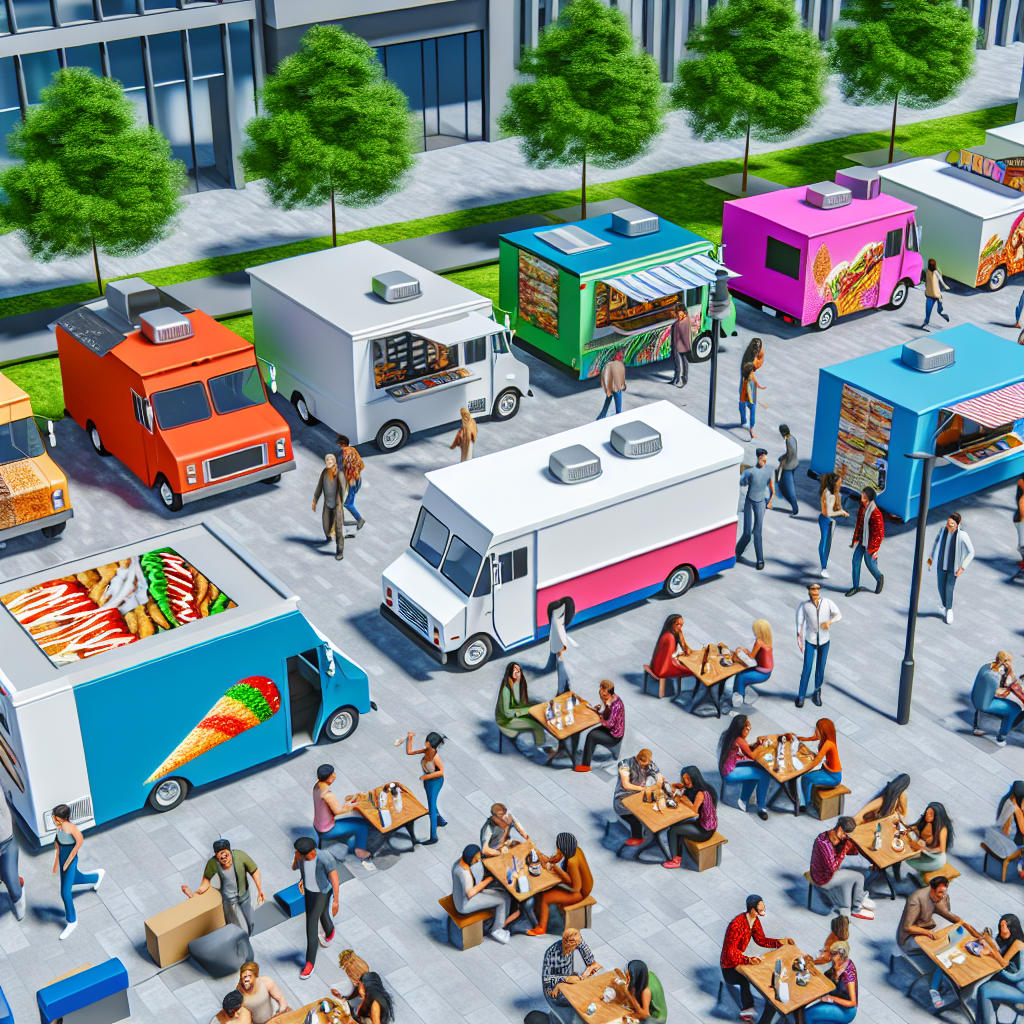
Route planning and site selection are the marketing engine. High-foot-traffic areas, events, and partnerships with businesses can create predictable volumes. Different venues demand different operating tempos: commuter zones require fast turnover and easy packaging; festivals allow for broader menus and slower service with plated presentations. The truck’s layout should allow for quick service under pressure and comfortable plating when the pace relaxes. Scheduling a mix of predictable spots and curated events balances steady income with marketing opportunities.
Branding on the exterior and the service experience inside the truck must align with culinary identity. Visual design should be legible at a distance and intimate at the window. Consider a simple, bold wrap and functional signage that highlights the signature dish and indicates any limited-time items. Interior signage that communicates a clear prep workflow can also help staff stay organized. The packaging should protect the product and present it attractively, while being cost-effective and suited for the menu’s eating style.
Financial planning often determines what is feasible. Vehicles with more robust equipment and compliance features cost more upfront but can reduce operating friction and expand revenue opportunities. Conversely, leaner builds reduce capital requirements but may limit menu breadth and require more frequent maintenance. Consider total cost of ownership: purchase price, modification, permitting, insurance, fuel, and maintenance. These recurring costs shape pricing, staffing, and daily revenue targets.
Procurement channels matter for budget and timeline. Sourcing from verified manufacturers with warranties and reliable parts support reduces long-term risk. Buying used equipment or retrofitting a secondhand trailer lowers initial expenditure but may increase maintenance and limit resale value. When evaluating suppliers and models, look beyond sticker price to include build quality, materials, and compliance documentation.
Operational resilience is a function of design and contingency planning. Redundancy in critical systems—backup power, spare burners, and emergency tools—keeps service running through common failures. Build relationships with local repair shops and have a contingency list of alternative venues if permitted sites become unavailable. Digital tools for orders and payments reduce cash handling and speed throughput, and they allow real-time sales tracking that informs inventory and staffing decisions.
Sustainability is increasingly a competitive advantage. Efficient burners, LED lighting, and responsible packaging choices reduce operating costs and appeal to an eco-conscious customer base. Recycling grease and sourcing local proteins not only supports environmental goals but also can enhance flavor profiles and community ties. These choices should be practical and aligned with the daily realities of mobile service.
Training ties all technical decisions together. Consistent product quality requires consistent technique. Staff should be trained in portioning, breading, frying times, oil management, and plating standards. Safety drills for fires, spills, or vehicle issues should be routine. Simple checklists for opening, mid-shift, and close procedures keep operations predictable and reduce the cognitive load on staff during busy periods.
A mobile kitchen that aims to deliver a restaurant-quality cutlet must accept trade-offs. Space limits force selective investments; weight and fuel constraints shape equipment choices; regulations impose design constraints. The successful approach balances these factors with a relentless focus on what defines the dish: temperature control, timing, and ingredient quality. When these priorities are upheld, the truck becomes an extension of the kitchen’s reputation rather than a diluted version of it.
For operators exploring available mobile kitchen models and builds, reputable supplier listings provide useful comparisons of dimensions, construction materials, and compliance markers. These resources can help match a vehicle footprint to a menu and service model, and they often include technical specifications to aid in planning and permitting.
Finally, for those considering the business and technical trade-offs in greater depth, a practical guide that explores vehicle selection and layout choices offers detailed, actionable steps for narrowing options and evaluating suppliers: choosing the right food truck models.
External reference used in the development of this chapter: https://www.alibaba.com/product-detail/BELYOO-Mobile-Kitchen-Food-Truck-fully_1600478915786.html?spm=a2700.189083.0.0.1f7a5e7dRjP3Zn
From Plates to Wheels: Market Dynamics and Real-Time Updates in the Cutlet Mobility Era
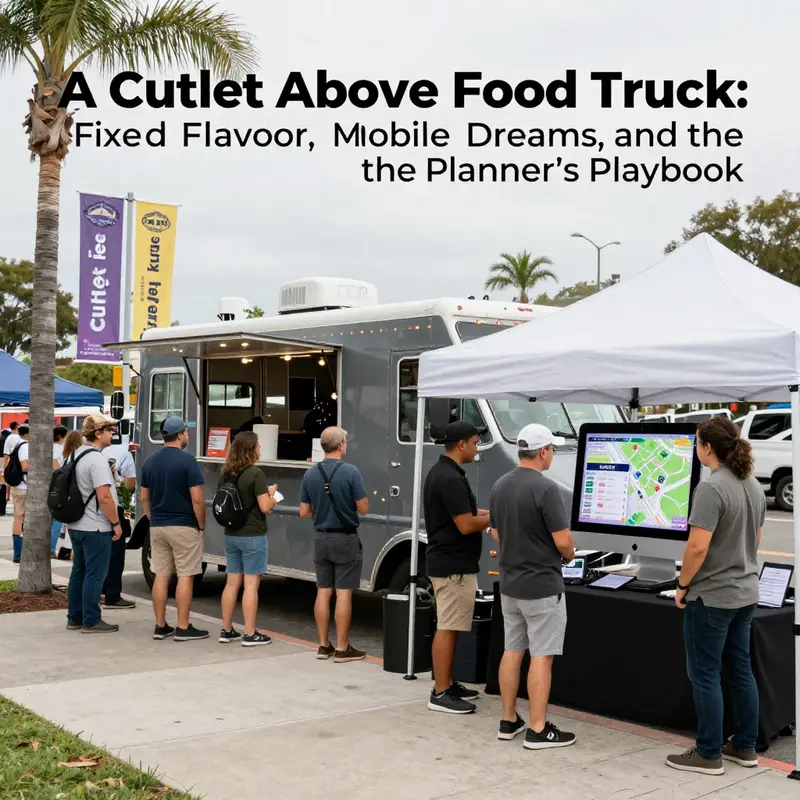
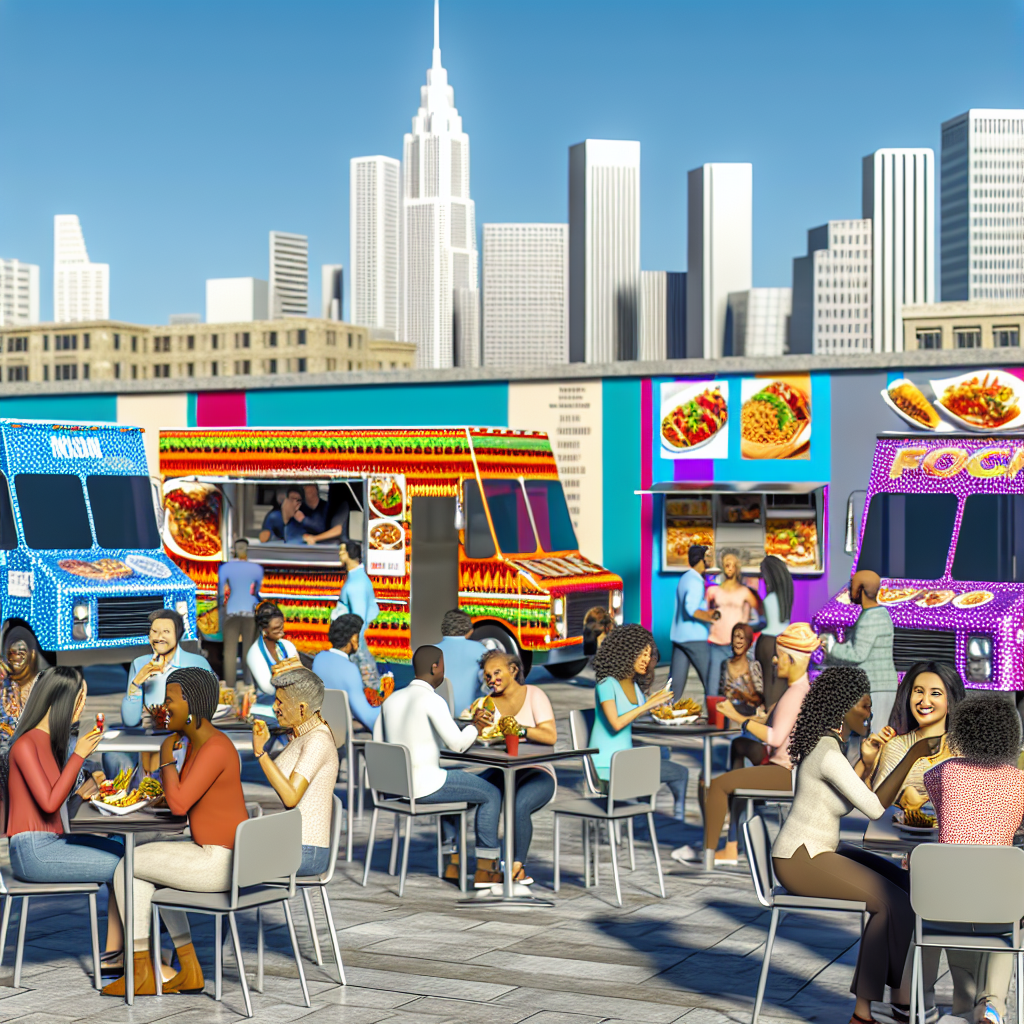
The city hums with a different tempo when a cutlet-first concept slips from the bounds of a fixed storefront and tilts toward the street, toward pop-up gatherings, and toward the open hours of the late afternoon and evening. The movement reflects a broader reboot of how people eat in urban space: the appetite for immediacy, the pull of novelty, and the insistence on a dining experience that feels personal, flexible, and responsive. A well established cutlet-focused eatery that has earned local loyalty on a fixed boulevard can become a useful lens for understanding what happens when a culinary identity migrates to wheels. In this landscape, market dynamics are not simply about selling more units of a favorite dish; they are about translating a fixed brand promise into a mobile rhythm that can arrive where patrons are, adapt to changing crowds, and tell real time stories through the locations it chooses and the updates it shares. The move from brick to wheel is not merely a logistical shift. It becomes a continuous experiment in timing, visibility, and customer engagement, all guided by digital tools that let a truck, or any mobile unit, behave more like a live broadcast than a static storefront.
Industry data underscores why this shift matters. The food truck market in the United States is projected to grow from roughly one point nine to two billion dollars over the next several years, with a compound annual growth rate in the mid sixes. That trajectory is driven by urban densification and a persistent demand for convenient, experiential dining that can be had without a long drive and without a long wait. The same trend is feeding a broader appetite for digital ordering platforms, real time location services, and transparent menu availability. Operators are no longer simply cooking on the go. They are curating experiences that appear wherever people gather: in office parks after work, on campus quads between classes, and in entertainment districts that fuse performance, music, and bites into an informal evening economy. In such a context, a cutlet brand with a storied kitchen pedigree can leverage the flexibility of mobility to extend its value proposition without sacrificing the quality that earned it a reputation in a fixed location. The challenge is to maintain that quality while embracing a new operating tempo that demands speed, consistency, and an almost hip sense of brand timeliness.
A practical implication of this shift is the redefinition of what a successful lunch or dinner moment looks like. For a fixed-location restaurant, success often means a predictable cadence: a steady stream of customers arriving at predictable times, with inventory and labor aligned to the rhythm of a downtown lunch crowd. When the same culinary identity goes mobile, the cadence multiplies. The truck can target a broader geographic arc, from university campuses to corporate campuses to nightlife corridors. It can adjust to the day of the week, weather, and local events with agility. It can be present at peak demand windows where a fixed restaurant might be closed or operating at reduced capacity. The ability to adapt in real time becomes a core asset, and with it comes the opportunity to expand revenue streams beyond the traditional midday window. Yet agility must be anchored in reliable systems. Real time updates to location, menu, and wait times are not a luxury but a necessity to reduce uncertainty for customers and to optimize throughput for operators.
The literature that guides operators today emphasizes two intertwined threads: the appetite for mobility as a growth channel, and the digital scaffolding that makes mobility viable at scale. On the growth side, the logic is straightforward. Moving beyond a single storefront enables access to multiple audiences who would not otherwise encounter the brand. It also widens the ring of potential partners—event organizers, campus administrators, and neighborhood associations—who see mobile units as a flexible solution for special occasions, seasonal promotions, and community days. The digital layer is what turns that mobility into a predictable and repeatable model. Real time GPS-based tracking, mobile ordering, push messaging about specials, and transparent indicators of wait times transform what could be perceived as unpredictability into a service attribute. In practice, customers come to expect that they can find a truck with the exact menu they want, at a location they can easily reach, and with a forecast of how long they’ll wait to place an order and receive it. This expectation fuels loyalty in a way that mirrors the loyalty customers have long shown to fixed locations, but with an added dimension: the ability to cultivate a sense of brand anticipation through the cadence of updates and the personality of the truck’s digital presence.
The Florida regulatory landscape, often cited as comparatively favorable to commercial mobility, provides a useful lens for examining how policy shapes the pace of scaling. The state’s approach to food safety, vendor permitting, and location restrictions tends to enable faster entry into new micro markets while maintaining essential guardrails around safety and accountability. This balance matters because as a culinary identity moves into the street, the operational envelope expands: more frequent stops, more variable environments, and more dynamic risk management. Operators must then invest in both the defensive side of business—compliance, insurance, and record keeping—and the offensive side—data-driven demand forecasting, dynamic inventory management, and price optimization that reflects real time input from the market. The contrast with other regions, such as California, where regulation often pairs high innovation incentives with heavier compliance costs, becomes instructive. It highlights how regional climates do not merely determine where a truck can park; they shape how that truck can behave, with technology as a mediator that can reduce friction or amplify it, depending on how it is deployed.
A crucial piece of the mobility puzzle is the spectrum of digital tools that translate concept into capability. Location-based services, GPS routing, and customer-facing APIs combine with back-end inventory and order management to create a reliable, end-to-end experience. Operators can post a menu that updates in real time to reflect daily specials and availability, then push notifications to customers who subscribe to alerts about the truck’s location. The same tools that guide a delivery drone or a ride-hailing vehicle become the scaffolding for a street food operation that prizes predictability as much as spontaneity. In practice, this means more than posting a menu and waiting for customers to find the truck. It means actively guiding demand through adaptive pricing, limited-time items, and time-anchored promotions that align with the truck’s current location and capacity. It also means a more fiber-thin line between kitchen and consumer, where a dish idea can be tested in the field at low risk, with instant feedback loops that inform future iterations. Such a model thrives when data flows freely and transparently, translating what is happening on the curb into actionable insight that optimizes inventory, reduces waste, and preserves the integrity of the culinary identity that first drew patrons in.
The narrative of the cutlet concept moving into a mobile format also foregrounds the social dimension of street food. A truck is not merely a source of sustenance; it is a mobile stage where the brand personality comes alive through visuals, sound, and tempo. The signage, the open flame, the sizzle, and the tempo of the service create a sequence of sensory cues that travel with the vehicle and with the accompanying app-based updates. Patrons are not simply buying a plate; they are authenticating the experience in a social space where peers can follow, comment, and share. The real-time feed becomes a form of micro-community-building, one that extends beyond the physical act of eating to the creation of a recurring social moment that can be repeated across neighborhoods and nights. That social dimension is what sustains loyalty in a mobile context, just as it does in a brick-and-mortar setting, but with a different cadence and different variables for success.
The operational implications of mobility are nuanced. On the supply side, grocery-type procurement constraints—protein costs, produce yields, and the volatility of seasonal suppliers—can tighten margins, especially when demand surges in response to a well-timed social post or a favorable weather window. Operators must invest in forecasting models that account for weather, events, and even school calendars. They must also build redundancy into the supply chain and the equipment that supports safe, efficient cooking on the move. This includes durable, heat-insulated exteriors and coordination with local health authorities for street operations. On the customer side, the driver of value is clarity. Customers want to know where the truck will be, when it will arrive, what items are available, and how long the wait will be. They want the ability to customize orders, the assurance that their preferred menu items will be ready when they get there, and a sense that the operator respects their time. All of these expectations feed back into the technical architecture behind the truck: a lightweight, reliable ordering system that can withstand variable network conditions, a map with reliable real-time updating, and a staff workflow calibrated to quick turns and high throughput without compromising food safety.
For readers seeking practical navigation through these changes, the link between mobility strategy and menu engineering cannot be overemphasized. A cutlet or any specialized cuisine must consider how its core identity translates to a mobile setting. Will the menu be pared down for speed, or will it embrace a wider array of offerings to capitalize on the novelty of the truck as a traveling kitchen? The answer often lies in a blended approach: a compact core that travels well and a rotating set of specials that leverage the truck’s mobility as a storytelling device. The dynamic nature of location-based marketing, when paired with a curated menu, becomes a powerful combination for building a loyal following that seeks out the truck on specific days when the menu is optimized for a particular neighborhood or event. In other words, the brand promise should be consistent—great flavors, reliable service, and an engaging digital presence—while the execution adapts to the constraints and opportunities of the road.
The practical guidance that emerges from this discussion points toward a measured, phased approach. Start with a clearly defined mobility objective: access a new audience, extend evening hours, or participate in campus events. Map this objective to a digital playbook that includes location tracking, live menu updates, and transparent wait times. Pilot in a limited geographic radius to learn how customers respond to the truck’s presence in different neighborhoods and at different times. Use predictive analytics to anticipate demand and fine-tune inventory levels. Build strong partnerships with event organizers and campus administrations to secure frequent, reliable locations. As data accumulates, gradually expand the operational envelope. The balance between speed and quality must remain at the center, with the goal of preserving the house-made flavors and attention to detail that a fixed kitchen can deliver, while embracing the flexibility and reach that mobility offers.
Embedded in this approach is a recognition that the real value of live updates and digital platforms is not simply convenience. It is trust. In a world where customers can locate the truck with a few taps, see the current menu, and anticipate a quick service window, the perceived reliability of the brand grows. That trust compounds across a community of repeat visitors who come to rely on the truck’s consistent presence, its ability to adapt, and its responsiveness to feedback. A well-executed mobile operation does more than serve meals; it creates a recurring social ritual around a culinary identity that can traverse neighborhoods while remaining anchored in the flavor profile that defined the brand in its original location. The essence of the move from plate to wheel is therefore not a departure from quality but an evolution in how quality is delivered, scaled, and experienced in real time.
For readers who want to explore the practical aspect of model selection and architectural choices for a mobile culinary venture, there is a logical pathway. A thoughtful starting point centers on choosing the right truck model and configuration that aligns with the intended geography and audience. The literature and industry blogs emphasize how the physical form of a mobile unit interacts with branding, menu discipline, and operational efficiency. A compact solution may suit a dense urban core with limited parking and high foot traffic, while a larger platform may be better for sprawling campuses or festival circuits. The choice of model also shapes the equipment loadout, including the capabilities for quick service, the power and water systems, and the ability to scale up during peak periods. For those who want to dive deeper into these considerations, a useful resource offers practical guidance on selecting the right mobility chassis and kitchen workflow to support a balanced, scalable operation. Choosing the right food truck model.
As the mobility narrative unfolds, it is worth situating the discussion within the broader market context. The Grand View Research industry analysis of the food truck market maps a sector undergoing rapid digital transformation, where mobile operators leverage app-based ordering, real-time location data, and dynamic pricing to optimize profits and enhance guest experience. The report highlights the synergy between mobility, consumer demand for convenience, and the growing sophistication of back-end systems that translate on-street activity into actionable business intelligence. The trajectory is not a niche trend but a mainstream trajectory that shapes how specialty cuisines reach new audiences while preserving core culinary values. The number one takeaway from this vantage point is clear: the more integrated the digital layer, the more resilient and scalable the mobile concept becomes, provided that the frontline service remains attentive, consistent, and delicious.
In the end, the mobility story for a cutlet-centered cuisine is a narrative of balance. It requires steadfast attention to the elements that define quality in a fixed kitchen—flavor, freshness, consistency, and care—while embracing a set of digital tools and a street-level operating tempo that unlocks new locations and new times. The result is not the evaporation of brand identity but its extension in space and time. The truck becomes an ambassador for the core culinary idea, traveling to where communities gather, updating patrons with real-time possibilities, and inviting them to engage with the brand in a living, evolving pattern. This is the essence of a cutlet concept that moves: a disciplined approach to operations, a vigilant eye on market dynamics, and a willingness to lean into technology as a liberator rather than a distractor. For stakeholders who have watched a fixed restaurant grow roots, the mobility path offers a bridge to broader exposure and continued relevance in a dining ecosystem that prizes speed, clarity, and shared moments around a beloved dish.
External resource: For a broader market perspective on the growth and digital transformation in the food truck sector, see the Grand View Research industry report on the food truck market: https://www.grandviewresearch.com/industry-analysis/food-truck-market
Final thoughts
A Cutlet Above sits at a crossroads where a storied fixed-location kitchen could choose to extend its reach through a carefully planned mobile path. The current business model shows a brand built on consistency, quality, and local connections, all of which are assets if the team ever ventures into a truck or pop-up format. The mobile considerations highlight practical, non-negotiable elements: durable exteriors, certified safety systems, efficient workflow, and reliable power and ventilation. Market dynamics and digital platforms remind organizers and hosts that visibility, timing, and precise communication determine success at events, markets, and conferences. For event planners, corporate teams, and community groups, the takeaway is actionable: align partnerships around a queue-ready guest experience, leverage mobile parity to expand reach without diluting the core flavor, and stay connected through real-time updates. In the end, a thoughtful blend of tradition and flexibility can make every cutlet moment feel exclusive—whether it’s served from a storefront window or a carefully choreographed mobile setup.