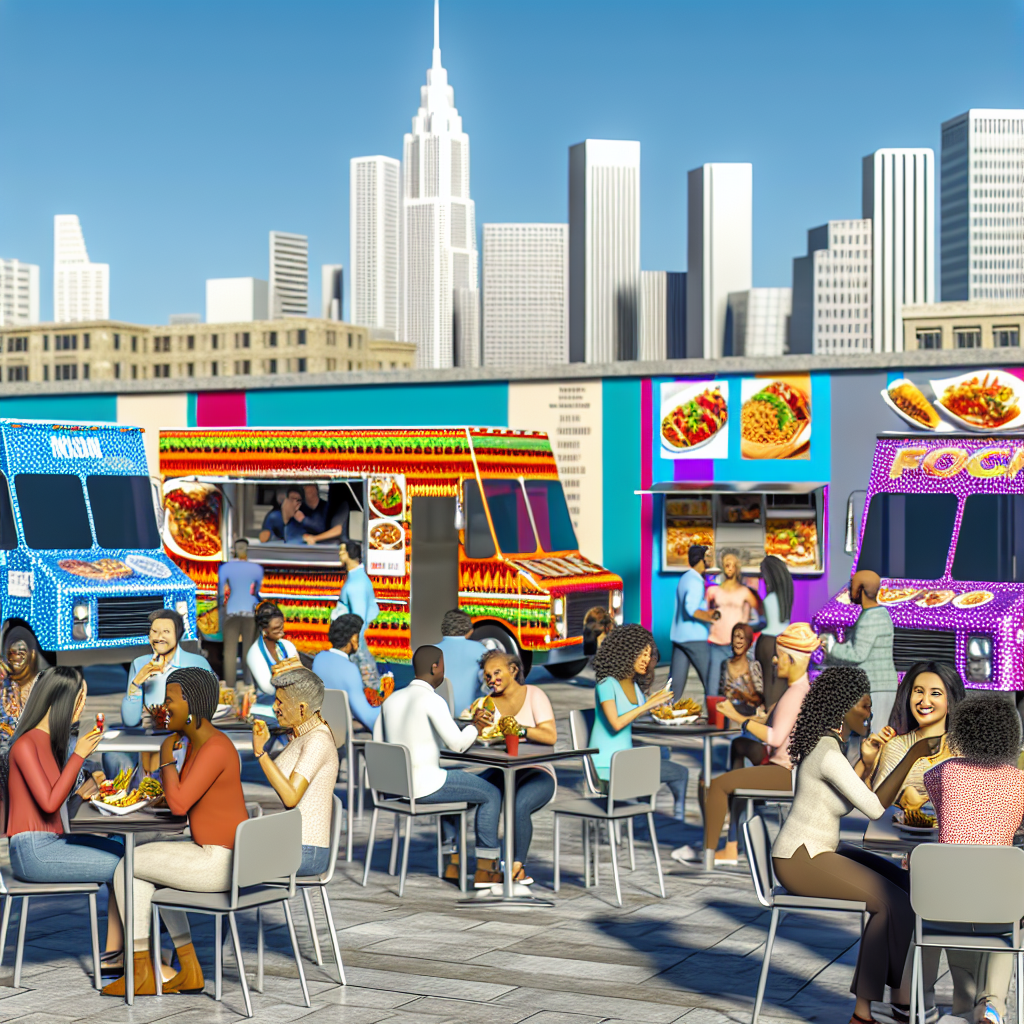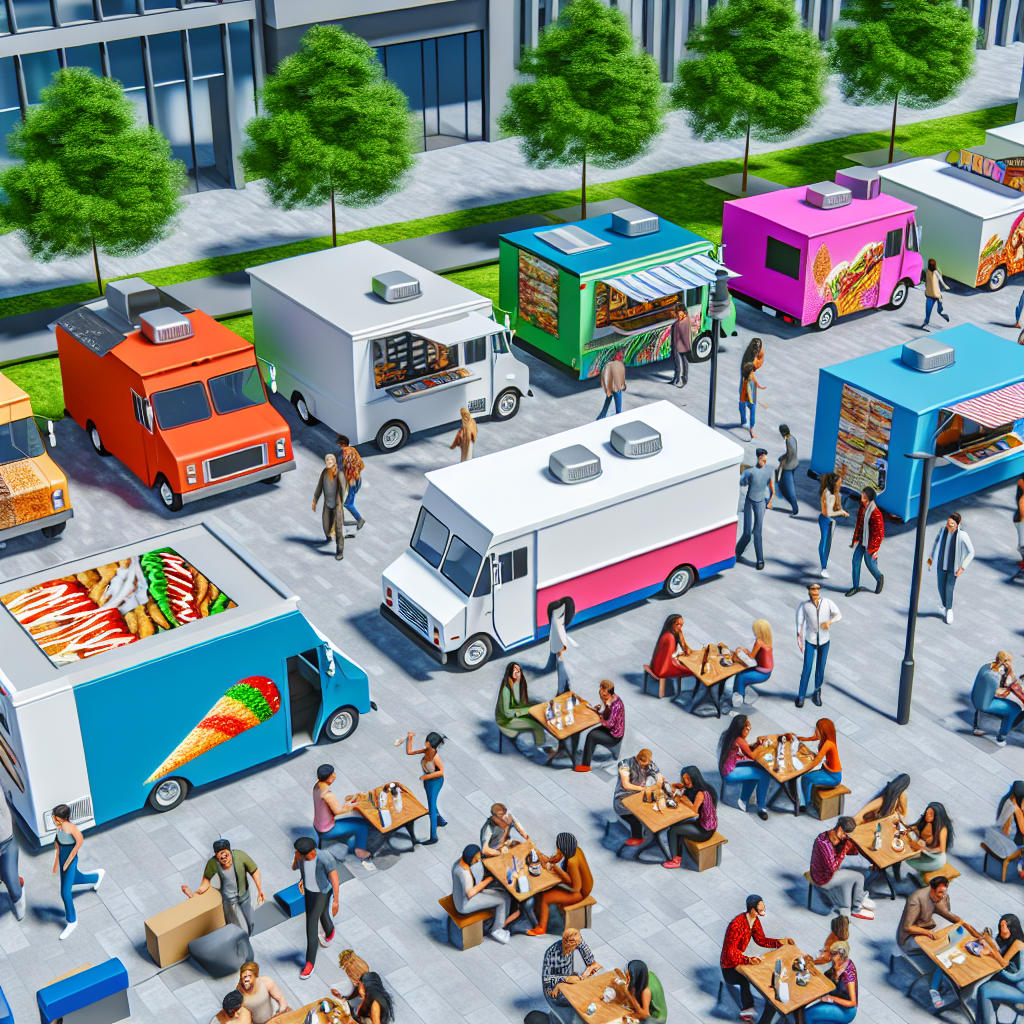

When you’re planning an outdoor event, catering a corporate lunch, or organizing a community gathering, understanding food truck sizes is crucial. The dimensions of food trucks vary widely, and knowing how big they are can influence everything from where they’re parked to what menu options they can offer. In this article, we’ll explore the average food truck dimensions and their implications for various operations, from catering to logistics. Each chapter will delve into how truck size impacts competitors, operational regulations, and service logistics, giving you a comprehensive view of what to expect in the bustling world of street food.
Sizing the Street Kitchen: The Real Measurements Behind the Average Food Truck
The size of a food truck is not just a matter of curb appeal or a handy traveling billboard. In the daily grind of street sales, festival lines, and schoolyard lunch rushes, the truck’s footprint defines what you can cook, how you move, and how comfortably you survive a long shift with a full roster of ingredients, gadgets, and customers. Size frames every decision, from how easily you can squeeze through a tight alley to how many shelves you can fit between a commercial reach-in and a flame grill. In discussing the average food truck, it helps to ground the talk in concrete measurements that translate into real-world constraints and opportunities. The typical scale runs from a practical minimum to a broad upper ceiling, and within that spectrum there is a surprising amount of variety driven by location, event type, and the specific cuisine a crew aims to serve. Understanding these dimensions invites a clearer conversation about what a truck can reasonably do, what it can’t, and how operators design workflow and branding around a given footprint.
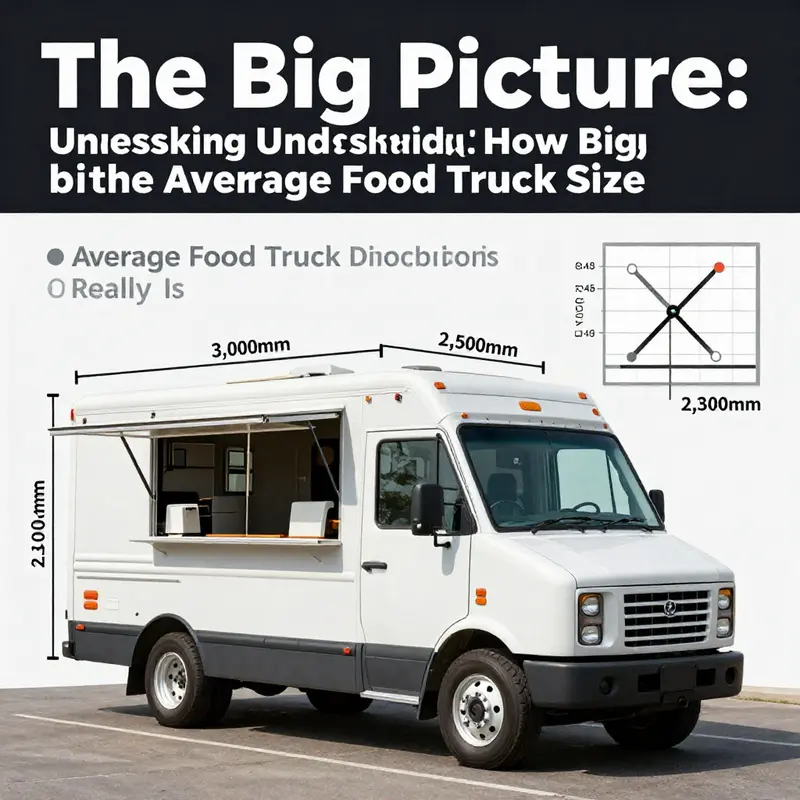
Across most markets, the standard language of size uses three primary dimensions: length, width, and height. In metric terms, trucks commonly measure somewhere between three thousand and five thousand millimeters in length. That is about three meters to five meters, or roughly ten to sixteen and a half feet. Widths typically span from around eighteen hundred to twenty-five hundred millimeters, translating to about six to eight and a quarter feet. Heights cluster in the neighborhood of twenty-three hundred to twenty-six hundred millimeters, which is approximately seven and a half to eight and a half feet. These ranges are not a single rigid box, but a spectrum that accommodates a wide array of kitchen configurations, service models, and mobility needs. The bulk of the industry gravitates toward a compact yet efficient middle ground: a length that can slip into standard downtown blocks and onto event lots, a width ample enough to house a capable cooking line and prep area, and a height that clears typical warehouse racking and hanging signage while still staying nimble for parking under city canopies and tree-lined avenues.
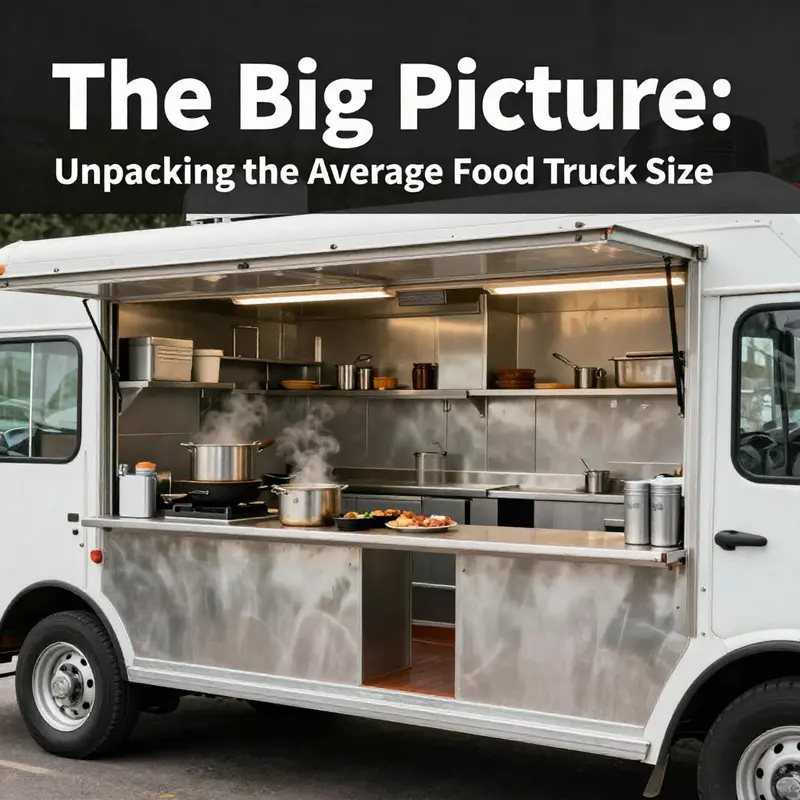
To translate those numbers into real space, imagine a compact model that might be described in industry catalogs as four meters long, two meters wide, and two and a half meters tall. In daily terms, that’s about a 13 by 6.5 by 8.2-foot footprint. It might not sound enormous, but it is precisely sized to balance multiple competing demands. The interior must house cooking equipment—stoves, fryers, grills, and vent hoods—plus refrigeration, prep surfaces, storage for dry goods and disposables, and a service counter that remains accessible to customers without creating bottlenecks. When you add in a sink, a sanitation station, and the electrical and gas infrastructure required to support the equipment, the usable floor area begins to shrink quickly, even as the overall exterior feel of the truck remains compact and inviting. In practical terms, such dimensions allow for a workflow where orders can be assembled in sequence along a single prep line, with cold storage tucked neatly at the back and a service window open to the crowd. This arrangement reduces the need for operators to zigzag around the kitchen, and it helps maintain a steady pace during peak hours.
The other side of the coin is mobility. Most food trucks are built on a trailer chassis, a detail that is often overlooked in popular storytelling but matters profoundly in practice. A trailer chassis affords mobility and flexibility but also imposes constraints. The trailer adds weight, which can influence licensing, insurance, and road taxes in some jurisdictions. It can affect maneuverability in tight urban corridors and require different parking approaches compared to a self-contained, motorized unit. Moreover, because the truck is, in many cases, effectively a mobile home on wheels, the design must anticipate not only daily cooking tasks but also the rhythms of movement—from highway hops to curbside tandems with neighboring vendors at a busy market. In this sense, the “average” size serves as a practical standard, a baseline that supports fluid transitions between street corners and events, while the actual interior arrangement grows out of the specific menu, the regional climate, and the local permitting framework. Those who study the street‑level economics of food service often circle back to this trio of numbers because they govern not just space but also energy demands, waste management, and the capacity to stock enough ingredients to avoid frequent restocks during a hectic shift.
But the real story behind the numbers is not a fixed blueprint; it is a set of design pressures that push operators toward different configurations while staying within the same practical envelope. A compact, roughly four-meter by two-meter unit can allocate space for a couple of stoves and a fryer, a medium-sized refrigerator, a prep table, and a pass-through counter for customers. It can fit in restrictive layouts near schools or in tight downtown blocks where on-street parking is a rare treat. This is the kind of truck that tends to win where turnarounds matter most—the quick service cadence that makes a long line move or a pop-up that must be assembled quickly between events. Yet this economy of space also comes with trade-offs. There is less room for elaborate menu showcases, fewer surfaces for elaborate garnishes, and a tighter separation between raw ingredient storage and clean cooking zones. The operator pays in pace and versatility for the advantage of a smaller footprint that can be parked again and again without negotiating enormous parking fees or complicated truck-through setups.
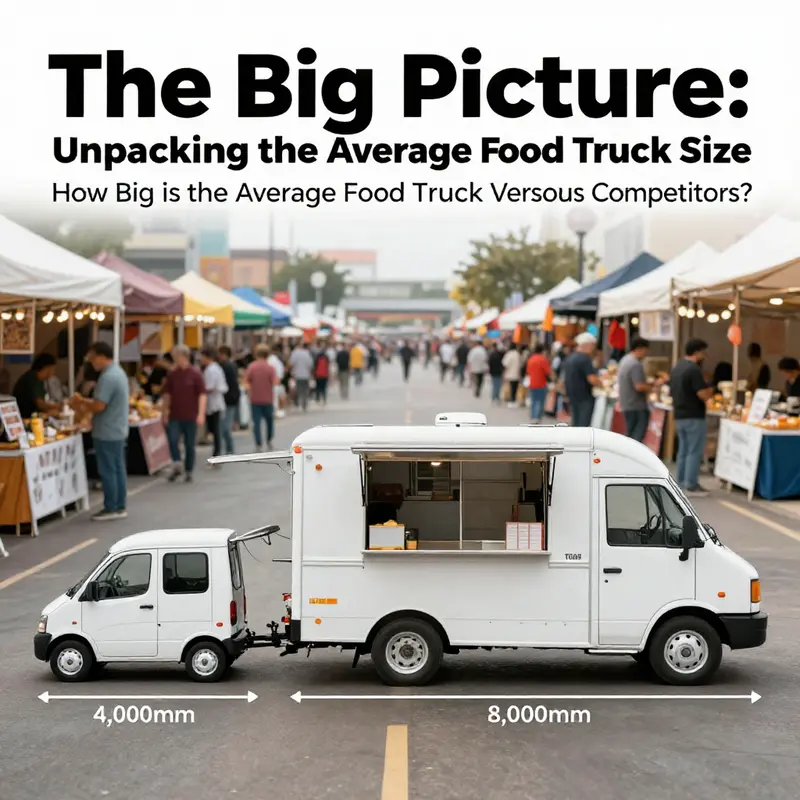
On the other end of the spectrum, larger models—up to eight thousand millimeters in length, or about twenty-six feet—offer the opposite set of trade-offs. They provide significant interior capacity for more complex cooking lines, extensive cold storage, bigger dishware arrays, and room for more elaborate prep spaces. These are the trucks that appear at larger events, multiple-station venues, or catering gigs where the menu demands a broader range of equipment and an expanded inventory. In urban settings, the longer profile invites considerations about turning radii, off-street parking, and the feasibility of maneuvering through congested blocks or narrow backstreets. It becomes essential to map routes, service windows, and exterior signage in ways that keep the truck both compliant and efficient. The key point is not that one size is inherently superior, but that the right size is a function of location, schedule, and the type of service you plan to deliver. The objective is to select a footprint that can carry the desired kitchen setup, withstand a full day’s workload, and still present a coherent brand experience to customers who judge the operation at a glance.
In practice, a well-designed truck balances interior layout with exterior presentation. Inside, the shell is laid out with a zone system: a cooking zone near the hood and exhaust, a preparation zone along the back or side where raw ingredients are handled, a cold storage zone tucked away from heat and steam, and a service zone at the window where customers order and receive food. The exact placement of these zones depends on the equipment brand mix, but the logic is consistent. The size dictates how many pieces of equipment can be accommodated and how long the workflow can be before it becomes bottlenecked by space constraints. A common compact configuration prioritizes a lean cooking line—one or two burners, a fryer or grill, a compact oven, a small refrigerator, and a single prep table—while leaving some space for a freezer or additional shelves. A larger, catering-oriented unit can spread its layout to accommodate a broader array of appliances, a larger sink, more storage racks, and perhaps a separate warming station for finished dishes. The trade-offs are precise and tangible: more equipment means more electrical and gas needs, heavier ventilation demands, and a broader footprint that demands more parking space and stricter compliance checks.
An important nuance in these conversations is the everyday reality of movement and street life. The physical footprint must harmonize with the choreography of parking, queuing, and vehicle ingress and egress. Operators often think of space in terms of “door swing” and “service window reach,” not just the raw numbers on a spec sheet. A truck that is too long for a given curb cut or too wide for a festival alley can become a logistical headache, even if it offers more kitchen real estate. Conversely, when the footprint is optimized for the location—whether it is a constrained downtown block or a sprawling festival ground—the same busier rhythm that chases long lines and high ticket counts can be achieved with a well-planned, mid-range unit. This is why many operators center their choices around how the space will be used most days rather than how much glamor is packed into the brochure photos. The goal is to align practical layout with the expected cadence of service, ensuring that each inch of floor space earns its keep through faster service, cleaner work zones, and safer, more efficient operations.
For those who want a tangible reference point that sits squarely within the typical range, consider a compact mobile unit in the vicinity of 3.7 meters in length, 1.4 meters in width, and 2.3 meters in height. Those measurements translate to roughly 12.1 feet by 4.6 feet by 7.5 feet, a proportion that many street vendors rely on for effective workflow and city street presence. This form factor represents a sweet spot for outdoor catering and pop-up events, where mobility and pace hold more weight than unbounded interior capacity. It is a size that supports a focused menu and disciplined prep routines, while still providing enough room to accommodate an efficient service window and a modest service counter. Operators who use this scale often emphasize the ease with which such trucks can navigate busy sidewalks, park near schools or office complexes, and re-position quickly as foot traffic shifts during peak hours. In the broader discussion of model choices, the question often becomes about how to tailor a given footprint to a specialized menu, a particular climate, and the anticipated density of customers. The answer lies in a careful survey of the space you need, the space you can secure, and the space you can grow into without compromising safety or compliance. If you want to explore different model configurations and how to map your kitchen to a given footprint, you can refer to material on choosing the right food truck model for your goals, which offers deeper guidance on balancing menu, equipment, and space. Choosing the Right Food Truck Model.
The numbers above anchor a broader conversation about design, resilience, and adaptability. As cities evolve, parking restrictions tighten, and events demand more efficient throughput, the ability to compress a functional kitchen into a street-ready shell becomes a strategic asset. The interior layout can be reimagined within the same exterior envelope by shifting equipment footprints, reorienting prep lines, or rethinking the location of the service window. Yet the exterior dimensions remain a fixed constraint that governs how the truck interacts with its surroundings: width determines the buffer between the vehicle and traffic or pedestrians, length defines the minimum clearance for docking and serving, and height interacts with overhead constraints, awnings, and signage. Each dimension interacts with the next to define a practical envelope that must be respected not only by the operator but by city planners and event coordinators who must ensure safe, efficient positioning of a mobile kitchen in crowded spaces. The art of size mastery, then, lies not in chasing the largest space but in matching the footprint to the job at hand, ensuring that every square inch is optimized for cooking and service while preserving the agility to move when the moment calls for it.
For readers who want to connect these practical concerns to broader industry dynamics, the discussion of dimensions is a gateway to understanding how a truck fits into a larger ecosystem of regulations, pricing, and labor planning. The size of a truck affects not just the cooking line, but also the infrastructure that supports it, including electrical supply, ventilation, water use, and waste management. It shapes how a team stores dry goods and perishables, how often it restocks during a shift, and how much back-of-house activity you can conceal from customers while still keeping a clean, efficient front of house. All of this matters when projecting profitability, planning a startup budget, or evaluating the feasibility of a new concept in a tight urban corridor. In short, the average dimensions are more than a numerical baseline; they are a practical framework for imagining and designing the street kitchen that you want to bring to life.
As a closing thread that ties these ideas to ongoing learning and planning, consider how a given footprint aligns with the broader ecosystem of industry guidance. The journey from dimensions to daily operations is not a straight line but a loop: smaller footprints invite sharper efficiency and more controlled menus; larger footprints offer flexibility for expansive menus and high-volume service. The choice hinges on where you intend to park, what events you expect to attend, and how you want customers to experience your brand from curb to counter. When you think through these factors in light of the material dimensions discussed, the picture of “how big is the average food truck” becomes less of a fixed statistic and more of a dynamic decision space—one that can be tuned as opportunities arise and as constraints shift with time and place. To deepen this understanding and to explore how different models might align with your specific goals, revisit the guidance on model selection and adaptation in the related resources.
External resource: https://www.alibaba.com/product-detail/HANYI-HY-VL777-3-Wheel-Mobile-Food-Truck_1600295528579.html
Sizing the Street Kitchen: Understanding the Average Food Truck Size and Its Market Implications
In the mobile dining space, size defines capability and flexibility. The length, width, and height of a food truck determine how much cooking space and storage exist and how easily the vehicle can maneuver through tight urban environments. When asked how big the average food truck is, most operators favor a balance between mobility and capacity. A practical size allows for essential equipment, safe movement of staff, and the ability to park in curbside spots without blocking traffic.
The consensus picture centers on trucks in roughly 14 to 22 feet in length (about 4.3 to 6.7 meters). This range accounts for more than half of market activity and represents a compromise between interior volume and exterior practicality. A typical layout can separate cooking, holding, and prep zones while staying nimble enough to park, reposition, and comply with local limits.
Dimensionally, most trucks fall in a length of about 3,000 to 5,000 millimeters, a width of 1,800 to 2,500 millimeters, and a height of 2,300 to 2,600 millimeters. A common archetype might be around 4,000 by 2,000 by 2,500 millimeters, suited to campuses, markets, and office parks. Larger models, up to roughly 8,000 millimeters in length, offer more equipment and storage but bring greater parking and fuel considerations.
The so-called sweet spot—roughly 14–22 feet—often serves as a default for many operators because it balances kitchen capacity with mobility, cost, and city constraints. Beyond this range, larger trucks appeal to high-volume catering or fixed-site deployments, where the extra footprint can be justified by throughput and branding, but parking and maneuvering become more challenging.
A complementary factor is branding and aesthetics: vintage or niche designs can attract attention, but may require extra attention to modernization for safety and emissions. Regulation matters too: municipalities set parking, street width, and fire code constraints that influence viable sizes and configurations. In practice, the best approach is to match truck size to service pattern and site realities, ensuring the menu, throughput, and site access align with a practical footprint. The business case favors mobility, reliable flow, and a kitchen layout that minimizes friction from prep to service. For readers exploring options, a practical step is to model throughput and space needs against the footprint, then study the tradeoffs of the 14–22 foot window as a default starting point.
For those who want a deeper dive, practical resources and community discussions can help translate numbers into a concrete plan. External references on market size and growth are useful for context, but the core decision remains how much kitchen space is needed to serve the chosen menu within regulatory limits and street realities.
null
null
Sizing the Street: How the Average Food Truck’s Dimensions Shape Cities, Kitchens, and the Flow of Mobile Service
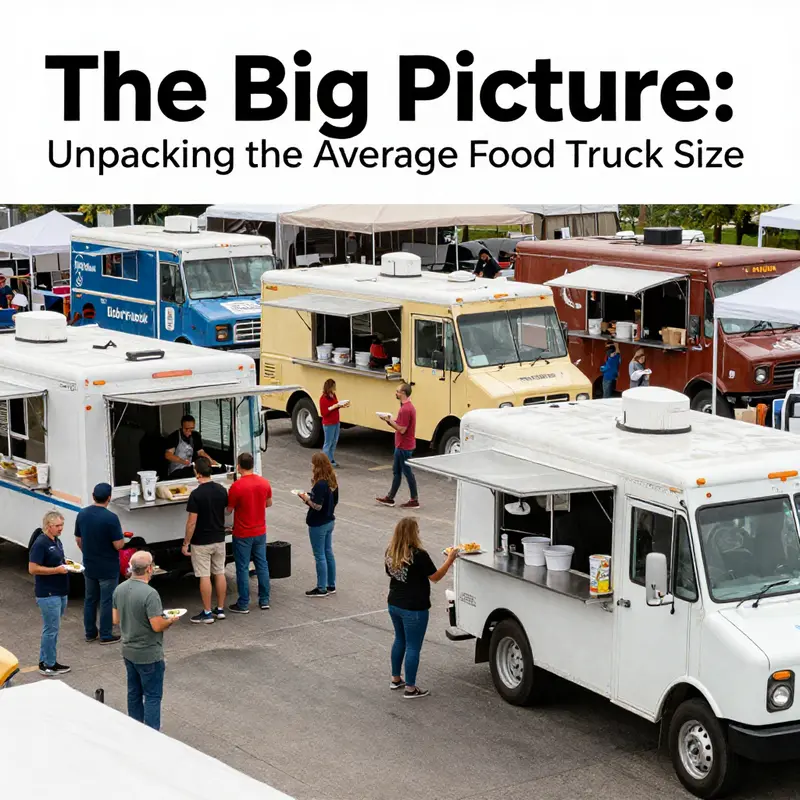
The size of a food truck is more than a measurement on a spec sheet. It is a living constraint that governs where it can operate, how rapidly it can move from venue to venue, and what kind of menu can be executed within a given day. When people ask how big the average food truck is, they are really asking about a sweet spot between maneuverability and capacity. The answer begins with the numbers that define the typical footprint: most trucks hover in the 16 to 24 feet range in length, with a width of about 8 to 9 feet and a height near 10 to 11 feet. In metric terms, that translates roughly to 3,000 to 5,000 millimeters in length, 1,800 to 2,500 millimeters in width, and about 2,300 to 2,600 millimeters in height. Those dimensions are not arbitrary. They reflect a balancing act between driving through crowded streets and having enough interior space to house the equipment and inventory needed for a busy service window. An oft-cited compact model sits around 4,000 millimeters long, 2,000 millimeters wide, and 2,500 millimeters high, a proportion that keeps the vehicle nimble in urban cores while still delivering a capable kitchen. In practice, this translates to roughly 13 feet long by 6.5 feet wide by just over 8 feet tall in common measurements, a footprint that is small enough to thread through tight lanes yet robust enough to house a functioning commercial kitchen. Such dimensions enable a truck to slide into commercial districts and school zone plazas with a minimal footprint, allowing operators to maximize the number of daily shifts without excessive repositioning of utilities, permits, or parking spots. The compact form factor is specific, but it is not universal. Larger, full kitchen trucks exist and push the boundaries of what is comfortable in a busy city street. They can extend up to 8,000 millimeters in length—about 26 feet—opening space for more appliances, more stock, and a broader menu. The upside is obvious: greater capacity to cook, hold, and serve. The trade-off is equally clear: maneuverability and parking become more challenging, fuel costs climb, and the logistical choreography required to place a bigger truck in a crowded venue becomes more complex. Across regions, these trade-offs are especially pronounced. The same footprint that serves a bustling metro lane can also constrain a unit attempting to park near a school, a festival ground, or a curbside pop-up. The practical implications of these sizes become clearer when we look at regional patterns, particularly in densely built urban environments where a truck’s footprint interacts with street width, curb space, loading zones, and pedestrian flow. In markets like parts of Southeast Asia, including cities in the Philippines and Malaysia, smaller footprints are often favored. Operators lean toward compact designs that slip into narrow streets and park in tight lots, allowing for quick turnarounds between locations. The logic is not just convenience; it is logistical necessity. In such contexts, a compact truck aligns with the rhythm of dense urban life, where every minute spent repositioning can translate into lost sales and longer queues. Yet the same broad rules apply elsewhere. In other neighborhoods and at large events, a larger truck’s extra kitchen capacity becomes a strategic asset, enabling a wider menu, more simultaneous cooking stations, and greater food output during peak hours. The size question, therefore, becomes a strategic choice about the nature of the business, the geographic footprint of the operation, and the type of event that sustains it. This is more than a math problem; it is a narrative about what a mobile kitchen is expected to do in a given space. If a vendor aims to serve a steady stream of customers in school zones or office corridors, the pace is brisk and the footprint must be forgiving of limited parking. A compact model can be deployed in shifts, moved with relatively low fuel consumption, and stored in smaller parking areas when not in use. If the business targets large festivals or weekend markets where volume is king, a bigger kitchen becomes appealing, even essential. The question becomes one of resource allocation: more space for equipment, more inventory in stock, more staff to operate. Whenever the discussion turns to size, a host of practical considerations surfaces. Smaller trucks are inherently more agile. They tend to require fewer utility connections at the curb and can operate with shorter setup times. This agility translates into more daily location swaps, tighter turnover, and the ability to respond quickly to shifts in demand. On the operational floor, a compact footprint nudges the design toward modular, retractable, or multi-use components. Storage for dry goods, fresh ingredients, and disposables is optimized through compact shelving, vertical storage, and clever use of under-counter spaces. These design choices are not cosmetic; they are the difference between a two-hour setup and a ten-minute one. They also influence safety and workflow—how staff move from storage to prep to service windows, and how the waste stream is managed without cluttering the space where customers are served. Larger trucks, by contrast, foreground depth of menu and scale of operation. They justify the investment in extra plumbing, electrical capacity, and sometimes dedicated water or waste lines that can sustain longer service periods. They often require more robust power supplies and water tanks, as well as more staff who can handle multiple cooking zones and a bigger inventory. In practice, this means that a large truck can host a broader array of kitchen equipment—from multiple grills and fryers to extra refrigeration and cold storage—and still preserve a coherent workflow. However, the pride of size also invites a set of operational caveats. Parking becomes a periodic obstacle, particularly in congested districts or at venues with limited loading zones. Turner-on-a-dime maneuvers are less frequent, and the margin for error in backing into a tight curbside spot grows thinner. Fuel consumption increases in proportion to length and the electrical load required to run multiple appliances, another reason some operators naturally gravitate toward smaller, lighter builds for regular, repeat deployments. The logistics ripple outward beyond the truck itself. A smaller truck’s footprint feeds into faster site development and quicker restoration of the storefront narrative—customers encounter a friendly window, a ready-to-serve kitchen, and a clean, efficient setup that can be moved to the next site with minimal downtime. The business benefits are immediate: speed, flexibility, and the capacity to serve more venues within a single day. The flip side is the menu constraint. A compact kitchen tends to specialize or focus on a few core dishes that can be produced with limited equipment, coordinated storage, and a tight supply chain. A larger kitchen can widen the offering, maybe even support seasonal specials or regional staples that demand more complex preparation. The choice between these paths is rarely about one factor alone. It is a synthesis of location, cadence, and the appetite of the customer base. For readers weighing the next investment, a stepping-stone approach is common: begin with a compact, highly maneuverable model that fits the markets you intend to test, then scale up if demand and logistics lines align. This approach also aligns with a broader truth about urban food service: the vehicle is not a mere transport vessel; it is a kitchen that must adapt to the street’s tempo. The practical takeaway of these size considerations is a framework rather than a fixed rule. If a business model relies on frequent moves, rapid set-up, and a tight parking footprint, the smaller end of the spectrum becomes an operational advantage. If a business model centers on capacity, diversification of menu items, and the ability to sustain long service windows at single venues, a larger footprint may be warranted. For those who want to explore the decision in depth, there is a useful line of inquiry beyond raw dimensions: how does the truck’s size influence the arrangement of the interior workflow? The path from storage to prep to service is a design exercise, and the relative allocation of space to cooling, heating, water, and waste handling shapes not only what can be cooked, but how quickly and cleanly it can be served. In this sense, the conversation about size becomes a conversation about efficiency. A truck’s dimensions touch every facet of the customer experience, from the moment a queue forms to the final disposal of packaging. It affects the pace at which a line moves, the consistency of food quality, and the ability to maintain compliance with health and safety standards within a busy curbside setting. It also feeds back into the financials: a larger vehicle often entails higher upfront costs and ongoing operating expenses, even as it may unlock higher revenue through a broader menu and greater throughput. The answer to how big the average food truck is, therefore, is not a single measurement but a dynamic range shaped by location, event type, and business strategy. The same truck that excels in a high-density district may struggle at a sprawling festival if it lacks the maneuvering ease or the drawing power of a larger unit. Conversely, a nimble, compact truck can thrive in a series of micro-events, pop-up markets, and school engagements where quick setup and teardown turn a daily route into a reliable revenue stream. For operators who are charting their path, the decision should be anchored in three practical questions: What is the typical density of the locations you will serve? How long do you need to stay at each site, and how quickly do you need to move on to the next? What is your intended menu breadth and the corresponding equipment load? Answering these questions helps determine whether a compact footprint or a larger kitchen line best fits the business model, the physical environment, and the financial plan. If you are at a crossroads about model selection, it can be valuable to consult resources that compare size with efficiency and logistics. A relevant overview can be found in the industry guide that links size to operational efficiency and design considerations—this resource places the numbers above into a practical framework of how space is allocated, how utilities are provisioned, and how the entire operation is scheduled across multiple sites. For readers who want a targeted starting point in the decision process, a concise write-up on choosing the right truck model provides focused guidance on weighing form, function, and fit. See the resource on choosing the right food truck model for a structured comparison of dimensions, layouts, and use cases. https://loschifladostruck.com/choosing-the-right-food-truck-model/. As with any major investment, the best choice balances current needs with future growth potential. Smaller trucks offer the agility to chase markets and maximize location days, while larger trucks unlock menu breadth and higher volume when the situation calls for scale. The overall landscape, then, is not a fixed one; it is a spectrum where every decision about length, width, and height reshapes the choreography of service, the footprint on the street, and the rhythm of a business that lives on wheels. For readers seeking a broader perspective on how size translates into efficiency, the following external guide offers a comprehensive look at logistics, design, and outcomes across diverse markets. It synthesizes case studies, field observations, and practical rules of thumb for operators who want to optimize both space and throughput: https://www.foodtrucks.com/size-and-efficiency-guide
Final thoughts
In summary, understanding the size of an average food truck is not just about measurements—it’s about maximizing opportunities for service, compliance, and logistics in food catering. Whether you’re an event planner looking to book a food truck, a corporate HR team organizing lunchtime meals, or a passionate food enthusiast, grasping the dimensions helps in making informed decisions that enhance the overall experience. As the food truck scene continues to thrive, staying informed about these practical considerations will foster better interactions and smoother operations. Now you’re equipped to navigate the world of food trucks with confidence!