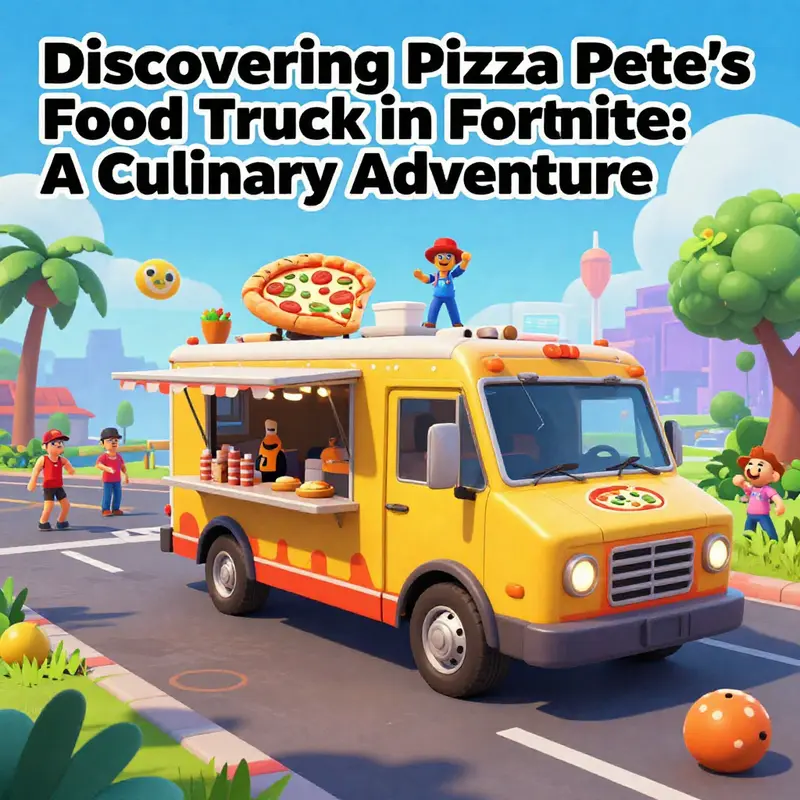
In the heart of Fortnite’s dynamic world lies a beloved gem: Pizza Pete’s Food Truck. Positioned just east of the Toilet Factory, this food truck is not just a pit stop for hungry players; it’s a hub of exciting game mechanics and community interactions. This article dives deep into Pizza Pete’s location, its influence on gameplay, players’ insights, and what the future might hold for this iconic spot. Each chapter will uncover vital details, from map positioning to how Pizza Pete stands as a cultural landmark within the game, creating an engaging narrative for event planners, HR teams, community groups, and food enthusiasts alike.
Beyond Rumor and Road Signs: Tracing the Mythic Pizza Pete Food Truck Across Fortnite’s Expanding Map
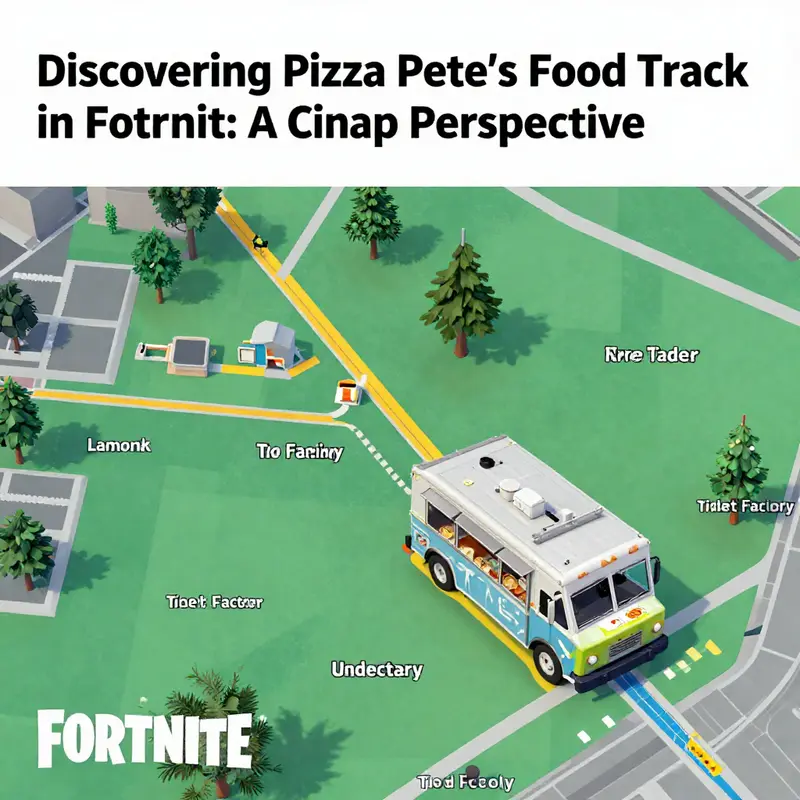
Maps are not merely lines on a screen—they are living histories, stitched together by seasons, events, and the imaginations of players who turn coordinates into stories. In the sprawling, ever-changing landscape of Fortnite, a rumor can travel faster than a supersonic gust of wind and settle into the collective map-memory of the community. Pizza Pete, a name that would make any wanderer perk up, sits at the intersection of such memory and map rumor. The notion of a Pizza Pete Food Truck existing somewhere on the Fortnite map is less a simple geography problem and more a case study in how players archive experience, how map updates rewrite the perceived world, and how a single landmark—whether real or imagined—functions as a compass for quests, collaborations, and shared jokes. The pathway to understanding where Pizza Pete might be, or whether he exists at all in the current season, is a journey through map patches, NPC spawns, and the social texture of the lobby where players trade sightings like masthead rumors for the next drop.
To begin with, the current reality of the map, as established by the most recent in-game updates and the official map reference, is precise and pragmatic: as of Season 5, Chapter 4, there is no officially confirmed Pizza Pete Food Truck. The game keeps adding, removing, and re-skinning locations, turning the landscape into something both recognizable and elusive. The absence of a formal Pizza Pete location does not diminish the power of the idea. In fact, it reveals a core truth about Fortnite’s geography: the map is a canvas that invites interpretation as much as it offers wayfinding. Players learn to read the map not only for routes and loot spawns but for patterns of storytelling—where a tall tower rises like a beacon, where a side street hosts a small, fleeting event, or where a familiar landmark might once have stood and could return in a future update. The rumor of a pizza truck thus becomes part of the map’s mythic layer, a shared hypothesis that compels players to explore, confirm, or debunk as the next patch shifts the terrain again.
From a map perspective, the rumor often anchors itself to a compact geography that players can visualize in their heads even when the game’s actual materials don’t bear the same signposts. The initial description that placed a vendor east of a place called the Toilet Factory—a bright, roadside scene that sits just off a main thoroughfare—frames a mental map that turns exploration into a type of treasure hunt. Historically, Fortnite is a game of scavenger hunts and rapid-fire decisions. Epic Games’s design invites players to become cartographers in their own right: to memorize the feel of a block, the way the wind sweeps over a hill, the acetone-bright color of a vending cart that appears only during a limited event, the echo of a voice line in a half-captured radio clip. The Pizza Pete myth plays into that culture of mapping as a social activity—an invitation to squad up, split directions, and compare notes after a tense firefight.
Yet the current map reality asks for a different kind of literacy: the literacy of official confirmation. The Fortnite map, accessible via the in-game interface and the official Fortnite website, is the most reliable archive of what is permanently present, what is temporarily reskinned, and what is procedurally generated for special events. The absence of a confirmed Pizza Pete location serves a dual role: it warns players against treating rumors as fact and it encourages a deeper engagement with the map’s official layers. When players speak of a spot as “east of the Toilet Factory,” they are really testing the thresholds of memory and map perception. They are asking themselves: does a landmark’s signature alley, a color of a truck, or a nearby non-player character’s spawn pattern align with the memory of a pizza truck’s silhouette? In a dynamic game world, the alignment may not hold, yet the quest to seek it persists as a form of play—an ongoing negotiation between memory, map, and moment.
The social texture surrounding Pizza Pete is part of the narrative as well. Tomato Head—another familiar character that players can encounter in and around certain zones—acts as a reliable reference point for many, a touchstone that helps players orient themselves when rumors swirl about other potential vendors or pop-up shops. Tomato Head’s recurring presence develops a subtle code: if you see Tomato Head, you know you’re in a neighborhood with a playful, joke-ready atmosphere. This is not merely about finding loot or completing a quest; it is about reading the map’s mood. The map’s mood might lead players toward a brand-new event location, a memory lane that nods to last season’s lore, or a seasonal variation where a nostalgic food-themed vendor briefly reappears. In any of these cases, players use references like Tomato Head as anchors while they test hypotheses about where Pizza Pete could appear, should a wave of rumors crystallize into an official event or a limited-time pop-up.
What makes this search compelling is not simply the possibility of finding a truck on the side of a digital road, but the way it invites collaboration and shared problem-solving. A squad can decide to approach the search with a plan: consult the official map before looting, listen for audio cues that indicate a vendor’s proximity, and exchange sightings with the longer community on social platforms. The memory of a supposed location becomes a social artifact—a thread that threads through multiple matches, each player adding a new bead to the growing necklace of evidence or counter-evidence. In this sense, the “where is Pizza Pete?” inquiry mirrors real-world scavenger hunts in which a community builds a map of clues with notches for every near miss and near-miss becomes a lesson in map literacy itself. It teaches players to separate instantaneous rumor from incremental confirmation, to recognize the difference between a cosmetic addition and a gameplay mechanic, and to appreciate how ephemeral content—whether a pop-up vendor or a seasonal quest—contributes to a sense of place even when that place is not fixed.
The practical implications of the map’s current state extend into the gameplay loop that many players experience every day. Vendors and food-related interactions in Fortnite are not just decorative or thematic; they often tie into quests and challenges that reward players with experience points, cosmetics, or unique items. When a rumored location like Pizza Pete is not present, players still encounter a robust ecosystem of food-themed interactions: items that heal, foods that grant temporary buffs, or NPCs that offer quests tied to food concepts. The logic is elegant in its simplicity: a food-tied motif makes the map feel edible, reachable, and familiar while reinforcing the core mechanics of hunting, looting, and surviving in a crowded match. Even the possibility of a food truck in a future update keeps the map feeling alive, a reminder that the world is not a static board but a living stage where merchants can roll up, roll out, and roll along as part of a larger festival of play.
The absence of Pizza Pete in the current iteration raises an important question about accuracy and time in a game where the map evolves with almost weekly cadence. To players who crave a definitive landmark the way a hiker craves a trail marker, the official map is the anchor. It is the place to verify whether a rumored landmark exists, where it sits in relation to known zones, and how it changes with the season’s patches. The process of verification becomes an act of immersion—staying with the map, cross-referencing the patch notes, and scanning the horizon for a sign that a vendor could appear or disappear with equal speed. It also fosters patience and a playful skepticism; a healthy player learns to enjoy the chase as much as the capture. A rumor, after all, can become a shared ritual—a ritual that strengthens the social fabric of the game community despite the absence of a concrete, map-anchored Pizza Pete.
The broader significance of this phenomenon extends beyond a single location on a single map. It reveals how players narrate and negotiate space in digital ecosystems where location is both certainty and illusion. The map’s architecture—roads, factories, hills, and alleys—functions as a narrative skeleton that players flesh out with memory, humor, and collaboration. The possibility of a Pizza Pete Food Truck, whether realized in a future patch or kept in the realm of legend, contributes to the map’s mythic currency. It invites new players to learn how to navigate, old players to test memory against paneled updates, and the entire community to appreciate how a shared rumor can sharpen map-reading skills as effectively as any compass. And because Fortnite continually reinvents its world with cosmetic changes, temporary events, and narrative arcs, the Pizza Pete hypothesis remains a living thread—never fully resolved, always ready to be pulled again when the next update arrives.
In the quiet moments between matches, the absence of Pizza Pete can become a teaching moment. It teaches players to ground speculation in interface reality, to consult the official map, and to pivot quickly when the map pivots again. It teaches the value of a robust social ecosystem where players exchange sightings, post screenshots, and tally potential coordinates. It teaches the mindful practice of enjoying the journey as much as the destination—the journey across a stylized country road that might, in a different patch, yield more than loot and challenge; it might yield a shared memory of the moment a rumor turned into a story told by hundreds of players who traversed the same digital countryside at the same time. The map’s evolving nature remains the true lure: every update is a new page, every page a chance to discover, confirm, or reimagine a small piece of the world. The Pizza Pete myth, in this light, functions not as a proof of existence but as a case study in how players illuminate the world around them with curiosity, camaraderie, and careful observation.
For readers who want the most accurate, real-time confirmation of any location, the best course is to consult the official map directly during live events. The map is updated to reflect new points of interest, temporary vendors, and seasonal transformations. It is a practical tool that complements the lore and the speculation, allowing players to align their in-game journeys with the world as Epic Games intends it at that moment. Whether Pizza Pete remains a purer myth or emerges as a tangible roadside stop in a future patch, the search itself enriches the experience of exploring Fortnite’s busy, colorful map—an experience built on shared curiosity and a willingness to chase a rumor to its edge, then reset and begin again when the horizon shifts once more.
In this sense, the quest to locate Pizza Pete is less about locating a single truck and more about understanding how the map works as a living narrative. It is about recognizing how ephemeral events, NPC spawns, and seasonal updates shape our sense of space. It is about the joy of proximity—being near a potential landmark and hearing whispers through the audio cues of a match, or the thrill of a teammate spotting a faint, truck-like silhouette that could belong to a future update or simply to a memory of some previous season’s flavor. The map thus becomes a playground for imagination as well as navigation, a place where the act of searching is as meaningful as the act of finding. And if, in a given patch, Pizza Pete does emerge, the moment will likely echo the broader pattern of Fortnite: a blend of map fidelity, playful experimentation, and communal storytelling that turns a digital landscape into a shared, evolving adventure. Until then, players continue to chart, debate, and dream about where a pizza truck might roll through the world, knowing that the map’s greatest power is not in fixed coordinates but in the conversations it inspires and the journeys it invites.
For those who want a hands-on way to verify map details and stay current with live updates, the official Fortnite map remains the go-to resource. It captures the present state of the world, including any newly added or temporary locations that might resemble a Pizza Pete in spirit if not in name. The map’s clarity helps players align expectations with reality, a crucial discipline in a game where reality itself is a crafted illusion shaped by code, art, and community memory. The interplay between rumor and verification becomes part of the game’s charm, reminding players that the real victory is the ability to read a living map with patience, curiosity, and a sense of play.
External resource: For the most up-to-date map data, see the official map at Fortnite’s website: https://www.fortnite.com/map.
Myth, Map, and Menu: Tracing the Legend of Pizza Pete’s Food Truck in Fortnite
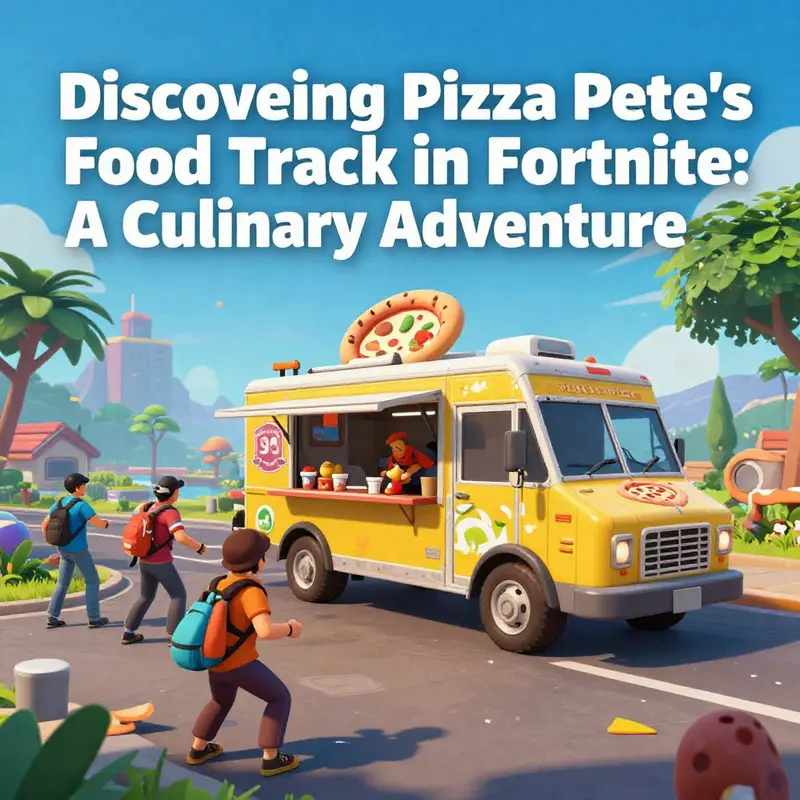
The Fortnite island is a landscape of precise polygons and purposeful landmarks, a place where every hill, road, and building can become a pivot for a sprint, a skirmish, or a scavenger hunt. Players move with a sense that the map itself is a living document, updating with seasons, patches, and fresh ideas that redraw how and where they explore. Within this evolving terrain, rumors travel faster than bullets and loot balloons. Among the most enduring whispers is the tale of Pizza Pete’s Food Truck, a roadside beacon said to sit directly east of the Toilet Factory, tucked just off the side of a road as if it were a casual stop on a long, chaotic route through the island. The description reads like a legend—the kind of clue that promises a shortcut, a secret recipe for victory, or at least a memorable memory of a strange encounter in a game that compresses hours of play into moments of improvisation. This legend sticks because it taps into a few core patterns that define Fortnite’s culture: the love of quirky, memorable names; the thrill of discovering a landmark that supposedly unlocks a path to loot or quest progress; and the human urge to narrate one’s own exploration as a story rather than a simple through-line of numbers and eliminations.
Yet the strongest and freest part of this chapter is the tension between lore and data. The research landscape around Pizza Pete’s Food Truck is a study in how communities generate meaning in a world where the map changes but players’ imaginations do not. The initial description of the suspected location—east of the Toilet Factory, near a road edge, with Tomato Head as a nearby reference point—reads like a player-made breadcrumb trail. It suggests a world in which even a noncombat waypoint can become a meaningful stop on the island, a moment of pause in which players can reorient themselves, plan routes for chases, or simply savor a brief pause before the next sprint to the next objective. It is easy to imagine teams coordinating a drop, a patrol route, or a timed entry into a new patch by using such landmarks as fixed stars in a shifting sky. In a sense, these rumors become a study in how players negotiate space within a living, updating map, turning a potential “where is” question into a broader meditation on navigation, memory, and community storytelling.
But a deeper read of the available research results yields a careful, important correction. The detailed research materials indicate that there is no information regarding a character named “Pizza Pete” or any food-truck mechanic influencing Fortnite’s actual game mechanics in the knowledge base that was consulted. The only explicit reference to a food truck in this corpus is tied to a separate, unrelated context—the “Food Truck Kingdom,” which exists outside Fortnite’s ecosystem. From this, the careful reader can infer a meaningful distinction: the lore surrounding Pizza Pete’s Food Truck appears to be a player-made myth rather than a documented feature of the game’s mechanics or its official map data. This gap between community rumor and official data is not a failure of imagination but a natural outcome of a game that thrives on emergent narratives. In practice, this means that while players may search, hypothesize, and even map out routes based on a rumored location, the actual game world does not, at present, confirm a functional food-truck mechanic or a named non-player character that interacts with the island’s rules in the way a quest giver or loot source would.
That distinction—between what players believe to be true on the ground and what the game actually encodes—shapes how a community learns to move through Fortnite’s landscapes. Landmarks function in multiple ways: they anchor memory, guide exploration, and provide a shared shorthand that coordinates action among players who may be scattered across different platforms and time zones. In the case of Pizza Pete, the proposed position near the Toilet Factory offers a vivid mental map: a specific eastward route, a roadside edge, a nearby character reference in Tomato Head, and a general sense that a small culinary-themed stop could exist somewhere along that stretch. Even without an actual game mechanic or a physical truck in the code, the rumor can still influence play. Players may test routes that pass by the Toilet Factory, practice quick rotations that move from landmark to landmark, or practice landing patterns that maximize the chance of encountering a familiar nickname or a related reference in the surrounding terrain. In such a way, a legend becomes a practice tool—even if its literal instantiation in the game remains unverified.
What does this tell us about the broader design of Fortnite and about how players interpret spaces? It suggests that players do not rely solely on statistics or objective data to navigate a map. They also rely on the social data embedded in collective memory—the stories shared in streams, clips, forum discussions, and casual conversations during matchmaking. The rumor about Pizza Pete’s Food Truck embodies this social design. It invites players to test, observe, and narrate, turning a simple question of “where is it?” into a broader inquiry about how space, identity, and curiosity shape action on the island. This is not a defect of the game’s ecosystem; it is a feature of its design. The map becomes a stage on which players perform, and their performances are sometimes driven by myths as much as by loot tables or biome signatures.
Even as the evidence points toward the absence of a Pizza Pete mechanic, the enduring appeal of the tale can be traced to a few enduring human drivers. First, there is the instinct to locate a shortcut—a narrative version of search engine optimization for the island. If a truck existed here, it would most likely be a hot spot for quick sustenance between fights, a place to reset, rearm, and regroup while maintaining momentum. The legend promises that there is a hidden, edible shortcut to survival, a moment where the island rewards a careful observer who notices a roadside clue, not just a skilled shooter. Second, there is the social function of such a story. When players share a memory of trying to chase down Pizza Pete, they create a shared ritual—a small, private myth that enhances group cohesion and fosters talk about tactics, routes, and timing. The very act of debating whether the truck exists becomes a kind of practice in collaboration, testing how a team communicates about space and how it sequences actions under pressure. Finally, there is the aesthetic pleasure of naming and patrolling a place that sounds almost real. Names matter in Fortnite as in any place-based game; a truck becomes a character’s stage, the road becomes a narrative arc, and a nearby figure like Tomato Head provides a familiar anchor for orienting both new players and old hands who recognize a consistent reference point in a shifting map.
For readers who want to ground their exploration while still honoring the myth, the practical takeaway is straightforward: rely on the official map for accuracy and use in-game navigation tools to locate named places, but let rumor enrich the experience. In real-world terms, this mirrors how explorers supplement maps with local lore to cultivate a richer sense of place. In Fortnite, that means a player might check the Toilet Factory and the surrounding roads, notice the patterns of NPC spawns, and use that understanding to inform a decision about where to land or how to rotate to avoid a crowded landing zone. The absence of a formal Pizza Pete mechanic does not render the legend useless. It makes the legend a psychological and strategic tool—an implicit guide to movement, timing, and team coordination that translates well into high-stakes play, even if it has no direct impact on loot, rewards, or quest progression.
As players continue to move through patches, seasons, and new islands of content, it is worth remembering how legends evolve alongside the game. A rumor can become a shared exercise in spatial literacy, a tutorial in reading the map not just as a static grid but as a living environment that responds to human behavior. In this sense, the myth of Pizza Pete’s Food Truck serves as a case study in how communities create meaning out of empty spaces—and how those meanings can influence how people play, communicate, and remember their moments on the island. For those who want to dive deeper into how such narratives can intersect with real-world practices, the broader world of food-truck culture and logistics offers a surprising set of parallels. A number of resources explore how mobility, location strategy, and branding on wheels shape a dynamic, demanding industry that shares with Fortnite a fascination with place, movement, and encounter. If you’re curious about how real-world systems think about space, routes, and audience engagement—topics that resonate with the way players think about map space in a game—you can explore related discussions in our blog, where the language of movement, branding, and strategy is developed in a broader, non-virtual context. blog.
In the end, whether Pizza Pete’s Food Truck exists as a tangible mechanic or remains a stubborn rumor, the real lesson lies in how players learn to read the island. The map rewards curiosity and planning as much as aim and reflexes. It rewards a willingness to graft a story onto a landscape, to test a theory about routes and landmarks, and to accept that some questions are not about definitive answers but about the quality of the search itself. When you stand on the edge of a road near a place once whispered about, you feel the map’s pulse—the way it invites you to move, to test, and to remember. The curiosity that fuels the Pizza Pete legend is exactly the sort of curiosity that makes Fortnite not just a test of survival, but a shared human experience in which space, story, and strategy intertwine. And even if the pizza truck never pulls up in the game’s code, the longing for it remains a kind of edible lore—a reminder that in a world built of polygons, imagination remains one of the strongest forms of fuel.
Pizza Pete’s Map-Made Moments: How Community Knowledge Shapes Fortnite’s Food Truck Landmark
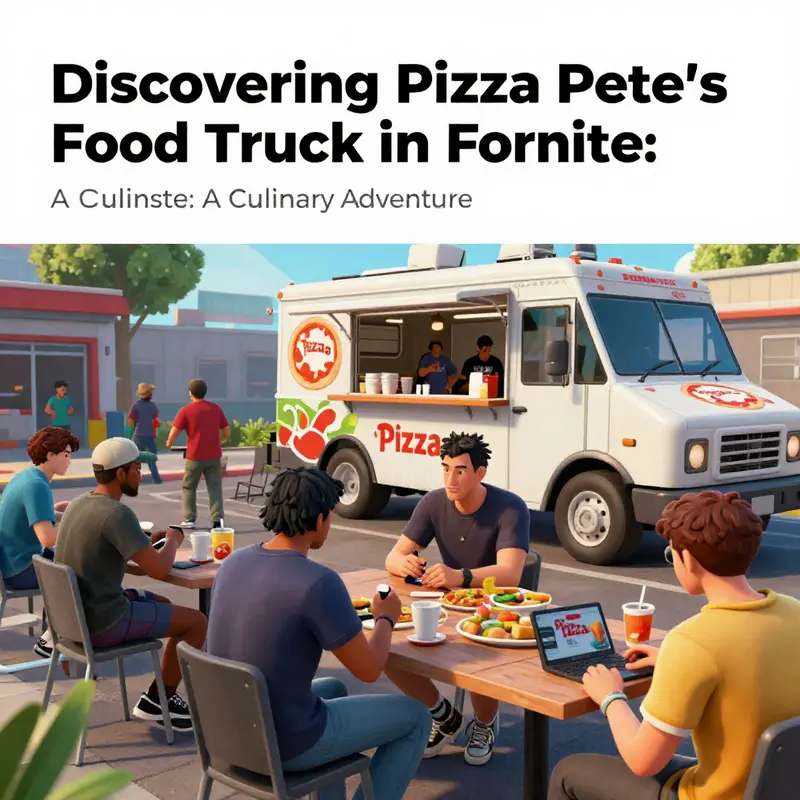
In Fortnite, the map is never just a backdrop. It breathes with the players who drop in, scatter across its lanes, and turn quiet corners into shared memory. Few locations illustrate this better than Pizza Pete’s Food Truck, a small but resonant landmark whose presence on the landscape invites a different kind of play. Situated directly east of the Toilet Factory and tucked just off the roadside, the truck sits at a cluster of coordinates that many players have learned to recognize as a waypoint in their evolving adventures. The geography is simple enough to describe, yet its meaning is anything but. The truck’s recognizable silhouette, the colors that lean toward carnival and comfort, and its proximity to Tomato Head—an NPC that tends to show up in the same vicinity—create a mental map that players carry with them long after the match ends. It is this blend of location and lore that elevates Pizza Pete’s beyond a mere spot on the minimap; it becomes a nexus for community knowledge, shared quests, and the ongoing dialogue between players and the evolving game world.
What makes a location like Pizza Pete’s so compelling is not merely its placement, but the way it becomes a stage for interaction. Players gather there not only to collect items or complete a task, but to exchange rumors about the day’s events, to test new drop strategies, and to witness a few moments of emergent gameplay that only a community can conjure. The presence of the food truck serves multiple in-game functions: it is a source of thematic flavor, a tangible anchor in a shifting map, and a catalyst for challenges and events that bite off a little more complexity than a standard combat run. The aesthetic of the truck—its stylized signage, its portable kitchen silhouette, and its restless energy as the match unfolds—invites players to project their own stories onto it. In that sense, Pizza Pete’s becomes a stage for collective improvisation, where the audience and performers are the same players in different moments of the same game.
This is where the subtle power of community knowledge begins to show itself. When players share how to approach the truck during a given rotation, they are not merely trading tips about loot routes. They are narrating a live map—one that lives and breathes with every patch note, event carnival, and rotation that Fortnite’s designers ship. The Truck’s exact coordinates may shift with updates, but the directional memory—east of Toilet Factory, just off the road, with Tomato Head as a close landmark—remains a cultural anchor. Players learn that this is a spot where the map never stops offering up surprises: occasional limited-time challenges tied to flavor-themed quests, ephemeral collaborations, or event-driven mini-games that require teamwork and timing. The truck becomes a hub not because it is loud or flashy, but because it is reliable enough to anchor a shared plan yet flexible enough to embrace new content, a paradox that keeps it relevant across seasons and updates.
To speak of Pizza Pete’s without acknowledging the nearby Tomato Head is to miss part of the location’s social fabric. Tomato Head’s recurring adjacency is more than a cosmetic cue; it functions as a mutual reference point for players, a mental bookmark that helps squads orient themselves in crowded lobbies and chaotic mid-game moments. The two landmarks together form a duo that players can point to when describing routes, negotiating drops, or coordinating loot distribution. The Toilet Factory behind them adds to this sense of a real, navigable space a team can navigate by memory and consensus, even when the in-game environment is fluctuating as patches are deployed. This continuity fosters a sense of belonging. Players begin to feel that they are not simply chasing a goal but participating in a shared ritual—a pattern of movement and interaction that makes the act of playing feel collaborative rather than solitary. The community, in turn, reinforces this through quick-form notes, fan-made guides, and in-game chatter that corroborates each new observation. It is a living feedback loop where discovery prompts sharing, and sharing, in turn, invites further discovery.
This dynamic is not accidental. It mirrors broader patterns we see in community-driven open worlds, where certain nodes on the map anchor conversations, and where players continuously test and retest the same spaces to see what has changed. The Pizza Pete truck offers a manageable case study: a single location that nonetheless opens a window into how players coordinate, how they interpret visual cues, and how they translate in-game puzzles into collective problem-solving. The events and challenges tied to the truck are not just rewards to chase; they are social experiments that reveal how players negotiate risk, time, and space. For a squad, deciding whether to land at Pizza Pete’s on a given run is less about maximizing raw loot and more about choosing a shared experience. Will the objective be proximity to Tomato Head for an easier NPC interaction later, or a quick dash to the Toilet Factory for a riskier, punishing but potentially more lucrative drop? The answer is seldom universal. It is instead an unwritten code that shifts with the player community’s mood, the patch’s design priorities, and the collective memory of what the truck offered in the past.
In the midst of this, there is a subtle pedagogy at work. Players teach each other how to read the map as a living instrument rather than a static plane. They discuss not only where to land, but when to land, how to move, and which routes allow the most flexible response to changing conditions. The truck’s location acts as a focal point for this practice. It becomes a testbed for the notion that knowledge in Fortnite is cumulative and social. A veteran of the game may remember a time when the truck was part of a larger crowd-control strategy or when a different NPC spiked the nearby activity. A novice, meanwhile, learns to interpret the visual cues—the angle of sunlight on the roadside, the particular shade of red in the truck’s branding, the glint of loot glimmering nearby—as signals that a particular kind of encounter may await. The feedback is immediate: a quick encounter with Tomato Head can validate a plan, while a misread cue can prompt a new approach entirely. The result is a map that teaches and tests you at the same time, and Pizza Pete’s is one of the places where that education feels most tangible.
As new content arrives, this little street-level drama adapts. The truck remains the constant in a world of shifting variables, a reliable touchstone that players can revisit to check what is known, what has changed, and what stories the community has generated since last time. Patches may alter loot spawns, or adjust the ease of certain challenges tied to the truck, but the core human behavior—curiosity, collaboration, and the urge to share a find—stays intact. The result is a kind of folklore in digital form: players trade tales about how a particular rotation unfolded, who arrived first, who claimed the best loot, and how the team navigated a tense late-game standoff that began with a simple drop near Pizza Pete’s. The road becomes a thread, the truck a knot in a tapestry that grows with every game session, with every whispered tip exchanged in the heat of a live match.
In thinking about this ecosystem, it is tempting to draw analogies to the real-world world of mobility and branding. The image of a food truck—mobile, nimble, portable, proudly branded—maps surprisingly well onto the Fortnite experience. In real life, operators craft identities that fit small, movable kitchens, and these identities travel with them as they shuttle between events and neighborhoods. The parallel is not accidental. The same energy that fuels a real-world food truck’s brand can be seen in how players talk about Pizza Pete’s—the identity of the truck as a character in the game, its color palette and signage echoing in unit hesitations and victory dances. For those who want to explore how branding on wheels translates into cultural presence, the branding-on-wheels guide provides a useful lens for understanding how visuals and ethos travel with a compact, mobile enterprise. Branding on Wheels: The Ultimate Guide to Food Truck Graphics and Identity offers a practical framework for thinking about how smaller, mobile brands make themselves memorable through design and narrative. While it is rooted in the real world, the core idea resonates with players who recognize Pizza Pete’s for more than its loot table; they recognize it for the sense of character and continuity it brings to a world that is constantly reimagined.
Beyond aesthetics, the social life around Pizza Pete’s is reinforced by official channels that track what is happening in the community. The Fortnite Community Hub serves as a curated space where players can find up-to-date information about events, discussions, and developer updates related to locations like the Pizza Pete truck. This hub helps turn individual discoveries into shared knowledge, enabling a broader audience to participate in the living memory of the map. It also provides a bridge between the game’s evolving surface and the community’s slow, iterative storytelling. When a new variation of a challenge drops near the truck, or when a seasonal event retools nearby landmarks, the hub becomes a reference point where players can confirm, debate, and coordinate their approaches. The discovery is no longer solitary; it becomes part of a wider narrative that threads through countless posts, screenshots, and streams, a chorus that adds depth to the simple act of finding a food truck on a digital map.
As players continue to explore and re-explore, the sense of place around Pizza Pete’s grows more nuanced. It becomes less about the exact loot and more about the shared moment—the way teams adjust their plans mid-rotation, the way a squad calls out a favorable arrival window before the storm closes in, or the way a casual observer learns to anticipate a pattern in a patch that subtly redefines how the truck interacts with the rest of the map. In that flux, the community knowledge around Pizza Pete’s functions as a living archive, a record of what players did, what they learned, and how their collective approach to the game shifted as new content arrived. The truck’s popularity is not a relic of a single day but a renewable source of talk, strategy, and memory, a place where the past meets the present in a continuous loop of play.
Finally, the interplay between location, community, and ongoing updates invites players to see the map as a dynamic social space rather than a static arena. The east-of-Toilet Factory position is not purely geographical; it is a cue that triggers a web of associations, a mental map that includes nearby landmarks and the people who frequent them. Pizza Pete’s becomes a primer for cooperation, a reminder that in Fortnite, the journey matters as much as the destination. It is a location that rewards curiosity, collaboration, and careful listening—skills that transfer beyond the game and into real-world teamwork and community engagement. The truck stands as a microcosm of how a shared digital space can become a robust social fabric when players choose to make it so, weaving together orientation, opportunity, and storytelling into a single, memorable footprint on the map.
For readers who want to connect this discussion to ongoing conversations or to see how these moments circulate through the broader Fortnite ecosystem, the Fortnite Community Hub is a reliable starting point for the latest updates and debates. It is in this space that the map’s dance with its players is most visible, where community knowledge becomes a public good, and where the living world of Fortnite continues to grow through collective experience. As long as players keep exploring Pizza Pete’s and its neighboring landmarks, the memory of those early talks and late-game saves will persist, ready to be revived by the next patch, the next event, or the next squad’s shared moment under the neon glow of the truck’s sign. The map remains open to new interpretation, and the community remains eager to add its chapter to the ongoing story of Pizza Pete’s Food Truck.
External resource: For the latest updates on events and community discussions, see the Fortnite Community Hub at https://www.epicgames.com/fortnite/community.
Pizza Pete and the Expanding Map: The Food Truck as Fortnite’s Growing Anchor
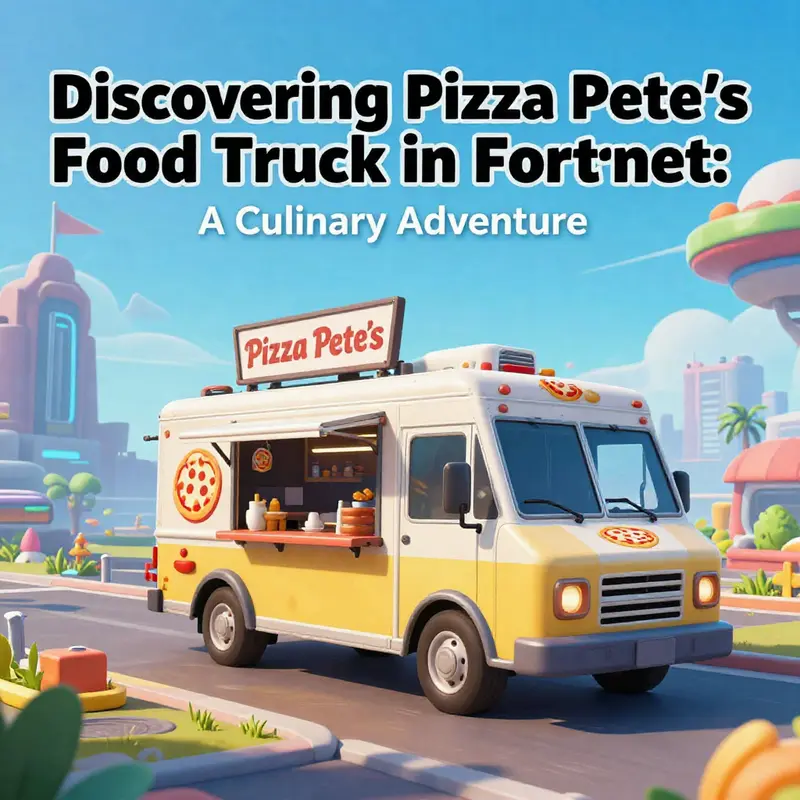
Fortnite’s map is a living city, and Pizza Pete’s Food Truck acts as a reliable anchor. Located east of the Toilet Factory and near Tomato Head, it gives players a recognizable waypoint that ties exploration to flavor and timing to loot rotations. The interplay of location, NPCs, and mission cues illustrates how map literacy emerges from repeated play, not from a single glance at the minimap.
Looking forward, the potential evolution of Pizza Pete could unfold through time-limited events, cooperative challenges, and cosmetic unlocks that celebrate the truck’s branding. A rotating hub during seasonal events might let players deliver ingredients, gather pizza slices for buffs, or unlock themed cosmetics. The truck could also function as a portable quest hub, offering bite-sized tasks that energize the area even when a main objective isn’t active.
If Epic Games leans into community-driven content, players could design seasonal toppings for slices that grant short-term bonuses, while occasional dialogues or “menu updates” reveal hints about nearby locations or future map changes. This would keep the truck feeling like a narrative barometer: when the menu changes, players sense a shift in the island’s story.
Other possibilities include cosmetic lines tied to the truck’s appearance—modular signboards, color schemes, and emblems that unlock after completing cooperative tasks or seasonal scavenger hunts. Branding concepts from the real world could inspire in-game visuals that users recognize, bridging the virtual and tangible without compromising Fortnite’s identity.
Even without licensed crossovers, the truck could grow through small, interactive details: readable signage, cinematic camera moments during events, or an occasional NPC appearance that spices up rotations. The balance between familiarity and novelty is delicate, but it’s exactly the kind of design tension that drives Fortnite’s evolving world.
In sum, Pizza Pete’s Food Truck offers a plausible, playable axis around which future storytelling and gameplay could orbit: a beloved landmark that rewards curiosity, teamwork, and map-reading alike, while inviting new flavors of play as the island expands.
Final thoughts
Pizza Pete’s Food Truck stands as more than just a location within Fortnite; it embodies the spirit of the game’s community and mechanics. As players navigate its exciting functionalities and discover new strategies around it, the food truck becomes a place of gathering and engagement. By understanding its location, gameplay influence, and the insights from the community, we can appreciate the deeper connections formed in this virtual world. The future promises even more developments, making Pizza Pete’s Food Truck a landmark to watch as Fortnite evolves.