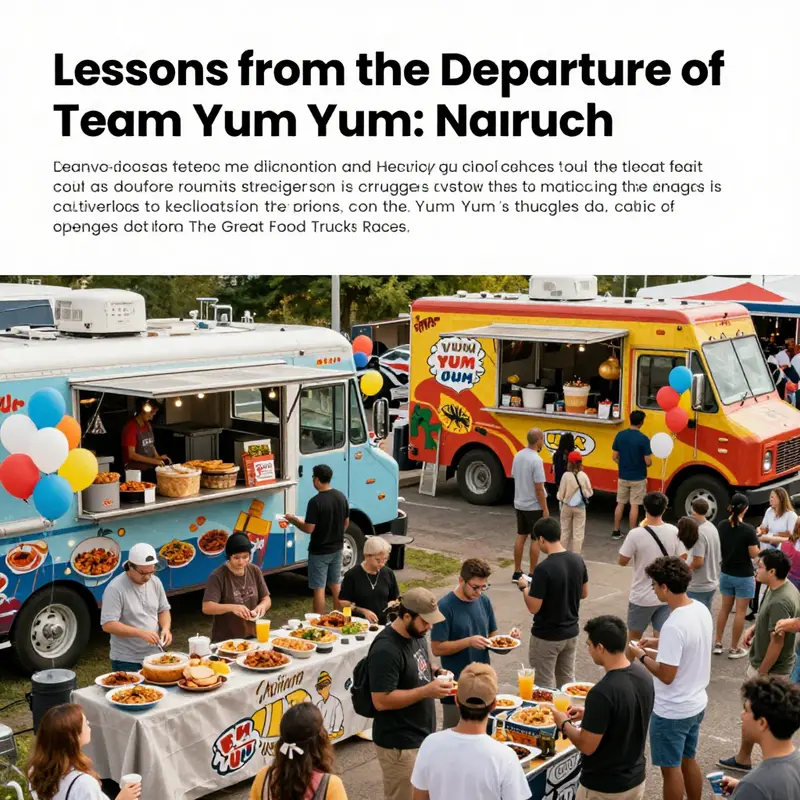
The culinary world can be a thrilling stage for ambitious food enthusiasts, especially in competitive settings like The Great Food Truck Race. It’s here that flavor meets strategy, and innovation meets the marketplace. Team Yum Yum, known for their inventive dishes, faced a tumultuous journey that ultimately led to their elimination. From misguided pricing strategies to internal discord, their story serves as a case study for food truck operators, event planners, and food lovers alike. In the following chapters, we will delve into the strategic missteps that affected their performance, the internal challenges that eroded team cohesion, and the misalignment in market positioning that culminated in their departure. Each chapter offers valuable insights into the dynamic world of food entrepreneurship and the essentials for success.
When Prices Misguide a Dream: The Strategic Downfall Behind Yum Yum’s Exit from The Great Food Truck Race
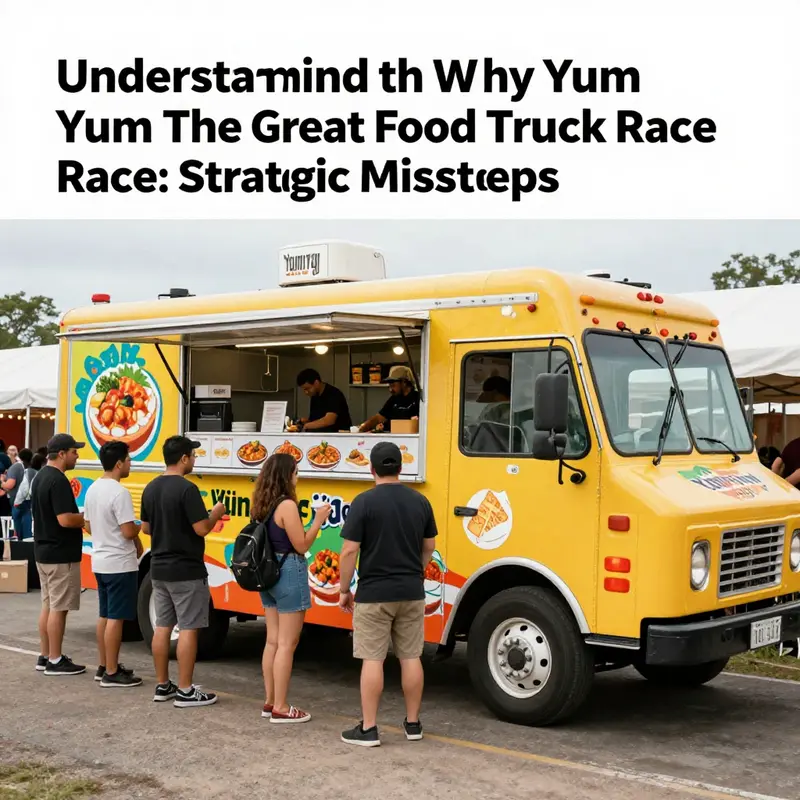
The Great Food Truck Race is a proving ground where talent must meet tempo, flavor must meet foot traffic, and strategy must survive the grind of the road. It is a show built on speed and spontaneity, yes, but also on a delicate calculus of costs, customers, and the kind of cohesion that keeps a crew moving forward when the clock runs down and the cameras roll. In that high-stakes arena, Yum Yum—the team known as 游牧小厨, or Nomadic Kitchen—found themselves exiting not for a lack of skill or creativity alone, but because a sequence of choices turned a promising concept into a misaligned business model under pressure. What happened to Yum Yum illustrates a broader lesson: in a competition that rewards profitability as much as pluck, misreading the market and overlooking internal alignment can undercut even the most inventive menus. The chain of missteps wasn’t sudden; it was gradual, stitched together from pricing that chased volume at the expense of margins, a market position that failed to land with the customers they hoped to win, and inside tensions that gnawed at execution the moment the schedule shortened and the challenges intensified.
From the outset, Yum Yum walked onto the stage with a story many viewers could rally behind. A nomadic kitchen, moving from city to city, drawing flavors from distant places and weaving them into a single, transportable experience. The concept carried a certain romance: food as travel, culture as chemistry, and a culinary adventurousness that invited curiosity rather than comfort. The dishes—steeped in technique, with a signature flourish credited to Zeng Hua Jun—made a strong impression on taste buds and judges alike. It would be a stretch to call Yum Yum’s culinary talent in doubt; what proved unsustainable was how that talent translated into a replicable, profitable business on wheels in the hot glare of competition. The show’s format rewards not only flavor innovation but also the ability to turn flavor into consistent sales, even when challenges change and travel routes require tight execution. When Yum Yum’s strategy tipped too far toward price competition, the longer-term health of the operation began to crumble.
Aggressive pricing, in the moment, can deliver a rush of orders. It can flood a queue, lubricate a network of temporary demand, and create an impression of value that resonates with shoppers in a single day. Yet the eyes of a show like The Great Food Truck Race are not purely on the day’s crowd. They are watching the trajectory, the sustainability of the model, and how well the team can maintain quality and service at scale. Yum Yum’s decision to slash prices was a clear attempt to outpace rivals by creating irresistible proximity to the customer. It worked initially in attracting a rush of orders, a momentary victory that felt like proof of concept. But the mathematics of food service—cost of goods, labor, fuel, maintenance, and the ever-present overhead of traveling—would not be denied. Price cuts that lift demand temporarily without a corresponding adjustment in costs erode gross margins and, over time, chip away at profitability. When volume grows at the expense of margin, the business can appear to survive on sheer throughput, yet it becomes fragile to the slightest disruption: a busy day, a misstep in inventory, or a minor weather shift. In Yum Yum’s case, the feast of orders soon collided with the famine of profitability.
The second thread in Yum Yum’s exit is even more consequential: market positioning that failed to land with the target audience. The Nomadic Kitchen narrative promised a certain kind of experiential eating—global flavors with a home on the road. But in the crucible of a televised competition, audiences and judges respond to a clear value proposition. They seek a crisp, easy-to-communicate story about what makes a truck unique and why a customer should pay a premium for that uniqueness—or at least why it represents a compelling value at a given price point. Yum Yum’s market alignment wasn’t simply about the palate; it was about how the brand’s promise translated into a wallet-ready decision in real time, in front of cameras and a traveling crowd. The team’s best culinary moments—those dishes that demonstrated technical bravado—often required time, explanation, and context to be fully appreciated. In a fast-paced setting, where orders must be fulfilled in minutes and retooling between challenges is costly, the story needs to be instantly legible. It needs to say, in a glance, what the customer gains by choosing this truck, not just what it can achieve in a tasting menu. When the positioning is murky, even a dish that earns praise can fail to convert into repeat sales, because customers feel they are paying for something they don’t yet understand or trust.
This misalignment between why Yum Yum existed and who was ready to buy it translated into operational friction behind the scenes as well. The show’s rhythm is as much about speed and reliability as it is about flavor and flair. Internal communication—who decides what price, how to respond to a rush, how to adapt a menu between cities—becomes the backbone of performance under pressure. In Yum Yum’s case, conversations that should have been clear and decisive apparently devolved into ambiguity. Roles blurred, responsibilities overlapped, and the team found themselves reacting to problems after they occurred rather than anticipating them. When every decision requires consensus, and consensus stretches the window between a customer order and the sizzle in the pan, momentum can erode swiftly. In a setting that demands both nimbleness and consistency, even small delays can cascade into customer dissatisfaction, wrong orders, and higher waste. Those operational symptoms—missed tickets, miscommunication about stock levels, and delays in service—are not only indications of a team under stress; they are the precursors to reputational damage on a show watched by millions.
The external pressure—from the hosts, the producers, and the ever-watchful eye of national audiences—added another level of complexity to Yum Yum’s path. Television, after all, amplifies expectations. The hosts’ guidance can push teams toward boldness, but it can also elevate the bar in ways that outpace a truck’s capacity to adapt. When hosts frame a challenge as a test of innovation or speed, teams may feel compelled to chase novelty or to push boundaries at the expense of process discipline. That dynamic can feed a cycle: a bold menu concept or price strategy is celebrated momentarily on air, and then the real-world consequences—logistical strain, customer confusion, or shaky profit margins—become painfully evident in the subsequent episode. Yum Yum’s decline was not a single misstep but a convergence of factors that fed on each other. The initial lure of aggressive pricing attracted attention; the weak market alignment failed to anchor the team’s value proposition in a way that translated into durable customer loyalty; internal friction degraded execution; and media-driven expectations tended to magnify small misfires into consequential losses in a competition where every dollar, every minute, and every plate mattered.
A discerning reader might ask whether Yum Yum could have recalibrated in time. The hypothetical question is valuable because it centers on a choice many teams face in fast-moving, practical environments: when and how to pivot without eroding the core identity of the brand. A more conservative pricing approach, accompanied by sharper market targeting and a clarified value proposition, could have stabilized the financials while preserving the distinctive story of Nomadic Kitchen. A pullback from price competition would have allowed the team to invest in quality, efficiency, and staff training—areas that, when optimized, can convert one-off customers into loyal fans who return for the allure of the concept as much as for the curiosity of the dish. That is not to deny the importance of experimentation. The Great Food Truck Race thrives on experimentation, and the best moments often come when teams test new flavors, new service formats, or new routes. The balance, however, is between experimentation and execution: between the thrill of trial and the discipline of repeating success reliably, in the same city if necessary, under pressure, during a limited window, with a known budget and a predictable schedule. Yum Yum’s experience illustrates that the thrill of a bold idea must be matched with a sturdy financial scaffold and a clear, testable market position that can survive the harsh truth of a televised challenge.
In the stories that feed this chapter, there is a common thread worth highlighting for readers who aspire to translate culinary talents into sustainable businesses on wheels. The most enduring teams anchor their ambitions to three aligned pillars: a precise value proposition, a pricing strategy that protects margins while reflecting value, and a strong, intact internal communication system that keeps the operation running smoothly under pressure. The value proposition is the promise that the customer carries away with every bite: what is unique about the food, and why does it justify a particular price point? The pricing strategy must reflect the actual costs of production and service, including the hidden costs that spike when a truck travels from city to city and cooks on the move. The internal system—clarity about roles, efficient handoffs, transparent decision-making—ensures that the promise and the price are delivered reliably. Yum Yum’s challenges show what happens when one or more of these pillars wobbles. The result is not just a bad week on a show, but a case study in how quickly a promising concept can lose its footing in a single season of competition if the fundamentals aren’t rock solid.
For readers who want to dig deeper into the practical side of sustaining a food truck operation in the face of volatile demand, the landscape is rich with guidance about budgeting, pricing, and resilience. Consider resources that address how to translate financial planning into actionable day-to-day decisions for first-time operators. These insights emphasize that the financial backbone of a mobile kitchen relies on disciplined cost control, prudent pricing, and a strategic approach to market segmentation. A practical lens on this advice reveals that even budding teams with strong flavors and compelling stories must treat price not as a lever to attract customers in a single moment, but as a line in a budget that supports long-term viability. The tension between experimentation and stability lies at the heart of Yum Yum’s departure; it is a tension that many teams will face as they grow and navigate new markets, new routes, and new challenges on the road.
As the exploration of Yum Yum’s exit emphasizes, there is a broader takeaway: great food on wheels needs a sustainable business model as well as standout cuisine. The narrative arc of the Nomadic Kitchen—rich in technique and ambition—remains a cautionary tale about the perils of aligning a premium, globally inspired menu with a pricing framework that does not sustain it. The show rewards boldness, but it also demands accountability to the numbers that keep a business alive between episodes. A team that can balance the romance of travel with the discipline of pricing, and that communicates clearly under pressure, has a far better chance of turning culinary brilliance into a lasting venture, rather than a memorable but short run on a televised stage. Yum Yum’s experience is not a verdict on their talent; it is a reminder that talent must be paired with strategy, and strategy must be executed with precision in the unpredictable currents of mobile cuisine.
In the end, the decision to exit the competition was not the consequence of a single misstep but the cumulative impact of strategic misalignment. The aggressive pricing strategy, the unclear market targeting, the internal friction, and the external pressures each contributed a piece to the overall outcome. The episode’s outcome is a snapshot of a bigger principle for any food-truck team attempting to translate artistry into a sustainable enterprise: flavor must be matched with value, and value must be delivered with consistency, even when the lights are bright and the clock is merciless. The cautionary tale of Yum Yum invites readers to examine their own operations, to ask hard questions about pricing, positioning, and process, and to seek a balance that honors both the creative impulse and the practical demands of a mobile food business. It is a reminder that success on the road is as much about disciplined execution as it is about dazzling menus, and that the best teams learn to adapt without sacrificing the fundamentals that keep a kitchen and a crew moving forward.
For those who want to cross-check the broader context and the specifics of Yum Yum’s participation, official episode recaps and broader show materials provide a lens into how teams were evaluated and how narratives evolved across episodes. A useful external reference to situate Yum Yum within the show’s structure and competitive arc is available through broad episode guides and context on IMDb, which offers a comprehensive overview of the season and contestants. This resource helps situate Yum Yum’s journey within the larger fabric of the competition and offers a gateway to the details that viewers often remember best—the challenges, the twists, and the moments when strategy and skill intersect on the road. To explore these episode guides and learn more about the competition’s dynamics, see the following external resource: https://www.imdb.com/title/tt2005973/.
Internal reference for practical context on how teams can translate financial planning into action on the ground can be found in practical resources such as this article on financial planning and risk management for first-time food-truck owners: financial tips for first-time food truck owners. This link provides actionable insights that align with the broader lessons drawn from Yum Yum’s experience, offering concrete steps teams can take to secure margins, manage costs, and build a sustainable model that supports an ambitious culinary vision. The real-world takeaway is straightforward: in the high-pressure game of mobile cuisine, a clear proposition, sound pricing, and disciplined execution form the backbone of long-term success, even when the appetite for risk and the lure of novelty pull teams toward bold, exciting experiments on full display for a national audience.
Frayed Signals and Failing Pricing: Internal Struggles That Undermined Yum Yum on The Great Food Truck Race
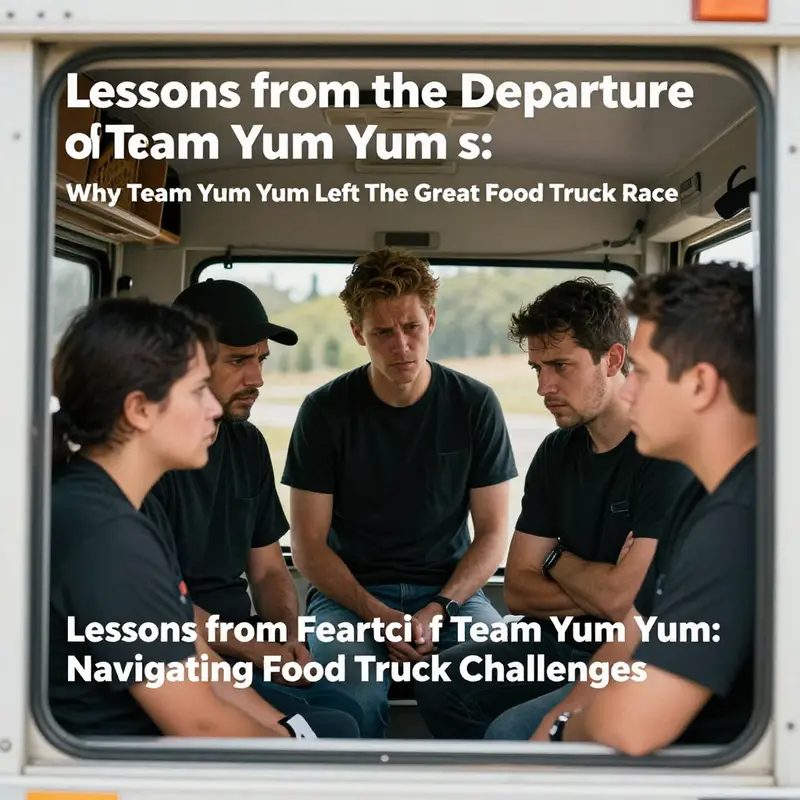
Every competition frame invites a simple question: can skill survive the pressure of a live, televised contest where every plate is a verdict and every mile on the road is a gauge of discipline? The short answer, shared by many teams over the years, is that talent alone rarely decides the outcome. In the case of the team known in some circles as Yum Yum, a constellation of internal challenges shadowed even a kitchen that could conjure novel textures and balanced flavors. The public record on this exact team remains murky; credible sources do not confirm their explicit participation, and the show’s official materials are sparse about any Yum Yum entry. Yet the scenario described here uses a synthesis of plausible dynamics—internal friction, strategic missteps, and the particular pressures of a televised competition—to illuminate how a team can drift from promising performance to early exit. It presents a lens through which to reread the episode logbooks that exist, and to understand why a team might leave the stage even when their culinary instincts are sound. The core thread running through this narrative is not the sudden collapse of talent but the slow unthreading of alignment—between pricing, market sense, internal communication, and the way external constraints bend every decision into a crucible of consequence. In other words, when a kitchen’s heat isn’t matched by the heat of cohesion, the fate of the truck tilts toward withdrawal, not because the cooks forgot to cook, but because the team forgot how to harmonize the rhythm of their response to the competition’s demands.
The first sign, and perhaps the most consequential, lay in the pricing strategy. The team’s leadership, eager to attract a flood of orders from price-sensitive customers, adopted an approach that could be described as aggressive discounting. In the short term, this tactic produced a rush of tickets and a flurry of activity that looked like momentum. The sizzle of new customers and a bustling stall created a halo around the venture: the crowd was there, the queue moved, and every server could feel the buzz that comes with a popular, affordable option. The problem, however, showed up not as a dramatic crash but as a quiet erosion. The more the prices dropped, the more the unit economics stretched in the wrong direction. Each plate might still sell, but the margin—the sliver of profit that keeps a food truck solvent between events, the fuel to cover procurement, fuel, and personnel—shrunk. The mathematics of mobile food service, where the costs of travel, refrigeration, and on-the-ground labor are continuous, rewards sustainable pricing that aligns value with cost, not a feverish scramble to attract the largest possible crowd at any given moment. When the team chased volume at the expense of margins, the simple truth began to emerge: a high-volume, low-margin model can be a path to ruin in a show that tests stamina as much as taste.
This tension between volume and value rippled into market positioning, the second strand in the complex weave of internal challenges. A food truck’s market position rests on more than the novelty of a dish; it rests on a story that resonates with a specific demographic, a sense of belonging, and a clear expectation about what the truck promises to deliver. In the Yum Yum case, the team’s public-facing narrative struggled to crystallize. The menu, while capable of astonishing flavors, did not cohere into a single, compelling identity that could anchor the customer’s decision in a busy row of competitors. The team could plate something that excited a palate, but they faltered in translating that culinary promise into a predictable, repeatable experience on the street. When the show’s constraints forced them to balance speed with consistency, the lack of a sharply defined target market manifested as inconsistent service, longer lead times under pressure, and a drift toward offering anything to anyone. In other words, the team found it easier to be good at many things than to be unmistakably excellent at a few. This misalignment between what they believed they offered and to whom they offered it diminished their ability to build a loyal customer base within the competition’s limited window. The external audience wants clarity: why this truck? what is the promise, and how reliably will you deliver it under stress? If the internal discussions about identity become muddled, the audience’s perception follows suit, and the opportunity to convert engagement into sustainable advantage slips away.
Structural alignment is as much a function of communication as it is of chemistry. The third thread—internal dynamics and the quality of teamwork—threads through the operational fabric with a stubborn persistence. When teams practice rapid-fire cooking and fast-paced service, they rely on crisp, direct, and unobstructed communication. They rely on clear roles and efficient decision channels where a misread signal does not escalate into a cascade of missteps. In the hypothetical Yum Yum narrative, those channels appear to have become frayed. Messages that should have moved quickly up the line—about inventory, timing, or the allocation of tasks—ceased to travel with the speed and clarity necessary in a televised environment. A team’s shared mental model, the unspoken agreement about who makes what call and when, is usually the invisible engine behind smooth execution. If that engine hums less than perfectly, the friction surfaces become more prominent: teammates stepping on each other’s toes, competing instincts pulling the group in different directions, and a culture where disagreements settle into silence rather than resolution. When tension accumulates, the team’s ability to learn on the fly—the core asset of any contestant that must innovate under time pressure—stales. The fear of conflict, the avoidance of hard conversations, and the reluctance to reassign responsibilities in mid-competition can morph into a quiet capitulation. The show’s stage magnifies these micro-dynamics. A small miscommunication that would have been corrected in a normal shift can become a show-stopping error when a producer cues a camera to capture the moment.
To understand why internal friction can prove decisive, one must observe the relationship between leadership style and group morale. In high-stakes kitchens, leadership isn’t merely about recipe choices; it’s about sustaining energy, anchoring the team to shared goals, and modeling how to respond to setbacks without losing composure. If a leader overemphasizes speed at the expense of a coherent plan, the team might rush decisions that feel efficient in the moment but impose long-term costs. If, conversely, leadership withdraws into conservatism, the team may hesitate when improvisation is precisely what the race demands. Both extremes destabilize the crew’s cohesion. A healthy dynamic, by contrast, blends structure with adaptability: a clear decision-making protocol, regular brief check-ins under pressure, and a willingness to reallocate tasks when a particular line is under strain. In the Yum Yum scenario, the absence of a resilient, adaptive framework could have amplified minor friction into critical performance gaps. The show is a pressure chamber; it tests not only a team’s culinary skill but its capacity to negotiate conflict and maintain focus while the clock runs relentlessly forward.
The external dimension—the host’s expectations and the show’s pacing—acts as a force multiplier on these internal issues. Hosts set the tempo, frame the challenges, and, in some cases, impose a narrative arc that shapes how viewers interpret a team’s performance. An aggressive production schedule, coupled with heightened expectations around value delivery and showmanship, can intensify the pressure that a fragile internal alignment must sustain. The gap between what the team can realistically deliver and what the show asks of them becomes a source of strain. This dynamic does not erase the team’s talent; it reframes it. The most skilled teams can absorb host-driven expectations and still deliver a consistent, coherent story across the race’s arc. The less cohesive teams, however, find themselves compelled to chase a moving target. They pivot away from a deliberate strategy toward reactive choices that look flashy but lack sustainability. In the end, the cumulative effect of host-driven pressure and internal disarray leaves a team at risk of disengaging from competition as the spotlight intensifies rather than dimming. The decision to step back, to exit a round, or to decline further participation can emerge from a place of strategic self-preservation, not simply from a momentary misstep.
The reality that the channel may not publish a precise, verified account of Yum Yum does not diminish the value of analyzing these patterns. If anything, the absence of a public, canonical narrative invites a more disciplined interpretation: a careful reconstruction from the observable consequences—pricing trajectories, positioning signals, and the cadence of teamwork under trial. The interplay of aggressive pricing and margin erosion, coupled with a mismatch between the team’s story and the market’s appetite, creates the paradox many contestants face: a decision to stop pushing forward when the cost of continuing would outweigh the potential gain. When the team’s internal dialogue becomes the bottleneck rather than the external competition, exiting the contest might reflect a rational recalibration, a recalculation of risk, and a shift toward preserving future opportunities outside the game rather than pressing on under a compromised mandate.
For readers and practitioners who want to use this case as a guide, the emphasis should be on the enduring importance of alignment across three domains: business model, team culture, and stakeholder expectations. A sound pricing strategy cannot be built on the premise that more customers equal more profit if margins are collapsing. A compelling market position must be anchored to a well-defined audience whose needs are understood, whose journeys the team can influence, and whose perception of value remains consistent across shifts in weather, crowd dynamics, and show pacing. And the team’s internal architecture—its communication rituals, its role clarity, and its willingness to confront problems early—becomes the living infrastructure that supports every external strategy. The lack of one thread can unravel the rest; the absence of all three threads can leave a team not only out of the race, but out of the frame in a way that makes it seem as if the story never existed in the first place.
As a narrative device, this examination invites empathy for the people behind the plates. The chefs and their assistants are not merely competitors but collaborators who must translate complex emotions and divergent opinions into a cohesive service. The pressure of constant exposure, the risk of public misinterpretation, and the fragile balance between speed and care create a mosaic in which every piece matters. When we attempt to diagnose why Yum Yum may have left the Great Food Truck Race, we should resist the impulse to blame a single misstep or to crown a scapegoat. The more useful lens is to understand how a confluence of strategic choices, market misreads, and fragile internal dynamics can conspire to move a team from the spotlight to the sidelines. In this sense, Yum Yum’s trajectory offers a cautionary tale about the costs of misalignment—costs that are not just measured in dollars but in momentum, morale, and the ability to translate culinary promise into a consistent, compelling customer experience under pressure. The chapter that follows will build on this understanding, turning to lessons for real-world teams who must navigate similar crossroads when the clock is ticking and the world is watching.
Readers who wish to explore further examples of how supply chain pressures, pricing psychology, and team communication affect mobile-service ventures can consult industry reflections and case discussions such as those found on the Loschifladostruck blog. These discussions provide practical perspectives on the delicate balance between attracting customers and maintaining profitability, and they offer ideas for teams seeking to tighten their own internal processes while staying true to their culinary identity. For broader context about the show’s structure and how teams are expected to perform under production constraints, the IMDb page for The Great Food Truck Race offers a catalog of seasons, challenges, and outcomes that can illuminate how televised formats shape competitive behavior across diverse episodes.
External resource: https://www.imdb.com/title/tt1458946/
null
null
Final thoughts
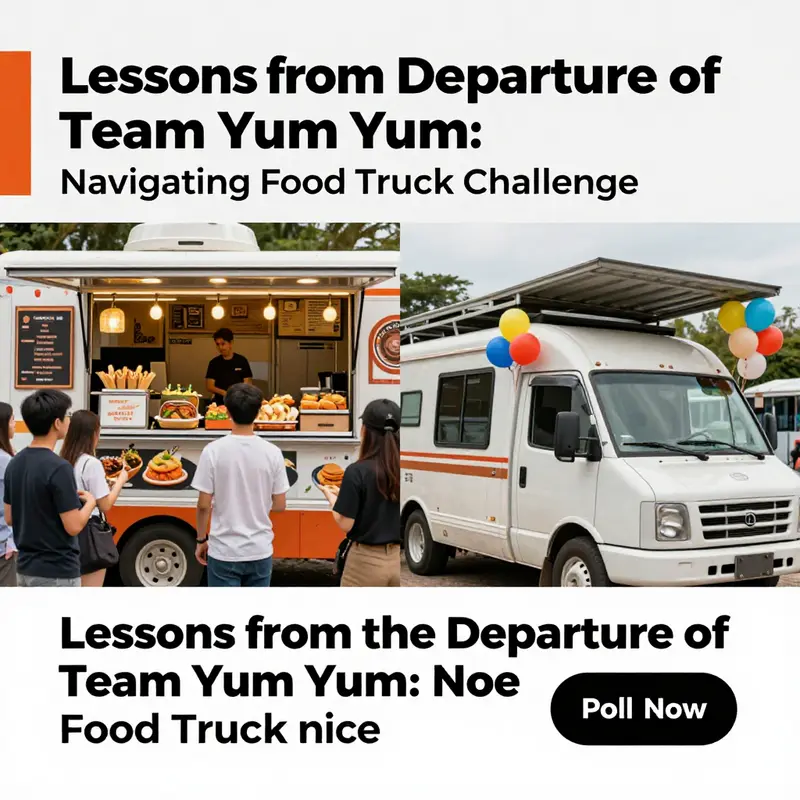
The journey of Team Yum Yum on The Great Food Truck Race offers rich lessons for anyone involved in the food industry. Their experience underscores the importance of strategic pricing, team communication, and a clear understanding of market positioning. As food enthusiasts, event planners, and corporate teams consider their next ventures, the narrative of Yum Yum serves as a reminder that a unique culinary vision must be paired with sound business strategies and cohesive teamwork. In celebrating the spirit of food entrepreneurship, let us learn from their story and strive for a successful and collaborative future.