

Understanding the weight of an 18 ft food truck is crucial for anyone involved in event planning, corporate catering, or running a food truck. Knowing how much your mobile kitchen weighs influences towing considerations, permits, and equipment choices. Throughout this guide, we will break down the weight specifications, explore factors that influence their weight, highlight variations among different models, and explain why knowing your truck’s weight is essential for smooth operations. Whether you’re orchestrating a large festival or simply curious about food truck fundamentals, let’s navigate the captivating world of food truck weight together!
Weighing the Road: What an 18-Foot Food Truck Really Weighs and Why It Matters for Towing, Permits, and Performance
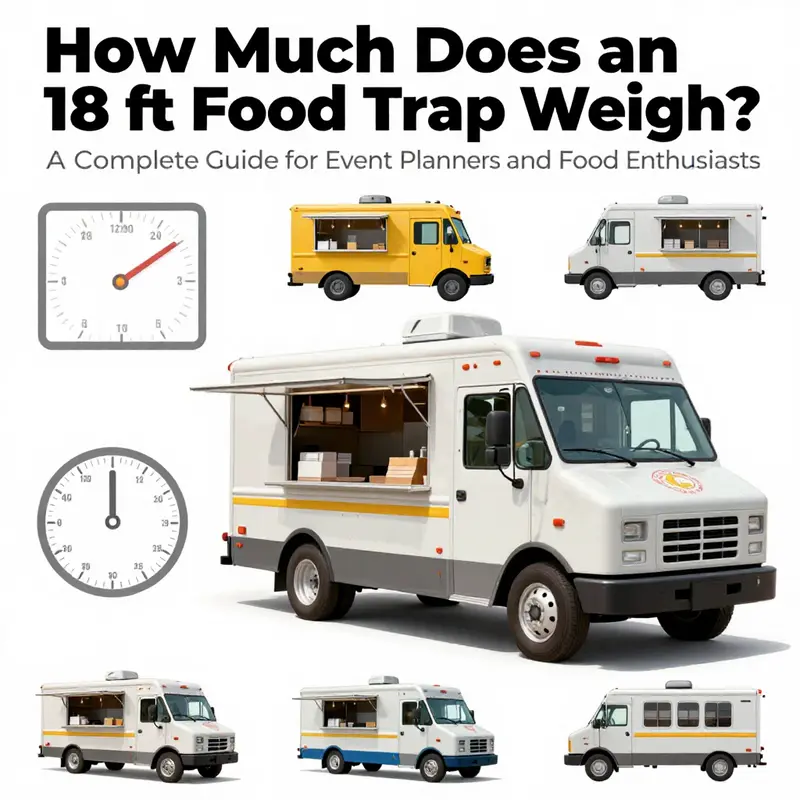
Weight has a way of shaping every move a food entrepreneur makes on the road. It governs how you accelerate, how you navigate turns, which roads you can legally travel, and how much gear you can haul between events. For an 18-foot food truck, the numbers you see in manufacturer specs are more than just measurements. They are a practical guide to planning trips, budgeting for permits and insurance, and ensuring the kitchen stays operational no matter where the next pop-up takes you. When people first start researching, they often fixate on the gross numbers alone, but the full picture emerges only when you consider how the vehicle is built, what equipment sits inside, and how the weight is distributed. In a sense, weight is the quiet architect of performance on wheels.
A typical 18-foot food trailer sits in a weight band that starts around 1,100 kilograms and climbs to about 1,600 kilograms when it is empty but outfitted for strong performance. That translates to roughly 2,425 pounds on the light end and about 3,527 pounds on the heavier end. These figures describe the trailer itself, before you load it with appliances, stock, and water. They also hint at how different customers approach the build. A compact shell with lighter materials and minimal equipment will hover toward the lower end, whereas a fully equipped kitchen with heavy-duty refrigeration, robust plumbing, and generous storage tends toward the upper end. The variability matters because it influences not only how the trailer behaves behind a tow vehicle but also the kind of vehicle required to safely handle the load and the regulatory obligations that follow.
To understand what drives the weight, it helps to picture the core structure. An 18-foot trailer used for commercial purposes commonly features a double-axle configuration, meaning four tires share the load and distribute it across the road surface. This setup improves stability and reduces the chance of overloading a single axle, which can strain tires and brakes. The suspension in these trailers is designed for heavy use. In many models, each axle carries a substantial leaf-spring system—often around 16 leaf springs per axle. That yields a total of 32 leaf springs and reflects the emphasis on even weight distribution, controlled ride height, and reduced sway when the trailer is negotiating uneven pavement or windy conditions. The emphasis on such a suspension setup is not merely about ride comfort; it is a practical safety feature that helps maintain consistent braking and steering response, which is especially important when the trailer is loaded with hot equipment and cold storage.
Inside the trailer, the weight story becomes more complex. The kitchen itself, with ovens, grills, fryers, sinks, and gas lines, is a primary contributor to the overall mass. Refrigeration units and freezers are typically among the heavier components in a mobile kitchen. They add not only their own weight but also the weight of associated compressors, condensers, and ducting. Water systems contribute as well: tanks for fresh water and waste water, piping, and pumps all add to the load, and propane tanks for cooking appliances add yet more weight and a level of risk management for transport and use. Even choices about insulation, cladding, and interior cabinetry can tip the scales—stainless steel surfaces are durable but heavier than some alternative materials, while composite or galvanized builds can offer savings at the cost of potential durability or longevity. In practice, the weight of these features interacts with the trailer’s payload capacity, a figure that designers often quote as a realistic limit for what you can safely carry beyond the trailer itself.
Payload capacity is a critical piece of the puzzle and is often stated as a practical ceiling rather than a theoretical one. For many 18-foot trailers, a payload of up to about 1,300 kilograms—roughly 2,866 pounds—represents a comfortable upper bound for kitchen gear, inventory, propane, water, and personnel. This means that while the empty or baseline trailer may weigh around 1,100 to 1,600 kilograms, you can add substantial gear and still maintain safe operation, provided your vehicle and trailer combination can handle the resulting load. It is a reminder that the numbers are not just about the trailer in isolation but about the entire system: the tow vehicle, the hitch, the braking system, the tires, and how you drive in a variety of operating environments. In practice, staying within the payload helps preserve performance margins on the road, keeps fuel economy reasonable, and reduces the risk of overloading, which can affect everything from tire wear to breakaway safety.
The gross vehicle weight, or GVW, is where the story becomes even more tangible for anyone planning routes, permits, and insurance coverage. On the market, 18-foot fully equipped trailers typically land in a GVW window of roughly 3,500 kilograms to 5,000 kilograms. That translates to about 7,700 pounds to 11,000 pounds. The spread reflects variations in construction materials, the presence or absence of heavy-duty refrigeration, extra cold storage capacity, water volumes, gas systems, and even the weight of mounting hardware and shelves. If your build leans toward stainless steel interiors with robust refrigeration and larger water tanks, you may approach the higher end of that range. If you opt for lighter materials and more compact configurations, you may sit closer to the lower end. This GVW range matters because it determines the type of tow vehicle required, the braking and lighting system you must install on the trailer, and the regulatory steps you will need to take for road use. It also influences the way you plan travel between events, particularly when schedules require long highway drives or crossings into areas with weight-restricted routes and tunnels.
All these numbers feed into a broader sense of how a trailer will behave on the road. Weight distribution is a practical science. Not only do you need a stable center of gravity, but you also need predictable deceleration and cornering. The double-axle arrangement, along with the heavy-duty suspension, supports this goal by spreading the load and reducing stress on any single wheel. Yet the driver’s role remains crucial. Driving a heavily loaded 18-foot trailer demands anticipation, smooth inputs, and a plan for contingencies—such as reduced speeds, longer stopping distances, and careful lane positioning to accommodate wider turns. The importance of the weight profile surfaces in common-sense checks before you hit the road: ensuring tire pressures are within manufacturer specifications for both the empty and loaded state, confirming the hitch and coupler are rated for the maximum expected weight, and verifying that the brake controller in the tow vehicle can modulate the load on the trailer brakes in a controlled manner.
From a practical standpoint, where the weight lives in the build affects decisions you will make from the first days of a business. If you prioritize speed and a lean setup, you may accept some compromises on cold storage capacity or the number of appliances you can run simultaneously. If revenue is dependent on high-volume cooking at high-profile events, you might justify heavier equipment to deliver a wider menu, fully stocked with fresh inventory and ample cold storage. Weight is not simply a constraint; it is a design parameter that helps you map your operating model to real-world constraints. This perspective is one reason many operators begin by studying models and builder configurations that align with their anticipated menu, event profile, and travel plans. A useful gateway into this exploration can be found in guides that discuss how to choose the right food truck model, which helps translate appetite into a practical chassis and kit list. Choosing the Right Food Truck Model This reference can illuminate how weight interacts with other design choices and how a given configuration might shift the balance between speed, efficiency, and service capacity.
The overarching message for prospective buyers and operators is clear: no single number defines your truck’s capability. The published figures provide a framework, but the real-life performance depends on how the trailer is built, how it is loaded, and how you drive it. If you are planning to purchase, start with the base weights and then add equipment incrementally, keeping a careful log of each addition. This approach helps you reassess your payload capacity and GVW in light of the actual gear you intend to carry. It also makes it easier to align with regulatory standards, insurance requirements, and your financial plan for the enterprise. In the longer arc of building a mobile kitchen, weight becomes a navigation tool, guiding you toward a configuration that respects road safety, minimizes operating costs, and preserves the reliability of your service.
For those who want concrete examples of how weight appears in current market listings without guessing, it is useful to review a typical 18-foot commercial food trailer’s specification range. A manufacturer-supplied range can show you the balance between shell, kitchen, and optional features, illustrating how different choices move the GVW and payload. Such listings also highlight how heavy equipment and cold storage drive up the mass, sometimes prompting adjustments to the tow vehicle or even altering the decision to pursue a lighter build in certain markets. The practical takeaway remains consistent: in planning, treat weight as a core constraint that shapes your menu, service model, and route strategy. By understanding how the numbers translate into on-the-road realities, you can design a business that travels with confidence and meets the demands of diverse events, from street fairs to large-scale catering gigs.
External reference for further context on market ranges and weight considerations can be found here: https://www.alibaba.com/product-detail/18ft-Commercial-Food-Vans-Concession-Food_1600492525222.html.
null
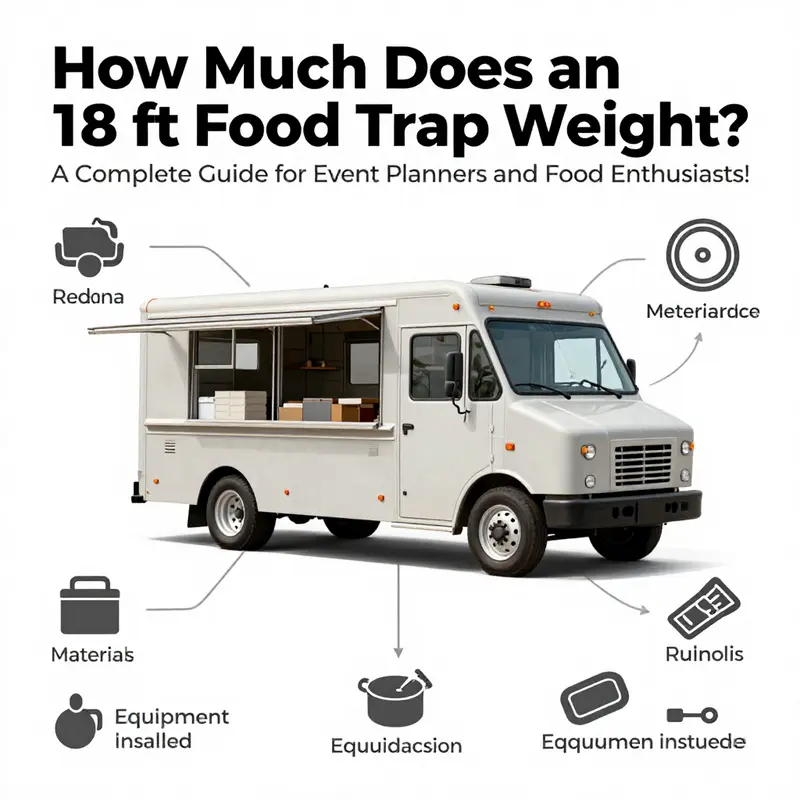
null
null
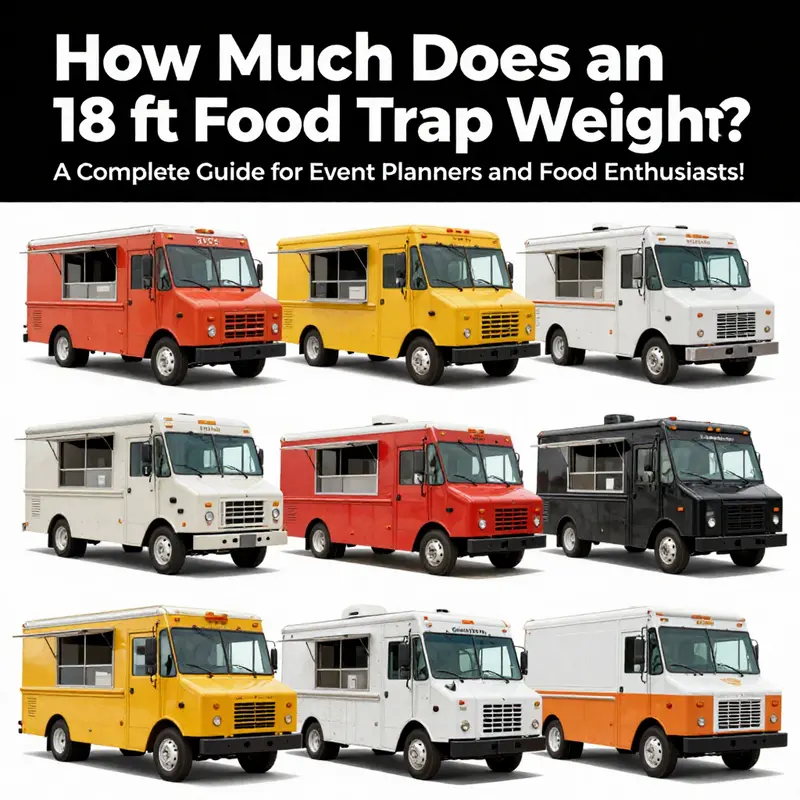
null
Weighing the Miles: Why the Mass of an 18-Foot Food Truck Matters for Every Run
Weight is more than a number on a spec sheet; it is a moving constraint that shapes every decision a mobile kitchen makes from dawn order to last light. An 18-foot food truck sits at a practical crossroad where utility, safety, and economy collide. When you map out a business built on flavor and service rather than a fixed storefront, the weight of the vehicle becomes a daily factor, not a one-time consideration. Across a spectrum of configurations, these trailers commonly fall in a weight range that can surprise first-time buyers. In metric terms, many 18-foot models arrive between about 1,100 kilograms and 1,600 kilograms, roughly 2,425 to 3,527 pounds. Those numbers are not just trivia; they translate to how you plan for towing capacity, parking access, fuel use, and even the menus you can support on a given day. A lighter baseline means more payload for ingredients and equipment, while a heavier baseline demands a tougher tow vehicle, sturdier pavement, and careful route planning. The practical retailer or caterer who learns to read these numbers with discipline gains a silent advantage: the ability to predict how a rig behaves under load and to design operations around that predictable behavior.
The distinction between empty weight and loaded weight is the first hinge in this discussion. Empty weight, or curb weight, refers to the trailer’s mass when it is not carrying food, water, fuel, or crew. It is the starting point for evaluating whether a given tow vehicle can handle the trailer without pushing the limits of its own gross vehicle weight rating (GVWR). The GVWR is a specification that ties together vehicle structure, axle ratings, tires, and braking capacity. Exceeding the GVWR is not a mere policy violation; it can alter braking distance, steering response, and overall stability, especially in wet or windy conditions. To avoid surprises, operators should verify the empty weight against the manufacturer’s published specifications and, where possible, corroborate with certified scales. A reliable weight baseline is the compass that keeps a fleet within safe operating envelopes and within insurance and regulatory expectations.
Even more nuanced is tongue weight, the downward force the trailer’s coupler places on the hitch ball. In practice, an ideal tongue weight sits at roughly 10 to 15 percent of the total trailer weight. This distribution matters because it governs how the trailer tracks behind the towing vehicle. A tongue weight too light can induce sway; too heavy can push on the rear axle of the tow vehicle and impair steering. In an 18-foot mobile kitchen, where heavy refrigeration units, ovens, and sinks are common, the tongue weight can become a meaningful portion of the overall mass. The math is straightforward but important: if the total loaded trailer weighs around 3,000 pounds, the tongue weight might sit in the neighborhood of 300 pounds to keep the trailer stable without overburdening the hitch or the tow vehicle’s rear tires. Maintaining this balance is not a one-time calculation but a habit, especially as you swap out equipment or reconfigure the kitchen layout for a different event.
Safety and reliability hinge on this weight discipline because an 18-foot trailer with commercial-grade cooking gear is not a light companion. It carries heavy griddles, fryers, convection ovens, refrigeration systems, robust sinks, and roomy prep surfaces. Each of these components adds mass, and their placement within the trailer affects both tongue weight and the weight distribution across axles. Heavier modules mounted toward the rear can increase tongue weight and push the rear axle toward a higher loading condition, changing how the rig accelerates and stops. Conversely, bulky equipment toward the front can reduce tongue weight but may shift the load in ways that impact braking and handling in strong crosswinds. The optimal arrangement is a careful, deliberate balance informed by the vehicle’s weight ratings and the trailer’s own geometry. In practice, many operators document typical configurations and keep a running log of the weights they encounter during routine operations. This habit supports consistent maintenance and reduces the likelihood of unanticipated weight shifts during a busy service window.
The equipment reality is a central driver of weight. A compliant, fully equipped 18-foot kitchen often means more than just the sum of appliances. It means walls that are sturdy yet light enough to resist flex, insulation that keeps cool air in and hot air out, and plumbing that handles frequent use without adding unnecessary mass. The choice of materials—composite panels, steel framing, and efficient refrigeration—shapes the baseline mass. A lighter chassis paired with heavy-duty, high-efficiency equipment can deliver a competitive payload while preserving handling. On the other hand, a trailer built with heavier materials or more extensive cold storage will push the total mass up, demanding a stronger tow setup and tighter attention to load distribution. These structural decisions ripple through the operation: weight affects startup torque for generators, fuel economy on long routes, and even the length of access roads or parking lots you can comfortably navigate. For operators, the takeaway is not simply to chase the lightest possible build but to align the trailer’s mass with the business model. A compact menu with high turnover can thrive with a lighter configuration, while a demanding program that features hot hold lines, extensive refrigeration, and large prep zones benefits from a robust yet well-managed payload.
Beyond the kitchen itself, ancillary loads contribute meaningfully to total weight. Fresh water and waste water tanks, a generator, propane for cooking and heating, and quality fuel for the vehicle all add up. External power hookups can reduce on-board fuel consumption but may also require additional equipment that adds weight. Propane tanks, while essential for reliable cooking, introduce mass that cannot be shrugged off. The prudent operator scrutinizes every gallon of water onboard and every drop of fuel remaining in the tank as part of the daily load calculation. The balance between energy independence and weight management often becomes a strategic choice, especially when planning for long events in venues with limited power access or when touring across regions with varied infrastructure. In this context, a well-designed weight plan informs not just safety, but also menu feasibility. It guides the decision about how many burners can operate simultaneously, how many refrigeration units can stay online, and how many customers you can serve without compromising service speed or product quality.
To stay in command of these dynamics, the practice of weight monitoring emerges as indispensable. The most reliable path is to confirm the empty and loaded weights with primary sources such as manufacturer specifications or certified scales. A systematic approach may involve weighing the trailer at a commercial vehicle scale during onboarding, then weighing representative loaded configurations as the business profile evolves. A weight log becomes a living document: it captures typical loaded weights for different menu setups, identifies trends, and flags potential capacity issues before they become problems in the field. This approach pays dividends in safety, insurance compliance, and the peace of mind that comes with knowing you are operating within the limits set by the equipment and the road rules you must respect.
Regulatory and practical implications amplify the importance of weight awareness. Several jurisdictions impose strict weight limits on roads and bridges. Exceeding these limits can trigger fines, permit requirements, or vehicle impoundment. The weight dimension also intersects with licensing, insurance, and accident liability. Understanding how weight interacts with braking performance, tire load ratings, and suspension resilience helps ensure you stay within legal boundaries while preserving the reliability of your service. The operational implications extend to route planning as well. Heavier trailers demand longer stopping distances, more careful lane positioning, and sometimes avoidance of specific routes or bridges with weight restrictions. Efficient routing, therefore, becomes a weight-aware discipline that can save time, fuel, and wear on both truck and trailer over months of operation. In short, knowledge about weight is not a sidebar to running a mobile kitchen; it is a core competency that affects safety, legality, and scalability.
From a business perspective, weight also intersects with the initial investment and ongoing maintenance. Heavier builds tend to require stronger chassis, more robust tires, and sometimes more frequent inspections of suspension and braking systems. This does not imply that heavier always means worse value; rather, it means value must be assessed in context. A heavier trailer with superior insulation and refrigeration may support longer service windows, more complex menus, and higher throughput, which can justify the extra mass if it translates into revenue and reliability. Conversely, a lighter, well-balanced trailer might be favored by operations emphasizing agility, lower maintenance, and simpler logistics. The critical thread is that weight is a variable that you should actively manage rather than passively accept. A deliberate approach to weight planning—driven by the menu, venue demands, and typical service patterns—helps keep the business nimble and predictable.
As you compare models and configurations, consider how your weight strategy aligns with your broader goals. A quick guide sits within reach: the concept of choosing the right food-truck model should factor not only price and capacity but also the weight envelope it imposes on towing and operating costs. A model that offers the optimal balance of payload, stability, and efficiency is more likely to perform consistently across a variety of events, climates, and road conditions. For a concise primer on selecting the right configuration, see the resource titled Choosing the right food-truck model.
In short, knowing the weight of an 18-foot food truck is not a niche concern but a foundational element of successful mobile food service. It informs what you can cook, how you transport it, where you park, and how you scale your business over time. When weight becomes a deliberate, data-informed part of planning, mobility becomes a strength rather than a constraint. This is the discipline that turns a trailer into a reliable partner on every route, every venue, and every season. For those who want a solid, external frame of reference on towing and trailer weight, see official guidance from the transportation authorities, which outlines the practical limits, safety considerations, and best practices for trailer weight and towing. https://www.transportation.gov/vehicle-safety/trailer-weight-and-towing-guidelines
Final thoughts
Understanding the weight of an 18 ft food truck is more than just a number; it’s a foundational aspect that affects your planning and execution. Whether you’re a committed food enthusiast ready to embark on a food truck adventure, or an event planner ensuring your venue accommodates the perfect mobile kitchen, knowing the weight specs and variations will empower your decisions. By acknowledging the factors that influence these weights, you can effectively manage permits, ensure road safety, and optimize your operational choices. Weighing these considerations will lead to smooth sailing in your culinary ventures!