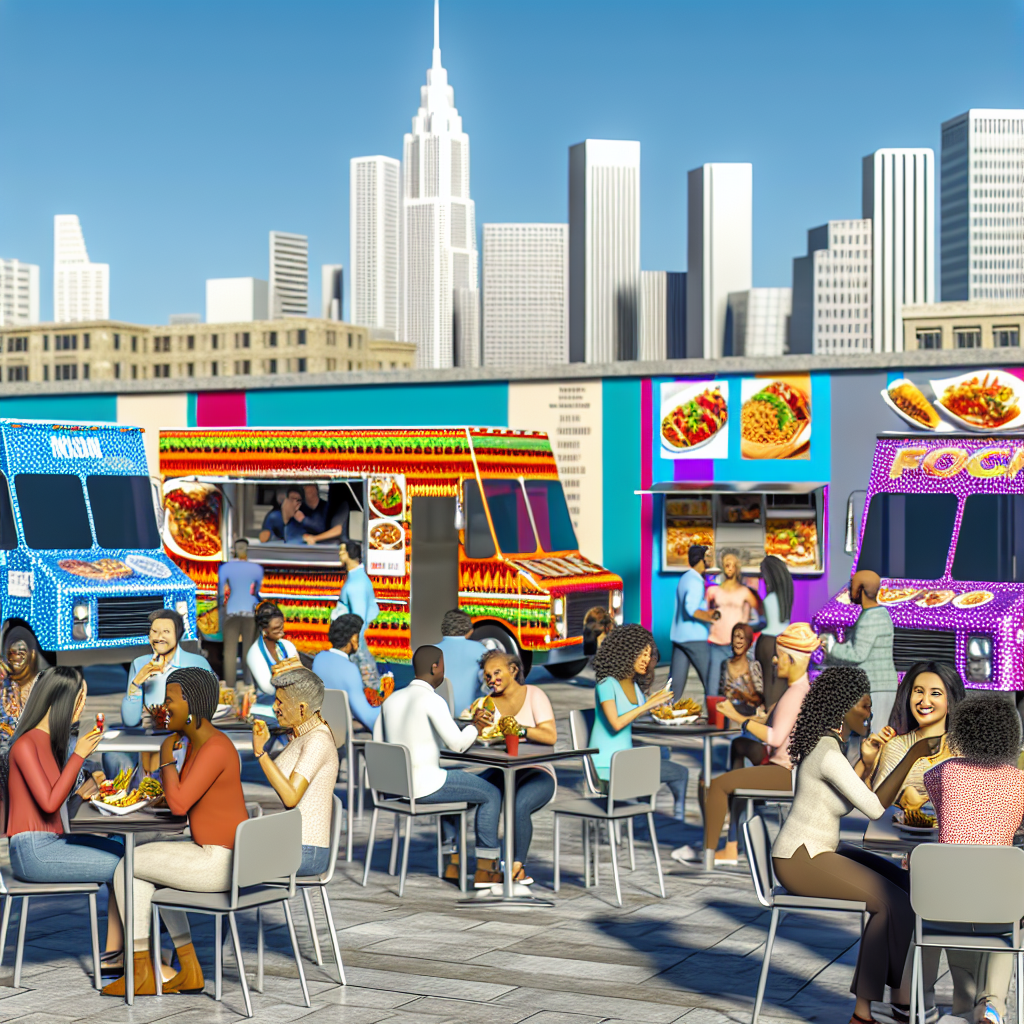
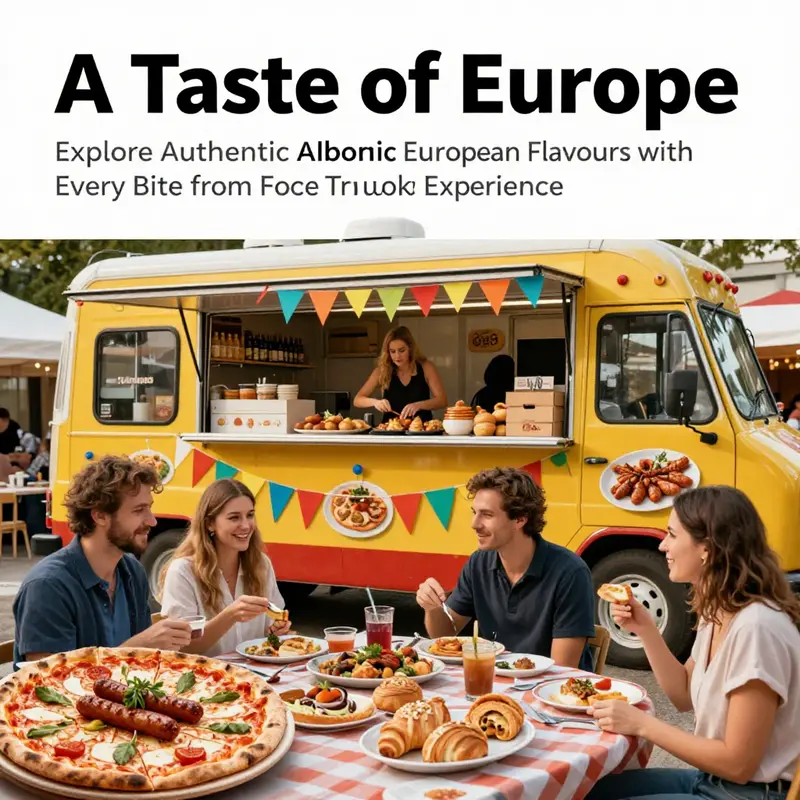
Europe is a tapestry of diverse cuisines, each with its own heritage and flavor profile. What better way to experience this culinary richness than through a food truck that brings these vibrant dishes right to your community? From the rustic charm of Italian wood-fired pizzas to the hearty staples of German sausages, and the delicate creations of French patisseries, the ‘A Taste of Europe’ food truck menu serves as a passport to exquisite flavors and traditional cooking methods. This exploration will dive into three delightful chapters: the Italian specialties that make your mouth water, the German and Central European flavors that offer comfort in every bite, and the French classics paired with Mediterranean influences that elevate everyday meals into exquisite experiences. Prepare to indulge your senses and explore how this food truck is poised to tantalize your taste buds and cater to various gatherings, events, and personal cravings.
Italian Specialties on the Move: Crafting Fresh, Authentic Flavors in a Taste of Europe Food Truck Menu
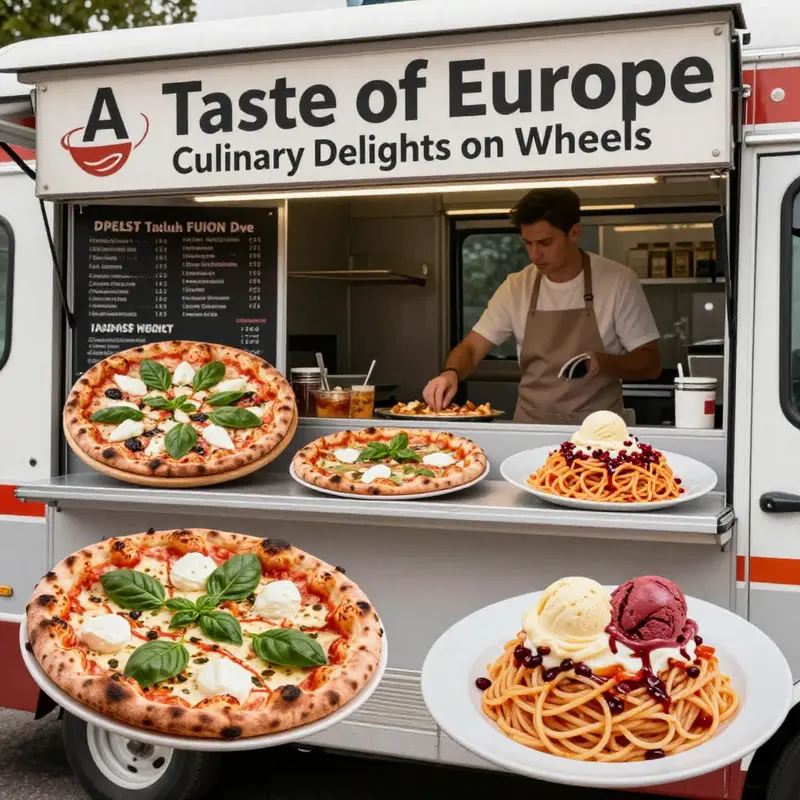
A single chassis, a sizzling skillet, and a heartbeat of coastlines, markets, and trattorias—that is the image a Taste of Europe food truck aims to evoke when Italian specialties anchor the menu. In this setting, the aroma of freshly made pasta and the crackle of a wood-fired crust don’t just announce lunch; they signal an experience. The concept hinges on freshness, traditional technique, and the ability to translate the romance of Italian cooking into a compact, bustling window on the street. It is a mobile extension of a kitchen that values simplicity and quality as much as speed and accessibility. The dishes, while familiar to many, gain new life when prepared before customers’ eyes, with each order becoming a small theatre piece in a larger, shared cultural performance. The result is a menu that travels well across neighborhoods, from office parks to university campuses, from city centers to festival grounds, without losing the sense of place that makes Italian cuisine feel timeless and personal.
At the core of this Italian section are the fresh, made-to-order pastas. The truck’s pasta station is more than a line on a menu; it is a culinary apparatus that transforms a few staple ingredients into plates that feel luxurious and comforting at the same time. The act of rolling dough, cutting fresh strands, and finishing sauces on the spot anchors the entire operation in quality and immediacy. The pasta options typically lean on classic Italian preparations that are inherently efficient in a high-turnover setting. A bowl of spaghetti carbonara, for example, becomes a demonstration of technique: glossy emulsion, the right balance of cheese and cured pork, and the final toss that coats every strand. A plate of tagliatelle with a rich ragù delivers depth with a modest set of ingredients and a short simmer, enabling a bold flavor profile without overlong wait times. Such dishes do not demand lengthy preparation in advance; instead, they showcase craft in the moment, which in turn elevates perceived value and justifies premium pricing in busy urban environments.
The pizza offerings complement the pasta without overshadowing it. Wood-fired crusts fry to blistered perfection, their aroma weaving through the queue and inviting customers to choose toppings with confidence. The menu tends toward classic Italian textures and seasonal simplicity: a margherita whose brightness comes from ripe tomatoes, fresh mozzarella, basil, and a whisper of olive oil; a mushroom-centric pie with sautéed mushrooms and perhaps a splash of garlic and thyme; and other combinations that emphasize fresh herbs and the clean balance of cheese, dough, and a hot oven. The emphasis is not on novelty for novelty’s sake but on reliability, consistency, and a sense of place. When a customer tastes a slice, they taste the memory of a wood-fired oven tucked into a sunlit piazza, even if they’re standing in a contemporary urban block or along a busy transit corridor.
Beyond pasta and pizza, the Italian module can carry other authentic offerings that flow naturally within a European menu. The truck may offer a handful of antipasti-inspired bites, such as small plates featuring marinated vegetables, olives, and cheeses, presented with care and a nod to regional Italian pantry staples. The sauces and condiments often reflect time-honored techniques: a silky al pomodoro that carries the brightness of ripe tomatoes and a touch of garlic; a butter-and-sage finish that coats gnocchi or tagliatelle with velvet richness; a herbaceous pesto that brightens a simple pasta with pistachio, basil, and olive oil. These elements, while familiar, are elevated by the speed and precision of on-site preparation—an important distinction in the eyes of patrons who may be tasting Italian street food for the first time but crave a sense of authenticity.
In this model, the kitchen’s organizational design matters as much as the dishes themselves. The Ape Car-inspired case study, as reflected in recent research, highlights a food truck that centers on freshly prepared pasta and other authentic Italian offerings. This approach translates well to the mobility and versatility demanded by contemporary street food. The truck’s layout enables the chef to move efficiently from a pasta-rolling station to a wood-fired oven and then to a compact service area where orders are assembled with minimal movement. Because speed is a constant pressure in food truck operations, the ability to prepare key components—the pasta dough, the sauces, the dough for pizzas—on demand reduces waste and preserves flavor. It also creates a reliable rhythm: a steady tempo of dough resting, water boiling, sauces simmering, and pizza crusts blistering in the oven. The system is designed not merely for speed but for consistency across different venues, ensuring that a customer’s first bite at a festival matches the one they enjoyed at an office park during a lunch rush.
The truck’s ability to reach a broad audience is essential. Office districts provide a steady stream of professionals seeking a satisfying, quick lunch. Festivals and events bring in a diverse crowd hungry for something both familiar and new. University campuses offer students opportunities to eat well between classes, often with a desire for affordable luxury. Morning commuter routes present a chance to offer a brisk breakfast or a satisfying snack that echoes the Italian kitchen’s tradition of breakfast or mid-morning coffee with pastries or light bites. The menu’s design supports these rhythms with a few core items that can be scaled with sauces and toppings to maintain variety without sacrificing speed or quality. A few staple items paired with rotating seasonal specials can keep the truck interesting while preserving a straightforward operation that staff can execute with confidence.
The pricing strategy for this Italian core leans into value without sacrificing premium perception. Fresh pasta, when prepared to order, commands a higher price point than many mass-produced options on the street. But the perceived value is amplified by the theater of making the pasta live, the aroma of garlic and olive oil, and the crust’s crackle from the wood-fired oven. The goal is to create a WYSIWYG moment for the customer: what they see is what they get, with a clear sense that the food is crafted and attentive to detail. The high profit margins associated with simple, high-quality ingredients play a crucial role in the truck’s financial viability. A few key ingredients—potatoes for gnocchi if offered, fresh tomatoes, high-quality mozzarella, and seasonal produce—can sustain a menu’s breadth without bloating the supply chain. The operational model then scales by introducing a few seasonal specials that leverage the same techniques and equipment, keeping waste to a minimum and turnover high.
The Italian module’s cultural resonance is also worth noting. European street food settings often emphasize a strong sense of place, where the food communicates regional stories through technique and ingredient choices. A Taste of Europe menu that foregrounds Italian specialties can create a bridge between local tastes and continental flavors. Patrons who have never traveled to Italy might discover a pasta shape they love or a sauce profile that feels like a memory they didn’t know they carried. Meanwhile, regulars who crave a comforting Italian staple will find both reliability and a touch of novelty in seasonal riffs. In this sense, the truck becomes a portable ambassador of Italian cuisine, not merely a vendor of familiar fare. The experience matters as much as the plate, and the narrative the truck conveys—skillful pasta, a bubbling sauce, a crust blistered in wood fire—builds trust and anticipation for the next visit.
To understand how this Italian core ties into the broader European menu, consider the branding and identity that support a consistent customer experience. A well-executed mobile kitchen communicates its story through visuals, packaging, and the rhythm of service. A brand that evokes a trattoria with clean lines, rustic warmth, and a touch of contemporary flair helps customers feel transported without leaving the city. The guide to branding on wheels, which offers practical insights into graphics and identity for food trucks, provides a useful framework for translating the Italian kitchen’s texture and mood into a visual language customers recognize at a glance. The guide emphasizes how color palettes, typography, and menu design come together to create a coherent impression—one that aligns with the crisp efficiency of the pasta station and the inviting scent of a wood-fired crust. Integrating this branding approach with the menu’s Italian core ensures that a customer’s experience is not just a meal but a remembered moment that travels with them beyond the curb.
The operational reality of keeping an Italian-focused truck competitive rests on a few pragmatic principles. First is the quality control that comes from on-site preparation. The moment the pasta hits the water and the sauce begins its glossy simmer, there is a responsibility to time and temperature. A rushed operation risks under-seasoning or overcooking, spoiling the very essence of the dish. Second is the versatility of the equipment. The same compact space that kneads dough can also handle the finishing touches on pizzas and the quick assembly of antipasti plates. Third is the staff’s confidence. A team that understands the timing of each component and can communicate about heat, texture, and flavor will deliver a smoother service, even when the line grows long. Finally, the supply chain remains lean. Fresh produce, high-quality flour, and reliable cheeses must be sourced consistently. This consistency underpins trust; customers know that the truck will deliver the same level of Italian comfort no matter where they encounter it.
The beauty of this approach lies in its adaptability. The same Italian core can be scaled for different event types or seasons. In summer heat, a light pasta with a tomato-based sauce, basil, and a drizzle of olive oil can sing on a hot plate, while a cooler season invites heartier proteins and slower-simmered sauces that coax deeper flavors from the same ingredients. The menu thus becomes a living conversation with customers, inviting them to explore the spectrum of Italian cooking within a portable, fast-paced format. The truck’s schedule can be tuned to align with peak foot traffic in particular districts, offering a consistent cadence that customers come to anticipate. And as the broader Taste of Europe concept grows, the Italian module nests comfortably among other European influences—mediterranean wraps, French crepes, central European sausages—creating a composite street-food identity that celebrates variety while honoring tradition.
In sum, Italian specialties anchor the Taste of Europe food truck menu by delivering a reliable, high-quality core that thrives on freshness, visible technique, and efficient service. The made-to-order pastas, the wood-fired pizzas, and the complementary Italian bites become more than items on a list; they become a narrative of cultural craftsmanship that can travel wherever the truck goes. This approach is not merely about selling food; it is about inviting people to share in an Italian moment on a street corner, to savor the texture of a perfectly al dente strand, to relish the scent of a blistered crust, and to remember the way a small, mobile kitchen can evoke a larger Italian table. It is, in the simplest terms, a taste of Europe carried forward with every order, a portable trattoria that respects tradition yet speaks fluently in the language of modern urban dining. For operators, the lesson is clear: shape a menu around made-to-order essentials, design a kitchen that can perform quickly and consistently, and present the experience with branding that resonates as clearly as the aroma of fresh pasta. The payoff is both culinary and commercial—a flexible, scalable model that invites repeat visits and enables a broad audience to experience the pleasures of Italian cooking in the most portable of settings.
External reference for a broader view of European food truck operations and the ecosystem that supports them can be found at https://www.foodtrucks.com/europe-food-truck-explained. For a deeper dive into branding and identity strategies tailored for mobile kitchens, you can explore the branding on wheels guide linked earlier within this chapter.
Sizzling Bridges on Wheels: Authentic Central European Flavors on a Taste of Europe Food Truck
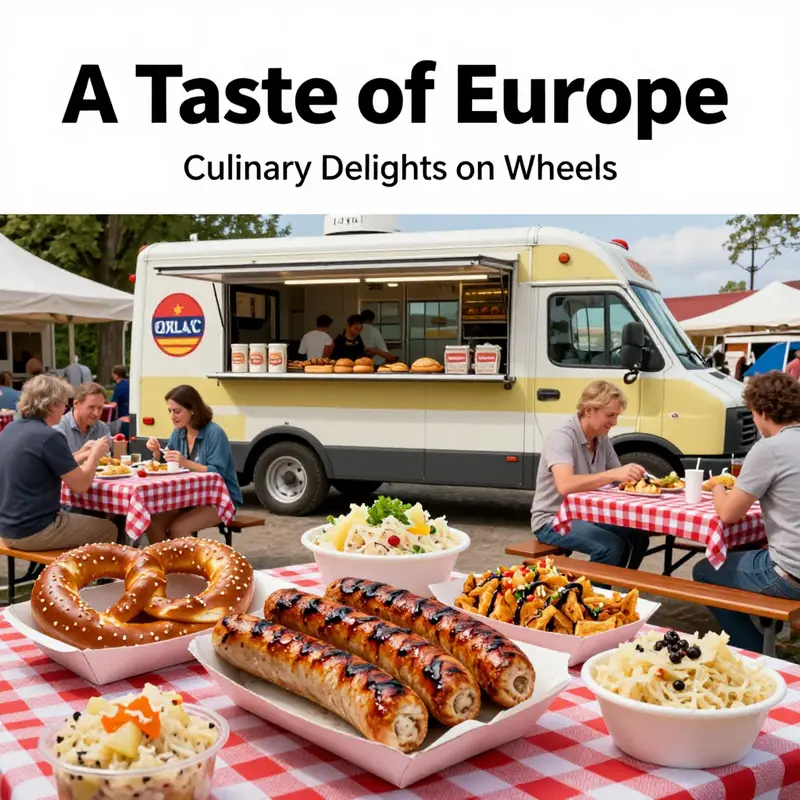
Across city blocks, a Taste of Europe food truck does more than serve meals; it curates memory the way a well-worn guide maps a marketplace filled with steam, laughter, and the clink of glasses. The German and Central European section anchors the concept with a rhythm of smoke, grainy bread, and precision at the grill. At the heart of the menu are fresh, house-made sausages formed from premium cuts of pork, beef, or a delicate blend that may include veal to coax tenderness and depth. The spice profile—marjoram, white pepper, a whisper of nutmeg, and garlic—echoes kitchens where tradition is practiced with patient hands and a careful taste memory. The preparation process matters as much as the plate itself. The sausage mixture is ground to a consistency that holds its shape but yields to a gentle bite. The casing is treated with care, the mix tucked inside and grilled until the exterior wears a caramelized crust that gleams in the streetlight. Then the sausage is nestled into a crusty bread roll that stays sturdy enough to bear the juices without surrendering its own texture. In every bite, there is a dialogue between heat, salt, and smoke, a conversation that begins with the crust and resolves in the lingering perfume of the spice blend on the palate.
To complement the sausages, the truck offers accouterments that have been honed by generations of street cooking while still feeling immediate enough to download into a bustling afternoon. A tangy, long-fermented cabbage preparation offers brightness and crunch, providing a counterpoint to the richness of the meat. A sharp mustard—hot, if the day calls for heat, or mild for balance—cuts through fat and lifts the savory notes. Grilled onions, their edges singed into a delicate char, add a note of sweetness and depth, their caramelized sugars weaving through the sausage’s savor. A side dish such as a simple potato salad introduces earthiness and creamy textures, turning a quick lunch into a compact, satisfying meal that travels well from stand to seat. This trio of components—meat, tangy greens, and starch—creates a compact tour of Central European comfort in a frame designed for the curb.
Within that framework, the menu introduces a signature twist that has traveled well from regional markets into broader urban landscapes: an onion-stuffed sausage. The idea begins with a solid pork sausage and carries the aroma of caramelized onions through every bite. The onion’s sweetness accompanies the meat without masking its core character, and the bun acts as a quiet, steady partner, soaking up juices while maintaining a sturdy bite. The exterior browns and tightens, producing a crisp surface while the interior remains tender and juicy. The balance is delicate: the onion should flavor without overwhelming, the spices should etch themselves into the taste memory, and the overall composition should feel cohesive rather than crowded. The result is a dish that captures the essence of Central European charcuterie heritage while translating it for the modern, on-the-go diner.
Authenticity remains the compass. All items are prepared in-house daily, and the truck prioritizes local sourcing whenever possible. The moral of the sourcing approach is as important as the sourcing itself: flavor is inseparable from provenance. When ingredients travel a short path from producer to plate, brightness and aroma stay vivid, and the texture of the final bite holds its integrity. This attention to origin supports nearby farmers and artisans, more often than not turning a routine lunch into a moment of shared community. The sensory impact of a meal is not just about taste; it is about context—the aroma of garlic and smoke filling the air, the squeak of the bun as it meets the grilled surface, the warmth that blooms at the center of the bite, and the lingering tang of the condiments that accompany it. Each element is crafted to be legible, so a customer can understand the layers without having to parse a complicated instruction sheet.
The approach also reflects a practical, modular philosophy that suits a mobile kitchen. The truck is designed to travel light yet deliver high impact in diverse settings, from crowded office corridors to weekend fairs. The ability to serve robust flavors quickly emerges from disciplined mise en place, a compact grill setup, and an assembly line that respects speed without sacrificing quality. Fresh spices are ground, and the sausage is ground and mixed with the right fat ratio to achieve that essential balance of moisture and bite. The initial browning is watched with a close eye; overcooking would dull the smoke and dull the texture, while under-seasoning would leave the flavors unanchored. The kitchen staff read the crowd with experience, adjusting heat and pace to meet the tempo of service. It is a dance of timing and touch, where even the simplest component must sing with clarity and purpose.
Alongside the core sausages, condiments, and sides, the concept builds a broader, more resilient identity that travels well through urban streets and seasonal shifts. The aim is not merely to churn out familiar flavors but to present a complete, instantly recognizable personality—an edible postcard from Central Europe. The same culinary nerve can accommodate seasonal variations, swapping in fresh produce when available while preserving the core flavor profile. That balance between continuity and change is essential for a mobile concept that must perform in different neighborhoods and at varying events. The result is a menu that invites conversation, not just consumption—diners discover a little theater of food where the memory of a place is made tangible in every bite.
This narrative is inseparable from the people who stand at the window, the hands that shape the sausage and the onions, and the eyes that judge the moment the bun meets the grill. The staff’s confidence—the readiness to explain how the dish is built, or to describe the choice of spice blend—transforms a simple transaction into a moment of cultural exchange. The dining experience becomes a two-way conversation: the customer learns what makes a Central European sausage sing, and the cook learns what flavors the audience most seeks. In that exchange, a street kitchen becomes a small, time-bound institution of learning and sharing, a portable room where the stories of a region’s culinary approach move with the steam and the heat of the grill.
The chapter’s focus anchors a broader journey within the Taste of Europe concept, a menu philosophy that blends regional identities into a cohesive, portable dining experience. The Italian and French influences offer their own textures and techniques, the Mediterranean and Middle Eastern contributions bring brightness and spice, and the dessert tradition adds sweetness and scent that linger beyond the last bite. Yet the German and Central European core provides a sturdy backbone: robust flavors refined through traditional methods, crafted with care, and presented with sincerity on a street corner. This backbone is what makes the concept reliable enough to travel, but it is also what invites diners to linger long enough to notice the details—the way the caramelized onion catches the light, the way a touch of mustard lingers on the tongue, the way a warm bread roll gives way to a tender, seasoned filling.
The mobile kitchen environment is more forgiving of experimentation than a fixed eatery, and that is a strength. A Taste of Europe truck can respond to the day’s conditions and guests by letting the onion-stuffed sausage stand as a signature, while offering additional preparations that broaden the menu’s reach. The approach is one of steady growth rather than sudden leaps, with each season providing an opportunity to refine methods, test new pairings, and strengthen the brand’s regional voice. In practical terms, the operation thrives when it remains anchored in in-house preparation and local sourcing, because those choices emphasize flavor clarity and value. The customer does not just receive a meal; they receive a narrative about a people who have perfected the art of turning humble ingredients into something memorable, something that belongs to a moment, a place, and a crowd.
From a consumer’s vantage point, the value proposition is clear: a compact, coherent tasting tour of Central European fare, prepared on the spot with evident care, and presented with warmth and efficiency. The experience rewards repeat visits by maintaining the same standard of flavor while allowing the occasional, welcome variation to keep things fresh. The imagined journey traces a line from the first inhale of smoke and spice to the final crumb of the bun, a line that many diners will willingly walk again and again.
For operators exploring how to translate heritage into mobility, the lesson is simple and enduring. The central European flavors are not merely a menu; they are a framework for hospitality. The cooking method—ground meat balanced with subtle spice, a crisp exterior, and a juicy interior—serves as a reliable backbone. The onion-stuffed variation demonstrates how careful innovation can light up tradition without undermining it. The daily, in-house preparation and the commitment to local sources reinforce a sense of craft that customers can taste and trust. The result is more than a meal; it is an invitation to pause, reflect, and share in a cultural lineage that has traversed borders and time to land on a curb in a new city.
To readers seeking practical pointers on how to connect these flavors to a broader audience, the underlying principle is to honor the palate and honor the place. The textures, aromas, and temperatures align to create a bite that is not easily forgotten. The truck becomes a moving classroom where customers learn not only what they are eating but why it matters, how the ingredients were chosen, and what the cooking process reveals about a region’s culinary history. In this space, a simple bite becomes a window into a culture, and the street corner transforms into a welcome doorway for travelers and locals alike. The German and Central European flavors thus anchor the Taste of Europe concept while pointing toward a wider future where a mobile kitchen can host a sustained, respectful, and delicious exchange of regional identities.
For readers who want to explore more about how to build and sustain a mobile operation with such a lineage, a starting point is the sense that European street foods are about resonance as much as recipe. The textures, aromas, and temperatures harmonize to create a memorable bite, and the truck becomes a portable classroom for those who wish to understand and appreciate the region’s culinary language. In this light, the onion-stuffed sausage, with its unassuming composition, acts as a gateway—an introduction to a broader world of European flavors that can be tasted on the go, one bite at a time. The larger arc of the Taste of Europe concept then emerges not as a collection of dishes but as a philosophy of hospitality—an invitation to share in a lineage of nourishment that has traveled across borders and centuries, now animated by a modern, mobile kitchen. The German and Central European flavors provide both anchor and compass, guiding the reader toward a broader ambition: to turn the road into a place where good, honest cooking lives, is tasted, and shared. In this sense, the chapter closes with a hopeful reminder that food trucks can be more than itinerant vendors; they can be ambassadors, translators, and storytellers—bridging cultures through the simplest, most honest acts of cooking and sharing.
To connect these reflections with further practical reading, consider exploring additional perspectives on brand identity and operations in mobility contexts. For more on how mobile kitchens cultivate a strong, place-specific identity, see the Los Chi Ladostruck blog at loschifladostruck blog. External resource for broader industry context and guidance on European mobile dining dynamics can be found at https://www.foodtrucks.com/europe-food-truck-explained
Crêpes and Mezze on Wheels: Weaving French Technique and Mediterranean Fire into a European Food Truck Menu
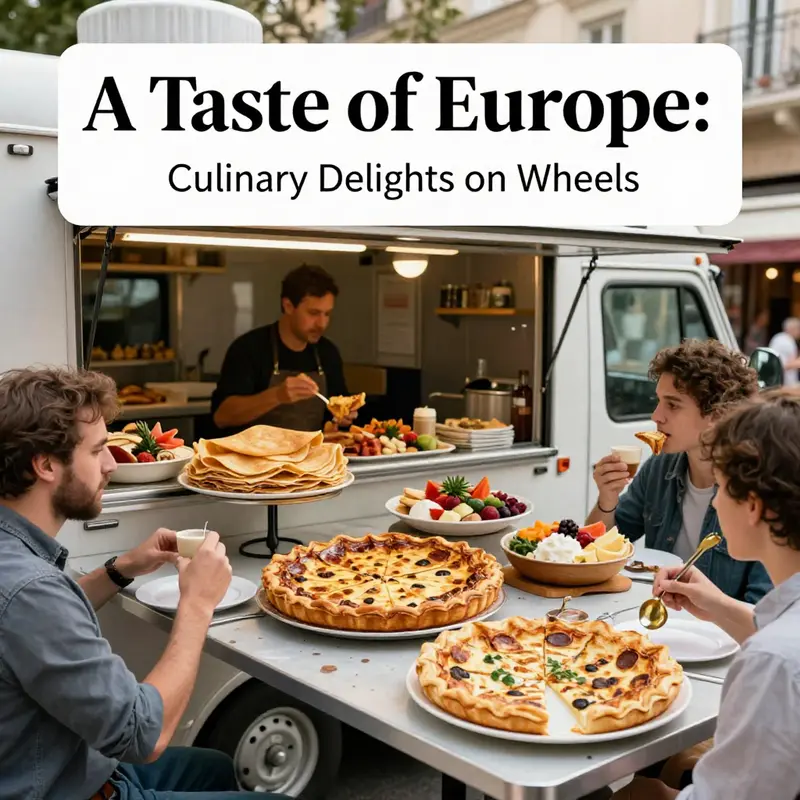
The street is a classroom, and a taste of Europe on wheels becomes a lesson in dialogue as much as in appetite. A Taste of Europe food trucks cultivate a conversation between two broad culinary cultures—the refined, technique-driven world of French cooking and the sun-drenched, ingredient-forward spirit of the Mediterranean. When you walk up to a truck that leans into this blend, you don’t just order a dish; you enter a tasting room where conversations between butter and olive oil, thyme and lemon, flour and flour-dusted hands, unfold in real time. The result is not a clash of traditions but a harmonious flame that licks the edges of comfort while inviting curiosity. The menu, in that sense, becomes a narrative: an arc that starts with a delicate, century-old French technique and moves through the vibrant, sunlit lanes of the Mediterranean coast, returning to the plate with a sense of place and purpose that only portable, vendor-operated cuisine can offer.
French techniques provide the backbone of this chapter in the same way a well-structured sentence anchors a paragraph. The preparation of batter and dough is a quiet art, a discipline of temperature, resting times, and patient emulsification. A thin batter, spread on a hot pan, becomes something more than sustenance; it becomes a canvas for seasonal fillings and bright accents. The classic French influence shows up not only in the texture of a lightly browned edge but in the way a savory crepe carries a balanced weight of ingredients, a harmony between the silken and the crisp, a whisper of butter finishing a dish that began with simple, honest components. When the heat is just right, a crepe glides from pan to plate with a translucence that invites the next layer of flavor. A touch of herbs, a modest cheese, a delicate vegetable medley—the elements must be chosen for how they interact, not only for how they stand alone. In the food truck’s compact kitchen, these are not grand, staged moments but practical exercises in timing and economy. The on-site finishing—a quick fold, a light pan-sear, a drizzle of a lemon-olive oil emulsion—creates a sensory signature that feels refined yet appropriate for the street.
The other voice in this dialogue is Mediterranean brightness—the boldness of citrus, the warmth of olive oil, and the plant-forward vitality that sits at the heart of the region’s street foods. In a truck setting, Mediterranean flavors translate into ready-to-serve formats that respect both speed and generosity. Hummus, with its nutty, creamy profile, becomes a versatile spread that can anchor a wrap, a mezze plate, or a crisp bit of bread. Grilled vegetables—peppers, zucchini, eggplant—bring a smoky sweetness that remains excellent after a ride and a stall shift. Herb-driven marinades and spice-forward rubs enrich meats and vegetables without overpowering the essential freshness of the ingredients. These elements work well together because they’re anchored in shared kitchen values: bright citrus, herbaceous lifts, olive oil’s smooth finish, and a reverence for vegetables that shine when given a little heat and a lot of soul. The Mediterranean influence does not merely flavor the dish; it acts as a counterweight to the French technique, offering a vibrancy that counterbalances the careful restraint of the French approach with a sunlit immediacy.
But the genius of this fusion on a food truck lies in its portability and its rhythm with urban life. The menu reads like a well-told itinerary: a starter that invites curiosity, a main course that offers depth, and a finish that leaves a lingering, savory brightness. A single wrap might begin with a thin, warm crepe-like construction, its surface crisp and inviting, then unfold into a wheel of textures—a creamy spread, a roasted vegetable layer, a handful of fresh herbs, and a citrus-kissed finish. The same approach translates into a compact plate or a sharing platter that can travel well for events yet feel intimate at a small stand. The careful balance is essential. The French influence carries a restrained richness; the Mediterranean side provides brightness and a sense of immediacy. Together, they create a cohesive menu that feels both refined and accessible, a rare blend in a space where speed often weighs against depth.
A practical thread runs through this culinary tapestry: seasonality, sustainability, and the reliability of quality ingredients. In practice, the truck team prioritizes ingredients that stay vibrant through a short service window. The delicate art of French technique benefits from ingredients that can withstand a few minutes of transit and a few hours of exposure to urban heat, whereas the bright, straightforward character of Mediterranean components thrives on freshness and a direct, uncomplicated preparation. The menu’s structure evolves with the calendar, offering a leaner selection in the depths of winter and a brighter, more varied lineup as markets shift with the season. For the operator, this means planning is both art and science: forecasting demand, aligning with suppliers who understand the rhythm of the street, and crafting offerings that can be prepared quickly without sacrificing flavor. The truck environment rewards a modular mindset—where each component can be prepared ahead, finished on-site, and then plated with a flourish that communicates care and craft.
The on-site finish is where the fusion becomes memorable. A kitchen crew can pre-mace, pre-sauté, or pre-assemble the core components, but the last mile—hot crepes kissing a savory filling, or a wrap that comes together as the customer watches—delivers the emotional payoff. Texture is king here. The crisp edge of a thin pancake contrasts with a whisper-soft interior; the hummus provides a velvety counterpoint to charred vegetables; a squeeze of citrus awakens both components and palate. The interplay of temperature is equally critical. A warm component layered over a cool, creamy spread gives a dining experience that feels both comforting and exciting. The result is a sensory journey that travels beyond the moment; it hints at a journey across coastlines, even for a customer standing in a city alley or near a park’s edge, where the sun hits the sign just as a breeze shifts through the queue. This is not merely eating; it is storytelling in a few bites, a micro‑epic told with flour, oil, herbs, and the memory of a Mediterranean breeze brushing a French kitchen’s boilers.
The branding and presentation of such a menu reinforce the narrative. Packaging, signage, and plating must reflect a coherent European thread while acknowledging the practicality of street service. A color story that evokes sunlit shores and clean, modern lines helps customers immediately grasp the fusion’s aim: a trip without a passport, a plate that feels both refined and accessible. The educational layer—subtle but persistent—invites guests to explore the idea that these two regional traditions share culinary roots. The shared language is one of technique and balance: the art of balancing an acid note against a creamy base, the discipline of preparing components in advance and finishing them with a simple flourish, the respect for seasonal produce that keeps preparations vibrant without becoming heavy. In this sense, the truck becomes a tiny, moving classroom—an invitation to taste and learn in a way that feels immediate and personal.
Within the broader ecosystem of European street food, this French-Mediterranean fusion also speaks to the realities and opportunities of urban food culture. The modular design of a modern truck makes it feasible to pair a Mediterranean mezze mindset with French technique in a way that supports variety and resilience. It allows for occasional experimentation with new vegetables from local markets, or a citrus-forward accent that elevates even the simplest component. It also prompts a refined approach to how customers experience the menu. A well-timed demo—watching a cook fold a silken crepe, then finish it with a veil of herb oil and a gentle crack of sea salt—becomes a performance that invites the audience to linger, to ask questions, to imagine the source of the flavors. In urban settings, where a line can form with surprising speed, the challenge is to maintain the same level of attention to detail that would be expected in a sit-down dining room. That requires organization, practiced tempo, and a kitchen crew that views each service as an opportunity to refine. When these elements align, the fusion feels seamless and natural, a narrative that unfolds with every wrap, every plate, every bite.
To imagine how this could look in practice, consider a day at a bustling downtown corner where a steady stream of office workers and evening event-goers becomes the audience. The French influence might begin with a delicate, warm base—thin, pliable, almost lace-like in its edge—holding a filling of vegetables roasted to a smoky edge, a light cheese, and a whisper of herb. The Mediterranean influence follows, lifting the dish with a citrusy brightness, a scoop of a bright, creamy spread, and a layer of grilled vegetables that still carry a hint of char. The wrap is easy to grasp with one hand, a satisfying bite that sits well with a coffee or a glass of sparkling water. A small plate can follow, featuring a minimezze arrangement—hummus, roasted vegetables, a crisp bread, and a drizzle of olive oil—offering a second moment of interaction that invites conversation with the crew and a deeper appreciation for the ingredients. The experience becomes an invitation to travel through taste, to notice how technique and energy can transform simple components into something that feels both intimate and expansive. It is precisely this balance—the quiet confidence of French technique paired with the vibrant clarity of Mediterranean flavors—that makes a modern European street food menu feel timeless and urgent at the same time.
In this context, a blog from a relevant operator can offer a candid, practical lens on how a fusion menu evolves, how it stays consistent across shifts and seasons, and how branding aligns with culinary intent. An internal touchpoint for readers who want to explore more of this perspective might point to a widely respected food truck blog for practitioners and enthusiasts alike, offering insights into resilience, efficiency, and creative planning on the move. LosChiflado’s Truck Blog serves as a useful companion piece for readers who crave practical, hands-on discussion about menu design, equipment choices, and the realities of running a European-inspired mobile operation. You can explore this resource to gain a sense of how a thoughtfully designed menu translates from the page to the street, how branding and identity evolve in tandem with the food, and how operators balance ambition with the realities of daily service. The link below provides a gateway to that ongoing conversation: LosChiflado’s Truck Blog.
As you walk away from a tray of the day’s offerings—the warm, delicate silhouette of a French-inspired item, the bright crunch of Mediterranean vegetables—the underlying connection becomes clear. This is not a collage of borrowed flavors; it is a shared culinary language, spoken across borders and built on the same pillars that sustain any kitchen: respect for ingredients, precision in technique, and a generosity of spirit that welcomes the curious and the hungry alike. A Taste of Europe on wheels reflects a street-level ethos of accessibility without compromise. It invites a broad audience to participate in a tasting tour that feels intimate, educational, and deliciously human. The fusion is not a compromise; it is a deliberate choice to facilitate connection through flavor, to demonstrate that two different gastronomic lineages can coexist with dignity and delight, and to show that a well-curated, portable menu can tell a larger story about place, movement, and shared appetite for discovery.
For readers who want to explore how these flavors fare in real neighborhoods, the example of the American Midwest offers a compelling microcosm. In cities like Omaha, the Mediterranean influence has found a welcoming foothold, with offerings that lean into hummus, grilled vegetables, and herb-forward wraps alongside more familiar European staples. These trucks demonstrate how Mediterranean and Greek-inspired fare can resonate with diverse communities, even when the setting is not close to a coastal region. Local Yelp listings highlight the appetite for such fare in North Omaha, reflecting a broader urban willingness to experiment with European-inspired street nourishment. The real-world presence of these flavors in varied cityscapes reinforces the sense that this is not a temporary trend but a durable approach to menu design on the move. The portable format makes it possible to bring a taste of multiple European shores to a street corner, a festival lineup, or a college campus, creating opportunities for cross-cultural exchange through the universal language of good food.
In situ, then, the fusion of French technique and Mediterranean fire on a European food truck is a study in balance—an equilibrium of textures, brightness, and restraint that yields a menu capable of pleasing a wide array of palates while remaining distinct and memorable. It is a culinary philosophy adapted to the realities of street operations: a philosophy emphasizing the care that goes into small, precise steps and the generosity required to share true flavor with a passing crowd. The result is a menu that feels both elevated and approachable, a tasteful compromise that honors tradition while embracing the freshness and immediacy that the street demands. This synergy—between the precise hands of French technique and the sunny, robust heart of Mediterranean fare—offers a vivid blueprint for future European street menus. It speaks to what a taste of Europe on a truck can be when it refuses to choose sides, opting instead for a continuity of craft, flavor, and story told bite by bite, stall by stall, customer by customer.
External reference for broader context and local flavor exploration: https://www.yelp.com/search?cflt=mediterranean&find_loc=North%20Omaha%2C%20NE
Final thoughts
The ‘A Taste of Europe’ food truck is more than just a meal—it’s an exploration of the delicious and rich culinary diversity that Europe offers. From the hearty comfort of German sausages to the fresh zest of Italian pizzas, and the sophisticated essence of French and Mediterranean cuisine, this food truck serves a little bit of everything that caters to various palates and occasions. Whether you are planning an event, seeking a quick lunch, or nurturing a love for exquisite food, this menu promises to bring authentic flavors that resonate with the spirit of each dish’s culture. Dive into a world of food that is both familiar and beloved, all from the convenience of your local streets.