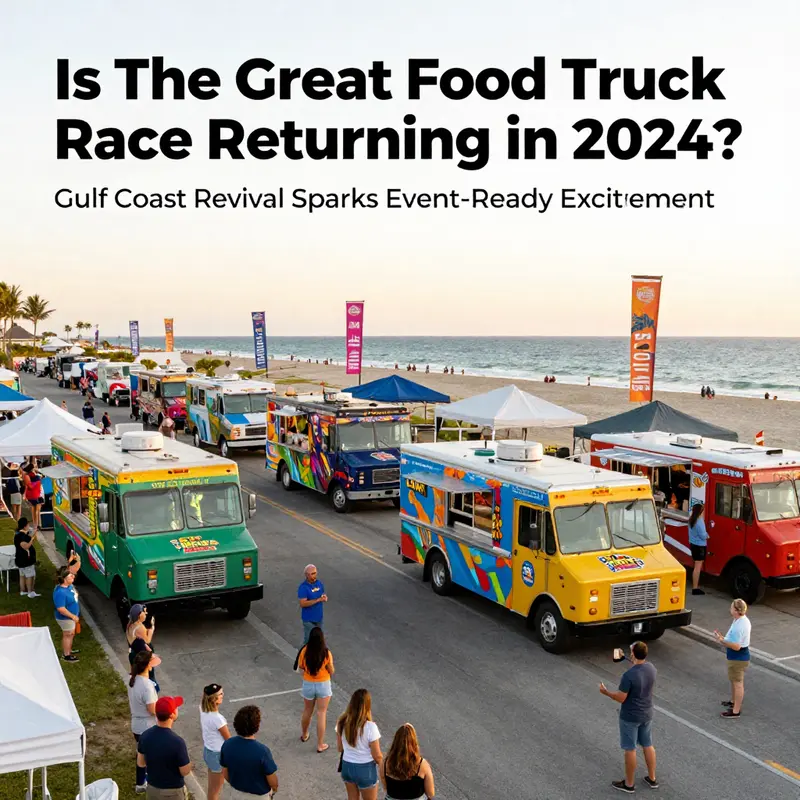
The Great Food Truck Race is coming back in 2024, and the Gulf Coast revival promises a feast of flavor, competition, and community energy. With nine diverse trucks cruising a sun-kissed route toward a $50,000 prize, the season blends high-stakes cook-offs with the warm, inviting spirit of coastal celebrations. For event planners, corporate teams, local groups, and food enthusiasts, the revival is more than a television moment—it’s a blueprint for engaging experiences: pop-up tasting events, live viewing parties, interactive challenges, and cross-cultural storytelling that travels from screen to stage. Across the chapters that follow, you’ll see how the revival is structured, when to expect premieres, who’s in the cast, what the prize entails, and how audiences are already responding. This holistic view helps organizers map activations, sponsorships, and inclusive programming that capture the excitement while delivering memorable experiences for guests and communities alike.
null
null
Gulf Lights, Grills, and the Clock: Unpacking The Great Food Truck Race 2024’s Production Details and Premiere Timeline
When a beloved competition returns, fans look not only at the bright colors and sizzling pans but at the gears turning behind the scenes. The Great Food Truck Race 2024 rejoined screens with a renewed sense of scale and a sharper focus on place, time, and the grit that keeps teams moving. The seventeenth season, billed as The Great Food Truck Race: Games on the Gulf, deployed its familiar mix of culinary bravado and business pressure along the teeming coastlines of the Gulf. It arrived in late spring, with a premiere that set a brisk tempo for what would unfold as a full arc of road, roadblocks, and rendezvous. The season’s core premise remained intact—nine food trucks chasing a substantial prize while navigating a carefully choreographed series of challenges—but the Gulf Coast provided a stage that was both expansive and intimate, capable of hosting the roar of large crowds and the quiet tension of a midnight prep session in a make-shift kitchen trailer. The production team framed every segment with attention to the sensory drama of coastal life: salt in the air, the hum of ferries, a midday sun that could turn a sizzling skillet into a living hazard, and a cityscape that could rise up with a festival crowd or dissolve into a quiet dock when a challenge demanded it. And through it all, the camera caught not just the feats of flavor but the decisions that shape a business on wheels—the math behind a menu, the logistics of parking and permit compliance, and the nerves that come with a ticking clock and a public audience.
From the outset, the Gulf proved to be more than a picturesque backdrop. It was a living character in the competition, influencing what teams served and how they priced, plated, and pitched. The producers leaned into the geography in ways that felt both strategic and storytelling-driven. Each course, each challenge, and each destination along the coastline bore the mark of a place where maritime economy and street food culture intersect in high-stakes moments. In a realm where television often relies on a single, dramatic finale, Games on the Gulf used the coast as a continuous thread—an environment that could shift from sunlit piers to crowded beachfronts within a single episode. That fluidity made for a season that felt expansive and immersive, not merely episodic.
The show’s familiar host—the charismatic Tyler Florence—returned to guide the teams through an array of grueling tasks that tested more than just taste. He carried the weight of expertise and the expectation of steady, constructive critique. Florence’s presence anchored the season, translating scores and strategy into a narrative that viewers could follow without getting lost in jargon. He offered a consistent barometer for what counted as a strong operation under pressure: efficient supply chains, a lean menu, smart inventory management, and a customer experience that could convert long lines into lasting impressions. The interplay between Florence’s guidance and the trucks’ improvisation created a rhythm that carried audiences from the first episode’s hopeful spark to the season’s final, high-stakes sprint.
Production-wise, the timeline for Games on the Gulf followed a rhythm similar to prior seasons, but with a heightened emphasis on regional relevance and logistical choreography. Filming took place across multiple Gulf Coast locales, where teams encountered not only culinary challenges but also the realities of operating in seasonally crowded markets. The production schedule was a careful balance of on-location shoots, kitchen prep, tasting panels, and live event days that put the teams under the watchful eyes of large audiences—and under the pressure of a precise broadcast window. The result was a tightly managed sequence of episodes that built in scale and stakes as teams moved closer to a climactic conclusion. The season’s premiere—broadcast on June 30, 2024, in the United States—set the tone for a year of coastal competition that would test business sense as aggressively as it did flavor intuition. It was a reminder that the show has always thrived not just on clever recipes but on the ability to adapt quickly to shifting crowds, weather, and backdrop.
Along with the premiere, the season’s arc revealed a blend of continuity and novelty. The show continued to combine culinary artistry with street-savvy entrepreneurship, pushing teams to balance creative menus with cost control, waste reduction, and speed of service. The Gulf’s environmental and logistical realities demanded that teams forecast demand, negotiate markets, and recalibrate menus in real time. In this sense, the competition evolved into a practical lab for real-world food-truck operations—a feature that resonated with longtime fans and newcomers alike. The final episodes carried a particular emotional buoyancy, as the teams that had endured the season’s long days and nights confronted the final challenge with the intent to win not only money but the validation that comes from competing at the highest level in a beloved format.
As the season’s narrative reached its apex, the final showdown unfolded in Miami, a city that has long embodied the intersection of cuisine, culture, and competition on The Great Food Truck Race. The last two teams—The Lime Truck and Hodge Podge—faced off in a race to accumulate the decisive prize, ultimately earning $15,000 and earning the right to meet Tyler Florence at a landmark venue, South Point Park, to claim victory. The sprint to the finish captured a core thrill of the series: the combination of speed, precision, and taste that makes a street-food concept credible enough to survive under television lights and live crowds. The choreography of that final stretch—balancing high-stakes tasting with rapid service at a crowded destination—illustrated why the Gulf season hung together as more than a regional detour. It connected the flavor-driven artistry of each truck with the strategic discipline required to sustain a small business under constant scrutiny.
For viewers who cared about the production depth behind the show, the season offered ample evidence of a robust pipeline of content, cast coordination, and editorial storytelling. The production team negotiated permits, secured permits for large audiences, and organized the logistics needed to move a fleet of mobile kitchens through dense coastal environments. It was as much about keeping nine moving kitchens in sync as it was about delivering a cohesive narrative arc of triumphs, missteps, and the quiet, persistent hustle that defines so many food-entrepreneur journeys. The Gulf setting amplified both the show’s drama and its educational value, inviting audiences to reflect on how food trucks adapt to weather, crowd dynamics, and regional tastes while maintaining a clear, customer-centered approach to service.
As the season’s chapters unfolded, one could sense a deliberate intention to foreground not just success on a scoreboard but the growth of the individuals behind the trucks. The journey from a hopeful first episode to a disciplined, finals-ready team required more than a clever recipe; it demanded collaboration, adaptability, and a business mindset attuned to the realities of mobile operations. The producers reinforced this through moments that highlighted the crews negotiating supply chains, adjusting to changing demand, and retooling menus to meet guest expectations. In this way, the Gulf season stood as a practical showcase of the entrepreneurial virtues that drive the food-truck world, blending culinary ambition with the operational discipline that sustains it.
For readers seeking additional context on production details, cast movements, and episode-by-episode schematics, a wealth of information is available on the show’s official pages and fan-curated databases. A reliable starting point for episode listings and cast details is The Movie Database entry for The Great Food Truck Race, which charts the season’s trajectory and identifies the participating trucks. And for those who want to dive deeper into the broader ecosystem surrounding the show—its production complexities, regulatory considerations, and logistical challenges—the Loschifladostruck blog provides practical perspectives on navigating the food-truck landscape. Loschifladostruck blog.
While the narrative of Games on the Gulf is anchored in a specific year and a distinct coastal route, its production choices echo across the franchise. The Gulf Coast, with its vibrant mix of seafood culture, festival crowds, and seasonal commerce, offered a testing ground that encouraged teams to innovate without losing sight of fundamentals. The season’s premiere timeline, the scale of its on-location shoots, and the final showdown in Miami all pointed to a continued commitment to high-stakes storytelling that remains accessible to viewers who love flavor, speed, and strategy in equal measure. As the episode list expanded toward the midseason and the final episodes approached, the audience could sense the momentum building toward a conclusion that would function not as a single finale but as a culmination of the season’s broader arc—an arc about how culinary talent translates into viable, scalable business under pressure.
For those who want to explore production nuances beyond what airs on screen, the IMDb page for The Great Food Truck Race Season 17 offers a catalog of production notes, guest appearances, and episode-specific credits that illuminate the choices behind the camera. It becomes clear that the gulf setting, the host’s guiding hand, and the competition’s structure all interact to shape what ultimately lands in viewers’ living rooms as a cohesive, engaging story of culinary ambition on wheels. In this way, the 2024 season achieved a balance between spectacle and substance, delivering not only the thrill of the race but also a portrait of the practical realities that fuel the dreams of countless food-truck operators.
Looking ahead, the Gulf season’s production details and premiere timeline serve as a meaningful reference point for fans and critics who track how reality-competition formats evolve. The show’s ability to adapt—incorporating location-driven challenges, audience engagement, and a clear, outcomes-oriented finale—speaks to its lasting appeal. It also offers valuable lessons for aspiring operators who study the balance of creativity, cost control, and customer experience required to succeed in a crowded market. Whether viewed as entertainment or a blueprint for street-food enterprise, The Great Food Truck Race 2024 reinforces the idea that success in this field comes at the intersection of flavors, finances, and fearless execution.
External resource: https://www.imdb.com/title/tt26967180/
Games on the Gulf Returns: Cast, Hosts, and the Competitive Pulse of The Great Food Truck Race 2024
If the horizon over the Gulf Coast could speak, it would sound like sizzling pans and the whistle of a food truck window rolling up at dawn. In 2024, fans heard it loud and clear: The Great Food Truck Race is back, sharper and more game-driven than ever, with a new energy that the title itself seems to promise. The seventeenth season arrives under the banner Games on the Gulf, a subtitle that signals not only a geographical stage but a temperament—one that treats each stop as a test of strategy, speed, and the ability to win over diners in neighborhoods that taste of history and heat. The premiere on June 30, 2024, marked more than a return; it marked the channeling of a long-running premise into a format that rewards not just culinary flair but the kind of tactical play that turns a single service into a sprint toward victory. At the center of this revival is a familiar figure, the host who once again serves as both referee and commentator as the road unfolds. Tyler Florence returns as the main host, his presence lending a recognizable cadence to the season’s competitive rhythm. Florence’s role is not simply to judge food but to calibrate the tempo of the race itself, guiding the nine teams through a calendar of challenges that demand quick thinking and consistent execution. The structure stays true to the series’ DNA while leaning into a more overt game orientation, a shift that makes the journey across the Gulf Coast feel like a high-stakes relay where every decision, from menu tweaks to sales tactics, can tilt the odds toward survival or elimination.
The field this season is a compact but diverse nine-truck lineup, each bringing a distinct voice to the streets they traverse. Among them are Plates on Deck, led by Samuel Jenkins; Cooks with Passion, headed by Jasmine Smith; Nola Creations, with Darrell Johnson steering the menu; Fishnet, featuring Keyia Yalcin; Highway Robbery, commanded by Zakary Keres; Burger & Brew, run by Kevin Hsieh; Fuego Fuego, led by Cody Hoover. The list also includes two squads for whom the record of the moment left a tiny question mark, Sizzle & Spice and Taco Trail, where the public-facing roster has not been fully disclosed in every official listing. Still, their names carry weight in the community of competitors, and their inclusion signals a season that values not just individual recipes but the personality and resilience that make a team memorable across a long road trip. The season’s premise begins at the iconic NASA Johnson Space Center in Houston, a symbolic starting line that echoes ambition and exploration. From there, the nine trucks embark on a nine-city circuit that stretches across the United States, a route designed to reveal who can translate kitchen craft into crowd appeal while navigating the logistical pressure of a mobile business on a moving stage. The Gulf landscape offers a particular flavor to the competition, a blend of coastal foods, seasonal produce, and cultural influences that create a living map of regional tastes for the crews to decipher and reassemble into compelling, portable meals under pressure.
In practice, the format pairs two distinct challenges in each episode, creating a cadence that tests both the art of cooking and the science of selling. The first challenge centers on a dish, a test of technique, balance, and innovation—an arena where a team’s ability to translate a concept into a dish that resonates with a diverse audience can turn a strong start into a durable lead. The second challenge places the focus firmly on execution in the field—customer service, speed, accuracy, and the ability to upsell without sacrificing quality. These dual pressures culminate in a judgment that weighs not only the plate the team hands to a line of eager customers but the line’s experience, the unit’s efficiency, and the consistency that makes a single service repeatable. It is here that the competition’s most subtle dimensions reveal themselves: the way a team adapts a recipe to the constraints of a crowded coastal city, how they manage inventory and waste, and how they converse with patrons in both buoyant moments and the occasional tense peak service. The ultimate prize remains a clean and direct incentive—the $50,000 that can launch a truck’s next phase, supporting growth, a more robust roster of ingredients, or a larger footprint in a sector where margins are often thin and risk is a constant companion.
What makes this season compelling beyond the blade-sharp challenges and the propulsive pace is the way the Gulf setting frames the narrative of competition itself. The Gulf Coast is not merely a backdrop but a character with both hospitality and risk written into its geography—the unpredictable weather, the heavy traffic seasons, the fusion of seafood, spicy seasonings, and regional comfort foods that invite chefs to improvise while honoring tradition. The nine-city arc is designed to reveal who can adapt to shifting crowds, who can leverage a local flavor story into a mobile menu, and who can translate a moment of culinary inspiration into a service that keeps customers returning for a second bite. In a sense, the show becomes a social laboratory: it demonstrates how a carefully calibrated brain, a cohesive team dynamic, and the right pocket of capital can convert a spark of inspiration into sustained sales. And while the focus is on entertainment, there is a practical throughline for viewers who dream of turning a food-truck dream into a business reality. The competition’s demands mirror real-world pressures—budget discipline, supply chain awareness, and the constant need to read a market that shifts as quickly as a line can form at a window.
For readers who want to translate what the show reveals into real-world strategies for the road, there are practical touchpoints that echo in the everyday life of a truck owner and operator. The season’s narrative underscores the persistent importance of a thoughtful menu that can be scaled for speed without sacrificing flavor, the necessity of strong service protocols, and a keen sense for the rhythm of a city’s appetite. It also points toward the value of resilience in the face of unforeseen challenges—the weather, the wear on equipment, and the emotional toll of a long circuit that tests a crew’s cohesion as much as their culinary skill. There is a clear through line about how a small business can grow from a televised sprint into a sustainable marathon when the fundamentals are in place: clear branding, consistent quality, and an ability to pivot when a city’s palate shifts or a supplier runs short. Those lessons—often gleaned through the show’s high-velocity format—are the ones that keep audiences engaged long after the cameras roll.
For readers looking to explore more on the practical side of running a mobile kitchen, the field notes and practical discussions available through community voices and industry voices can offer grounded insight. A helpful resource that ties into the broader themes of entrepreneurship, resilience, and branding on wheels can be found at Los Chiflado’s Truck, where a steady stream of essays and reflections connect life on the road with strategic planning and financial management. This background texture enriches the viewing experience by offering a schema through which to interpret the show’s drama and the crews’ decisions, encouraging readers to take away patterns that can be adapted to their own ventures. And as the season unfolds, viewers are reminded that while the race is televised as a contest, it is also a study in how food trucks can evolve within a dynamic market, turning competition into a catalyst for growth rather than a barrier to entry.
While the cast and the format provide plenty to discuss, the season’s storytelling rests on the blend of personalities that each team brings to the window. The nine trucks carry not only a menu but a narrative—their origin stories, their signature dishes, and their approach to improvisation when a city’s crowd changes the tempo of a service. The show is precise about measuring not just what the plate delivers but what the server contributes to the overall experience: the tempo of service, the ability to persuade without pressure, and the courage to try something new under the watchful gaze of a national audience. Tyler Florence’s guidance anchors these dynamics; his judgments, delivered with a calm but firm cadence, create a clear standard that pushes teams toward a higher level of consistency. The combination of Florence’s seasoned perspective and the teams’ evolving strategies produces a momentum that is as much about learning as it is about winning. The gulf itself becomes a teacher, illustrating how climate, culture, and cuisine converge to shape a single, vivid journey across a country that has learned to celebrate street-level innovation as much as culinary tradition.
As the season progresses, the audience is drawn into the choreography of the road—the careful planning required to manage a route, charges for parking or staging, and the delicate balance of maintaining a compelling story across diverse settings. The show’s design rewards not just a standout signature dish but the ability to translate that dish into a narrative that resonates with a broad audience. The best teams demonstrate a blend of improvisation and discipline: a flexible menu that responds to a crowd’s feedback, a service model that scales efficiently, and a business mindset that treats every city as an opportunity to build a lasting connection with diners. In that sense, Games on the Gulf becomes more than a competition; it becomes a map of what it takes to sustain a mobile culinary operation in a landscape that is as diverse as it is demanding. The season invites viewers to consider how far a small business can go when it pairs culinary craft with the rigor of a game plan, and how that blend can translate into real-world growth for aspiring truck owners who tune in for ideas, inspiration, and a front-row seat to the drama of the road. For more on production details and cast, explore the IMDb listing.
The Gulf Coast Comeback: The Great Food Truck Race Returns in 2024 with Games on the Gulf, a Coastline Route, and a Chase for the Prize
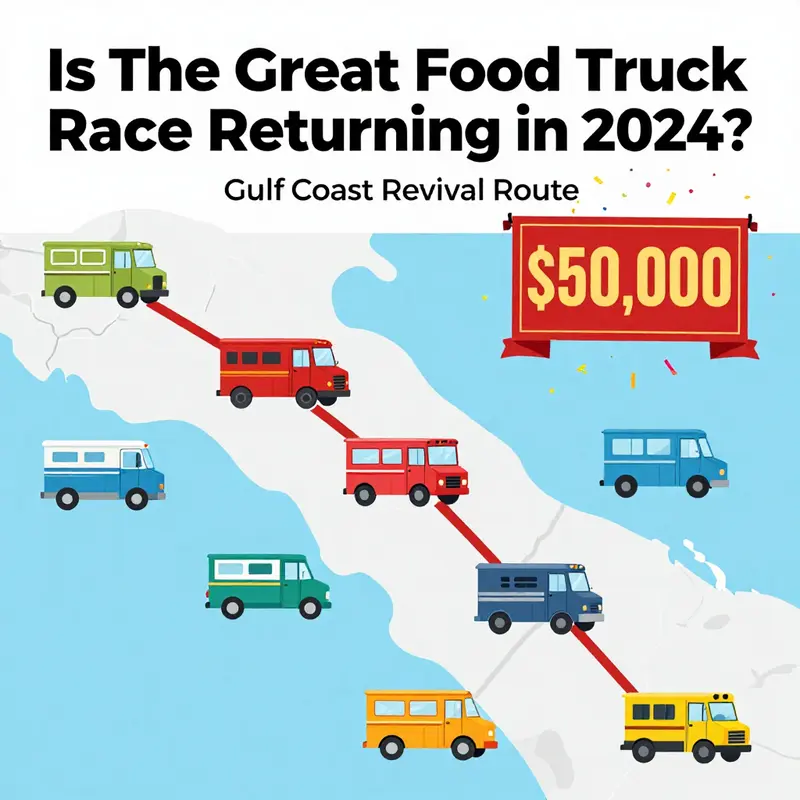
The return of The Great Food Truck Race in 2024 marked more than a revival; it signaled a reimagining of a battle-tested format set against a new horizon. The seventeenth season, proudly carrying the subtitle Games on the Gulf, rolled onto screens with the kind of energy that fans had come to expect from a show that blends culinary invention with the grit of a road race. Premiering on June 30, the season kicked off a coast-to-coast journey along the Gulf, sending nine ambitious food truck teams into a landscape where weather can be both ally and adversary, and where crowds along the waterfronts can make or break a day’s profit before the day’s end. The gulf coast route offered more than a picturesque backdrop; it presented a living laboratory for the art of converting low margins and tight schedules into sizzling plates and sold-out windows. Each truck carried not just a signature dish but a team story, a small business dream under pressure, and a version of the American dream that unfolds one service at a time in public view. As the long arc of the season unfurled, it became clear that the Gulf was less a backdrop and more a character in its own right, shaping decisions, testing resilience, and offering opportunities that only a coastal circuit can provide.
What stood out in 2024 was the way the season balanced high-stakes competition with moments of human connection that have long defined the show. Teams navigated a string of challenges that demanded quick math, sharper sourcing, and a palpable sense of showmanship. They faced the same realities that many street-food entrepreneurs encounter—unpredictable crowd sizes, line management, and the pressure to maximize every dollar earned on a sizzling day. The gulf route amplified these pressures through heat and humidity, coastal traffic, and the constant hum of a crowd that loves food almost as much as it loves spectacle. Yet within those constraints, the teams found opportunities to differentiate through culinary technique, branding, and menu design, turning each day’s parameters into a new page of strategy. The result was a season that felt both familiar and refreshed, the familiar rush of competition enhanced by the scenic, ever-moving stages of coastal towns, city blocks near harbors, and seaside promenades.
The prize, while publicly discussed as a substantial cash sum, remained a touchpoint rather than a numeric endpoint throughout the narrative. The official channel stopped short of declaring a fixed amount in every public document, inviting a magnetism around the title of champion and the recognition that comes with it. But broader industry chatter and fan discourse suggested a substantial reward—an investment that would not only honor the winning team but also empower a new chapter in their business journey. What mattered more in the moment, however, was the glow of the applause and the moment when a team’s name rose above the din of the crowd. The race itself is as much about who can endure the demands of a long, exacting schedule as it is about who can plate a dish that sings with originality after hours of back-to-back service. The show’s cadence remained relentless, with each leg of the Gulf Coast route injecting new energy into a familiar formula.
Across the nine competing trucks, the lineup reflected a spectrum of culinary identity—seemingly disparate influences welded into a shared ambition. Some teams leaned into tradition, reimagining coastal classics with modern flair while staying respectful to their roots. Others leaned into bold experimentation, treating the truck as a mobile test kitchen where flavors collide and narratives are built around a single, emblematic dish. The Gulf’s rhythm—short, sharp service windows followed by rapid repositioning—demanded discipline. It also demanded creativity: a special sauce, a seasonal ingredient, a clever pastry pairing, a dish that could travel well under a sweltering sun and still deliver a wow on the tasting spoon. Watching these teams adapt day after day, you could sense a living study in entrepreneurship under pressure. The show’s producers staged environments designed to test both the craft of cooking and the craft of business—pricing under pressure, inventory control, and the delicate art of balancing menus so that every plate tells a story but nothing stalls a service.
Seasonal signatures emerged as well. The Gulf is not uniform in its energy; it shifts with the breeze and the tide, and the competition rode along that variability. Some episodes leaned toward seafood-forward concepts, leveraging the coast’s abundant maritime bounty, while others leaned into global street-food sensibilities—tacos, arepas, tacos al pastor, and bowls that carried the heat of spices from far-flung kitchens into a compact, portable format. The culinary storytelling was as important as the service performance. Audiences could sense when a team’s dish reflected not just culinary technique but a narrative that connected to the place they were cooking in—like a mini-musical about a grandmother’s recipe found in a cooler of ice and a suitcase of fresh herbs. Beyond the food, the physical demands of racing through a stretch of beloved Gulf towns made parking, maneuvering, and traffic management an unglamorous but crucial part of the competition. The narrative of the season rewarded teams that could translate spatial agility into consistent service times, a balance that often determined who earned the day’s best score and who drifted toward mid-table where the margin for error is thin.
Host guidance underpins the season’s throughline. The figure at the helm offered direction without overshadowing the teams’ autonomy. This dynamic is essential to the show’s formula: a steady yet firm presence who could push teams to refine strategies while keeping the clock and the crowd in a productive rhythm. The result was a tension-free tension, a mixture of mentorship and competition that allowed the human aspects—the nerves, the pride, the quick laughter, and the shared relief after a successful service—to surface. The interaction between contestants and the guiding voice on the show demonstrated how leadership and collaboration can coexist within a race that is as much about business acumen as it is about culinary bravado. Even as the episode structures tightened, the heartbeat of the season remained clear: a collective pursuit of excellence under the relentless gaze of public view.
The Gulf’s finale, which culminated on a warm summer day in Miami’s South Point Park, gave the season its dramatic closure. The final two teams faced a legacy moment, racing to hit a cash target that would seal their victory and bring them into the show’s pantheon of champions. The setting—a sun-dusted park by the water, a crowd tuned to the finale’s cadence, and a host who had become a familiar compass—made the moment feel inevitable, the kind of culmination that lives in fan memories long after credits roll. The reveal carried with it a certain romance: the idea that a dream built on street-side entrepreneurship could take a team to a public, celebratory finish line in a coastal city. The season’s arc, from the first episode to that Miami finale, traced a path of growth for each team. It was a narrative of resilience, adaptation, and the rare capacity to transform a mobile kitchen into a brand with an audience that follows every new location and every new dish.
For fans eager to revisit the journey or explore the season in more depth, the full slate of episodes sits on the show’s official streaming pages. Those who want to dig into contestants’ backstories, episode-by-episode recaps, and the characters who brought the Gulf route to life can find a rich repository of material. In particular, the season’s portrayal of entrepreneurial risk, the logistics of mobile food service, and the artistry behind menu development offer useful takeaways for anyone considering a foray into the food-truck world. For readers who want to translate these insights into practical steps, a nearby resource offers guidance on parking challenges faced by fleets on the road, emphasizing the real-world logistics that complement the culinary craft. See the linked guide on mastering food truck parking challenges for a practical angle on the season’s on-the-ground realities. https://loschifladostruck.com/mastering-food-truck-parking-challenges/
Beyond the episode arcs and the spectacle of the competition, the season’s cultural footprint is worth noting. It captures a moment when food culture is not only about the plate but about the entire journey—from concept to street corner to buyer’s hands. The Gulf route anchors the show in a geographic and culinary landscape that invites both nostalgia for coastal cooking and curiosity about how contemporary food businesses scale when the clock is always ticking and the crowd is always watching. The season’s footprint goes beyond the nine trucks and the prize; it speaks to a broader storytelling trend in which food, travel, and entrepreneurship intersect in public, performative space. Fans who followed the season from premiere to finale found more than entertainment; they encountered a narrative about how small businesses navigate uncertainty, innovate under pressure, and leverage visibility to propel growth. It’s a reminder that the race isn’t only about who wins but about who survives with a plan, a promise, and a taste that lingers in the memory well after the last bite.
For those new to the series, the season serves as a springboard into a broader conversation about how coastal markets present both opportunity and challenge for mobile food enterprises. The Gulf route, with its sunny landscapes and culinary diversity, provides a compelling case study in branding on wheels, the logistics of rapid service, and the artistry of menu design that travels well. It’s a season that wears its ambition on its sleeve while inviting viewers to consider the real-world implications of turning a kitchen into a traveling business. The season’s end card, with the final two teams stepping into an arena that was as much about storytelling as it was about the dinner plate, left audiences with a sense of possibility: the idea that entrepreneurship, creativity, and a bit of luck can align in a way that makes a coast-to-coast journey feel like a natural extension of a single, loud, delicious dream. Those craving more granular details—episode-by-episode insights, contestant bios, and a look at how the route’s geography influenced each challenge—can turn to the show’s episode recaps on the official pages and to fan-curated resources that track the season’s evolving dynamics. For a deeper dive into the cast and the episodes, readers can explore the series page on a major film database, where the season’s entries are cataloged with context and commentary. And for the broader arc beyond the Gulf season, a quick look at the season’s online archive can illuminate how this return preserved the show’s core spirit while inviting new audiences to taste what the chefs and drivers were cooking up along the coast.
External reference: https://www.imdb.com/title/tt1769569/
Riding the Gulf Wave: Audience Buzz and Cultural Ripples From The Great Food Truck Race’s 2024 Return
When the seventeenth season of The Great Food Truck Race rolled onto screens in 2024, it did more than deliver a new sprint of culinary clashes. It reentered a space where food on wheels sits at the intersection of art, entrepreneurship, and community gathering. The Gulf Coast setting, christened with the season title Games on the Gulf, offered a vivid backdrop that blended salt air with sizzling planchas and the hum of distant bands at coastal markets. Nine trucks navigated a loop of coastal cities and pop-up events, facing challenges that tested not just taste but speed, branding, and the speed at which a team can pivot under pressure. The host, Tyler Florence, anchored the journey with calm authority, guiding teams through unglamorous logistics plus the high-stakes pressure of decision points that could tilt the competition in a moment. The result was a return that felt both familiar and freshly invigorating, a reminder that competition television can still elevate everyday food dreams into shared cultural conversations.
For audiences, the response to Season 17 was strikingly warm and expansive. Viewers praised the season’s high-stakes format, which balanced table-turning twists with moments of quiet resilience. The Gulf Coast setting mattered in more than scenery; it underscored a culinary ethos rooted in regional abundance—seafood, citrus, spice, and farm-to-table sensibilities seasoned by street-level ingenuity. The entrants themselves became focal points for audience attachment. Personal stories of hustle, doubt, and persistence formed a through-line more compelling than any single dish. And when rivalries surfaced—like the spirited competition between groups that carried the “Stars and Stripes” nickname—the emotional stakes escalated in a way that felt earned and human. Fans didn’t just vote with their taste buds; they streamed social commentary, fan art, and thread discussions that captured who people rooted for and why. The dialogue extended beyond the episode airings, becoming a touchstone in online communities where memories of favorite plates and jaw-dropping moves circulated with affectionate energy.
Culturally, The Great Food Truck Race in 2024 reinforced how mobile dining has become a powerful storytelling device. The trucks arrived with menus that were as much about identity as they were about sustenance. Each episode, filmed against the Gulf’s changing light, spoke to a country increasingly curious about the origins of its flavors and the people behind them. The show highlighted a spectrum of culinary traditions—Southern comfort, coastal seafood, and inventive fusions that stitched together disparate regional cuisines. In doing so, it broadened audiences’ appetites for the stories behind the dishes. The lane between entertainment and entrepreneurship blurred, revealing that the trucks are more than temporary pop-ups; they are mobile ambassadors for local economies. The season’s narrative threads celebrated resilience—how women and men built businesses from scratch, navigated unpredictable seasonality, and learned to tell their stories through the plate, the truck’s branding, and the efficiency of their service lines.
This cultural sway is not merely about momentary fascination. The show acts as a catalyst for tourism and community engagement. Communities along the Gulf Coast—markets, festivals, and gatherings—receive a spotlight that can translate into longer-lasting interest and foot traffic. Viewers see how a well-placed pop-up can enliven a street corner, how a neighborhood can rally around a favorite truck, and how culinary ideas travel quickly when presented with a competitive frame that emphasizes both craft and speed. The season’s emphasis on regional ingredients and cooking styles invites audiences to reassess the value of local specialties and the ways in which a simple bite can reflect a community’s history and aspirations. In this sense, the Gulf season didn’t merely stage a game; it staged a cultural exchange that encouraged viewers to seek out, support, and even recreate the spirit of place in their own communities.
The show’s influence extends beyond the screen into conversations about food entrepreneurship. The participants’ journeys—balancing cost control with creative experimentation, choosing markets that maximize exposure, and negotiating the logistics of a mobile kitchen—resonate with aspiring operators listening to the clock tick in real time as they balance ambition with practical constraints. The narrative suggests that meaningful culinary success hinges on more than taste. It rests on storytelling, brand presence, and a willingness to adapt in the face of shifting local conditions. This is a key lesson that audiences took to heart: the value of a strong, authentic concept that can travel as far as a truck can roll. The season’s emphasis on the Gulf as a culinary crossroads reinforced a broader trend in which regional identity is celebrated not only on plates but in the way trucks present themselves, interact with crowds, and leverage community partnerships.
From a branding perspective, the visibility of the trucks during episodes underscored how important identity is to audience connection. The show rewarded teams that could present a coherent vision—logo design, color schemes, signage that could cut through crowded streets, and a menu narrative that was easy to grasp in a brief roadside moment. The cultural uptake of these visuals extended into fan-created content and online discussions, where branding choices became shorthand for character and strategy. For readers who want a deeper dive into the connection between compelling visuals and market presence, consider exploring how branding on wheels can transform a humble cart into a lasting cultural emblem. Branding on Wheels: The Ultimate Guide to Food Truck Graphics and Identity.
The audiences’ sustained engagement also reflects how social media has become a companion screen to the show. Short-form clips, behind-the-scenes glimpses, and audience polls amplified the core drama of the season. Fans debated decisions, celebrated clever flavor pairings, and mocked missteps with a sense of community rather than mere critique. The Gulf locale fed these conversations with sensory details that viewers could almost taste: the way citrus notes brightened a seafood-forward dish, or how a smoky finish could transform a humble comfort staple into something memorable. This is the kind of participatory culture that makes a television season feel less like a finite arc and more like a continuing dialogue that travels across screens and into kitchens at home. The season’s success in this regard demonstrates that reality competition has evolved beyond the box, becoming a lens through which people explore taste, trade, and togetherness.
In considering the broader arc, the Great Food Truck Race in 2024 reaffirmed how entertainment can reflect and shape culinary curiosity without losing sight of craft. The Gulf season highlighted how community dynamics, regional cuisine, and entrepreneurial spirit together form a narrative that is both entertaining and instructive. It encouraged viewers to think about how a small business on wheels can become a cultural touchstone, a moving invitation to explore new flavors, and a catalyst for conversations about where food comes from and who is making it. The human stories—the late-night prep, the quick pivots to accommodate unexpected crowds, the pride in a sailor’s sear on a coastal fish, the joy of a well-timed win—these moments stitched a sense of shared experience that cameras can only hint at but audiences felt deeply. This is where the show’s cultural impact becomes most evident: not only in who won or what recipe dazzled, but in how the journey sparked curiosity about regional cuisines, personal resilience, and the power of a community meal delivered from a truck on a sunlit afternoon.
For those seeking a factual anchor to the season as a whole, the official show page on TMDB offers episode guides, cast details, and user reviews that illuminate how the series was received across timelines and generations of fans. The Gulf season’s resonance lies in its ability to translate a competitive structure into a shared cultural experience—one that invites audiences to reimagine what a simple meal on the go can mean in a world that values quick-witted entrepreneurship and communal storytelling. As viewers look back, the season stands as a reminder that food television can be more than competition; it can be a mirror and a map—reflecting local flavors while guiding aspiring food truck owners toward communities ready to welcome new ideas. The Gulf coast’s enduring appetite for novelty, quality, and collaboration remains a powerful engine behind this ongoing cultural conversation.
External resource: https://www.themoviedb.org/tv/18697-the-great-food-truck-race
Final thoughts
The Gulf Coast revival of The Great Food Truck Race in 2024 is more than a televised competition—it’s a living invitation for organizers to weave culinary spectacle into community and workplace experiences. From premiere timelines to cast dynamics and the high-stakes prize, the season offers scalable ideas for festivals, team-building events, and sponsor activations that highlight local flavor and cross-cultural storytelling. By translating the show’s energy into live activations, planners can create inclusive, interactive spaces that celebrate creativity, collaboration, and the joy of sharing good food.