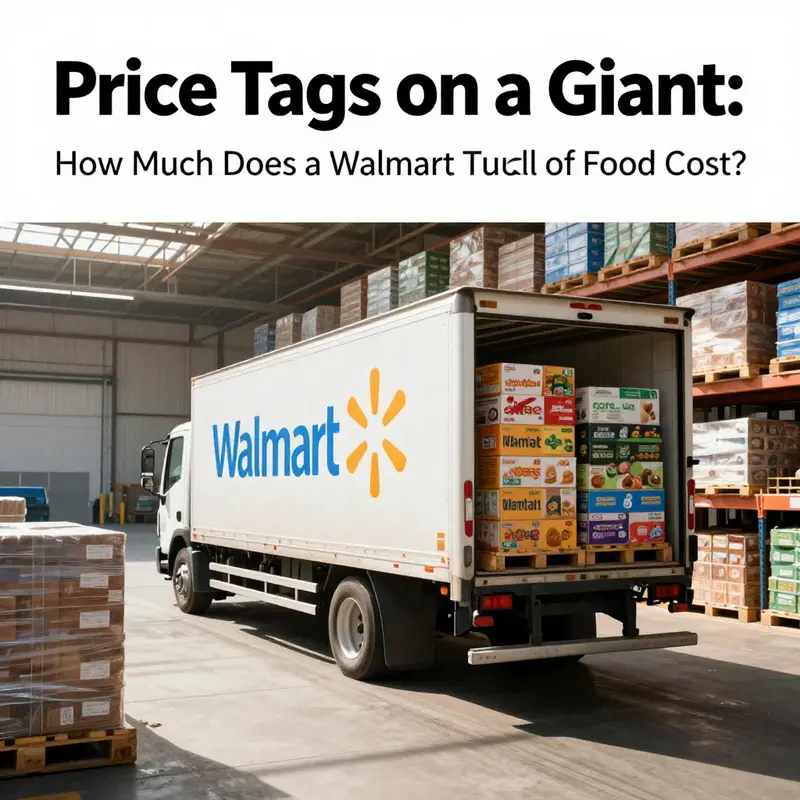
From the warehouse floor to your event budget, the number behind a Walmart truck full of food isn’t a single fixed price. It’s a mosaic made of product mix, wholesale prices, and the miles that trucks traverse. Walmart operates a colossal, intricately choreographed supply chain—one that moves tens of thousands of pounds of groceries into stores every day. A full truckload, typically 40,000 to 50,000 pounds, can span a broad range: roughly $50,000 on the low side for bulk non-perishables, up to $100,000 or more when the load leans heavily on perishables and specialized logistics. Perishables bring refrigeration, cold-chain handling, and faster turnover costs; non-perishables ride on non-refrigerated routes but scale with volume, fuel, and driver hours. For event planners budgeting a large catering run, HR and admin teams organizing corporate outreach, local communities coordinating food drives, and curious consumers tracking mass-market pricing, the real story is how cost factors vary with product mix, route, and timing. The following chapters unpack these dynamics, offering a grounded view of what it takes—and what it costs—to move a Walmart truck full of food from dock to doorstep.
Behind the Wheel: Unpacking the Real Cost of a Walmart Truckload of Food
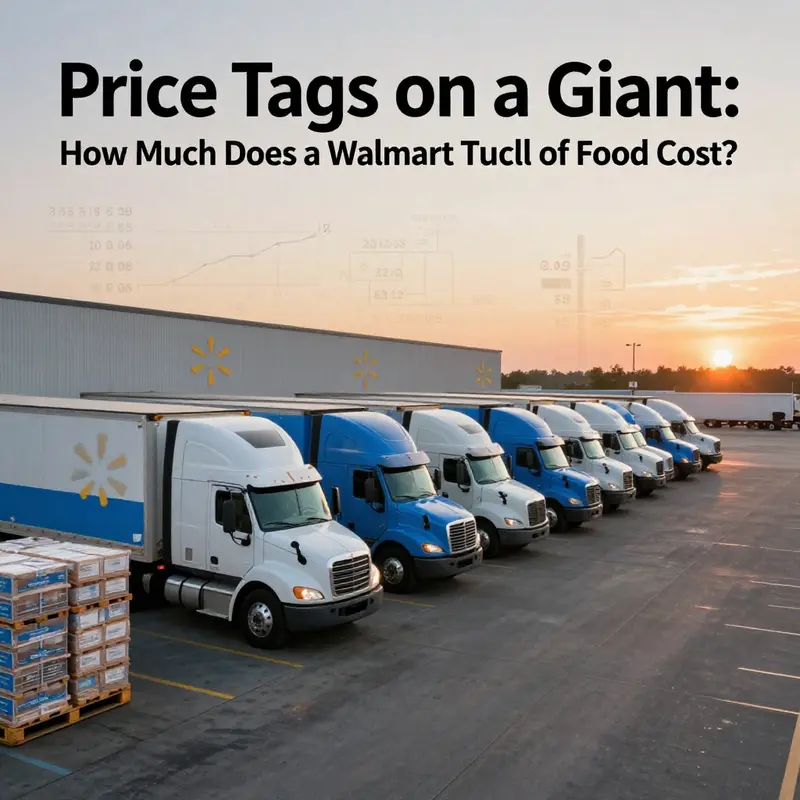
Ask most people how much a Walmart truckload of groceries costs, and you’ll likely hear a single number. In truth, there isn’t a fixed sticker price for a load of food rolling out of Walmart’s network. The answer lives in a maze of moving parts: the mix of items, their packaging, the distance traveled, the season, and the efficiency of the logistics engine behind the scenes. What makes this topic so revealing is precisely what it implies about modern retail at scale. A truckload here isn’t a consumer bargain or a standalone freight contract; it’s a bundle of interlocking costs that flow from product design to aisle price. When you step back and follow the money, you see how a multinational retailer with tens of thousands of stores and an enormous private fleet translates hundreds of millions of pounds of food into the everyday prices shoppers rely on. The question, then, shifts from “how much for a truckload?” to “what drives the price of moving food through a vast, highly synchronized supply chain?” and finally to “how do those drivers of cost influence what ends up on the shelf at a discount?” In this chapter, we walk through the cost architecture that makes a Walmart truckload of food possible—and, more importantly, affordable in the sense that Walmart’s scale and discipline pull the price per unit down for consumers even as the total outlay remains immense. The most important takeaway is that the cost of moving a truckload is not a single figure but a layered calculation, one that hinges on the type and quantity of food, the logistics network employed, and the strategic choices Walmart makes to keep costs predictable and controllable across a sprawling, global operation. A typical full truckload, carrying roughly forty thousand to fifty thousand pounds of goods, illustrates the range rather than a fixed price. The lower end of the spectrum tends to be dominated by non-perishable, dense items that travel well through standard shipping lanes. The higher end tends to arrive when perishables—fresh produce, meat, and dairy—enter the mix, demanding refrigerated trailers, heightened handling, and more careful temperature control throughout the journey. These factors, taken together, explain why a single number cannot capture the true cost of a Walmart truckload. The figure most often cited in industry chatter—fifty thousand to a hundred thousand dollars or more—reflects a floor and a ceiling, not a fixed tag. It captures the reality that a load’s price is a function of what goes into it as much as how far it travels, and how Walmart’s supply chain teams optimize the route and the handling. The scale that Walmart leverages is the core driver of this optimization. The company operates one of the world’s largest private fleets, integrated tightly with a distribution network designed to move product from suppliers to distribution centers and then to stores with minimal idle time. This scale enables Walmart to negotiate freight rates that smaller retailers cannot, and it allows the company to spread fixed costs—like fleet maintenance, driver wages, and fuel efficiency—over an enormous volume. In practical terms, the cost of a truckload becomes a function of the structure and discipline of that network. The distance traveled matters, but the route design matters even more. Short, direct routes with limited backhauls reduce fuel and labor costs, while longer, more circuitous paths with multi-stop deliveries increase both. Yet the same network that can knead out inefficiencies in scheduling can absorb variability more easily than a fragmented system. The result is a price that reflects not a single mile and a single product but a blended outcome of the load’s composition and the network’s efficiency. The cost drivers can be grouped into a few core categories, though the real-world interactions among them are nuanced and dynamic. First, the product type and packaging heavily shape cost. Perishables require cold storage and temperature control, which translate into higher energy consumption, specialized pallets, and more frequent handling. Frozen items need consistent refrigeration from loading to unloading, which adds not just energy costs but the risk management overhead—since spoilage or temperature excursions threaten both product quality and shelf life. In contrast, non-perishables—canned goods, dry staples, and other shelf-stable items—tend to be more forgiving of minor temperature fluctuations and can ride in ambient-temperature trailers at a lower cost. The packaging itself also plays a decisive role. The weight, size, and stacking efficiency of pallets determine how much freight fits into a given trailer and how many shipments can be consolidated into one trip. Higher density items reduce per-pound freight costs by maximizing payload utilization, while bulky or irregularly shaped items require more space per unit and can necessitate specialized handling, adding a modest premium to the overall price. Within the same load, this variation can accumulate quickly, especially when the mix shifts toward items that require additional protective packaging or more careful layout within the trailer to prevent product damage. Second, transportation costs are a tapestry of fuel, labor, maintenance, and route optimization. Fuel remains a dominant variable in any long-haul logistics operation, and its price is volatile. Even with modern engines that optimize fuel efficiency, the sheer distance of the network means fuel spend scales with miles traveled and the load’s weight. Labor costs follow the same logic. Drivers must be compensated, and their time is a major component of the cost of moving goods. Maintenance and tire wear contribute to the backdrop, particularly for fleets that operate in complex routes and climates where road conditions or seasonal demands can hasten wear. Route planning, meanwhile, is the quiet force behind cost containment. A well-designed route minimizes empty backhauls, reduces idle time at distribution centers, and balances the load across the fleet to optimize asset utilization. Each of these choices, while incremental on any single trip, accumulates into tens of thousands or millions of dollars across a year. Third, storage and handling add another layer of cost, especially when the load includes perishables. Refrigerated storage in distribution centers or cross-docking facilities adds energy and equipment costs, while the handling process itself—sorting, repacking, and physically moving goods—requires labor and equipment wear. For non-perishables, the storage equation is simpler: shorter dwell times, straightforward shelving, and less energy consumption. The difference in storage costs often aligns with the ratio of perishable to non-perishable items in the load. Storage can also be time-based, with peak-season surcharges driving up costs during intense demand periods. And long-term storage can become an adverse cost if items remain idle for months; in some business models, this is managed through turnover strategies and dynamic pricing to push volumes through the network more quickly. Another layer of the cost story is the scale and efficiency that come with Walmart’s integrated system. The ability to operate a private fleet aligned with distribution centers means the company can negotiate freight terms at a scale that imposes less margin pressure per mile for each carrier. The means by which Walmart routes goods—from supplier to distribution center to storefront—are designed to be as frictionless as possible. This structural advantage translates into lower unit costs for many items on shelves, contributing to the company’s “Save Money. Live Better.” positioning. But the cost of the truckload is not simply an internal accounting exercise. It becomes embedded in the price to the consumer through the retailer’s pricing strategy and promotional dynamics. Walmart’s approach to pricing—low everyday prices, strategic rollbacks, and a relentless push to reduce waste and improve inventory turnover—places a pressure on the supply chain to operate efficiently. Those price reductions are sustainable because the supply chain channels savings back into the consumer price, rather than dissipating them as profits at the freight level. The interplay here is worth noting: the same cost optimization that lowers the price of groceries for shoppers also contributes to the viability of maintaining a large and diverse assortment in stores across varied markets. Yet, even with this efficiency, the number one takeaway remains: there is no single price tag for a truckload of food in Walmart’s system. The “truckload cost” is the sum of many moving parts, and the relative weight of each part shifts with the load’s composition, the route, and the season. When you consider a full truckload as a conceptual bundle, you can imagine a spectrum rather than a fixed point. At the lower end, a load dominated by non-perishable, dense items incurs lower handling costs and less energy-intensive storage, making the freight portion more predictable and, in aggregate, less expensive per pound. At the higher end, a load heavy with perishables requires continuous temperature control, more careful packaging, and stricter spoilage risk management, pushing up the per-pound cost. In the real world, these cost signals are subject to the same macro influences that sway any large-scale logistics operation: fuel prices, driver availability, equipment downtime, maintenance costs, and the efficiency of the routing software that orchestrates tens of thousands of daily moves. The nuance inside these factors matters. For instance, a load with a high proportion of refrigerated products may necessitate dedicated trailers or temperature-controlled zones within a single trailer. This configuration improves product safety and reduces waste but adds a premium to the transportation cost. Conversely, a load that can be cross-docked and routed through high-throughput facilities reduces dwell time, increases throughput, and reduces per-unit handling costs. The upshot is that a Walmart truckload’s cost is a dynamic equilibrium: the mix of items and the logistical choreography the company chooses to press the most value out of each mile and each pallet. Within that dynamic, the cost structure for third-party sellers using Walmart’s fulfillment services highlights the difference between moving goods through Walmart’s internal network and selling them through the Walmart marketplace. Those costs, when items are stored and shipped via fulfillment services, are not simply freight charges. They include fulfillment fees that vary by item size and weight, storage fees that scale with how long an item sits in a warehouse, peak-season surcharges, and potential long-term storage penalties. The numbers can look stark in isolation: a per-unit fulfillment fee might range from a few dollars to more than ten dollars, depending on the item, while storage fees scale with unit size and storage duration. Add to that the possibility of seasonal surcharges and the long-term storage charge for items that linger beyond typical turnover windows, and the cost picture becomes a careful calculus for sellers seeking to balance price, inventory levels, and service quality. In practice, these costs are not mere line items on a bill; they influence every decision around product mix, order frequency, and packaging design. They encourage suppliers to optimize packaging for pallet efficiency, reduce waste, and align replenishment cycles with the network’s capacity. And they push the retailer to pursue the most efficient routes, the best cross-docking opportunities, and a testing ground for new technologies—from advanced predictive analytics to live-tracking and fleet optimization—that can shave a sliver here and there from the total. All of this matters because Walmart’s scale is both a multiplier of potential savings and a spotlight for cost discipline. The company’s broad reach makes a big difference in the everyday price of food, but that price is earned through a long chain of cost-control measures that begin long before a single trailer leaves a distribution center. In the end, the cost of a truckload of food is not simply a sum of a freight rate and a handful of fuel surcharges; it is a portfolio of decisions about product selection, packaging, routing, timing, and storage. If you want a sense of the practical ranges, consider the baseline: a full truckload of mixed grocery items can hover in a wide band from roughly fifty thousand dollars to well over a hundred thousand dollars, with the lower end more feasible when the load leans toward non-perishables and efficient packaging, and the higher end when perishables, temperature control, and turn-time constraints push against the system’s efficiencies. This is not a number meant to antagonize readers with abstractions. It is a reminder that large-scale food logistics are a theater of optimization. The same principles that let a shopper see everyday low prices are at work behind the scenes, shaping how much of a supply chain cost is embedded in the price of food at the register. To navigate this landscape, one must understand the chart of cost drivers, not just a single line item. The cost drivers—product type, packaging, cold chain requirements, storage and handling, route design, fleet scale, and the sheer operational discipline of an integrated network—work together to determine how much a truckload costs, how that cost is distributed across the lifecycle of the goods, and how Walmart manages to keep prices competitive across a sprawling, dynamic retail empire. For readers who want to translate these abstract ideas into a more concrete planning framework, the numbers are useful, but the story is even more informative. If you’re evaluating a shipment, a seasonal restock, or a potential partnership with a large retailer, you’re not negotiating a single freight quote; you are negotiating a bundle: the cost of moving a large, time-critical, and temperature-sensitive volume of food through a system built to absorb shocks, optimize routes, and push the boundaries of efficiency. It’s a story about scale, but it’s also a story about discipline—the discipline to minimize waste, to maintain quality, to keep freight rates predictable, and to translate those efficiencies into lower prices for consumers who rely on the daily availability of affordable food. For readers who want to see how this translates in practice, a deeper dive into official cost-associated resources provides the latest framework for understanding Walmart’s cost-estimation logic. This is where the conversation meets real-world policy and tools, including formal cost estimators and guidelines for supply chain pricing. As a practical takeaway, the next time you hear a price on a can or a carton in a Walmart store, you can think about the invisible scaffolding beneath it: a network whose value lies not in a single price tag but in the cumulative effect of a well-orchestrated system designed to move food quickly, safely, and affordably across a vast geographic footprint. If you’re exploring fleet management or food logistics in your own business and want a sense of how an enormous retailer approaches cost, one small step toward understanding is recognizing that every shipment is a negotiation between efficiency and risk, between speed and storage, and between the promise of low prices and the reality of high-volume operations. This perspective helps readers appreciate why, in a world of relentless supply-chain pressures, the cost of a truckload of food remains a moving target—always a function of the load’s composition, the route, and the operational choices that keep the system humming. For a practical gateway to pricing specifics applied to selling through Walmart’s marketplace, see the official cost estimator and related resources, which provide structured guidance on fulfillment and storage fees—the kind of figure that, while not a single number for a “truckload,” illuminates how costs accumulate and how Walmart strives to balance them with consumer value. If you want to explore additional perspectives on fleet economics, the following internal resource offers a focused look at budgeting and financial planning for first-time fleet operators and food-truck ventures: financial-tips-for-first-time-food-truck-owners. This kind of guidance helps translate the macro picture into actionable steps for asset management, cost tracking, and strategic procurement in smaller-scale operations that mirror the larger network in miniature. For readers seeking formal policy and pricing frameworks that anchor these dynamics in the real world, a primary external reference to consult is the Walmart marketplace cost structure page, which lays out the typology of fees, surcharges, and storage costs that consumers rarely see but that play a central role in the overall economics of retail food. This external resource provides the most current and applicable guidance for understanding how the cost structure evolves with policy changes, seasonality, and shifts in demand, and it helps connect the practical considerations discussed here with the official mechanisms that govern retailer logistics. External resource: https://marketplace.walmart.com/learn/fees
Counting the Cost on a Walmart-Scale Load: How Perishables, Non-Perishables, and Route Realities Shape a Truck Full of Food
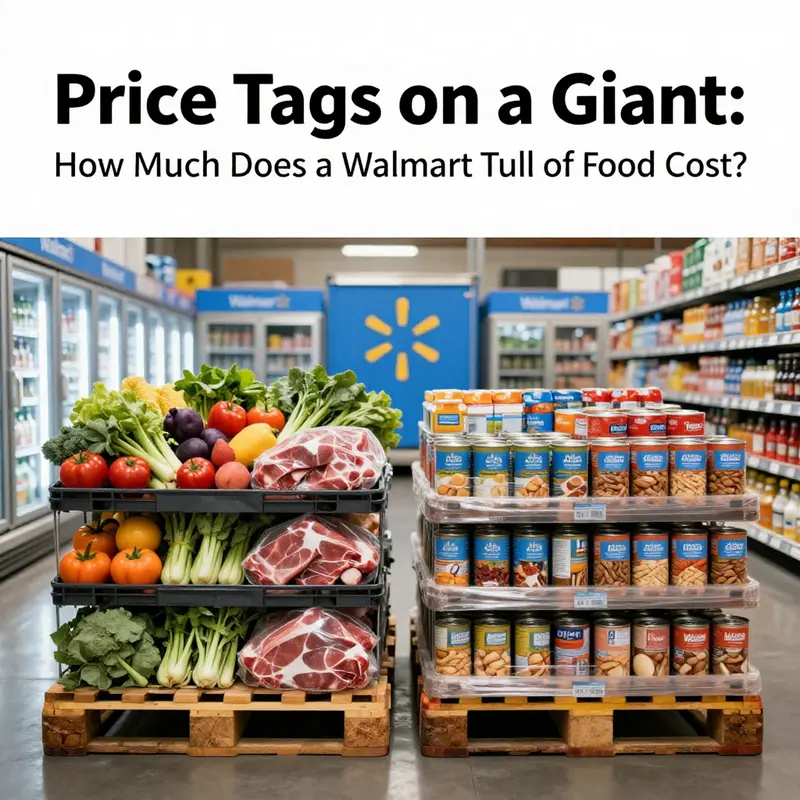
When people ask how much a Walmart truck full of food costs, they’re really asking how a giant, highly integrated modern supply chain allocates value across a vast, variable landscape. There is no single fixed price for a full load, because the tally depends on what’s in the cab—perishables or non-perishables, the mix of products, their packaging, how they’re palletized, and the precise route from distribution center to store. Walmart’s own scale makes a difference, but scale doesn’t erase the truth that bulk food transportation is a moving target, shaped by market prices, cold-chain requirements, and the countless decisions that go into moving millions of pounds every day. The company’s size matters not as a single price tag but as a system of factors that collectively compress costs for the end consumer while still sustaining the high service expectations that come with a retailer of its magnitude.
To begin with, a full truckload in this context usually means something on the order of forty thousand to fifty thousand pounds of goods. In a world built on efficiency, that kind of mass moves through a tightly choreographed logistics network: pallets arranged to optimize weight distribution, routes chosen to minimize empty miles, and a fleet of vehicles equipped to handle both speed and precision. When you hear figures like fifty thousand dollars or more for a truckload, that range is not an arbitrary ceiling. It is a reflection of the diversity of items that can fill a single trailer and the costs embedded in moving them across a landscape that can shift with fuel prices, labor markets, and seasonal demand. Perishable goods—those that need refrigeration or temperature control—exert a distinct premium on transport and handling. They demand continuous energy, specialized equipment, and more sophisticated tracking to prevent spoilage. Non-perishables, while less intensive to move, still carry significant costs in packing, warehousing, and distribution. The difference between these two categories is not merely about shelf life; it’s a real delta in the cost structure that ultimately helps set retail prices and inventory strategies for stores that must keep products available, fresh, and safe for consumption.
Walmart anchors this conversation in its own operations. The company runs an expansive logistics network that includes distribution centers, cross-docking facilities, and a large private fleet dedicated to moving goods from warehouses to stores. The scale here means that even though no single truckload has a published price, the overall logistics system can negotiate, optimize, and absorb costs in ways that smaller shippers cannot. Bulk purchasing power, standardized packaging, and highly automated inventory management allow Walmart to push savings downstream. Yet those same advantages don’t erase the realities that perishable loads, with their refrigeration units and continuous monitoring, have costs that non-perishables can largely avoid. In practice, this means a mixed truckload—part perishables, part non-perishables—will carry a cost profile that sits somewhere between the two extremes, with the perishable portion acting as a price accelerator and the non-perishable portion acting as a stabilizer.
When we talk about the cost of a “truck full of food,” it helps to separate two broad but interrelated cost drivers: the cost of goods themselves and the cost to move them. The first is straightforward in concept but slippery in practice, because wholesale prices for food items are constantly in flux. The second is the logistics price—fuel, driver wages, maintenance, insurance, and the capital cost of the fleet—that scales with distance, weight, and the required level of service. For perishable items, the cost of the cold chain—the refrigeration units, energy consumption, insulation quality, and the risk of spoilage—becomes a meaningful portion of the total. For non-perishables, the emphasis shifts toward packaging integrity, palletization, and warehouse handling fees. The interplay between these two spheres—what’s inside the trailer and how it gets there—produces a spectrum of possible totals rather than a single, definitive number.
Consider the perishable versus non-perishable dichotomy in practical terms. Perishables demand refrigerated trailers, or at least climate-controlled environments within the trailer. They require temperature monitoring, logs, and faster transit to reduce the risk of spoilage. Each mile traveled with a chilled load carries a premium for energy, equipment maintenance, and the human oversight needed to maintain quality and safety standards. In contrast, non-perishables can often be moved with standard dry freight equipment, which reduces the energy footprint and allows for longer dwell times if needed, without compromising product integrity. The trade-off is not simply a matter of whether a product is likely to spoil; it’s a matter of how long the load can sit in transit or on a dock, how many handling steps are required, and how much packaging or secondary containment is necessary to keep everything in good condition.
The practical effect of this divide is a cost curve that isn’t flat. If you fill a trailer with just non-perishable items, the cost per pound tends to be lower because you avoid the episodic spikes associated with cold storage and refrigerated transport. But even non-perishables carry bulk costs: the sheer volume, packaging standards that ensure safe stacking, handling fees at warehouses, and the need for reliable, damage-free delivery to dozens of stores across a region or country. When perishables are introduced, the curve shifts upward in a meaningful way. Refrigeration equipment consumes fuel and requires maintenance. Temperature fluctuations can lead to waste if quality thresholds are breached. The trucking network must be capable of rapid response to temperature excursions, which adds management complexity and, often, premium pricing for time-critical delivery windows.
What does this mean for a Walmart-scale truckload? It means the total cost is the sum of many moving parts, including product mix, weight, packaging, and the distance between origin and destination. A full truckload with a heavy emphasis on perishables could easily sit in the upper end of the range—tens of thousands of dollars more than a similar load of dry goods would cost if all other factors were equal. Conversely, a load comprised almost entirely of non-perishables could ride closer to the middle of the spectrum, with savings coming from longer shelf life, lower energy requirements, and less temperature-sensitive handling. The gulf between these scenarios illustrates why there is no single price tag. It also clarifies why a huge retailer with global reach must maintain a flexible, data-driven approach to logistics, constantly recalibrating routes, re-prioritizing shipments, and leveraging its buying power to optimize every mile and every pallet.
The cost math is further complicated by market conditions that shift week to week. Fuel prices, labor markets, equipment availability, and even geopolitical events can influence transportation costs. The impact on a full truckload is not linear; it depends on the mix of goods and the key constraints at any given moment. A truck carrying a steady mix of non-perishables may experience relatively stable transport costs, while a perishable-heavy load might be exposed to price volatility in cold-chain components, such as refrigerated trailer rental and monitoring services. Even the same route can produce different totals if the store network’s demand changes, if a DC reroutes shipments to balance inventory, or if a carrier adjusts rates due to tight capacity. In a system as large as Walmart’s, these adjustments happen continuously, underscoring why the precise price of a single truckload is not published and is instead inferred from a constellation of data points across the network.
From a budgeting perspective, readers accustomed to consumer prices are likely thinking in terms of a delivery price that lines up with a single wholesale item or a single shipment. But the reality for a mass retailer is that the cost of a truckload funds not only the goods themselves but every step of the path those goods traverse—from regional distribution centers to dozens of stores, and sometimes back to the nucleus of demand planning where replenishment decisions are made. The total cost is thus a function of both the intrinsic value of the items and the extrinsic logistics costs incurred to deliver them intact and on time. Walmart’s ability to keep costs manageable for consumers stems from a carefully engineered balance: it negotiates favorable terms with suppliers, optimizes routing and consolidation, and scales its fleet and facilities to absorb shocks in the system rather than pass them completely to the shopper. In other words, the sticker price you see for items on a shelf is supported by an elaborate, high-efficiency network that makes a big difference in the aggregate, even if the price of any particular truckload remains variable.
In this narrative, it is helpful to ground the discussion with a sense of the practicalities that drive the numbers. When perishables are involved, the trailer is a moving cold room. The cost structure includes the energy required to maintain the temperature, the condition of insulation, the reliability of refrigeration units, and the speed with which the load can be moved to avoid waste. It also includes the systems that ensure compliance with safety standards, traceability requirements, and the ability to respond quickly to any quality concerns that might arise during transit. The perishable portion of a mixed load often translates into a premium for shorter transit times and heightened oversight, which means more money up front but a lower risk of spoilage and waste downstream. Non-perishables, meanwhile, offer predictable stability. They can ride longer on a trailer, survive a longer chain of custody, and be consolidated with other shipments to maximize trailer utilization and minimize empty miles. The result is that the overall cost of a truckload can swing dramatically based on the product mix, even when the total weight carried remains similar.
To illustrate the breadth of possible cost structures, imagine a hypothetical full truckload with a balanced mix: a substantial portion of shelf-stable items and a share of refrigerated goods spread across the trailer. The perishables require careful temperature control, systematic scanning for quality, and rapid handoffs at distribution centers. The non-perishables, while less sensitive, still demand robust packaging, secure palletization, and careful load planning to prevent damage during transport. The combination creates a cost profile where refrigeration-related expenses are offset by efficient loading and routing, but the balance still leaves room for significant variation. The same truck on a different route, carrying a different mix, could yield a markedly different total. This is not a paradox of complexity; it is a natural consequence of operating at scale in an industry defined by tight margins, thin margins on individual items, and the need for impeccable service levels across thousands of stores.
From a consumer-facing vantage point, understanding this complexity helps explain why Walmart can offer low prices while still maintaining an intricate, large-scale logistics engine. The company’s procurement teams leverage massive buying power to secure favorable terms with suppliers, which helps keep item prices down even as transport costs oscillate. In addition, the logistics network is designed to reduce waste and improve speed. Cross-docking, streamlined handling, and economies of scale in both inbound and outbound movements let the network push costs down the line. Yet the per-mile and per-pallet cost for a refrigerated load remains higher than for a dry load, and the premium associated with maintaining cold chain integrity remains a real consideration that shapes total spend on a truckload of perishables.
For readers who want a practical tie-in to budgeting and operations, consider the following: the exact cost of a full truckload is a function of both price inputs—what suppliers charge for goods—and price outputs—what it costs to move them efficiently. A realistic planning approach in a high-volume retailer environment involves building cost scenarios that reflect different product mixes, distance bands, and service requirements. It also requires a keen eye on the risk of waste and spoilage, which, for perishables, translates into a line item that may not appear in a simple cost-per-pound calculation but is absolutely real in the P&L. In other words, the cost of a truckload is not merely a function of what’s inside the trailer; it is also a function of time, risk appetite, and the supply chain’s capacity to manage variation across thousands of product SKUs, each with its own set of constraints and priorities.
This is where the narrative moves from abstract economics to practical insight. A reader who is curious about budgeting for a fleet or analyzing supplier relationships should recognize that the marginal cost of adding one more perishable item to a load is rarely zero. It might be even higher than the marginal cost of adding a non-perishable item, because perishables impose the risk of loss and the need for tighter control. But the marginal cost of moving a larger fraction of non-perishables on the same truck can, in a well-tunctured network, reduce overall transport costs per unit through better trailer utilization and reduced number of shipments. The optimal mix, therefore, is not simply a matter of maximizing quantity or prioritizing perishables. It is a dynamic blend designed to minimize waste, maximize on-time delivery, and sustain quality across a widely dispersed retail footprint.
For readers who want to explore the budgeting and strategic planning side further, the chapter invites reflection on how a large retailer negotiates with suppliers and optimizes the chain. The same principles apply to many players in the logistics ecosystem: if you can obtain favorable price points for goods, you can offset some of the higher costs associated with cold storage and rapid delivery. If, however, you can improve trailer utilization, reduce dwell time at docks, and shorten cycle times, you can dampen the cost impact of perishables and maintain service levels across a broad network. The essential takeaway is not that one category is inherently cheaper than the other, but that the total cost of moving a full truckload is a composite of item-specific characteristics, route-specific realities, and the operational discipline that links procurement to delivery in a timely, cost-conscious manner.
To close this exploration, consider how readers could use these insights in practical planning. If you’re budgeting for a fleet operation, start with a clear sense of the product mix you expect to ship over typical cycles. Build scenarios that separate perishables from non-perishables and test various routes to understand how distance, seasonality, and carrier capacity influence total costs. Invest in reliable cold-chain equipment and monitoring solutions if perishables dominate the load, and couple that with robust warehouse processes that minimize handling damage and waste. Leverage data analytics to identify opportunities for consolidation and cross-docking that reduce wasted miles. And keep in mind that the real value of a Walmart-scale logistics system lies not in any single price point but in the way the network absorbs shocks and maintains flow across a dynamic retail landscape. The more precisely you can model your mix, route, and timing, the better you can estimate the true cost of a truckload and, crucially, preserve the delicate balance between price, availability, and quality that defines modern mass-market grocery retail.
For readers seeking actionable grounding beyond theory, here is a practical path: explore the practical implications of a well-managed budget for first-time fleet owners, and consider how those tips translate to corporate-scale operations. financial tips for first-time truck owners can offer a bridge between individual operator lessons and the larger, organizational budgeting realities discussed here. While the scale is different, the core ideas—control over spend, understanding variable costs, and planning for contingencies—apply just as surely to a fleet serving thousands of stores as to a single-owner operation.
In the end, the question of how much a Walmart truck full of food costs isn’t answered by a single figure. It’s answered by a model: a nuanced, data-driven framework that accounts for the mix of perishables and non-perishables, the route and speed of delivery, and the every-day discipline that keeps a massive, multi-tier supply chain humming. The price tag is a function of constraints and decisions across the system, and the most accurate budgeting comes from recognizing where those constraints bite and where the efficiencies lie. The resulting total is not a fixed point but a reachable envelope, one that Walmart’s logistics architecture aims to stay well inside by leveraging scale, optimization, and relentless focus on reliability. External reference to the broader context of corporate logistics and supply chain strategy is available through industry and corporate resources, such as Walmart’s own public-facing information portals.
External resource: https://corporate.walmart.com
The Truckload Equation: Unpacking the Real Cost of a Walmart Food Shipment
A Walmart truckload of food represents a freight ecosystem on a scale that most businesses never approach. A typical full truckload carries roughly 40,000 to 50,000 pounds of goods. But even that broad descriptor conceals the real variation behind the curtain. The items inside can range from perishable produce and dairy to canned goods and bagged snacks. Perishables demand temperature-controlled transport and tighter handling protocols, which translate into higher costs and more complex logistics. Non-perishables, while cheaper to move per mile in some respects, still accumulate significant expense when you consider the sheer volume Walmart handles, the velocity of replenishment, and the need to avoid spoilage, packaging damage, or regulatory hiccups along the way. And because the fleet spans distribution centers around the world, the route itself becomes a major determinant of final cost. A truck heading across a region with low fuel surcharges and favorable traffic patterns will incur lower operating costs than one routed through congested corridors or across international borders with tight customs controls and longer wait times. The distance traveled is not just a matter of miles; it is a calculus of time, risk, and the opportunity cost of inventory that isn’t sitting on shelves yet.
Viewed from the supply chain’s cockpit, the cost of a truckload is a mosaic of interlocking pieces. The first brick is the price Walmart pays to suppliers for the goods themselves. The wholesale price of food items in Walmart’s enormous purchasing network is driven by volume discounts, private-brand strategies, long-term supplier contracts, and the ability to forecast demand with high precision. The second brick is the logistical tariff that travels with the goods to the stores: transportation, handling, and storage. Within that block lie fuel costs, driver wages and benefits, vehicle depreciation, maintenance, insurance, and the overhead of operating a private fleet or managing third-party logistics partners. There are also packaging and palletization costs, containment and insulation requirements for perishable items, temperature monitoring equipment, and the administrative costs of compliance with food safety standards and cross-docking procedures at distribution centers. In aggregate, these elements merge to form a cost foundation that can swing widely based on the product mix and the route profile.
To anchor the discussion, consider the rough numerical band that industry observers sometimes cite for a fully loaded general cargo truck in the wholesale sector: a single truckload of groceries could fall somewhere in the range of $50,000 to $100,000 or more. That spread captures a wide swath of reality. On the lower end, a trailer filled primarily with stable, non-perishable goods at moderate volumes and efficient routes can press costs toward the $50,000 mark. On the higher end, a load heavy with perishables, refrigerated trailers, and specialized handling may push past six figures, particularly if the journey is long, involves tricky cross-border logistics, or sits in a period of volatile fuel prices. The specific product mix matters; a trailer heavy in fresh produce can be offset by more cost-efficient segments elsewhere, but the refrigeration, temperature-controlled monitoring, and the risk of spoilage create a premium on those items that simply doesn’t exist for dry goods. Weight, too, matters. Heavier loads require more fuel, more powerful tractors, and more robust braking and maintenance, all of which translate into higher per-mile costs.
Walmart’s vast scale changes the math in fundamental ways. The company operates one of the world’s most sophisticated supply chains, a backbone built on distribution centers that feed a network of more than 10,000 stores globally. With hundreds of DCs and a mix of private fleet and third-party logistics partners, Walmart can optimize routes, consolidate shipments, and sequence deliveries with a precision that is hard to replicate at smaller volumes. The scale enables favorable pricing on bulk fuel contracts, standardized maintenance programs across thousands of tractors and trailers, and a broad-based approach to negotiating favorable rates with carriers who are willing to handle high-volume, time-sensitive freight. When the cost of goods, transportation, and handling compresses, Walmart can keep supply chain expenses relatively low per unit of product, which translates into the common consumer benefit of lower prices across a wide array of items.
The mathematics of cost are not merely about pushing price tags lower; they are about safeguarding freshness, reducing waste, and ensuring availability. Perishable goods impose a premium because the window for sale is finite and the value of a spoiled product is a direct hit to margins. Reversing momentum on spoiled stock is not simply a revenue concern; it is a waste concern that ripples through the entire network. Walmart’s approach to mitigating waste hinges on a robust, data-driven replenishment engine. Real-time data sharing across suppliers, distribution centers, and stores allows Walmart to forecast demand with remarkable accuracy and trigger automated replenishment at the store level. The result is leaner inventories, fewer markdowns, and a higher likelihood that products are on shelves when customers want them. In practical terms, this reduces emergency shipments, expedited freight costs, and storage overhead—each a line item that could otherwise overwhelm a simple “cost per truck” calculation.
The decision to lean into private fleet operations versus relying on third-party carriers is another lever in the cost equation. Walmart’s network blends owned transportation assets with strategic outsourcing to specialized logistics partners. This hybrid model enables tighter control over service levels while still providing the flexibility to scale up operations during peak seasons or surges in demand. The private fleet benefits from standardized maintenance cycles and unified safety protocols, which reduces the risk of breakdowns that can derail schedules and escalate costs. At the same time, the third-party tier introduces competitive bidding, capacity discipline, and the potential for cost savings in peak periods. The balancing act between control and flexibility is a core element of Walmart’s logistical playbook, and it directly shapes the bottom line of each truckload.
Fuel, of course, has long been the great determinant of carrier costs. The price of diesel, the efficiency of the tractors, and the aerodynamics of the trailer all influence per-mile costs. A long-haul route with favorable fuel pricing might trim the cost per mile, while a shorter route with high congestion or longer dwell times in distribution hubs can raise it. Additionally, the weight of the cargo and the need for refrigeration add to fuel burn in ways that non-perishable, dry goods do not experience. Everything from tire wear to engine maintenance to the availability of efficient loading docks factors into the long-term cost picture. In a business built on scale, even modest per-mile savings multiply across thousands of truckloads each year, producing meaningful margin improvements that fund ongoing price discipline across Walmart’s assortment.
Beyond the physical movement of goods, the management of time is a central price driver. A truckload’s value is highly sensitive to lateness. Delays cascade: a late arrival at a distribution center disrupts downstream replenishment, which can trigger expediting costs, stockouts at stores, and dissatisfied customers. Walmart’s logistics architecture minimizes these risks through synchronized planning, cross-docking strategies, and rigorous performance standards for carriers. Cross-docking reduces handling and storage time at the DC, moving goods more quickly from receiving to outbound lanes. The result is shorter lead times and less inventory sitting in warehouses—a direct reduction in costs associated with storage and capital tied up in assets that aren’t turning into sales. The payoff isn’t just in pounds moved but in the velocity of those pounds through the system.
The economic logic of a Walmart truckload also rests on the efficiency of information. Walmart’s supply chain is infamous for its data integration. Real-time sharing of point-of-sale data, inventory levels, and supplier production schedules enables demand forecasting with remarkable clarity. That clarity lowers the risk of overproduction and understocking, both of which carry cost penalties in different forms. Overstocking ties up working capital, increases holding costs, and raises the risk of obsolescence for certain items. Understocking leads to lost sales and the need for speedier, more expensive replenishment. The optimal balance—the one Walmart strives to achieve—depends on accurate signals and the ability to execute replenishment with minimal friction. In such a system, the cost of a truckload is not static; it is the outcome of a continuous optimization where product mix, timing, and route execution are tuned to reduce waste and maximize throughput.
In addition to the operational realities, there is a strategic narrative at work. Walmart’s scale enables profound bargaining power with suppliers, a capability that translates into favorable unit costs that can offset higher freight expenses in some cases. The company’s private-brand strategy and its ability to source large volumes of staples mean that a portion of the truckload is built on goods with predictable margins and predictable replenishment cycles. That predictability matters because it makes the logistics math more reliable. The company can allocate resources to maintain a reliable service level, even as the rest of the market experiences volatility in fuel prices, labor markets, or commodity costs. This is how a cost that fluctuates widely on a per-item basis can still be managed in a way that supports consistent pricing for consumers. It is not that Walmart has a magic price, but that its price is the result of disciplined cost control across an extraordinary scale of operations.
For those curious about the mechanics behind the numbers, Walmart does provide tools and resources that illustrate the broader cost structure. A cost estimator tool on its Marketplace Learn platform gives sellers a way to input product dimensions, weight, and other attributes to estimate storage, picking, packing, and shipping costs. While this tool serves a different purpose than calculating a single truckload’s price, it offers a tangible sense of how the various elements—storage, handling, and transport—coalesce into a comprehensive logistical cost. Understanding these building blocks helps explain why the same truck’s load can yield different per-pound costs across different product mixes and routes. It also underscores how a company with Walmart’s scale can absorb fluctuations in one component by compensating with efficiency gains elsewhere.
All of this matters beyond the warehouse floor. The ultimate aim is to deliver the best possible value to customers—“Save Money. Live Better.”—without compromising availability or freshness. The cost of a truckload of food cannot be a single fixed price because the business objective is not simply to move goods from point A to point B. It is to move them in a way that sustains a broad system of price discipline, reliability, and speed. When a warehouse receives a mixed load of perishables and shelf-stable items, the cost discussion must account for the relative freshness risk and the potential for spoilage, as well as the necessity of meeting store demand on a precise timetable. Walmart’s supply chain is built to absorb those complexities by aligning procurement choices, transportation arrangements, and inventory strategies with the realities of consumer demand. The result is a system that minimizes waste, reduces the risk of stockouts, and enables the retailer to offer competitive prices even as external costs shift.
Understanding the price tag of a single truckload also invites reflection on broader industry dynamics. Independent operators and smaller retailers often face a different set of constraints, including less leverage in supplier negotiations, higher per-unit transport costs, and fewer opportunities to optimize routes through a dense, coordinated network. Walmart’s position shows what is possible when scale is married to sophisticated data analytics and an integrated logistics architecture. It isn’t merely about pushing down the cost per mile; it is about creating a resilient pipeline that can sustain low prices in a market characterized by volatility in fuel costs, labor markets, and global supply disruptions. In that sense, the cost of a Walmart truckload of food reveals more about the power and precision of a world-class supply chain than about any single price figure. It is the practical embodiment of a system designed to turn enormous volumes into consistent value for shoppers, even as the goods themselves differ widely in their perishability, packaging, and shelf life.
For readers seeking a concrete sense of the numbers in a specific context, a World War II–era adage holds true in a modern logistics sense: the price you pay is the price of time, reliability, and risk. A load dominated by non-perishables can present a lower headline figure, but a route that shortens dwell times in crowded hubs can offer savings that ripple across the entire network. Conversely, a load with a high share of fresh produce might command higher direct costs due to refrigeration, cold-chain maintenance, and spoilage risk, yet it can be offset by higher demand and quicker turnover at stores when planned precisely. The nuanced dance between these variables is the heartbeat of Walmart’s supply chain strategy. It is not a simple arithmetic problem but a dynamic orchestra in which product mix, route design, and process excellence conduct the performance. The more that data and automation can tighten the orchestration, the more cost-effective each truckload becomes over time, reinforcing Walmart’s ability to keep prices low across thousands of items in a highly competitive marketplace.
Internal link to related considerations
For readers who want a grounded take on the kinds of financial decisions a large fleet must navigate—covering costs, cash flow, and risk management—the following resource provides a practitioner-friendly primer: financial tips for first-time food truck owners. This link illustrates how smaller operators grapple with many of the same cost components in a different scale, offering a useful contrast to the macro-level economics described here. It is a reminder that cost discipline, forecasting, and strategic sourcing are universal challenges in moving goods from production to consumption.
As a closing lens on the subject, the numbers and the narrative together suggest a practical takeaway: while there is no single price tag for a Walmart truckload of food, the cost structure is intelligible once framed as a portfolio of interacting forces. Product mix, perishability, route geometry, and the efficiency of data-enabled planning shape whether a given load sits near the lower or upper end of the cost spectrum. Walmart’s immense scale, disciplined logistics, and continuous investment in technology compress those costs over time, enabling sustained price advantages for shoppers while maintaining high service levels across a sprawling global supply chain. The result is not just a statistic for accountants but a tangible pathway by which millions of households gain reliable access to affordable food. The cost of a truckload becomes a proxy for the health of a system designed to deliver value efficiently, safely, and consistently, even when the market throws curveballs.
External resource: https://corporate.walmart.com
Final thoughts
Understanding the price of a Walmart truck full of food isn’t about a single sticker price. It’s about the orchestra of cost drivers—the product mix, the weight, the perishability profile, the refrigeration needs, the miles traveled, and the operational efficiencies that Walmart has built at scale. Perishables push up costs through cold chains and higher handling, while non-perishables leverage volume to spread fixed costs over more units. The broader economics and logistics of Walmart’s supply chain—fuel, labor, maintenance, scheduling, and route optimization—shape every truckload’s final bill. For event planners, HR teams, community organizers, and everyday shoppers, this means pricing insights that reflect real-world constraints and efficiencies, not just sticker prices. As Walmart continues to refine its logistics network, smaller buyers and larger communities alike can glean practical lessons in budgeting, procurement, and timing that translate into smarter purchasing decisions and better value for meats, produce, and pantry staples alike.