Cincinnati’s food truck scene is a vibrant network of parks and plazas where cuisine, culture, and community mingle. For event planners, corporate teams, neighborhood groups, and curious eaters, picking the right park can shape attendance, guest experience, and lasting memories. This guide maps the city’s most reliable options through three lenses: a bustling central hub anchored by The Pitch Cincy, an artsy East End ecosystem centered on Cove Food Park, and accessible suburban and peripheral venues that expand capacity and vibe. By examining location dynamics, access, and community energy, you’ll see how each setting aligns with different goals—branding, team-building, outreach, or simply delicious exploration. Chapter 1 dives into central Cincinnati and the Pitch Cincy case study to reveal how downtown grids, transit access, and live-music energy create magnetic experiences. Chapter 2 surveys the East End, highlighting Cove Food Park’s 2019 opening and its blend of food, art, and community programming. Chapter 3 focuses on Bridgeview and beyond—peripheral spaces that offer flexible layouts and neighborhood-friendly atmospheres. Together, these sections form a holistic map to plan memorable, well-attended food truck events across Cincinnati.
Central City Momentum: An Integrated View of Cincinnati’s Food Truck Parks Through The Pitch Cincy Case
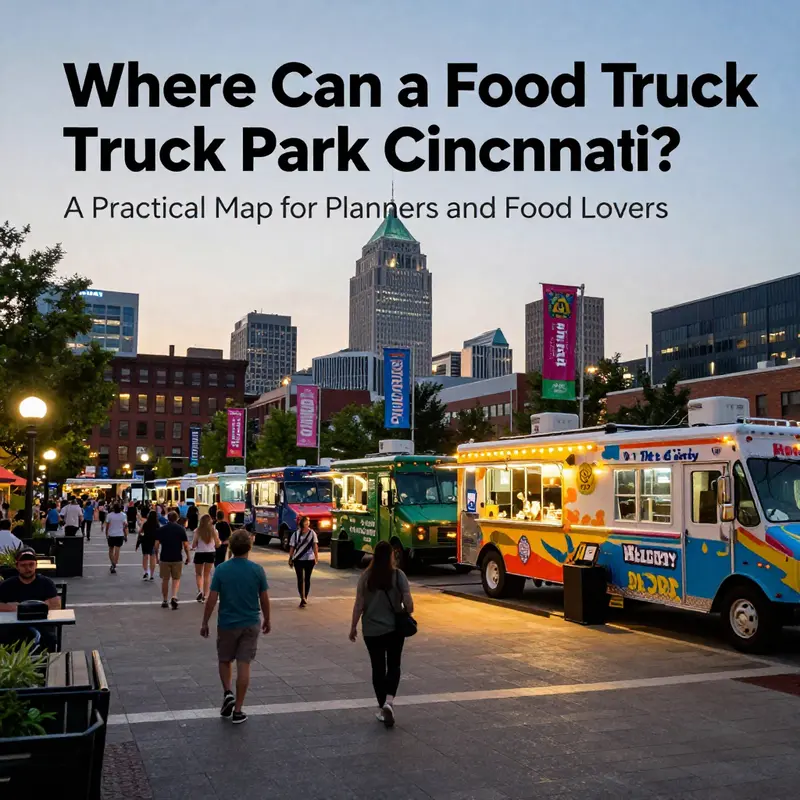
Cincinnati’s food truck phenomenon sits at the intersection of urban design, cultural appetite, and a city’s stubborn but hopeful desire to reimagine street life. In recent years, the city has watched a handful of mobile kitchens transform underused pockets of land into vibrant gathering spaces. The central question—where can a food truck park in Cincinnati—finds its most compelling answer not in a single curbside corner, but in a pattern of strategically located hubs that blend accessibility, visibility, and durable infrastructure with a steady rhythm of activity. Among these, a standout model emerges in the heart of the city at 1430 Central Parkway, where The Pitch Cincy stands as a living case study. This site is more than a row of food stalls set beside a street. It is a deliberate urban intervention that ties food culture to a major entertainment destination, turning a transit corridor into a robust culinary destination that operates with predictability and a sense of place. The Pitch Cincy opened its doors in May 2021, occupying a space directly opposite the stadium that hosts Cincinnati’s professional football and a spectrum of major events. The site sits within walking distance of a flood of visitors on game days, concerts, and community gatherings, creating a built-in audience that can be mobilized without the friction that often accompanies new ventures in the city center. The central Parkway location, by design, represents a convergence of travel corridors, pedestrian flows, and the city’s annual calendar of events. It is not a pop-up or a seasonal pop-up made ephemeral by weather and shifting contractor schedules. It’s a dedicated, year-round space with fixed amenities that extend beyond the stalls themselves. The presence of seating, restrooms, and electrical hookups signals a commitment to customer experience and vendor viability. This is not merely a place to purchase food; it is a small district of its own, with branding, a sense of safety, and predictable hours that support both operators and guests. The transformation of this land reflects a broader urban strategy: repurposing underutilized central-city parcels into multi-use spaces that contribute to placemaking while supporting local entrepreneurship. The Pitch Cincy demonstrates how a well-chosen corner can anchor a larger network of activity. The adjacent stadium draws guests who crave a quick, diverse bite before or after events, while the park’s permanence invites regulars who want a consistent option in a dense urban setting. To any observer, it is clear that the site’s success is not merely about who is cooking but where and how the cooking happens in a lived, walkable city. The combination of location, infrastructure, and branding creates a compound effect. Foot traffic is not luck; it is curated through a blend of accessibility, visibility, and a deliberate relationship with the surrounding entertainment ecosystem. The surrounding streets, parking patterns, and public transit options all shape how people arrive, linger, and spend. The Pitch Cincy’s footprint in central Cincinnati models a broader urban design logic: place the culinary attractor in a corridor that already commands daily or weekly footfall, layer in year-round facilities that reduce friction for both customers and vendors, and then connect the experience to a larger anchor—here, a stadium that channels tens of thousands of visitors across seasons. The result is not merely a successful food park but a micro-community where locals, visitors, students, and workers converge regularly to savor, chat, and move on with their day. The site’s capacity to anchor a neighborhood’s rhythm lies in a simple but powerful combination: a high-traffic landmark, a stable platform for operations, and a clear, attractive identity that invites repeat visits. The Pitch Cincy encapsulates a model for another new proposal in central Cincinnati: aim for a location that can reliably deliver robust foot traffic, not just on game days but every day of the year. Fixed infrastructure—electricity, water, restrooms, seating—reduces the operational risk for vendors. A well-chosen site becomes a platform for brand-building. The vendors do not merely emerge to sell tacos or burgers; they participate in a curated urban experience that invites social sharing, supports live entertainment nearby, and becomes a recognizable part of the city’s culinary landscape. The case study is not a blueprint to be copied wholesale, but a signal about what works in the city’s central zone: proximity to a high-visibility destination, a walkable environment, and the certainty of a reliable customer stream. The Pitch Cincy thus informs the kind of due diligence future proposals demand. A successful central Cincinnati park must align with the city’s development trajectory, harmonize with public space usage, and demonstrate how permanent infrastructure can sustain a diverse set of vendors across seasons. The case suggests that the most durable food truck parks are those that offer more than a row of stalls; they become nodes that promote longer visits, encourage repeat customers, and contribute to the city’s cultural and economic vitality. The site’s city-facing design invites pedestrians to move through a sequence of experiences—grab a bite, listen to a live act, stroll toward a transit stop, or take in a game-day crowd—without friction. The narrative around 1430 Central Parkway thus reads as a layered argument for central-city food hubs: they must be anchored by a well-trafficked magnet, built on solid utilities, and wrapped in a brand that elevates the street experience rather than simply filling a vacancy. This is not a nostalgic reimagining of street food; it is an urban infrastructure decision that turns a central parcel into a year-round, community-focused culinary crossroads. For cities contemplating new proposals, The Pitch Cincy is a live case that demonstrates why the central district matters, how a food park can coexist with a stadium, and how design decisions cary the most weight in a district that already hums with activity. The lesson extends beyond a single property. It points to a broader principle: in a city where river views, cultural assets, and professional sports anchor the calendar, the most sustainable food truck parks are those that earn their place by connecting directly to the pulse of the neighborhood and the rhythm of the city’s movements. If planners and entrepreneurs pursue this logic—central placement near a major venue, durable street infrastructure, and a deliberate, welcoming environment—the result can be a network of micro-districts that collectively redefine how Cincinnati experiences food on the move. This approach is not about chasing a single win but about cultivating a density of thriving spaces that together map a practical, humane, and economically viable way to city dining. The Pitch Cincy case shows that when a park is stable, visible, and integrated with surrounding life, it gains a resilience that seasonal or temporary setups cannot match. It earns trust with vendors who want steadiness; it earns trust with guests who crave reliability; and it earns the city a predictable engine for foot traffic that can sustain nearby businesses, arts, and public life. For anyone imagining a new food truck park in central Cincinnati, The Pitch Cincy offers a concrete reference point: secure a space that is easy to reach, hard to miss, and equipped to function every day of the year. Make the site part of a larger urban fabric, not an isolated block of commerce. And ensure there is a shared understanding that parking, safety, accessibility, and restrooms are not afterthoughts but core commitments. This is the architecture of durable urban food culture. If planners want to push beyond conventional nine-to-five retail, they can design spaces that help people meet, linger, and taste their way through the city. The central zone provides the perfect proving ground for this concept, with a ready-made audience, a prominent anchor, and a square of land ready to be transformed into a small district where food and community converge. The Pitch Cincy is more than a successful eatery row; it is a statement about how Cincinnati can codify a practical, humane, and economically sound approach to food trucks in a city where the center remains vital to the region’s identity. It proves that the central city can host a professional, year-round culinary hub that respects pedestrians, honors the surrounding venues, and contributes to the vitality of downtown life. The method is clear: choose a location that matters to people, build the right infrastructure to support a diverse lineup of vendors, and design the space with an eye toward safety, comfort, and branding. In doing so, Cincinnati can replicate the central-city success story across a portfolio of sites, each reinforcing the others and collectively creating a food landscape that is as varied as the neighborhoods it serves. This approach aligns with the city’s broader urban development trends, which favor mixed-use spaces, active streets, and public realms that invite spontaneous gathering. The Pitch Cincy thus stands as a benchmark and a beacon—a reminder that food trucks can be more than a stop along the way. When placed with intention, they become the anchor of a neighborhood’s daily life, a magnet for visitors, and a catalyst for ongoing investment in urban vitality. For readers seeking practical, on-the-ground guidance, the story of central Cincinnati invites a closer look at how location, infrastructure, and branding can coordinate to create a sustainable, beloved food destination at the heart of a growing city. The central district is where a thoughtful combination of accessibility, visibility, and permanent amenities can turn an ordinary parking lot into a dynamic, year-round destination for food lovers, families, workers, fans, and neighbors alike. The Pitch Cincy demonstrates that such a space can be more than a market; it can become a cultural touchstone, a steady platform for small businesses, and a catalyst for a city’s evolving urban life. Readers and prospective operators who study this model will gain a clearer vision of how to align a food truck park with Cincinnati’s development priorities—anchoring a site near a major cultural or sporting venue, ensuring robust infrastructure, and cultivating a branded, welcoming atmosphere that invites people to linger, explore, and return. The narrative confirms what many operators already suspect: the best places to park a food truck are not just where customers pass by, but where the city’s energy already gathers, where seating and restrooms remove friction, and where the space itself tells a story about the community it serves. In central Cincinnati, that story finds its most resonant chapter in The Pitch Cincy and the parcel at 1430 Central Parkway, a location that embodies the city’s aspiration to turn street food into an enduring element of urban life. For anyone designing the next phase of Cincinnati’s food truck ecosystem, the takeaway is simple and actionable: look for the urban crossroad where a landmark destination meets a pedestrian-first street, couple it with reliable infrastructure, and curate an experience that invites repeated, multi-sensory engagement. In doing so, Cincinnati can continue to expand the footprint of accessible, high-quality street food while reinforcing its identity as a city that treats public spaces as living, thriving places. To readers who want a practical primer on the nuts and bolts behind parking logistics, see this resource on mastering food-truck parking challenges for hands-on guidance. https://loschifladostruck.com/mastering-food-truck-parking-challenges/ Additionally, for a broader view of Cincinnati’s evolving food scene and ongoing park-level initiatives, you can explore The Pitch Cincy’s official portal to understand how a central-city hub integrates with ongoing events and community initiatives: https://www.thepitchcincy.com
Chapter 2 — East End Street Legacies: An Analytical Look at Where a Food Truck Can Park in Cincinnati, with Cove Food Park (4601 Kellogg Ave, Opened 2019) as a Case Study
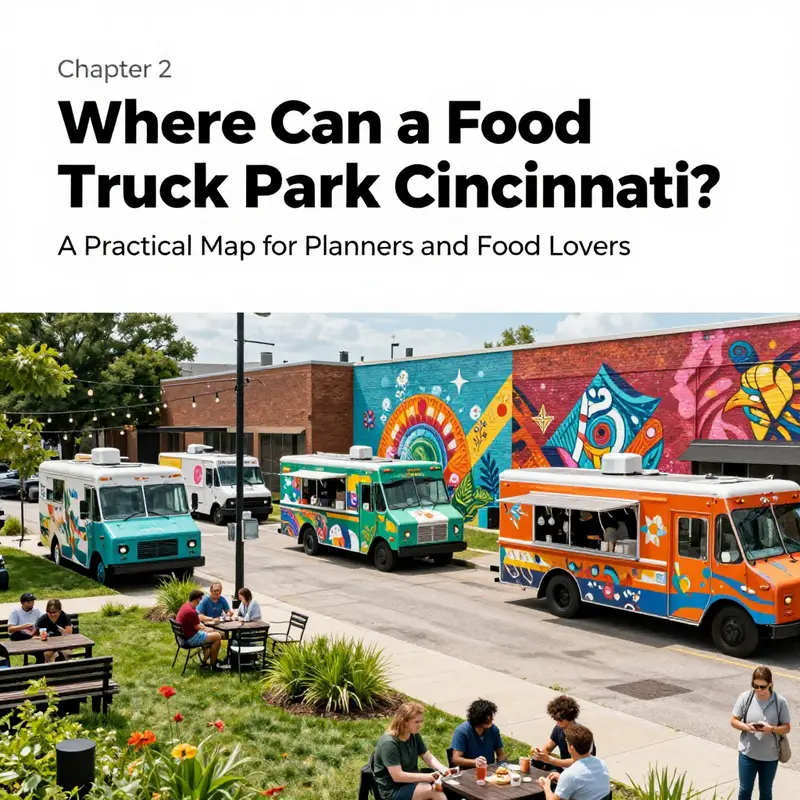
The East End of Cincinnati has long been more than a boundary on a map; it has functioned as a living laboratory for how food, community, and mobility intersect in a city that prizes both tradition and experimentation. When Cove Food Park opened in 2019 at 4601 Kellogg Ave, the East End welcomed a formal, rotating ecosystem of mobile vendors into a curated outdoor setting. The idea was simple in principle: create a park-like space where food trucks could gather, breathe, and serve a diverse audience that included nearby residents, commuters, families, and curious visitors drawn to a shared experience of flavor and atmosphere. The park’s design mirrored a broader urban trend: take the street and turn it into a stage for culinary variety, blue-sky social life, and small-business resilience. In those early days, Cove stood as more than a parking lot with wheels; it was a deliberate attempt to knit together food, art, and community through a single address and a schedule that rotated trucks with the seasons.
What happened next is a reminder of how dynamic these urban food ecosystems can be. The Cove model proved powerful, attracting a broad mix of trucks and a steady stream of patrons who preferred the energy of an outdoor dining scene—tables and umbrellas, music in the air, and the sense that the neighborhood was actively reclaiming public space for shared enjoyment. Yet by January 2026, Cove Food Park had been listed as permanently closed. That closure is not merely a footnote; it is a data point about the fragility and adaptability of street-food hubs in a changing city. It invites a closer look at why a space like Cove can emerge with great promise and then retreat, and what that arc means for operators who park their livelihoods on municipal streets or in sanctioned lots.
To understand where a food truck can park in Cincinnati’s East End today—and why Cove’s story matters as a lens—one must examine the broader landscape. The East End hosts a constellation of venues known for their culinary creativity, social energy, and structural capacity to host outside vendors. The Pitch Cincy, located nearby and often described as a central hub for food trucks alongside live music and weekend crowds, represents a different model of parking and engagement. It is a venue that combines the rhythm of a festival with the reliability of a neighborhood gathering spot, offering trucks a steady cadence of events and audiences. Funnel of Luv, with its emphasis on a fried-then-craveable appeal, demonstrates how a single signature dish can anchor a street-food identity and draw a loyal following from across the city. Beards & Bellies BBQ brings a smokier, more traditional culinary vocabulary to the East End, while Bridgeview—set at the edge of the city’s landscape—expands the palate with a blend of options that can accommodate both casual stroll-ins and extended, evening dining rituals. What links these venues is not merely geographic proximity but a shared function: they convert a stretch of pavement into a stage for mobility-based entrepreneurship and communal dining.
Taken together, these East End venues form an analytical case study in how space, policy, and culture shape where a food truck can park. The park model that Cove exemplified—an arrangement of open space, seating, shade, and a rotating roster of trucks—fueled a sense of possibility. It suggested that the advantage of a designated gathering space is not only the predictable traffic flow or the convenience of a defined lot, but the ability to curate an experience that encourages repeat visits. When Cove opened, it offered a narrative about place-making: a permanent enough footprint to attract operators who needed reliability, yet flexible enough to accommodate a continuously evolving menu and an ever-changing clientele. The model encouraged pod-like clustering, where trucks could build reputations within a single location, while the surrounding venues offered complementary experiences—music, games, arts, and a social cadence that kept the space lively from late afternoon into the evening.
The closure of Cove shifts the conversation in practical terms from aspiration to operational reality. If a truck operator asks where to park on a given Friday or weekend, the answer becomes more nuanced. It is not simply about finding a vacant curbside slot; it is about locating a space that aligns with city regulations, event calendars, and the rhythms of the neighborhood. In the East End, where river views and evolving infrastructure intersect with a robust cultural calendar, parking strategies must account for the choreography of traffic, pedestrians, and competing uses of public space. The East End is a living system, where parking opportunities emerge in the gaps between planned events, private bookings, and spontaneous street-life moments. In that sense, Cove’s historical role continues to inform current practice even as the physical park sits closed. Operators can learn from Cove’s success in terms of accessibility, pedestrian-friendly design, and the balance between permanent infrastructure and temporary occupancy. The core insight is not that a single park guarantees success, but that a thoughtful combination of accessible spaces, predictable hours, and a welcoming environment for customers creates a sustainable ecosystem for street vendors.
From a policy and planning perspective, the East End’s parking puzzle hinges on a few persistent variables. First, the availability of designated spaces for trucks within or adjacent to event venues reduces the friction of loading and unloading, which is essential for maintaining efficiency and safety. Second, the presence of rotating schedules—where trucks rotate in and out depending on the day, the event, or the season—helps avoid crowding and permits diverse culinary representation. Third, fee structures and permit requirements that are transparent and predictable enable operators to plan: a truck that knows the cost and timing of a permit can optimize its route, its staffing, and its inventory. The East End’s experience with Cove underscores the importance of clear, enforceable guidelines for space use, hours of operation, and waste management. It also points toward the need for ongoing investment in the public realm: accessible sidewalks, reliable power sources for trucks’ equipment, portable restroom access, and well-lit gathering spaces that invite lingering rather than simply passing through.
A closer look at the other East End venues helps reveal how operators navigate the parking map in practice. The Pitch Cincy functions as a magnet for crowds that seek not only food but a social experience. The trucks that align with that energy know that proximity to a stage or a live-entertainment anchor can translate into longer dwell times, higher average check sizes, and improved word-of-mouth referrals. The Funnel of Luv—famed for a signature fried chicken and fries reputation—demonstrates how a strong culinary identity can anchor a truck’s schedule and attract repeat business in a compact geographical area. Beards & Bellies BBQ shows the enduring appeal of traditional smoke-kissed flavors in an urban context, where a core audience will travel within a city for a known style of pit barbecue. Bridgeview embodies the appeal of a slightly more relaxed plate-to-people dynamic, where people may come for a sunset view, a casual bite, and a chance to wander among multiple trucks without the pressure of a single dominant brand. Each venue contributes distinct advantages and constraints: ease of access, parking turnover rates, on-site amenities, and the ability to integrate with events. The net effect is a parking map that resembles a constellation rather than a single anchor, with Cove’s absence leaving a gap that other venues have to absorb or reconfigure around.
What does this mean for an operator standing at Kellogg Avenue on a bustling Saturday afternoon, scanning for a place to park? It means recognizing that the East End’s allure is not just about a roll of asphalt but about an ecosystem where spaces are valued for both their function and their ambiance. It means understanding the time of day: late afternoon sun can turn a parking lot into a social plaza, while evening hours demand lighting and security. It means appreciating the competition and complementarity of nearby trucks and activities. A successful operator will not simply chase the cheapest permit or the closest curb; rather, they will seek spaces where customers can park, stroll, and engage with multiple offerings without feeling crowded or rushed. They will look for venues that provide a natural extension of their brand—whether that branding emphasizes comfort, novelty, or a particular flavor profile—and they will align their menu, staffing, and inventory with the expected flow of patrons. In practical terms, this requires research into event calendars, a willingness to collaborate with organizers, and a readiness to adapt to shifts in policy or public sentiment.
The East End’s current parking reality also invites a reflection on resilience. Cove’s history offers a cautionary tale about over-reliance on a single model or a single site. Resilience in this context means diversification: trucks that map themselves to multiple venues, seasonally adjusted schedules, and a network of partners that share the burden of marketing, maintenance, and customer engagement. It also means embracing feedback from the community, which in Cincinnati’s East End often centers on accessibility and inclusive experiences. A park or gathering space that can host a broad cross-section of residents—from families with young children to students to retirees—tends to generate durable foot traffic and repeat business. In that sense, the East End’s parking map is less a static grid and more a dynamic choreography, one that requires ongoing collaboration among city agencies, venue operators, neighbors, and the trucks themselves. This is why Cove’s legacy, even in its closure, remains a touchstone: it demonstrates both what is possible when a space is well designed for outdoor dining and what must be addressed when the market shifts or ownership changes.
The practical takeaway for operators, planners, and patrons is to view parking not as a single decision made at the curb, but as part of a broader strategy that harmonizes logistical ease with experiential value. It is about asking the right questions: Where are the most predictable windows for customer flow? Which spaces offer adequate lighting and safety features after dark? How can a site balance the needs of street vendors with those of pedestrians, residents, and neighboring businesses? Which partnerships—be they with event organizers, neighborhood associations, or city departments—can help secure stable access to spaces across seasons? And crucially, how can a shift in one site’s status, like Cove’s closure, catalyze a more resilient and diversified parking network across the East End? These questions are not abstract; they shape the bottom line for operators and influence what a visitor experiences when the sun begins to set and a row of trucks lights up the curb with neon and steam.
For readers charting their own route through Cincinnati’s East End—a route that might begin at Kellogg Avenue and weave through The Pitch Cincy, Funnel of Luv, and Beards & Bellies BBQ—the chapter offers not a fixed map but a way to think about parking as a function of place, cadence, and community. It invites individuals to consider how a space can be used creatively while respecting neighbors and the rhythm of city life. It also invites operators to embed themselves in the vitality of the East End rather than treating it as a simple stop along a route. In this sense, Cove’s 2019-2026 arc becomes a case study in how urban food ecosystems evolve. The location’s story shows that a park can ignite a local food culture, attract a diverse audience, and still be vulnerable to broader economic forces and shifting policy landscapes. The East End’s current scene, with its cluster of venues and ongoing adaptations, continues to offer opportunities for trucks that are flexible, community-minded, and attentive to the lived experience of patrons who come hungry and leave with a sense of discovery. The parking question, then, is less about a single corner and more about how to cultivate a network of spaces that together sustain a vibrant, inclusive, and delicious urban landscape.
As a practical note for practitioners who want to translate this analysis into action, one key recommendation is to approach the East End as a living ecosystem. Build relationships with venue managers, event organizers, and neighbors. Track the calendars that affect when and where trucks can operate. Develop a flexible fleet plan that can move between sites with ease, adjusting menus and staffing to capitalize on the strengths of each venue. Invest in portable infrastructure that can boost on-site efficiency—think power management, waste disposal, and weather protection—without compromising the aesthetic of the space. And always prioritize the customer experience: clear signage, accessible seating, and a comfortable pace that invites lingering rather than quick turnover. In this way, the East End becomes not only a place to park a truck but a place to participate in a shared culinary culture that values variety, accessibility, and authenticity. Cove’s presence, and later its absence, remind us that food trucks do not exist in a vacuum. They thrive when they are part of a thoughtfully designed urban fabric that recognizes the value of public space as a platform for entrepreneurship, community, and enduring memory. The East End’s story—its venues, its shifts, its closures—forms a narrative about how Cincinnati negotiates the balance between mobility, memory, and modern street-food life.
For readers who want a practical framework to apply these insights, a concise, action-oriented resource on parking strategies exists and is linked here. This internal guide offers concrete steps for planning routes, securing permits, and coordinating with venue partners to maximize revenue while maintaining a positive community footprint. mastering food-truck parking challenges
External reference to historical context and reporting on Cove’s opening and trajectory can be found in contemporary coverage of Cincinnati’s evolving food-truck scene. For a broader documentary context, see external reporting that chronicles the early days of Cove and the surrounding East End food-truck culture, which helps situate this chapter within the city’s ongoing street-food narrative. External reference: https://www.wcpo.com/article/news/local/cincinnatis-new-food-truck-park-everything-you-need-to-know/57183545
null
null
Final thoughts
By exploring central, East End, and suburban venues, planners gain a practical, interconnected view of where a food truck park Cincinnati can thrive. The Pitch Cincy demonstrates the pull of downtown energy and transit-linked access; Cove Food Park captures the value of art-rich, community-minded spaces; and Bridgeview-like peripheral venues show how flexibility and parking accessibility can support larger, branded experiences. The takeaway: align your event goals with the venue’s energy, capacity, and community ecosystem, and you’ll unlock memorable food moments that resonate with organizers, teams, and everyday food enthusiasts alike.